
Circular fashion means keeping your clothing in use longer by reusing, recycling, and designing for durability. It moves away from the typical linear model of making and discarding clothes, aiming to reduce waste and environmental harm. By choosing brands that prioritize eco-friendly materials and ethical practices, you help support a more sustainable system. If you’re curious about how this approach can transform your wardrobe, keep exploring the details to see how you can make a difference.
Key Takeaways
- Circular fashion creates a closed-loop system to reuse, recycle, and remanufacture garments, minimizing waste and environmental impact.
- It designs clothes with their entire lifecycle in mind to promote durability and extend usability.
- Using eco-friendly materials like organic cotton and recycled fabrics reduces resource consumption and pollution.
- Ethical manufacturing and transparent supply chains ensure fair wages and sustainable production practices.
- Making conscious fashion choices supports brands committed to sustainability, reuse, and closing the fashion loop.
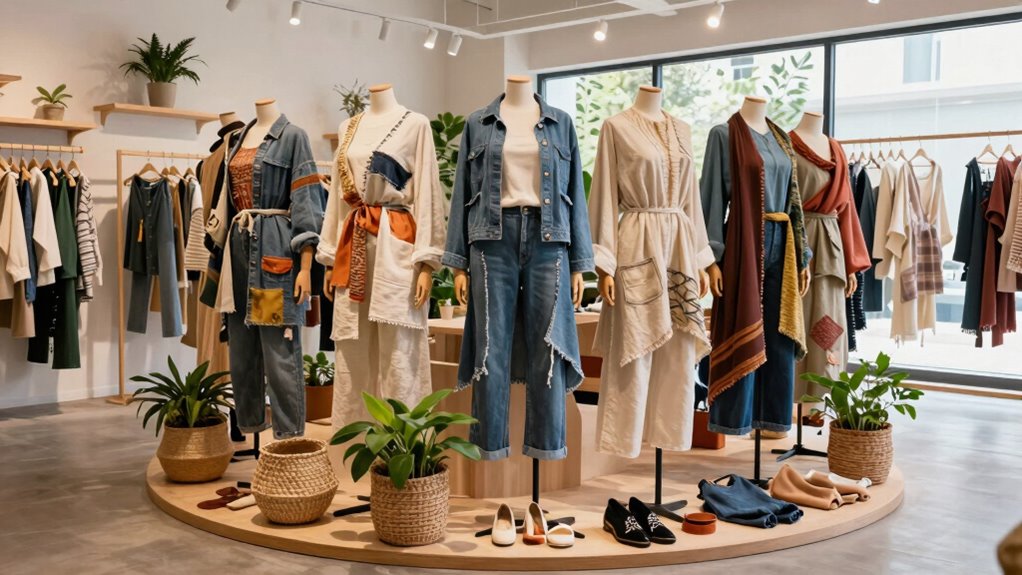
Have you ever wondered how your clothing choices impact the environment? Every time you buy a new shirt or toss out an old pair of jeans, you’re contributing to a complex system that affects ecosystems, communities, and future generations. Sustainable fashion aims to change that by promoting practices that reduce waste and pollution. A key part of this approach is understanding what ‘circular’ really means in the context of clothing. Instead of the traditional linear model—where resources are extracted, turned into products, and then discarded—circular fashion seeks to create a closed-loop system. That means designing clothes with their entire lifecycle in mind, so they can be reused, recycled, or remanufactured rather than ending up in landfills.
Circular fashion designs clothes for reuse, recycling, and longevity, reducing waste and environmental impact.
When you choose brands that prioritize circularity, you’re supporting the use of eco friendly materials. These are fabrics and fibers that minimize environmental impact, whether through organic cultivation, reduced water use, or lower chemical inputs. Think about opting for organic cotton, recycled polyester, or Tencel, which are all examples of eco friendly materials that help conserve resources and reduce pollution. By favoring such materials, you’re encouraging companies to innovate and adopt sustainable sources, which ultimately lessens the environmental footprint of your wardrobe. Additionally, understanding the lifespan of garments can help you make more sustainable choices by extending the usability and value of your clothing. Incorporating durability in design can further enhance the longevity of your wardrobe, reducing the need for frequent replacements. Recognizing the importance of recycling can also lead to better disposal habits and support closed-loop systems. As awareness of supply chain transparency grows, consumers can better assess the ethical practices behind their clothing.
Equally important is the commitment to ethical manufacturing. Circular fashion isn’t just about materials; it’s also about how clothes are made. Ethical manufacturing ensures fair wages, safe working conditions, and respect for workers’ rights. When companies prioritize ethical practices, they often implement transparent supply chains and sustainable production methods that reduce waste and energy consumption. Additionally, understanding the importance of biodiversity in maintaining healthy ecosystems can influence brands to adopt more sustainable practices that protect natural habitats. This approach aligns with the principles of circularity, emphasizing not just how long a garment lasts but also how it’s produced, used, and disposed of. When you support brands dedicated to ethical manufacturing, you’re helping to create a more just and sustainable industry.
Ultimately, embracing circular fashion means thinking beyond just buying and wearing clothes. It’s about making choices that promote longevity, reuse, and responsible production. You can do this by seeking out brands that incorporate eco friendly materials and prioritize ethical manufacturing processes. These steps help close the loop, ensuring that your clothing has a positive impact on the environment and society. As you become more conscious of what ‘circular’ really entails, you’ll find that your fashion choices can be powerful tools for fostering sustainability and reducing waste.
As an affiliate, we earn on qualifying purchases.
Frequently Asked Questions
How Do Circular Fashion Practices Impact Clothing Quality and Durability?
Circular fashion practices can positively impact clothing quality and durability by focusing on fabric longevity and material innovation. You’ll notice garments built with higher-quality, durable materials that last longer, reducing waste. By embracing innovative, sustainable fabrics, you guarantee your clothes maintain their integrity over time. This approach encourages better craftsmanship, making your clothing more resilient and eco-friendly, which benefits both your wardrobe and the environment in the long run.
What Are the Main Challenges Brands Face When Adopting Circular Models?
You might find that embracing circular models challenges brands with supply chain complexity and the need for greater brand transparency. These hurdles can slow innovation and increase costs, making change feel intimidating. Yet, overcoming them is essential to creating truly sustainable fashion. By simplifying supply chains and opening up about practices, brands can build trust and foster meaningful progress, turning these challenges into opportunities for growth and positive impact.
Can Circular Fashion Be Cost-Effective for Consumers and Producers?
Yes, circular fashion can be cost-effective for both consumers and producers. You’ll benefit from cost savings through durable, quality clothing that lasts longer, reducing frequent replacements. For producers, circular models improve production efficiency by reusing materials and minimizing waste, which cuts costs. Over time, these efficiencies can lower prices and create sustainable value, making eco-friendly fashion more accessible and appealing to everyone.
How Does Circular Fashion Influence Global Textile Waste Management?
You might think circular fashion complicates waste management, but it actually transforms how we handle textile waste globally. By promoting recycling programs, it encourages waste reduction and keeps textiles out of landfills. This approach fosters innovation in recycling technologies, making waste less of an environmental burden. As you support circular fashion, you’re helping create a more sustainable textile industry that minimizes waste and maximizes resource reuse worldwide.
What Role Do Consumers Play in Supporting Circular Fashion Initiatives?
You play a vital role in supporting circular fashion initiatives through consumer awareness and ethical shopping. By choosing to buy from brands that prioritize sustainability, you help reduce textile waste and promote reuse. Your awareness about the environmental impact of fashion encourages more responsible consumption. Supporting brands committed to circular practices fosters a shift toward eco-friendly production, ensuring that your shopping habits contribute positively to a more sustainable and waste-free fashion industry.
Conclusion
Imagine walking through a vibrant garden where every flower blooms again, never losing its beauty. That’s what circular fashion promises—a continuous cycle that nurtures our planet. By embracing this way of thinking, you become a gardener of sustainability, planting seeds that grow into endless style without draining the earth. So, choose wisely, and let your fashion choices weave a tapestry of harmony, where beauty and responsibility blossom side by side, forever dancing in the breeze.