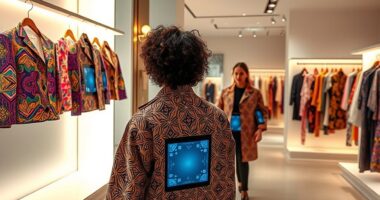
Social media plays a key role in setting fashion trends by making them accessible and faster than ever. Platforms like Instagram and TikTok enable you to instantly share and discover style ideas, while viral challenges and user-generated content influence what’s popular. Influencers and micro-celebrities amplify trends, and algorithms push them worldwide quickly. If you keep exploring, you’ll see how this digital shift is revolutionizing how fashion evolves every day.

Get the latest gadgets delivered free with Prime
- Fast, free delivery on millions of items
- Prime Video, Amazon Music and more included
- Member-only deals all year
Key Takeaways
- Social media democratizes fashion by enabling anyone to participate in trend creation through hashtags and user-generated content.
- Platforms like Instagram and TikTok facilitate rapid trend sharing and amplification via visual content and viral challenges.
- Influencers and micro-influencers drive trend adoption and brand visibility through collaborations and authentic content.
- Real-time feedback and algorithms allow brands to quickly adapt and produce trending styles, accelerating the fashion cycle.
- Social media mediates sales and influences consumer behavior, making it a powerful tool for setting and spreading fashion trends.
Instagram fashion photo editing tools
As an affiliate, we earn on qualifying purchases.
As an affiliate, we earn on qualifying purchases.
Democratization of Fashion Through Platform Accessibility

Thanks to social media platforms, anyone with internet access can now participate in fashion trends, breaking down traditional industry barriers. With smartphones, you can instantly create content and join trending challenges from anywhere. Social media platforms act as new couturiers, shaping public perception of fashion and style. Digital Fashion Weeks replace costly runway shows, enabling a global audience to watch and engage, which has democratized access to high-profile events. You no longer need industry connections or formal training to influence fashion; everyday people can shape trends. Hashtags like #OOTD serve as decentralized trend libraries, making it easy to discover and share styles. Micro-influencers and street style submissions drive niche and mainstream trends alike. This accessibility means regional styles can go viral worldwide, and diverse voices challenge conventional beauty standards. Additionally, the rise of user-generated content has expanded opportunities for participation, allowing a broader spectrum of creators to influence the industry. The proliferation of digital platforms has also facilitated the growth of independent fashion designers, giving them more visibility than traditional channels. Furthermore, the use of cookies and data tracking by social platforms helps tailor content and ads, further personalizing the fashion experience. Incorporating mindfulness and emotional intelligence into social media engagement can foster more authentic interactions and reduce negative impacts. Social media empowers you to participate directly in shaping fashion, making it more inclusive than ever.
Visual Content and Instant Sharing on Instagram and TikTok

Instagram’s visual focus lets you post high-quality images and videos, perfect for highlighting designs and fashion moments. Platforms’ Role in Fashion Trend Dissemination and Content Formats TikTok’s short-form videos enable quick trend sharing and real-time engagement, fostering a sense of immediacy. Both platforms offer unique features like Stories, Reels, and filters that enhance creativity and interactivity. Influencers use these tools to share personal styles, often sparking global trends overnight. The dynamic nature of content sharing on these platforms allows trends to evolve rapidly, capturing the attention of audiences worldwide. The speed of trend propagation ensures that new styles can go viral within hours, impacting the global fashion landscape instantly. This rapid spread of information is supported by the platforms’ ability to leverage viral algorithms, which prioritize trending content for broader exposure. Understanding how audience engagement influences content visibility helps brands optimize their strategies. Brands tailor content to each platform’s strengths, maximizing reach and engagement. Additionally, the use of user-generated content fosters community participation and accelerates trend adoption. The instant sharing capabilities allow trends to spread rapidly, turning individual posts into viral phenomena that shape the broader fashion landscape.
The Rise of Viral Challenges and Trend Acceleration

Viral challenges on social media platforms have become powerful catalysts for rapidly accelerating fashion trends. When a challenge catches on, items linked to it suddenly gain massive popularity, boosting sales and shaping consumer preferences. TikTok’s algorithm amplifies these trends, making them spread quickly across audiences. This rapid dissemination is facilitated by the platform’s sophisticated content recommendation systems. Influencers participate, further fueling the momentum and reaching wider demographics. As trends go viral, demand often skyrockets, causing items to sell out almost overnight. Retailers respond swiftly, producing and marketing related products to keep up with the fast-paced cycle.
Additionally, state-specific tax laws can influence how retailers and consumers approach new trends, especially when considering the cost implications of rapid product turnover. However, this rapid trend turnover raises sustainability concerns due to increased waste and overconsumption. Overall, viral challenges drastically shorten trend lifecycles, transforming how fashion spreads and evolves in real time, driven by community engagement and platform algorithms.
Influence of User-Generated Content on Fashion Authority

User-generated content (UGC) is reshaping how fashion trends are created and perceived, giving consumers a powerful voice in the industry. You trust authentic, relatable content over traditional ads, making UGC a key driver in influencing your purchasing decisions. Understanding UGC and Its Role in Fashion Marketing demonstrates how customer-created content such as genuine reviews, selfies, and videos provide unfiltered product experiences that resonate with audiences. Fashion brands leverage UGC to build inclusive, genuine marketing strategies that foster stronger connections with you. When brands showcase real-life scenarios through UGC, it boosts trust and credibility, encouraging you to engage and buy. Interactive formats like shoppable videos enhance your experience, making it easier to act on inspiration. UGC also democratizes fashion by empowering consumers to participate in trend creation and brand conversations, positioning you not just as a buyer but as a co-creator in shaping style. This authenticity shifts the power dynamic, elevating consumer influence in fashion authority. Recognizing the asset division process helps you understand how brands and consumers can equally participate in shaping fashion narratives. Additionally, visual authenticity plays a crucial role in establishing credibility and relatability within UGC-driven marketing strategies. Moreover, understanding content authenticity ensures that consumers remain confident in the reliability of the information shared. The rise of social media platforms has accelerated the spread of UGC, making it an essential tool for modern fashion marketing. Increasingly, the consumer engagement fostered by UGC helps sustain long-term brand loyalty and community building in the fashion industry.
Impact of Influencer Partnerships on Brand Visibility

Have you ever wondered how influencer partnerships boost a fashion brand’s visibility? When you partner with influencers, especially mega-influencers, you tap into massive audiences that can generate immediate sales, like Nordstrom’s $4 million daily boost. Brands allocate over 40% of their marketing budgets to these collaborations, recognizing their power. Micro-influencers, with smaller followings, deliver higher engagement within niche markets, while mid-tier influencers strike a balance between reach and relatability. Platforms like TikTok and Instagram Reels focus on short-form videos, amplifying trend dissemination. Sponsored content, especially in fashion, makes up a considerable portion of social media posts—25% on Instagram alone. Influencer partnerships, whether through direct product mentions or live shopping, considerably elevate brand visibility and influence consumer behavior across diverse audiences. Influencer marketing industry valuation increased from $1.7B in 2016 to $24B in 2024, demonstrating its growing significance in the fashion industry. Additionally, the integration of social media algorithms enhances the targeted reach of influencer campaigns, making them even more effective at capturing consumer attention. Furthermore, understanding targeted audience demographics helps brands tailor their influencer collaborations for maximum impact. Recognizing the role of automation in business can also streamline campaign management and optimize performance metrics, ensuring more efficient use of marketing resources. A better understanding of follower engagement metrics can optimize campaign performance and ensure authentic connections. Notably, leveraging electric bikes as part of lifestyle branding can create new opportunities for influencer collaborations in the outdoor and fitness sectors.
Platform-Specific Dynamics and Their Effects on Trend Propagation

Platform-specific features shape how fashion trends spread across social media. On Instagram, visually striking content gets prioritized, pushing trend-heavy posts to Explore pages and feeds. With 70% of brands using Instagram, Stories and Reels boost collection launches, while hashtag challenges like #OOTD amplify grassroots trends. Its shopping feature shortens the cycle from inspiration to purchase. A new trend-setting dynamic is the use of performance cookies, which help platforms analyze user interactions and optimize content delivery, further accelerating trend propagation. These cookies enhance the accuracy of user behavior analysis, enabling platforms to refine their algorithms and promote trending content more effectively. Moreover, the integration of algorithmic personalization ensures that users are continuously exposed to emerging styles tailored to their preferences, amplifying trend reach. TikTok’s short-form videos create rapid microtrend lifespans, with engaging edits and duet features fostering community-driven evolution. Hashtags like #FashionTok attract billions of views, revealing emerging styles quickly. Pinterest’s search-based discovery surfaces niche aesthetics early, and seasonal forecasts reinforce trends. Twitter’s real-time commentary during Fashion Week accelerates critique and style debates. These platform-specific features collectively shape how quickly and broadly fashion trends propagate across social media.
Speed of Trend Dissemination via Algorithmic Curation

Algorithms are the driving force behind how quickly fashion trends spread across social media. They curate content based on your interests and interactions, ensuring you see engaging posts, often including trending styles. This targeted promotion helps trends go viral rapidly, sometimes within hours, by pushing popular content to wider audiences.
As a result, fashion trends can shift overnight, highlighting certain styles over others almost instantaneously. Platforms like TikTok and Instagram amplify this effect, enabling trends to reach a global audience swiftly.
The immediate feedback from users allows brands and designers to adjust their strategies in real time, producing trendy items quickly. This rapid dissemination accelerates the fashion cycle, fueling the growth of fast fashion and encouraging quick consumption and disposal of new styles.
Shifts in Consumer Behavior Driven by Social Media

Social media’s rapid spread of fashion trends has fundamentally reshaped how you discover and engage with new styles. Viral product identification, driven by algorithms highlighting trending items, makes it easy to find popular pieces.
Peer-to-peer sharing through Instagram Reels and TikTok hauls replaces traditional magazines, fueling micro-trend acceleration with hashtag challenges like #CottageCore.
Algorithmic curation surfaces niche brands and independent designers, expanding your options.
Visual search tech allows direct shopping from posts, streamlining purchases.
You give immediate feedback via comments and polls, influencing product tweaks.
User-generated campaigns validate your preferences, while social commerce features like Instagram Shops create instant buying opportunities.
Trust shifts toward relatable micro-influencers, and community-driven hashtags replace top-down trend forecasts, making you an active participant in fashion evolution.
Industry Adaptations for Digital Trend Capitalization

To capitalize on digital fashion trends, brands and marketers are adopting innovative strategies that leverage the unique strengths of each social media platform. You’ll find strategic hashtag use essential for boosting visibility, categorizing content, and fostering community through branded hashtags. Trend-specific tags like #TikTokFashion help aggregate viral content, while cross-platform tagging ensures consistent exposure across Instagram and TikTok.
Influencer collaborations, especially with micro-influencers and diverse creator networks, accelerate trend adoption and authenticity. You’ll see brands creating real-time content with short videos and live shopping to generate organic momentum quickly.
Adapting content formats—Reels, Stories, IGTV—tailors messaging to platform audiences. Data-driven tools like social listening and predictive analytics help refine campaigns, optimize budgets, and forecast trend cycles, keeping your brand agile in this fast-paced landscape.
The Future of Fashion Trends in a Social Media-Driven Landscape

The landscape of fashion trends is evolving rapidly, driven by the explosive growth of short-form videos and viral content on platforms like TikTok. You’ll notice trend cycles shortening, with microtrends lasting weeks instead of seasons, thanks to algorithm-driven discovery and hashtag challenges.
Influencers, especially niche creators, now shape styles directly, often collaborating with brands or setting viral aesthetics through styling videos. TikTok’s rise surpasses Instagram in trend velocity among Gen Z, while Pinterest helps forecast upcoming trends.
Niche influencers lead trends through styling videos, partnering with brands and driving viral fashion aesthetics.
Sustainability remains a key factor, with consumers demanding transparency and advocating for circular fashion, even as fast fashion exploits viral moments.
Cultural democratization continues, giving diverse voices influence and enabling localized trends to gain global traction. Expect social media to keep accelerating, diversifying, and shaping fashion’s future landscape.
Frequently Asked Questions
How Do Social Media Algorithms Influence Which Fashion Trends Go Viral?
You see that social media algorithms influence which fashion trends go viral by prioritizing content that gets high engagement. When your likes, shares, or comments spike on a style, the platform boosts it to more users.
Influencers and viral challenges help amplify trends, while algorithms personalize recommendations based on your preferences. This cycle accelerates trend visibility, making some styles popular quickly while limiting exposure to diverse or niche fashion.
What Role Do Niche Online Communities Play in Shaping Mainstream Fashion Trends?
They say, “Rome wasn’t built in a day,” and the same applies here. Niche online communities shape mainstream fashion trends by cultivating unique styles, fostering engagement, and spreading ideas rapidly.
You see, influencers within these groups showcase specific aesthetics, which social media amplifies through hashtags and viral challenges. Over time, these micro-trends grow, influence larger audiences, and eventually become part of mainstream fashion, proving that small roots can create big changes.
How Does User-Generated Content Impact Brand Reputation and Consumer Trust?
User-generated content substantially boosts your brand reputation and consumer trust. When you showcase authentic reviews and real customer experiences, it makes your brand feel more relatable and credible.
UGC encourages deeper emotional connections, increases engagement, and expands your reach organically. Consumers trust peer opinions more than traditional ads, so integrating UGC into your marketing helps build loyalty, enhance your brand’s credibility, and ultimately drive more meaningful interactions and conversions.
In What Ways Do Platform-Specific Features Enhance Trend Visibility and Adoption?
You notice that platform-specific features boost trend visibility and adoption by making content more engaging and accessible. Instagram’s grid and shop features showcase styled looks directly, while Stories and Reels offer real-time demos.
TikTok’s FYP and challenges rapidly spread microtrends, and Pinterest’s search tools inspire long-term preferences. By leveraging these unique features, you can easily discover, engage with, and adopt emerging styles across platforms, accelerating your fashion evolution.
How Are Traditional Fashion Gatekeepers Adapting to Social Media-Driven Trend Creation?
Think of traditional fashion gatekeepers as ships steering a stormy sea. You see, they’re adapting by engaging directly on social media, collaborating with influencers, and creating real-time content.
They’re embracing digital runway shows and listening to consumer feedback to stay afloat. This shift from top-down control allows you to see how brands now ride the waves of social media, democratizing fashion and making trends more vibrant and accessible.
Conclusion
As you scroll through social media, you see fashion’s democratization unfold—where anyone can set trends, yet brands race to keep up. Instant sharing and viral challenges accelerate styles, blurring the line between influencer and authority. While social media empowers your choices, it also demands industry agility. In this fast-paced digital world, the future of fashion lies in your hands—where authenticity meets innovation, shaping trends at lightning speed.
Halloween Picks
halloween
As an affiliate, we earn on qualifying purchases.