
Innovations in eco-friendly fabric dyes focus on developing sustainable extraction methods that reduce resource use and environmental impact. New techniques like enzyme-assisted and ultrasonic extraction make it easier to obtain vibrant colors while minimizing water and chemical use. Researchers are also working on improving biodegradability to guarantee dyes break down safely after disposal. If you keep exploring, you’ll discover how these advancements are making eco-friendly dyes more practical and accessible for widespread use.
Key Takeaways
- Modern extraction methods like enzyme-assisted and ultrasonic techniques improve efficiency and reduce chemical and water use.
- Researchers develop biodegradable formulations to ensure natural dyes break down safely after disposal.
- Sustainable sourcing practices, such as using waste materials and small-scale cultivation, minimize environmental impact.
- Innovations focus on scalable, eco-friendly processes to make natural dyes more accessible for widespread use.
- Collaboration among industry stakeholders accelerates development of environmentally safe, effective natural dye technologies.

As awareness of environmental impact grows, more people are turning to eco-friendly fabric dyes as a sustainable alternative to traditional methods. These dyes often come from natural sources, aiming to reduce pollution and lessen ecological footprints. However, adopting these dyes isn’t without its hurdles. One significant challenge is biodegradability. Unlike synthetic dyes, which can linger in the environment for years, natural dyes and their residues can sometimes break down unpredictably, depending on the source material and processing methods. This unpredictability makes it difficult to guarantee that the dyes won’t cause long-term environmental issues once they’re washed into water systems. To address this, researchers and manufacturers are working to develop formulations that break down safely and completely after disposal, ensuring they don’t accumulate or harm ecosystems.
Another major aspect of eco-friendly fabric dyes revolves around natural dye extraction. This process involves sourcing pigments from plants, minerals, or insects, which requires careful consideration of sustainability. You might find that certain plants used for dyeing are overharvested or cultivated in ways that threaten local biodiversity. As a result, sustainable dye extraction practices are critical. Techniques such as using waste materials from food production or cultivating dye plants on a small scale reduce pressure on natural habitats. Additionally, innovative extraction methods, like using eco-friendly solvents or water-based processes, help minimize chemical usage and energy consumption. Improving the efficiency of extraction methods can also help reduce resource use and environmental impact.
Sustainable dye extraction uses waste materials and eco-friendly methods to protect biodiversity and reduce environmental impact.
The process of natural dye extraction can be complex, often requiring specific conditions like pH adjustments, heat, or prolonged soaking to extract vibrant colors effectively. You need to be mindful of how these methods impact the environment. For instance, traditional dye extraction might involve large amounts of water and chemicals, leading to waste disposal issues. Modern innovations aim to refine these processes, making them more efficient and environmentally responsible. Some techniques utilize enzyme-assisted extraction or ultrasonic waves to boost yield while reducing resource consumption.
Despite these challenges, progress in eco-friendly fabric dyes keeps advancing. You can participate in this movement by choosing dyes derived from responsibly sourced materials and supporting brands committed to sustainable practices. As research continues, expect to see improvements like more consistent natural dye extraction methods, enhanced biodegradability, and scalable processes that make eco-friendly dyes more accessible. Embracing these innovations means contributing to a cleaner environment while still enjoying vibrant, beautiful textiles. The journey toward sustainable dyeing is ongoing, but every effort pushes us closer to a future where fashion and environmental health go hand in hand.
Fostering collaboration among researchers, manufacturers, and consumers is essential to accelerate technological advancements and achieve widespread adoption of eco-friendly dyes.
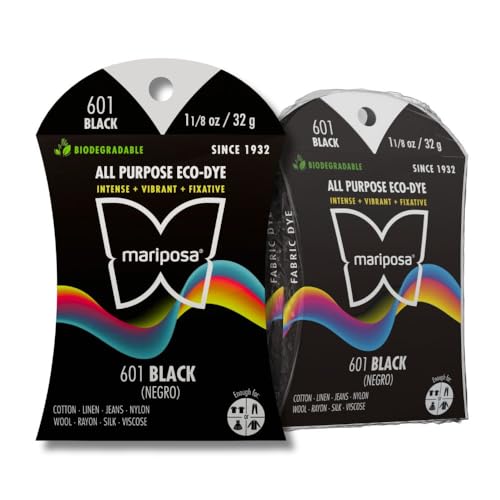
Black Fabric Dye (3-Pack) All-Purpose Eco-Dye for Cotton, Linen, Jeans, Wool, Rayon, Silk & More; Earth-Friendly, Non-Toxic, Clean Dye Formula, Enough for 3lbs of Fabric | Color: Black (601)
Vibrant Lasting Color – Our Black (601) Fabric Dye delivers intense, high-fixation color that stays rich wash after…
As an affiliate, we earn on qualifying purchases.
As an affiliate, we earn on qualifying purchases.
Frequently Asked Questions
Are Eco-Friendly Dyes as Colorfast as Traditional Dyes?
Eco-friendly dyes often match traditional dyes in colorfastness, though it depends on the specific eco dye performance and application. You’ll find that many eco dyes now offer comparable colorfastness comparison results, especially with advanced formulations and proper fixing techniques. While some eco dyes may initially seem less durable, ongoing innovations make certain you get vibrant, long-lasting colors without compromising sustainability. Always consider testing different eco dyes to find the best fit for your project.
How Do Eco-Friendly Dyes Impact Fabric Durability Over Time?
Eco-friendly dyes generally support fiber longevity and maintain color retention over time. You might notice that fabrics dyed with these eco-friendly options tend to stay vibrant longer, as they often bind better with fibers, reducing fading. While some eco-dyes are as durable as traditional dyes, others may require careful care to preserve their color. Overall, eco-friendly dyes can enhance fabric durability if formulated properly.
Can Eco-Friendly Dyes Be Used on All Types of Fabrics?
Think of eco-friendly dyes as a versatile artist’s palette—you can paint on many fabrics, but not all with the same brush. Fabric compatibility varies, so you need to select the right dye for each material. Proper dye application techniques are essential to guarantee vibrant colors and lasting results. Some fabrics, like silk or cotton, accept eco-dyes well, while others may need special treatment or may not be suitable at all.
What Are the Cost Differences Between Eco-Friendly and Conventional Dyes?
You’ll find that eco-friendly dyes often cost more upfront than conventional dyes, mainly due to their sustainable sourcing and processing methods. However, the cost comparison varies depending on scale, with larger operations sometimes benefiting from economies of scale. When considering economic feasibility, you should weigh the environmental benefits and potential brand value against the higher initial expenses. Over time, eco-friendly dyes can be cost-effective, especially as sustainability becomes a consumer priority.
Are There Any Health Risks Associated With Eco-Friendly Fabric Dyes?
You might be surprised to learn that eco-friendly fabric dyes substantially reduce health risks. Unlike conventional dyes, they contain fewer allergenic compounds and chemical residues, lowering chances of skin irritation or allergic reactions. While no dye is completely risk-free, eco-friendly options are generally safer for your skin and the environment. Always check labels, but switching to these dyes can help you avoid many of the health concerns linked to traditional dyes.

Fabric Dye Powder; Eco Friendly Biodegradable Clothing Dye Kit All Purpose Color for Natural and Synthetic Fabrics (Dark Blue (628))
Vibrant Lasting Color – Our Clothing Fabric Dye delivers intense, high-fixation color that stays rich wash after wash….
As an affiliate, we earn on qualifying purchases.
As an affiliate, we earn on qualifying purchases.
Conclusion
As you embrace these innovations, you’re planting seeds of change in the garden of sustainability. Each eco-friendly dye you choose is like a gentle rain nourishing the earth, transforming the fabric industry into a vibrant, blooming landscape. By making mindful choices, you’re weaving a brighter, greener future—turning your wardrobe into a canvas of hope and harmony. Together, you and these dyes can paint a world where beauty and nature flourish side by side.

Rit Dye – Liquid Fabric Dye for Crafting, Clothing, and Décor – 8 oz. Bottle – Black (Gloves Included)
Easy to Use – The process is super easy to follow. Simply add dye to hot water with…
As an affiliate, we earn on qualifying purchases.
As an affiliate, we earn on qualifying purchases.
ultrasonic extraction natural dyes
As an affiliate, we earn on qualifying purchases.
As an affiliate, we earn on qualifying purchases.