
Automatic watches run on sophisticated mechanical movements that wind themselves through your wrist’s motion. They use different types like ETA, Sellita, or In-House calibers, each offering varying quality and features. The typical power reserve lasts around 38 to 42 hours, but regular maintenance is key to keeping your watch accurate and reliable. Servicing costs can range from $200 to over $1,000, depending on the model. If you continue exploring, you’ll discover essential tips to keep your watch in top shape.
Key Takeaways
- Automatic watches operate via mechanical movements that wind themselves through wrist motion, with popular calibers like ETA, Sellita, and In-House.
- The typical power reserve ranges from 38 to 42 hours, depending on the movement and model.
- Regular servicing every 3-5 years, costing between $200 and $1,000, is essential for optimal performance and longevity.
- Proper maintenance involves daily winding, safe storage, and avoiding magnetic fields and extreme temperatures.
- Signs of repair needs include time inaccuracies, stopping, or damage to the case, dial, or strap.
How Do Automatic Watches Work? Exploring Mechanical Movements
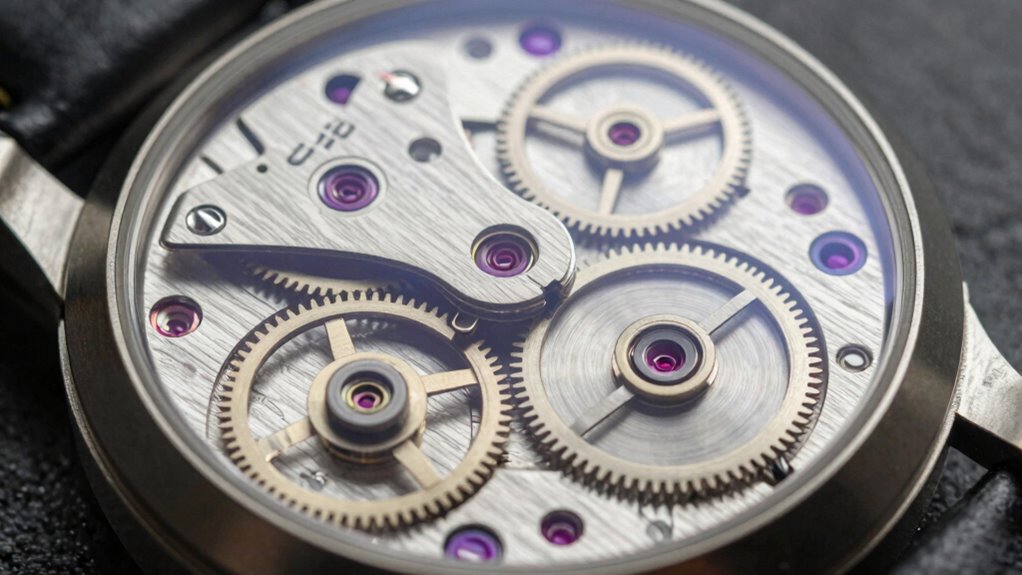
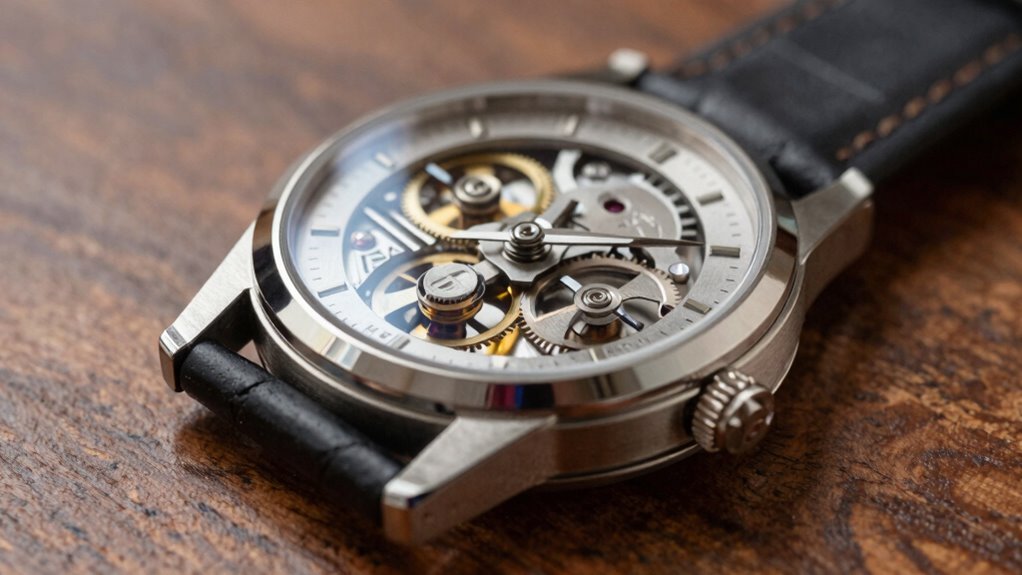
Automatic watches operate through a sophisticated mechanical movement that winds itself as you wear them. This innovation is a key part of luxury branding, symbolizing craftsmanship and precision. Over the years, the historical evolution of automatic watches has transformed them from simple timekeeping devices into symbols of status and artistry. Early models relied on manual winding, but advancements introduced rotor mechanisms that harness your wrist’s motion to power the watch. This seamless integration of engineering and aesthetics appeals to collectors and enthusiasts alike. Modern technology has further enhanced their accuracy and reliability, ensuring their continued appeal among modern consumers. The complex gear train inside converts the rotor’s motion into energy to keep the watch running smoothly, showcasing the intricate engineering involved. Understanding their mechanical movement highlights why these watches remain highly valued and enduring symbols of sophistication. Additionally, automatic winding systems improve user convenience by reducing the need for manual winding, making them more user-friendly for daily wear.
What Types of Movements Do Automatic Watches Use? (ETA, Sellita, In-House)
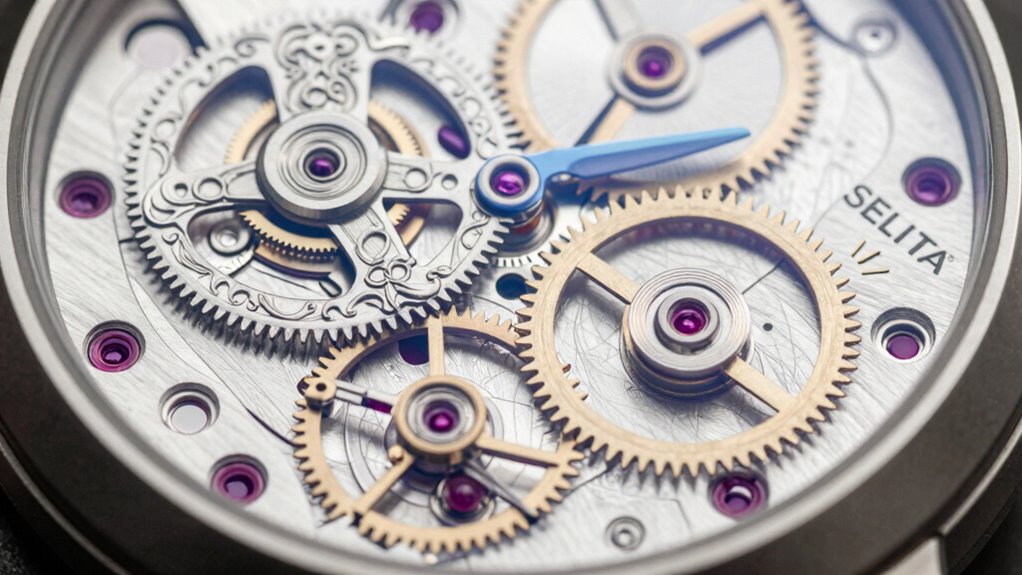
Ever wondered what types of movements power your automatic watch? Most use either ETA, Sellita, or in-house calibers. ETA movements are renowned for reliability and are common in many brands. Sellita offers similar quality, often at a lower cost, making them popular among mid-range watches. In-house movements are developed by brands themselves, showcasing craftsmanship and innovation. Your choice of watch case materials and strap customization can complement these movements, enhancing overall appeal. Here’s a quick comparison:
| Movement Type | Key Features |
|---|---|
| ETA | Reliable, widely used |
| Sellita | Cost-effective, solid quality |
| In-House | Unique, expertly crafted |
| Compatibility | Varies with watch case materials |
What’s the Typical Power Reserve of Automatic Watches?
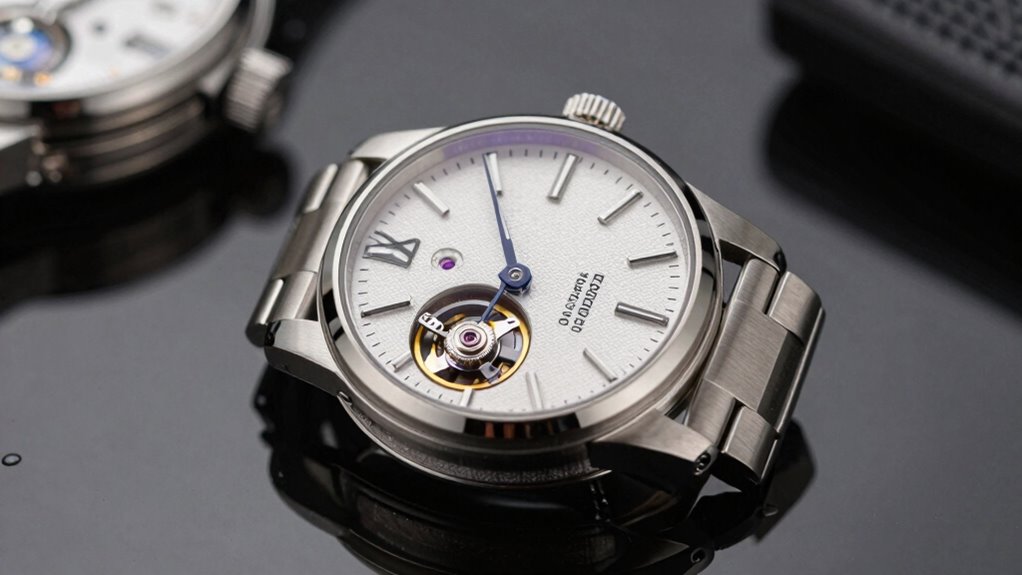
Most automatic watches can run for about 38 to 42 hours on a full wind, though some high-end models push this limit even further. This power reserve means you can wear your watch for a day or two without winding it. If you wear your watch daily, the movement stays wound through wrist motion, maintaining accuracy. When you switch to a different watch strap, confirm it’s secure to keep your watch in place. Water resistance also plays a role in overall durability, but it doesn’t affect power reserve directly. Keep in mind, if your watch has a shorter power reserve, you might need to wind it more often or use a watch winder. Knowing your watch’s power reserve helps you plan maintenance and ensures reliable performance.
How Can You Maximize the Accuracy of Your Automatic Watch?
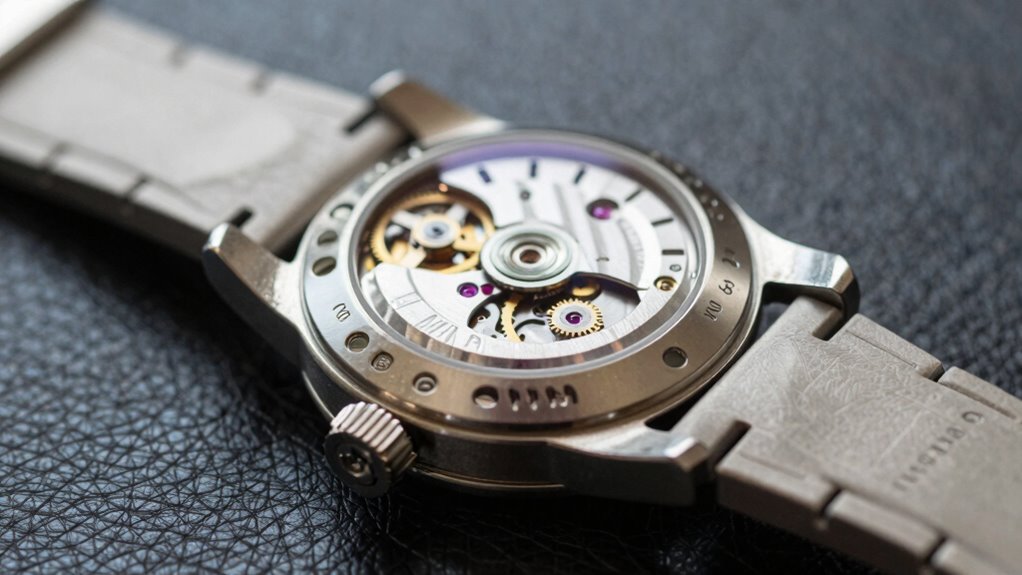
To keep your automatic watch running accurately, regular care and proper handling are key. Consistently wearing your watch helps keep the movement wound, maintaining precision. Store vintage models upright in a watch box to prevent damage and dust buildup. Avoid extreme temperatures and magnetic fields, which can disrupt accuracy. Choose a reputable watch brand known for precision engineering. Keep your watch away from shocks and impacts, especially during sports or physical activities. Regularly wind your watch if it hasn’t been worn for a while, ensuring it stays accurate. Additionally, selecting a watch crafted from vetted materials ensures durability and longevity. Proper piercing care and hygiene can also be important for watches with removable components or decorative elements. Incorporating high-quality security gear into your storage solutions can further protect your valuable timepieces. Ensuring that your watch components are properly maintained can prevent costly repairs and extend the lifespan of your watch. Remember, careful handling and mindful storage help preserve your watch’s timing. Using environmentally controlled storage can also help prevent damage from humidity and temperature fluctuations. By following these tips, you’ll enjoy better accuracy and extend the lifespan of your cherished timepiece.
How Often Should You Service Your Automatic Watch?
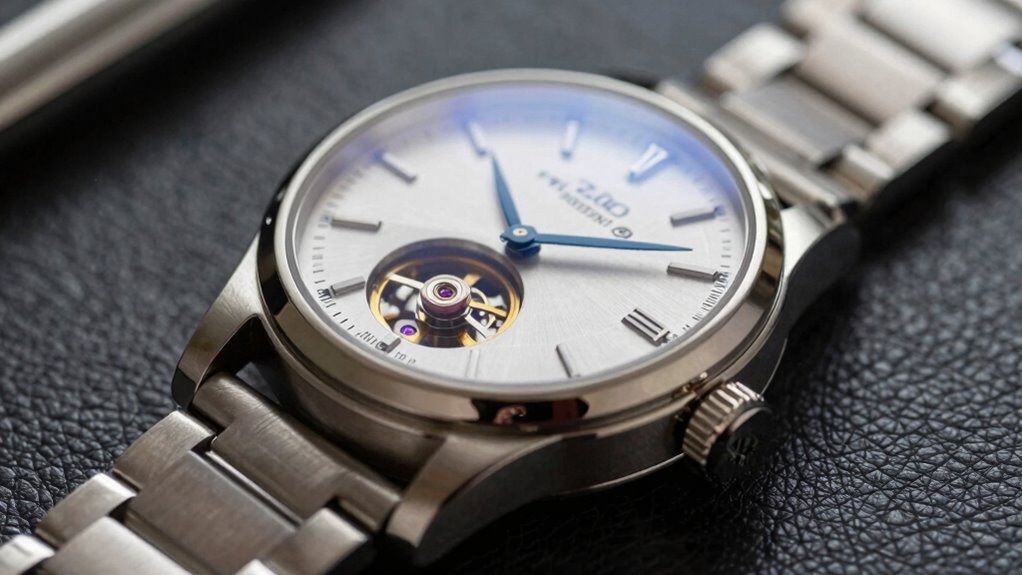
Regular servicing is essential to keep your automatic watch running smoothly and accurately. Typically, you should have your watch serviced every three to five years, depending on usage and environmental conditions. During servicing, a professional will check the movement, clean internal parts, and lubricate gears. It’s also important to inspect the watch strap for wear and tear, replacing it if necessary. Regular servicing helps maintain water resistance, especially if you frequently swim or expose your watch to moisture. Over time, seals and gaskets degrade, risking water damage. Ensuring water resistance remains intact protects your watch’s internal components. Additionally, understanding the importance of support networks can help you stay informed about proper maintenance practices. Researching reputable service providers is crucial to ensure your watch receives quality care. Staying aware of maintenance intervals can help you plan timely service visits and prevent costly repairs. By sticking to a servicing schedule, you’ll prolong your watch’s lifespan and keep it functioning reliably, preserving its value and appearance. Maintaining proper watch care also contributes to the longevity and performance of your timepiece.
What Are the Typical Costs for Servicing and Repairing Automatic Watches?
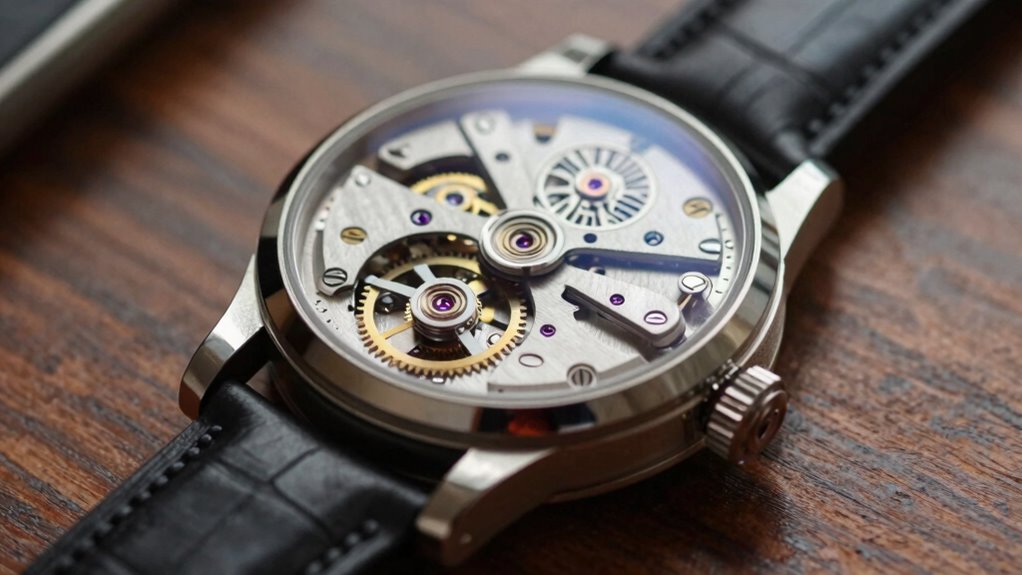
Understanding the costs for servicing and repairing your automatic watch helps you plan for maintenance expenses. These costs can vary based on service frequency, watch brand, and repair complexity. Being aware of the typical expenses guarantees you’re prepared for both routine care and unexpected repairs.
Service Frequency and Costs
Automatic watches typically need servicing every three to five years to keep them running accurately and reliably. The costs vary based on brand, complexity, and whether you’re dealing with a luxury branding piece or a vintage model. Generally, expect to pay more for high-end brands, especially those with intricate movements. Servicing costs for vintage models can be higher due to rarity and the need for specialized parts. Regular maintenance ensures your watch remains in top condition, preserving its value and functionality.
Here are key points to think about:
- Servicing costs range from $200 to $1,000+
- Luxury branding often incurs higher fees
- Vintage models may require more extensive repairs
- Routine maintenance prevents costly repairs later
- Think about the watch’s value when budgeting for service
Repair Expenses and Factors
Repair expenses for automatic watches can vary widely depending on the type of repair needed, the watch’s brand, and its complexity. Luxury watch brands often have higher service costs due to specialized parts and craftsmanship, sometimes reaching several hundred dollars for major repairs. Vintage watch collection pieces may require extra care, with restoration or replacement parts increasing expenses. If your watch needs a simple movement adjustment, costs might be lower, around $50 to $150. More extensive repairs, like replacing a damaged rotor or mainspring, can cost $200 or more. Keep in mind that regular servicing helps avoid costly repairs later. Ultimately, understanding the factors influencing repair costs helps you budget better and preserve your automatic watch’s value over time.
How Can You Extend Your Automatic Watch’s Lifespan?
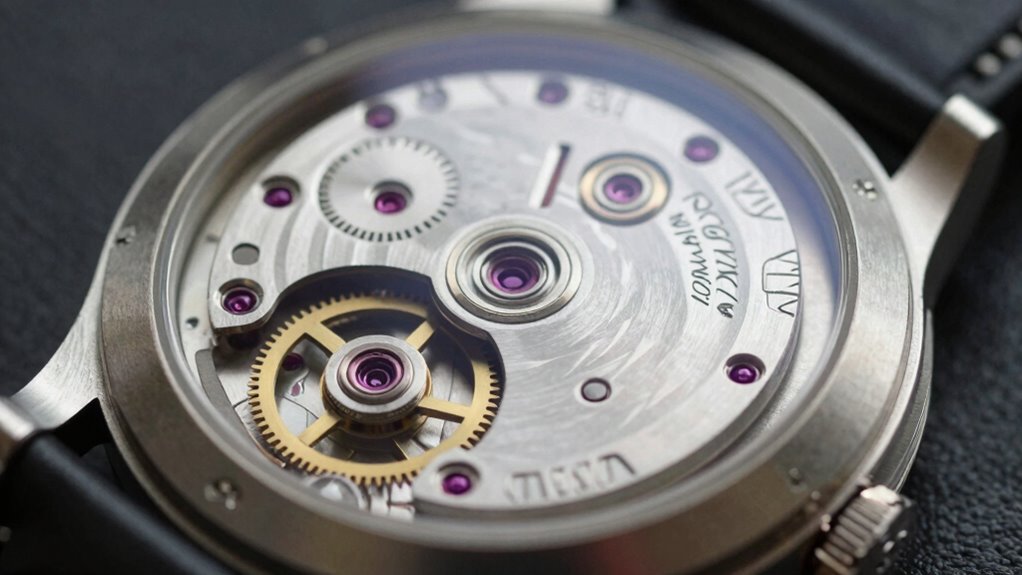
To extend your automatic watch’s lifespan, you should follow a regular servicing schedule to keep it running smoothly. Using proper winding techniques and avoiding over-winding helps prevent damage to the movement. Additionally, storing your watch safely in a protective case when not in use shields it from dust and impacts. Being mindful of wearing conditions can also help preserve the watch’s accuracy and functionality over time. Regularly inspecting and cleaning your watch can also prevent buildup that may affect its performance, ensuring longevity through proper maintenance. Proper storage in a climate-controlled environment further helps prevent deterioration caused by humidity and temperature fluctuations. Understanding and adapting to regional climates can be crucial for maintaining optimal conditions for your watch’s longevity.
Regular Servicing Schedule
Regular servicing is essential for keeping your automatic watch running smoothly and extending its lifespan. Routine maintenance ensures the movement stays clean, lubricated, and accurate. To maximize your watch’s longevity, consider these tips:
- Keep your watch wound regularly to prevent oil from settling and ensure consistent movement.
- Store your watch in a watch box or case when not in use to protect it from dust and impacts.
- Avoid exposing your watch to extreme temperatures or magnetic fields, which can affect accuracy.
- Have your watch checked by a professional every 3-5 years for servicing and lubrication.
- When storing your watch for long periods, wind it gently before wearing again to start the movement smoothly.
- Understanding watch movements can help you better care for your timepiece and identify potential issues early.
- Regularly monitor your watch’s accuracy to detect any signs of malfunction early, which can prevent costly repairs.
- Consulting a vetted expert can also help ensure your watch receives proper maintenance and repairs.
Following a proper servicing schedule helps your automatic watch stay reliable and extend its lifespan.
Proper Winding Techniques
Proper winding techniques are crucial for maintaining your automatic watch’s accuracy and longevity. By practicing consistent daily winding, you ensure the mainspring remains properly tensioned, preventing unnecessary wear. When winding, turn the crown gently in a clockwise direction until you feel slight resistance; avoid overwinding. Regular winding keeps the movement lubricated and reduces the risk of parts seizing. To help you remember, here’s a simple guide:
| Step | Tip |
|---|---|
| Daily winding | Wind at the same time each day |
| Gentle turns | Don’t force beyond resistance |
| Avoid overwinding | Stop when you feel resistance to prevent damage |
Implementing these winding techniques extends your automatic watch’s lifespan and maintains ideal performance.
Safe Storage Practices
Storing your automatic watch correctly is key to keeping it running smoothly over time. Proper storage prevents damage and preserves its movement and appearance. Always keep your watch in a sturdy watch case to protect it from dust, moisture, and shocks. Consider the strap materials when storing; leather straps benefit from a cool, dry place, while rubber or metal straps are more tolerant of humidity. Avoid exposing your watch to direct sunlight or extreme temperatures, as these can affect its performance. If you’re not wearing the watch regularly, use a watch winder to keep the movement active. Additionally, store it upright to prevent strain on the strap or case. Proper storage habits extend your watch’s lifespan and ensure it remains in excellent condition. Maintaining the power reserve of your automatic watch through proper storage can also enhance its longevity. Regularly servicing your watch and keeping it clean can further prevent mechanical issues and wear and tear, ensuring consistent performance over the years. Paying attention to environmental factors can help reduce the risk of damage from external conditions and preserve your watch’s accuracy and appearance.
How Do You Know When Your Automatic Watch Needs Repair? Signs to Watch For
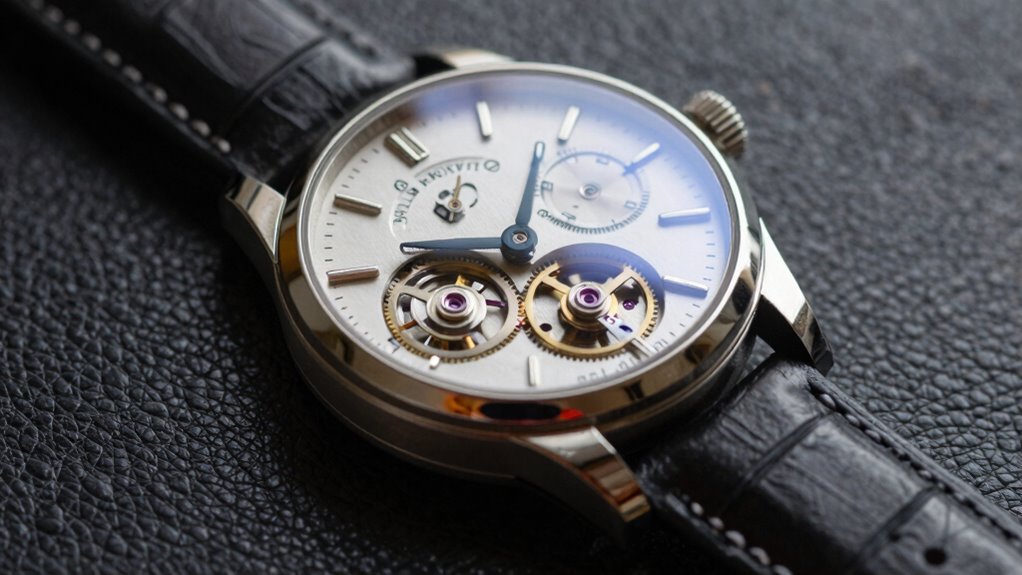
If your automatic watch starts losing time or behaving unpredictably, it’s a clear sign something might be wrong. You might notice your watch runs slow or stops altogether, indicating it needs servicing. Additionally, if you see issues with the watch band, such as looseness or damage, it’s a good idea to get watch band replacements to prevent further wear. Changes in the dial’s appearance, like fading or cracks, can also signal internal issues that require professional attention. Keep an eye out for difficulty in setting the time or irregular movement of the second hand. These signs suggest your watch may need repair to maintain accurate time and preserve its aesthetic, especially if you’ve customized the dial or invested in a unique design.
Should You Invest in a High-End or Entry-Level Automatic Watch?
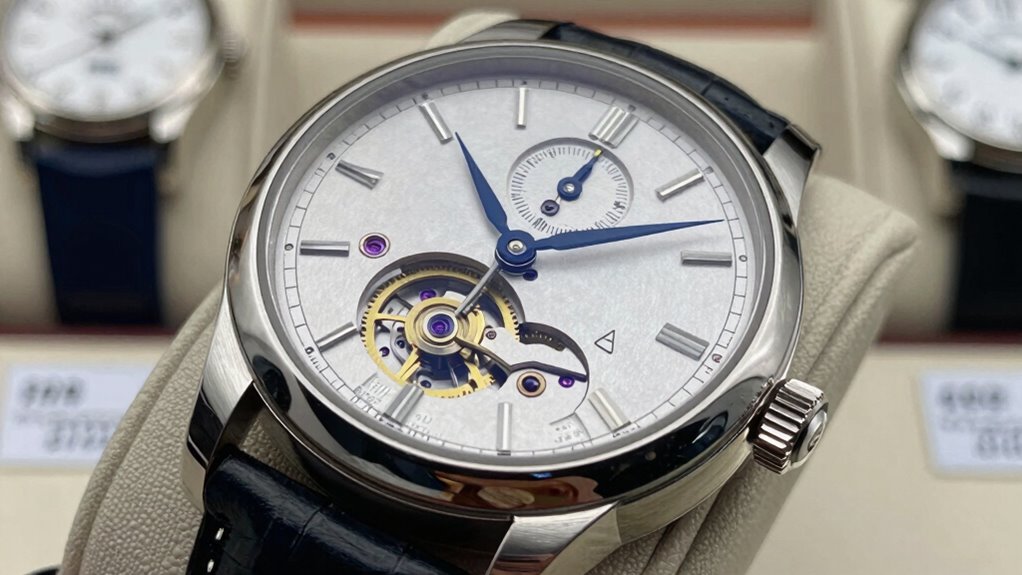
Choosing between a high-end and an entry-level automatic watch depends on your priorities and budget. If you value luxury branding and the prestige associated with owning a luxury piece, investing in a high-end watch offers superior craftsmanship and collector’s value. These watches often feature intricate movements, premium materials, and exclusive designs, making them more desirable over time. On the other hand, entry-level automatic watches provide reliable performance at a more accessible price, perfect for everyday wear or starting a collection. Consider your goals: are you after status and long-term investment, or a dependable, stylish watch without breaking the bank? Your decision should align with your passion for horology, budget constraints, and whether you seek a potential collector’s item or an everyday companion.
Frequently Asked Questions
How Do Different Materials Affect Automatic Watch Durability?
You’ll find that watch material substantially impacts durability factors. For example, stainless steel offers excellent resistance to scratches and corrosion, making your watch last longer. Titanium is lighter and even more resistant to damage, perfect for active lifestyles. Ceramic is highly scratch-resistant but brittle, so handle with care. Choosing the right material depends on your lifestyle and how much you value durability, but overall, quality materials enhance your watch’s longevity.
Can Automatic Watches Be Waterproof or Water-Resistant?
A stitch in time saves nine—your watch’s water resistance can save your day. Automatic watches can be waterproof or water-resistant, but not necessarily both. Water-resistant watches withstand splashes and brief immersions, while waterproof ones are designed for deeper depths. Testing methods like pressure tests verify their limits. Always check the manufacturer’s specifications, and remember, no watch is truly waterproof—treat yours with care to avoid costly repairs.
What Are Common Issues That Cause Automatic Watches to Stop?
Your automatic watch can stop due to common issues like automatic winding problems or power reserve issues. If you don’t wear it regularly or it isn’t wound properly, the watch’s mainspring may lose tension, causing it to stop. Additionally, dust or dirt can interfere with the movement’s gears. To keep it running smoothly, confirm regular wear or manual winding and occasional servicing to address internal wear or debris.
How Do I Authenticate a Luxury Automatic Watch?
Your luxury watch deserves a detective’s eye. To authenticate it, carefully examine the craftsmanship, weight, and logo details—counterfeit detection relies on subtle cues like serial numbers and engravings. Use a jeweler’s loupe for precision, compare it to official images, and consider professional watch authentication. Remember, even the tiniest flaw can reveal a fake, so trust experts to confirm its authenticity and protect your investment.
Are There Specific Climates That Impact Automatic Watch Performance?
Certain climates can substantially affect your automatic watch’s performance. Extreme temperatures, high humidity, and environmental factors like dust or salt air can influence the movement and corrosion. To guarantee peak performance, avoid leaving your watch in direct sunlight or humid environments for long periods, and get regular maintenance if you live in challenging climates. Protecting your watch from these climate impacts ensures it stays accurate and lasts longer.
Conclusion
Now that you understand the ins and outs of automatic watches, you’re equipped to make smarter choices and keep your timepiece ticking perfectly. With proper care, maintenance, and a little love, your watch can last a lifetime—possibly longer than you’ve had your first crush. Remember, a well-maintained automatic watch isn’t just a tool; it’s a timeless companion that can outlast even the most legendary stories. Keep it wound, and let time be your ally.