To get the best sound from your turntable, choose the right cartridge type—moving magnet or moving coil—based on your budget and preferences. Properly set and measure tracking force using a stylus gauge and align your cartridge carefully with a protractor to prevent record and stylus damage. Avoid common mistakes like incorrect alignment or excessive force, which can harm your records and equipment. Keep learning for detailed tips to perfect your setup and protect your records.
Key Takeaways
- Proper cartridge setup, including alignment and tracking force, is essential to prevent record damage and ensure optimal sound quality.
- Moving Magnet (MM) and Moving Coil (MC) cartridges differ in sound profile, cost, and maintenance requirements, affecting compatibility and performance.
- Use a protractor and a stylus force gauge to precisely align the cartridge and set tracking force according to manufacturer specifications.
- Incorrect tracking force or misalignment can cause stylus and record wear, resulting in distortion, skipping, and reduced equipment lifespan.
- Regular cleaning, inspection, and proper maintenance of the stylus and turntable components help prevent setup errors and prolong record and equipment life.

Audio-Technica AT-VM95E Dual Moving Magnet Turntable Cartridge Green
VM95 Series dual Magnet cartridge with 0.3 x 0.7 mil Elliptical stylus
As an affiliate, we earn on qualifying purchases.
As an affiliate, we earn on qualifying purchases.
Why Proper Turntable Setup Matters for Your Records and Sound

Have you ever wondered why your records sound dull or skip unexpectedly? Proper turntable setup is key to preserving your vinyl’s quality. When you set up your turntable correctly, you protect your records from unnecessary wear during playback, extending their lifespan. Good setup also enhances sound clarity, ensuring you enjoy rich, detailed music. Additionally, pay attention to record storage; storing records vertically in a cool, dry environment prevents warping and damage. Turntable aesthetics matter too—they’re not just for looks but can influence stability and vibration. A well-maintained, properly aligned turntable reduces skipping and distortion, giving you the best listening experience. Neglecting setup compromises audio quality and risks damaging your treasured collection, making proper setup an essential step for every vinyl enthusiast. Proper cartridge alignment can make a significant difference in sound quality, so investing time in setup is well worth it. Regularly checking tonearm balance and tracking force can also prevent unnecessary record wear and improve playback performance. Additionally, understanding tracking force and its impact on stylus contact can help you optimize sound and record longevity.

Neoteck Digital Turntable Stylus Force Gauge 0.01g/5.00g with Orange LCD Backlight Turntable Stylus Pressure Gauge with 5g Weight &Leather Case Accurate Tracking for Phono Cartridge -Jet Black
Essential Tool for Vinyl Enthusiasts:For those dedicated to the art of vinyl playback, this cartridge tracking force scale…
As an affiliate, we earn on qualifying purchases.
As an affiliate, we earn on qualifying purchases.
Understanding Turntable Cartridges: Types and Features

Understanding your turntable cartridge is key to getting great sound, and there are different types to contemplate. Moving magnet and moving coil cartridges each have unique features that affect performance and cost. By knowing what to look for, you can choose the right cartridge to match your listening style and setup. Additionally, exploring the vinyl revival movement reveals how these cartridges contribute to the rich, nostalgic sound that vintage audio enthusiasts cherish. The technological differences between cartridge types also influence their compatibility with various turntables and audio systems, ensuring you select the best option for your setup. Moreover, a careful setup process, including correct tracking force, can significantly improve sound quality and cartridge longevity.
Cartridge Types Overview
Choosing the right turntable cartridge is vital because it directly affects sound quality and playback performance. There are two main types: Moving Magnet (MM) and Moving Coil (MC). Each type offers different features, so your choice depends on your preferences and setup. When selecting a stylus, consider compatibility with your cartridge type and how it impacts sound clarity. Proper cartridge storage is also important; keep cartridges in a clean, dust-free environment to prevent damage and ensure longevity. Some cartridges are built for easy stylus replacement, making maintenance simpler. Understanding these differences helps you make informed decisions, guaranteeing your vinyl playback remains clear and detailed. Ultimately, selecting the right cartridge type and caring for it properly will enhance your listening experience.
Moving Magnet Vs. Moving Coil
Moving Magnet (MM) and Moving Coil (MC) cartridges are the two main types you’ll encounter when selecting a turntable cartridge, and each offers distinct advantages. MM cartridges tend to be more affordable, easier to maintain, and allow for simpler stylus replacement, making them beginner-friendly. They also generally work well with standard tonearm balance settings. MC cartridges, on the other hand, provide superior sound quality and detail but require more precise setup and often involve higher costs for stylus replacement. Because of their delicate coils, MC cartridges demand careful tonearm balance to prevent damage. Your choice depends on your budget, listening preferences, and willingness to fine-tune your setup. Understanding these differences helps guarantee you select the right cartridge for peak performance and longevity. Additionally, proper piercing care can prevent infections and irritation, ensuring your body jewelry stays in good condition over time.
Key Features To Consider
What key features should you focus on when selecting a turntable cartridge? First, consider vibration isolation. A cartridge with good vibration damping reduces unwanted noise and ensures accurate sound reproduction. Look for designs that minimize external vibrations reaching the stylus, preserving sound clarity. Next, examine stylus wear. A durable stylus with high-quality materials lasts longer and maintains fidelity over time. Some cartridges feature advanced suspension systems that help protect the stylus from excessive wear caused by tracking errors or rough records. Additionally, check compatibility with your turntable and personal listening preferences. By prioritizing vibration isolation and stylus durability, you’ll improve your setup’s performance and enjoy a richer, more accurate audio experience.

Hudson Hi-Fi Turntable Cartridge Alignment Kit – The Audiophile Purists Perfected 3-Piece LP Cartridge Setup Set. Accuracy Optimized Digital Scale, Azimuth Ruler, Protractor – Rich Pure Sonic Sound
All-Inclusive Kit: Each kit comes with a turntable stylus digital scale and Premium PE Case. With our alignment…
As an affiliate, we earn on qualifying purchases.
As an affiliate, we earn on qualifying purchases.
How to Choose the Right Cartridge for Your Listening Style

Selecting the right cartridge depends largely on your listening style and the type of music you enjoy. If you prefer crisp, detailed sound, a high-quality stylus on a modern cartridge may suit you best. For a warmer, nostalgic vibe, vintage cartridge options paired with stylish turntables can deliver unique character. Consider these factors:
Choose your cartridge based on your music taste and preferred sound warmth or clarity.
- Your favorite genres (jazz, rock, classical)
- Preference for warmth versus clarity
- Compatibility with your turntable
- Budget constraints
- Aesthetic appeal of stylish turntables
Choosing a cartridge that aligns with your listening habits ensures a more satisfying experience. Whether you want sleek performance or vintage charm, selecting the right cartridge helps you get the most out of your setup. Focus on matching your listening style to the cartridge’s sound profile for ideal enjoyment.

Big Fudge Vinyl Record Cleaning Kit – 4-in-1 Vinyl Record Cleaner Kit for Records Includes Ultra-Soft Velvet Brush Cleaning Liquid Stylus Brush and Storage Pouch – Pro Records Care
Vinyl Cleaning Kit: Eliminate dust, dirt, and fingerprints with our ultra-soft velvet brush and XL cleaning solution in…
As an affiliate, we earn on qualifying purchases.
As an affiliate, we earn on qualifying purchases.
How to Properly Set and Measure Tracking Force

Properly setting and measuring your turntable’s tracking force is key to achieving ideal sound quality and protecting your records and stylus. To do this, start by balancing the tonearm so it floats parallel to the platter without downward pressure. Once balanced, adjust the counterweight until the tonearm stays in place. Then, set your tracking force to the cartridge manufacturer’s recommended value using a stylus force gauge. Correct tracking force minimizes stylus wear and prevents excessive record wear. Regularly checking and fine-tuning this force ensures your stylus tracks accurately and reduces distortion. Additionally, proper setup can prevent unnecessary damage to your records and stylus over time. Ensuring your turntable is on a stable surface can also improve overall sound quality and prevent vibrations that might affect tracking. Remember, improper tracking force can lead to uneven stylus wear and damage over time, so take the time to get it right for optimal performance and record longevity. Maintaining consistent tracking force is essential for preserving both your records and stylus, ensuring they last longer and perform better.
Step-by-Step Guide to Aligning Your Cartridge Correctly
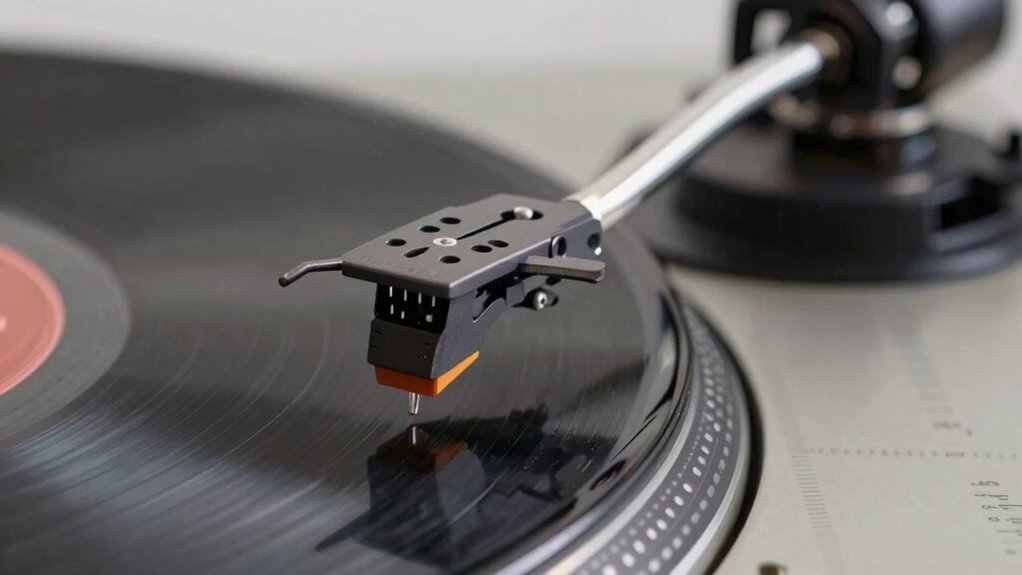
Aligning your cartridge accurately is essential for ideal sound quality and record preservation. Proper alignment prevents uneven stylus wear and ensures consistent tracking. To get started:
- Use a mirror or alignment tool to check cartridge position.
- Adjust the tonearm height for proper tonearm balance.
- Align the cartridge’s overhang with your protractor, ensuring it sits flush.
- Verify that the stylus is centered in the record groove.
- Double-check that the cartridge’s null points match the alignment protractor.
This process helps maintain correct stylus contact and reduces unnecessary stylus wear. Pay close attention to tonearm balance before fine-tuning. Proper alignment results in cleaner sound, longer cartridge life, and fewer record scratches. Take your time to get it right for ideal turntable performance.
Common Setup Mistakes That Can Damage Your Records

One common mistake is using incorrect cartridge alignment, which can cause uneven wear on your records. Applying too much tracking force can also damage delicate grooves over time. Additionally, neglecting regular maintenance like cleaning your stylus or turntable can lead to unnecessary record wear and harm.
Incorrect Cartridge Alignment
Incorrect cartridge alignment is a common mistake that can seriously damage your records over time. Misalignment causes uneven wear on your vinyl and accelerates stylus replacement. To avoid this, check your cartridge alignment regularly. Keep in mind:
- Ensure the stylus tracks correctly along the grooves
- Use an alignment protractor for precise setup
- Avoid skewed or crooked cartridge positioning
- Maintain proper platter balancing to prevent uneven pressure
- Double-check tracking force after aligning
Proper alignment minimizes record wear and preserves sound quality. Remember, even small deviations can lead to significant damage. Take care during setup to avoid costly repairs later. Correct alignment also helps your stylus last longer, saving you money. Regularly inspecting and adjusting your cartridge guarantees a safer, better listening experience.
Excessive Tracking Force
Have you ever wondered how excessive tracking force can harm your records? When your stylus pressure is too high, it puts extra stress on your vinyl, causing unnecessary wear and potential permanent damage. This often results from setting your tonearm weight too heavy or failing to adjust it correctly. Too much tonearm weight increases stylus pressure, making the stylus dig too firmly into the record’s grooves. Over time, this accelerates record wear, reduces sound quality, and can even cause permanent damage to both your records and stylus. Additionally, improper tracking force can lead to increased record surface noise and distortion. To prevent this, always calibrate your tracking force according to your cartridge’s specifications, ensuring it’s not too high. Proper adjustment helps preserve your records and maintains ideal sound quality over time.
Neglecting Regular Maintenance
Neglecting regular maintenance can lead to serious damage to your records and compromise sound quality. Skipping routine tasks like record cleaning and stylus inspection allows dirt, dust, and debris to accumulate, causing increased wear and pops. Without proper care, your stylus can become clogged or worn, damaging both records and equipment. Neglecting these essentials also risks misalignment and tracking issues that degrade sound and harm your collection. To keep your turntable in top shape, regularly:
- Clean records thoroughly before playing
- Inspect and replace the stylus when needed
- Check and adjust tracking force
- Keep the tonearm and platter dust-free
- Lubricate moving parts as recommended
Consistent maintenance preserves sound fidelity and extends the life of your records and turntable.
Troubleshooting Sound Quality Issues During Setup

When you start setting up your turntable, sound quality issues can often be traced to simple setup errors or connection problems. First, check that your records are clean; dust and grime can cause distortion. Verify your stylus isn’t worn out—replacing it if necessary improves clarity. Confirm all cables are securely connected and the cartridge alignment is correct. Use the following table to troubleshoot common issues:
| Issue | Cause | Solution |
|---|---|---|
| No sound | Loose connection | Recheck all cables |
| Distorted sound | Incorrect tracking force | Adjust tonearm weight |
| Background hum | Grounding issue | Ground turntable properly |
| Skipping records | Dirty stylus or record | Clean stylus and record |
| Poor bass or treble | Incorrect cartridge alignment | Re-align cartridge |
These steps help identify and fix setup-related sound problems quickly.
How Incorrect Setup Affects Your Records and Sound Performance

Improper setup of your turntable can lead to significant issues that affect both your records and overall sound quality. When the tracking force or cartridge alignment is off, you risk uneven stylus wear, which shortens your stylus’s lifespan. This can also cause unnecessary record wear, reducing vinyl longevity. Incorrect setup may result in distorted sound, skipping, or excessive background noise. You might also notice a loss of detail and clarity in your music. To avoid these problems, ensure your cartridge is properly aligned, tracking force is correctly set, and your tonearm balance is accurate. Regularly check and adjust these settings to protect your records and optimize sound performance. Proper setup guarantees your listening experience remains clear and your records stay in good condition longer.
Tips for Maintaining and Adjusting Your Turntable Over Time

To keep your turntable performing at its best, regular maintenance and adjustments are essential. Vibration dampening is key—ensure your turntable sits on a stable, vibration-absorbing surface to prevent unwanted noise and skips. Periodically check the platter for dust and debris, which can introduce vibrations. Stylus cleaning is also vital; a dirty stylus hampers sound quality and can damage records. Use a specialized brush or cleaning solution to gently remove dust after every few plays. Keep your tonearm balanced and tracking force properly adjusted to avoid excessive wear. Lubricate moving parts as recommended by the manufacturer to guarantee smooth operation. Regularly inspecting your equipment setup and making necessary adjustments will help maintain optimal performance and prolong your turntable’s life. Additionally, understanding the different cartridge types can help you select the best one for your listening preferences. Proper cabling and grounding are also crucial to reduce hum and interference, ensuring the cleanest sound possible. Consistent care will prolong your turntable’s life and maintain peak sound quality over time.
Expert Tips to Avoid Rookie Turntable Setup Mistakes

To get the best sound, you need to set up your turntable correctly from the start. Making sure your cartridge is properly aligned and your tracking force is just right can prevent damage and improve playback. Avoid common rookie mistakes by paying close attention to these setup details.
Proper Cartridge Alignment Techniques
Proper cartridge alignment is essential for getting the best sound quality from your turntable, and it’s a step that can make or break your listening experience. Accurate alignment ensures your stylus pressure remains consistent and minimizes record wear. To achieve alignment accuracy, consider these expert tips:
- Use a mirror or alignment protractor for precise positioning
- Check that the cartridge body is parallel to the tonearm
- Make small adjustments and listen for improvements
- Confirm that the stylus sits squarely in the record groove
- Regularly verify alignment, especially after moving or bumping your turntable
- Remember that Free Floating setups may require special attention to ensure the tonearm and cartridge are properly balanced and aligned to prevent uneven wear or tracking issues.
Correct Tracking Force Adjustment
Achieving the correct tracking force is essential because too much pressure can cause stylus wear and record damage, while too little leads to skipping and poor sound. To set this properly, start with your tonearm in balance; adjust the counterweight until the arm floats level. Then, use a tracking force gauge to dial in the recommended force for your cartridge, usually specified by the manufacturer. Applying the correct force ensures the stylus maintains contact with the record groove without excessive pressure. Regularly check and adjust your tonearm balance and tracking force to prevent uneven stylus wear and optimize sound quality. Proper adjustment minimizes damage, prolongs cartridge life, and guarantees your records sound their best.
Frequently Asked Questions
How Often Should I Replace or Upgrade My Turntable Cartridge?
You should consider replacing or upgrading your turntable cartridge every 1 to 3 years, depending on usage and cartridge lifespan. If you notice a decline in sound quality or increased background noise, it’s a good time for an upgrade. Regularly check your cartridge’s condition, and if you’re serious about audio quality, upgrading more frequently can guarantee peak performance and sound clarity.
Can I Use Any Cartridge With My Turntable Model?
Think of your turntable as a finely tuned orchestra—only specific cartridges can join the symphony. You can’t just pick any cartridge and expect perfect harmony; cartridge compatibility depends on your turntable specifications—mount type, tonearm length, and connections. Always check your model’s manual or consult with the manufacturer before swapping cartridges. Using an incompatible cartridge risks damage and subpar sound, so choose wisely to keep your musical masterpiece playing flawlessly.
What Signs Indicate My Tracking Force Is Set Incorrectly?
If your tracking force is set incorrectly, you’ll notice issues like excessive record wear, distortion, or skipping. Your tone calibration may sound off, and you might see visible signs during stylus inspection, such as uneven wear or debris buildup. To fix this, check your tracking force with a scale and adjust it according to your cartridge specifications. Regularly inspect your stylus to guarantee it’s clean and in good condition for maximum sound quality.
Does Cartridge Weight Affect Sound Quality and Record Wear?
Think of your cartridge weight as the foundation of a house—if it’s off, everything else suffers. Yes, cartridge weight affects sound quality and record wear; too heavy can cause undue record groove pressure, leading to distortion and damage. Properly balanced, it ensures your stylus tracks smoothly, delivering clear sound and extending your records’ life. Keep your cartridge weight just right to enjoy ideal sound quality and record preservation.
Are There Specific Tools Recommended for Precise Cartridge Alignment?
Yes, there are specific tools recommended for precise cartridge alignment. Alignment tools like protractor guides or mirror-based calibration devices help you position the cartridge accurately, ensuring ideal tracking and sound quality. Using these calibration devices, you can measure and adjust the cartridge angle, overhang, and azimuth precisely. This minimizes record wear and distortion, giving you the best possible listening experience. Always follow the manufacturer’s instructions for your chosen alignment tools.
Conclusion
Mastering turntable setup isn’t just about meticulous measurements; it’s about making your music magnificent. By balancing cartridges, fine-tuning tracking force, and fixing faults, you foster flawless sound and preserve precious records. Remember, patience, precision, and practice prevent problems and promote pristine playback. With proper care and clever calibration, your turntable transforms tunes into timeless treasures, turning simple setups into spectacular soundscapes. So, stay steady, stay savvy, and savor the sweet symphony of your carefully calibrated collection.