
TL;DR

Get the latest gadgets delivered free with Prime
- Fast, free delivery on millions of items
- Prime Video, Amazon Music and more included
- Member-only deals all year
A VR developer has created a virtual reality version of a real castle, allowing users to explore it digitally. This innovative project raises questions about the future of virtual tourism and historical preservation.
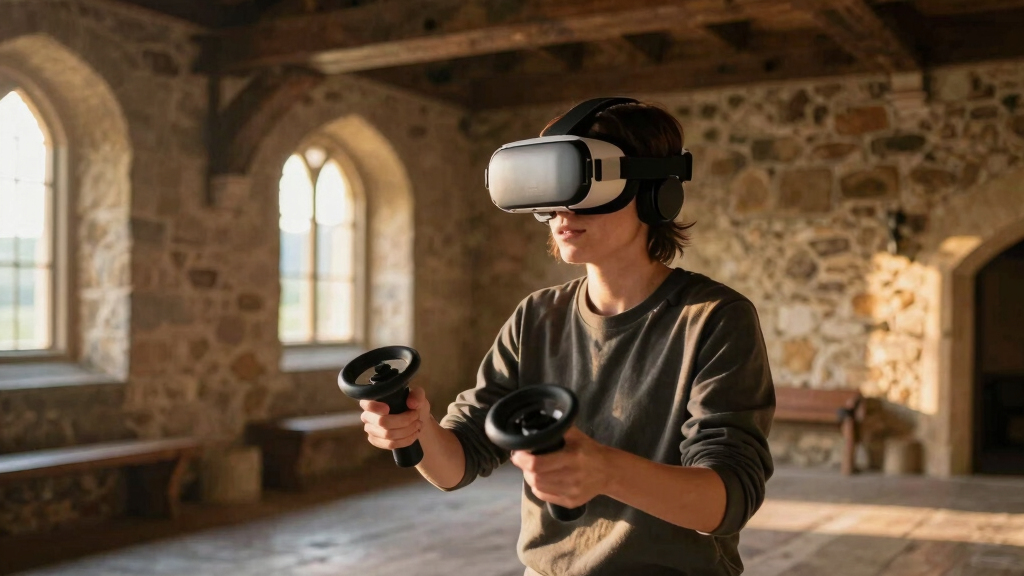
A developer has successfully converted a real castle into a detailed virtual reality experience, allowing users to explore its architecture and interiors digitally. This development highlights the potential of VR for immersive VR experiences for historical tourism and education, making it a noteworthy innovation for both tech enthusiasts and heritage preservation efforts.
The project involves creating a highly detailed VR recreation of an existing castle, with the aim of providing an authentic experience for users without physically visiting the site. For more on immersive VR setups, see our immersive VR experience guide. According to the developer, the VR environment includes accurate architectural details, interior furnishings, and surrounding landscapes, all reconstructed from extensive photographic and architectural data.
While the project is still in its testing phase, early demonstrations suggest that users can navigate the castle’s halls, chambers, and courtyards as if they were physically there. This kind of experience can be similar to the immersive VR experiences offered in specialized setups. The developer claims that this approach could revolutionize virtual tourism, enabling people worldwide to experience heritage sites remotely. It is not yet clear whether the project will be publicly available or integrated into existing VR platforms.
Potential Impact on Virtual Tourism and Heritage Preservation
This project underscores the growing role of virtual reality in cultural heritage. By allowing users to explore historic sites remotely, VR could reduce physical tourism’s environmental impact and make heritage accessible to those unable to visit in person. Additionally, it offers new avenues for digital preservation, ensuring that historic structures can be experienced even if they are damaged or inaccessible in real life.
However, questions remain about the authenticity of the experience, copyright issues, and the potential commercial use of such digital reconstructions. The development also raises ethical considerations regarding the commercialization of cultural heritage.
VR headset for immersive experiences
As an affiliate, we earn on qualifying purchases.
As an affiliate, we earn on qualifying purchases.
From Digital Reconstructions to Virtual Heritage Tours
Recent years have seen increasing interest in using VR for cultural and educational purposes, with several museums and heritage sites experimenting with virtual tours. This project builds on that trend by creating a full-scale, immersive VR environment of a real castle, rather than simple 2D or 3D models. The concept was shared on Reddit by a developer who described turning a physical castle into a VR experience, sparking widespread curiosity and discussion within the virtual reality community.
While detailed technical aspects have not been disclosed, the initiative follows ongoing advancements in photogrammetry, 3D modeling, and VR rendering, which now enable such realistic recreations. It remains unclear whether this is a standalone project or part of a larger effort to digitize heritage sites.
“Turning a real castle into a VR environment is a significant step toward immersive digital heritage experiences.”
— an anonymous researcher from r/virtualreality
Unconfirmed Details About Public Access and Technical Scope
It is not yet clear whether the VR reconstruction will be publicly available or how widely it will be distributed. Details about the technical process, such as the software used or the level of interactivity, remain undisclosed. Additionally, the project’s future funding, licensing, and potential commercialization are still uncertain.
Next Steps for Development and Public Demonstration
The developer plans to refine the VR environment based on user feedback and may host public demos or release the experience on popular VR platforms. Further technical details and potential partnerships with heritage organizations are expected to be announced in the coming months. Monitoring these developments will be key to understanding the project’s long-term impact.
Key Questions
Can I currently explore the castle in VR?
It is not yet confirmed if the VR experience is publicly accessible. The project is still in testing phases, and wider availability has not been announced.
What technology is used to create the VR castle?
Specific technical details have not been disclosed, but the project likely involves photogrammetry, 3D modeling, and VR rendering techniques.
Will this VR experience be available on all VR devices?
This has not been confirmed. Future availability may depend on the developer’s plans and platform compatibility.
Does this project raise concerns about cultural heritage rights?
Potential ethical and legal issues are being considered, especially regarding copyright and the commercialization of digital reconstructions.
Could this approach replace physical visits to heritage sites?
While VR can increase accessibility and preserve sites digitally, it is unlikely to fully replace the experience of visiting in person. It complements traditional tourism and preservation efforts.
Source: r/virtualreality
Halloween Picks
halloween
As an affiliate, we earn on qualifying purchases.