
TL;DR
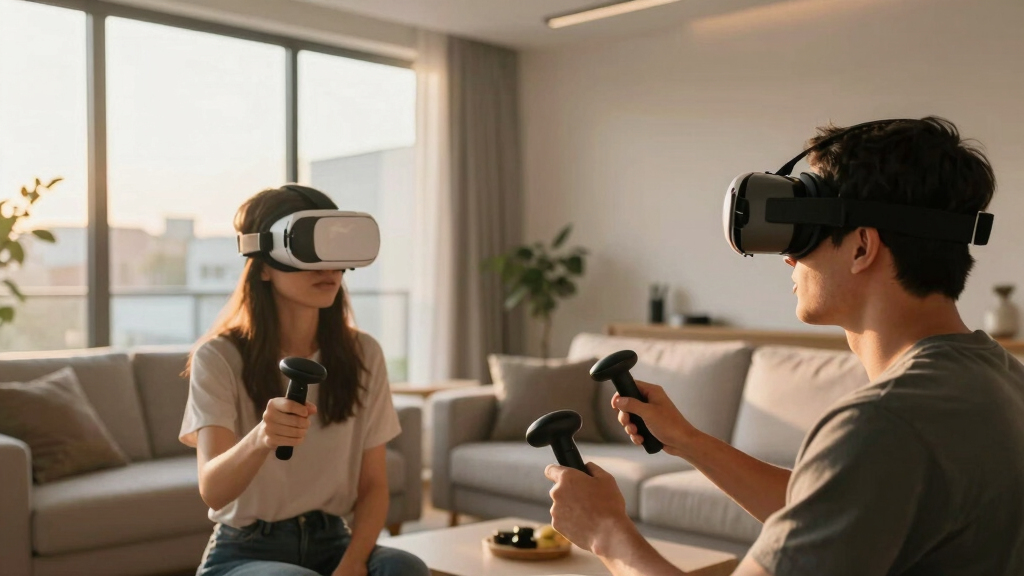
Two players occupy the same physical space with their own furniture while sharing a virtual environment. The setup is captured from a third headset, demonstrating a new multiplayer VR experience. Details are emerging on how this system works and its potential applications.
Two players are participating in a multiplayer VR experience within a shared physical room, each with their own furniture, captured from a third headset. This development highlights a new approach to multiplayer VR, allowing players to interact in the same real-world space while maintaining individual setups. The setup was showcased on r/OculusQuest, drawing attention to its innovative use of real-world environments combined with virtual gameplay.
The system involves two players occupying a single physical room, each with personalized furniture, while engaging in a shared virtual environment. The experience was filmed from a third headset that captures both players’ perspectives and the physical space, demonstrating how real-world objects and furniture can be integrated into multiplayer VR. The demonstration was shared on Reddit, sparking interest among VR enthusiasts and developers.
Details about the technical implementation remain limited, but the setup suggests advanced spatial tracking and synchronization to ensure each player’s physical furniture aligns with their virtual avatar. It is not yet clear whether this system uses custom hardware, software modifications, or a combination of both, nor how scalable or accessible this setup might be for broader consumer use.
Innovative Multiplayer VR with Real-World Furniture
This development matters because it demonstrates a new level of immersion and social interaction in VR, allowing players to share a physical space with personalized furniture while maintaining individual virtual experiences. It could influence future multiplayer VR designs, making shared physical environments more practical and personalized. For users, this means a more natural and engaging multiplayer experience that closely mimics real-world social interactions.
As an affiliate, we earn on qualifying purchases.
Recent years have seen significant progress in VR technology, including improved spatial tracking, haptic feedback, and multiplayer capabilities. Previous efforts focused on virtual avatars and synchronized environments, but integrating real-world furniture and shared physical space remains a challenge. This demonstration builds on ongoing innovations by exploring how personalized physical setups can coexist within shared virtual worlds.
The concept aligns with broader trends toward more realistic and social VR experiences, potentially paving the way for applications in gaming, remote collaboration, and social gatherings. However, such setups are typically complex and require specialized hardware, which limits immediate consumer adoption.
“This setup shows promising potential for more natural multiplayer interactions in VR by combining real-world objects with virtual environments.”
— an anonymous researcher
Technical Details and Scalability Still Unclear
It is not yet confirmed how the system precisely synchronizes the physical furniture with the virtual environment, or whether it relies on custom hardware or software solutions. The scalability of this approach for broader consumer use remains uncertain, as the setup appears complex and resource-intensive. Further technical details are expected from the developers or demonstrators in the coming weeks.
Further Demonstrations and Potential Consumer Applications
Next steps include more detailed technical disclosures, testing for scalability, and exploring how this setup can be simplified for wider adoption. Developers and VR companies may experiment with integrating similar features into commercial products, potentially enhancing multiplayer VR experiences with personalized physical environments. Monitoring updates from the creators or community feedback will clarify how this innovation evolves.
Key Questions
How does the system track the physical furniture?
The exact tracking method has not been disclosed, but it likely involves advanced spatial sensors or external tracking systems to align physical furniture with virtual representations.
Can this setup be used with existing VR headsets?
It is unclear whether current consumer VR headsets support this level of physical customization without additional hardware or modifications.
What are the potential applications of this technology?
This approach could enhance multiplayer gaming, remote social gatherings, or collaborative work by creating more natural and personalized shared physical and virtual spaces.
Is this technology available for consumers now?
No, this appears to be a demonstration or prototype; broader consumer availability is not yet confirmed.
Source: r/OculusQuest