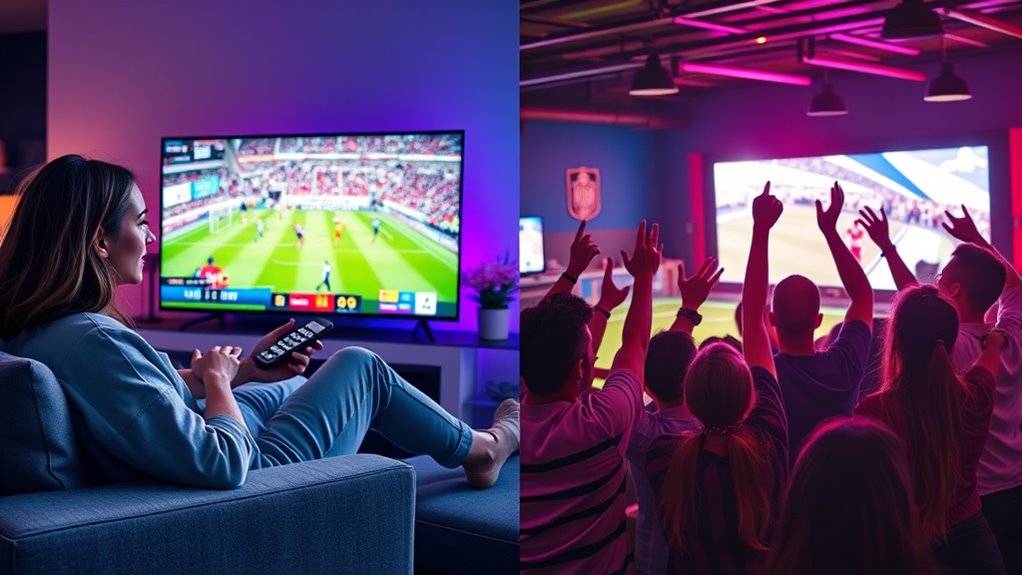

You’re shifting how you watch sports, balancing the convenience of streaming with the energy of attending live events. Streaming lets you watch anytime, from anywhere, with interactive features and on-demand options. Meanwhile, live sports in stadiums offer a vibrant atmosphere and real-time communal energy. As you explore these options, you’ll see how modern viewers like you are blending digital and in-person experiences, shaping the future of sports entertainment—discover more about how your choices are evolving next.
Key Takeaways
- Viewers prefer streaming for convenience, on-demand access, and flexibility across devices, reducing dependency on traditional broadcast schedules.
- Interactive features like live chats and real-time stats on streaming platforms foster deeper fan engagement and community building.
- Despite the appeal of in-person attendance, streaming offers a virtual experience that overcomes distance and cost barriers.
- Viewers now balance between live attendance for atmosphere and streaming for convenience, impacting how they prioritize sports viewing.
- The rise of digital platforms is reshaping the sports landscape by emphasizing accessibility, interactivity, and personalized viewing experiences.
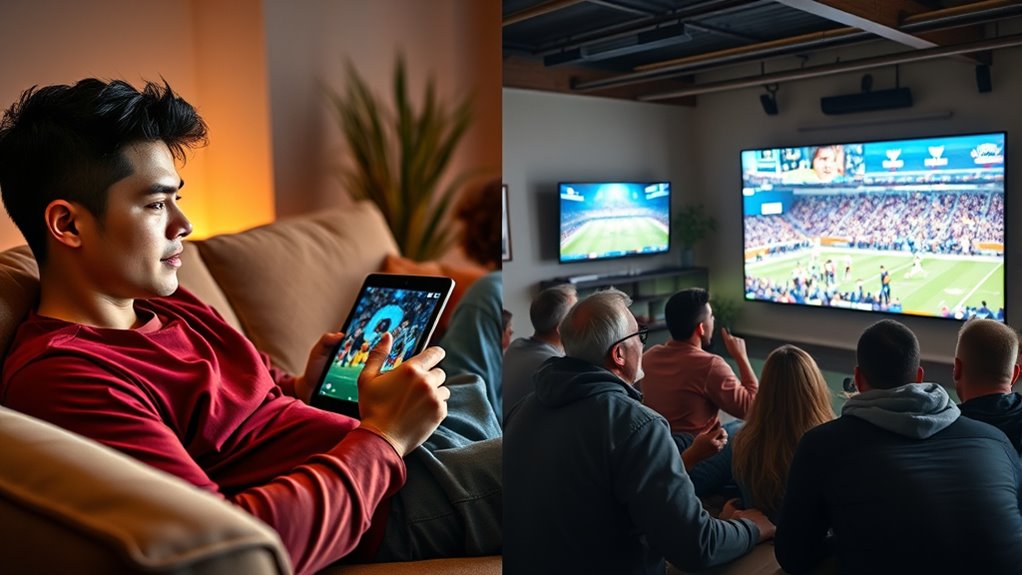
Have you ever wondered whether streaming or watching live sports is better for you? The way you consume sports has evolved dramatically in recent years, and understanding the differences can help you make a choice that enhances your experience. Streaming offers a new way to engage with sports, especially through virtual viewing, which allows you to watch games from the comfort of your home or anywhere with an internet connection. This method provides unparalleled convenience—you can tune in on your laptop, tablet, or even your smartphone, making it easy to catch a game on the go. Virtual viewing also means you’re not limited by traditional broadcast schedules; many streaming platforms offer on-demand access or multiple camera angles, giving you a more personalized experience.
Streaming offers convenient, personalized access to sports anytime, anywhere, with on-demand content and multiple camera angles.
However, one of the biggest shifts with streaming is how it impacts fan engagement. Live sports broadcasts traditionally fostered a communal atmosphere—fans gathered in stadiums or crowded bars, sharing the excitement physically. Streaming has changed that landscape, creating a new form of connection through digital platforms. Many streaming services now incorporate interactive features like live chats, real-time stats, and social media integration, which allow you to engage with other fans even if you’re watching alone. This virtual interaction can heighten your sense of community, making you feel part of a larger fanbase. It’s a different kind of engagement—more immediate and accessible—yet it still fuels your passion for the game.
On the other hand, watching live sports in person delivers an experience that virtual viewing can’t fully replicate. The energy of a packed stadium, the roar of the crowd, and the electric atmosphere heighten your emotional investment in the game. Being there in the moment can deepen your connection to your team and the sport itself. But attending live sports isn’t always feasible for everyone—costs, distance, and schedule conflicts can limit access. Streaming fills that gap, giving you a front-row seat without leaving your couch. It also offers flexibility to switch between multiple games or highlights, keeping you in the loop regardless of your schedule.
Ultimately, your choice depends on what you value most. If you crave the social aspect and the thrill of being surrounded by thousands of fans, live sports might be your preferred option. But if convenience, personalized viewing, and virtual fan engagement matter more, streaming could be the better fit. Both methods are reshaping your sports experience, giving you new ways to enjoy your favorite game. Whether you’re cheering in a stadium or engaging with fellow fans online, today’s options make sports more accessible and interactive than ever before. Additionally, time management apps can help you organize your viewing schedule efficiently so you don’t miss out on key moments.

Roku Streaming Stick HD — HD Streaming Device for TV with Roku Voice Remote, Free & Live TV
HD streaming made simple: With America’s TV streaming platform, exploring popular apps—plus tons of free movies, shows, and…
As an affiliate, we earn on qualifying purchases.
As an affiliate, we earn on qualifying purchases.
Frequently Asked Questions
How Does Streaming Impact Sports Advertising Revenue?
Streaming impacts sports advertising revenue by offering targeted ads based on viewer analytics, increasing ad effectiveness. You’ll see more personalized campaigns, which attract higher ad revenue because advertisers can reach specific audiences. Additionally, streaming platforms provide real-time data, letting you measure engagement and adjust strategies quickly. This dynamic approach helps sports organizations maximize ad revenue, making streaming a powerful tool for monetization in today’s digital age.
What Are the Legal Challenges of Streaming Live Sports?
You face legal challenges with streaming live sports, especially around broadcast rights and piracy concerns. Unauthorized streams infringe on rights holders’ licenses, risking legal action and revenue loss. You must navigate complex licensing agreements and guarantee your streams comply with copyright laws. Combating piracy is essential, as illegal streams undermine official broadcasters and can lead to hefty fines or shutdown orders, making it imperative to implement strong security measures and legal safeguards.
How Do Regional Restrictions Affect Streaming Options?
Ever wondered why some streams are unavailable in your area? Regional restrictions, caused by geo-blocking issues, limit your access based on your location. These restrictions create subscription barriers, forcing you to find alternative services or VPNs to watch your favorite sports. They’re designed to protect licensing agreements but can frustrate viewers like you seeking seamless access. How much longer will these borders keep you from enjoying live sports without hassle?
Are There Differences in Viewer Engagement Between Streaming and Live?
You’ll notice that viewer engagement differs between streaming and live sports. Streaming often promotes higher viewer interaction through comments, polls, and real-time chats, boosting engagement metrics. In contrast, live sports tend to generate more excitement and emotional involvement, which can lead to increased attention and sharing. Your participation influences overall engagement, so actively engaging with content enhances your experience, whether streaming or watching live.
How Is Technology Improving the Streaming Sports Experience?
Technology is markedly enhancing your streaming sports experience through enhanced streaming quality, so you get clearer, smoother visuals even during fast-paced action. Interactive viewing features, like multiple camera angles, real-time stats, and chat options, let you engage more deeply with the game. These innovations make watching sports on streaming platforms more immersive and personalized, ensuring you stay connected and entertained no matter where you are.

Comprehensive and Interactive Sports Streaming Platform
As an affiliate, we earn on qualifying purchases.
As an affiliate, we earn on qualifying purchases.
Conclusion
As you navigate the world of sports viewing, remember that your choices are transforming the game itself. Streaming offers unmatched convenience, while live sports create electrifying moments you’ll never forget. Your preferences shape the future of how we experience sports—you’re on the front lines of a revolution more dramatic than any playoff upset. So, embrace the shift, because in this changing landscape, your passion and choices are more powerful than ever. The future of sports is in your hands—don’t just watch, own it!
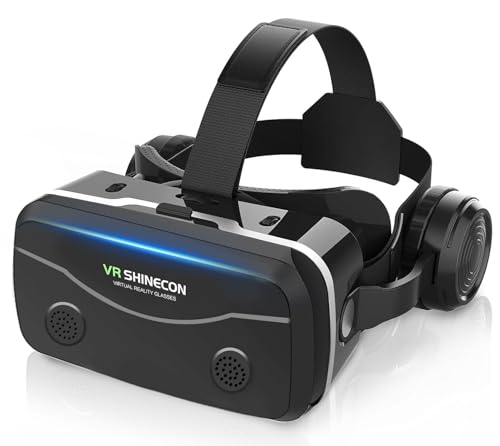
All-in-One Smartphone VR Headset | Built-in Hi-Fi Headphones, 120° Wide FOV, Aspherical Lenses | The Ultimate 3D Movie & Mobile Gaming Kit
【2026 New Popular Design】This VR headset is the latest version, offering significantly improved comfort and focus accuracy. The…
As an affiliate, we earn on qualifying purchases.
As an affiliate, we earn on qualifying purchases.

3D VR Headset, Virtual Reality Glasses Headset Helmets, Compatible with 5.0-7.0 inch with Controller, for Mobile Games & Movies(Black)
【Immersive 3D Movie Viewing】Gaming and watching movies in 3D works best when proper your eyes properly align with…
As an affiliate, we earn on qualifying purchases.
As an affiliate, we earn on qualifying purchases.