
TL;DR

Get the latest gadgets delivered free with Prime
- Fast, free delivery on millions of items
- Prime Video, Amazon Music and more included
- Member-only deals all year
Researchers are creating virtual reality ‘dance partners’ to help shy or inexperienced dancers gain confidence. This innovation aims to address social anxiety and improve dance skills through immersive practice. The project is in early development stages, with more testing needed. Learn more about digital innovation projects.
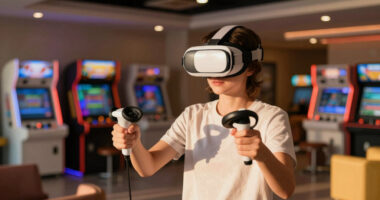
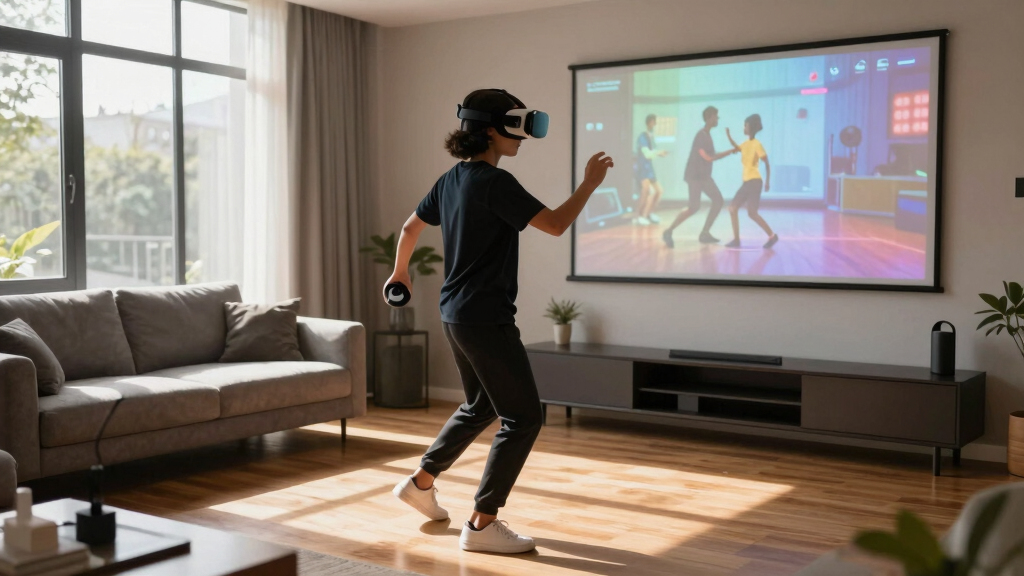
Researchers are developing virtual reality (VR) dance partners designed to help shy or inexperienced dancers build confidence and improve their skills. The project aims to address social anxiety related to dancing and provide a safe, immersive environment for practice. This development is in early stages, with prototypes currently being tested.
The initiative involves creating AI-powered virtual dance partners that can simulate real dance interactions within a VR environment. According to an anonymous researcher involved in the project, the goal is to provide users with a non-judgmental space to learn and practice dance moves, gradually increasing their comfort level on the dance floor.
Initial prototypes feature customizable avatars that respond to user movements and provide real-time feedback. The system aims to adapt to different skill levels and help users develop rhythm, coordination, and confidence. The project is still in the testing phase, with developers gathering user feedback to refine the experience.
This innovation could significantly benefit individuals with social anxiety or those new to dancing by providing a safe, controlled environment to practice. It also has implications for the broader use of VR in social skill development and therapy, potentially transforming how people overcome personal barriers in social settings.
As an affiliate, we earn on qualifying purchases.
Virtual reality has increasingly been used for training, therapy, and social interaction simulation. Previous efforts include VR-based public speaking training and social skills therapy for autism. The development of VR dance partners builds on this trend, aiming to make social activities like dancing more accessible for those hesitant or shy.
While VR dance training tools exist, the integration of AI-driven partners that respond dynamically to users is a new frontier. The project reflects ongoing innovation in combining AI and VR to address personal and social development challenges.
“Our goal is to create a non-judgmental space where shy individuals can practice dance and gradually gain confidence.”
— an anonymous researcher
Development Stage and User Acceptance Uncertain
It is not yet clear how effective the VR dance partners will be in real-world confidence building or how users will respond to the technology. The project remains in early prototype testing, and user feedback is still being collected to assess usability and impact.
Upcoming Testing Phases and User Trials
Developers plan to conduct broader user testing in the coming months to refine the virtual dance partner system. Future milestones include integrating more sophisticated AI responses, expanding customization options, and exploring potential therapeutic applications. Further research will determine the system’s effectiveness in helping shy individuals improve their dance skills and confidence.
Key Questions
How does the virtual reality dance partner work?
The system uses AI-driven avatars within a VR environment that respond to user movements, provide feedback, and simulate dance interactions to help users practice and improve their skills.
Who is developing this VR dance partner technology?
The project is being developed by researchers working on integrating AI and VR for social skill development, though specific company or institutional names have not been disclosed.
Can this technology help people with severe social anxiety?
While early prototypes aim to assist shy or inexperienced dancers, its effectiveness for individuals with severe social anxiety remains to be tested through further research and trials.
When will the system be available for public use?
The technology is still in prototype testing; a commercial release date has not been announced. Further development and validation are needed before it becomes widely accessible.
Are there similar VR tools for other social activities?
Yes, VR has been used for training in public speaking, social skills, and therapy, but AI-driven virtual dance partners represent a new application within this space.
Source: rss
Fall Picks
fall essentials
As an affiliate, we earn on qualifying purchases.