
NFTs are transforming your digital art experience by providing verified ownership and provenance through blockchain technology. This shift secures your rights, prevents forgery, and allows direct transactions with artists worldwide. As digital assets gain real market value, you’ll notice a change in how art is bought, sold, and displayed. The secure environment and high-quality presentation options make digital art more legitimate and engaging. If you keep exploring, you’ll uncover how this revolution continues to reshape the entertainment world.
Key Takeaways
- NFTs authenticate and establish ownership of digital art, transforming how digital assets are bought, sold, and valued.
- Blockchain technology ensures secure, transparent transactions, reducing fraud and increasing trust in digital art markets.
- Artists can sell directly to global audiences and earn royalties through smart contracts, disrupting traditional gallery systems.
- Digital art gains real market value as verifiable, unique assets, shifting perceptions from file sharing to collectible investments.
- Advanced display technology enhances visual quality, allowing digital art to be showcased vividly and authentically in the entertainment landscape.
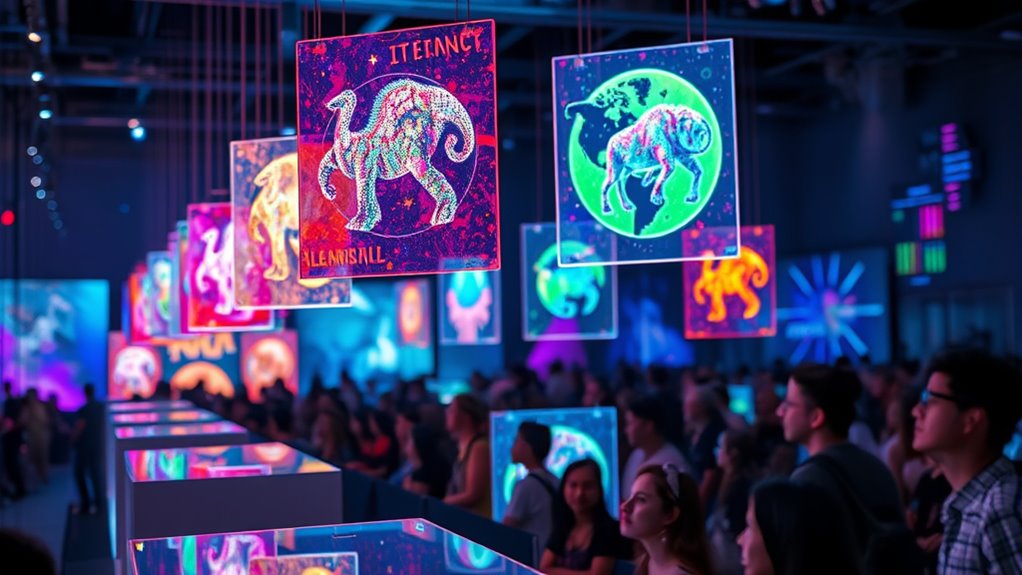
Digital art has transformed dramatically with the rise of NFTs, or non-fungible tokens. This technology has revolutionized how you buy, sell, and think about digital creations, making it possible to establish clear ownership and provenance in a space that was once easily copied and shared without recognition or compensation. When you purchase an NFT, you’re not just buying an image or animation; you’re acquiring a unique digital asset verified through blockchain verification, which confirms its authenticity and scarcity. This process ensures that each piece is one-of-a-kind, and you can confidently prove your digital ownership without relying on third-party platforms or traditional methods. Blockchain verification acts as a digital ledger that records every transaction and transfer associated with your NFT, creating an immutable record that cannot be tampered with or duplicated. This level of transparency and security gives you peace of mind, knowing that your ownership rights are stored securely on a decentralized network.
Because of this, artists and collectors are now empowered in ways that were not possible before. As a collector, you can confidently buy and trade digital art, knowing that the blockchain guarantees your ownership rights are legitimate and exclusive. This clarity helps reduce the fears of forgery and fraud, which have long plagued the digital art world. For artists, NFTs open up new revenue streams by allowing you to sell your work directly to a global audience, bypassing traditional galleries or intermediaries. When your art is minted as an NFT, it’s permanently linked to your blockchain address, establishing your authorship and enabling you to receive royalties automatically through smart contracts whenever your work is resold. This seamless process ensures that your digital ownership is not only secure but also continuously rewarding.
Moreover, the integration of blockchain verification with digital ownership transforms how digital art is perceived and valued. It shifts the focus from mere file sharing to the recognition of unique, collectible assets that hold real market value. You now have the means to verify the authenticity of a piece instantly, whether you’re buying, selling, or showcasing your collection. This technology fosters a new level of trust and legitimacy within the digital art community, encouraging more creators and collectors to participate. As a result, the entertainment landscape is evolving, with digital art gaining recognition as a legitimate, valuable asset class. In this new environment, your digital ownership is protected, your transactions are transparent, and the boundaries of what digital art can achieve are expanding rapidly. Color accuracy and contrast ratio play crucial roles in how digital art is displayed, ensuring that visual details are vivid and true to the original work.
Frequently Asked Questions
How Do NFT Royalties Benefit Digital Artists Long-Term?
NFT royalties benefit your long-term income by ensuring a steady stream through royalty structures. Every time your digital art gets resold, you automatically earn a percentage, creating ongoing revenue. This setup rewards your creativity beyond the initial sale, giving you financial stability over time. You no longer rely solely on one-time sales; instead, your work keeps generating income, making NFTs a powerful tool for digital artists seeking long-term financial growth.
Can NFTS Guarantee Art Authenticity and Provenance?
NFTs can help guarantee art authenticity and provenance through blockchain verification. When you create or buy digital art, a blockchain-based digital signature records its origin, making it tamper-proof. This verification process ensures the artwork’s authenticity and clear provenance, giving you confidence in its legitimacy. While not foolproof, NFTs considerably reduce the risk of forgery and help maintain the value and trust in digital art.
What Are the Environmental Impacts of NFT Creation?
Creating NFTs markedly impacts the environment due to high energy consumption and a large carbon footprint. When you mint or trade NFTs, you’re using blockchain networks that require substantial electricity, often from fossil fuels. This process contributes to greenhouse gas emissions and climate change. To reduce your environmental impact, consider platforms that use energy-efficient algorithms or offset your carbon footprint through sustainable initiatives.
How Do NFT Marketplaces Regulate Copyright Issues?
You might think NFT marketplaces are a copyright enforcement powerhouse, but they face huge legal challenges in regulating issues. They implement systems like digital rights management, takedown notices, and artist verification to combat copyright infringement. While these measures help, enforcement isn’t perfect. Marketplaces continually adapt to evolving laws, aiming to protect creators’ rights and prevent unauthorized use, making them essential players in safeguarding digital art and content.
Are NFTS Accessible for Emerging Artists or Only Established Creators?
You can access NFTs as an emerging artist, opening up new opportunities to showcase your work. While some platforms favor established creators, many are designed to reduce creative barriers, making it easier for newcomers to enter the market. This accessibility allows you to connect directly with collectors, build your reputation, and explore innovative ways to monetize your art without relying on traditional galleries or intermediaries.
Conclusion
As you explore the vibrant world of NFTs and digital art, imagine stepping into a gallery where every pixel pulses with possibility, and each creation is a gateway to new experiences. This revolution transforms how you create, collect, and connect with art, turning the digital canvas into a living, breathing landscape. Embrace the change, and let yourself be swept away by the endless horizon of innovation—where your next masterpiece could reshape the entertainment universe.