
Choosing between laser and lamp projectors involves more than just upfront costs. Laser projectors offer longer-lasting brightness, lower maintenance, and better performance in bright environments, but they come with a higher initial price. Lamp projectors are cheaper initially but require regular bulb replacements and have shorter lifespans. Environmental impact, long-term expenses, and reliability are key factors to contemplate. Continue exploring to uncover the trade-offs that can help you make the best choice.
Key Takeaways
- Laser projectors have longer lifespans and lower maintenance costs, offsetting their higher initial purchase price.
- Lamp projectors are more vulnerable to ambient light, requiring darker environments for optimal image quality.
- Laser projectors produce consistent brightness and color accuracy over their lifespan, unlike lamp projectors whose output diminishes over time.
- Environmental impact favors laser projectors due to reduced waste and hazardous materials, despite higher manufacturing costs.
- The true long-term value depends on usage frequency, environmental conditions, and maintenance priorities, often overlooked in initial cost comparisons.

Optoma HZ41 4600-Lumen Full HD Laser DLP Home Theater and Gaming Laser Projector – Black
- Brightness: 4600 ISO Lumens
- Throw Ratio: 1.48 to 1.62:1
- Refresh Rate: 120 Hz
As an affiliate, we earn on qualifying purchases.
As an affiliate, we earn on qualifying purchases.
Which Projector Type Is Right for You?
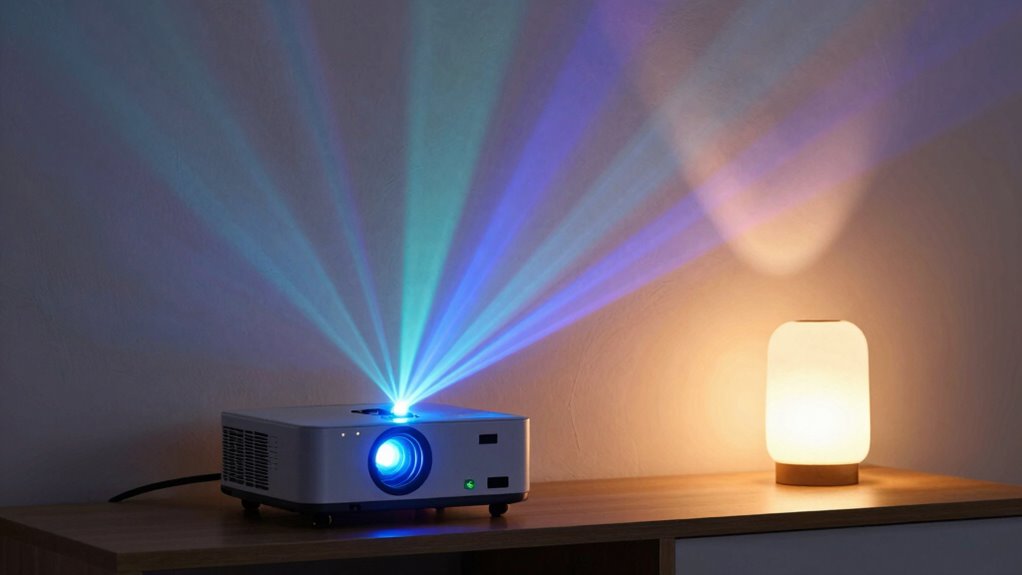
Deciding between a laser projector and a lamp projector depends on your specific needs and preferences. If you prioritize advanced projection technology, laser projectors offer longer-lasting brightness and minimal maintenance. They typically provide sharper images and better color accuracy, especially in bright environments. Laser projection technology also guarantees consistent image quality over time, making them ideal for professional presentations or home theaters. On the other hand, lamp projectors usually come at a lower upfront cost and may suit casual users who don’t need the highest color precision or brightness. Consider how much importance you place on color accuracy and image clarity. If you want vibrant, true-to-life colors and a more durable solution, a laser projector might be the right choice. Otherwise, a lamp projector could meet your basic needs. Additionally, contrast ratio significantly impacts image quality and viewing experience, which is an important factor to consider when choosing between projector types. Furthermore, understanding the technology differences can help you evaluate long-term performance and maintenance needs more effectively. Recognizing the initial investment involved can also influence your decision, especially when comparing upfront costs versus long-term savings. It’s also beneficial to review energy efficiency to understand ongoing operational costs over the lifespan of the projector. Moreover, considering the environmental impact of each projector type can help make a more sustainable choice.
Key Differences Between Laser and Lamp Projectors
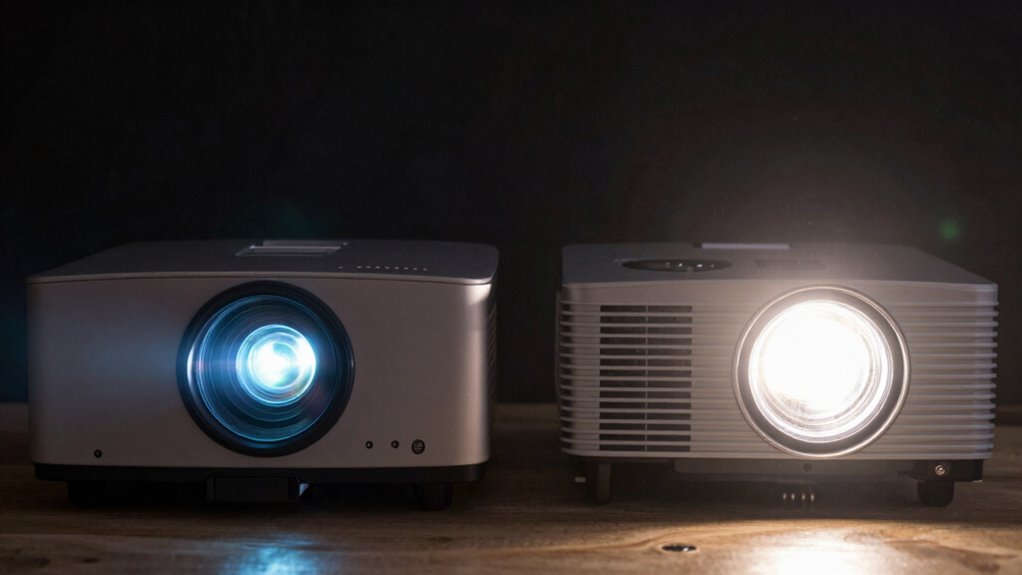
Laser and lamp projectors differ markedly in their technology, affecting performance, maintenance, and cost. Laser projectors typically offer a longer projection distance, allowing you to project larger images from greater distances without sacrificing quality. They also perform better in ambient light conditions, maintaining brightness and clarity even in well-lit rooms. In contrast, lamp projectors often struggle with ambient light, requiring darker environments to achieve optimal image quality. Maintenance needs vary; laser projectors usually have longer-lasting light sources with minimal upkeep, while lamp projectors need regular bulb replacements, adding to ongoing costs. Additionally, light source longevity plays a crucial role in overall operating expenses. These key differences influence your choice depending on your environment and usage, with laser projectors providing more flexibility and durability for diverse settings. Moreover, cost considerations are vital, as initial investment and long-term expenses can differ significantly between the two types.
How Much Do Laser and Lamp Projectors Cost Initially and Over Time?
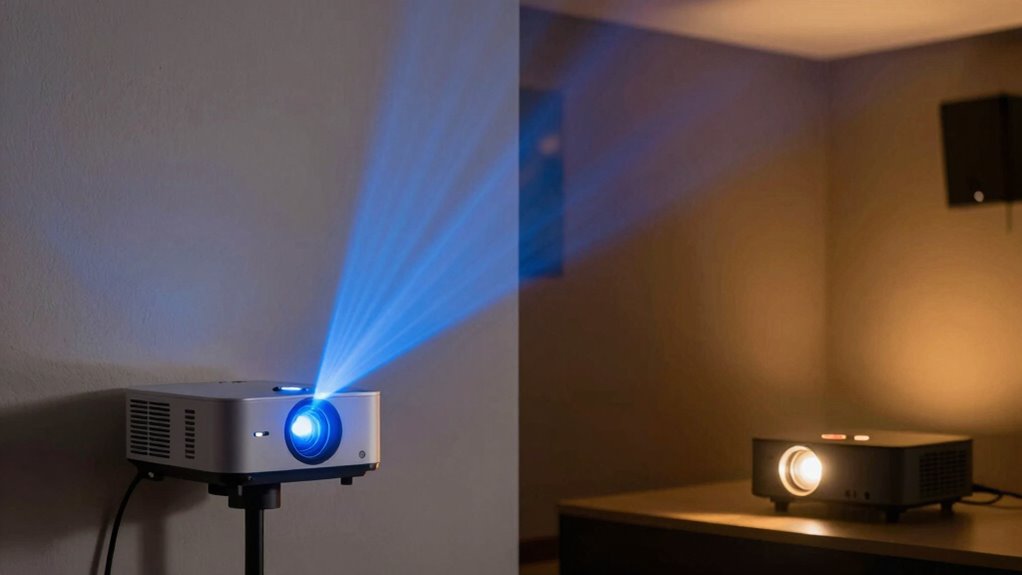
While laser projectors often have a higher upfront cost compared to lamp models, their longer lifespan and lower maintenance expenses can make them more economical over time. The initial investment for laser projectors tends to be higher, but you save on replacement lamps and upkeep. Over the long term, laser projectors generally cost less due to reduced maintenance and longer-lasting light sources. Here’s a quick comparison:
| Aspect | Laser Projectors | Lamp Projectors | Cost Implication |
|---|---|---|---|
| Initial Investment | Higher | Lower | Upfront cost |
| Maintenance | Lower | Higher | Long-term savings |
| Lamp Replacement | Not required | Frequent | Cost and downtime |
| Lifespan | 20,000+ hours | 4,000–10,000 hours | Better long-term value |
What Is the Environmental Impact of Laser vs. Lamp Projectors?
You might wonder how laser and lamp projectors compare in their environmental footprints. Laser projectors typically use less energy but may pose waste management issues due to their longer lifespans and unique components. Considering their overall lifecycle helps you understand which option is more eco-friendly. Additionally, the production and disposal of high-efficiency solar panels can have environmental impacts that are worth considering in the context of sustainable technology choices. It is also important to examine the energy consumption patterns throughout the device’s lifespan to make a comprehensive environmental assessment. Moreover, understanding the waste management challenges associated with advanced projector technologies can further inform eco-conscious decisions. Evaluating product lifespan and maintenance needs can provide further insight into their environmental sustainability. Recognizing the importance of recycling programs for electronic waste can also reduce environmental harm.
Energy Consumption Differences
When comparing the energy consumption of laser and lamp projectors, it becomes clear that laser projectors generally use less power over their lifespan, making them more environmentally friendly. Their superior power efficiency translates into significant energy savings, reducing overall electricity use. Laser projectors maintain consistent brightness with less wattage, unlike traditional lamp models that require frequent bulb replacements and higher power draw to compensate for dimming over time. This increased efficiency not only cuts down on energy costs but also lessens your carbon footprint. By choosing a laser projector, you’re making a more sustainable choice that minimizes energy waste while delivering high-quality visuals. Additionally, water-cooled systems can further improve energy efficiency by reducing the need for cooling and extending device lifespan. Over time, the reduced energy consumption makes laser projectors a smarter, eco-friendlier investment.
Waste Management Challenges
Laser projectors often pose different waste management challenges compared to traditional lamp models. Their components, like laser diodes and electronic circuits, require proper handling to avoid environmental harm. You need to consider:
- The complexity of e waste recycling due to specialized parts.
- Strict disposal regulations for hazardous materials in laser systems.
- Potential environmental impacts if components aren’t disposed of correctly.
Unlike lamp projectors, which mainly involve replacing bulbs, laser projectors produce waste that’s harder to recycle and manage. Improper disposal can release toxic substances and hinder waste processing efforts. Consequently, understanding local e waste recycling options and adhering to disposal regulations becomes vital to minimize environmental impact. Proper waste management ensures you reduce harmful emissions and support sustainability efforts.
Lifecycle Environmental Impact
The environmental impact of laser versus lamp projectors extends beyond waste management and begins with their entire lifecycle, from manufacturing to disposal. Laser projectors generally have a lower manufacturing impact because they use fewer materials and energy during production. However, recycling challenges arise due to the complex combination of electronic components and hazardous materials, making disposal more difficult. Lamp projectors, on the other hand, rely on mercury-based lamps that pose significant recycling challenges and environmental risks if not properly handled. Over their lifespan, laser projectors tend to generate less waste and consume less energy, reducing their overall environmental footprint. Additionally, recycling programs tailored to each technology’s unique components are essential to properly manage end-of-life disposal.
How Reliable Are Laser and Lamp Projectors? Maintenance and Lifespan

Laser and lamp projectors differ markedly in reliability, maintenance needs, and lifespan, which can impact your overall viewing experience. Laser projectors generally boast longer projection lifespans, often exceeding 20,000 hours, reducing the need for frequent replacements. In contrast, lamp projectors typically require lamp replacements every 2,000 to 4,000 hours, increasing maintenance frequency.
Laser projectors provide longer lifespan and lower maintenance compared to lamp projectors.
Consider these key points:
- Laser projectors offer greater reliability with fewer component failures over time.
- Maintenance is less intensive, saving you time and effort.
- The longer projection lifespan of laser models means fewer replacements and lower long-term costs.
Your choice influences not just image quality but also ongoing upkeep and durability, shaping your overall satisfaction.
How Do Brightness and Resolution Compare in Laser and Lamp Projectors?

When comparing brightness and resolution, it’s clear that both factors considerably affect your viewing experience, but they can vary between laser and lamp projectors. Laser projectors typically offer higher brightness levels, making them better for large or well-lit rooms. Lamp projectors may struggle with brightness comparison, especially over time, as their lumen output can decrease. Regarding resolution differences, both types can deliver high-definition images, but laser projectors often support higher resolutions more consistently. Here’s a quick comparison:
| Feature | Laser Projectors | Lamp Projectors |
|---|---|---|
| Brightness | Usually brighter, ideal for large spaces | Generally lower brightness, suited for smaller rooms |
| Resolution | Often support higher resolutions | Can vary, but often at lower resolutions |
| Consistency | Maintains brightness longer | Brightness diminishes with lamp age |
| Cost | Higher upfront, but longer-lasting | Lower initial cost, higher maintenance |
Which Projector Offers the Best Value for Different Settings?
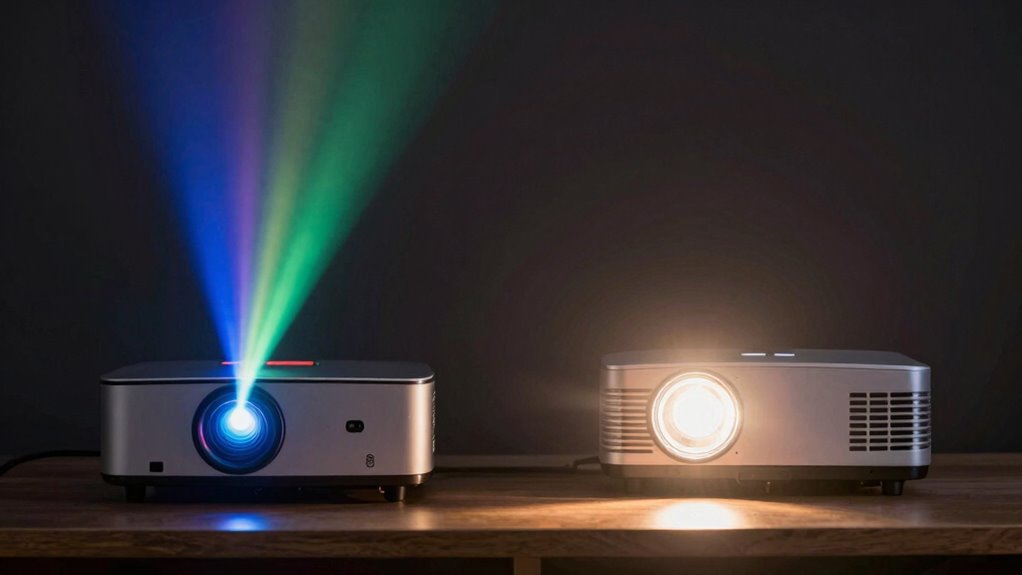
When choosing between laser and lamp projectors, you need to take into account cost, image quality, and maintenance. Different settings may favor one type over the other based on these factors. Additionally, understanding the seasonal variations in ambient light can influence your choice, especially for applications like astrophotography where optimal visibility is essential. Recognizing how ambient lighting conditions fluctuate throughout the year can help you select the projector best suited for your environment. Considering energy consumption can also impact long-term operational costs and sustainability efforts. Being aware of cabling and installation challenges can further ensure a smooth setup and reliable performance over time. Moreover, factoring in technological advancements can help you anticipate future improvements and maximize your investment.
Cost Effectiveness
Choosing the right projector depends heavily on your budget and intended use, as laser and lamp projectors differ markedly in upfront costs and ongoing expenses. If you’re prioritizing cost effectiveness, consider these factors:
- Initial Investment: Laser projectors typically cost more upfront but may save money long-term. Long-term savings can outweigh the initial higher purchase price for many users. Additionally, the higher initial cost often reflects advanced technology features that contribute to better performance and durability.
- Maintenance Costs: Lamp projectors require regular bulb replacements, adding to ongoing expenses.
- Longevity and Savings: Laser projectors often last longer without replacements, offering better long-term savings.
- Additionally, energy efficiency plays a role in overall operating costs, as laser projectors tend to consume less power over time. Moreover, the initial purchase price should be evaluated against potential long-term savings to determine overall value.
If your budget constraints are tight, a lamp projector might seem appealing initially. However, for those seeking long-term savings and lower maintenance, laser projectors tend to be more cost-effective over time, providing better value despite higher initial costs.
Image Quality Variance
While cost is a key consideration, image quality can markedly influence which projector offers the best value for different settings. Laser projectors typically excel in color accuracy, delivering vibrant, consistent hues across the entire screen, making them ideal for detailed visuals or color-critical applications. They also offer superior resolution consistency, maintaining clarity even at higher brightness levels. Lamp projectors, on the other hand, may experience fluctuations in color accuracy over time as the bulb ages, potentially diminishing image fidelity. Resolution performance can vary more with lamp projectors, especially if the bulb isn’t replaced regularly. For settings demanding sharp detail and true-to-life colors—like professional presentations or home theaters—laser projectors often provide better overall image quality, ensuring your visuals stay crisp and accurate across different environments. Additionally, image quality stability tends to favor laser technology, which can be crucial for long-term use. Maintaining consistent visual performance over time is essential for users who require reliable image fidelity without frequent adjustments. Moreover, long-term reliability can significantly impact overall value, especially in environments where consistent image quality is critical. An understanding of performance consistency can help users choose a projector that meets their needs over its lifespan.
Maintenance Requirements
Maintaining a projector is essential for ensuring ideal performance and longevity, and the ease of upkeep can considerably influence which model offers better value for your needs. Laser projectors generally demand less maintenance, but you should still consider these factors:
- Lamp lifespan – Lamp-based projectors require periodic lamp replacements, often after 2,000–4,000 hours, increasing ongoing costs.
- Filter maintenance – Both types need filter cleaning or replacement to prevent overheating and dust buildup, impacting image quality.
- Ease of service – Laser projectors usually need fewer adjustments, saving you time and effort over their lifespan.
Ultimately, laser projectors excel in low-maintenance requirements, making them more cost-effective in the long run for busy or high-use environments.
Common Myths About Laser and Lamp Projectors Debunked?
Many common beliefs about laser and lamp projectors simply aren’t true, leading to confusion for consumers. These projection myths often stem from outdated info or tech misconceptions. For example, some think laser projectors are always more expensive and less reliable, but that’s not the case. Others believe lamp projectors can’t produce high-quality images or last long, which isn’t entirely accurate anymore. Many assume laser projectors require complex maintenance, yet they often need less upkeep than traditional lamps. Clearing up these misconceptions helps you make better decisions. Recognizing that not all myths hold weight allows you to focus on the features that truly matter for your needs, avoiding unnecessary worries about durability, cost, or image quality based on false assumptions.
Final Tips: Choosing the Best Projector for Your Needs

Choosing the right projector ultimately depends on your specific needs and environment. To make an informed decision, consider these key factors:
- Determine if you require precise projection calibration for sharp images, especially in professional settings.
- Evaluate whether portability matters, favoring portable options if you need mobility or space-saving solutions.
- Balance long-term costs, such as maintenance and bulb replacements, against initial investment.
Laser projectors often excel in projection calibration and durability, while lamp projectors may be better for budget-conscious users. Think about where and how you’ll use the projector—indoor or outdoor, stationary or portable. This helps you select a model aligned with your needs, whether for home entertainment or business presentations. Making these considerations ensures you choose a projector that offers exemplary performance and value.
Frequently Asked Questions
How Do Laser and Lamp Projectors Handle Long-Term Usage?
You’ll find laser projectors typically have a longer projector lifespan, often lasting up to 20,000 hours or more, which means fewer replacements. Lamp projectors, however, usually need bulb replacements every 2,000 to 4,000 hours, increasing long-term replacement costs. Over time, laser projectors tend to be more cost-effective due to their durability, while lamp projectors might incur higher maintenance expenses, especially with frequent usage.
Can Laser Projectors Operate in Extreme Temperatures?
Sure, laser projectors can handle extreme temperatures, but don’t expect them to turn into thermal superheroes overnight. While they boast impressive thermal stability and environmental resilience, harsh conditions might still challenge their performance. If you’re planning to use one in a desert or Arctic tundra, just remember: even the toughest laser projector appreciates some climate moderation. They’re resilient, but not invincible—think of them as the tough guy with a soft spot for climate control.
What Are the Safety Concerns With Laser Projectors?
You should be aware of laser safety when using laser projectors, as direct eye exposure can cause damage. Always avoid looking directly into the laser beam and keep the projector out of reach of children. Using eye protection, like safety glasses, is recommended if you’re handling or maintaining the device. Following manufacturer guidelines guarantees safe operation and minimizes risks associated with laser exposure.
How Does Color Accuracy Differ Between Laser and Lamp Projectors?
You’ll notice laser projectors often offer a wider color gamut, resulting in richer, more vibrant colors, compared to lamp projectors. This is because laser projectors maintain consistent color calibration over time, ensuring accurate color reproduction. Lamp projectors may experience color shifts as the lamp ages, reducing color accuracy. So, if precise color representation matters, laser projectors tend to deliver superior color fidelity through better color calibration and a broader color gamut.
Are There Specific Maintenance Requirements for Laser Projectors?
You’ll find laser projectors are pretty low-maintenance, but they do have specific requirements. Typically, you’ll need to keep the lens clean and monitor the laser lifespan to guarantee peak performance. Maintenance frequency is less than lamp projectors, but it’s wise to check the cooling system periodically. Think of it as tending a garden—you keep an eye on things, and your projector will perform like a champ for years.
Conclusion
Ultimately, choosing between laser and lamp projectors depends on your priorities. Weigh the worth of wallet-friendly costs against environmental effects, reliability, and brightness. Don’t disregard the details—deliberate on durability, design, and demands. By balancing benefits and barriers, you’ll find the perfect projector to perfectly fit your space and style. Make a mindful, informed decision, and march forward with confidence, knowing you’ve matched your needs with the right, reliable projector.