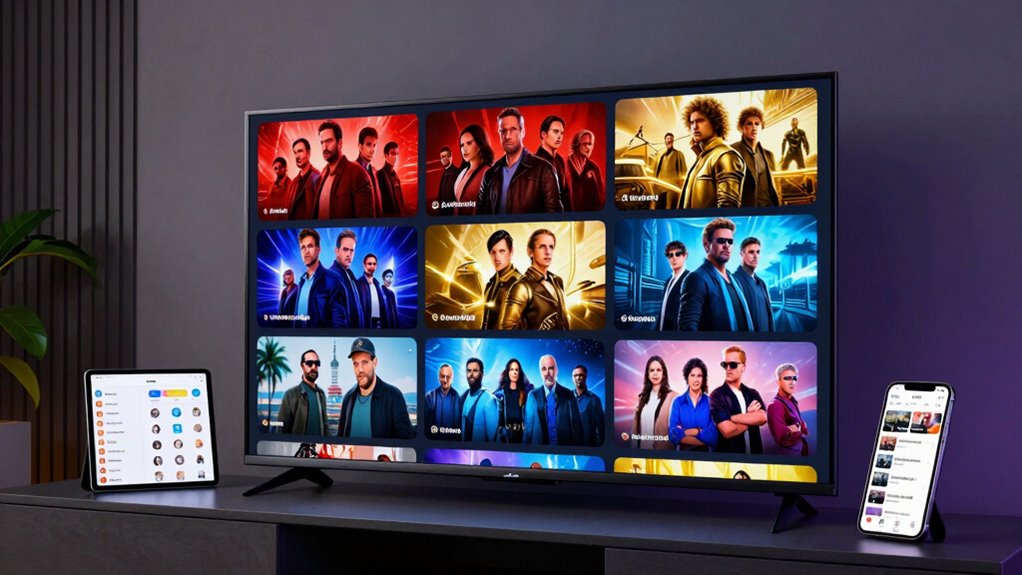

Algorithms analyze your viewing habits, search history, and even the time of day to personalize your recommendations. They suggest shows or movies that match your interests, creating a feeling of understanding your tastes. However, this can lead to filter bubbles, limiting your exposure to diverse genres and viewpoints. While they keep you engaged longer, being aware of how these systems work helps you make more mindful choices. If you keep exploring, you’ll discover ways to expand your viewing horizons.

Get the latest gadgets delivered free with Prime
- Fast, free delivery on millions of items
- Prime Video, Amazon Music and more included
- Member-only deals all year
Key Takeaways
- Streaming algorithms analyze viewing data to personalize recommendations based on user preferences and habits.
- They tend to reinforce existing interests, potentially creating filter bubbles and limiting diversity.
- Personalized suggestions increase engagement but may lead to a narrow viewing cycle.
- Awareness of algorithm influence enables users to explore new genres and diversify content choices.
- Designing algorithms with content diversity in mind encourages broader exposure and balanced recommendations.

Have you ever wondered how streaming platforms seem to know exactly what you want to watch next? It’s all thanks to complex algorithms that analyze your viewing habits and preferences. These algorithms use your past choices, search history, and even the time of day you watch to tailor recommendations specifically for you. These personalization effects make it feel like the platform understands your tastes perfectly, often suggesting shows or movies that align with your interests. But while it’s convenient, it also raises some concerns, especially about the filter bubble risks.
Streaming algorithms analyze your habits to personalize suggestions, but they can create filter bubbles and limit content diversity.
When algorithms personalize your feed, they tend to reinforce your existing preferences. If you watch a lot of action movies, you’ll likely get more action film suggestions, and fewer recommendations for other genres. This creates a kind of echo chamber, where your viewing choices become increasingly narrow. Over time, you’re less exposed to diverse content, which can limit your perspective and reduce your chances of discovering new interests. This is the core of filter bubble risks: you might miss out on different viewpoints or genres because the system keeps feeding you what it thinks you want to see.
However, these algorithms are designed to keep you engaged longer. The more tailored the recommendations, the more likely you are to keep watching. This can boost your satisfaction in the short term, but it might also trap you in a cycle where your content options become increasingly limited. You might find yourself stuck in a loop of similar shows or genres, missing out on the broader variety available. The platforms benefit from this, as prolonged engagement translates to more ad impressions or subscription retention, but it can also diminish your overall viewing experience if you’re not aware of the underlying effects.
Despite the convenience, it’s important to recognize how these algorithms shape your viewing choices and the potential risks involved. Regularly exploring new genres or manually searching for content outside your usual preferences can help break the filter bubble. Being aware of personalization effects allows you to take control of your viewing habits rather than passively following the recommendations. Understanding the content filtering mechanisms behind these algorithms gives you the power to enjoy a diverse range of content while still benefiting from personalized suggestions. Additionally, algorithm design plays a crucial role in shaping the content you’re exposed to, emphasizing the importance of understanding how these systems operate. Recognizing how algorithmic personalization influences your entertainment choices can help you make more mindful viewing decisions. Furthermore, increasing awareness about content diversity can encourage platforms to develop more balanced algorithms that promote a wider array of content options.
Products Worth Considering

Logitech MX Master 4 Ergonomic Wireless Mouse with Haptic Feedback, Graphite

Bose SoundLink Flex Bluetooth Speaker (2nd Gen), Black

Anker SOLIX S2000 Portable Power Station, 2,010Wh, 1,500W
As an affiliate, we earn on qualifying purchases.
Frequently Asked Questions
How Do Algorithms Personalize Content for Individual Users?
Algorithms personalize content for you by analyzing your viewing history, likes, and interactions to predict what you’ll enjoy next. They focus on maximizing user engagement, so they recommend videos similar to your past preferences while also introducing diverse content to keep you interested. This balance between familiarity and content diversification keeps your experience fresh and engaging, encouraging you to spend more time on the platform and discover new creators effortlessly.
Can Algorithms Create Filter Bubbles or Limit Diversity?
Did you know that nearly 60% of users are trapped in echo chambers? Algorithms can create filter bubbles, limiting your exposure to diverse perspectives and fostering echo chambers. This often leads to diversity suppression, where your feed mainly shows similar viewpoints. Consequently, your understanding narrows, and critical thinking decreases. You might not realize it, but these algorithms subtly shape your worldview, emphasizing familiar content and restricting your access to different ideas.
What Data Do Algorithms Use to Recommend Videos?
Algorithms use your viewing history, search queries, and engagement metrics like likes, shares, and comments to recommend videos. They analyze your preferences to improve content diversity and keep you engaged. By tracking what you watch and interact with, the system predicts what you might enjoy next. This process aims to maximize user engagement but can sometimes limit content diversity, creating a more personalized yet potentially narrow viewing experience.
How Transparent Are Algorithms About Their Recommendations?
Only about 20% of viewers feel they understand how recommendations work, highlighting limited transparency. Algorithms often hide their decision-making, which can lead to biases—known as algorithm bias—that influence what you see. While some platforms disclose basic info, many lack clear explanation of recommendation transparency. This opacity leaves you unsure if your content is shaped by fair, unbiased processes or hidden influences, making transparency a vital issue.
Do Algorithms Prioritize Popular Content Over Niche Interests?
Yes, algorithms often prioritize popular content over niche interests to boost content virality and capitalize on viral trends. You might notice that trending videos or widely shared topics get more recommendations, making it harder for niche content to stand out. This focus on viral trends helps platforms maximize engagement, but it can limit exposure to less mainstream or specialized interests, shaping what you see based on overall popularity rather than diversity.
Conclusion
Understanding algorithms helps you see how your viewing choices are shaped behind the scenes. Did you know that over 70% of the content people watch on streaming platforms is driven by recommendations? This shows just how powerful algorithms are in guiding your entertainment choices, often without you realizing it. Being aware of this influence allows you to make more intentional viewing decisions, ensuring you watch what truly interests you rather than what algorithms suggest.