Hi-Res audio offers richer, clearer sound with more detail than standard formats, but whether you can actually hear the difference depends on your equipment, environment, and listening habits. If you use quality headphones or speakers and listen in a good space, you might notice nuances that standard audio misses. However, many factors influence perception. Keep exploring; you’ll discover what truly makes a difference for your listening experience.
Key Takeaways
- Hi-Res Audio offers higher fidelity and more detail than compressed formats like MP3, but perception varies among listeners.
- The ability to hear the difference depends on equipment quality, listening environment, and listener training.
- High-quality headphones, speakers, and proper room acoustics significantly enhance the perception of Hi-Res audio.
- Not all Hi-Res files are uncompressed; many use advanced compression, so higher resolution doesn’t always mean better sound.
- Upgrading to Hi-Res Audio is beneficial for audiophiles with suitable gear, but casual listeners may not notice a significant difference.

Soundcore by Anker Q20i Hybrid Active Noise Cancelling Headphones, Wireless Over-Ear Bluetooth, 40H Long ANC Playtime, Hi-Res Audio, Big Bass, Customize via an App, Transparency Mode
Block the World, Keep the Music: Four built-in mics work together to filter out background noise — whether…
As an affiliate, we earn on qualifying purchases.
As an affiliate, we earn on qualifying purchases.
What Is Hi-Res Audio and How Does It Differ?

What exactly is Hi-Res Audio, and how does it stand out from standard audio formats? It’s designed to deliver superior audio fidelity, meaning you get clearer, more detailed sound. Unlike compressed formats like MP3s, Hi-Res Audio preserves the nuances and depth of the original recordings. This results in a richer listening experience, allowing you to hear subtle details often missed with lower-quality audio. When you listen to Hi-Res tracks, you’ll notice increased clarity, a wider dynamic range, and more accurate sound reproduction. This isn’t just about volume; it’s about capturing the true essence of the music. If you care about authentic sound quality, Hi-Res Audio offers a significant upgrade, transforming how you experience your favorite songs and recordings. Understanding audio fidelity is key to appreciating the benefits of Hi-Res Audio.

Alpine S2-S65/S2-S65C, S Series 6.5" 2-Way Hi-Res Speakers Bundle
Bundle Product: Alpine S2-S65 & S2-S65C – S Series 6.5" 2-Way Hi-Res Full Range and Component Speakers. Complete…
As an affiliate, we earn on qualifying purchases.
As an affiliate, we earn on qualifying purchases.
Can You Hear the Difference Between Hi-Res and Standard Audio?

Many listeners wonder if they can actually tell the difference between Hi-Res Audio and standard formats like MP3s or CDs. Your audio perception plays a big role here—you might notice differences if you’re attentive or have trained ears, but many find it hard to distinguish in everyday listening. Listener preferences also matter; some prefer the convenience of compressed files, while others seek out the richer detail of Hi-Res. Research shows that for casual listening, most people struggle to perceive significant differences. However, if you listen closely with quality equipment and focus on subtle nuances, you may notice improved clarity, depth, and realism. Additionally, audio fidelity plays a crucial role in perceiving these differences, especially when using high-quality headphones or speakers. Factors like listener training and the listening environment can also influence your ability to detect subtle audio improvements. Increased listening experience can enhance your sensitivity to these nuances, making subtle differences more perceptible. Moreover, perceptual sensitivity varies among individuals, affecting how noticeable these audio improvements are for each listener. Enhancing your listening environment by reducing background noise can also help you better discern these differences. Ultimately, whether you hear a difference depends on your hearing ability, environment, and how much you value high-fidelity sound.

2026 Latest USB C DAC Audio Adapter with Headphone Amplifier, USB C to 3.5mm Audio Adapter for Wired Headphones, Hi-Res Type C DAC Compatible with iPhone 15, Android, Laptop & Tablet (DAC black)
Upgraded USB C DAC for Better Sound Quality This USB C DAC audio adapter converts digital audio into…
As an affiliate, we earn on qualifying purchases.
As an affiliate, we earn on qualifying purchases.
What Equipment Do You Need for Hi-Res Listening?

To enjoy true Hi-Res audio, you’ll need a high-quality audio source that supports the format. Proper playback equipment, like a good DAC and headphones or speakers, also makes a big difference. Without these essentials, you won’t experience the full detail and clarity that Hi-Res audio offers. Ensuring your equipment is capable of supporting high-quality sound helps maximize your listening experience, especially when integrating with smart home audio systems that can optimize sound quality throughout your space. Additionally, understanding the horsepower of electric dirt bikes can inspire the selection of powerful audio systems that match your energetic lifestyle. Recognizing the AI’s role in healthcare innovation underscores how technological advancements are transforming various aspects of our daily lives, including audio technology. Moreover, investing in proper audio calibration can further enhance the clarity and richness of your listening experience.
High-Quality Audio Source
Achieving the best Hi-Res audio experience requires starting with a high-quality audio source. This guarantees the audio retains its richness and clarity. Look for sources that preserve the original recording’s integrity, often achieved through a careful manufacturing process that minimizes noise and distortion. Avoid digital compression, which can degrade sound quality. To ensure optimal quality, consider these factors:
- Use uncompressed or lossless formats like FLAC or WAV.
- Verify the source’s resolution supports Hi-Res standards (24-bit/96kHz or higher).
- Choose reputable streaming services that offer high-quality files.
- Check that the audio source maintains the full dynamic range for a richer listening experience.
Focusing on these aspects guarantees you start with the best possible foundation for Hi-Res listening.
Proper Playback Equipment
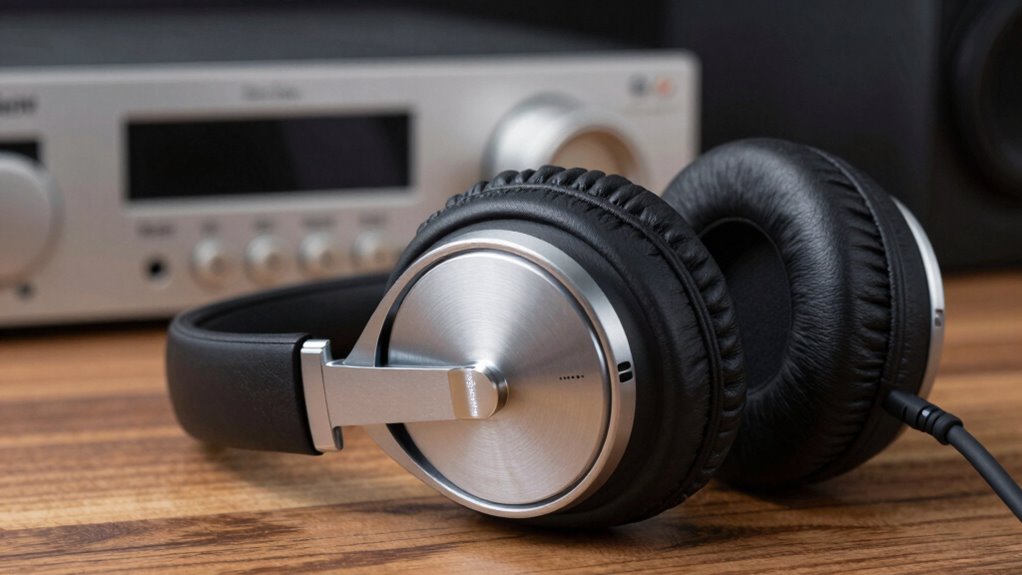
Having the right playback equipment is essential for experiencing Hi-Res audio at its best. Proper speaker placement ensures you get ideal soundstage and clarity, so position your speakers at ear level and avoid walls that can muddy the sound. When using headphones, comfort is key; choose models with padded ear cups and adjustable headbands to prevent fatigue during long listening sessions. High-quality headphones can reveal details in the music that lesser models miss, so look for open-back designs for a more natural soundstage or closed-back for better noise isolation. Whether speakers or headphones, investing in good equipment enhances your Hi-Res experience, allowing you to hear the fine nuances and depth that make high-resolution audio worth exploring. Additionally, proper cleaning glass on your equipment can help maintain optimal sound quality and device longevity.

Focusound 52 Pack Acoustic Foam Panels 1" x 12" x 12" Sound Proof Foam Panles Soundproofing Noise Cancelling Wedge Panels for Home Office Recoding Studio with 300PCS Double-Side Adhesive
Soundproofing – Acoustic foam panels triangular grooves structure for better noise absorption, helps to reduce and absorb unwanted…
As an affiliate, we earn on qualifying purchases.
As an affiliate, we earn on qualifying purchases.
Are Streaming Services Making Hi-Res Audio Easier to Access?

Streaming services now offer hi-res audio options, making high-quality sound more accessible than ever. They also provide convenience and often cost less than purchasing physical media or downloads. This shift raises the question: are these platforms truly making hi-res audio easier for you to enjoy? Additionally, many services now incorporate audio codecs and connection standards, which are essential for delivering high-fidelity sound quality across various devices.
Streaming Platforms Offer Hi-Res
Are streaming platforms making hi-res audio more accessible than ever? Yes, many services now support high-resolution formats, thanks to advances like bitrate improvements and new file formats. This means you can enjoy better sound quality without downloading massive files. Some key points include:
- They offer a variety of hi-res file formats such as FLAC and DSD.
- Bitrate improvements ensure clearer, more detailed audio streams.
- Many platforms now provide seamless streaming at higher resolutions.
- Compatibility with high-end gear makes listening more satisfying.
Accessibility and Cost Benefits
Thanks to the widespread availability of streaming services, accessing hi-res audio has become more affordable and convenient than ever. These platforms offer significant accessibility benefits, allowing you to enjoy high-quality sound without needing expensive equipment or specialized downloads. With a subscription or even free tiers, you can stream a wide range of hi-res tracks directly to your devices, making high-quality audio more reachable for everyone. The cost advantages are clear—streaming eliminates the need for purchasing costly physical media or high-end players. Instead, you get instant access to a vast library of hi-res content at a fraction of the traditional costs. This shift makes embracing hi-res audio easier and more practical, encouraging more listeners to experience enhanced sound quality without breaking the bank. Additionally, understanding streaming platform features and car leasing costs and options can help consumers make informed decisions when considering high-end audio equipment for their vehicles.
Debunking Common Myths About Hi-Res Audio

Many myths surround Hi-Res Audio, leading some listeners to doubt its benefits or dismiss it entirely. One common misconception is that higher resolution automatically means better sound; however, factors like audio compression and file formats matter more. To clarify:
- Not all Hi-Res files are uncompressed; many use advanced audio compression techniques to reduce size without sacrificing quality.
- Higher bitrates don’t always guarantee a noticeable difference, especially if your equipment isn’t capable of revealing subtle details.
- File formats like DSD and FLAC preserve quality better than lossy formats, but compatibility varies.
- The myth that only expensive gear can reproduce Hi-Res Audio ignores that many devices support high-quality formats at affordable prices.
- Audio compression techniques can influence the perceived quality of Hi-Res files, making it important to understand how these methods impact listening experience. Additionally, understanding audio file formats and their compatibility helps consumers make informed choices about playback options.
Should You Upgrade to Hi-Res Audio? How to Decide
Deciding whether to upgrade to Hi-Res Audio depends on your listening habits, equipment, and priorities. If you value detailed sound and have the right gear, upgrading might be worthwhile. Consider your current audio file formats and whether your device supports high-resolution files. Storage requirements also matter—Hi-Res files are larger and demand more space. Here’s a quick comparison:
| Aspect | Benefits |
|---|---|
| Audio File Formats | Better clarity, more detail |
| Storage Needs | Larger files, more space |
| Listening Habits | Critical listening, audiophile needs |
If your habits involve casual listening or your setup isn’t optimized, the upgrade may not be necessary. Weigh these factors carefully before making a decision.
Does Your Listening Environment Affect Hi-Res Sound Quality?

Your listening environment plays a crucial role in experiencing the full benefits of Hi-Res Audio. Factors like room acoustics and speaker placement can markedly influence sound quality. Poor acoustics can cause echoes or dampen high frequencies, reducing clarity. Proper speaker placement ensures balanced sound and prevents audio from becoming muddled. To optimize your environment:
- Position speakers away from walls and corners to avoid bass distortion.
- Use soft furnishings or acoustic panels to absorb unwanted echoes.
- Maintain an equidistant setup between speakers and your listening position.
- Adjust speaker angles to direct sound precisely toward your ears.
- Understanding room acoustics can help you make informed adjustments for superior audio clarity, as acoustic treatment can significantly improve sound quality in challenging spaces.
Frequently Asked Questions
Is Hi-Res Audio Compatible With All Music Players?
Not all music players support hi-res audio, so compatibility depends on their bitrate compatibility and format support. If your device can handle higher bitrates and supports formats like FLAC or DSD, you’ll likely enjoy hi-res files. However, many standard players might only support MP3 or AAC. Always check your device’s specifications to guarantee it’s compatible with hi-res audio before investing in high-quality music files.
How Does File Size Impact Hi-Res Audio Storage?
File size fundamentally affects your hi-res audio storage. Larger files result from less file compression, meaning higher quality but increased storage requirements. When you choose hi-res formats, you’ll notice notably bigger files, demanding more space on your device. So, if you’re tight on storage, you might need to compromise by opting for more compressed files. Remember, bigger files boost quality but also burden your storage capacity.
Can Smartphone Speakers Deliver Hi-Res Audio Quality?
Smartphone speakers can’t fully deliver hi-res audio quality because of their limitations. Their small size and design restrict sound clarity and depth, and audio compression further diminishes quality. While you might notice some high-frequency details, the overall experience falls short of true hi-res standards. To enjoy the full benefits, use external speakers or headphones designed for high-resolution audio, which can better reproduce the nuanced sounds that smartphone speakers can’t handle.
Are There Legal Issues With Hi-Res Music Downloads?
You might face legal issues with hi-res music downloads, like copyright concerns and licensing restrictions. While acquiring high-quality files, make certain you’re downloading from authorized sources, or you risk infringement. Imagine a pristine lake tainted by pollution—your music experience is compromised if licensing rules aren’t respected. Always verify the legality of your downloads to avoid potential lawsuits or takedowns, preserving both your peace of mind and legal safety.
What Are the Best Headphones for Hi-Res Audio?
If you want the best experience with high-res formats, look for headphones designed for audiophile gear. Brands like Sennheiser, Audio-Technica, and Beyerdynamic offer models with detailed sound, wide frequency ranges, and excellent clarity. These headphones reveal subtle nuances in your music, making them perfect for appreciating hi-res audio. Make sure they have high impedance and accurate drivers to truly enjoy the full depth and richness of high-res formats.
Conclusion
If you think you need expensive gear to notice a difference, think again. Even in a quiet room with basic headphones, you might catch subtle details in hi-res audio that standard files miss. While it’s not always night and day, upgrading your setup can unleash richer soundscapes. So, don’t dismiss hi-res just yet—give it a try, and you might find yourself immersed in music in a whole new way, even without perfect conditions.