ALR screens are designed to boost picture quality in bright rooms by reflecting ambient light back to viewers, enhancing contrast and color accuracy. They’re worth considering if your room has lots of natural light or if standard screens wash out easily. However, they tend to be more expensive and require proper installation. If you’re curious about whether an ALR screen suits your setup and want to learn more, keep exploring this guide.
Key Takeaways
- ALR screens are ideal in bright rooms with high ambient light, enhancing contrast and color accuracy without complete darkness.
- They are worth the investment when projector brightness and room lighting conditions match the screen’s reflective properties.
- ALR screens tend to be more expensive but can provide long-term savings by reducing the need for room modifications.
- Proper installation and matching screen material to ambient light levels are crucial for optimal performance.
- They may not be cost-effective for dark-room setups or environments with minimal ambient light interference.
What Are ALR Screens and How Do They Work?
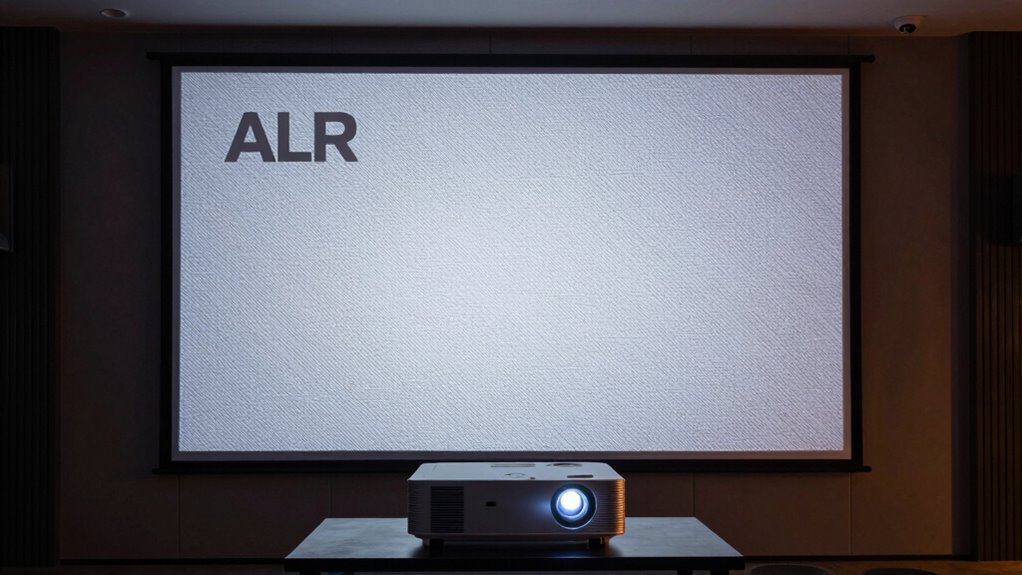
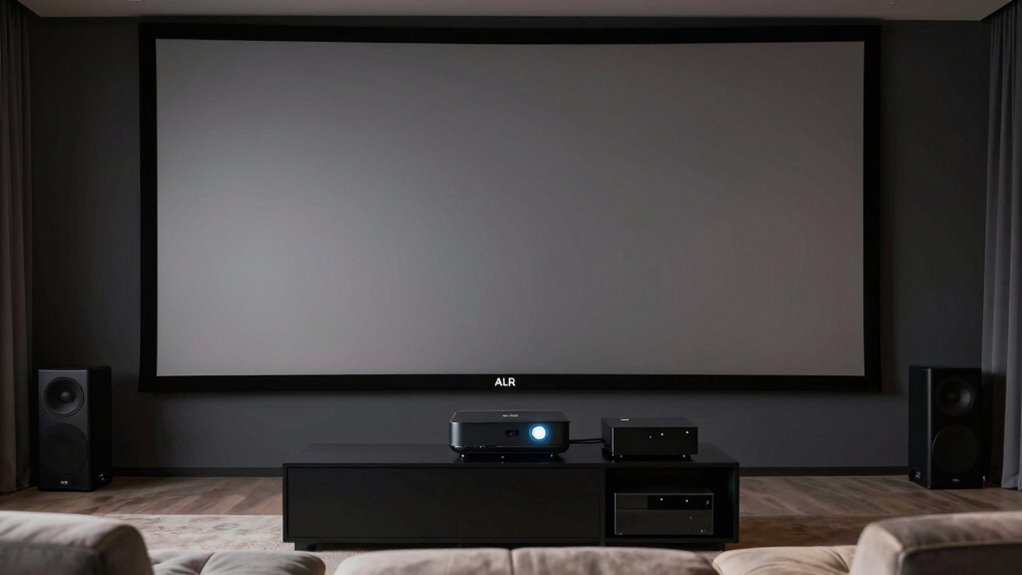
ALR screens, or Ambient Light Rejection screens, are specially designed projection screens that minimize ambient light interference to improve picture quality. They work by using a textured surface that reflects light directly back to your eyes, reducing the impact of ambient lighting in your room. This innovative design allows for better contrast and color accuracy even in brightly lit environments. Room size plays a role because larger spaces often have more ambient light, which these screens combat effectively. If your room is bright or has windows, ALR screens help ensure you still get a sharp, clear image. They’re an excellent choice when ambient lighting can’t be completely controlled, allowing you to enjoy high-quality projection without the need for complete darkness. Additionally, screen technology advancements have made ALR screens more affordable and versatile for different room conditions. The development of advanced materials has contributed to their increased cost-effectiveness, making them a practical solution for many home theater setups.
Is an ALR Screen Right for Your Room and Needs?
Deciding whether an ALR screen is right for your room depends on your specific lighting conditions and viewing habits. If your room has a lot of ambient lighting or windows that bring in natural light, an ALR screen can help improve picture quality by reducing glare and enhancing contrast. Consider your room size—larger spaces with brighter lighting benefit more from ALR technology, while smaller, darker rooms might not need it. Think about how you use your space: if you frequently watch in daylight or during bright evenings, an ALR screen could be a worthwhile investment. Additionally, ambient light management plays a crucial role in maximizing the benefits of ALR screens. Proper room lighting control can significantly influence the overall viewing experience. Moreover, understanding the different types of screen materials can help you select the most suitable option for your needs. For example, some screen surfaces are designed specifically to improve contrast in bright environments. In fact, choosing the right screen technology can make a notable difference in viewing quality, especially in challenging lighting conditions. However, if your room stays dim and controlled, a standard screen might suffice. Assess your ambient lighting and room size to determine if an ALR screen aligns with your needs.
When Should You Consider Using an ALR Screen?
You should consider an ALR screen if your room has ambient light that can wash out standard screens. Your budget and the cost of installation also play a role in deciding if an ALR screen fits your needs. Additionally, make sure your projector’s brightness and compatibility work well with the screen’s reflective properties for the best experience. Exploring wall art trends like digital frames or interactive murals can also enhance your viewing environment. Incorporating eco-friendly materials into your home theater setup, such as recycled or sustainable components, can make your space both stylish and environmentally conscious. Considering visual comfort features like glare reduction can further improve your viewing pleasure, especially in rooms with ambient light factors that may affect image quality. To optimize your setup, understanding the lighting conditions of your space can help determine if an ALR screen will provide the desired clarity and contrast.
Room Lighting Conditions
When ambient light is present in your viewing environment, it can diminish the brightness and contrast of a standard projection screen, making it harder to see images clearly. If your room has lots of ambient lighting, consider an ALR screen to improve picture quality. Proper screen placement becomes essential to maximize effectiveness, especially near windows or light sources. Here are four situations when an ALR screen is worth considering:
- You have a brightly lit room with uncontrolled ambient lighting.
- You want sharper contrast for vibrant, detailed images.
- Your projector is in a fixed position, limiting adjustments.
- You seek a more cinematic experience without blackout curtains.
In these cases, an ALR screen can markedly enhance your viewing regardless of ambient lighting conditions.
Budget and Cost Factors
Are budget constraints influencing your choice of projection screen? If so, consider how ALR screens compare in cost to traditional options. While they often cost more upfront, a detailed cost comparison might reveal long-term savings through improved image quality and reduced need for ambient light control. Your budget considerations should include not just the initial purchase price but also installation and potential upgrades to your projector or room setup. If you’re working with a tight budget, an ALR screen may not be the best fit, especially if your primary goal is cost savings. However, if you prioritize picture quality and a better viewing experience, investing in an ALR screen could be justified, provided it aligns with your overall budget and long-term viewing goals.
Projector Compatibility Needs
Choosing the right projection screen depends heavily on your projector’s specifications and capabilities. If your projector produces high contrast and brightness, an ALR screen can considerably enhance your viewing experience. Consider these factors:
- The screen material must match your projector’s brightness to avoid washed-out images.
- Your installation options matter—fixed, motorized, or portable screens affect setup and flexibility.
- Compatibility with ambient lighting is essential—ALR screens excel in well-lit rooms.
- Make sure your projector’s resolution aligns with the screen to prevent image distortion or blurring.
What Are the Benefits and Drawbacks of ALR Screens?
ALR screens offer several advantages that make them a popular choice for controlling light and glare, but they also come with some limitations. One key benefit is contrast enhancement, which helps produce sharper, more vibrant images even in well-lit rooms. This feature aligns with emerging trends in fan engagement technology, where immersive viewing experiences are increasingly valued. This makes your viewing experience much more immersive. However, installation complexity can be a drawback; ALR screens often require precise mounting and *ideal* viewing angles to perform effectively. If not installed correctly, their benefits diminish, and you might not see the expected improvements. Additionally, ALR screens tend to be more expensive than standard screens, so you’ll need to weigh the cost against the performance gains. Proper installation techniques are crucial to maximize their benefits. Overall, they’re a valuable solution in bright environments but come with considerations around setup and investment.
Common Myths About ALR Screen Technology

Many people believe ALR screens are expensive or unnecessary, but that’s not always true. You might also think all ALR screens are the same, yet options vary widely in quality and price. Let’s clear up these common myths so you can make an informed decision about whether ALR technology is right for you. Additionally, understanding different types of screen technology can help you choose the best solution for your needs. Recognizing the cost-benefit analysis of ALR screens can further clarify when they are a worthwhile investment and when they might not be necessary. Being aware of template compatibility considerations can also influence the overall effectiveness of your home office setup, especially when integrating projection screens into your workspace. Moreover, considering security measures for your home or workspace can provide added peace of mind when integrating new electronic equipment.
Myth: ALR Is Expensive
One common misconception is that ALR screens are prohibitively expensive, but in reality, they can be a cost-effective solution for improving your home theater experience. When you do a thorough price comparison, you’ll find that ALR screens often cost less than extensive projector upgrades or multiple room modifications. Plus, modern ALR screens are designed for straightforward installation, reducing potential challenges that might have been a concern in the past. Additionally, as AI technology advances, the development of better image processing and screen materials has made ALR screens more affordable and accessible for consumers.
Misconception: All ALR Screens Are Same
| Aspect | Impact |
|---|---|
| Screen Material | Affects contrast, color, and light blocking |
| Installation | Ensures proper light rejection and minimal distortion |
| Variability | Different brands and models offer diverse features |
Not all ALR screens are equal; understanding these differences helps you make the right choice.
Belief: ALR Is Unnecessary
Some people believe that ALR screens aren’t necessary because they think a standard projector screen or even a plain wall can deliver a good viewing experience. But neglecting an ALR screen can compromise your screen setup and viewing comfort. Here are four reasons why ALR screens are worth considering:
- Enhanced Brightness – They reflect ambient light away, making images pop even in bright rooms.
- Vivid Colors – You get richer, more accurate colors that improve immersion.
- Better Contrast – Deep blacks and bright highlights boost overall picture quality.
- Reduced Glare – They minimize distractions, so you stay focused on the movie or game.
Ignoring these benefits may lead to a less satisfying viewing experience, especially when you want the best home theater performance.
Are ALR Screens Worth the Extra Cost?
Are ALR screens worth the extra cost? If your room has significant ambient lighting, an ALR screen can make a big difference. These screens are designed to reject light from sources like windows or lamps, maintaining better picture quality even when the lights are on. They often have higher screen brightness levels, which helps improve contrast and color vibrancy in bright environments. If you prioritize a sharp, vivid image without dimming the lights, an ALR screen can justify the additional expense. Additionally, smart home security devices like smart locks and office gear can help protect your investment and create a secure viewing environment. It’s also helpful to consider the 16PF traits like openness and extraversion, which can influence how much you value enhanced visual performance and viewing comfort. However, if your viewing space is dark or controlled, a standard screen might suffice. Consider your room’s lighting conditions and how much you value improved brightness and contrast before investing in an ALR screen.
Affordable Alternatives to ALR Screens for Your Budget
Looking for budget-friendly options that still deliver a quality viewing experience? You don’t need to splurge on an ALR screen. There are affordable alternatives that can work well for your setup. Consider these DIY screen solutions, which save money and offer customization:
- Use a smooth, matte wall painted with special projector paint for a sleek, reflective surface.
- Build a frame from inexpensive materials like wood or PVC, then stretch blackout fabric or white paint for a simple screen.
- Repurpose a large sheet of inexpensive fabric or blackout cloth as an easy, portable screen.
- Create a portable, collapsible frame for flexible viewing locations.
- Proper setup of your DIY screen is crucial to ensure optimal image quality and viewing angles.
These budget-friendly options give you a high-quality experience without breaking the bank, making DIY screens a smart choice.
How to Pick the Perfect ALR Screen for Your Setup
Choosing the right ALR screen for your setup involves considering several key factors to guarantee the best image quality and performance. First, assess your projection surface—some screens are better suited for specific environments. Also, evaluate the ambient light in your room; ALR screens excel in bright settings by reducing light interference.
Here’s a quick comparison:
| Factor | Considerations |
|---|---|
| Projection Surface | Matte or textured surfaces improve contrast and glare management. |
| Ambient Light | Higher ambient light requires a screen with better ambient light rejection. |
Frequently Asked Questions
How Long Do ALR Screens Typically Last?
ALR screens typically last around 10 to 15 years, depending on usage and maintenance. Their durability lifespan can be affected by factors like exposure to sunlight and environmental conditions. You might face replacement costs if the screen becomes damaged or worn out over time. Proper care can extend their lifespan, helping you avoid frequent replacements and maximize your investment in a quality ALR screen.
Can ALR Screens Be Used Outdoors?
Think of ALR screens as a sturdy ship sailing through unpredictable weather. Yes, you can use them outdoors, but only if they’re designed for outdoor durability. Look for screens with weather resistance, which can withstand sun, rain, and wind. Without proper outdoor features, they might warp or fade. So, choose an ALR screen specifically built for outdoor use to guarantee it stays sharp and effective, no matter the weather.
Are ALR Screens Compatible With All Projectors?
ALR screens aren’t compatible with all projectors. You need to take into account your projector’s brightness, resolution, and throw distance to ensure the screen’s reflective properties work well. They’re especially useful in environments with high ambient light levels, helping you overcome projection challenges by enhancing contrast and color. Check your projector’s specs and ambient light conditions to determine if an ALR screen is the right choice for your setup.
What Maintenance Do ALR Screens Require?
You’ll love the thrill of screen maintenance, right? Just kidding. ALR screens need occasional cleaning to keep that perfect image—gently wipe with a soft cloth and mild cleaner. Frame maintenance is minimal; check for loose screws or warping. Avoid harsh chemicals, and your screen stays stunning. Regular care guarantees your investment lasts longer, so you can enjoy crisp visuals without the drama of a dusty, drooping display.
Do ALR Screens Affect Picture Quality in Dark Rooms?
Yes, ALR screens can affect picture quality in dark rooms. They often reduce ambient light interference, which improves contrast enhancement and makes images clearer. However, if the screen isn’t properly designed or positioned, it might slightly diminish the brightness and detail in dark scenes. To get the best quality, choose an ALR screen suited for low-light environments, ensuring it balances ambient light rejection with maintaining vivid, detailed images in dark rooms.
Conclusion
In the end, whether an ALR screen is worth the splurge depends on how epic your viewing setup is. If you crave cinema-quality images that make every movie feel like a blockbuster, then it’s like having a private theater in your home—no joke! But if you’re just a casual viewer, you might find it’s a fancy gadget that’s more flash than function. Decide if you’re ready to turn your space into a true entertainment powerhouse!