When choosing between thermal and ink label printers for shipping, thermal printers typically save you money long-term because they print faster, require less maintenance, and use less energy. They produce durable labels that last longer outdoors and in harsh conditions, reducing reprints and waste. Ink printers might seem cheaper initially but can lead to higher hidden costs from ink, repairs, and misprints. To discover which option best fits your shipping needs, explore the details that follow.

Get the latest gadgets delivered free — and shop member deals
- Fast, free delivery on millions of items
- Access to Prime Big Deal Days deals on October 6–7
- Prime Video, Amazon Music and more included
Key Takeaways
- Thermal printers offer faster, more durable labels with lower ongoing costs, ideal for high-volume shipping needs.
- Ink printers require regular ink cartridge replacements and maintenance, increasing long-term expenses and potential delays.
- Thermal labels resist heat, moisture, and UV, ensuring label longevity during outdoor or long-term storage.
- Upfront costs for thermal printers are higher, but they typically reduce operational and waste costs over time.
- Hidden expenses like ink waste, maintenance, and reprints make ink printing less economical for large-scale shipping.
As an affiliate, we earn on qualifying purchases.
What Are the Main Differences Between Thermal and Ink Label Printers?
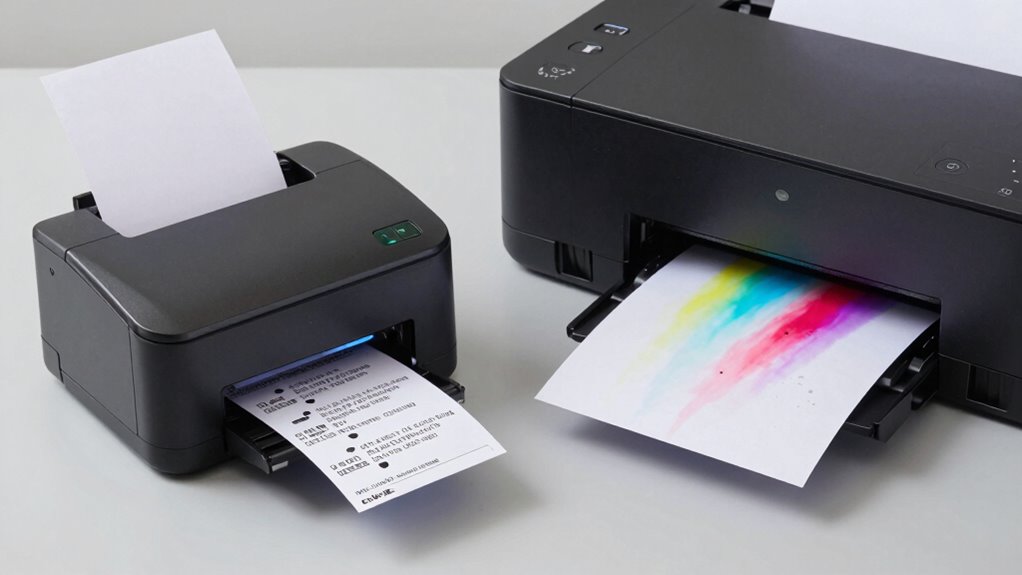
Have you ever wondered how thermal and ink label printers differ? The main difference lies in how they produce images. Thermal printers use heat to directly activate special paper, resulting in sharp, clear labels with high label resolution. They don’t require ink or toner, so there’s no ink absorption process, which reduces mess and maintenance. Label printing technology plays a significant role in determining overall efficiency and quality. Ink label printers, on the other hand, rely on liquid ink that’s absorbed by the label material. This process can affect label quality, especially if ink absorption isn’t consistent, leading to potential smudging or fading. label quality can vary significantly between the two types, impacting shipping efficiency. Thermal printers excel in producing durable labels with crisp details, while ink printers might offer more color options but often struggle with longevity and detail clarity. Additionally, label lifespan is a critical factor when considering durability for various shipping conditions. Understanding these distinctions helps you choose the right printer for your shipping needs. Label durability plays a crucial role in how effectively labels meet various shipping requirements.
How Do Thermal and Ink Printers Affect Shipping Speed and Efficiency?

Thermal and ink printers impact your shipping process differently, especially in speed and efficiency. Thermal printers often print faster and require less maintenance, reducing downtime. Meanwhile, ink printers may need more frequent upkeep but can offer consistent print quality for your labels. Additionally, selecting the appropriate printer type can influence your overall installation process, ensuring smoother operations in your shipping workflow. Choosing the right printer can also improve label durability, which is essential for safe and reliable delivery.
Printing Speed Differences
While both thermal and inkjet printers can handle shipping label production, their printing speeds vary considerably, directly impacting overall shipping efficiency. Thermal printers are known for their rapid print speed, often producing labels in seconds, which allows for quick processing and minimal delays. In contrast, inkjet printers typically print more slowly due to the nature of ink application, requiring more time per label. This difference can substantially affect throughput, especially during peak shipping periods. If you prioritize efficiency and high-volume output, thermal printers offer a clear advantage. Faster print speeds reduce bottlenecks, streamline your workflow, and guarantee labels are ready on time. Additionally, considering label durability is important, as thermal labels tend to withstand environmental factors better than inkjet prints. Ultimately, selecting a printer with a suitable print speed is vital for maintaining smooth, efficient shipping operations.
Maintenance and Downtime
Maintenance requirements and potential downtime considerably influence shipping speed and overall efficiency. Thermal printers are known for their high durability, often running longer with less frequent maintenance, which minimizes downtime management. You’ll find they require little upkeep, so you can keep your shipping operations moving smoothly. Ink printers, on the other hand, demand regular maintenance—such as ink replacements and printhead cleaning—which can lead to unpredictable downtime. This increased maintenance impacts your overall throughput, causing delays and reducing efficiency. When choosing between the two, consider how printer durability affects your ability to manage downtime effectively. A more durable thermal printer can help you sustain faster shipping speeds by minimizing interruptions, ensuring your shipping process remains consistent and reliable. Additionally, printer durability plays a crucial role in maintaining high efficiency over time. Incorporating electric bikes with durable components can serve as an analogy for long-lasting equipment, emphasizing the importance of reliability in operational equipment. Proper maintenance schedules and choosing reliable equipment are critical for minimizing downtime and maximizing productivity, especially when considering the long-term costs associated with maintenance requirements.
Print Quality Consistency
Consistent print quality is essential for maintaining efficient shipping operations, as errors or unclear labels can cause delays and misdeliveries. Thermal printers generally produce sharp, clear labels quickly, ensuring reliable print speed and consistent color vibrancy, especially with monochrome labels. Ink printers can offer richer color vibrancy, but their print quality may vary depending on ink quality and maintenance, potentially slowing down operations. Variations in print quality can lead to misreads or reprints, slowing shipping processes. Thermal printers excel in maintaining uniform print quality over time, reducing errors and ensuring labels are legible at high speeds. In contrast, ink printers might require more frequent calibration to sustain consistent quality. Additionally, air quality considerations in the workspace can influence printer performance and longevity, highlighting the importance of maintaining a clean and healthy environment to optimize printing operations. Regularly monitoring printer maintenance can help prevent issues that affect print consistency and longevity. Furthermore, implementing proper environmental controls can extend the lifespan of your printing equipment and maintain optimal print quality over time, especially as environmental factors can impact print durability.
What Are the Purchase and Setup Costs for Thermal and Ink Printers?

When choosing between thermal and ink printers for shipping labels, understanding their purchase and setup costs is essential. A cost comparison shows that thermal printers generally have a higher upfront price but lower ongoing expenses. They usually require minimal setup, needing only power and network connections, making installation straightforward. In contrast, ink printers often cost less initially but can incur higher costs over time for ink cartridges and maintenance. Setup for ink printers may involve calibrating color accuracy and ensuring proper paper handling, which can be more complex. Thermal printers are designed for quick setup with fewer adjustments, making them more efficient for high-volume shipping environments. Your choice depends on balancing the initial investment against long-term operational costs.
What Hidden Expenses Come With Ink Label Printing?
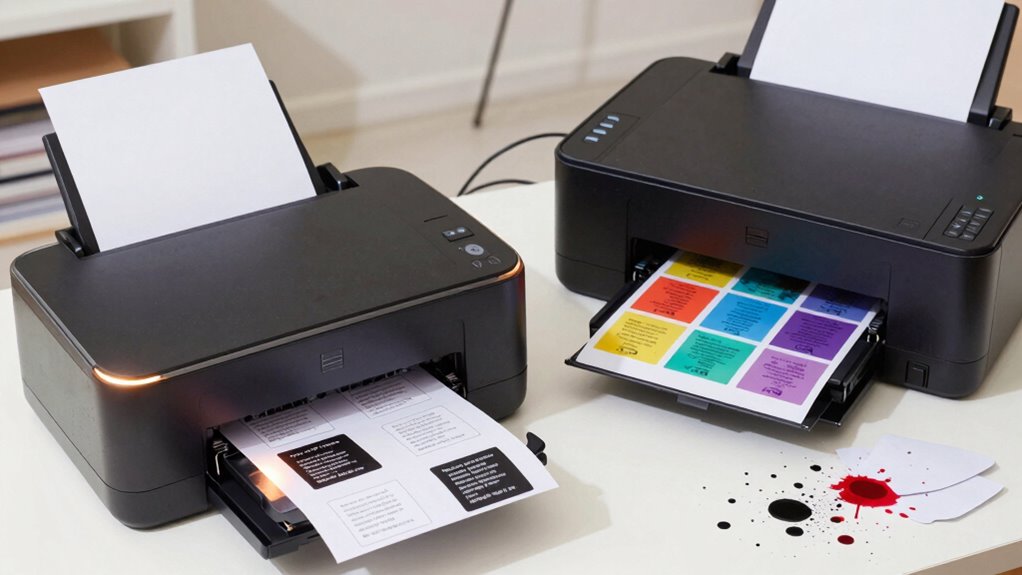
Using ink label printers might seem straightforward, but the hidden costs can add up quickly. You’ll face ongoing ink expenses that accumulate over time, and maintenance can become a significant budget item. Plus, waste from misprints or unused ink can further inflate your overall printing costs. Additionally, the lack of transparency about advertisement cookies can lead to unexpected data collection and targeted advertising. Furthermore, the upfront equipment costs for quality ink printers can be substantial compared to other options. Considering the cultural significance of Indonesian masks, choosing a printer that balances quality and cost-efficiency is crucial to maintain authentic and vibrant label designs without overspending.
Ink Costs Accumulation
Have you ever considered how quickly ink costs can add up when printing shipping labels? Each time you replace an ink cartridge, you’re paying for a component that might be underutilized, especially if your volume is low. The cost per label isn’t just about the ink itself but also the quality of the paper stock you choose—more premium paper can consume more ink and increase expenses. Frequent ink cartridge replacements, combined with printing on larger or thicker paper stock, can considerably inflate your overall costs. Over time, these small expenses accumulate, making ink label printing more expensive than it initially appears. Additionally, printing efficiency and proper maintenance can help reduce ink wastage and save money over time. Using quality ink and optimizing your printing settings can further minimize unnecessary ink consumption. Moreover, selecting appropriate printing technology can significantly impact your ink usage and overall costs. Implementing cost-saving techniques like batch printing can also help mitigate these expenses. If you print labels regularly, understanding this accumulation helps you manage your budget better and consider more cost-effective options.
Maintenance and Waste
Maintenance and waste often hide unexpected costs in ink label printing. Ink cartridges can produce significant label waste, especially when prints are misaligned or faulty, leading to increased costs. Additionally, frequent ink refills can strain printer durability, causing parts to wear out faster. To minimize these hidden expenses, consider:
- Regularly maintaining your printer to prevent breakdowns caused by ink buildup or misalignments.
- Monitoring label waste to identify inefficiencies and avoid unnecessary reprints.
- Investing in a durable printer designed for high-volume printing to reduce repair costs and extend equipment lifespan.
Which Printer Uses Less Energy: Thermal or Ink?

When comparing energy consumption, thermal printers generally use less power than inkjet printers. Thermal printers are designed for efficiency, relying on heat to produce images without needing ink or toner, which reduces overall power usage. Their simpler mechanism means they consume less energy during operation, making them more energy-efficient for frequent printing tasks. Inkjet printers, on the other hand, require more power to operate their complex components, including pumps and heaters for ink delivery and drying. This higher power consumption can lead to increased energy costs over time. If energy efficiency and lower power consumption are priorities for your shipping operations, thermal printers are usually the better choice, as they consume less electricity while maintaining reliable performance.
Which Labels Last Longer: Thermal or Ink?

Thermal labels generally last longer than inkjet-printed labels because they are designed to withstand environmental factors like heat, moisture, and UV exposure. Their superior label durability guarantees your shipping labels stay legible throughout transit and storage. Ink longevity can be affected by exposure to elements, causing ink to fade or smudge over time. To maximize label performance, consider these factors:
- Environmental Resistance: Thermal labels resist humidity, sunlight, and temperature changes better than inkjet labels.
- Material Quality: Premium thermal paper offers enhanced durability and ink longevity.
- Use Case: For long-term storage or outdoor shipping, thermal labels provide a more reliable solution.
Choosing thermal labels helps ensure your shipping information remains clear and legible longer than inkjet alternatives.
Which Printer Works Best for Small Businesses or Large Warehouses?
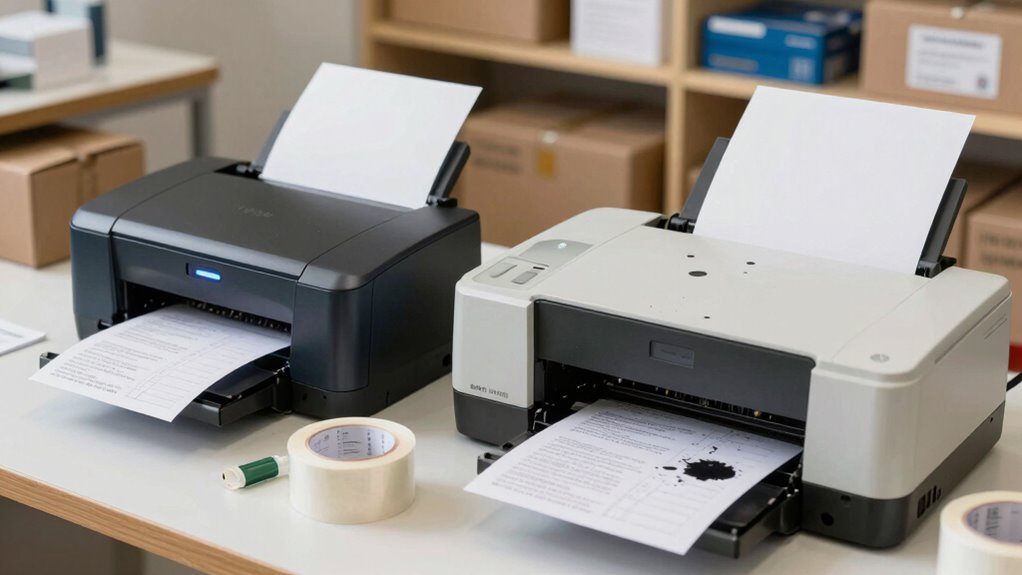
Choosing the right printer depends on your business size and volume. For small businesses, a compact thermal printer offers a cost-effective solution with lower maintenance and ink costs. Its durability ensures consistent performance for lower to moderate shipping needs. Larger warehouses require high-volume printers built to handle frequent use, making durability a key factor. These industrial models may have a higher initial cost but deliver a better cost comparison over time due to fewer breakdowns and replacements. If your volume fluctuates, consider a versatile model that balances durability with affordability. Ultimately, small businesses benefit from thermal printers with lower operational costs, while larger warehouses should invest in robust, durable printers designed for continuous, heavy-duty printing.
Is a Thermal Printer a Better Investment in the Long Run?
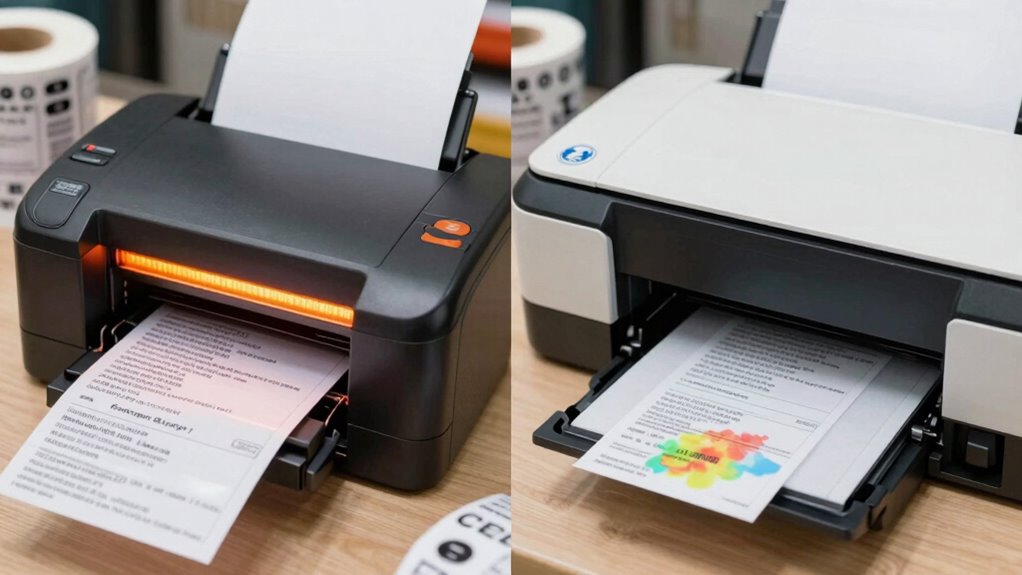
Investing in the right printing technology can considerably impact your long-term costs and efficiency. Thermal printers often prove to be a smarter investment because they reduce ongoing expenses and environmental impact. Consider these points:
- Cost analysis: Thermal printers eliminate ink or toner costs, saving you money over time.
- Durability: Labels printed with thermal technology resist smudging and fading, reducing reprints.
- Environmental impact: Without ink cartridges or toner waste, thermal printers produce less waste and have a smaller ecological footprint.
While the initial investment might be higher, thermal printers typically offer lower operating costs and are more eco-friendly in the long run, making them a better investment for your shipping needs.
Tips to Save Money and Optimize Your Shipping Labels
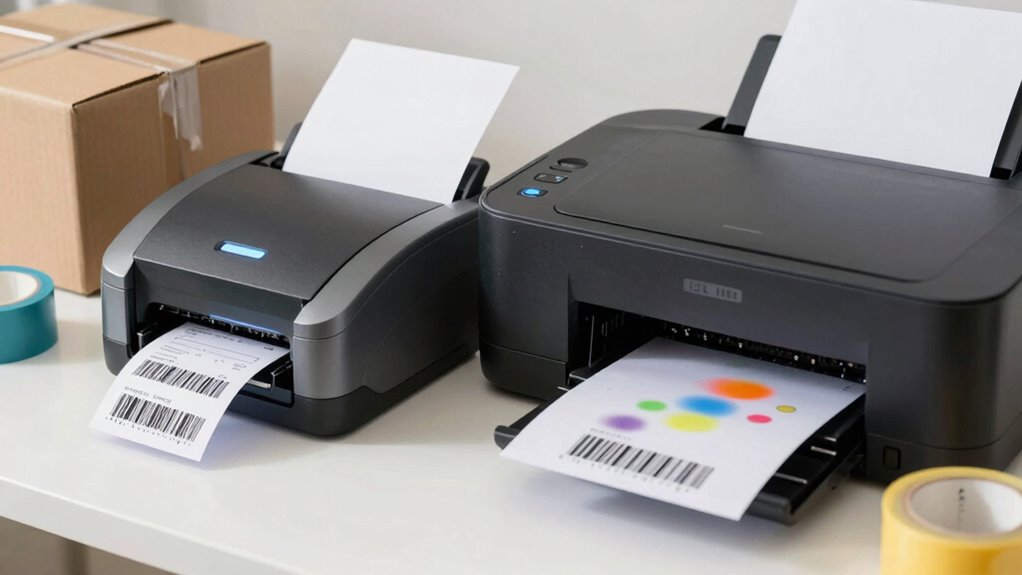
To save money and make the most of your shipping labels, start by selecting the right label size and type for your shipments. Properly chosen labels improve label durability, preventing smudging or tearing during transit, which reduces reprints and wasted supplies. Focus on print speed to boost efficiency—faster printers can handle higher volumes without sacrificing quality, saving you time and labor costs. Investing in durable labels ensures they stay legible throughout the shipping process, avoiding costly re-labeling or customer service issues. Additionally, streamline your printing process by using compatible, cost-effective supplies that match your printer type. By balancing label durability with efficient print speed, you optimize your shipping workflow, cut expenses, and ensure your labels stay clear and effective from warehouse to delivery.
Frequently Asked Questions
How Do Environmental Factors Impact Label Durability and Readability?
Environmental factors like UV resistance and humidity effects considerably impact label durability and readability. You should choose labels with high UV resistance to prevent fading from sunlight exposure. Additionally, consider labels that withstand humidity, so ink or thermal print remains clear despite moisture. By selecting labels designed for these conditions, you guarantee your shipping labels stay legible and intact, reducing the risk of lost or delayed deliveries caused by unreadable labels.
Can Thermal Printers Handle Custom or Special Label Materials?
Yes, thermal printers can handle some special label materials, but you need to verify their compatibility first. Not all thermal printers work with every type of special label material, such as matte or textured surfaces. You should verify the printer compatibility to ensure it can produce high-quality, durable labels on your chosen materials. Always consult the manufacturer’s guidelines to avoid printing issues or damage to your printer.
Are There Specific Maintenance Needs for Thermal Versus Ink Printers?
You might think thermal printers need less maintenance, but they still require regular calibration to guarantee print quality. Unlike ink printers, you won’t replace ink cartridges, but you should keep the print head clean to prevent clogs. Ink printers demand more frequent ink cartridge replacements and cleaning cycles. Both types need routine checks, but thermal printers generally have fewer moving parts, making maintenance simpler and less costly overall.
How Do Label Printer Choices Influence Customer Satisfaction?
Your choice of label printer directly impacts customer satisfaction by ensuring label accuracy and faster printing speeds. Thermal printers produce clear, smudge-proof labels quickly, reducing errors and delays. Ink printers might slow you down and risk smudges, leading to misrouted packages. By selecting a thermal model, you enhance reliability and efficiency, which keeps your customers happy with timely, accurate deliveries.
What Are the Security Considerations for Printing Sensitive Shipping Labels?
Think of your shipping labels as treasures; safeguarding them is vital. You should implement label encryption to protect sensitive data from hackers and guarantee access control so only authorized personnel can print or view these labels. By doing so, you prevent theft, fraud, and data breaches, keeping your customers’ trust intact. Security measures like encryption and access restrictions act as an unbreakable shield, defending your business from potential threats.
Conclusion
Choosing between thermal and ink label printers isn’t just about initial costs; it’s about recognizing the subtle nuances that can quietly influence your shipping process. By understanding these hidden factors, you can make a more informed decision that gently steers your business toward smoother, more efficient operations. Remember, the right printer doesn’t just serve your current needs—it subtly shapes your long-term success, guiding you toward smarter, more economical shipping solutions.
Fall Picks
fall essentials
As an affiliate, we earn on qualifying purchases.