
📊 Full opportunity report: When One Agent Isn’t Enough: Claude Now Builds Its Own Team of Agents on the Fly on ThorstenMeyerAI.com — validation score, market gap, and execution plan.

Get the latest gadgets delivered free with Prime
- Fast, free delivery on millions of items
- Prime Video, Amazon Music and more included
- Member-only deals all year
TL;DR
Anthropic’s Claude has launched a new feature called dynamic workflows, enabling it to assemble and manage its own team of agents for complex tasks. This development aims to improve performance on high-value, multi-step projects by overcoming limitations of single-agent execution.
Anthropic’s Claude has introduced a new feature called dynamic workflows, allowing it to automatically assemble and manage a team of specialized agents for complex, high-value tasks. This capability marks a significant step forward in AI orchestration, enabling Claude to handle projects that exceed the limits of a single agent’s capacity and mitigate common failure modes.
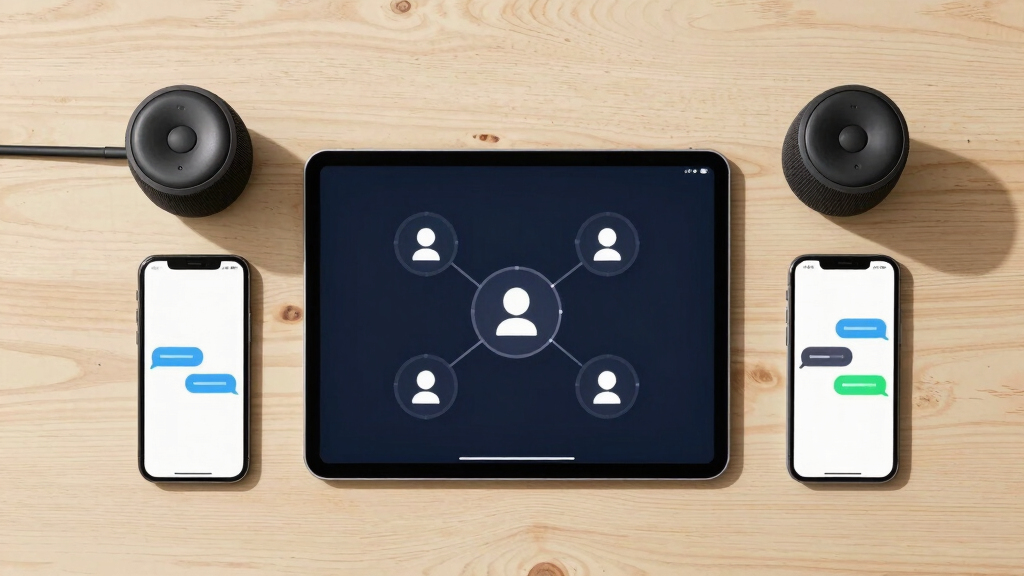
The feature is built on Claude’s ability to generate small JavaScript programs that act as orchestrators, dynamically spawning subagents with tailored roles. These subagents can operate in isolated environments, use different models based on task needs, and coordinate seamlessly. For example, Claude can now automatically create a dispatcher, specialists, and reviewers for a complex project, then disband the team once the task is complete. This approach addresses issues like agent laziness, self-bias, and goal drift, which occur when a single agent handles long or complex tasks.
According to Anthropic, this feature is most useful for complex, high-value projects where accuracy and thoroughness are critical. It is not intended for simple tasks like fixing typos. The system can decide which model to assign to each subagent and whether to run agents in parallel or sequentially. The orchestration patterns include classify-and-act, fan-out-and-synthesize, adversarial verification, generate-and-filter, tournament, and loop-until-done, mirroring the decision-making processes of experienced human team leads.
When one agent isn’t enough: Claude now builds its own team on the fly
Skills package what you know; loops decide how far you delegate over time. Dynamic workflows are the third axis — within a single task, Claude writes its own harness and assembles a temporary team of subagents. Think of it as Claude drawing an org chart for one job.
The shift is from prompting a worker to commissioning a team — more output, more cost, and a manager’s judgment required. Reach for a workflow when a task is big, parallel, adversarial, or judgment-heavy — and when you can feel a single agent getting lazy, grading its own homework, or losing the plot. Bound it (token budgets, pilot first) — workflows can spawn hundreds of agents and burn far more tokens. For everything else, don’t hire five people to change a lightbulb.
Implications for AI-Driven Project Management
This development represents a shift in AI capabilities, moving from single-agent execution to autonomous team management. It enhances the potential for AI to undertake complex, multi-step projects with increased accuracy and reliability. For organizations, this could mean more effective automation of research, verification, and decision-making processes, reducing reliance on human oversight for high-stakes tasks.
However, Anthropic emphasizes that this feature requires significantly more tokens and computational resources, making it suitable primarily for tasks where the benefits outweigh the costs. The approach also raises questions about how AI-managed workflows will integrate with human teams and what oversight mechanisms will be necessary.
As an affiliate, we earn on qualifying purchases.
Evolution of AI Orchestration Capabilities
This announcement builds on previous work by Anthropic’s Claude team, which focused on skills packaging and looping for task delegation. The introduction of dynamic workflows completes a trilogy aimed at enabling AI systems to handle increasingly complex projects. Prior to this, Claude could only operate within a single context window, limiting its ability to manage multi-stage or long-term tasks. The new feature addresses these limitations by allowing Claude to write and execute custom orchestration programs, effectively creating AI-managed project teams on the fly.
This capability was made possible by recent advances in Claude’s reasoning abilities, particularly with the release of Claude Opus 4.8, which supports the creation of tailored harnesses for specific jobs. The concept of dynamic workflows is a natural evolution, combining automation, modularity, and decision-making in a way that mirrors human project management processes.
“Claude’s ability to autonomously build and orchestrate its own team of agents marks a new era in AI project management, especially for complex, high-value tasks.”
— Thorsten Meyer, AI researcher at Anthropic
Unresolved Questions About Workflow Reliability
It is not yet clear how well these autonomous workflows will perform across diverse real-world applications, or how they will be monitored and controlled to prevent errors or unintended behaviors. The computational costs and token usage implications also remain to be fully evaluated in large-scale deployments.
Next Steps for Deployment and Evaluation
Anthropic plans to further test and refine the dynamic workflows in real-world scenarios, with potential expansion to broader customer use cases. Observers will be watching for how effectively Claude manages complex projects, how it handles errors, and how organizations integrate this capability into their workflows. Additional updates may include improved oversight tools and efficiency optimizations.
Key Questions
How does Claude build its own team of agents?
Claude generates small JavaScript programs, called workflows, that spawn and coordinate subagents with specific roles, such as specialists or reviewers, tailored to the task at hand.
What types of tasks are best suited for this new feature?
High-value, complex projects requiring multi-step reasoning, verification, or parallel processing are ideal, such as research synthesis, extensive fact-checking, or detailed analysis.
Does this increase the computational costs significantly?
Yes, dynamic workflows use more tokens and processing power, making them suitable mainly for tasks where accuracy and thoroughness justify the added resource use.
Can this feature replace human project managers?
While it enhances AI’s ability to manage complex workflows, it is intended to supplement human oversight rather than replace human project managers entirely.
What are the potential risks of autonomous agent teams?
Risks include errors in coordination, unforeseen behaviors, or resource inefficiencies, which is why oversight and testing are crucial during deployment.
Source: ThorstenMeyerAI.com
Halloween Picks
halloween
As an affiliate, we earn on qualifying purchases.