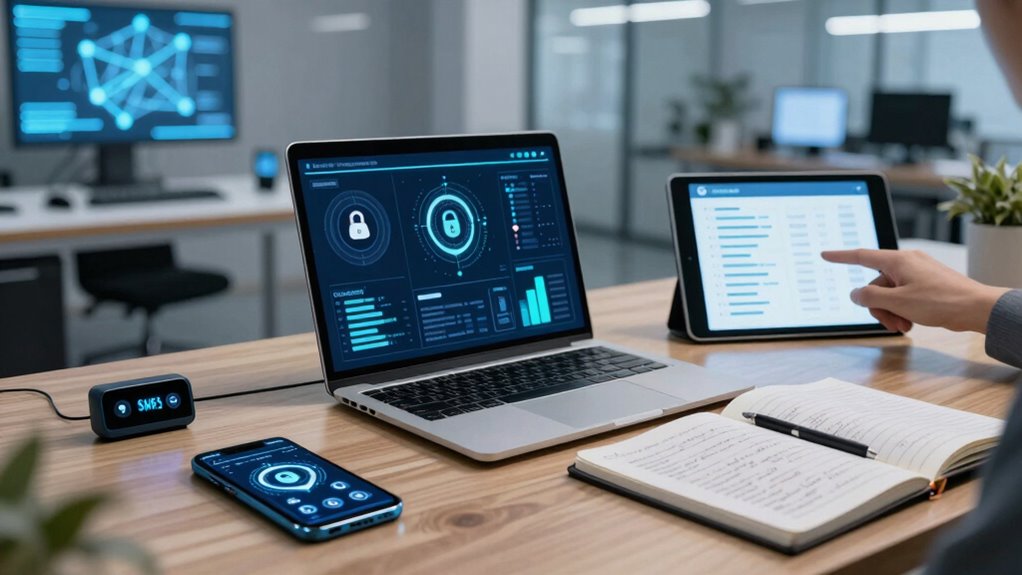

To strengthen your SME’s cybersecurity, focus on five key controls. Don’t overlook the importance of quick threat detection tools like intrusion systems and monitoring solutions. Train your staff regularly on phishing, password hygiene, and safe browsing to build a security-conscious culture. Conduct ongoing vulnerability assessments, keep software updated, and enforce strong password policies. Stay aware of emerging threats and adapt your defenses. Mastering these controls can substantially boost your defenses — and there’s more to explore on how to implement them effectively.

Get the latest gadgets delivered free with Prime
- Fast, free delivery on millions of items
- Prime Video, Amazon Music and more included
- Member-only deals all year
Key Takeaways
- Implement robust threat detection tools like intrusion detection systems and SIEM solutions for early threat identification.
- Conduct regular security assessments, vulnerability scans, and updates to address evolving cyber threats.
- Train employees consistently on phishing, password hygiene, and safe browsing to reduce human-related vulnerabilities.
- Enforce strong password policies and adopt cybersecurity frameworks to guide comprehensive security strategies.
- Maintain a security-conscious culture by staying informed about emerging threats and adapting defenses proactively.
Are small and medium-sized enterprises (SMEs) truly prepared to defend against cyber threats? Many believe they’re too small or too insignificant to be targeted, but the reality is quite different. Cybercriminals often see SMEs as easy targets because they tend to have fewer resources and less sophisticated security measures in place. To effectively shield your business, you need to focus on the controls that matter most, starting with robust threat detection. Without the ability to identify and respond to threats quickly, your organization remains vulnerable to breaches that could compromise sensitive data, disrupt operations, or damage your reputation. Implementing threat detection tools, such as intrusion detection systems and security information and event management (SIEM) solutions, can help you spot unusual activity early. These tools analyze patterns and flag suspicious behavior, giving you the chance to act before a breach occurs. But technology alone isn’t enough. Employee training plays a vital role in your cybersecurity defenses. Your staff are often your first line of defense, and their awareness of cyber threats can make or break your security posture. Regular training sessions that educate employees on phishing scams, password hygiene, and safe browsing habits are essential. When your team understands how to recognize and respond to potential threats, they become an active part of your security strategy, rather than inadvertent weak links. Combining threat detection with extensive employee training creates a layered defense, making it harder for cybercriminals to succeed. It also fosters a security-conscious culture within your organization, where everyone understands the importance of cybersecurity and their role in maintaining it. Beyond these basics, you should also prioritize regular security assessments and updates. Cyber threats evolve constantly, so your defenses must evolve as well. Conduct vulnerability scans and penetration tests periodically to identify and fix weaknesses before attackers can exploit them. Staying up-to-date with cybersecurity best practices and maintaining a proactive approach are essential to counteract the ever-changing landscape of threats. Keeping all software and systems up to date, and enforcing strong password policies, are fundamental components of effective cybersecurity. Staying informed about emerging cybersecurity threats and best practices is crucial to maintaining a resilient defense. In addition, understanding the importance of cybersecurity frameworks can help guide your security strategy and ensure comprehensive coverage. Remember, cybersecurity isn’t a one-time effort; it’s an ongoing process that requires vigilance and proactive management. For SMEs, investing in threat detection tools and employee training isn’t just a good idea—it’s a necessity. These controls help you stay ahead of threats, reduce risks, and protect your business’s future. Don’t wait until it’s too late; start building your cybersecurity defenses today by focusing on the controls that matter most.
intrusion detection system for small business
As an affiliate, we earn on qualifying purchases.
As an affiliate, we earn on qualifying purchases.
Frequently Asked Questions
How Often Should SMES Update Their Cybersecurity Policies?
You should update your cybersecurity policies at least annually or whenever there’s a significant change in your business or threat landscape. Regular policy review helps guarantee your incident response plans are current and effective. Stay proactive by incorporating lessons learned from any incidents, new technologies, or regulatory updates. Consistent updates keep your defenses strong, help prevent breaches, and ensure your team knows exactly how to respond in any security situation.
What Are the Best Affordable Cybersecurity Tools for Small Businesses?
You should explore affordable solutions like Avast Business Antivirus, Bitdefender, or Malwarebytes to protect your small business. These tools cover security essentials such as malware detection, real-time scanning, and web filtering, all at a budget-friendly price. They’re easy to implement and maintain, providing crucial protection without breaking the bank. Investing in these affordable solutions helps you safeguard sensitive data and maintain customer trust efficiently.
How Can SMES Train Staff on Cybersecurity Best Practices?
Think of staff awareness as building a fortress around your business. You can do this by regularly conducting engaging phishing simulations that sharpen their defenses. Use real-world scenarios to make training stick and foster a culture of vigilance. Encourage open dialogue about cybersecurity concerns, and recognize their efforts. This way, your team becomes an active line of defense, transforming passive awareness into proactive protection against cyber threats.
What Legal Requirements Exist for Cybersecurity Compliance?
You need to understand that legal obligations for cybersecurity compliance standards vary depending on your industry and location. Many regions have laws requiring data protection, breach notification, and secure handling of customer information. You’re responsible for staying updated on these requirements and implementing necessary controls. Non-compliance can lead to hefty fines and reputational damage. Regularly review legal obligations, document your compliance efforts, and seek legal advice to guarantee you meet all applicable standards.
How to Recover Data After a Cyberattack?
When a cyberattack hits, your first step is to implement data recovery strategies, like restoring from backups. Think of your backup solution essentials as your safety net—regularly updated, secure, and easily accessible. Juxtapose the chaos of the breach with the calm of a well-prepared recovery plan. You can quickly get your data back, minimize downtime, and reduce damage by having reliable backups and a clear recovery process ready to go.
Conclusion
By now, you’ve got the tools to shield your SME from cyber threats—think of it as your digital armor, sharper than any medieval knight’s. Remember, cybersecurity isn’t a one-time quest but an ongoing adventure. Stay vigilant, update your defenses, and don’t forget to train your team. Just like the legendary pirates of old, those who stay prepared will always outsmart the modern-day cyber buccaneers. Keep your treasure safe and sail smoothly into the future!
Fall Picks
fall essentials
As an affiliate, we earn on qualifying purchases.