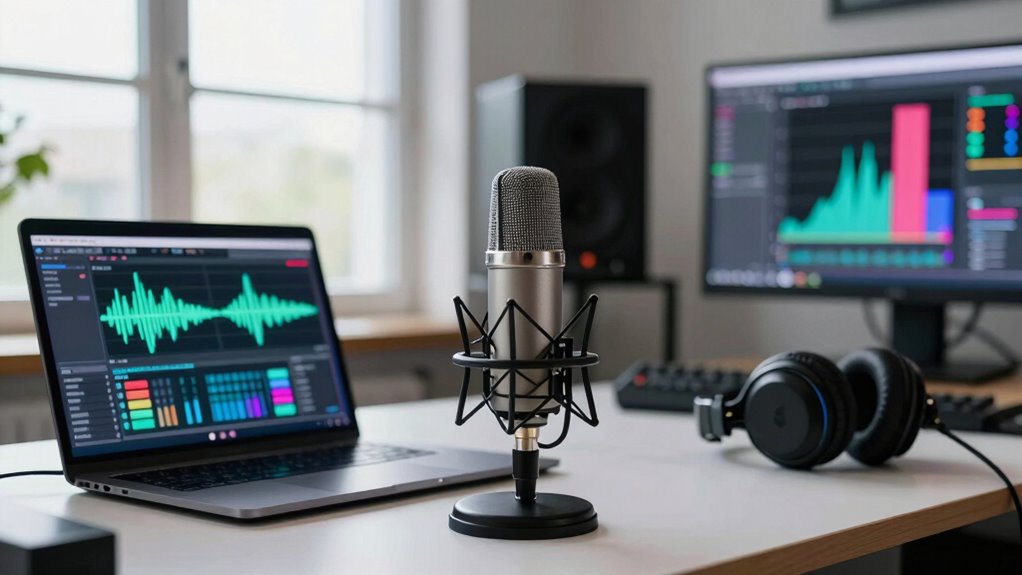

Speech-to-text and voice cloning technologies convert spoken words into written text and synthesize realistic voices, transforming communication and identity verification. You benefit from faster, more efficient interactions, but privacy concerns and ethical issues like misuse and consent also arise. Advances are making these systems smarter, more accurate, and emotionally aware. If you keep exploring, you’ll uncover how these innovations shape our future and the safeguards in place to manage their risks.

Get the latest gadgets delivered free — and shop member deals
- Fast, free delivery on millions of items
- Access to Prime Big Deal Days deals on October 6–7
- Prime Video, Amazon Music and more included
Key Takeaways
- Speech-to-text technology converts spoken language into written form using advanced neural networks and deep learning models.
- Voice cloning employs generative models, such as neural waveform synthesis, to create synthetic speech resembling a target voice.
- Both technologies rely on large datasets, training algorithms to improve accuracy, naturalness, and contextual understanding.
- Ethical concerns include privacy, consent, and potential misuse like deepfake audio and identity theft.
- Future advancements focus on real-time, emotionally aware transcription and secure verification methods like blockchain.
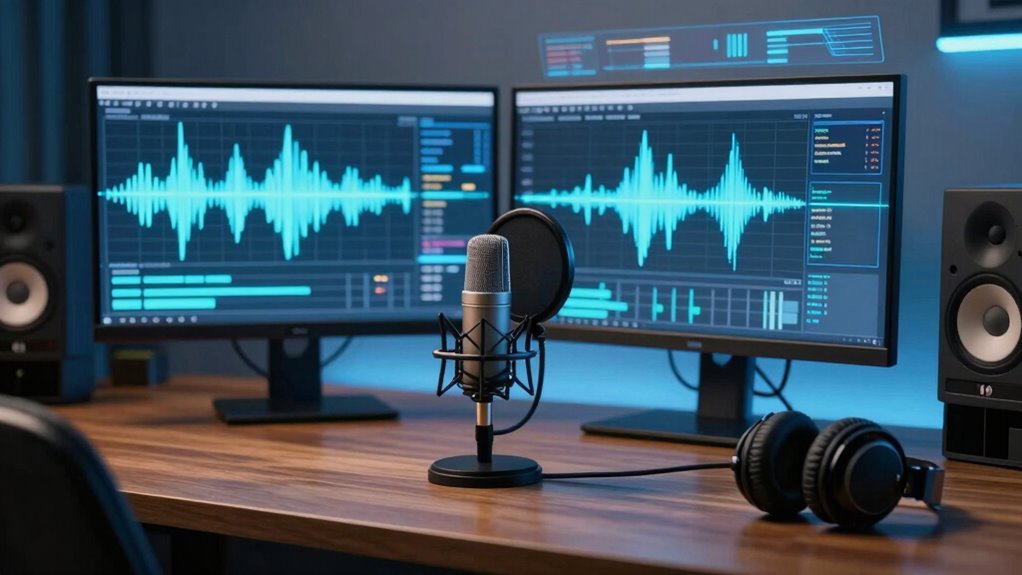
Speech-to-text technology has revolutionized how we convert spoken words into written form, making communication faster and more efficient. It’s now an integral part of our daily lives, from voice assistants to transcription services. As this technology advances, it’s essential to weigh the ethical implications that come with its widespread use. For example, privacy becomes a concern when sensitive conversations are transcribed and stored. You might worry about who has access to your voice data and how securely it’s protected. Additionally, there’s the risk of misuse, such as unauthorized recording or voice-based identity theft. As developers improve accuracy and integrate AI, the potential for misuse increases, raising questions about consent and the boundaries of voice data collection.
Speech-to-text tech enhances communication but raises privacy, consent, and misuse concerns in our increasingly connected world.
Meanwhile, voice cloning—a technology that generates synthetic speech that sounds like a specific individual—pushes these ethical issues further. You could see how voice cloning can be used for positive purposes, like helping people with speech impairments or creating realistic virtual assistants. However, it also opens doors to misuse, such as deepfake audio, impersonation scams, or spreading misinformation. The ethical implications here involve consent, authenticity, and the potential harm caused by falsely attributed speech. It’s vital that creators and users of speech and voice cloning tech develop clear guidelines and legal frameworks to prevent abuse. As the technology advances, ensuring ethical development will be crucial to prevent harmful applications.
Looking forward, future advancements promise to make speech-to-text and voice cloning even more sophisticated. You can expect these systems to become more accurate, context-aware, and capable of understanding nuance and emotion. Such improvements could lead to seamless, real-time transcription that captures not just words but tone and intent. Future innovations might also involve better privacy controls and more transparent AI, ensuring users have control over their voice data. Researchers are working on ways to authenticate voice content, possibly through digital signatures or blockchain, to combat the rise of fake audio. Additionally, increased focus on privacy controls could help mitigate some of the concerns related to data security and misuse. Furthermore, ongoing research aims to develop voice authentication methods that can verify the legitimacy of audio clips, adding another layer of security.
Despite these advancements, you should remain cautious about the ethical landscape. As technology progresses, so does the need for responsible use and regulation. Ensuring transparency, protecting privacy, and respecting consent will be essential in harnessing these tools for good. The future of speech-to-text and voice cloning holds incredible potential, but only if you approach it with awareness of the ethical challenges and a commitment to ethical development.
speech-to-text transcription device
As an affiliate, we earn on qualifying purchases.
As an affiliate, we earn on qualifying purchases.
Frequently Asked Questions
How Accurate Are Current Speech-To-Text Transcription Systems?
Current speech-to-text transcription systems are quite accurate, especially in controlled environments. You’ll find that accent recognition has improved considerably, helping systems adapt to diverse speech patterns. However, background noise can still pose challenges, often reducing transcription accuracy. Despite these hurdles, advancements continue to enhance reliability, making it easier for you to transcribe conversations accurately, even with varying accents or noisy surroundings.
Can Voice Cloning Replicate Emotional Nuances and Personality?
Voice cloning can replicate some emotional nuances and personality traits, but it often falls short of true emotional authenticity. You might notice the cloned voice mimics tone or inflection, yet it struggles to fully capture genuine feelings and complex personality layers. While technology advances, achieving perfect personality replication remains a challenge, and emotional authenticity still requires human touch. So, expect some limitations in conveying deep emotion through cloned voices.
What Are the Primary Ethical Concerns With Voice Cloning Technology?
You should be aware of deepfake dangers and consent challenges with voice cloning. These technologies can be misused to impersonate someone without permission, leading to misinformation, fraud, or emotional harm. Without clear consent, you risk violating privacy rights or causing reputational damage. It’s vital to establish strict ethical guidelines and legal safeguards to prevent abuse and protect individuals from potential harm caused by voice cloning misuse.
How Do Privacy Laws Impact the Use of Speech and Voice Data?
Privacy laws considerably impact how you can use speech and voice data by enforcing data ownership rights and requiring legal compliance. You must guarantee that you have explicit consent from individuals before collecting or processing their voice data. These laws protect individuals’ rights, meaning you need to handle data responsibly, comply with regulations like GDPR or CCPA, and respect data ownership to avoid legal issues and maintain trust.
What Industries Are Most Impacted by Speech-To-Text and Voice Cloning?
Imagine a bridge spanning diverse landscapes—that’s what speech-to-text and voice cloning do for industries. You’re likely to see heavy impacts in healthcare, education, and customer service, where language barriers are barriers no more. These tools serve as accessibility solutions, enabling clearer communication and inclusivity. By breaking down linguistic walls, you help create a world where everyone’s voice can be heard, understood, and valued.
Conclusion
Now that you understand how speech-to-text and voice cloning work, it’s clear these technologies are reshaping communication. Imagine a future where your voice can be perfectly replicated or instantly transcribed—what stories will you tell with that power? As these tools become more advanced, they’ll reveal new possibilities for connection and creativity. Are you ready to embrace this exciting leap forward, or will you let it pass by unnoticed? The choice is yours.
Fall Picks
fall essentials
As an affiliate, we earn on qualifying purchases.