
Smart cities use AI and automation to make urban living smarter, safer, and more sustainable. You benefit from optimized traffic flow, real-time public safety alerts, and smart homes that adapt to your needs. AI-powered infrastructure reduces waste, improves water management, and lowers emissions. Digital twins help planners test new ideas before implementation. Discover how these innovations are transforming your city and what’s coming next by exploring further.
Key Takeaways
- AI enables smarter city planning through data analysis, predictive modeling, and digital twin technology for sustainable urban development.
- Automated traffic management and IoT sensors optimize transportation flow, reducing congestion and commuting times.
- Smart security systems, facial recognition, and surveillance improve public safety and crime prevention.
- AI-powered waste and water management systems automate sorting, monitor resources, and detect issues to enhance environmental sustainability.
- Integration of AI and automation fosters economic growth, creates new jobs, and enhances quality of urban living through innovative technologies.
Revolutionizing Urban Infrastructure With AI
Artificial intelligence is transforming urban infrastructure by enabling smarter planning and management. You can leverage AI to analyze various data sources, helping you identify the best locations for new developments. Predictive modeling allows you to simulate future scenarios, ensuring growth stays efficient and sustainable. Global adoption of AI in cities demonstrates its vital role in urban development. AI also maximizes resource use, reducing waste and improving the delivery of public services. With data-driven insights, you make informed decisions that shape long-term infrastructure strategies. Plus, AI’s integration with IoT devices provides real-time data collection, enhancing management capabilities. These tools enable you to plan proactively, optimize resource allocation, and create smarter, more resilient urban environments that adapt to evolving needs. AI’s role in infrastructure revolutionizes how cities grow, operate, and serve their populations effectively.
Smarter Transportation for Safer, Faster Travel
Have you ever wondered how cities are making travel safer and faster? AI-driven traffic management optimizes signals in real time, reducing wait times by up to 30%. IoT sensors monitor vehicle and pedestrian density, rerouting traffic through connected apps to prevent gridlocks. Smart transportation systems are increasingly integrated into urban infrastructure, facilitating seamless data exchange between vehicles and traffic control centers. Predictive analytics forecast bottlenecks, enabling preemptive route adjustments. Centralized systems broadcast live transit updates, maintenance alerts, and alternative options. Emergency vehicle prioritization uses V2I tech to clear routes instantly during crises. Smart parking solutions guide drivers to open spots with sensors, reducing search time by over 40%, while dynamic pricing optimizes space use. Additionally, implementing real-time data enables more responsive traffic management, further improving urban mobility. Connected public transit detects vehicle issues early and relays capacity info, helping commuters choose safer, faster options. These innovations collectively enhance urban mobility, making travel smoother and safer for everyone. Additionally, self-watering plant pots demonstrate how sustainable technology can be integrated into urban living environments, promoting greener cities. Moreover, implementing advanced traffic sensors enhances the accuracy of congestion forecasting, further optimizing traffic flow and reducing environmental impact, especially when combined with expiration of outdated infrastructure. Utilizing innovative traffic management techniques can also boost overall efficiency and sustainability in urban transportation networks.
Planning Cities of the Future Through Digital Twins

Digital twins are transforming how cities plan for the future by creating detailed virtual models of urban environments. These replicas simulate city infrastructure, allowing you to explore different development scenarios and assess their impacts. By integrating real-time sensor data with historical information, digital twins provide a thorough view of city dynamics. This integration facilitates comprehensive urban analysis, enabling planners like you to evaluate infrastructure performance, predict environmental risks, and test sustainable development strategies before implementation. Digital twins also promote public involvement, giving residents access to interactive models and encouraging community feedback. Cities are generating and collecting vast amounts of data, with records dating back years. By consolidating data from multiple departments into a unified platform, they improve decision-making confidence. Incorporating energy consumption data into digital twin models can help identify opportunities for improving sustainability and reducing operational costs. Additionally, integrating urban infrastructure systems with digital twins allows for more precise simulation of traffic flow, utility management, and emergency response. Furthermore, linking digital twins with emerging AI technologies enhances the accuracy and utility of simulations. Ultimately, digital twins help you design smarter, more resilient cities equipped to handle future growth and challenges efficiently.
Enhancing Public Safety and Emergency Response
Cities are increasingly leveraging smart technologies to enhance public safety and speed up emergency responses. AI tools like facial recognition, cameras, and drones help reduce crime by up to 40%, making neighborhoods safer. AI helps create smart, safe cities globally. High-definition surveillance and video analytics improve crime detection and response times, while IoT sensors provide real-time situational awareness. Citizens can report issues via apps, streamlining communication. Emergency response times drop by 20-35% thanks to AI-driven data analysis and automated systems like text-to-911. Video analytics help identify critical situations quickly, enabling faster interventions. Additionally, integrated platforms foster better coordination among responders. The implementation of these technologies also encourages public trust through increased transparency and accountability. As these systems become more prevalent, ongoing privacy concerns and the need for clear policies are essential to safeguard individual rights and maintain public trust. Furthermore, addressing cybersecurity vulnerabilities in these interconnected systems is crucial to prevent malicious attacks that could compromise safety, emphasizing the importance of ongoing security measures and system resilience. Building user confidence through community engagement can further enhance the effectiveness of these smart safety initiatives.
Creating Intelligent Homes and Living Spaces

Advancements in smart city infrastructure are now extending into private homes, transforming them into interconnected, responsive living spaces. You can now rely on connected security systems with motion sensors, smart locks, and cameras that send real-time alerts and let you monitor remotely. These systems are often integrated with AI algorithms that enhance detection accuracy and automate responses, increasing overall safety. AI-driven facial recognition on smart doorbells helps distinguish residents from strangers, reducing false alarms. Automated lighting simulates occupancy to deter intruders when you’re away, and weather data integration adjusts security protocols like storm shutters. A centralized app dashboard lets you manage all security devices effortlessly. Smart thermostats optimize heating and cooling based on weather forecasts and usage patterns, while light sensors and occupancy detection automate lighting. These innovations create safer, more efficient, and more convenient homes tailored to your lifestyle.
The Environmental and Economic Benefits of AI Integration
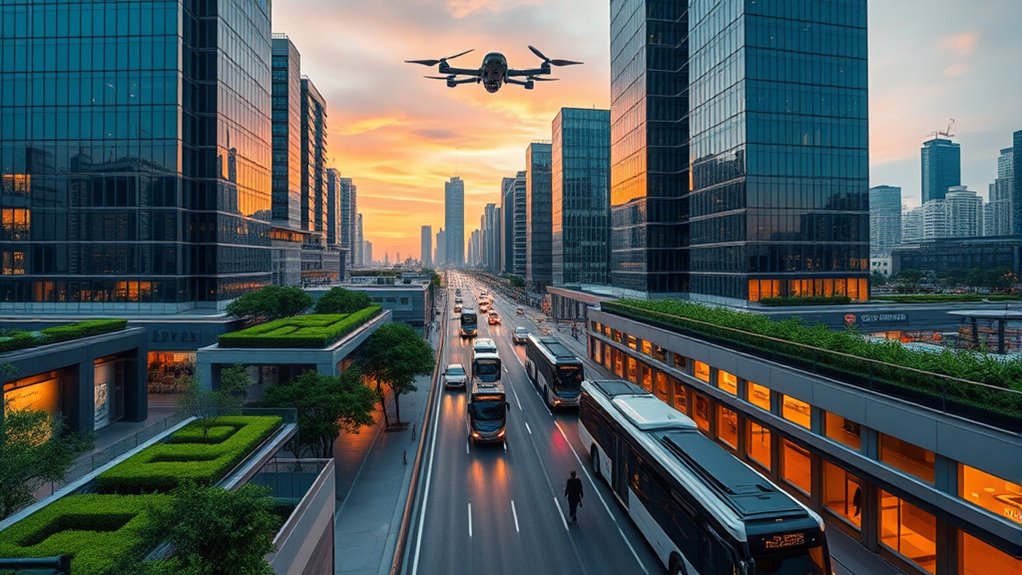
AI integration in smart city infrastructure delivers significant environmental and economic benefits by enhancing efficiency and sustainability. You’ll see AI-powered sensors monitoring air quality and weather, enabling smarter decisions that reduce pollution and improve outdoor living conditions. These sensors can help cities adjust their hours of operation to better serve residents and reduce unnecessary energy use. Additionally, AI-driven traffic management systems optimize flow, cutting vehicle emissions and boosting air quality. These innovations support ecological responsibility and healthier environments. Moreover, the use of aesthetic wall organization systems in urban planning can create more inviting public spaces that foster community engagement and well-being. The integration of data analysis enhances decision-making processes, ensuring that urban growth aligns with environmental goals. Automation in waste management and utilities further reduces operational costs and improves service efficiency, demonstrating the economic advantages of AI. Cities like Barcelona demonstrate how AI-driven solutions lower waste collection expenses and improve resource use.
AI-Driven Waste and Water Management Strategies
Have you ever wondered how smart technology transforms waste and water management? AI-driven systems automate waste sorting with high accuracy, using computer vision to separate recyclables, organics, and trash. They distinguish plastic types, improving recycling rates and reducing contamination. Sensors monitor sorting quality in real-time, and IoT-enabled smart bins notify collection services when full, increasing efficiency. Additionally, implementing cognitive recognition programs can help identify potential health issues related to water quality. Furthermore, advances in machine learning algorithms enable more precise predictions of waste generation patterns, leading to more effective resource allocation.
Predictive algorithms optimize garbage truck routes, saving fuel and lowering emissions, while forecasting waste generation helps schedule pickups dynamically. By analyzing data patterns, these systems can anticipate peak waste periods and adjust operations proactively.
For water management, AI detects pipe leaks by analyzing pressure data, predicts contaminant risks, and identifies consumption anomalies. It also forecasts floods by combining weather and drainage analytics and automates irrigation using soil moisture sensors.
These strategies streamline resource use, cut costs, and support sustainable urban living.
The Future of Job Growth and Investment in Smart Cities
As smart city development accelerates, job growth and investment opportunities are expanding across various sectors, transforming urban economies. Tech-driven roles in secondary and tertiary industries are surging, especially in IoT, data analytics, and urban tech manufacturing.
Public service jobs grow through digital infrastructure projects and e-governance platforms. The demand for data analysts and urban tech specialists is rising, creating new career paths.
Investment is projected to grow at 9.32% annually from 2024 to 2029, fueling venture capital in AI-powered urban planning and smart infrastructure. Local economies benefit from lower operational costs thanks to energy-efficient infrastructure.
Workforce development efforts, like digital upskilling and public-private partnerships, are closing skill gaps. Regional disparities persist, but smart city investments attract talent and firms, boosting job creation and economic growth.
Frequently Asked Questions
How Does AI Ensure Data Privacy in Smart City Systems?
You want to know how AI guarantees data privacy in smart city systems. AI classifies sensitive data with discovery tools, uses privacy-preserving models, and applies differential privacy techniques to protect identities.
It enables federated learning, keeping data decentralized, and employs zero-knowledge authentication for secure verification. These methods, combined with AI-driven threat detection and encryption, help you safeguard personal information while maintaining efficient urban management.
What Are the Main Challenges in Implementing AI at Scale?
You face several challenges when implementing AI at scale. High infrastructure costs, including hardware and maintenance, can be overwhelming.
You also need to navigate security and privacy concerns, ensuring data protection and cybersecurity.
Technical issues like data accuracy and system integration complicate deployment.
Additionally, regulatory gaps, public acceptance, and skill shortages pose hurdles.
Overcoming these obstacles requires careful planning, investment, and building trust with stakeholders to successfully expand AI solutions.
How Do Cities Address AI Algorithm Biases?
When facing AI algorithm biases, cities take proactive steps like conducting demographic audits to spot underrepresented groups.
For example, a city might analyze predictive policing models to guarantee they don’t unfairly target minority neighborhoods.
You can support this effort by advocating for transparency, participating in community councils, and staying informed about how data collection and validation help create fairer, more inclusive urban AI systems.
What Skills Are Needed for Future Jobs in Smart Cities?
You’ll need a mix of technical, project management, communication, and sustainability skills for future urban jobs. Get comfortable with data science, AI, IoT, and cloud computing to analyze and manage city systems.
Improve your teamwork, problem-solving, and stakeholder management abilities to coordinate projects effectively. Also, develop strong communication and cultural awareness to engage diverse communities and promote sustainable, ethical urban development.
How Is AI Regulated to Prevent Misuse or Errors?
Have you ever wondered how we keep AI in check? Cities regulate AI through robust governance frameworks, risk assessment tools, and project review processes that guarantee ethical use.
They develop policies to protect privacy, promote fairness, and foster accountability. International collaboration and standards also play a role, aligning city efforts with global norms.
These measures help prevent misuse and errors, ensuring AI benefits everyone responsibly and ethically.
Conclusion
As you walk through the glowing streets of a smart city, the seamless flow of traffic, crisp air, and vibrant community spaces come alive through AI’s touch. Automation paints a future where your daily life is smoother, safer, and more sustainable. With every smart sensor and digital twin working in harmony, you glimpse a city that evolves with you—a vibrant heartbeat of innovation, ready to embrace tomorrow’s possibilities.