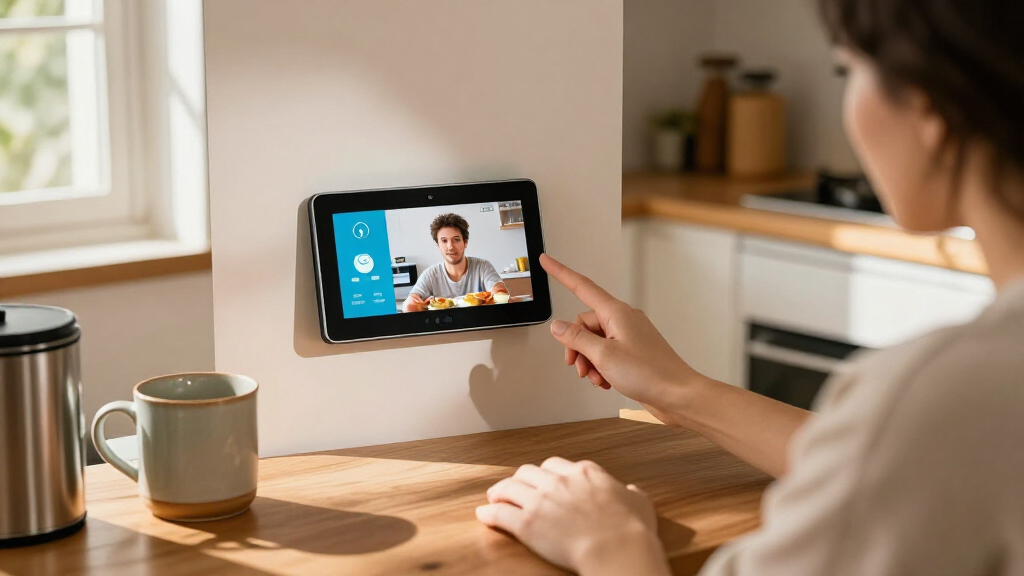

The best smart home video displays combine useful screen-based controls with video calling, home monitoring, or smart-home management. I rank the Google Nest Hub Max as the best overall for its large screen and versatile home hub features, while the Amazon Echo Show 11 stands out for a bigger Alexa display and the eufy Security Smart Display E10 for viewing compatible security cameras. The main tradeoffs are ecosystem fit, display size, privacy controls, and whether you need a camera on the display itself. Smaller Echo Show 5 models take less space, but their compact screens suit quick tasks better than video-heavy use. Read on for the full breakdown and guidance on matching a display to your home.

Get the latest gadgets delivered free with Prime
- Fast, free delivery on millions of items
- Prime Video, Amazon Music and more included
- Member-only deals all year
Complete the kit



Key Takeaways
- The Nest Hub Max is the most versatile all-rounder in this lineup, pairing a larger screen with amazon.com/dp/B09B2SBHQK?tag=t3chbillion-20&ascsubtag=dc-1205036″ target=”_blank” rel=”nofollow sponsored noopener”>amazon.com/dp/B0DC91H3JK?tag=t3chbillion-20&ascsubtag=dc-1205036″ target=”_blank” rel=”nofollow sponsored noopener”>amazon.com/dp/B07L6KVGXV?tag=t3chbillion-20&ascsubtag=dc-1205036″ target=”_blank” rel=”nofollow sponsored noopener”>Google Assistant for people who want one display to cover several household tasks.
- Screen size changes how a display works in daily use: the Echo Show 11 and Nest Hub Max suit shared rooms and video viewing better than the compact Echo Show 5 models.
- The eufy Security Smart Display E10 is the security-focused choice; buyers should prioritize it when viewing compatible camera feeds matters more than general-purpose assistant features.
- The Nanit Display Screen is purpose-built for baby monitoring, so it makes more sense for caregivers who want a dedicated monitor than for shoppers seeking a general smart-home hub.
- Three Echo Show 5 listings share the same core model name in different finishes; choose among them based on placement and appearance rather than expecting a different display role.
| Amazon Echo Show 5 Smart Display with Alexa, Cloud Blue |  | Best Compact Smart Home Display | Display: 5.5 inches | Camera: 2 MP | Color: Cloud Blue | VIEW LATEST PRICE | See Our Full Breakdown |
| Google Nest Hub Max 10-Inch Smart Display with Google Assistant, Chalk |  | Best for Large-Screen Google Home Control | Display size: 10 inches | Display resolution: 1280 × 800 pixels | Display type: LCD | VIEW LATEST PRICE | See Our Full Breakdown |
| Nanit Display Screen – 8″ Touchscreen Dedicated Baby Video Monitor – HD |  | Best Dedicated Baby Monitor Display | Screen size: 8 inches | Resolution: 1080p HD | Dimensions: 10.24 × 6.85 × 2.68 inches | VIEW LATEST PRICE | See Our Full Breakdown |
| Amazon Echo Show 11 Full HD Smart Display with Spatial Audio, Graphite |  | Best Overall Alexa Smart Home Display | Display: 10.95-inch Full HD touchscreen, 1920 × 1200 resolution | Dimensions: 10 × 5 × 7.2 inches (255 × 127 × 182 mm) | Weight: 45.92 oz (1302 g) | VIEW LATEST PRICE | See Our Full Breakdown |
| Meta Portal Smart Video Calling Device with 10-Inch Touchscreen, Black |  | Best for Video Calls | Screen size: 10 inches | Screen resolution: 1280 × 800 pixels | Camera: 13 MP | VIEW LATEST PRICE | See Our Full Breakdown |
| Amazon Echo Show 5 Smart Display with Alexa, Charcoal |  | Best Compact Alexa Display | Display: 5.5-inch touchscreen | Camera: 2 MP with built-in shutter | Dimensions: 5.8 x 3.6 x 3.2 inches (147 x 91 x 82 mm) | VIEW LATEST PRICE | See Our Full Breakdown |
| Amazon Echo Show 5 Smart Display, Glacier White |  | Best White Finish for Alexa Spaces | Display: 5.5-inch touchscreen | Camera: 2 MP with built-in shutter | Dimensions: 5.8 x 3.6 x 3.2 inches (147 x 91 x 82 mm) | VIEW LATEST PRICE | See Our Full Breakdown |
| eufy Security Smart Display E10, 8-Inch Smart Home Hub |  | Best for Security Camera Monitoring | Screen size: 8 inches | Storage: 64GB eMMC | Model: T87A0 | VIEW LATEST PRICE | See Our Full Breakdown |
| Google Nest Hub 7″ Smart Display with Google Assistant (1st Generation) – Chalk |  | Best Camera-Free Google Assistant Display | Display: 7 inches | Manufacturer: Google | Model number: H1A | VIEW LATEST PRICE | See Our Full Breakdown |
| smart home video display | Weight | Camera | Color | Dimensions |
|---|---|---|---|---|
| Amazon Echo Show 5 Smart Displ | — | 2 MP | Cloud Blue | — |
| Google Nest Hub Max 10-Inch Sm | 450 g | 6.5 MP; 1080p video capture | — | — |
| Nanit Display Screen | 1.54 pounds | — | — | 10.24 × 6.85 × 2.68 inches |
| Amazon Echo Show 11 Full HD Sm | 45.92 oz (1302 g) | 13 MP with auto framing | — | 10 × 5 × 7.2 inches (255 × 127 × 182 mm) |
| Meta Portal Smart Video Callin | 2.28 pounds | 13 MP | Black | 10.25 × 0.91 × 7.06 inches |
| Amazon Echo Show 5 Smart Displ | 16.1 oz (456 g) | 2 MP with built-in shutter | Charcoal | 5.8 x 3.6 x 3.2 inches (147 x 91 x 82 mm) |
| Amazon Echo Show 5 Smart Displ | 16.1 oz (456 g) | 2 MP with built-in shutter | Glacier White | 5.8 x 3.6 x 3.2 inches (147 x 91 x 82 mm) |
| eufy Security Smart Display E1 | 2.46 pounds | — | Black and white | — |
| Google Nest Hub 7" Smart Displ | 1.8 pounds | — | Chalk | 7 x 2.65 x 4.65 inches |
More Details on Our Top Picks
Amazon Echo Show 5 Smart Display with Alexa, Cloud Blue
I’d choose the Echo Show 5 when counter space matters more than screen size. Its 5.5-inch display suits quick checks of weather, photos, and compatible camera feeds, while the built-in camera adds video calling without requiring a separate device. Compared with the Echo Show 11, it takes up less room and includes physical camera and microphone controls, but its smaller screen is a poor fit for watching shows or viewing a room feed from across the kitchen. It also handles compatible Alexa smart home controls, making it a useful bedside or desk hub. Some functions depend on compatible devices or services, so I’d favor it for simple, glanceable tasks rather than as a main household entertainment screen.
Pros:- Compact 5.5-inch screen fits bedside tables and crowded counters
- Built-in camera supports video calls and compatible camera viewing
- Physical camera shutter and microphone-off button provide direct privacy controls
- Controls compatible Alexa smart home devices
Cons:- Small screen limits comfortable video viewing and distant camera monitoring
- Some features require compatible devices or services
Best for: Alexa households seeking a compact bedside or desk display for quick updates, calls, and compatible camera views.
Not ideal for: People who want a large screen for video, group viewing, or monitoring camera feeds from a distance.
- Display:5.5 inches
- Camera:2 MP
- Color:Cloud Blue
- Smart home control:Alexa-compatible devices
- Privacy controls:Microphone-off button and built-in camera shutter
- Fabric material:100% post-consumer recycled polyester yarn
- Aluminum:100% recycled aluminum
- Packaging:100% recyclable
Our verdict“Choose the Echo Show 5 for compact Alexa access and quick camera checks; pick the Echo Show 11 if screen size is your priority.”
Google Nest Hub Max 10-Inch Smart Display with Google Assistant, Chalk
The Nest Hub Max is the strongest fit here for buyers who want a roomy Google Assistant display that can also handle calls and entertainment. Its 10-inch, 1280 × 800 touchscreen gives camera views and on-screen controls more space than the Echo Show 5, and the built-in 6.5 MP Nest Cam adds a dedicated monitoring function. A stereo system with a subwoofer also makes it more suited to music and video than a small bedside display. The tradeoff is that its listed camera and smart home features are tied to the Google ecosystem, while the newer Echo Show 11 offers a higher-resolution screen and built-in Zigbee, Matter, and Thread hub. I’d choose this Nest for a Google-centered home, not for buyers seeking the newest connectivity options or a compact footprint.
Pros:- Large 10-inch touchscreen gives camera feeds and controls ample viewing space
- Built-in 6.5 MP Nest Cam supports home monitoring and video calls
- Stereo audio with a 30W subwoofer suits music and video playback
- Works with compatible smart home devices
Cons:- Google ecosystem focus may not suit Alexa-centered households
- Software update support date is not provided
- No battery runtime information is provided
Best for: Google Assistant households that want one large display for smart home controls, camera viewing, video calls, and media.
Not ideal for: Buyers who need a compact display, newer listed smart home hub protocols, or clearly specified ongoing software support.
- Display size:10 inches
- Display resolution:1280 × 800 pixels
- Display type:LCD
- Camera:6.5 MP; 1080p video capture
- Audio:Stereo system with 30W subwoofer; 50W total output
- Connectivity:Bluetooth
- Operating system:Android
- Memory and storage:4 GB RAM; 4 GB storage
- Weight:450 g
Our verdict“Pick the Nest Hub Max for a large Google-based home control and media screen, but choose the Echo Show 11 for newer listed hub connectivity and a sharper display.”
Nanit Display Screen – 8″ Touchscreen Dedicated Baby Video Monitor – HD
The Nanit Display Screen earns its place as the specialist pick for parents already using Nanit cameras. Unlike the Google Nest Hub Max or Echo Show 11, it is not a general-purpose smart home screen: it is a dedicated monitor with live nursery video, two-way audio, sleep status, and split-screen viewing for multiple Nanit cameras. That focus can make overnight checks more direct, and the 8-inch 1080p screen is larger and sharper on paper than the Nest Hub Max’s 10-inch, 1280 × 800 panel. The tradeoffs are substantial: this display has no camera of its own, full functionality requires a Nanit monitor and Insights subscription, and screen-on battery life is listed at only 3–6 hours. I’d recommend it for a Nanit-equipped nursery, not as a shared household dashboard.
Pros:- 8-inch 1080p touchscreen provides a detailed nursery view
- Split-screen supports viewing multiple Nanit cameras at once
- Two-way audio and background audio support listening and communication
- Portable battery operation allows use away from a fixed power outlet
Cons:- Requires a separate Nanit Smart Baby Monitor and an Insights subscription for full functionality
- Display does not include its own camera
- Screen-on battery life is listed at only 3–6 hours
Best for: Parents with Nanit cameras who want a dedicated portable screen for nursery video, sleep updates, and more than one camera feed.
Not ideal for: Households seeking an all-purpose smart home display, buyers without Nanit equipment, or anyone needing long screen-on battery runtime.
- Screen size:8 inches
- Resolution:1080p HD
- Dimensions:10.24 × 6.85 × 2.68 inches
- Weight:1.54 pounds
- Battery:1 lithium-ion battery required
- Screen-on battery life:3–6 hours
- Material:Plastic
- Monitor compatibility:Nanit Smart Baby Monitor
Our verdict“Choose the Nanit display if your nursery already uses Nanit cameras; for broader smart home control, the Echo Show 11 is the more versatile pick.”
Amazon Echo Show 11 Full HD Smart Display with Spatial Audio, Graphite
I rank the Echo Show 11 first for buyers who want a large screen to serve as both a smart home hub and a shared household display. Its 10.95-inch Full HD panel gives camera views, calls, and controls more room than the Echo Show 5, while the 13 MP auto-framing camera is better suited to calls when people move around. The built-in Zigbee, Matter, and Thread hub also reduces the need for separate bridges in compatible setups, a broader hub feature set than the listed Nest Hub Max specifications. Spatial audio and room sensors add useful everyday functions, though the device’s size calls for a dedicated counter or shelf spot. Some capabilities still depend on Alexa and compatible devices, so I’d pass if you want a small display or do not use Amazon’s ecosystem.
Pros:- 10.95-inch Full HD touchscreen offers more detail and viewing area than the Echo Show 5
- Built-in Zigbee, Matter, and Thread Border Router supports a wide range of compatible smart home devices
- 13 MP auto-framing camera helps keep callers in view as they move
- Spatial audio and room sensors add media and household awareness features
Cons:- Large footprint can be difficult to fit on crowded counters
- Some features depend on Alexa and compatible smart home devices
Best for: Alexa households seeking a large, high-resolution central display with video calling and built-in support for several smart home standards.
Not ideal for: People with limited counter space or buyers whose smart home setup does not use Alexa or compatible devices.
- Display:10.95-inch Full HD touchscreen, 1920 × 1200 resolution
- Dimensions:10 × 5 × 7.2 inches (255 × 127 × 182 mm)
- Weight:45.92 oz (1302 g)
- Camera:13 MP with auto framing
- Audio:1 × 2.8-inch woofer and 2 full-range drivers
- Wireless:Wi-Fi 6E (IEEE 802.11ax); Bluetooth 5.4
- Smart home hub:Zigbee, Matter, and Thread Border Router
- Processor:AZ3 Pro with AI Accelerator
- Sensors:Ambient temperature, ambient light, presence detection, and camera
Our verdict“Choose the Echo Show 11 as a central Alexa display if you have room for it; the Echo Show 5 is better for compact spaces.”
Meta Portal Smart Video Calling Device with 10-Inch Touchscreen, Black
The Meta Portal is the call-first choice in this group. Its 13 MP camera uses automatic framing to keep people in view as they move, and sound enhancement is designed to help speech stay clear. Support for Messenger, WhatsApp, Zoom, and Microsoft Teams makes it more flexible for calling than the Nanit Display Screen, which is built around its own baby-monitor system. The 10-inch touchscreen can also show photos between calls, but the Portal’s 1280 × 800 resolution is less detailed than the Echo Show 11 Full HD panel. It also relies on Wi-Fi and AC power, and some functions need extra accounts or the Portal mobile app. I’d pick it for frequent household calls, not as the most capable general smart home hub.
Pros:- Automatic camera framing keeps callers in view as they move
- Supports calling through Messenger, WhatsApp, Zoom, and Microsoft Teams
- Camera and microphone controls include a physical camera cover
- Can display photos when not being used for calls
Cons:- Requires Wi-Fi and AC power, limiting placement options
- Some features require additional accounts or the Portal mobile app
- 1280 × 800 screen is lower resolution than the Echo Show 11’s Full HD display
Best for: Households that make frequent calls across Messenger, WhatsApp, Zoom, or Microsoft Teams and want automatic camera framing.
Not ideal for: Buyers focused on smart home hub functions, cordless placement, or a higher-resolution screen.
- Screen size:10 inches
- Screen resolution:1280 × 800 pixels
- Camera:13 MP
- Weight:2.28 pounds
- Dimensions:10.25 × 0.91 × 7.06 inches
- Wireless:802.11ac
- Storage:16 GB flash memory
- Power:Corded electric
- Color:Black
Our verdict“Choose the Meta Portal for flexible video calling and automatic framing; choose the Echo Show 11 if smart home control and screen resolution matter more.”
Amazon Echo Show 5 Smart Display with Alexa, Charcoal
The Echo Show 5 suits a bedside table, desk, or other spot where a larger screen would take up too much room. Its 5.5-inch touchscreen handles quick checks of weather, photos, and compatible smart-home controls, while Alexa and the 2 MP camera support video calls and camera monitoring. Compared with the Google Nest Hub 7-inch, this model takes up less space and adds a camera with a physical shutter, but its smaller screen is less suited to watching videos or viewing several details at once. The microphone and camera off button offers another privacy control. Its tradeoffs are a modest speaker and reliance on standard Wi-Fi; some services may also require fees, and it does not support ad-hoc Wi-Fi networks.
Pros:- Small footprint fits bedside tables and crowded desks.
- Alexa voice control and touchscreen provide two ways to manage compatible smart-home devices.
- 2 MP camera supports video calls and compatible camera monitoring.
- Built-in camera shutter and microphone/camera off button provide physical privacy controls.
Cons:- The 5.5-inch screen is less comfortable for extended video viewing than the Google Nest Hub 7-inch.
- Some skills and services may require subscriptions or additional fees.
- Does not support ad-hoc Wi-Fi networks.
Best for: Alexa households looking for a small bedside or desk display for quick smart-home controls, brief viewing, and video calls.
Not ideal for: Buyers who want a larger screen for extended video viewing, or who need ad-hoc Wi-Fi support.
- Display:5.5-inch touchscreen
- Camera:2 MP with built-in shutter
- Dimensions:5.8 x 3.6 x 3.2 inches (147 x 91 x 82 mm)
- Weight:16.1 oz (456 g)
- Speaker:1.75-inch full-range built-in speaker
- Wi-Fi:Dual-band 802.11a/b/g/n/ac
- Bluetooth:A2DP and AVRCP support
- Processor:MediaTek MT 8169
- Color:Charcoal
Our verdict“Choose this Echo Show 5 if you want a compact Alexa display with camera-based calling and monitoring rather than a larger screen for viewing content.”
Amazon Echo Show 5 Smart Display, Glacier White
This Glacier White Echo Show 5 offers the same compact Alexa display setup as the Charcoal version, making its main distinction a finish that may better suit a light-colored bedside table, kitchen, or office. The 5.5-inch touchscreen is suited to brief viewing, photos, calls, and compatible smart-home controls, not extended video sessions. Compared with the eufy Security Smart Display E10, it is a smaller, general-purpose Alexa display rather than a dedicated multi-camera security screen; it also has a camera for calls, with a physical shutter. Its microphone and camera off button adds a direct privacy control. The compact size comes with limited viewing space, and some services may involve extra fees. It also requires standard Wi-Fi rather than an ad-hoc network. Recycled materials and recyclable packaging are additional points of distinction.
Pros:- Compact screen fits small bedside tables, counters, and desks.
- Alexa supports compatible smart-home controls and voice-led use.
- Camera supports video calls and includes a built-in shutter.
- Made with recycled materials and supplied in recyclable packaging.
Cons:- The 5.5-inch display offers less room for video and detailed camera views than larger hubs.
- Some skills and services may require subscriptions or additional fees.
- Does not support ad-hoc Wi-Fi networks.
Best for: Alexa users who want a compact display in a light-colored room and value a camera shutter and recyclable packaging.
Not ideal for: Households that need a large security-camera overview, a room-filling display, or ad-hoc Wi-Fi support.
- Display:5.5-inch touchscreen
- Camera:2 MP with built-in shutter
- Dimensions:5.8 x 3.6 x 3.2 inches (147 x 91 x 82 mm)
- Weight:16.1 oz (456 g)
- Speaker:1.75-inch full-range built-in speaker
- Wi-Fi:Dual-band 802.11a/b/g/n/ac
- Bluetooth:A2DP and AVRCP support
- Processor:MediaTek MT 8169
- Color:Glacier White
Our verdict“Pick the Glacier White Echo Show 5 if you want the compact Alexa features of the Charcoal model in a light finish, and do not need a larger security-focused screen.”
eufy Security Smart Display E10, 8-Inch Smart Home Hub
The eufy Security Smart Display E10 is the most security-focused pick here: it can show up to four live camera feeds and surface doorbell, door-unlock, and camera alerts. That makes it a better fit for keeping an eye on entry points than either Echo Show 5, whose smaller screen is aimed at general Alexa use, or the Google Nest Hub 7-inch, which is described as a general smart display. Local storage lets you replay event footage from the hub, while daily security summaries can draw on HomeBase 3 recognition features. The tradeoff is ecosystem dependence: facial and package recognition require HomeBase 3, so buyers without that system should not expect the full set of features. At 2.46 pounds, it is also a more substantial dedicated hub than the compact Echo Show 5.
Pros:- Shows up to four live security camera feeds at once.
- Hands-free alerts cover doorbell rings, door unlocks, and camera detections.
- 64GB local storage supports event footage playback from the hub.
- Daily security summaries are available with HomeBase 3.
Cons:- Facial and package recognition features depend on HomeBase 3.
- Its security-specific role is less suited to buyers seeking a general Alexa or Google Assistant display.
- At 2.46 pounds, it is heavier than the Echo Show 5 and less suited to frequent repositioning.
Best for: Eufy camera and doorbell owners who want a fixed display for several live feeds, event alerts, and local footage playback.
Not ideal for: Buyers without a compatible eufy security setup, especially those expecting HomeBase 3 recognition features without owning HomeBase 3.
- Screen size:8 inches
- Storage:64GB eMMC
- Model:T87A0
- Manufacturer:eufy
- Color:Black and white
- Weight:2.46 pounds
- Included components:5V/2A adapter, charging station, Smart Display E10, Type-C charging cable, wall mount
- Battery:One AAA battery included; lithium-ion battery cell type
Our verdict“Choose the E10 if your priority is viewing and reviewing eufy security events on a dedicated screen, rather than general-purpose smart-display use.”
Google Nest Hub 7″ Smart Display with Google Assistant (1st Generation) – Chalk
The Google Nest Hub 7-inch is a sensible choice for Google Assistant households that want a larger viewing surface without adding a camera. Voice commands and the touchscreen cover everyday tasks such as timers, reminders, weather, photos, and compatible smart-home controls. Compared with the Echo Show 5, the larger screen gives content more room, while the Echo Show includes a camera for video calls; this Nest Hub has no built-in camera. It also differs from the eufy Security Smart Display E10, which is built around multi-camera feeds and security-event playback rather than general Assistant use. This listing is a Korean-spec model that can be switched to English after setup, a detail that may add friction for buyers expecting English out of the box. Its Google ecosystem focus also rules out non-Google assistants.
Pros:- 7-inch display offers more viewing room than the Echo Show 5.
- Google Assistant supports hands-free help and compatible smart-home controls.
- Compact size suits kitchens, bedrooms, and offices.
- Language can be switched from Korean to English after setup.
Cons:- Limited to the Google ecosystem and does not support non-Google assistants.
- No built-in camera for video calls.
- The Korean-spec model requires a language switch after setup for English use.
Best for: Google Assistant users who want a 7-inch screen for household controls and everyday viewing but do not need video calls.
Not ideal for: Alexa households, buyers who need a built-in camera for calls, or shoppers who require an English-language setup without switching the Korean-spec model.
- Display:7 inches
- Manufacturer:Google
- Model number:H1A
- Weight:1.8 pounds
- Dimensions:7 x 2.65 x 4.65 inches
- Color:Chalk
- Included components:Cable
- Language:Korean spec model; can be switched to English after setup
Our verdict“Choose this Nest Hub if you use Google Assistant and prefer a larger camera-free display for daily home controls over the Echo Show 5’s video-calling camera.”
How We Picked
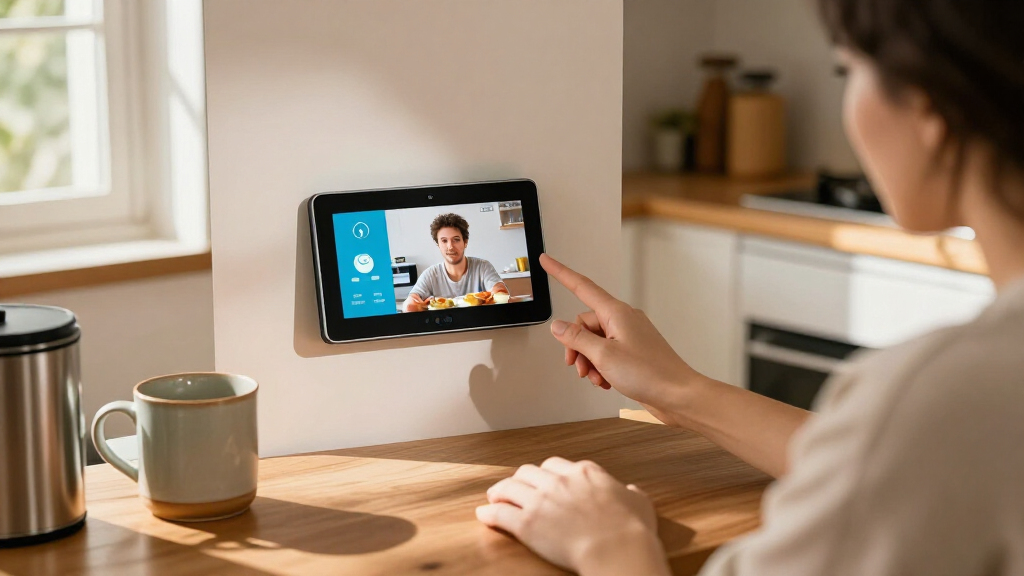
I ranked these displays around the jobs people actually expect them to do: show camera feeds, handle video calls, control connected devices, and provide useful information at a glance. I weighed screen size and viewing practicality against room footprint, interface and assistant ecosystem, device specialization, and how well each option suits a particular household. A display with a focused purpose can be the better choice for that task, even if it is less versatile overall.
Versatility and everyday usability put the Nest Hub Max at the top, while the Echo Show 11 follows for buyers who want a larger Alexa-centered display. The E10 and Nanit rank by their specific security and baby-monitoring roles; they are not substitutes for a general-purpose display in every home. The Echo Show 5 variants and first-generation Nest Hub offer compact alternatives, but their smaller screens or older generation position them behind larger, more flexible picks for video-centric use. I also treated the repeated Echo Show 5 finishes as a single product family rather than implying that color changes functionality.
| smart home video display | Color |
|---|---|
| Amazon Echo Show 5 Smart Displ | Cloud Blue |
| Google Nest Hub Max 10-Inch Sm | — |
| Nanit Display Screen | — |
| Amazon Echo Show 11 Full HD Sm | — |
| Meta Portal Smart Video Callin | Black |
| Amazon Echo Show 5 Smart Displ | Charcoal |
| Amazon Echo Show 5 Smart Displ | Glacier White |
| eufy Security Smart Display E1 | Black and white |
| Google Nest Hub 7" Smart Displ | Chalk |
Factors to Consider When Choosing Best Smart Home Video Displays
Before choosing a screen, I would decide what you want it to do most often and where it will live. A display that looks capable on a feature list may be awkward if it is too small to check a camera feed from across the room, tied to an ecosystem you do not use, or fitted with capabilities you would rather disable. These factors help separate a useful household screen from one that mostly takes up counter space.
Match the Display to Your Main Job
Start by naming the task that would make the screen worth having: checking cameras, making calls, managing smart-home devices, or monitoring a baby. General-purpose displays can cover several jobs, while dedicated monitors often make one workflow more direct. A common mistake is buying a specialized monitor and expecting it to replace a flexible home hub, or choosing a general display when uninterrupted monitoring is the priority. Think about who will use it and whether they need a simple, always-ready screen or a device they will interact with for varied tasks. If your needs are split, rank the most frequent job first and treat the others as bonuses. That approach can prevent paying for versatility you will rarely use.
Choose a Screen Size for the Viewing Distance
A screen that seems large on a product page can still feel small when it sits across a kitchen or living room. Consider the distance from the usual viewing spot, the size of the counter or bedside table, and whether you will read text or mostly glance at images. Larger displays are generally easier to share and view from farther away, but take up more space and can be less suited to a crowded nightstand. Compact screens fit more places, yet video calls and camera details can feel constrained. Before choosing, mark out the device footprint and imagine where its screen will face. The right size is the one that stays visible without making its location less useful.
Check Ecosystem and Camera Compatibility
Smart displays work best when their assistant and connected devices fit the systems already in your home. Check whether the lights, cameras, doorbells, and routines you rely on can be viewed or controlled from the display, rather than assuming that every device will work equally well across platforms. Camera compatibility matters especially: a display that cannot show your existing feed may add little to a security setup. If your household uses more than one ecosystem, decide which devices need screen access and test those requirements against the product’s supported services. A mismatch can leave you with duplicated apps or voice commands that behave differently by room. Keep the hub’s core job narrow enough that compatibility is easy to verify.
Decide Whether the Display Needs Its Own Camera
An integrated camera can make video calls easier and may support camera-based features, but it also changes the privacy tradeoff. If you plan to place the display in a bedroom or another private space, check how the camera and microphone can be disabled, and whether a physical control is available. Some households may prefer a screen without a built-in camera, especially when its main purpose is showing a separate security feed. Others will value being able to call family without reaching for another device. Do not treat a camera as an automatic upgrade; ask whether the people in that room will use it. Placement and privacy preferences should guide the choice.
Separate General Home Displays From Dedicated Monitors
A baby monitor or security-focused screen may make a more dependable fit for one specific routine than a broad assistant display, but specialization can narrow its usefulness elsewhere. Consider who needs access to the feed, whether the screen will stay in one room, and what happens when monitoring is no longer the main need. A dedicated device can simplify regular checks, while a multipurpose display can earn its space throughout the day. Buyers often compare these devices only by screen size, overlooking the differences in intended workflow and compatible equipment. Choose the specialist when its particular job is central to your household; otherwise, favor a general display that can serve more than one person or room.
Think About Placement, Controls, and Daily Upkeep
Placement affects how often a display gets used: a kitchen hub should be easy to glance at, while a bedside monitor needs to be comfortable within reach. Check power and cable routing, counter depth, viewing angle, and whether controls are accessible to everyone who will use it. Touchscreens can be convenient, but voice control may be more practical when hands are busy; neither replaces checking that essential tasks are easy to perform. Also think about software support and how the display fits into your household’s routines over time, particularly for older models or devices tied to a specific service. A quick placement plan can reveal that a larger screen will block workspace or that a smaller one will be hard to see. The best fit is the display that suits the room as well as the feature list.
Frequently Asked Questions
Should I choose an Amazon Echo Show or a Google Nest Hub?
I would choose based on the assistant and smart-home services your household already relies on, then compare screen size and camera needs. The Echo Show models suit buyers building around Alexa, with the Echo Show 11 offering a larger-screen route and the Echo Show 5 taking less space. The Nest Hub options fit Google Assistant households, while the Nest Hub Max is the more versatile pick in this lineup. Check that your existing cameras and connected devices work with the platform you choose. Switching ecosystems just for a display can create more friction than the screen solves.
Is a larger smart display worth the extra space it takes up?
A larger screen is most useful when people will view it from a distance, share it, or use it for video calls and camera feeds. It is less compelling if the display will sit close by for brief voice commands or timers. Measure the intended spot and think about whether the screen will compete with workspace, bedside items, or other controls. The Echo Show 11 and Nest Hub Max are better suited to prominent shared locations than a small bedside table. If the screen is mainly for quick glances, a compact model may be easier to live with.
Can I use a smart display as a home security monitor?
Often, but the useful question is whether the display supports your particular cameras and whether their feeds are convenient to access. The eufy Security Smart Display E10 is the lineup’s security-oriented option, while general-purpose displays can suit homes that want camera viewing alongside other assistant tasks. Confirm compatibility for each camera rather than relying on the display’s general smart-home label. Consider where the screen will sit and whether that location makes checking a feed practical. A display can help view cameras, but it should not be treated as a replacement for a complete security setup.
Is a dedicated baby monitor a better choice than a general smart display?
A dedicated monitor makes more sense when baby monitoring is the primary job and caregivers want a screen centered on that routine. The Nanit Display Screen is the specialist in this roundup, whereas general displays are better suited to households that also want broader assistant and smart-home functions. Before choosing, check what monitoring features depend on compatible equipment or services and whether caregivers need access from multiple locations. Also think about how the device will be used after the monitoring stage ends. A general display may have a longer list of household uses, but that does not make it the better monitor for every family.
Which Echo Show 5 listing should I buy?
The three Echo Show 5 entries here are listed in Cloud Blue, Charcoal, and Glacier White, so the main difference shown is finish rather than a distinct role in this roundup. Pick the color that suits the room and confirm the listing matches the model you intend to purchase. Do not assume that a different finish means a larger screen or a different feature set. If you need a display that is easier to view across a shared room, compare the Echo Show 5 with the larger Echo Show 11 instead. For a compact location, the finish can be the deciding factor once model details are confirmed.
Conclusion
For a single display to handle a range of household tasks, I recommend the Google Nest Hub Max as best overall. The best premium-style choice for a larger Alexa screen is the Echo Show 11, while the eufy Security Smart Display E10 fits buyers who put compatible camera viewing first. For beginners already using Alexa, an Echo Show 5 offers a compact way to start; choose among the Cloud Blue, Charcoal, and Glacier White listings by finish. Caregivers seeking a dedicated baby-monitor screen should look at the Nanit Display Screen, while Google households with limited space may prefer the smaller Nest Hub. My final advice is to choose by ecosystem and primary job first, then let screen size and room placement settle the tie.
Halloween Picks
halloween
As an affiliate, we earn on qualifying purchases.