
TL;DR

Get the latest gadgets delivered free — and shop member deals
- Fast, free delivery on millions of items
- Access to Prime Big Deal Days deals on October 6–7
- Prime Video, Amazon Music and more included
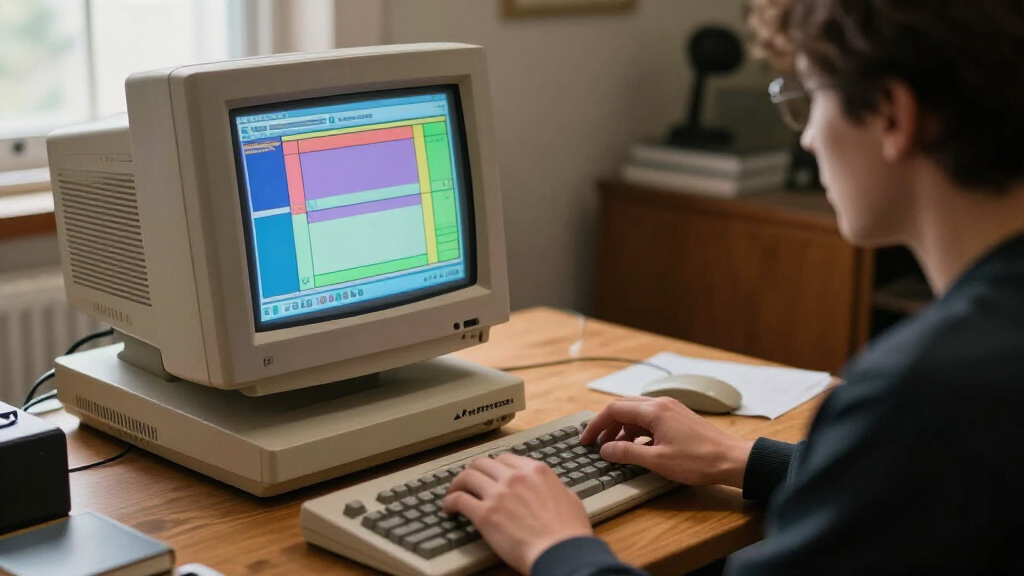
Online interest in the Commodore Amiga’s “screens” feature is spiking, though no specific product launch or announcement has been confirmed as the trigger. Screens were the Amiga’s system for holding multiple independent displays with separate resolutions and color depths in memory simultaneously.
Online search interest in Amiga screens — the Commodore Amiga’s distinctive system for managing multiple independent displays — has spiked in recent days, according to trend-tracking signals, prompting a wave of explainers and retrospectives about one of the classic platform’s best-remembered technical features. No product launch, anniversary event, or major announcement has been confirmed as the cause of the surge.
The Amiga, launched by Commodore in 1985, introduced a display architecture that differed sharply from its contemporaries. Rather than offering a single fixed display mode, the Amiga’s operating system allowed programs to create and hold multiple “screens” in memory at the same time. Each screen could have its own resolution, color depth, and palette, and users could drag screens up or down in front of one another with the mouse.
This meant a user could, for example, keep a high-resolution Workbench screen — the Amiga’s desktop environment — stacked behind a lower-resolution, color-rich screen running a game or a paint program, and slide between them instantly. The feature relied on the Amiga’s custom graphics chipset, most famously the Agnus chip’s blitter and copper coprocessors, which could switch display parameters mid-frame, allowing several screens with different video timings to coexist on one monitor.
For a machine of the mid-1980s, this was an unusual capability. Competing systems such as MS-DOS PCs and the Apple Macintosh of the era generally presented one display mode at a time, and switching modes usually meant closing or restarting applications. The Amiga’s approach is frequently cited in retro-computing communities as ahead of its time, and comparisons are often drawn to modern virtual desktops, multiple monitor setups, and window managers with per-workspace settings.
Why Retro Display Architecture Draws Eyes Now
The renewed interest matters for a few reasons. First, the Amiga remains one of the most studied platforms in retro-computing, with an active emulation scene — projects such as WinUAE and FS-UAE have long supported the screen system — and ongoing hardware efforts that keep the machine in circulation among enthusiasts. Primers on core concepts like screens help newer users coming to the platform through emulation.
Second, the Amiga’s screen system is a recurring reference point in modern interface design discussions. The idea of independent display surfaces with different resolutions coexisting in memory prefigures features that mainstream operating systems adopted years later, and the design is often cited when engineers and historians discuss how the Amiga influenced — or anticipated — later graphics architectures.
Finally, spikes in interest around niche technical topics often signal broader activity, such as new documentation projects, YouTube retrospectives, or community anniversaries. The direction of the current surge, however, is not established.
How the Amiga Screen System Worked
Screens on the Amiga were a level above windows. The operating system’s Intuition layer managed Workbench screens and application-created “custom screens,” each with its own memory layout, palette, and resolution set by the program that opened it. A screen could be opened in the background while another was visible, and the user could grab the title bar of the frontmost screen and pull it down to reveal the one behind — a visual effect that became one of the machine’s signature demonstrations.
The underlying hardware made this possible. The custom chipset could redefine the display partway down the screen, so the monitor effectively displayed slices of several screens in a single frame. Later Amiga models expanded the capability: the AGA chipset, introduced in 1992 with machines such as the Amiga 1200 and 4000, added 256-color display modes, and add-on graphics cards of the era extended resolution well beyond what the original chipset allowed.
Commodore went bankrupt in 1994, but the platform survived through successors, clones, and a persistent enthusiast community that continues developing software and hardware for it.
What Is Behind the Current Spike
The trigger for the surge in interest is unconfirmed. Trend signals show elevated search and coverage activity around the phrase, but they do not indicate whether the cause is a new video, a community project milestone, an emulation release, an upcoming anniversary, or simply organic rediscovery of the topic.
No vendor, museum, or community organization has announced an event tied to the spike as of this writing. Readers should treat any claimed cause circulating on social media as unverified unless it comes with a direct, attributable source.
Where the Interest May Lead
If the spike is tied to a specific release or media piece, an attributable announcement will likely surface in the coming days, at which point the cause can be confirmed. Independent of the trigger, the Amiga ecosystem continues to produce developments worth watching: ongoing emulation updates, new accelerator and FPGA-based hardware projects, and preservation efforts around Amiga software and documentation. Readers interested in the screen system itself can explore it directly through established emulators, which reproduce the multi-screen behavior of the original hardware.
Key Questions
What are screens on the Amiga?
Screens are independent display surfaces the Amiga operating system could hold in memory simultaneously, each with its own resolution, color depth, and palette. Users could slide them in front of one another with the mouse.
How is a screen different from a window?
Windows exist inside a screen. Screens sit above windows in the Amiga’s display hierarchy, and each screen can have entirely different display settings set by the program that opened it.
Could other computers of the era do this?
Not in the same way. Most contemporaries offered one display mode at a time, and switching modes typically disrupted running programs. The Amiga’s custom chipset could change display parameters within a single frame, letting multiple screens coexist.
Why is interest in Amiga screens rising now?
That is unclear. Search interest has spiked, but no specific announcement, release, or event has been confirmed as the trigger.
Can I try the screen system today?
Yes. Established Amiga emulators reproduce the screen system, and original hardware and modern recreation boards remain in use among enthusiasts.
Source: hn
Fall Picks
fall essentials
As an affiliate, we earn on qualifying purchases.