
TL;DR

Get the latest gadgets delivered free with Prime
- Fast, free delivery on millions of items
- Prime Video, Amazon Music and more included
- Member-only deals all year
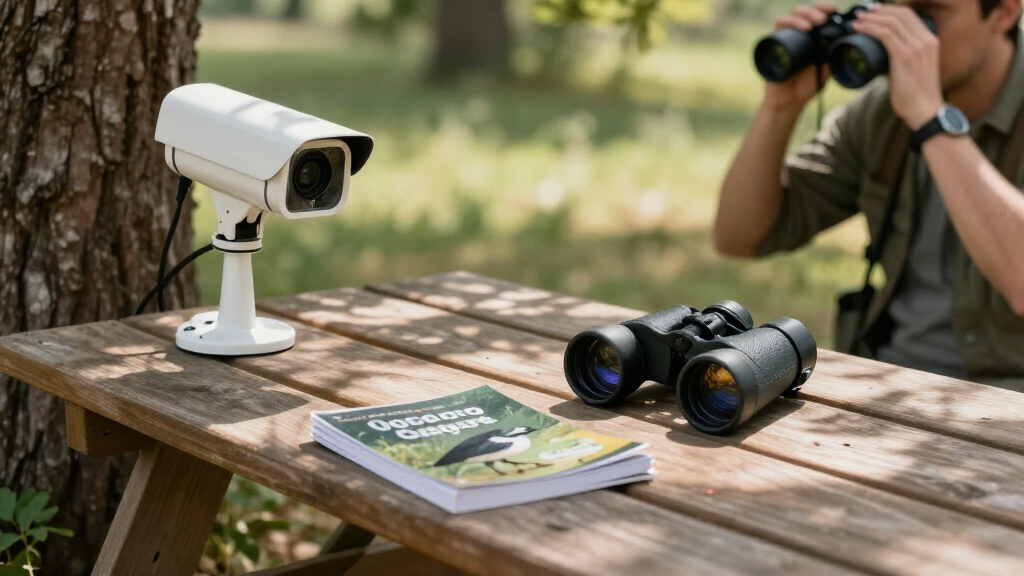
A homeowner has modified their security cameras to automatically identify bird species using AI software. This innovative approach combines surveillance tech with wildlife monitoring, attracting significant online attention. The development is still in early stages, with technical and privacy questions remaining.
A homeowner has successfully repurposed their security cameras into an automatic bird identification system using artificial intelligence software. This development highlights a creative use of existing surveillance technology for wildlife monitoring, attracting widespread online interest. While the project is still in early phases, it demonstrates the potential for DIY solutions to contribute to citizen science and biodiversity tracking.
The individual, whose identity is not publicly disclosed, installed open-source AI software on their home network to analyze footage captured by their security cameras. The system is designed to detect bird movements and classify species based on visual features. According to the creator, the project was motivated by a personal interest in birdwatching and a desire to utilize readily available technology for environmental observation.
Initial tests show that the system can distinguish between common local bird species with a reasonable degree of accuracy, though it is not yet at the level of professional ornithological tools. The setup involves integrating AI models trained on bird image datasets with existing security camera feeds, enabling real-time identification and logging of sightings. The project has attracted attention on social media and DIY tech forums, with many enthusiasts expressing interest in replicating or improving the approach.
Potential Impact of DIY Bird Identification Tech
This project illustrates how accessible technology can be adapted for citizen science, enabling individuals to contribute to local biodiversity data without specialized equipment. If refined, such systems could support community-based monitoring efforts, help track bird populations, and raise awareness about local ecosystems. It also demonstrates the broader trend of repurposing security infrastructure for environmental and scientific applications, expanding the utility of existing devices beyond security.
As an affiliate, we earn on qualifying purchases.
Growing Interest in DIY Wildlife Monitoring
Over recent years, there has been increasing interest in DIY wildlife monitoring projects, often driven by environmental concerns and technological advancements. Many hobbyists and citizen scientists have used trail cameras, Raspberry Pi devices, and open-source AI models to track local species. The current trend of adapting home security cameras for similar purposes appears to be gaining momentum, although most projects remain experimental and are shared within niche online communities.
The recent spike in online coverage appears to be triggered by a social media post showcasing this bird identification project, but it is not yet clear whether it is part of a broader movement or an isolated experiment. Experts note that while promising, such DIY solutions face limitations related to accuracy, data management, and privacy considerations.
Technical Limitations and Privacy Concerns Unclear
It is not yet confirmed how accurate or reliable the AI classification system is across different environments and bird species. The long-term viability and scalability of the project remain uncertain, as does its impact on privacy and data security, given that security cameras are involved. Additionally, whether this approach will inspire wider adoption or remain a niche experiment is still unknown.
Refinements and Broader Adoption of DIY Bird ID Systems
The creator plans to improve the AI models for better accuracy and expand testing to different locations. Community feedback and potential collaborations with ornithologists could enhance the system’s scientific value. As interest grows, developers and hobbyists may work on open-source platforms to share improvements, potentially leading to more robust, scalable solutions for citizen science projects.
Key Questions
Can I turn my security cameras into a bird identification system?
Yes, with appropriate AI software and datasets, it is possible to modify security cameras for bird identification. However, it requires technical knowledge and may not be highly accurate without further development.
What kind of AI software is used for bird identification?
Open-source machine learning models trained on bird image datasets are commonly used. These models analyze visual features to classify bird species in real time.
Are there privacy concerns with using security cameras for wildlife monitoring?
Yes, especially if cameras are placed in public or shared spaces. Users should consider local privacy laws and ensure data is securely stored and used responsibly.
How accurate are DIY bird identification systems currently?
Most are still in testing phases, with accuracy varying based on species, environment, and software quality. They are generally less reliable than professional tools but can be useful for hobbyist observation.
Will this technology be widely adopted?
It remains to be seen. While interest is growing in online communities, broader adoption depends on improvements in accuracy, ease of use, and addressing privacy issues.
Source: hn
Fall Picks
fall essentials
As an affiliate, we earn on qualifying purchases.