
TL;DR
The author visited Huawei’s new R&D campus near Shenzhen, China, and tested their latest AI glasses, including durability, video streaming, and privacy features. The visit revealed advanced product development and innovative testing methods.
Huawei’s new R&D campus near Shenzhen was the setting for an exclusive visit, where the author tested the company’s latest AI glasses and observed their advanced development process. This visit offers rare insight into Huawei’s innovation efforts and the capabilities of their wearable technology, which could impact future consumer and enterprise products.

Get the latest gadgets delivered free with Prime
- Fast, free delivery on millions of items
- Prime Video, Amazon Music and more included
- Member-only deals all year
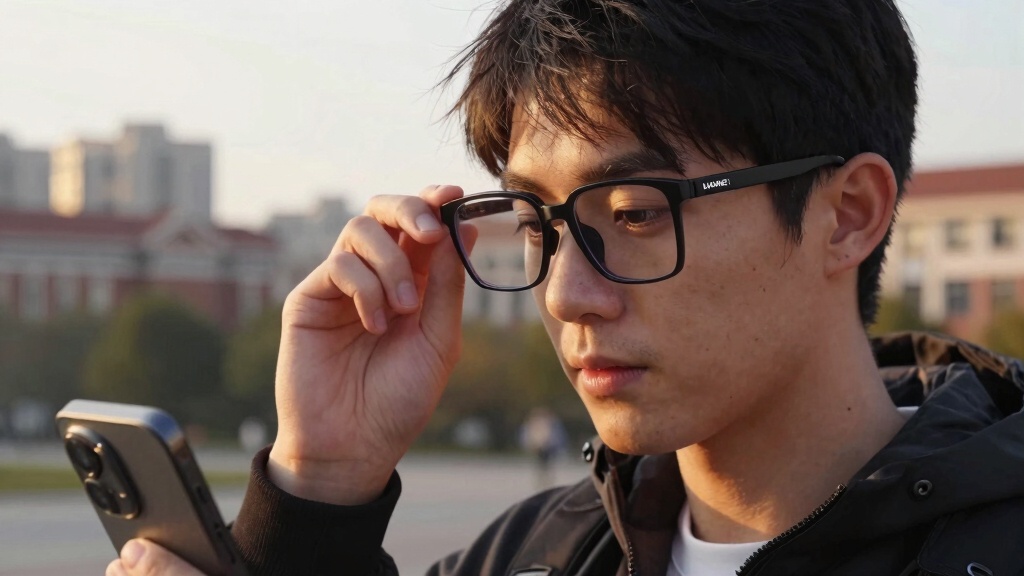
The visit took place at Huawei’s recently built campus in DongGuan, featuring a unique European-themed design with sections inspired by Verona, Paris, and Granada, connected by three train lines inside the venue. The author was shown the Huawei AI glasses, which are made of titanium alloy for durability and designed after extensive data analysis of diverse faces. During the tour, representatives demonstrated the glasses’ features, including waterproofing, video streaming, and audio privacy. The glasses support seamless integration with WeChat, enabling video calls using the front, back, and glasses’ cameras, although continuous streaming reduces battery life to about 1 hour and 20 minutes. The glasses also incorporate privacy features, such as speakers emitting audio toward the user’s ears and outward to prevent leakage, with extensive testing on hinges and frame durability, capable of withstanding over 10,000 openings.
Innovative Testing and Design at Huawei’s R&D Campus
This visit highlights Huawei’s focus on meticulous product development, including extensive testing of durability, ergonomic design based on data analysis, and integration of advanced features like video streaming and privacy. Such efforts suggest Huawei’s commitment to competitive wearable technology, which could influence global markets and consumer expectations.Products Worth Considering

Logitech MX Brio Ultra HD 4K Webcam for Streaming and Collaboration

Sonos Era 100 Wireless Smart Speaker, White

Amazon Kindle Scribe Colorsoft 64GB with Premium Pen
As an affiliate, we earn on qualifying purchases.
Huawei’s Investment in R&D and Wearable Tech Development
Huawei has recently expanded its R&D efforts with a new campus in DongGuan, emphasizing innovation in wearable devices. The company has been working on AI glasses with features aimed at both consumers and professionals, following trends seen in other companies like Microsoft with HoloLens. The recent testing and development efforts demonstrate Huawei’s intent to compete in the growing AR/VR and wearable sectors, with a focus on durability, user experience, and privacy.
“The durability tests, especially on the hinges and frame, are impressive—these glasses are built to last through thousands of openings and closeings.”
— Author after testing the glasses
Remaining Questions About Huawei’s AI Glasses Capabilities
It is still unclear how Huawei’s AI glasses will perform in everyday consumer settings over extended periods, especially regarding battery life during continuous use and the robustness of privacy features in real-world environments. Additionally, the full scope of software and hardware integration, and how these glasses will be marketed globally, remains to be seen.
Upcoming Developments and Potential Market Launches
Huawei is expected to continue refining the AI glasses, possibly releasing a commercial version in the near future. Watch for further announcements about software updates, expanded features, and broader testing results, which will clarify their competitiveness in the wearable tech market.
Key Questions
When will Huawei’s AI glasses be available to consumers?
Huawei has not yet announced an official release date. The current focus appears to be on testing and refining the product for future commercial launch.
How durable are the Huawei AI glasses?
Based on testing at the R&D campus, the frames and hinges are designed to withstand over 10,000 openings, indicating high durability for daily use.
What are the main features of Huawei’s AI glasses?
The glasses include waterproofing, video streaming with camera integration, privacy-focused audio, and ergonomic design based on extensive data analysis.
Will the glasses support other applications besides WeChat?
While the current demonstrations focused on WeChat, Huawei plans to expand compatibility with other apps, but details have not yet been disclosed.
What remains uncertain about Huawei’s wearable tech plans?
Uncertainties include long-term performance, battery life during extended use, and the global market strategy for these devices.
Source: The Ghost Howls