
TL;DR

Get the latest gadgets delivered free with Prime
- Fast, free delivery on millions of items
- Prime Video, Amazon Music and more included
- Member-only deals all year
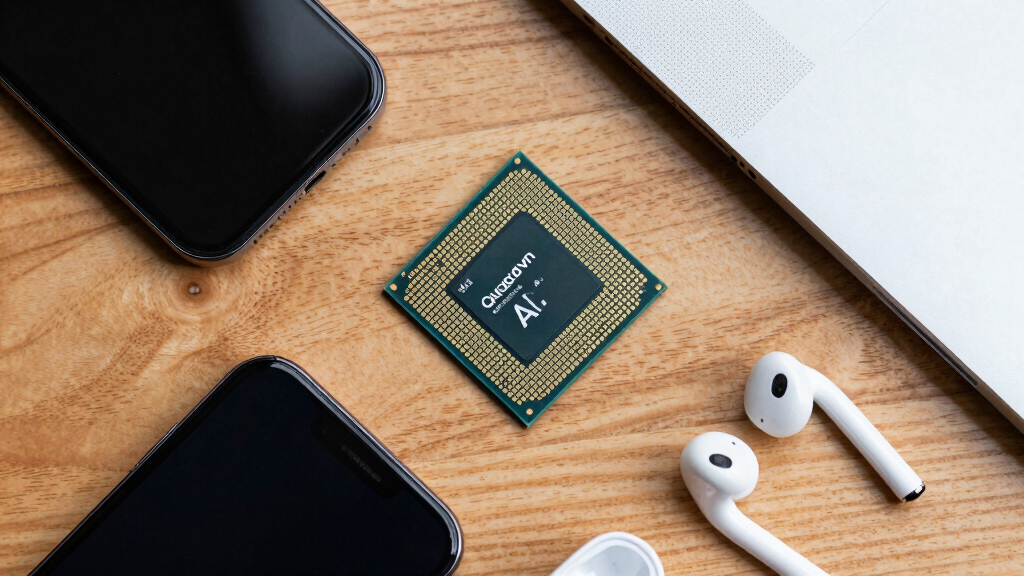
Qualcomm has announced a new AI data center chip that omits high-bandwidth memory (HBM), challenging Nvidia’s dominance in AI hardware. The development could reshape the competitive landscape.
Qualcomm has introduced a new AI data center chip that does not incorporate high-bandwidth memory (HBM), marking a strategic move to challenge Nvidia’s dominance in AI hardware. The announcement highlights Qualcomm’s efforts to diversify its AI product portfolio and reduce reliance on HBM technology, which is a key component in Nvidia’s high-performance GPUs.
During a recent presentation in Manhattan, Qualcomm’s vice president of data center, Durga Malladi, demonstrated a prototype chip featuring a design that stacks low-power DRAM chips directly on top of a logic die. This configuration aims to deliver high memory bandwidth without using HBM, which is typically more expensive and power-intensive. The chip is part of Qualcomm’s Dragonfly line, targeting AI data centers and large-scale machine learning applications.
Sources from Nikkei Asia report that this approach represents a significant departure from Nvidia’s current architecture, which relies heavily on HBM to achieve high data throughput. Qualcomm claims that their design can offer comparable performance while potentially reducing costs and power consumption, though detailed performance metrics are not yet publicly available.
Implications for AI Hardware Competition
This development could disrupt the current market dominance of Nvidia in AI data center hardware, especially as it seeks to maintain its lead amid increasing competition. Qualcomm’s approach may offer a more cost-effective and energy-efficient alternative, appealing to data center operators and cloud providers seeking to optimize performance and expenses. If successful, this could lead to a broader shift in AI hardware design and supply chains, impacting manufacturers and consumers alike.
As an affiliate, we earn on qualifying purchases.
Background on Nvidia’s HBM-Centric Architecture
Nvidia’s current AI data center products rely heavily on high-bandwidth memory (HBM), which provides the necessary data throughput for large-scale AI models. Nvidia’s HBM-based GPUs are considered the industry standard for training and inference tasks, giving the company a significant technological edge. However, HBM is costly and power-hungry, prompting competitors to seek alternative solutions.
Qualcomm’s move to develop an HBM-free chip aligns with broader industry efforts to reduce hardware costs and improve energy efficiency. The company has been investing in AI hardware for data centers, aiming to carve out a niche in this competitive space, traditionally dominated by Nvidia.
“Qualcomm’s new design could significantly reduce costs and power consumption compared to traditional HBM-based solutions.”
— an anonymous researcher
Technical Performance and Industry Adoption Unclear
It is not yet clear how Qualcomm’s HBM-free chip will perform in real-world AI workloads compared to Nvidia’s HBM-based solutions. Details on scalability, power efficiency, and cost savings are still emerging, and industry acceptance remains uncertain at this stage.
Further Testing and Industry Response Expected
Qualcomm is likely to conduct extensive performance testing and seek validation from potential clients. The company may also face scrutiny from industry analysts and competitors, with the next few months crucial for assessing the chip’s viability and market impact. Watch for product launches or demonstrations at upcoming industry events.
Key Questions
How does Qualcomm’s new chip differ from Nvidia’s AI hardware?
Qualcomm’s chip omits high-bandwidth memory (HBM) and stacks low-power DRAM directly on the logic die, aiming to reduce cost and power consumption while maintaining high data throughput.
Will this new design be as powerful as Nvidia’s HBM-based GPUs?
Performance metrics are not yet publicly available. It remains to be seen whether Qualcomm’s design can match Nvidia’s high-end performance in AI training and inference tasks.
What are the potential advantages of an HBM-free architecture?
Potential advantages include lower manufacturing costs, reduced power consumption, and simplified supply chains, which could make AI hardware more accessible.
When will Qualcomm’s new chip be available for commercial use?
There are no specific timelines announced yet. Industry observers expect further testing and validation before commercial deployment, possibly within the next year.
Could this challenge Nvidia’s market dominance?
Yes, if Qualcomm’s design proves successful in performance and cost, it could offer a competitive alternative, potentially shifting market dynamics in AI hardware.
Source: Nikkei Asia
Halloween Picks
halloween
As an affiliate, we earn on qualifying purchases.