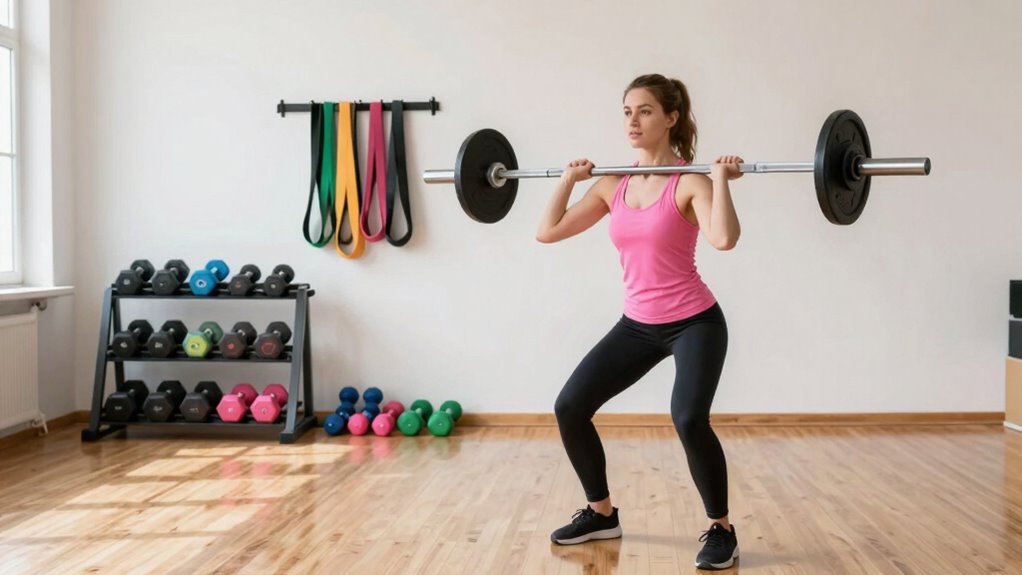

For beginners, a simple weekly split like working out three to four days a week helps you stay consistent and prevent overtraining. Focus on basic exercises such as squats, push-ups, and rows, hitting different muscle groups on different days. Make sure to include rest days for recovery and gradually increase your workout intensity. Proper technique and balanced nutrition are key. Keep going, and you’ll discover more tips to keep your progress steady and safe.

Get the latest gadgets delivered free with Prime
- Fast, free delivery on millions of items
- Prime Video, Amazon Music and more included
- Member-only deals all year
Key Takeaways
- A basic 3-day split (e.g., push, pull, legs) balances workout and recovery for beginners.
- Focus on fundamental exercises like squats, push-ups, and rows to build a strong foundation.
- Schedule rest or light activity days between workout days to promote muscle recovery.
- Gradually increase workout intensity and volume to ensure steady progress without overtraining.
- Incorporate proper technique and safety measures to prevent injuries and maximize effectiveness.
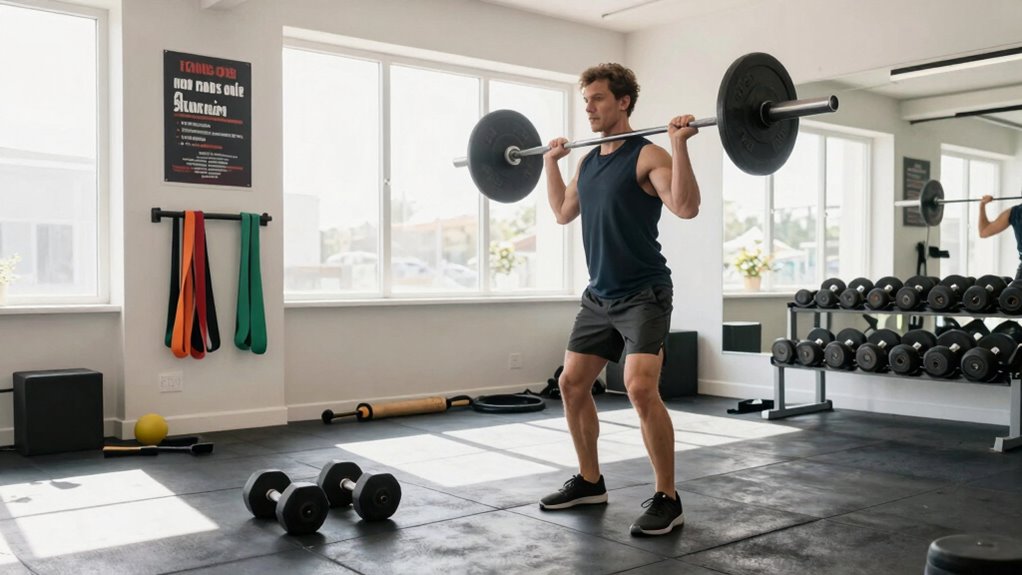
Are you wondering how to get started with strength training? The good news is, you don’t need to overcomplicate things at first. A simple weekly split can make your journey manageable and effective. To get the most out of your workouts, focus on the right nutrition tips and equipment essentials. These foundational elements ensure you build strength safely and steadily.
Start by understanding that your body needs fuel to perform and recover. Nutrition tips for beginners emphasize balanced meals with adequate protein, healthy fats, and complex carbs. Protein is especially crucial because it helps repair and grow muscle tissue. Incorporate lean meats, beans, dairy, or plant-based sources into your diet. Stay hydrated, and avoid processed foods high in sugar and unhealthy fats, which can hinder your progress. Eating enough calories is also vital; don’t underfuel yourself, especially on workout days. A simple rule is to listen to your hunger cues and aim for natural, whole foods as your primary nutrition source. Proper nutrition boosts energy levels, accelerates recovery, and enhances muscle gains. Additionally, understanding muscle recovery can help you optimize your rest days and prevent overtraining. Recognizing the importance of adequate rest and recovery is essential for long-term progress and injury prevention. Incorporating knowledge about training volume and intensity can further help you tailor your workouts for optimal results. A good understanding of muscle fatigue can also guide you in adjusting your workout load to avoid burnout. Including periodization in your training plan can also help prevent plateaus and keep your motivation high.
On the equipment side, you don’t need fancy gear to start. The essentials include a good pair of athletic shoes, a set of adjustable dumbbells, and a sturdy bench or stability ball. Resistance bands are also an affordable, versatile option that can add variety to your workouts. If you prefer bodyweight exercises initially, that’s perfectly fine—push-ups, squats, lunges, and planks require nothing but your body. As you progress, investing in basic equipment will expand your options without overwhelming you. Remember to prioritize safety: check that your equipment is in good condition and use proper form to prevent injuries.
Products Worth Considering

Samsung Galaxy Tab A7 Lite 8.7 32GB Wi‑Fi Android Tablet – Long‑Lasting Battery, Compact Slim Design, Sturdy Metal Frame (US Version)

Bose TV Speaker Compact Soundbar with Bluetooth and HDMI-ARC, Black

Bose QuietComfort Ultra Earbuds (2nd Gen), Wireless Noise-Cancelling Earbuds, Black
As an affiliate, we earn on qualifying purchases.
Frequently Asked Questions
How Long Should I Rest Between Sets?
You should rest for about 30 to 90 seconds between sets, depending on your goals. For muscle endurance, keep the rest period shorter, around 30 seconds. If you’re aiming for strength, extend your recovery period to 90 seconds to allow your muscles to recover fully. Listen to your body: if you feel ready sooner, rest less; if you need more recovery, take extra time. Proper rest helps maximize your workout effectiveness.
Can I Do Strength Training at Home Without Equipment?
Yes, you can do strength training at home without equipment. Surprisingly, a 2020 study shows that bodyweight exercises can be as effective as traditional weightlifting. You can create home workout routines using push-ups, squats, lunges, and planks to build strength. These exercises target multiple muscle groups, making them perfect for beginners. Plus, no equipment means you can easily fit training into your schedule and stay consistent.
How Quickly Will I See Results?
You can start noticing results in about four to six weeks if you stay consistent with your strength training. To keep motivated, track your progress regularly — like noting increased reps or weight. Motivation strategies, such as setting achievable goals and rewarding yourself, help you stay committed. Remember, everyone’s different, but with dedication and tracking, you’ll see improvements in strength and endurance sooner than you think.
What Should I Eat Before and After Workouts?
For ideal performance, focus on meal timing and nutrient balance. Eat a light, carbohydrate-rich snack about 30-60 minutes before your workout to fuel your muscles. After exercising, prioritize a balanced meal with protein and carbs within an hour to aid recovery. This approach guarantees you have sufficient energy during workouts and support muscle repair afterward, helping you see results more effectively.
How Do I Prevent Injuries While Strength Training?
Like a knight preparing for battle, you must armor yourself with proper form to prevent injuries during strength training. Focus on correct technique, start with lighter weights, and listen to your body. Warm up thoroughly and cool down afterward. Avoid rushing through reps, and never sacrifice form for heavier loads. Injury prevention depends on mindful training—stay attentive, consistent, and respect your limits, just as a true warrior would.
Conclusion
As you follow this simple weekly split, you’ll find strength building becomes almost effortless—like everything just falls into place. It’s funny how consistency and a straightforward plan can lead to such noticeable progress, almost as if your muscles are catching on to your rhythm before you do. Stick with it, and you’ll realize that strength isn’t just about lifting heavier; it’s about trusting the process and enjoying the journey. Sometimes, the simplest plan creates the strongest results.