
To hide cables for a wall-mounted TV, start by planning your route, either inside the wall or along the surface with raceways or covers that match your decor. Use a stud finder and drywall saw to run cables inside, or opt for cable raceways for a quick surface solution. Secure all wires tightly and conceal power outlets for a tidy look. Keep in mind safety standards, and you’ll discover more tips for a seamless setup.

Get the latest gadgets delivered free with Prime
- Fast, free delivery on millions of items
- Prime Video, Amazon Music and more included
- Member-only deals all year
Key Takeaways
- Use in-wall rated cables and conduit for a seamless, hidden appearance behind the wall.
- Drill small holes behind the TV to feed cables through, concealing them within the wall.
- Install cable raceways or covers that match your wall color or decor for a tidy look.
- Secure cables tightly with clips or zip ties to prevent sagging and maintain neatness.
- Plan cable routing for easy access and future adjustments without compromising aesthetics.
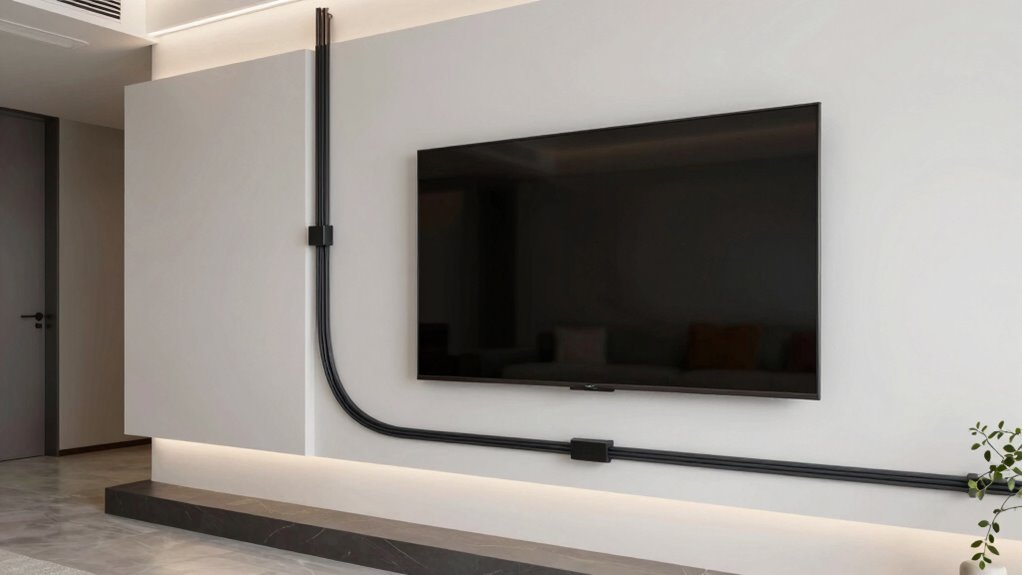
Mounting a TV on the wall can instantly modernize your space, but exposed cables often detract from its sleek look. To truly enhance your room’s aesthetic, you need effective cable management. The goal is to hide those unsightly wires and create a clean, polished appearance. The use of cable management solutions ensures not only a tidy appearance but also prevents damage to your cables over time. Luckily, there are straightforward ways to achieve this without sacrificing accessibility or safety.
Start by planning your cable route. Decide whether you want to run the cables inside the wall or along the surface. Running cables inside the wall offers the cleanest look, but it requires cutting into drywall and may need professional tools or assistance. If you’re comfortable with DIY projects, this option provides excellent aesthetic enhancement because the cables are completely hidden. Make sure to use in-wall rated cables and components to comply with safety codes. Alternatively, if you’re looking for a simpler solution, cable covers or raceways mounted along the wall can do the trick. These come in various colors and finishes, allowing you to match or contrast with your decor.
Plan your cable route carefully, choosing between hidden inside the wall or surface-mounted covers for a cleaner look.
Once you’ve chosen your method, gather the necessary tools and materials. For in-wall installation, you’ll need a stud finder, a drywall saw, and in-wall conduit or cable channels. For surface mounting, pick a cable raceway or cover that fits your style. Use cable clips or zip ties to secure loose wires behind furniture or along the wall’s edges, preventing them from sagging or creating clutter. Proper cable management not only improves the look but also minimizes the risk of tripping hazards. Additionally, understanding electrical safety standards is crucial when working with in-wall wiring to prevent hazards. Being aware of these standards helps ensure your setup is both safe and compliant. You may also want to consider proper planning to ensure easy future access or adjustments to your setup. Paying attention to wire length and positioning can save you time and effort during installation and future modifications.
When installing a cable concealment system, consider the placement of your power outlet and AV ports. You might need an extension cord or a power bridge kit to keep outlets hidden behind the TV. For a seamless appearance, drill a small hole behind the TV to feed cables through and hide them within the wall or along the back of furniture. This way, cables stay out of sight, and your setup looks neat and organized.
Products Worth Considering

Amazon Kindle Paperwhite (12th Generation, 2024), 16 GB, 7-inch Display, Black

Logitech MX Creative Console with 9 Customizable Keys, Graphite

Samsung Odyssey G7 40-Inch WUHD Curved Gaming Monitor (G75F)
As an affiliate, we earn on qualifying purchases.
Frequently Asked Questions
What Is the Cost Range for Cable Concealment Solutions?
The cost for cable concealment solutions varies depending on the method you choose. Basic cable management options like raceways or adhesive covers typically cost around $10 to $50. More advanced concealment options, such as in-wall wiring or custom cabinetry, can range from $100 to $500 or more. Your choice depends on your budget and the look you want, but there are affordable solutions for every price point.
How Do I Access Cables Once Hidden?
Imagine you’re like a skilled surgeon, and your TV’s cables are the essential organs needing access. To access hidden cables, locate the designated access points or panels embedded within the cable management system. Carefully open these access points to retrieve or modify cables. Once closed, they remain discreet, maintaining a sleek appearance. Regularly checking these access points guarantees your setup stays tidy and functional without compromising the wall’s clean aesthetic.
Are There Safety Concerns With Concealed Cables?
There are safety concerns with concealed wiring; improper installation can lead to electrical hazards. To guarantee cable safety, use quality conduits and follow local electrical codes. Concealed wiring should be done by a professional if you’re unsure, as it minimizes risks like short circuits or fire hazards. Always inspect the cables regularly for damage, and avoid overloading circuits to keep your setup safe and secure.
Can I Hide Cables Without Drilling Into the Wall?
Yes, you can hide cables without drilling into the wall by using cable management solutions like adhesive clips, cable raceways, or sleeves. These options keep cords organized and out of sight without damaging your wall. Alternatively, consider wireless alternatives like streaming devices or wireless soundbars, which reduce cable clutter altogether. This approach is quick, damage-free, and effective for maintaining a clean, organized look around your wall-mounted TV.
How Do I Hide Cables Behind a Stone or Brick Wall?
Hiding cables behind a stone or brick wall is like threading a needle through tough fabric. You’ll want to use a flexible, low-profile conduit or cable raceway designed for wall integration. Carefully drill small holes at strategic points for cable routing, and run the cables through these channels, ensuring they stay hidden. Finish by sealing the holes with mortar or wall filler to maintain the wall’s appearance and safety.
Conclusion
Hiding your TV cables is like tending a well-manicured garden—carefully planning each element creates harmony and beauty. When you conceal those wires, your space transforms into a sleek, unobstructed canvas, allowing your entertainment to shine without distraction. With patience and a little effort, you craft a seamless look, much like an artist perfecting their masterpiece. In the end, a tidy setup isn’t just practical; it’s a demonstration of your attention to detail and desire for elegance.