
For multi-zone HVAC, the ecobee Smart Thermostat Premium is my best overall pick because its included SmartSensor can help address room-to-room temperature differences, while the Honeywell T10+ Pro stands out for systems that use RedLINK sensors. The Sensi Touch 2 is another strong option for buyers who want remote room sensing without moving to ecobee’s broader feature set. The main tradeoff is that a smart thermostat with room sensors does not automatically control multiple HVAC zones: each independently controlled zone may need its own compatible thermostat and wiring. Compatibility, sensor support, and the number of thermostats your system needs matter more than a long feature list. Read on for how the 14 options differ and what to check before choosing.

Get the latest gadgets delivered free with Prime
- Fast, free delivery on millions of items
- Prime Video, Amazon Music and more included
- Member-only deals all year
Complete the kit



Key Takeaways
- Room sensors are not the same as zone control: amazon.com/dp/B09XXS48P8?tag=t3chbillion-20&ascsubtag=dc-552161″ target=”_blank” rel=”nofollow sponsored noopener”>ecobee Premium, Honeywell T10+ Pro, and Sensi Touch 2 can help manage comfort across rooms, but a sensor does not replace a thermostat and damper control for each independent HVAC zone.
- ecobee Premium leads this comparison for sensor-centered comfort: its included SmartSensor gives it an advantage over the more basic ecobee Essential and Enhanced models when room-to-room temperature differences are a priority.
- Honeywell T10+ Pro has a distinct system-fit role: its RedLINK 3.0 sensor support makes it a better match for buyers already considering compatible Honeywell sensor equipment than for shoppers seeking the simplest setup.
- Sensi and entry-level choices trade features for simplicity: Sensi Lite, Amazon Smart Thermostat, and Google Nest are candidates for straightforward single-thermostat needs, but buyers should check sensor and multi-zone requirements before choosing them for a zoned system.
- Several models appear in multiple finishes or generations: the two Nest colors and multiple Honeywell and Sensi models are not interchangeable by name alone; verify the exact model’s wiring, equipment support, and room-sensor compatibility.
| Honeywell Home RTH9600WF Smart Color Wi-Fi Thermostat |  | Best for Visual Control | Model: RTH9600WF | Connectivity: Wi-Fi | Display: Customizable color touchscreen | VIEW ON AMAZON | See Our Full Breakdown |
| ecobee Smart Thermostat Premium with Wi-Fi, Siri and Alexa, and SmartSensor |  | Best for Room-Level Comfort | Connectivity: Wi-Fi | Voice assistants: Siri and Alexa built in | Included sensor: SmartSensor | VIEW ON AMAZON | See Our Full Breakdown |
| Honeywell Home RTH9585WF Wi-Fi Smart Color Thermostat |  | Best for Scheduled Comfort | Model: RTH9585WF | Connectivity: Wi-Fi | Display: Customizable color touchscreen | VIEW ON AMAZON | See Our Full Breakdown |
| Sensi Lite Wi-Fi Smart Thermostat, Alexa Compatible, Energy Star Certified, ST25 | 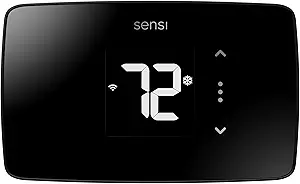 | Best for DIY Installation | Model: ST25 | Connectivity: Wi-Fi, 2.4 GHz | Voice assistants: Amazon Alexa, Google Assistant | VIEW ON AMAZON | See Our Full Breakdown |
| Sensi Smart Wi-Fi Thermostat, ST55 |  | Best for Straightforward Remote Scheduling | Model: ST55 | Connectivity: Wi-Fi | HVAC compatibility: Works with HVAC equipment found in most homes | VIEW ON AMAZON | See Our Full Breakdown |
| Honeywell T10+ Pro Smart Thermostat with RedLINK 3.0 Indoor Air Sensor |  | Best for Sensor-Rich Multi-Zone Control | Brand: Honeywell | Model: T10+ Pro | Connectivity: RedLINK 3.0 | VIEW ON AMAZON | See Our Full Breakdown |
| Amazon Smart Thermostat with Alexa and Ring Compatibility |  | Best for Alexa-Centered Homes | Compatibility: Alexa and Ring | Wiring requirement: C-wire required | Control: Alexa app, schedules, and compatible Alexa devices | VIEW ON AMAZON | See Our Full Breakdown |
| Sensi Touch 2 Smart Wi-Fi Thermostat, Alexa Compatible, ENERGY STAR Certified, ST76 |  | Best for Usage Reports and Add-On Room Sensors | Model: ST76 | Connectivity: Wi-Fi | Voice assistant: Alexa | VIEW ON AMAZON | See Our Full Breakdown |
| Google Nest Smart Thermostat, Charcoal |  | Best for Google Home Users with Simple Scheduling Needs | Color: Charcoal | Connectivity: Wi-Fi 2.4 GHz and 5 GHz; Bluetooth Low Energy | Energy certification: ENERGY STAR | VIEW ON AMAZON | See Our Full Breakdown |
| vine Smart Thermostat for Home, WiFi Compatible with Alexa and Google Assistant, 7-Day Programmable, Energy Star Certified |  | Best for Flexible Weekly Scheduling | Connectivity: Wi-Fi | System support: 24V AC gas, oil, electric, boiler, and heat-pump systems | Programming: 7 days × 8 periods | VIEW ON AMAZON | See Our Full Breakdown |
| ecobee Smart Thermostat Essential Wi-Fi Thermostat |  | Best Entry-Level Pick for App and Touchscreen Control | Connectivity: Wi-Fi | Display: Color touchscreen | System compatibility: Most 24 VAC HVAC equipment; stated as compatible with 85% of systems | VIEW ON AMAZON | See Our Full Breakdown |
| Honeywell Home T5 Smart Wi-Fi Thermostat |  | Best for Geofencing and Set Schedules | Connectivity: Wi-Fi | Scheduling: 7-day flexible scheduling | Temperature control: Geofencing and automatic home/away mode | VIEW ON AMAZON | See Our Full Breakdown |
| Google Nest Smart Thermostat, Snow |  | Best for Google Home Households | Connectivity: Wi-Fi | Color: Snow | Energy certification: ENERGY STAR certified | VIEW ON AMAZON | See Our Full Breakdown |
| ecobee Smart Thermostat Enhanced |  | Best for Occupancy-Based Comfort | Connectivity: Wi-Fi | HVAC compatibility: Stated as compatible with 90% of HVAC systems | Smart-home compatibility: Amazon Alexa, Google Assistant, Apple HomeKit, and SmartThings | VIEW ON AMAZON | See Our Full Breakdown |
| smart thermostat for multi zone hvac | Connectivity |
|---|---|
| Honeywell Home RTH9600WF Smart | Wi-Fi |
| ecobee Smart Thermostat Premiu | Wi-Fi |
| Honeywell Home RTH9585WF Wi-Fi | Wi-Fi |
| Sensi Lite Wi-Fi Smart Thermos | Wi-Fi, 2.4 GHz |
| Sensi Smart Wi-Fi Thermostat | Wi-Fi |
| Honeywell T10+ Pro Smart Therm | RedLINK 3.0 |
| Amazon Smart Thermostat with A | — |
| Sensi Touch 2 Smart Wi-Fi Ther | Wi-Fi |
| Google Nest Smart Thermostat | Wi-Fi 2.4 GHz and 5 GHz; Bluetooth Low Energy |
| vine Smart Thermostat for Home | Wi-Fi |
| ecobee Smart Thermostat Essent | Wi-Fi |
| Honeywell Home T5 Smart Wi-Fi | Wi-Fi |
| Google Nest Smart Thermostat | Wi-Fi |
| ecobee Smart Thermostat Enhanc | Wi-Fi |
More Details on Our Top Picks
Honeywell Home RTH9600WF Smart Color Wi-Fi Thermostat
The RTH9600WF is a good fit for buyers who want an at-a-glance touchscreen and app control for a compatible HVAC system, but its listed features do not include a room sensor or independent zone control. That makes it less suited to balancing temperatures across separate areas than the ecobee Smart Thermostat Premium, which includes a SmartSensor for room-level occupancy-based comfort adjustments. Here, the draw is the customizable color display, flexible schedules, weather information, and alerts in one thermostat. App and compatible voice-assistant control make routine changes easier when you are away. The main limits are practical: installation requires a C-wire, and the thermostat does not work with 120–240V electric baseboard heat. I would choose it for a straightforward central system, not as a substitute for dedicated multi-zone controls.
Pros:- Customizable color touchscreen makes settings and comfort information easy to view at the thermostat.
- App-based remote control and flexible scheduling support adjustments away from home.
- Works with compatible Alexa, Google Assistant, and Cortana devices.
- Weather information and smart alerts add useful context to daily operation.
Cons:- Requires a C-wire or compatible power adapter, which can complicate installation.
- Does not support 120–240V electric baseboard heat.
- No included room sensor or stated independent zone-control capability.
Best for: Households with compatible forced-air, hot-water, steam, or heat-pump HVAC that want a prominent color screen and remote scheduling.
Not ideal for: Buyers who need room sensors or separate control of multiple HVAC zones, or homes heated by 120–240V electric baseboard systems.
- Model:RTH9600WF
- Connectivity:Wi-Fi
- Display:Customizable color touchscreen
- System compatibility:Forced air (gas, oil, or electric), hot water, steam, and heat pumps with electric backup
- Voice assistant compatibility:Amazon Alexa, Google Assistant, Microsoft Cortana
- Power requirement:C-wire required
- Certification:ENERGY STAR
- Baseboard compatibility:Not compatible with 120–240V electric baseboard heat
Our verdict“Choose the RTH9600WF for touchscreen-led control of a compatible central system, but look to the ecobee Premium if room-level sensing is your priority.”
ecobee Smart Thermostat Premium with Wi-Fi, Siri and Alexa, and SmartSensor
Among these five, the ecobee Smart Thermostat Premium has the clearest room-level advantage: its included SmartSensor can use occupancy in another room to inform comfort adjustments. That can help address uneven temperatures in a home, though a sensor does not itself create independent HVAC zones or replace a multi-zone control system. Compared with the Honeywell RTH9600WF and RTH9585WF, which emphasize touchscreen scheduling, ecobee puts more weight on sensing and connected-home extras. It also adds a built-in air-quality monitor and Siri or Alexa voice control, while installation accessories and a three-year warranty are included. The tradeoff is a more involved smart-home setup: Siri needs an Apple home hub, and some security features require a subscription. Pick it for sensor-led comfort; skip it if you only need basic scheduling.
Pros:- Included SmartSensor can inform comfort adjustments based on occupancy in another room.
- Built-in air-quality monitoring and filter reminders add household maintenance context.
- Siri and Alexa voice control are built in.
- Power Extender Kit, Trim Kit, and a three-year warranty are included.
Cons:- A room sensor can help address comfort differences but does not independently operate separate HVAC zones.
- Siri control requires an Apple home hub.
- Some security features require an ecobee Smart Security subscription.
Best for: Households with uneven room temperatures that want an included occupancy sensor to inform comfort settings, alongside voice and air-quality features.
Not ideal for: Buyers seeking true independent control of multiple HVAC zones, or those who want a basic thermostat without smart-home setup or subscription-dependent extras.
- Connectivity:Wi-Fi
- Voice assistants:Siri and Alexa built in
- Included sensor:SmartSensor
- Air-quality monitor:Built in
- HVAC compatibility:Compatible with 95% of HVAC systems
- Installation accessories:Power Extender Kit and Trim Kit included
- Warranty:3 years
- Certification:ENERGY STAR
Our verdict“Choose the ecobee Premium if room sensing is your priority, while recognizing that its SmartSensor is not a replacement for independent zone controls.”
Honeywell Home RTH9585WF Wi-Fi Smart Color Thermostat
The RTH9585WF suits buyers who want programmable schedules, remote access, and a customizable touchscreen without adding a room sensor. It shares the RTH9600WF’s basic appeal—color display, Wi-Fi control, and compatibility with common central HVAC types—so the decision between those Honeywell models is less about multi-zone capability and more about the exact model and supported features. For room-by-room occupancy sensing, the ecobee Smart Thermostat Premium is the stronger fit because it includes a SmartSensor; neither Honeywell model lists that kind of sensor. This unit adds energy reports, weather forecasts, and maintenance alerts to help owners keep track of use and upkeep. Its C-wire requirement and lack of 120–240V baseboard support narrow installation options, so check system compatibility before choosing it.
Pros:- Customizable color touchscreen provides an accessible on-device control point.
- Flexible scheduling and app access support routine changes at home or away.
- Energy reports, weather forecasts, and maintenance alerts offer useful operating context.
- Compatible with Amazon Alexa and Google Home.
Cons:- Requires a C-wire.
- Not compatible with 120–240V electric baseboard heat.
- No included room sensor or stated independent multi-zone control.
Best for: Owners of compatible central HVAC systems who want flexible scheduling, energy reports, and a color touchscreen in a single-thermostat setup.
Not ideal for: Households that need room-sensor-based comfort adjustments, independent multi-zone control, or compatibility with electric baseboard heat.
- Model:RTH9585WF
- Connectivity:Wi-Fi
- Display:Customizable color touchscreen
- Programming:Flexible scheduling
- Compatibility:Forced-air gas, oil, or electric; hot water and steam; heat pumps with electric backup
- Voice assistants:Amazon Alexa and Google Home
- Power requirement:C-wire required
- Certification:ENERGY STAR
- Baseboard compatibility:Not compatible with 120–240V electric baseboard heat
Our verdict“Choose the RTH9585WF for scheduled, app-connected control of compatible central HVAC, but favor the ecobee Premium when room sensing matters more.”
Sensi Lite Wi-Fi Smart Thermostat, Alexa Compatible, Energy Star Certified, ST25
The Sensi Lite ST25 is the most installation-focused option in this group. A built-in level and step-by-step guidance help DIY owners mount it, while battery power means many compatible systems do not need a C-wire. That advantage has limits: the product data calls for a C-wire on heat-pump and heat/cool-only systems. It offers Wi-Fi app control, scheduling, geofencing, and usage reports, but its 2.4 GHz Wi-Fi requirement and LCD display make it a simpler choice than either Honeywell color-screen model. It also lacks the included room sensor found with the ecobee Premium, so it is not the pick for sensor-led room balancing. I would choose it when straightforward setup and essential remote controls matter more than advanced room-level features.
Pros:- Built-in level and step-by-step instructions support DIY installation.
- Battery or C-wire power accommodates many compatible setups.
- App control, scheduling, geofencing, and usage reports cover core remote-management needs.
- Supports Amazon Alexa and Google Assistant.
Cons:- A C-wire is required for heat-pump and heat/cool-only systems.
- Wi-Fi is limited to 2.4 GHz.
- No included room sensor or stated independent multi-zone control.
Best for: DIY homeowners with compatible 24-volt HVAC who want app-guided installation, geofencing, and remote scheduling without a C-wire on many systems.
Not ideal for: Owners of heat-pump or heat/cool-only systems without a C-wire, homes that rely on 5 GHz Wi-Fi, or buyers seeking room sensors for uneven temperatures.
- Model:ST25
- Connectivity:Wi-Fi, 2.4 GHz
- Voice assistants:Amazon Alexa, Google Assistant
- Compatible systems:Air conditioner, boiler, furnace, heat pump
- Power source:Battery or C-wire
- Voltage:24 volts
- Display:LCD
- Controls:App, touch, voice
- Batteries:2 AAA batteries included
Our verdict“Choose the Sensi Lite for a DIY-friendly, straightforward thermostat, but choose the ecobee Premium if room sensing is central to your comfort plan.”
Sensi Smart Wi-Fi Thermostat, ST55
The Sensi ST55 focuses on the basics: Wi-Fi remote access, flexible schedules, usage reports, and HVAC maintenance alerts. It is a practical pick for owners who want app-guided DIY setup without a C-wire in most installations. Compared with the Sensi Lite ST25, its standout installation claim is the broader statement that a common wire is not needed in most applications; the Lite specifies C-wire needs for heat-pump and heat/cool-only systems. Neither model lists an included room sensor, so both are less suited than the ecobee Smart Thermostat Premium to using occupancy in another room to guide comfort. The ST55 also leaves buyers to confirm C-wire needs for their particular system. Choose it for routine control and maintenance prompts, not for dedicated multi-zone management.
Pros:- C-wire is not required in most applications.
- DIY installation is supported by app instructions and a built-in level.
- Usage reports, HVAC performance alerts, and maintenance reminders support routine upkeep.
- Remote access, flexible scheduling, and Alexa compatibility are included.
Cons:- C-wire needs vary by installation, so system wiring must be checked.
- No included room sensor or stated independent multi-zone control.
- Energy outcomes depend on household use and the HVAC setup.
Best for: Homeowners with common compatible HVAC setups who want DIY app control, scheduling, and equipment reminders without adding room sensors.
Not ideal for: Buyers who need occupancy-based room adjustments, independent control of multiple zones, or a guaranteed C-wire-free installation on a specific system.
- Model:ST55
- Connectivity:Wi-Fi
- HVAC compatibility:Works with HVAC equipment found in most homes
- C-wire requirement:Not required in most applications; requirements vary by installation
- Certification:ENERGY STAR
- Installation:DIY with built-in level and app instructions
- Voice assistant compatibility:Alexa
- Maintenance features:HVAC performance alerts and maintenance reminders
Our verdict“Choose the ST55 for uncomplicated remote scheduling and DIY setup, but look at the ecobee Premium for room sensing or a dedicated zoning solution for separate zones.”
Honeywell T10+ Pro Smart Thermostat with RedLINK 3.0 Indoor Air Sensor
The Honeywell T10+ Pro is the clearest fit here for homes where rooms heat and cool unevenly: it can work with up to 20 RedLINK 3.0 sensors to track temperature, humidity, and motion, supporting room-aware control rather than relying only on the thermostat’s location. That makes it a more purpose-built choice for balancing occupied rooms than the Amazon Smart Thermostat, which focuses on app and Alexa routines rather than a broad sensor network. Geofencing can also adjust settings when household members leave, and 24 VAC compatibility plus accessory support gives it room to work with ventilation and humidity equipment. The tradeoff is a more involved setup: full functionality depends on compatible sensors, and some advanced heat configurations need an additional EIM module. I’d choose it for sensor-driven comfort, not for the simplest installation.
Pros:- Supports up to 20 compatible RedLINK 3.0 sensors for room-level temperature and humidity monitoring.
- Geofencing can adjust settings based on smartphone location.
- Works with a range of 24 VAC systems, including heat pumps and dual-fuel setups.
- Can integrate with humidification and ventilation accessories without running new wiring.
Cons:- Full sensor functionality requires specific compatible RedLINK sensors.
- Some advanced configurations, including 4-heat support, require an additional EIM module.
- A sensor-based setup can involve more compatibility checks and configuration than simpler app-focused models.
Best for: Households with several rooms that run at different temperatures and owners willing to add compatible RedLINK sensors for room-aware control.
Not ideal for: Buyers seeking a simple, low-setup thermostat or anyone unwilling to verify sensor and EIM compatibility for their HVAC configuration.
- Brand:Honeywell
- Model:T10+ Pro
- Connectivity:RedLINK 3.0
- Control:Touchscreen, Amazon Alexa, Google Assistant
- System compatibility:24 VAC systems
- Sensor capacity:Up to 20 RedLINK 3.0 indoor sensors
- Display:Touchscreen
- Included component:Indoor Air Sensor
Our verdict“Choose the T10+ Pro when room-by-room sensing matters more than keeping setup and equipment requirements minimal.”
Amazon Smart Thermostat with Alexa and Ring Compatibility
The Amazon Smart Thermostat is a straightforward pick for a home already organized around Alexa, but it is not a dedicated room-by-room zoning system. You can set schedules, control heating and cooling in the Alexa app, and automate adjustments through compatible Alexa devices; guided DIY installation may also make setup more approachable than the sensor-heavy Honeywell T10+ Pro. The key limitation for multi-zone shoppers is that the supplied information does not describe remote room sensors or multi-zone management. It controls the thermostat it is installed on, so buyers with separate HVAC zones should confirm how each zone will be controlled before choosing it. A C-wire is required, and some automation depends on compatible Alexa hardware. I’d shortlist it for simple Alexa-based control, not for balancing temperatures across rooms.
Pros:- Remote temperature control through the Alexa app.
- Supports schedules and automated adjustments with compatible Alexa devices.
- Guided DIY installation is offered.
- Honeywell Home thermostat technology underpins the product.
Cons:- Requires a C-wire, which may limit installation in older homes.
- Some automation features require compatible Alexa devices.
- Product details do not specify room-sensor support or multi-zone coordination.
Best for: Alexa households replacing a compatible single-zone thermostat and looking for app control, schedules, and guided DIY installation.
Not ideal for: Owners seeking room-by-room sensing or a stated multi-zone control solution, and homes without a C-wire.
- Compatibility:Alexa and Ring
- Wiring requirement:C-wire required
- Control:Alexa app, schedules, and compatible Alexa devices
- Installation:Guided DIY installation
- Technology:Honeywell Home thermostat technology
- Automation:Temperature adjustments using compatible Alexa devices
Our verdict“Pick this model for uncomplicated Alexa control on a compatible zone, but look elsewhere if room-level sensing is central to your plan.”
Sensi Touch 2 Smart Wi-Fi Thermostat, Alexa Compatible, ENERGY STAR Certified, ST76
The Sensi Touch 2 ST76 pairs everyday Wi-Fi scheduling with usage reports, equipment alerts, and maintenance reminders, giving owners more visibility into system operation than the basic schedule-and-app approach of the Amazon Smart Thermostat. For multi-zone comfort, its compatibility with Sensi Room Sensors offers a path toward monitoring rooms beyond the thermostat, though those sensors are sold separately and the supplied details don’t establish how many zones it can control. That distinction matters: a room sensor can help address uneven temperatures, but it does not automatically mean the thermostat can independently operate multiple HVAC zones. The ST76 requires a C-wire, so wiring needs checking before purchase. It makes the most sense for buyers who value reports and are comfortable building out sensor support, rather than those wanting a complete multi-zone package in the box.
Pros:- Remote access and flexible scheduling through Wi-Fi.
- Usage reports help owners track heating and cooling activity.
- Equipment alerts and maintenance reminders provide system information beyond temperature control.
- Compatible with separately sold Sensi Room Sensors and Alexa.
Cons:- A C-wire is required for installation.
- Room sensors are sold separately, adding to the setup needed for remote-room monitoring.
- The supplied product details do not specify independent control of multiple HVAC zones.
Best for: Owners who want Wi-Fi scheduling and system reports, and are prepared to add Sensi Room Sensors for better awareness of remote rooms.
Not ideal for: Buyers who need multiple HVAC zones managed directly, want included room sensors, or lack a C-wire.
- Model:ST76
- Connectivity:Wi-Fi
- Voice assistant:Alexa
- Certification:ENERGY STAR
- Room sensor compatibility:Sensi Room Sensors, sold separately
- Installation:DIY; C-wire required
- Included components:Thermostat, mounting hardware, installation guide, warranty booklet, owner’s manual
- System information:Usage reports, equipment alerts, and maintenance reminders
Our verdict“Choose the ST76 for scheduling and equipment visibility with optional room sensors, provided you verify that its control scope matches your zone system.”
Google Nest Smart Thermostat, Charcoal
The Google Nest Smart Thermostat suits buyers who want app-based scheduling and automatic adjustments when the home is unoccupied, with HVAC monitoring and maintenance alerts adding a layer of system awareness. Its strongest advantage over the Amazon Smart Thermostat is broader stated voice-platform flexibility: it works through Google Home and compatible voice assistants, including Matter-certified options. For a multi-zone home, though, the product description does not list room sensors or dedicated zone coordination, so I would not treat its occupancy response as a substitute for balancing temperatures between rooms. C-wire needs also deserve attention: it is unnecessary in most homes, but some zone-controlled systems and heat pumps may need one or a compatible power accessory. That makes it a convenient choice for straightforward systems, but a less certain fit for complex zoning.
Pros:- Adjusts settings when the home is unoccupied.
- Supports remote control and scheduling through the Google Home app.
- Provides HVAC monitoring and maintenance alerts.
- Works with Google Assistant and compatible Matter-certified voice assistants.
Cons:- Some zone-controlled and heat-pump systems may require a C-wire or compatible power accessory.
- The supplied details do not list room-sensor support or dedicated multi-zone coordination.
- Voice control requires a compatible smart device.
Best for: Google Home households wanting remote scheduling, automatic away adjustments, and HVAC alerts on a relatively straightforward system.
Not ideal for: Owners who need room-by-room temperature sensing or have a zone-controlled or heat-pump system without verified power compatibility.
- Color:Charcoal
- Connectivity:Wi-Fi 2.4 GHz and 5 GHz; Bluetooth Low Energy
- Energy certification:ENERGY STAR
- Control:Google Home app and compatible voice assistants
- C-wire requirement:Not required in most homes; some systems need a C-wire or compatible power accessory
- Occupancy feature:Automatic adjustments when the home is unoccupied
- Lock feature:No
Our verdict“This Nest is a sensible Google Home choice for basic scheduling and away adjustments, but buyers with multiple HVAC zones should verify system compatibility and room-control needs first.”
vine Smart Thermostat for Home, WiFi Compatible with Alexa and Google Assistant, 7-Day Programmable, Energy Star Certified
The vine Smart Thermostat is aimed at buyers who want detailed weekly routines: its schedule allows eight periods per day, while app, touch, and voice controls cover common ways to adjust settings. That schedule flexibility is more explicit than the basic control details provided for the Amazon Smart Thermostat, and Vine also lists compatibility with gas, oil, electric, boiler, and heat-pump systems operating on 24V AC. Auto-away, geofencing, and filter reminders add useful household automation. For multi-zone HVAC, however, broad system compatibility is not the same as controlling several zones: the product details do not specify room sensors or zone coordination. It also requires a C-wire and supports approximately 90% of 24V systems, so system checks are necessary. I’d consider it for schedule-driven control on one compatible thermostat circuit, not as a proven whole-home zoning hub.
Pros:- Seven-day programming provides up to eight schedule periods per day.
- Supports Alexa, Google Assistant, iOS, and Android control.
- Lists compatibility with several 24V system types, including boilers and heat pumps.
- Includes auto-away, geofencing, filter reminders, and child lock.
Cons:- Requires a C-wire for installation.
- Product details do not specify room sensors or direct coordination across multiple HVAC zones.
- Stated compatibility covers approximately 90% of 24V systems, so not every installation will qualify.
Best for: Households with predictable but varied weekly routines who want detailed schedules, app or voice adjustments, and a compatible 24V system.
Not ideal for: Buyers seeking documented multi-zone control or room sensors, and owners whose systems lack a C-wire or fall outside the listed compatibility range.
- Connectivity:Wi-Fi
- System support:24V AC gas, oil, electric, boiler, and heat-pump systems
- Programming:7 days × 8 periods
- Power requirement:C-wire required
- Display:LCD
- Control:App, voice, and touch
- Compatibility:Alexa, Google Assistant, iOS, and Android
- Certification:ENERGY STAR
Our verdict“Choose Vine for detailed weekly programming on a confirmed compatible circuit, but not as a substitute for a dedicated multi-zone control system.”
ecobee Smart Thermostat Essential Wi-Fi Thermostat
For multi-zone homes, I’d treat the ecobee Smart Thermostat Essential as a straightforward way to manage one compatible HVAC system—not as a full room-by-room zoning package. Its color touchscreen, app scheduling, and energy tracking make everyday adjustments accessible, while Apple HomeKit, Google Assistant, and Alexa support gives it broader smart-home reach than the Honeywell Home T5, whose listed strengths center on scheduling and geofencing. The Essential also detects indoor humidity and offers schedule assistance, but room-specific control depends on a SmartSensor sold separately. That distinction matters when different zones or rooms need different temperatures: the thermostat alone does not provide that capability. DIY installation suits handy buyers, though homes without a C wire may need a separately purchased Power Extender Kit. I’d choose it for simple, connected control, not advanced multi-zone management.
Pros:- Color touchscreen and ecobee app offer two convenient ways to adjust temperature.
- Works with Apple HomeKit, Google Assistant, and Alexa.
- Scheduling, energy tracking, humidity detection, and schedule assistance support day-to-day management.
- DIY installation is available for compatible systems.
Cons:- SmartSensor for room-by-room comfort is sold separately.
- Homes without a C wire may need a separately purchased Power Extender Kit.
- HVAC compatibility should be checked, particularly for a zoned system.
Best for: Homeowners with a compatible 24 VAC system who want touchscreen and app control, energy tracking, and smart-home integration, and who are comfortable checking wiring and adding sensors if needed.
Not ideal for: Buyers seeking included room sensors or independent control of multiple HVAC zones; the SmartSensor is separate, and listed compatibility does not establish support for every zone-control setup.
- Connectivity:Wi-Fi
- Display:Color touchscreen
- System compatibility:Most 24 VAC HVAC equipment; stated as compatible with 85% of systems
- Supported systems:Gas, oil, electric, dual fuel, forced air, conventional systems, heat pumps, and boilers
- Smart-home compatibility:Apple HomeKit, Google Assistant, and Alexa
- Features:Scheduling, energy tracking, indoor humidity detection, schedule assistant, and time-of-use optimization
- Installation:DIY; Power Extender Kit sold separately for homes without a C wire
Our verdict“Choose the Essential for accessible app and touchscreen control on a compatible system, but look elsewhere if included sensors or dedicated multi-zone features are priorities.”
Honeywell Home T5 Smart Wi-Fi Thermostat
The Honeywell Home T5 makes the most sense for households that want predictable weekly programming with a useful home-or-away adjustment. Its 7-day scheduling and geofencing can reduce unnecessary heating or cooling when residents leave, without requiring the broader smart-home feature set of the ecobee models. It also provides energy reports and personalized tips, and carries ENERGY STAR certification. Compared with the Google Nest Smart Thermostat, the T5 puts flexible schedules and location-based control front and center rather than emphasizing Google Home suggestions and HVAC alerts. For a multi-zone buyer, though, those controls should not be mistaken for separate zone management: the supplied details do not establish dedicated zone-control support. Wiring is another limiting factor, since an adapter may be needed, and heating-only oil systems require a C wire. I’d shortlist it for compatible systems and schedule-focused households, after checking wiring and zone compatibility.
Pros:- Seven-day flexible scheduling supports different routines across the week.
- Geofencing can switch temperature behavior based on household location.
- ENERGY STAR certified, with energy reports and personalized tips.
- Remote control is available from a smartphone or tablet.
Cons:- A C-wire power adapter may be required, depending on wiring and system type.
- Heating-only oil furnace systems require a C wire.
- Listed features do not establish dedicated multi-zone control.
Best for: Households with a compatible heat-and-cool system that want a weekly schedule, location-based away control, and energy reports from a phone or tablet.
Not ideal for: Owners of heating-only oil furnaces without a C wire, or buyers who need confirmed independent control of multiple HVAC zones.
- Connectivity:Wi-Fi
- Scheduling:7-day flexible scheduling
- Temperature control:Geofencing and automatic home/away mode
- Energy certification:ENERGY STAR certified
- Compatibility:Most heat/cool oil furnace systems
- Heating-only oil systems:Require a C wire
- Power requirement:C-wire power adapter may be required
Our verdict“Pick the T5 if weekly programming and geofencing fit your compatible system, but verify wiring and zone support before buying.”
Google Nest Smart Thermostat, Snow
For a household already using Google Home, the Google Nest Smart Thermostat offers a clear path to app-based temperature control, energy-saving schedule suggestions, and HVAC monitoring alerts. Those maintenance alerts set it apart from the Honeywell Home T5, whose listed appeal is more about geofencing and seven-day scheduling. Nest also supports Google Assistant, Alexa, and Matter-certified voice assistants, so it can fit into more than one voice-control setup. For multi-zone HVAC, however, I would not infer that those smart features provide independent zone control. The product details specifically warn that some zone-controlled systems may need a C wire or compatible power accessory. That makes a wiring and system check especially important before choosing it for a zoned home. It is a stronger fit for connected-home convenience than for buyers whose main need is confirmed room-by-room control.
Pros:- Remote temperature control through the Google Home app.
- Schedule suggestions can help users adjust heating and cooling habits.
- Monitors HVAC systems and sends maintenance alerts.
- Supports Google Assistant, Alexa, and Matter-certified voice assistants.
Cons:- Some zone-controlled systems may require a C wire or compatible power accessory.
- The listed features do not establish independent control across multiple zones.
- Smart-home strengths may be less useful to buyers outside the Google Home ecosystem.
Best for: Google Home households seeking remote temperature control, schedule suggestions, voice-assistant compatibility, and HVAC maintenance alerts on a compatible system.
Not ideal for: Buyers who need assured compatibility with a zone-controlled HVAC system or who want included room sensors and independent zone adjustments.
- Connectivity:Wi-Fi
- Color:Snow
- Energy certification:ENERGY STAR certified
- App control:Google Home app
- Smart-home compatibility:Google Assistant, Alexa, and Matter-certified voice assistants
- C-wire requirement:Not required in most homes; some systems need a C wire or compatible power accessory
- Additional features:Energy-saving schedule suggestions, HVAC monitoring, and maintenance alerts
Our verdict“Choose Nest for Google Home convenience and system alerts, not as a substitute for verified multi-zone controls.”
ecobee Smart Thermostat Enhanced
The ecobee Smart Thermostat Enhanced is the strongest fit here for buyers who want temperature changes to respond to occupancy and sleep routines, rather than relying only on a fixed weekly schedule. Its built-in occupancy sensing, humidity control, app access, and included Power Extender Kit give it a more automation-focused package than the ecobee Smart Thermostat Essential, which also supports scheduling and energy tracking but lists its power kit as a separate purchase. Enhanced works with Alexa, Google Assistant, Apple HomeKit, and SmartThings, and supports SmartSensors for room-level comfort. Those sensors are sold separately, though, so the cost and setup of expanding coverage are part of the decision. The supplied information also does not confirm independent control of multiple HVAC zones; buyers should verify compatibility for their specific system. I’d favor it for occupancy-aware comfort, not assume sensors alone create a multi-zone controller.
Pros:- Built-in occupancy sensing can adjust comfort based on whether rooms are in use.
- Includes a Power Extender Kit for DIY installation.
- Compatible with Alexa, Google Assistant, Apple HomeKit, and SmartThings.
- Supports SmartSensors and provides humidity control and remote app access.
Cons:- SmartSensors for room-by-room comfort are sold separately.
- Compatibility must be checked for the specific HVAC system.
- Occupancy sensing and optional sensors do not, by themselves, confirm independent control of multiple HVAC zones.
Best for: Homeowners who want occupancy- and sleep-based temperature adjustments, broad smart-home support, and the option to add ecobee SmartSensors for room-level comfort.
Not ideal for: Buyers who need included room sensors, confirmed control of multiple HVAC zones, or a thermostat that requires no system compatibility check.
- Connectivity:Wi-Fi
- HVAC compatibility:Stated as compatible with 90% of HVAC systems
- Smart-home compatibility:Amazon Alexa, Google Assistant, Apple HomeKit, and SmartThings
- Installation:DIY; includes Power Extender Kit and Trim Kit
- Warranty:3 years
- Features:Occupancy sensing, humidity control, remote app control, and SmartSensor support
- Energy savings claim:Up to 26% annually on heating and cooling costs
Our verdict“Choose Enhanced for occupancy-aware automation and an included power kit, but verify zone compatibility and budget for optional SmartSensors.”

How We Picked
I ranked these thermostats by how useful their capabilities are in a multi-zone HVAC decision, not by how many smart-home features they advertise. The main criteria were support for room sensors, the distinction between room comfort features and true zone control, compatibility considerations for common heating and cooling systems, wiring requirements, app and voice-control usability, and the clarity of each model’s role. A thermostat that can use remote sensors earned a stronger fit for addressing uneven temperatures, but I did not treat sensors as a substitute for independent zone controls.
The ecobee Smart Thermostat Premium ranks first for its included SmartSensor and broader comfort features. The Honeywell T10+ Pro and Sensi Touch 2 follow for buyers whose system and sensor preferences fit those platforms. Simpler or more budget-oriented choices rank lower for this particular use case when they offer less room-sensing support or provide fewer reasons to choose them for multi-zone comfort. Before buying any model, I would confirm compatibility for every zone and the exact thermostat model number with the HVAC system documentation or a qualified installer.
| smart thermostat for multi zone hvac | Connectivity |
|---|---|
| Honeywell Home RTH9600WF Smart | Wi-Fi |
| ecobee Smart Thermostat Premiu | Wi-Fi |
| Honeywell Home RTH9585WF Wi-Fi | Wi-Fi |
| Sensi Lite Wi-Fi Smart Thermos | Wi-Fi, 2.4 GHz |
| Sensi Smart Wi-Fi Thermostat | Wi-Fi |
| Honeywell T10+ Pro Smart Therm | RedLINK 3.0 |
| Amazon Smart Thermostat with A | — |
| Sensi Touch 2 Smart Wi-Fi Ther | Wi-Fi |
| Google Nest Smart Thermostat | Wi-Fi 2.4 GHz and 5 GHz; Bluetooth Low Energy |
| vine Smart Thermostat for Home | Wi-Fi |
| ecobee Smart Thermostat Essent | Wi-Fi |
| Honeywell Home T5 Smart Wi-Fi | Wi-Fi |
| Google Nest Smart Thermostat | Wi-Fi |
| ecobee Smart Thermostat Enhanc | Wi-Fi |
Factors to Consider When Choosing Smart Thermostat For Multi Zone Hvac
Choosing a thermostat for multi-zone HVAC starts with identifying what “multiple zones” means in your home. A zoned duct system with dampers, separate systems serving different floors, and one HVAC system with rooms that simply run hot or cold call for different solutions. The factors below help prevent a common mismatch: buying a smart thermostat with room sensors when the system actually needs separate zone thermostats and controls.
1. Identify Whether You Have True HVAC Zones
Start by checking whether each area has its own thermostat or whether one thermostat controls the whole system. True ducted zoning usually involves a zone control panel and dampers that direct conditioned air to different areas. Separate heating or cooling systems may also need their own thermostat, even when they share an app. Room sensors can report temperatures in other areas, but they generally do not open and close duct dampers by themselves. A common mistake is treating a sensor-driven comfort feature as a replacement for the equipment that controls each zone. If you are unsure, check the control panel, wiring, and system documentation before selecting a model.
2. Count Thermostats and Confirm Compatibility Per Zone
Make a list of every thermostat location and the equipment each one controls before comparing smart features. Two zones may use different heating stages, a heat pump, auxiliary heat, or separate equipment, so compatibility at one thermostat location does not prove compatibility throughout the home. Check the exact model’s supported system types and wiring requirements rather than relying on a product-family name. Multi-stage systems and heat pumps can require more conductors or specific control terminals. If a zone uses proprietary controls, confirm whether the thermostat can work with that panel rather than assuming standard wiring will fit. This check can prevent buying multiple units that cannot operate the system as installed.
3. Decide Whether You Need Room Sensors or Independent Control
Room sensors are useful when the thermostat’s wall location does not reflect comfort in bedrooms, a sunny room, or another frequently used space. They can help the thermostat account for readings away from its built-in sensor, depending on the model and settings. They do not necessarily provide a separate temperature target or independent heating and cooling schedule for each room. If occupants need different temperatures at the same time, ask whether the existing HVAC system can deliver that level of control. Adding sensors to a single-zone system may improve temperature decisions, but it cannot create new duct capacity or independent equipment. Match the feature to the problem rather than assuming more sensors mean more zones.
4. Check Wiring, Power, and Installation Constraints
Smart thermostats may require a C-wire or another supported power method, and that requirement can vary by model and HVAC setup. In a multi-zone installation, inspect every thermostat location rather than checking only the main floor. A wire that appears available may not be connected to the HVAC control board, and zone panels can change how terminals are used. Some systems also rely on proprietary communicating controls that are not designed for standard replacement thermostats. Before ordering several units, compare each thermostat’s wiring diagram with the equipment documentation and consider an HVAC professional’s assessment. Installation complexity can outweigh a small difference in app features.
5. Plan Schedules, Occupancy, and Household Control
Multiple thermostats create more settings to manage, so consider how schedules and app access will work across the household. Decide whether each zone needs its own schedule or whether a shared routine is enough. Occupancy features and remote sensors can be helpful, but their behavior may differ by room, device, and software settings. Households with different sleep schedules may prefer independent zone schedules over one system-wide routine. Voice assistant support is convenient, yet it should not be the deciding factor if the model lacks the sensor or equipment support your zones require. Think through who will change settings and how often before choosing a platform.
6. Balance Upfront Simplicity Against Long-Term Flexibility
A basic thermostat may be a sensible fit for a simple system, while a sensor-ready model can offer more flexibility as comfort needs change. Paying more makes sense when the added capabilities address a real need, such as monitoring remote rooms or integrating with a compatible sensor ecosystem. It makes less sense to pay for features that your zone panel cannot use or that duplicate controls already available elsewhere. Also consider future service: matching thermostats across zones can simplify household operation, but mixed equipment may require different models. Keep the exact model numbers, wiring notes, and zone assignments together for future troubleshooting. The best choice is the one that fits the system as installed, not the one with the longest feature list.
Frequently Asked Questions
Can one smart thermostat control every zone in my house?
Usually, one thermostat does not independently control several HVAC zones unless the system’s zone panel and equipment are designed for that arrangement. Many zoned homes use a thermostat for each zone, with a control panel coordinating dampers and heating or cooling equipment. A smart thermostat’s remote sensor may help it respond to temperatures in another room, but that is different from setting and controlling each zone independently. Check how many thermostats are currently installed and what each one controls. If you are replacing a system controller, verify compatibility with the zone panel before purchase.
Will adding a room sensor make a single-zone system act like multi-zone HVAC?
No. A room sensor can give a compatible thermostat another temperature reading, which may help it decide when to call for heating or cooling based on selected rooms or schedules. It does not add dampers, separate equipment, or independent airflow control. That means a sensor may reduce discomfort caused by a poorly placed thermostat, but it cannot guarantee different temperatures in different rooms at the same time. If that level of control is the goal, ask an HVAC professional whether the ductwork and equipment can support zoning. The answer depends on the home’s system, not just the thermostat.
Do I need to buy the same thermostat model for every zone?
Not always, but using the same platform can make schedules, app controls, and household setup more consistent. Different zones may have different equipment or wiring, so one model might fit one location and not another. Check compatibility for every thermostat and zone separately, including heat pump, auxiliary heat, and multi-stage needs where relevant. Mixing models can also mean different sensor features or control behavior across the home. Write down each zone’s equipment and wiring before deciding whether a uniform set is practical.
Should I choose ecobee Premium or Honeywell T10+ Pro for a zoned home?
My choice depends on the sensor ecosystem and the installed controls. The ecobee Premium is the stronger fit in this roundup for buyers who want an included SmartSensor and a broad comfort-focused feature set. The Honeywell T10+ Pro is more compelling when RedLINK 3.0 sensor support aligns with the equipment or sensor setup already being considered. Neither model should be assumed to replace a multi-zone control panel or provide independent control for every area. Confirm how each thermostat works with the specific zone panel and HVAC equipment before choosing between them.
What should I check before replacing thermostats in a multi-zone system?
Record the model numbers of the current thermostats, the equipment each controls, and the number of wires connected at each location. Find out whether the system has a zone control panel, dampers, or proprietary communicating controls, and check the manufacturer documentation for replacement requirements. Confirm that the new thermostat supports the heating and cooling stages used in that particular zone. Also check power requirements, since C-wire availability can differ between locations. If the wiring or controls are unclear, get a qualified installer to review the system before buying multiple thermostats.
Conclusion
For most buyers comparing these models around multi-zone comfort, I would start with the ecobee Smart Thermostat Premium as the best overall option, especially when room sensing is part of the plan. My best premium fit is the Honeywell T10+ Pro for households whose system and sensor setup suit RedLINK. For a balance of remote sensing and straightforward controls, the Sensi Touch 2 is a strong alternative. Buyers seeking a simpler, more value-focused thermostat can compare the Sensi Lite or Amazon Smart Thermostat, while beginners should prioritize the model that matches their existing wiring and system over extra features. For specific room-comfort needs, consider ecobee Premium, Honeywell T10+ Pro, or Sensi Touch 2—but if you need separate temperatures by zone, confirm that the thermostat works with the zone controls and plan for the required unit at each control point.
Fall Picks
fall essentials
As an affiliate, we earn on qualifying purchases.