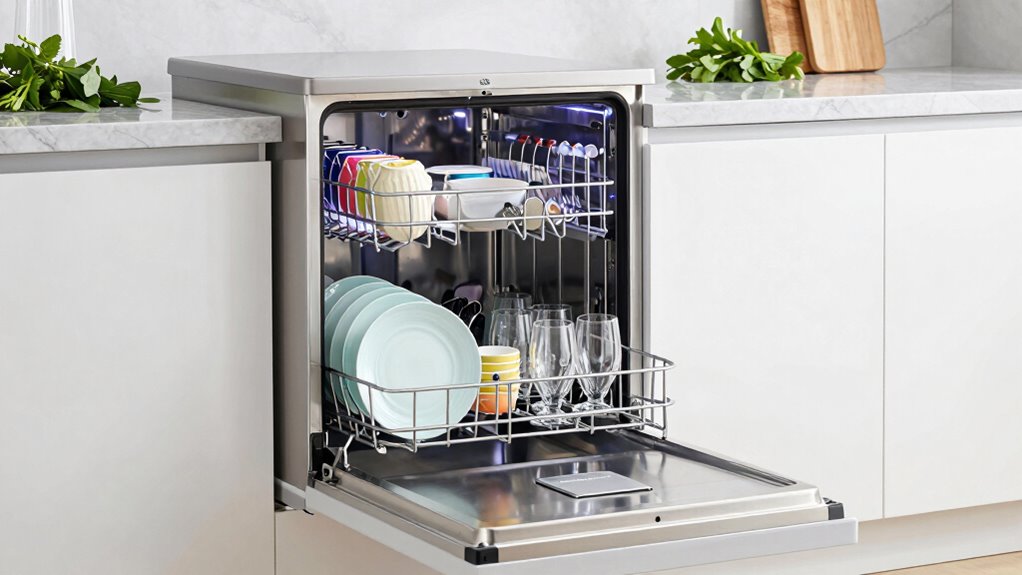

Countertop dishwashers are great for cleaning lightly soiled everyday dishes like plates, glasses, and utensils, especially if you have limited space or water. However, they struggle with heavy grime, baked-on food, or large, bulky items. They handle light to moderate soils well but won’t fully tackle stubborn stains or stuck-on residues. To get the most out of your unit, understanding its limitations and proper use can make a big difference. If you want to know more, keep exploring this overview.
Key Takeaways
- Countertop dishwashers effectively clean light to moderate soils on everyday dishes like plates, glasses, and utensils.
- They struggle with heavy, baked-on grime, stubborn stains, and dried-on food residues.
- Hard water can cause mineral deposits, spots, and reduced cleaning performance.
- Proper loading and delicate cycle settings are essential to avoid damaging glassware and plastics.
- They are limited in capacity and may require pre-rinsing for heavily soiled or bulky items.
countertop dishwasher for light soils
As an affiliate, we earn on qualifying purchases.
As an affiliate, we earn on qualifying purchases.
Do You Know How Countertop Dishwashers Actually Clean Your Dishes?
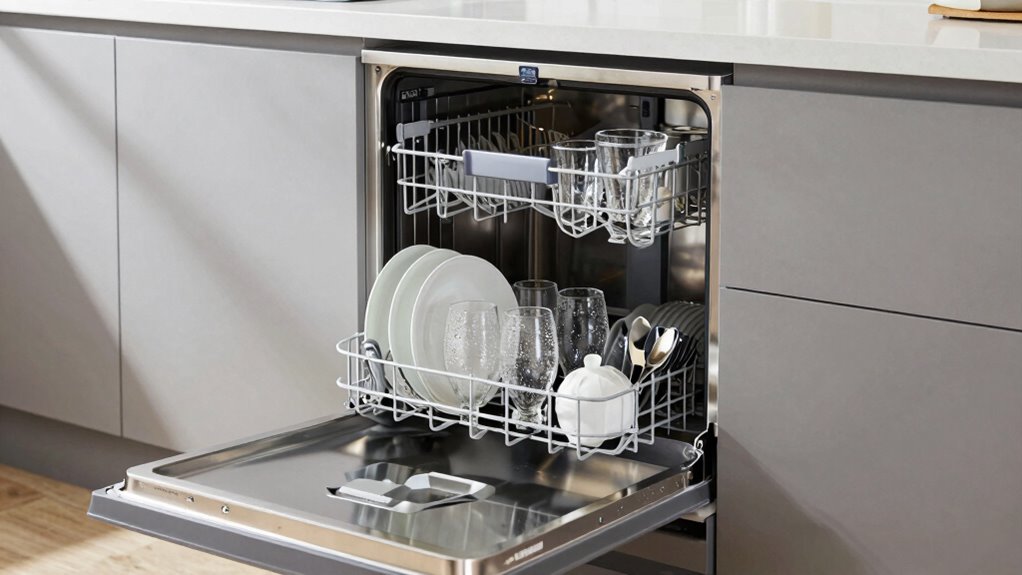
Many people assume that all dishwashers clean dishes the same way, but countertop models use a specific process to get your dishes sparkling. They rely on a combination of spray arms, water jets, and detergent to break down food residues. You might notice that countertop dishwashers tend to make less noise, but they can still produce some dishwasher noise during operation. Water consumption is typically lower than full-sized models, making them more efficient for small loads or limited water supply. These units fill with water, spray it vigorously on dishes, then drain it away, rinsing away dirt and grease. Understanding this process helps you appreciate how countertop dishwashers work to clean your dishes effectively, even if they’re smaller and more compact.
Which Foods and Soils Do They Handle Best?
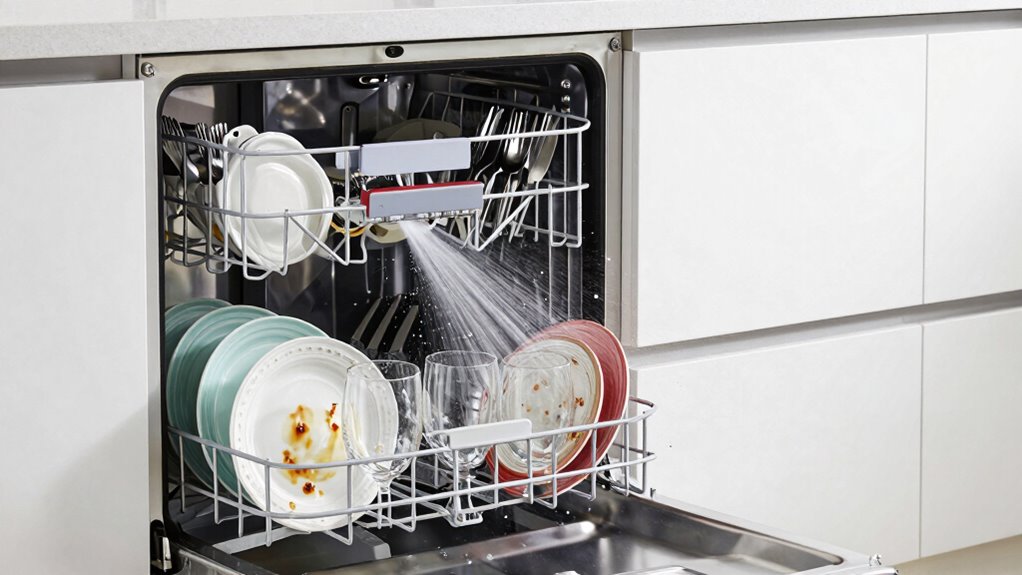
Countertop dishwashers excel at handling light to moderate soils, especially on everyday dishes like plates, glasses, and utensils. They’re best suited for lightly soiled items that don’t have dried-on food or stubborn stains. When it comes to manual loading, you need to arrange your dishes carefully to make sure water reaches all surfaces. Proper loading prevents re-soiling and improves cleaning results. Your choice of detergent also plays a role; using the right detergent makes certain effective cleaning without residue. These dishwashers handle everyday foods like sauces, fats, and lightly baked-on residues well, but they struggle with heavy, baked-on grime or sticky, dried-on foods. Keep in mind their limitations, and you’ll get the best results on your most-used, lightly soiled dishes. Being aware of content formats and how they influence cleaning outcomes can help optimize your dishwasher’s performance. Additionally, understanding testing accuracy and how different soils respond to various cycles can further enhance your cleaning efficiency. Regular maintenance and understanding the types of soils they can handle will also contribute to better cleaning results. Properly selecting and using cleaning cycles based on soil type ensures optimal performance and prolongs the lifespan of your dishwasher. Recognizing soil composition can help you choose the most effective cleaning approach for different types of stains and residues.
Can They Tackle Hard Water and Tough Stains Effectively?
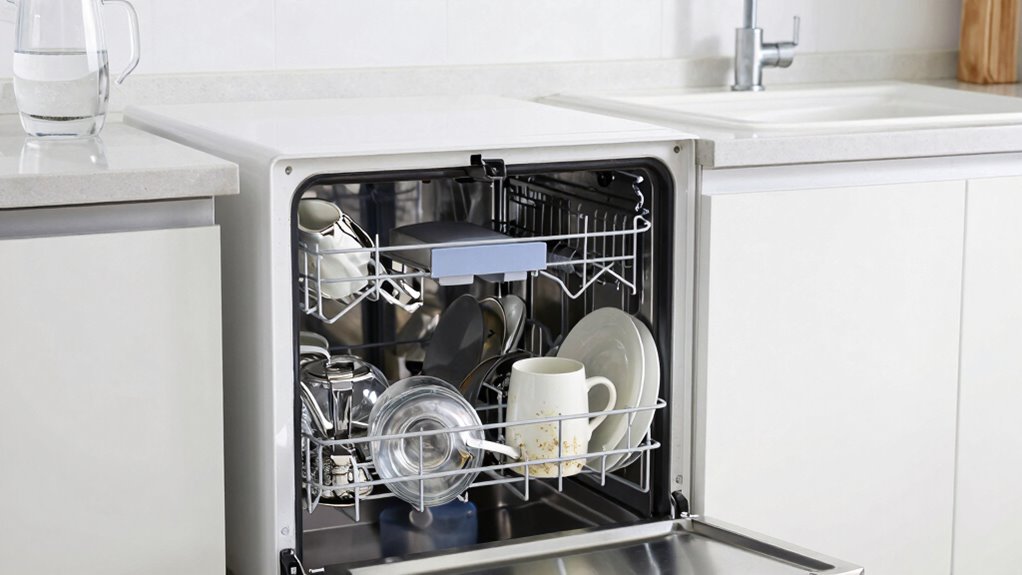
While countertop dishwashers handle light soils effectively, tackling hard water and stubborn stains presents a different challenge. Hard water issues, like mineral deposits and water spots, can hinder their ability to produce spotless results. These mineral buildup problems can cause scaling issues, which reduce the effectiveness of cleaning cycles. Additionally, mineral deposits can contribute to clogged spray arms, further impairing cleaning performance. These dishwashers often lack the powerful features needed for tough stain removal, especially with mineral buildup or baked-on grime. They may struggle to fully eliminate tough stains from glasses, dishes, or pots, leaving residues or spots behind. To improve performance, you might need to use specialized cleaning agents designed for hard water, but even then, results can vary. Proper water softening techniques and using water softeners can help mitigate some of these challenges. Overall, countertop dishwashers excel at light, everyday cleaning but are less effective at managing hard water issues and removing persistent stains.
What Are the Capacity Limits of Countertop Dishwashers?

Countertop dishwashers often have limited capacity compared to standard models, which means you can’t stack as many dishes at once. These capacity limitations are due to their smaller size and design, resulting in stricter load restrictions. You’ll need to prioritize what you wash in each cycle, especially when dealing with large loads. To better understand, consider this table:
| Item Type | Capacity Limitations |
|---|---|
| Plates | 4-6 standard-sized plates |
| Glassware & Cups | 4-8 pieces, depending on size |
| Silverware & Utensils | 10-12 items |
| Small Pots & Pans | Usually not recommended due to size |
Knowing these load restrictions helps you avoid overloading and guarantees ideal cleaning performance. Understanding capacity limits ensures you maximize efficiency and maintain dishwasher longevity. Additionally, being aware of capacity limitations can help prevent damage to the appliance and ensure thorough cleaning. It’s also helpful to properly load dishes to optimize space and washing effectiveness. Proper loading techniques that distribute items evenly are crucial for efficient water circulation, which improves cleaning results.
Are They Safe for Delicate Items Like Glassware and Plastic?
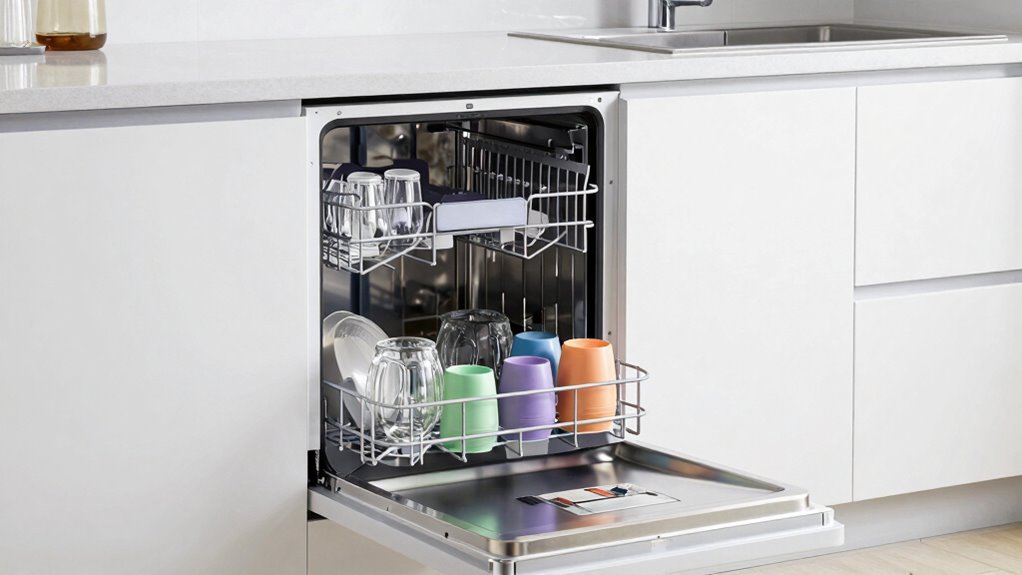
You might wonder if your delicate glassware is safe in a countertop dishwasher, but fragile items can sometimes crack or break during cycles. Plastic items are also at risk from heat damage or warping if not labeled dishwasher-safe. It’s important to know which items can handle the dishwasher’s cleaning process to avoid costly mistakes. Additionally, understanding the limitations of Free Floating systems can help you determine which materials are less likely to be damaged during cleaning. Being aware of appropriate cycle settings can further protect delicate items from unnecessary stress during the wash. Moreover, considering the mechanisms of dishwasher cleaning can assist you in choosing the right settings for delicate items. Recognizing security in payment processing can also be crucial when purchasing appliances or accessories, ensuring your transactions are protected from cyber threats. Incorporating knowledge about water temperature and its impact on fragile materials can also help prevent damage.
Fragile Items and Dishwasher Safety
Despite their convenience, countertop dishwashers can pose risks to fragile items like glassware and plastic. The high temperatures and vigorous water jets may cause delicate glassware to break or chip. Plastic items, especially those that aren’t labeled dishwasher-safe, can warp or melt if exposed to heat. When loading, avoid placing extremely fragile or thin glassware in the dishwasher. Use gentle dishwasher detergents designed for delicate dishes to prevent damage. After the wash cycle, opt for the rinse cycle to reduce residual detergent and ensure gentle cleaning. Keep in mind that some plastics aren’t suitable for dishwasher cleaning at all, so always check manufacturer guidelines. Being cautious helps protect your fragile items from damage during the dishwasher process.
Plastic Items and Heat Risks
Plastic items can be particularly vulnerable to heat risks during dishwasher cycles, especially if they’re not labeled dishwasher-safe. Exposure to high temperatures can cause plastic hazards like warping, melting, or discoloration. Heat damage compromises the integrity of plastic, making it brittle or misshapen over time. Delicate plastics, including certain containers and utensils, often aren’t designed to withstand the intense heat of some dishwashers, risking deformation or even releasing harmful chemicals. To avoid these issues, always check for dishwasher-safe labels before cleaning plastic items. If you’re unsure, consider hand-washing delicate plastics or placing them on the top rack where the heat is milder. Being cautious helps protect your plastics from heat damage and extends their lifespan.
How Do Cycle Settings and Temperature Impact Cleaning Results?

Cycle settings and temperature directly influence how effectively your countertop dishwasher cleans dishes. The cycle impact determines how long and intense the wash will be, affecting stubborn stains and grease removal. Using a heavier cycle for heavily soiled items ensures better cleaning, while quick cycles are suitable for lightly soiled dishes. Temperature effects are equally important; higher temperatures help break down grease and kill bacteria, resulting in cleaner, sanitized dishes. Conversely, lower temperatures may be gentler on delicate items but might not remove tough stains effectively. Adjusting cycle settings and temperature based on your load ensures ideal cleaning results. Additionally, understanding eco-friendly disposal practices can help you reduce waste and protect the environment. Proper detergent use is also crucial for optimal cleaning and preventing buildup in your appliance. Being aware of energy efficiency features can help you save time and reduce utility bills while maintaining cleaning performance. Selecting the appropriate cycle and temperature can also contribute to preventing mechanical failures, thus prolonging your dishwasher’s lifespan. Keep in mind that selecting the appropriate cycle and temperature can save time, energy, and improve your dishwashing outcomes. Understanding affiliate disclosure can also help you make informed decisions about your purchases and usage.
What Common Cleaning Challenges Do Users Face?
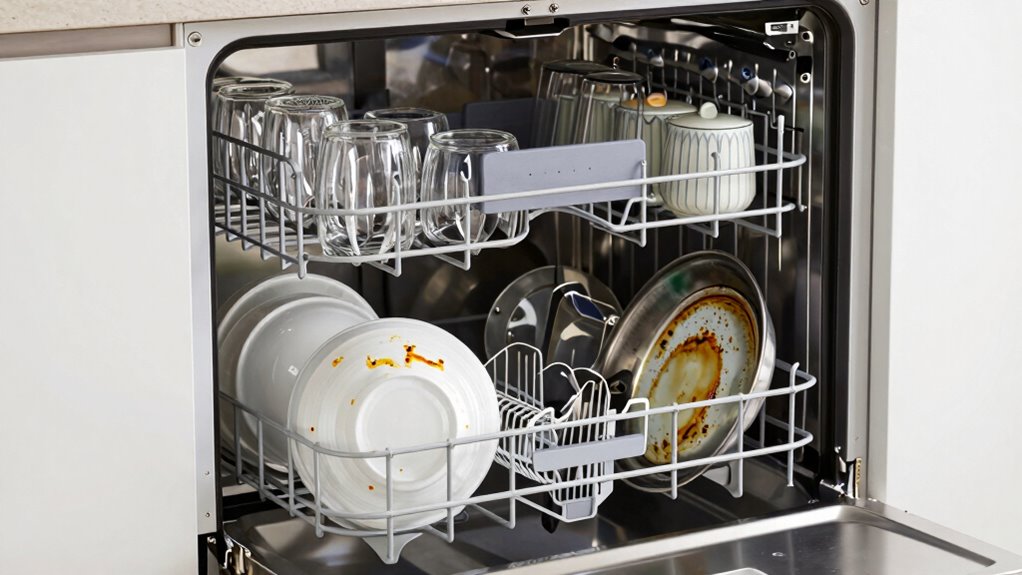
Many users encounter common cleaning challenges with countertop dishwashers, often struggling to remove stubborn stains, grease, or food residues. Dishwasher noise can be distracting, especially during longer cycles, making it hard to run the machine without disturbance. Water consumption is another concern; some models use more water than expected, leading to higher utility bills and inefficient cleaning. Additionally, low water pressure can leave dishes less spotless, requiring multiple cycles or pre-rinsing. Overloading the dishwasher is a frequent mistake, blocking water flow and reducing cleaning effectiveness. Finally, mineral deposits or hard water buildup can cause odors and reduce performance over time. Addressing these challenges involves proper loading, using the right detergent, and selecting appropriate cycle settings to improve results and minimize noise and water waste.
Are There Messes or Items That Countertop Dishwashers Just Can’t Handle?
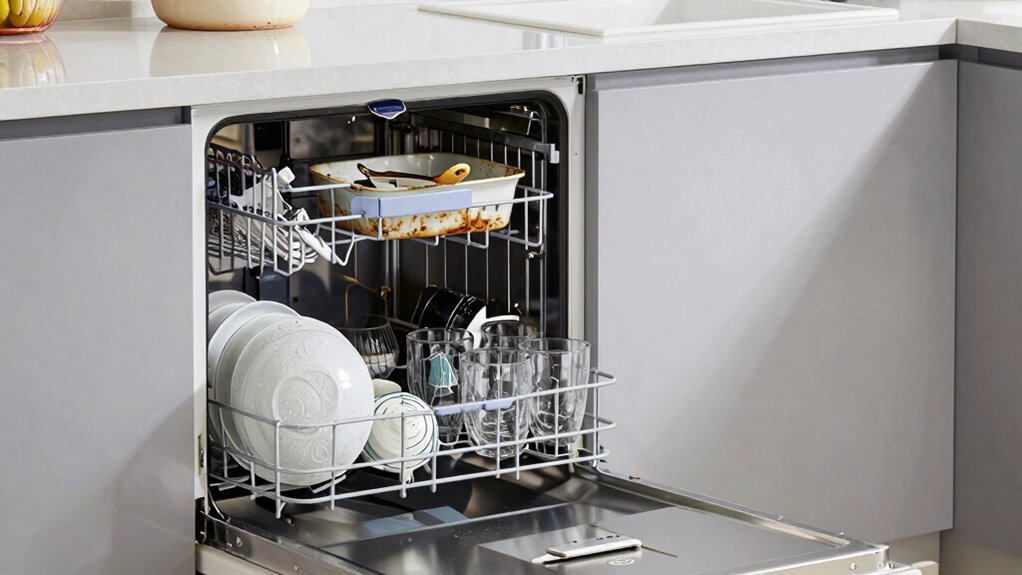
While countertop dishwashers handle a variety of everyday dishes well, they have limitations when it comes to certain messes and items. Heavy-duty items or large pots can be tricky because they may not fit or clean thoroughly, increasing power consumption and water usage. Here are some items they can’t handle well:
- Pans and large cookware – often too big or bulky.
- Cutlery with stuck-on food – may need pre-rinsing.
- Delicate glassware – risk of damage due to aggressive cycles.
- Heavily soiled or greasy items – may not get fully clean, requiring extra rinses.
Understanding these limitations helps manage expectations and prevents wasting water or power on items the dishwasher can’t effectively clean.
How Can You Maintain and Optimize Your Countertop Dishwasher’s Performance?
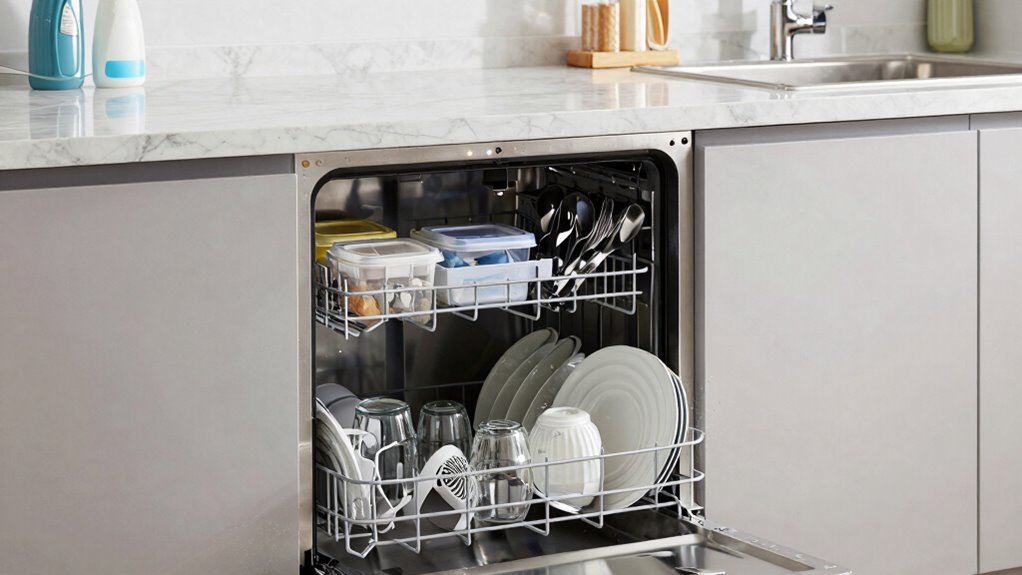
To keep your countertop dishwasher running smoothly and efficiently, regular maintenance is essential. Start by choosing the right detergent; use a high-quality, compatible detergent to prevent buildup and ensure thorough cleaning. Follow the manufacturer’s recommendations for detergent quantity to avoid excess suds or residue. Routine maintenance tips include regularly cleaning the filter and spray arms to prevent clogs and improve water flow. Wipe down the door seals to prevent mold and mildew. Run a cleaning cycle with a dishwasher cleaner every few months to remove mineral deposits and grime. Keep the interior dry when not in use to prevent mold. By staying consistent with these maintenance tips and selecting proper detergent, you’ll optimize performance and prolong your dishwasher’s lifespan.
Is a Countertop Dishwasher the Right Choice for Your Kitchen Needs?
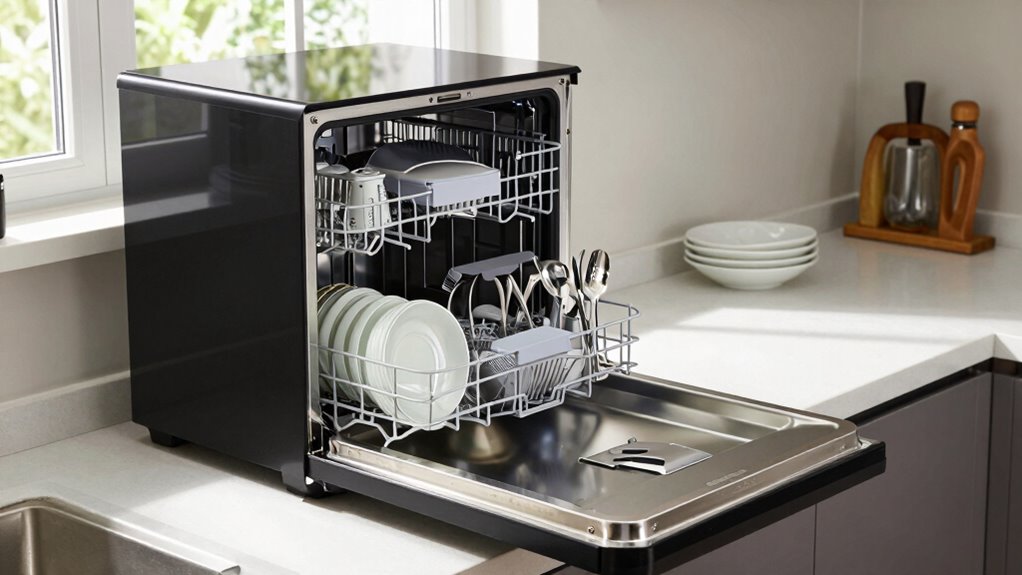
A countertop dishwasher can save space and fit easily into smaller kitchens, making it a convenient option. However, you’ll want to take into account the costs and how simple it is to install before deciding if it’s the right fit. Thinking about these factors helps ensure it matches your specific kitchen needs.
Space Efficiency Benefits
Countertop dishwashers excel in saving space, making them an ideal choice for kitchens with limited room. Their compact design fits easily on your countertop, freeing up valuable floor space. If you’re tight on space, here’s why a countertop placement works well:
- You don’t need to dedicate a full-sized cabinet or under-sink area.
- Easy to move or store when not in use.
- Ideal for small apartments or RV kitchens.
- Keeps your countertop organized and clutter-free.
This space-efficient setup means you get the convenience of a dishwasher without sacrificing precious kitchen real estate. It’s perfect if you want a simple, effective way to keep dishes clean without remodeling your entire kitchen.
Cost and Installation Factors
While countertop dishwashers are generally more affordable upfront than built-in models, you’ll need to contemplate installation costs and ongoing expenses to determine if they’re truly budget-friendly for your kitchen. A thorough cost analysis helps you weigh the initial purchase against potential installation fees, plumbing adjustments, or electrical upgrades. Many models are simple to set up, but following installation tips—like ensuring proper water connection and drainage—can save you time and prevent future issues. Keep in mind ongoing costs such as water and energy consumption, which vary by model. If you’re comfortable with minor setup adjustments and want a budget-conscious choice, a countertop dishwasher could be right for you. Otherwise, consider whether installation complexity and expenses align with your kitchen’s existing setup.
Frequently Asked Questions
How Energy-Efficient Are Countertop Dishwashers Compared to Full-Sized Models?
Countertop dishwashers are generally more energy-efficient than full-sized models because they use less water and electricity, reducing your overall energy consumption. Many models come with eco-friendly features like quick wash cycles and energy-saving modes, helping you save even more. While they might not handle large loads, they’re a great choice for smaller households or quick cleanup, making them a smart, eco-conscious option for efficient dishwashing.
Can Countertop Dishwashers Be Used With All Types of Detergents?
You might wonder if all detergents work with your countertop dishwasher, and the answer is, not quite. While most standard detergents are compatible, some specialty or high-efficiency formulas can affect cleaning effectiveness or damage the unit. You should check your dishwasher’s manual for detergent compatibility, ensuring you use the right type to get the best results. A wrong choice could leave dishes less than spotless or even harm your machine.
What Is the Typical Lifespan of a Countertop Dishwasher?
You can expect a countertop dishwasher to last around 3 to 5 years with proper maintenance. To extend its lifespan, follow maintenance tips like regular cleaning and using the right detergent. User reviews often highlight the importance of gentle handling and routine checks. Keep an eye on parts like the spray arms and filters, and address issues promptly to make sure your machine performs well for years.
Do Countertop Dishwashers Require Special Plumbing or Drainage Setups?
Imagine your countertop dishwasher as a helpful little stream, needing a simple connection to flow smoothly. You don’t need special plumbing or drainage setups; just guarantee your installation requirements are met. Usually, it connects to a standard kitchen faucet or has a drainage hose that directs water into the sink or drain. Focus on proper plumbing considerations, and your dishwasher will work seamlessly without extra plumbing changes.
Are There Specific Brands or Models Recommended for Best Cleaning Performance?
You should consider brand recommendations like Farberware, Danby, and Black+Decker for reliable cleaning performance. When doing model comparisons, look for features such as wash cycles, size, and water efficiency. These brands consistently receive positive reviews for cleaning dishes well in small spaces. Checking user feedback and expert reviews helps you choose the right model that meets your needs, ensuring you get the best cleaning results from your countertop dishwasher.
Conclusion
Ultimately, understanding your countertop dishwasher’s strengths and struggles helps you select, sustain, and spot its superpowers. While it handles everyday dishes with ease, it stumbles on stubborn stains and bulky loads. Stay savvy by maintaining your machine, managing expectations, and matching it to your needs. With proper care and realistic hopes, you’ll enjoy a dishwasher that delivers durability, dependability, and daily dishwashing delight—making your kitchen chores easier and more enjoyable.