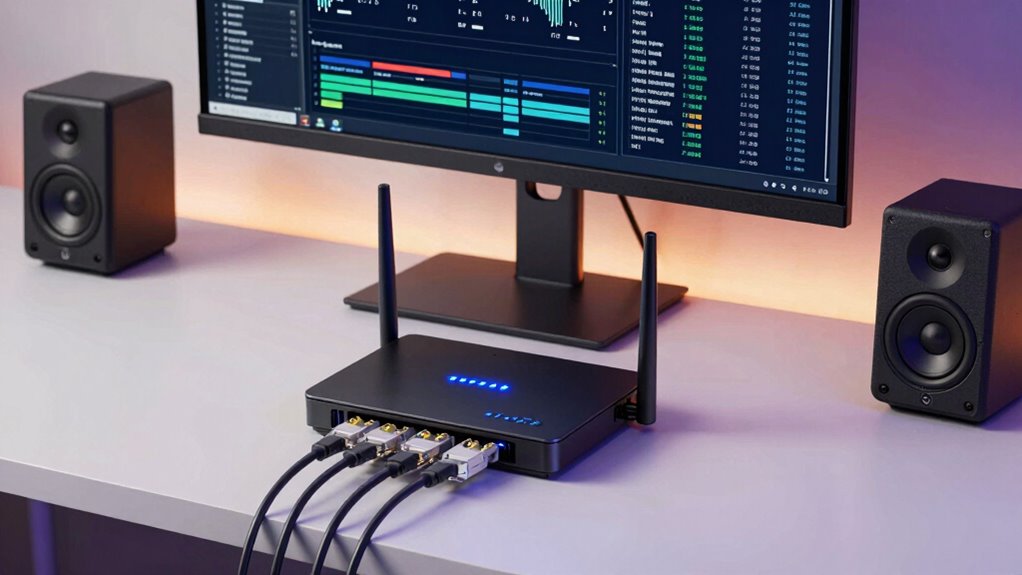

If you often transfer large files, stream high-resolution media, or run a smart home with many devices, upgrading to 10GbE might be worth it to boost speed and reliability. However, for basic web browsing or casual streaming, the speed upgrade could be overkill and costly. Consider your current setup and future needs carefully—if you’re curious about whether it’s the right move, more details are just ahead.

Get the latest gadgets delivered free with Prime
- Fast, free delivery on millions of items
- Prime Video, Amazon Music and more included
- Member-only deals all year
Key Takeaways
- 10GbE offers high speeds suitable for large file transfers and 4K/8K streaming, but may be unnecessary for basic internet use.
- Hardware costs and setup complexity can be significant, making it overkill for small households with minimal bandwidth needs.
- Upgrading provides future-proofing and network redundancy, but depends on device compatibility and existing infrastructure.
- Benefits outweigh costs mainly for power users, content creators, or data-heavy smart home setups.
- Careful evaluation of current and future network demands is essential to determine if 10GbE is a worthwhile investment.
As an affiliate, we earn on qualifying purchases.
What Is 10GbE Home Networking and How Does It Work?
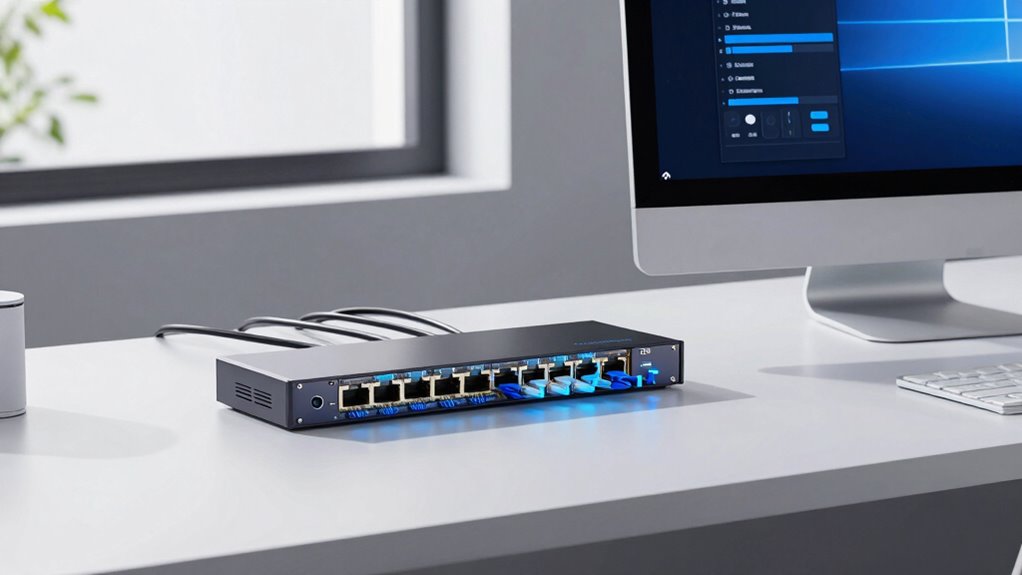
Ever wondered how your home network can handle demanding tasks like 4K streaming or large data transfers so smoothly? 10GbE home networking refers to using 10-gigabit Ethernet technology to substantially boost your home’s internet speed and data transfer rates. It often relies on fiber optics, which provide high bandwidth and low latency essential for demanding applications. To set up a 10GbE network, you’ll need compatible switches, network interface cards, and cabling, all integrated within an efficient network topology. This topology ensures seamless data flow between devices, minimizing bottlenecks. Additionally, implementing fiber optic cabling can significantly enhance your network’s capacity and reliability. Proper network configuration is crucial to maximize performance and prevent issues such as network congestion or bottlenecks. Investing in quality cabling and connectors can further reduce signal loss and improve overall network stability. By leveraging fiber optics and a well-planned network layout, your home network can achieve the high performance required for modern digital tasks, making activities like gaming, streaming, and large file sharing much more efficient. Incorporating network management tools can further optimize your setup and maintain consistent performance over time. Moreover, understanding the bandwidth capabilities of your network components helps ensure you’re utilizing the full potential of 10GbE technology.
Is Upgrading to 10GbE Worth It? Benefits and Drawbacks
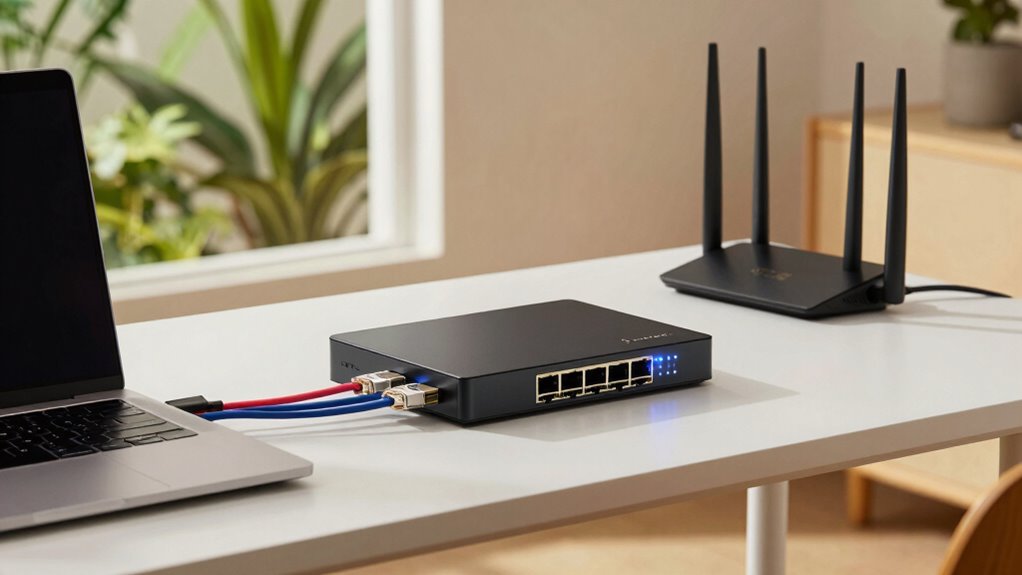
Upgrading to 10GbE can substantially improve your home network’s performance, but it’s important to weigh the benefits against the costs and potential challenges. With faster speeds, you’ll experience smoother data transfers, better support for high-bandwidth activities, and enhanced network redundancy, which helps keep your connection reliable during outages. Additionally, supporting color accuracy and high contrast ratios can be crucial for multimedia and gaming applications, ensuring a visually optimal experience. However, setting up 10GbE may require new hardware and technical know-how, making it a significant investment. Additionally, increased speed demands robust data encryption to protect sensitive information across your network. While the upgrade offers noticeable performance gains, consider whether your current needs justify the expense and effort involved. If you rely heavily on large data transfers or require maximum uptime, 10GbE could be worth it. Otherwise, it might be overkill for typical home use. Evaluating your network’s performance requirements can help determine if the upgrade aligns with your needs. Proper network security practices are essential to safeguard your data as speeds increase. Moreover, understanding network compatibility is vital to ensure all your devices can effectively utilize the faster connection. Maintaining awareness of network infrastructure updates can also prevent potential bottlenecks and ensure optimal performance.
How Much Does a 10GbE Home Network Cost? Is It a Good Investment?
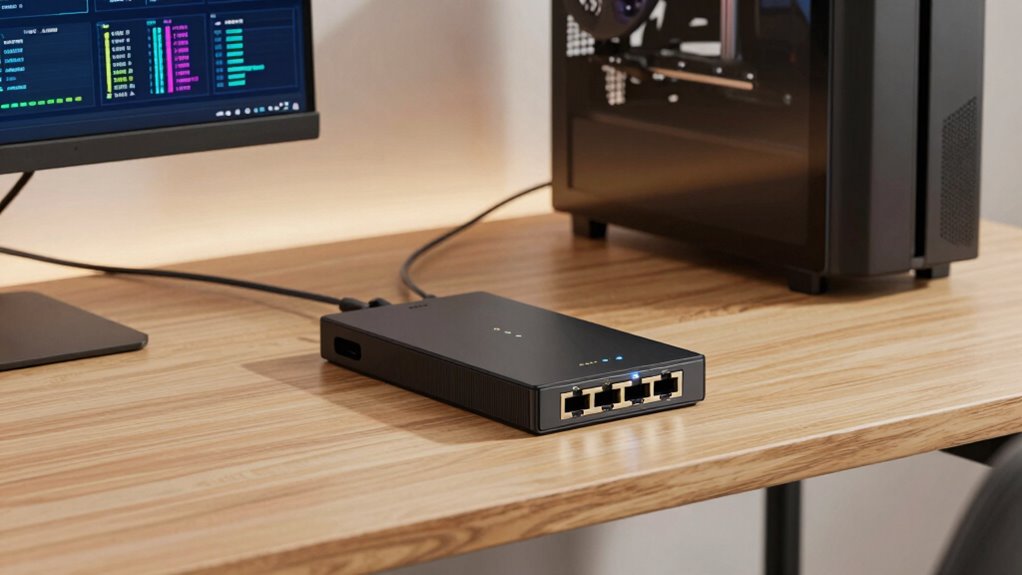
Determining the cost of a 10GbE home network depends on the hardware you choose and your existing setup. A thorough cost analysis includes switches, network cards, cabling, and potential upgrades to your router. Expect to spend anywhere from a few hundred to over a thousand dollars, depending on the quality and features. While the initial investment may seem high, consider future scalability—10GbE can accommodate growing data needs without frequent upgrades. This makes it a potentially cost-effective choice long-term. However, if your current devices and internet plan don’t demand such speeds, the investment might outweigh the benefits. Carefully evaluate your bandwidth requirements and planned usage to determine if the expense aligns with your networking goals.
Who Should Consider 10GbE at Home: And When Is It Overkill?
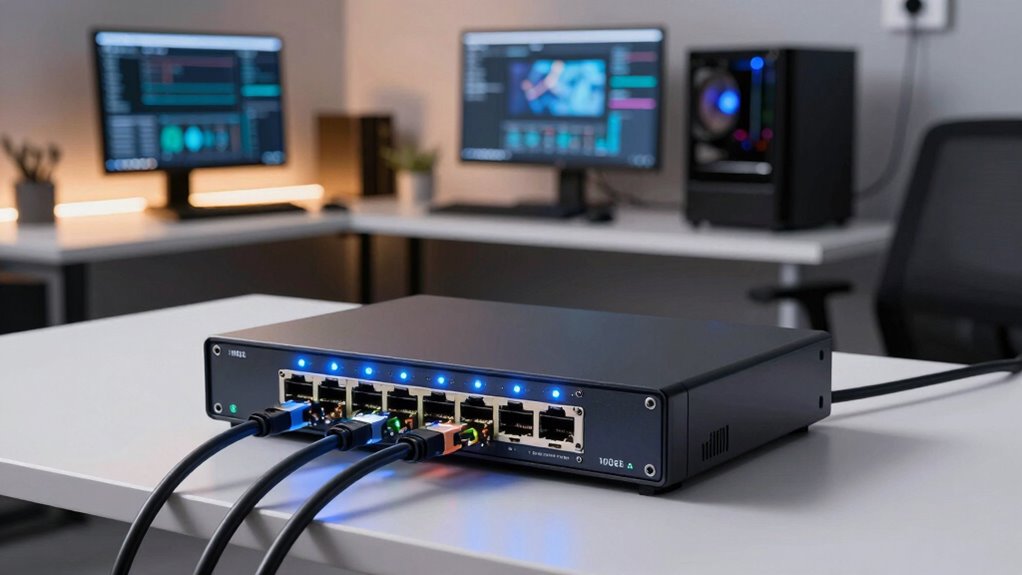
A 10GbE home network makes sense if you regularly transfer large files, stream high-resolution media, or run multiple devices that demand fast, reliable connections. If you’re into home automation, having a wired connection can reduce Wi Fi interference that often disrupts wireless devices. It’s ideal if your setup includes smart home hubs, security cameras, or data-heavy appliances that benefit from steady, high-speed links. However, if your internet usage is limited to browsing, streaming, or light file sharing, 10GbE might be overkill. In such cases, the cost and complexity won’t justify the benefits. Consider whether your devices and network demands truly need this level of speed before investing. Otherwise, you could be paying for capacity you don’t fully utilize.
Key Factors to Decide If 10GbE Is Right for Your Home Setup
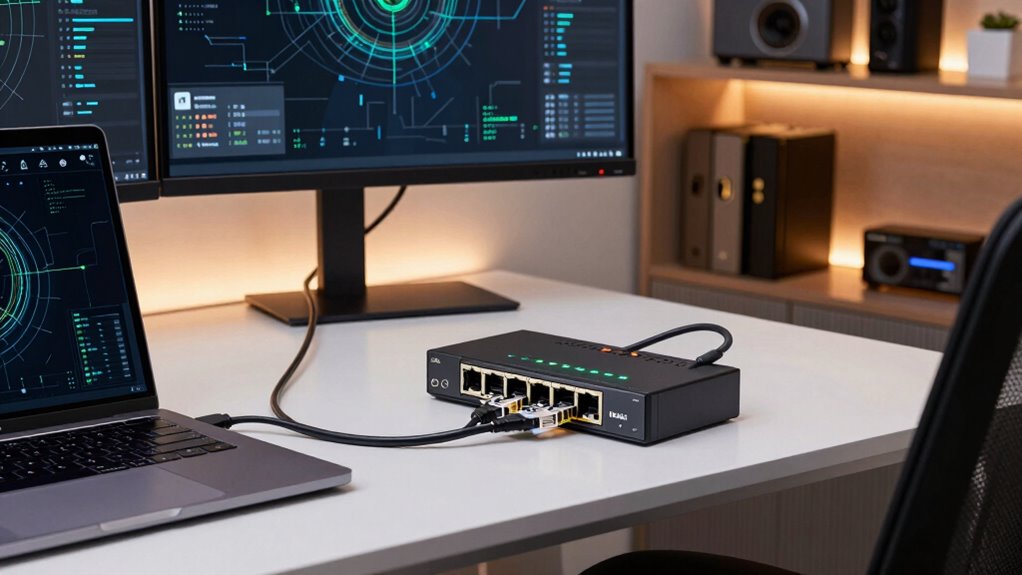
Deciding if 10GbE is right for your home setup hinges on evaluating your current and future network needs. If you handle large file transfers, 4K or 8K streaming, or frequent backups, 10GbE can notably boost performance. However, consider your device compatibility; verify your devices support 10GbE or can be upgraded without hassle. Network security also plays a role—faster connections can expose vulnerabilities if your setup isn’t properly secured. If your existing network infrastructure is outdated or lacks support for 10GbE, upgrading might require additional investments. Additionally, understanding your network infrastructure and its capacity can help determine if an upgrade is feasible. Upgrading to 10GbE may also involve understanding the hardware requirements and potential compatibility issues, which are crucial for a smooth transition. It’s also important to assess the cost-benefit of such an upgrade to ensure it aligns with your budget and needs. Conducting a thorough performance analysis can help you decide if the speeds justify the costs. Ultimately, weigh whether the improved speed justifies the costs and complexity, or if your current setup already meets your needs. This assessment helps determine if 10GbE is a worthwhile upgrade or overkill for your home.
Frequently Asked Questions
Can Existing Home Wiring Support 10GBE Speeds?
Your existing home wiring might support 10GbE speeds if you have high-quality cables like Cat6a or Cat7. However, older or lower-grade wiring often falls short, causing bottlenecks. You may need wiring upgrades or new cables to fully realize 10GbE performance. Before investing, test your current setup’s cable quality and consider upgrading wiring where necessary to guarantee you get the speeds you’re aiming for.
How Does 10GBE Affect Network Security at Home?
A chain is only as strong as its weakest link, so upgrading to 10GbE can boost your network security if you focus on device authentication and network encryption. Faster speeds mean higher data transfer rates, but they also demand robust security measures. Keep your devices secure and encrypt sensitive data to prevent breaches. With proper security protocols, 10GbE enhances your home network without compromising safety.
What Are the Energy Consumption Differences With 10GBE Equipment?
You’ll notice that 10GbE equipment generally consumes more power due to higher data processing demands, impacting your overall power consumption. However, newer models are increasingly designed with energy efficiency in mind, reducing their power draw during idle or low activity periods. While the energy consumption difference is noticeable, it’s often balanced by the performance benefits, especially if you’re managing large data transfers regularly.
Will My Internet Service Provider Support 10GBE Speeds?
Think of your internet service provider as the gatekeeper to your digital highway. Most ISPs don’t support 10GbE speeds directly; they often cap upload and download speeds well below that. To access 10GbE’s full potential, you need ISP plans that support such speeds and hardware capable of handling them. Check your ISP’s compatibility and ask about upload speed limitations—otherwise, you might be chasing a mirage.
How Future-Proof Is a 10GBE Home Network?
A 10GbE home network is quite future-proof if you invest in compatible network hardware and make certain your devices support it. As technology advances, more devices will adopt 10GbE, so upgrading now helps avoid frequent replacements. Keep in mind, however, that older devices may not be compatible, so you might need to upgrade multiple components. Overall, a 10GbE setup offers excellent longevity and performance for years to come.
Conclusion
Deciding if 10GbE is right for you depends on your needs, your budget, and your future plans. If you crave faster transfers, smoother streaming, and better performance, it might be worth it. If you only browse, stream casually, or have a modest setup, it could be overkill. Ultimately, weigh the benefits against the costs, consider your current and future needs, and choose what best fits your home’s digital lifestyle.
Halloween Picks
halloween
As an affiliate, we earn on qualifying purchases.