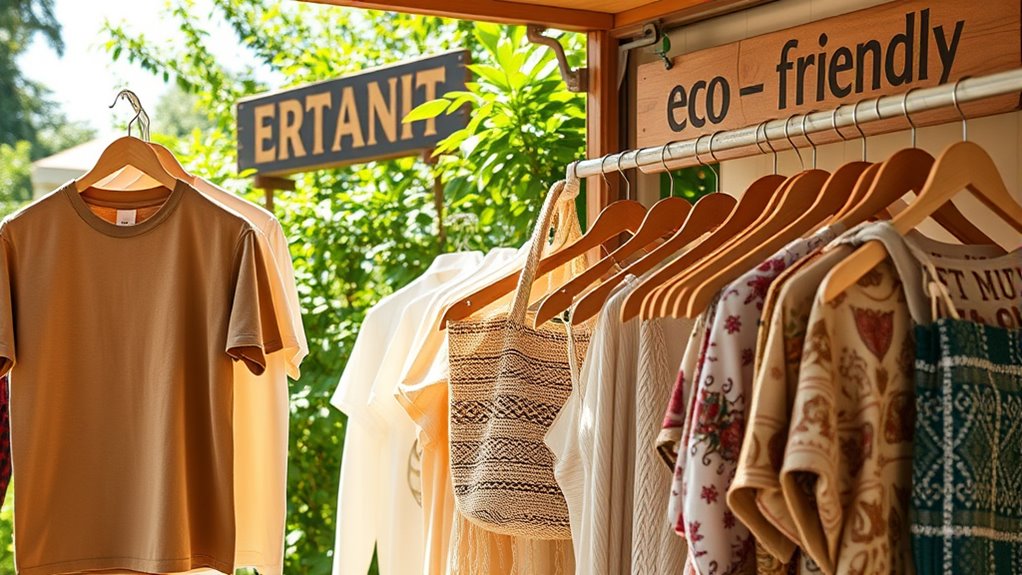

To choose sustainable fashion, focus on brands that prioritize eco-friendly fabrics like organic cotton, recycled polyester, or Tencel, and check for certifications such as Fair Trade or GOTS. Support companies that maintain transparency about their supply chains and manufacturing practices, ensuring fair wages and safe working conditions. Invest in quality pieces that last longer and repair clothes instead of discarding them. If you want to learn more about making eco-conscious choices, keep exploring tips that can help you build a greener wardrobe.
Key Takeaways
- Prioritize brands with certifications like Fair Trade, GOTS, or B Corp to ensure ethical and sustainable practices.
- Choose eco-friendly fabrics such as organic cotton, recycled polyester, or Tencel for environmentally conscious options.
- Support companies that maintain transparency about their supply chain and manufacturing processes.
- Invest in high-quality, durable clothing to reduce waste and promote longer-lasting wardrobe pieces.
- Avoid fast fashion by selecting timeless designs and maintaining clothes through proper care and repairs.
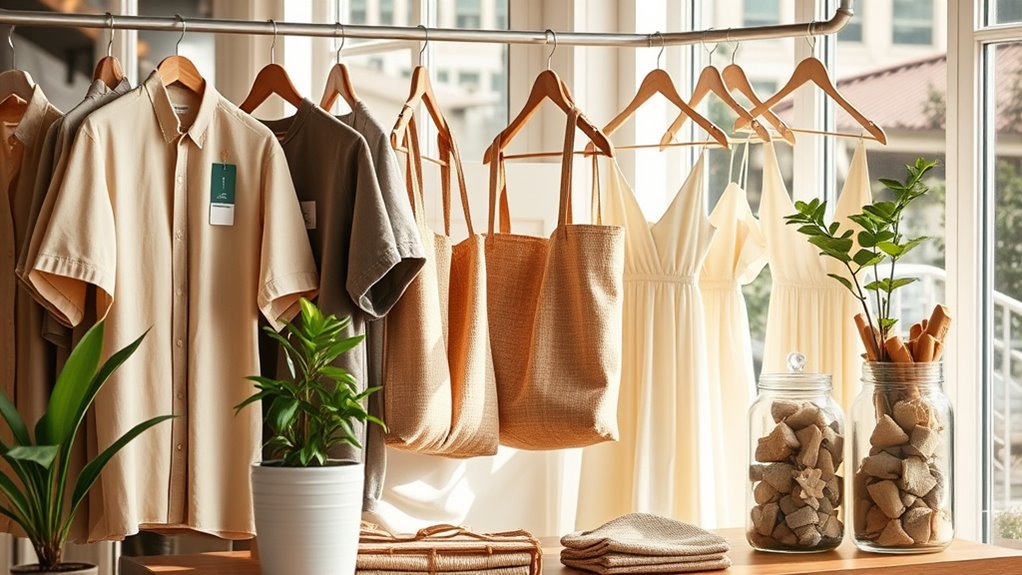
As more people become aware of environmental and ethical concerns, choosing sustainable fashion has never been more important. You want to look good while also making choices that support a healthier planet and fair treatment for workers. One of the best ways to do this is by paying attention to how your clothes are made. Ethical manufacturing focuses on ensuring that every step in producing your garments respects workers’ rights, provides fair wages, and maintains safe working conditions. When you buy from brands committed to ethical manufacturing, you’re supporting fair labor practices and reducing exploitation. These brands often provide transparency about their supply chains, so you can be confident your purchase isn’t contributing to labor abuses or environmental harm.
Another key factor is choosing clothing made from eco-friendly fabrics. Traditional fabrics like conventional cotton or synthetic fibers can be harmful to the environment due to heavy water use, pesticide application, and pollution from production processes. Eco-friendly fabrics, on the other hand, are grown or produced using sustainable methods that minimize environmental impact. For instance, organic cotton is grown without synthetic pesticides or fertilizers, reducing soil and water contamination. Recycled fabrics like polyester made from plastic bottles help reduce waste and lower carbon emissions. Tencel or Lyocell, derived from sustainably managed eucalyptus trees, are produced through closed-loop processes that reclaim and reuse solvents, making them a more eco-conscious choice.
When shopping, look for brands that prioritize both ethical manufacturing and eco-friendly fabrics. Many companies now clearly label their products or provide detailed information about their sourcing and production practices. This transparency makes it easier for you to make informed decisions. It’s also worth researching certifications like Fair Trade, GOTS (Global Organic Textile Standard), or B Corp, which verify that a brand adheres to strict social and environmental standards. These certifications can serve as reliable indicators that the company cares about sustainability and ethical practices.
You can also extend sustainable choices to your wardrobe by investing in quality pieces that last longer, rather than fast fashion items that fall apart quickly. Maintaining your clothes properly and repairing them when needed reduces waste and the demand for new production. By consciously selecting brands and fabrics that align with these values, you not only reduce your environmental footprint but also encourage the fashion industry to adopt more sustainable practices. Every purchase becomes an opportunity to support positive change, making your wardrobe a reflection of your commitment to a better world.
organic cotton sustainable clothing
As an affiliate, we earn on qualifying purchases.
As an affiliate, we earn on qualifying purchases.
Frequently Asked Questions
How Can I Verify a Brand’s Sustainability Claims?
You can verify a brand’s sustainability claims by checking for transparency in their supply chain and ethical manufacturing practices. Look for detailed information on their website about where and how their products are made. Third-party certifications like Fair Trade or B Corp also help confirm their commitment. Don’t hesitate to ask brands directly or research reviews to guarantee they genuinely prioritize sustainability, not just marketing.
Are Secondhand Shops Truly Eco-Friendly?
In an era where even a knight would envy your eco-conscious choices, secondhand shops are genuinely eco-friendly. By embracing upcycling innovations and sourcing from stores that prioritize eco-friendly fabrics, you help reduce waste and extend clothing lifecycles. Shopping secondhand minimizes demand for new production, lowering environmental impact. So, your thrift haul isn’t just stylish; it’s a smart, sustainable move for the planet’s future.
What Certifications Indicate Genuine Sustainable Fashion?
Look for certification standards like GOTS, Fair Trade, or OEKO-TEX, which indicate genuine sustainable fashion. These eco labels guarantee the brand meets strict environmental and social criteria, giving you confidence in their eco label accuracy. When shopping, check for these certifications to verify the authenticity of sustainability claims, helping you make responsible choices that support ethical production and reduce your environmental impact.
How Does Sustainable Fashion Impact Price Points?
Thinking like a time traveler, you’ll find sustainable fashion often costs more due to its eco-friendly materials and ethical labor practices. The cost implications stem from higher production standards, but increased market demand could eventually lower prices. While you might pay a premium now, your choices support better environmental and social impacts, encouraging brands to prioritize sustainability. This shift benefits everyone, making eco-conscious fashion more accessible in the future.
Can Sustainable Fashion Be Stylish and Affordable?
Yes, sustainable fashion can be stylish and affordable. You can find eco-friendly materials like organic cotton and recycled fabrics that look great without breaking the bank. Focus on brands committed to ethical manufacturing, ensuring fair labor practices and quality. By shopping smart, you’ll access trendy pieces that support sustainability, proving that eco-conscious fashion isn’t just ethical but also budget-friendly and fashionable.
Conclusion
By choosing sustainable fashion, you’re making a positive impact on the environment and supporting ethical practices. Did you know that the fashion industry accounts for about 10% of global carbon emissions? Every conscious purchase helps reduce waste, water use, and pollution. Remember, your choices matter—opting for eco-friendly brands and quality pieces over fast fashion not only benefits the planet but also guarantees you wear clothing with purpose. Stay stylish and sustainable!