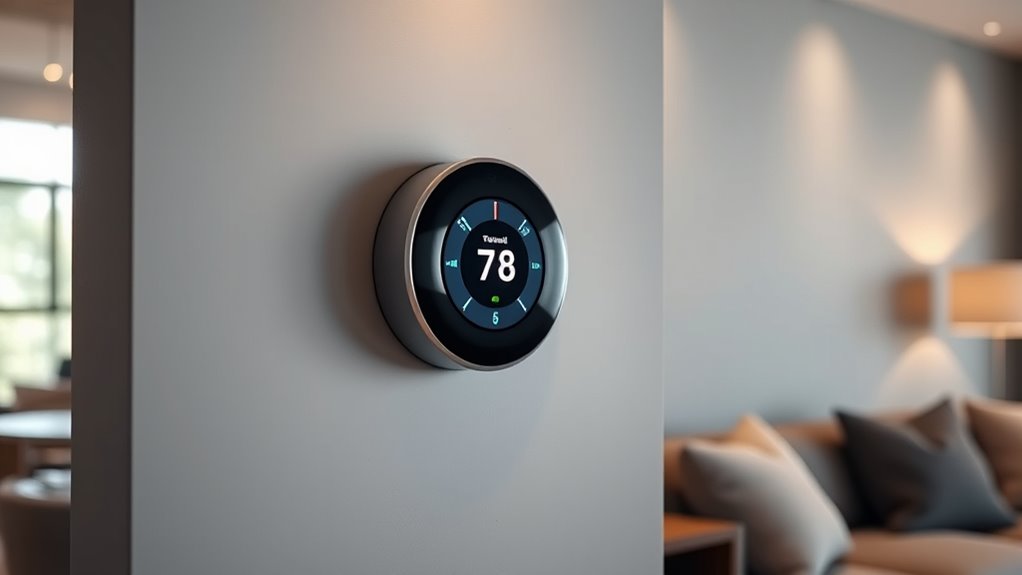

Smart thermostats with learning capability cut heating and cooling costs by building a schedule from your habits instead of forcing you to program one. After comparing 15 current models, the Google Nest Learning Thermostat (4th Gen) stands out as the best overall pick, thanks to its genuinely autonomous scheduling, refined design, and bundled remote sensors that balance temperatures across rooms. The ecobee Smart Thermostat Premium is the strongest alternative if you want broader smart-home compatibility and built-in air quality monitoring, while the Amazon Smart Thermostat is the value pick for buyers who want app control and basic automation without a premium price. The main tradeoff in this category is between true adaptive learning — which mostly means Nest — and sensor-driven automation with broader ecosystem support, which is where ecobee and Sensi shine. Keep reading for the full breakdown of what separates these models.

Get the latest gadgets delivered free with Prime
- Fast, free delivery on millions of items
- Prime Video, Amazon Music and more included
- Member-only deals all year
Complete the kit



Key Takeaways
- True self-programming is dominated by Nest: only the Nest Learning Thermostat generations (3rd, 4th, E, and Pro Edition) actively learn your schedule, while ecobee, Sensi, and Amazon models rely on occupancy sensing and manual or geofence-based schedules.
- Remote sensors matter more than the thermostat itself for comfort — the 4th Gen Nest bundles that include second-generation sensors and the ecobee Premium’s SmartSensor consistently delivered more even room temperatures than sensor-free models.
- The lineup splits into three clear price tiers: budget app control (Amazon Smart Thermostat, Sensi ST55), mid-tier smart features (Sensi Touch 2, ecobee Essential and Enhanced), and premium learning hardware (Nest Learning 4th Gen, ecobee Premium, Nest Pro Edition).
- C-wire requirements are the most common installation stumbling block — the Sensi models and Amazon Smart Thermostat work without a C-wire in most systems, while Nest models compensate with power-sharing but can struggle on older HVAC setups.
- Renewed and bundle variants of the same Nest hardware (like the renewed 4th Gen with two sensors) can be the smartest way to get premium learning features if warranty coverage is less of a concern.
| Google Nest Smart Thermostat, Charcoal |  | Best for App-Based Scheduling | Color: Charcoal | Connectivity: Wi-Fi 802.11b/g/n (2.4 GHz and 5 GHz) and Bluetooth Low Energy | Energy certification: ENERGY STAR | VIEW ON AMAZON | See Our Full Breakdown |
| Sensi Touch 2 Smart Wi-Fi Thermostat, ST76 |  | Best for Sensor-Based Room Comfort | Model: ST76 | Connectivity: Wi-Fi | Voice assistant: Amazon Alexa | VIEW ON AMAZON | See Our Full Breakdown |
| Google Nest Learning Thermostat (3rd Gen), Stainless Steel |  | Best for Automatic Learning | Generation: 3rd Gen | Finish: Stainless Steel | Voice assistants: Amazon Alexa and Google Assistant | VIEW ON AMAZON | See Our Full Breakdown |
| ecobee Smart Thermostat Enhanced with Wi-Fi |  | Best for Broad Smart Home Compatibility | Connectivity: Wi-Fi | HVAC compatibility: Compatible with 90% of HVAC systems | Included accessories: Power Extender Kit, trim kit, and installation materials | VIEW ON AMAZON | See Our Full Breakdown |
| Sensi ST55 Wi-Fi Smart Thermostat |  | Best for DIY Installation | Model: ST55 | Connectivity: Wi-Fi | Voice assistant: Amazon Alexa | VIEW ON AMAZON | See Our Full Breakdown |
| Google Nest Learning Thermostat (4th Gen) with Nest Temperature Sensor (2nd Gen), Obsidian |  | Best Overall | Generation: 4th gen thermostat; 2nd gen temperature sensor | Color: Obsidian | System compatibility: Most 24V heating and cooling systems | VIEW ON AMAZON | See Our Full Breakdown |
| Google Nest Learning Thermostat with Trim Kit Bundle, White |  | Best for Clean Installations | Color: White | Connectivity: Wi-Fi | App compatibility: Nest app for iOS and Android | VIEW ON AMAZON | See Our Full Breakdown |
| Ecobee Smart Thermostat Essential |  | Best Value | Energy savings: Up to 23% annually | Compatibility: 85% of HVAC systems (gas, oil, electric, dual-fuel, forced air) | Power requirement: No C-wire needed (optional Power Extender Kit) | VIEW ON AMAZON | See Our Full Breakdown |
| Google Nest Learning Thermostat (4th Gen, 2024) with Nest Temperature Sensor |  | Best Budget Route to Flagship Learning | Generation: 4th Gen (2024) | Display: 60% larger display with Dynamic Farsight | Compatibility: Alexa, Apple HomeKit, Google Home, Matter | VIEW ON AMAZON | See Our Full Breakdown |
| Google Nest Learning Thermostat T3016US, Stainless Steel |  | Best Classic Design Pick | Model: T3016US | Color: Stainless Steel | Material: Metal | VIEW ON AMAZON | See Our Full Breakdown |
| ecobee Smart Thermostat Premium with SmartSensor |  | Best Overall Learning Thermostat | Compatibility: 95% of HVAC systems | Voice Assistants: Siri and Alexa built-in | Certification: ENERGY STAR | VIEW ON AMAZON | See Our Full Breakdown |
| Google Nest Learning Thermostat Pro Edition (4th Gen, 2024) with Temperature Sensor – Polished Silver |  | Best for Complex HVAC Systems | Generation: 4th Gen (2024) | Color: Polished Silver | Connectivity: Wi-Fi, Bluetooth | VIEW ON AMAZON | See Our Full Breakdown |
| Google Nest Learning Thermostat (4th Gen, 2024) with 2 Temperature Sensors (2nd Gen) – Polished Obsidian (Renewed) |  | Best Value Learning Bundle | Controller Type: Google Assistant, Google Home app, touchscreen | Connectivity: Wi-Fi | Display: Digital, 60% larger borderless | VIEW ON AMAZON | See Our Full Breakdown |
| Amazon Smart Thermostat |  | Best Budget Entry Point | Compatibility: Alexa, Ring | Installation Requirement: C-wire required | Certification: ENERGY STAR | VIEW ON AMAZON | See Our Full Breakdown |
| Google Nest Learning Thermostat E, 3rd Generation Bundle |  | Best for Gentle Learning on a Midrange Budget | Controller Compatibility: Android, iOS | Control Type: Programmable, learning | Connectivity: Wi-Fi | VIEW ON AMAZON | See Our Full Breakdown |
| smart thermostats learning | Connectivity |
|---|---|
| Google Nest Smart Thermostat | Wi-Fi 802.11b/g/n (2.4 GHz and 5 GHz) and Bluetooth Low Energy |
| Sensi Touch 2 Smart Wi-Fi Ther | Wi-Fi |
| Google Nest Learning Thermosta | — |
| ecobee Smart Thermostat Enhanc | Wi-Fi |
| Sensi ST55 Wi-Fi Smart Thermos | Wi-Fi |
| Google Nest Learning Thermosta | — |
| Google Nest Learning Thermosta | Wi-Fi |
| Ecobee Smart Thermostat Essent | Wi-Fi, Apple HomeKit, Google Assistant, Alexa |
| Google Nest Learning Thermosta | — |
| Google Nest Learning Thermosta | Wi-Fi, Bluetooth |
| ecobee Smart Thermostat Premiu | Wi-Fi |
| Google Nest Learning Thermosta | Wi-Fi, Bluetooth |
| Google Nest Learning Thermosta | Wi-Fi |
| Amazon Smart Thermostat | — |
| Google Nest Learning Thermosta | Wi-Fi |
More Details on Our Top Picks
Google Nest Smart Thermostat, Charcoal
For buyers who want smart temperature adjustments without a thermostat that learns from every manual change, the Google Nest Smart Thermostat offers app-based scheduling and automatically turns the temperature down when you leave. That makes its learning angle more about responding to occupancy and a schedule you set than building a routine from your preferences. Compared with the Google Nest Learning Thermostat (3rd Gen), it gives up schedule learning and an included Energy History feature, but supports Matter-certified voice assistants and works with most homes without a C wire. HVAC monitoring adds useful alerts, though compatibility varies by system. This is a sensible fit for a Google Home household that wants straightforward automation; buyers seeking a thermostat that learns preferred temperatures should choose the 3rd Gen model instead.
Pros:- App-based schedules and remote temperature control
- Automatically adjusts when the home is unoccupied
- ENERGY STAR certified and compatible with Matter-certified voice assistants
- HVAC monitoring can provide maintenance alerts
Cons:- Does not learn preferred temperatures like the Nest Learning Thermostat (3rd Gen)
- Some HVAC systems require a C wire or compatible power accessory
- Voice control requires a compatible smart device
Best for: Google Home users who want remote control, an app-set schedule, and automatic away adjustments without relying on learned temperature preferences
Not ideal for: Buyers who want the thermostat to learn their schedule and preferred temperatures, or whose HVAC system needs a C wire and they do not want a power accessory
- Color:Charcoal
- Connectivity:Wi-Fi 802.11b/g/n (2.4 GHz and 5 GHz) and Bluetooth Low Energy
- Energy certification:ENERGY STAR
- C wire:Not required in most homes; some systems need one or a compatible power accessory
- Smart home compatibility:Google Assistant and Matter-certified voice assistants
- Lock feature:Not included
Our verdict“Choose it for app-led scheduling and away adjustments, but pick the Nest Learning Thermostat (3rd Gen) if learning your routine is the priority.”
Sensi Touch 2 Smart Wi-Fi Thermostat, ST76
The Sensi Touch 2 is a better match for buyers who want flexible scheduling and usage reports, with the option to add room sensors when one thermostat reading does not reflect comfort throughout the home. Those sensors are sold separately, so its room-by-room approach takes an extra purchase and setup. Unlike the Google Nest Learning Thermostat (3rd Gen), the supplied details emphasize schedules and reports rather than learning your preferred temperatures automatically. Guided app setup, HVAC alerts, and maintenance reminders make it practical for owners who want to manage settings and keep an eye on equipment. The main installation hurdle is firm: it requires a C wire. Consider the Nest Smart Thermostat if avoiding that requirement matters more than Sensi’s sensor compatibility.
Pros:- Flexible scheduling and remote access
- Usage reports, HVAC alerts, and maintenance reminders
- Compatible with Sensi Room Sensors for additional room readings
- Guided app setup
Cons:- Requires a C wire
- Sensi Room Sensors are sold separately
- Its listed features focus on scheduling and monitoring rather than learning temperature preferences
Best for: Homeowners with a C wire who want guided setup, usage reports, and the option to add room sensors for uneven temperatures
Not ideal for: Renters or homeowners without a C wire who want a simple installation, or buyers expecting room sensors to come in the box
- Model:ST76
- Connectivity:Wi-Fi
- Voice assistant:Amazon Alexa
- Certification:ENERGY STAR
- Room sensor compatibility:Sensi Room Sensors, sold separately
- Installation requirement:C wire required
- Included components:Thermostat, mounting hardware, installation guide, warranty booklet, and owner’s manual
Our verdict“Choose the ST76 if you have a C wire and value reports plus optional room sensors; choose the Nest Learning Thermostat (3rd Gen) for automatic schedule learning.”
Google Nest Learning Thermostat (3rd Gen), Stainless Steel
Among these five options, the Nest Learning Thermostat (3rd Gen) most directly answers the promise of a roundup about learning thermostats: it learns schedules and preferred temperatures, then makes adjustments automatically. Home/Away Assist adds occupancy-based changes, while Energy History gives owners a way to review use. Compared with the app-scheduled Google Nest Smart Thermostat, this model asks for less manual schedule building, but its remote controls and history depend on internet and Wi-Fi. Buyers can add a Nest Temperature Sensor for another room reading, though that sensor is sold separately. The stainless steel finish and bright display suit a more visible installation, but those touches do not guarantee energy savings. Pick this when adaptation matters more than keeping the setup simple and self-contained.
Pros:- Learns schedules and preferred temperatures for automatic adjustments
- Home/Away Assist responds to occupancy
- Energy History and HVAC alerts help owners monitor use and system issues
- Supports Amazon Alexa and Google Assistant
Cons:- Remote features require internet and Wi-Fi
- Nest Temperature Sensor is sold separately
- Energy savings are not guaranteed
Best for: Households with regular routines that want a thermostat to learn preferred temperatures and schedules, with remote history and HVAC alerts
Not ideal for: Buyers who need offline remote control, expect a temperature sensor included, or want guaranteed energy savings
- Generation:3rd Gen
- Finish:Stainless Steel
- Voice assistants:Amazon Alexa and Google Assistant
- Remote control:Nest app; requires internet and Wi-Fi
- Learning and occupancy features:Schedule learning and Home/Away Assist
- Monitoring:Energy History and HVAC monitoring
- Sensor compatibility:Nest Temperature Sensor, sold separately
Our verdict“Choose this Nest for schedule learning and energy history; choose the Google Nest Smart Thermostat if an app-set schedule is enough.”
ecobee Smart Thermostat Enhanced with Wi-Fi
The ecobee Smart Thermostat Enhanced blends learned preferences with adjustments based on occupancy and sleep, giving it a more context-aware approach than the schedule-and-report focus of the Sensi Touch 2. Its standout buying advantage is platform flexibility: it works with Alexa, Google Assistant, Apple HomeKit, and SmartThings, which can matter more than choosing a thermostat around one assistant. The included Power Extender Kit can help in homes without a C wire, while the Sensi requires one. ecobee cites potential heating and cooling savings, but actual results depend on the home and settings. Buyers should check HVAC compatibility and budget for SmartSensors if they want added room readings; those sensors are optional and sold separately.
Pros:- Adjusts settings based on occupancy, sleep, and learned preferences
- Works with Alexa, Google Assistant, Apple HomeKit, and SmartThings
- Includes a Power Extender Kit for homes without a C wire
- Remote control through the ecobee app, including on Apple Watch
Cons:- SmartSensors are sold separately
- HVAC compatibility should be checked before purchase
- Energy savings claims are not a guarantee of results in a particular home
Best for: Smart home households using multiple platforms that want occupancy- and sleep-aware adjustments and may lack a C wire
Not ideal for: Buyers who want room sensors included or prefer a thermostat with fewer system compatibility questions
- Connectivity:Wi-Fi
- HVAC compatibility:Compatible with 90% of HVAC systems
- Included accessories:Power Extender Kit, trim kit, and installation materials
- Smart home compatibility:Amazon Alexa, Google Assistant, Apple HomeKit, and SmartThings
- Remote control:ecobee app for smartphone, tablet, and Apple Watch
- Warranty:3 years
- Additional sensors:Compatible with ecobee SmartSensors, sold separately
Our verdict“Choose ecobee Enhanced for broad platform support and context-aware adjustments, especially when an included Power Extender Kit is useful.”
Sensi ST55 Wi-Fi Smart Thermostat
The Sensi ST55 suits buyers who want remote access and flexible scheduling but place a higher value on straightforward DIY installation than on automatic schedule learning. Its built-in level and app instructions help with physical setup, and the traditional thermostat footprint can make it a practical replacement. Usage reports, equipment alerts, and filter reminders add useful maintenance context. Compared with the Sensi Touch 2, the ST55 avoids a mandatory C wire in most applications, though wiring needs still depend on the HVAC system. It also does not list the Touch 2’s compatibility with Sensi Room Sensors. Neither Sensi model is described here as learning preferred temperatures like the Nest Learning Thermostat (3rd Gen), so choose the ST55 for installation guidance and scheduling rather than adaptive learning.
Pros:- DIY app instructions and built-in level support installation
- C wire is not required in most applications
- Offers remote access and flexible scheduling
- Usage reports, equipment alerts, and filter reminders support ongoing HVAC upkeep
Cons:- C wire needs vary by HVAC system
- Compatibility is not universal
- Does not list automatic learning of preferred temperatures or room sensor compatibility
Best for: DIY-minded homeowners replacing a traditional thermostat who want app-guided installation, remote access, and HVAC reminders
Not ideal for: Buyers who want automatic schedule learning, sensor-based room readings, or need certainty that their HVAC wiring will work without checking compatibility
- Model:ST55
- Connectivity:Wi-Fi
- Voice assistant:Amazon Alexa
- Certification:ENERGY STAR
- Installation:DIY with built-in level and app instructions
- C wire:Not required in most applications
- Features:Flexible scheduling, remote access, usage reports, equipment alerts, and maintenance reminders
Our verdict“Choose the ST55 for guided DIY setup and flexible app scheduling; choose the Nest Learning Thermostat (3rd Gen) if learning your routine is the main goal.”
Google Nest Learning Thermostat (4th Gen) with Nest Temperature Sensor (2nd Gen), Obsidian
This model stands out as the most complete learning package in this lineup. The 4th-generation hardware pairs genuinely adaptive scheduling with a 2nd-gen Nest Temperature Sensor, which is what turns it from a clever thermostat into a whole-home comfort system — the sensor lets it prioritize a cold bedroom or a stuffy nursery instead of averaging the hallway where it hangs. Compared with the Ecobee Smart Thermostat Essential, it leans harder on automatic learning rather than asking you to confirm schedule suggestions, and its Dynamic Farsight display shows useful info from across the room instead of waking only on touch. The tradeoff: it’s the priciest way into the Nest ecosystem, and unlike the entry-level Google Nest Smart Thermostat, buyers with unusual HVAC setups may still need a C wire. This pick makes the most sense for someone who wants set-and-forget automation on day one.
Pros:- Learns temperatures and routines automatically, so programming effort drops to nearly zero
- Included remote sensor manages hot and cold spots that single-thermostat homes can’t address
- 60% larger display with Dynamic Farsight is readable from across the room
- Works across Matter, Google Assistant, Alexa, and Siri, so it survives smart home platform changes
Cons:- Compatibility varies by heating and cooling system, so pre-purchase checking is mandatory
- A C wire may still be needed in some homes despite the no-C-wire claim
- Premium pricing makes it overkill if you only need basic scheduling
Best for: Homeowners who want true hands-off learning plus room-by-room temperature balancing without managing schedules manually
Not ideal for: Budget-focused buyers or those with older or unusual HVAC systems where C-wire and compatibility uncertainty adds cost and hassle
- Generation:4th gen thermostat; 2nd gen temperature sensor
- Color:Obsidian
- System compatibility:Most 24V heating and cooling systems
- C wire:Not required in most homes
- Smart home compatibility:Matter, Google Assistant, Alexa, and Siri
- Display:60% larger display with Dynamic Farsight
Our verdict“Buy this if you want the most capable learning thermostat in the roundup and are willing to pay for sensor-driven, whole-home comfort; skip it if your HVAC wiring or budget rules it out.”
Google Nest Learning Thermostat with Trim Kit Bundle, White
What separates this bundle from the standard 3rd Gen Nest Learning Thermostat isn’t the learning logic — it’s the included trim kit, which covers the wall marks, old paint outlines, and anchor holes left behind by whatever thermostat you’re replacing. That’s a small thing that matters a lot in rentals, freshly painted homes, or any wall where a bare swap would look sloppy. The white finish also reads more subtle than the stainless model’s mirror-like face. Compared with the 4th Gen bundle, you give up the larger display and the bundled temperature sensor, but you keep the core value: self-programming, Home/Away Assist that drops to Eco Temperatures when the house empties, and 95% system compatibility. The honest drawback is that this is last-generation hardware at a time when the newer model exists, and full functionality lives entirely in the Nest app.
Pros:- Trim kit conceals wall imperfections and old mounting holes for a professional-looking install
- Home/Away Assist switches to Eco Temperature automatically when you leave
- Compatible with 95% of heating and cooling systems
- Typical 30–60 minute installation makes it realistic for a confident DIYer
Cons:- Requires Wi-Fi and a compatible phone or tablet for setup and control
- Last-generation design lacks the 4th Gen’s larger display and bundled sensor
Best for: Renters and owners of freshly painted homes who want learning automation plus a cosmetically clean swap over an old thermostat’s wall damage
Not ideal for: Buyers chasing the latest hardware — the 4th Gen offers a bigger display and sensor support that this version can’t match
- Color:White
- Connectivity:Wi-Fi
- App compatibility:Nest app for iOS and Android
- System compatibility:95% of heating and cooling systems
- Installation time:Typically 30–60 minutes
- Included accessories:Trim kit
Our verdict“This is the pick when installation appearance matters as much as performance — a learning thermostat that won’t leave your wall looking patched together.”
Ecobee Smart Thermostat Essential
For buyers who want learning-style automation without the Nest premium, this is the smartest spend in the roundup. The headline is up to 23% annual savings on heating and cooling, driven by a schedule assistant that adapts to your routines plus time-of-use preheating and precooling that shift energy use to cheaper hours — something no Nest model in this lineup does natively. Compared with the Google Nest Learning Thermostat (4th Gen), it matches the three-ecosystem support (HomeKit, Alexa, Google) and adds indoor humidity detection, but its room-sensing ability depends on a SmartSensor sold separately, while the Nest bundles one in the box. Installation without a C wire is handled by an optional Power Extender Kit — also separate. This option is better suited to savers and tinkerers who will add accessories over time; the all-in cost climbs if you want everything up front.
Pros:- Up to 23% annual energy savings with schedule learning and time-of-use preheating/precooling
- Works with Apple HomeKit, Google Assistant, and Alexa equally well
- Color touchscreen makes direct interaction simple without the app
- Supports 85% of HVAC systems including gas, oil, electric, dual-fuel, and forced air
Cons:- Power Extender Kit and SmartSensor are sold separately, adding to real-world cost
- Not compatible with roughly 15% of HVAC systems
Best for: Energy-cost-conscious buyers who want maximum savings features per dollar and don’t mind adding sensors later
Not ideal for: Buyers who want everything in the box — room sensing and C-wire-free power accessories cost extra — and homes in the 15% of incompatible HVAC systems
- Energy savings:Up to 23% annually
- Compatibility:85% of HVAC systems (gas, oil, electric, dual-fuel, forced air)
- Power requirement:No C-wire needed (optional Power Extender Kit)
- Connectivity:Wi-Fi, Apple HomeKit, Google Assistant, Alexa
- Display:Color touchscreen
- Smart features:Indoor humidity detection, schedule assistant, time-of-use preheating/precooling
Our verdict“The strongest value pick for savers — buy it if lower energy bills are the goal and you’re willing to buy accessories à la carte.”
Google Nest Learning Thermostat (4th Gen, 2024) with Nest Temperature Sensor
Functionally, this is the same 4th-generation hardware as the Obsidian retail bundle (B0D5BBYRJM): the 60% larger Dynamic Farsight display, no C wire in most homes, the included 2nd-gen temperature sensor, and Matter support across Alexa, HomeKit, and Google Home. The difference is non-retail packaging, which typically means a plainer box and possibly thinner documentation — a fair exchange if the savings are real and the thermostat itself is identical. Compared with the older T3016US stainless model, this generation learns against outdoor weather data, not just your schedule, which is why Google cites average savings of 12% on heating and 15% on cooling. The honest risks: non-retail units may ship without full accessories or warranty paperwork, and without the smartphone app, setup and most smart features simply don’t exist.
Pros:- Same 4th Gen feature set as the retail bundle, including Dynamic Farsight display and bundled temperature sensor
- Learns from both your schedule and outdoor temperatures for smarter heating and cooling
- Broad compatibility with Alexa, Apple HomeKit, Google Home, and Matter
- Supports gas, electric, oil, forced air, heat pump, and radiant 24V systems
Cons:- Non-retail packaging may lack full accessories or warranty documentation
- Requires the smartphone app for setup and the full feature set
Best for: Deal-hunters comfortable with non-retail packaging who want current-generation learning hardware and a bundled sensor at a lower entry point
Not ideal for: Buyers who want retail-boxed warranty documentation and gift-ready packaging, or anyone without a smartphone for setup
- Generation:4th Gen (2024)
- Display:60% larger display with Dynamic Farsight
- Compatibility:Alexa, Apple HomeKit, Google Home, Matter
- System support:Gas, electric, oil, forced air, heat pump, radiant (24V systems)
- C-wire required:No (for most homes)
- Included accessories:Nest Temperature Sensor (2nd gen)
- Color:Obsidian
- Packaging:Non-retail
Our verdict“A sensible shortcut to flagship-level learning for buyers who verify the seller’s return terms and don’t need a retail box.”
Google Nest Learning Thermostat T3016US, Stainless Steel
This is the model that made learning thermostats famous, and the stainless steel finish remains the most distinctive object on any wall in this roundup — a metal dial and 2.08-inch display that still feels premium years after launch. The self-programming logic is here in full: it learns your schedule, and Home/Away Assist eases temperatures down when the house empties. Compared with the 4th Gen Nest, though, the smaller screen and lack of a bundled room sensor show its age, and unlike the Ecobee Smart Thermostat Essential, there’s no humidity readout or time-of-use energy shifting. It’s also the pick where compatibility homework matters most — electric baseboard and other high-current systems need checking before purchase. This model makes the most sense for design-driven buyers who value the classic hardware and don’t need the newest display or sensor ecosystem.
Pros:- Iconic stainless steel metal build that doubles as wall decor
- Learns your schedule and programs itself with no manual scheduling required
- Remote control via the Nest app plus Alexa and Google Assistant voice support
- Dual-band Wi-Fi (2.4GHz and 5GHz) with Bluetooth for flexible connectivity
Cons:- Remote control and notifications stop working without working internet and Wi-Fi
- Smaller 2.08-inch display and no bundled sensor compared with newer 4th Gen bundles
- System compatibility — especially baseboard heat — must be verified before buying
Best for: Design-conscious buyers who want the iconic metal dial aesthetic and dependable self-programming without paying for the latest generation
Not ideal for: Data-hungry users who want a large display, bundled room sensors, or advanced energy-shifting features found on newer models
- Model:T3016US
- Color:Stainless Steel
- Material:Metal
- Connectivity:Wi-Fi, Bluetooth
- Voltage:24 volts
- Display:Digital, 2.08 inches
- Compatibility:Air conditioner, electric baseboard heater, furnace, heat pump
- Wireless:Wi-Fi 802.11b/g/n (2.4/5GHz); 802.15.4 interconnect; Bluetooth Low Energy
Our verdict“Choose this for the timeless design and proven learning at a lower tier; move to the 4th Gen if display size and room sensing matter more than aesthetics.”
ecobee Smart Thermostat Premium with SmartSensor
This option stands out as the most complete package for buyers who want true whole-home learning rather than single-room automation. The included SmartSensor detects which rooms are occupied and adjusts temperatures accordingly, something the Amazon Smart Thermostat simply cannot do without extra hardware. Compared with the Nest Learning Thermostat 4th Gen, which also ships a temperature sensor, the ecobee goes further with a built-in air quality monitor and radar-based occupancy sensing.
The tradeoffs are real: Siri requires a separate Apple Home Hub, and features like smoke alarm detection sit behind a subscription. Those who don’t own an ecobee doorbell will never use the two-way talk function.
Pros:- Included SmartSensor eliminates hot and cold spots with room-by-room occupancy-based adjustments
- Built-in air quality monitoring with filter reminders
- Up to 26% energy savings with ENERGY STAR certification
- DIY-friendly installation with Power Extender Kit for homes without a C-wire
Cons:- Siri voice control requires an additional Apple Home Hub
- Smoke alarm detection alerts need an ecobee Smart Security subscription
- Two-way talk only works with a separate ecobee Smart Doorbell Camera
Best for: Homeowners who want room-by-room comfort, air quality insights, and hands-free voice control in one device
Not ideal for: Apple-centric users without a Home Hub, or buyers unwilling to pay a subscription for advanced alerts
- Compatibility:95% of HVAC systems
- Voice Assistants:Siri and Alexa built-in
- Certification:ENERGY STAR
- Included Accessories:SmartSensor, Power Extender Kit, Trim Kit
- Warranty:3 years
- Features:Air quality monitor, radar occupancy sensor, two-way talk
- Connectivity:Wi-Fi
Our verdict“The best pick if you want the most capable learning thermostat out of the box, provided you can live without its subscription-gated extras.”
Google Nest Learning Thermostat Pro Edition (4th Gen, 2024) with Temperature Sensor – Polished Silver
Where the ecobee Premium wins on breadth of features, this Pro Edition Nest wins on depth of HVAC compatibility. It handles zoned systems, heat pumps, radiant, and geothermal setups that trip up simpler thermostats like the Amazon Smart Thermostat, and the included Nest Temperature Sensor brings multi-room control to the party. Because it’s built for certified installers, configuration tends to be dialed in correctly from day one — a genuine advantage for complicated ductwork or multi-zone homes where a DIY mistake is costly.
The obvious downside: professional installation adds upfront cost, and it’s limited to 24V systems. Renters and owners of straightforward single-zone furnaces are better served by the standard Nest 4th Gen.
Pros:- Advanced compatibility with zoned, heat pump, radiant, and geothermal systems
- Includes Nest Temperature Sensor for multi-room precision
- Professional installation ensures correct configuration on complex setups
- Seamless integration with Alexa and Google Home
Cons:- Requires professional installation, adding to upfront cost
- Limited to 24V systems, excluding some high-voltage setups
Best for: Owners of zoned, heat pump, or geothermal systems who want professional setup and precise configuration
Not ideal for: DIYers with simple single-zone systems — the pro-oriented setup adds cost without benefit
- Generation:4th Gen (2024)
- Color:Polished Silver
- Connectivity:Wi-Fi, Bluetooth
- Display:LCD
- Control Method:App, voice (Alexa/Google Home)
- Compatibility:Most 24V systems (gas, electric, oil, heat pump, radiant, zoned)
- Included Accessories:Nest Temperature Sensor
Our verdict“The right choice for complicated HVAC configurations that demand expert calibration rather than trial-and-error DIY.”
Google Nest Learning Thermostat (4th Gen, 2024) with 2 Temperature Sensors (2nd Gen) – Polished Obsidian (Renewed)
This renewed bundle is the smart play for budget-conscious buyers who still want flagship learning capabilities. Unlike the single-sensor Pro Edition, it includes two Nest Temperature Sensors, making it better equipped for homes with multiple problem rooms. The 4th Gen hardware itself is strong: Smart Schedule learning, a 60% larger borderless display, and no C-wire requirement for most homes — an easier install than the Amazon Smart Thermostat, which strictly requires one.
The tradeoff is the refurbished condition, which may mean minor cosmetic blemishes and a shorter effective lifespan perception. Compared with buying new, though, the sensor count and feature set per dollar here are hard to beat.
Pros:- Two included temperature sensors for multi-room climate control
- Smart Schedule learns routines and suggests energy-saving tweaks automatically
- DIY installation with no C-wire required for most homes
- Large borderless display with Dynamic Farsight visible across a room
Cons:- Renewed condition may include minor cosmetic imperfections
- Premium price relative to basic programmable thermostats
- Full functionality depends on constant Wi-Fi connectivity
Best for: Savvy shoppers with multiple hot or cold spots who want top-tier learning features at a reduced cost
Not ideal for: Buyers who want pristine, factory-sealed hardware or a full-length warranty
- Controller Type:Google Assistant, Google Home app, touchscreen
- Connectivity:Wi-Fi
- Display:Digital, 60% larger borderless
- Mounting:Wall mount
- Color:Polished Obsidian
- Compatibility:24V systems (gas, electric, oil, forced air, heat pump, radiant)
- Installation Time:Approx. 40 minutes
- Condition:Renewed
Our verdict“The most sensor-for-your-money way into Nest’s 4th Gen learning platform, as long as refurbished hardware doesn’t bother you.”
Amazon Smart Thermostat
This model makes the most sense for buyers who want basic smart climate control without a premium price. It lacks the self-programming intelligence of the Nest Learning line — you’ll set schedules rather than have them learned — but its presence detection and Alexa-guided installation keep it genuinely useful. Compared with the Nest Learning Thermostat E, this option leans on Honeywell Home technology and tight Alexa/Ring integration, so households already running Echo or Ring devices get automatic comfort adjustments for near-free effort.
The catch is hardware limitation: a C-wire is mandatory, unlike the renewed Nest 4th Gen, and some advanced features sit behind an Alexa+ subscription.
Pros:- ENERGY STAR certified with potential for roughly $90 in annual savings
- Deep integration with Alexa and Ring ecosystems including presence-based automation
- Guided DIY installation through the Alexa app
- Honeywell Home engineering behind the hardware
Cons:- C-wire required for installation
- Advanced features may require an Alexa+ subscription
Best for: Alexa households on a budget that have a C-wire and want simple, reliable smart scheduling
Not ideal for: Homes without a C-wire, or buyers expecting true schedule-learning automation
- Compatibility:Alexa, Ring
- Installation Requirement:C-wire required
- Certification:ENERGY STAR
- Technology:Honeywell Home thermostat technology
- Control Method:Voice, app, automatic
- Features:Comfort zones, presence detection, programmable schedules
Our verdict“A dependable, low-cost entry into smart thermostats for Alexa-centric homes, provided a C-wire is already in place.”
Google Nest Learning Thermostat E, 3rd Generation Bundle
This bundle positions itself between the bare-bones Amazon Smart Thermostat and the flagship Nest 4th Gen. The Thermostat E learns your schedule and preferred temperatures over time, then shifts to an Eco Temperature when you leave via Home/Away Assist — genuine learning automation at a friendlier price than the 4th Gen bundles. Its 95% system compatibility and roughly 30-minute install make it approachable for first-time upgraders.
Compared with the renewed Nest 4th Gen, you give up the larger display and must buy temperature sensors separately, so multi-room households may outgrow it. It’s also battery-powered rather than hardwired, and fully dependent on the Nest app and Wi-Fi.
Pros:- Learns preferred temperatures and schedules automatically
- Home/Away Assist switches to Eco Temperature when the house empties
- HVAC monitoring alerts and energy-use history in the Nest app
- Compatible with 95% of heating and cooling systems with quick installation
Cons:- Nest Temperature Sensors sold separately
- Requires Wi-Fi and an iOS or Android device for setup and remote control
Best for: First-time smart thermostat buyers who want schedule learning and eco automation without flagship pricing
Not ideal for: Homes needing room-by-room sensors — they’re sold separately and add cost quickly
- Controller Compatibility:Android, iOS
- Control Type:Programmable, learning
- Connectivity:Wi-Fi
- Power Source:Battery powered
- Voltage:24 volts AC
- System Compatibility:95% of heating and cooling systems
- Installation Time:Typically 30-60 minutes
Our verdict“A friendly middle path for buyers who want set-it-and-forget-it learning without paying for flagship hardware.”

How We Picked
I ranked these 15 thermostats against four buyer-relevant criteria. Learning capability came first: models that genuinely build a schedule from your behavior ranked above those that only offer app scheduling or geofencing. Comfort consistency was second — models that support or bundle remote room sensors scored higher, because uneven temperatures are the most common complaint with single-thermostat homes. Ecosystem compatibility weighed heavily too: Matter support, Alexa, Google Home, and Apple Home integration determine whether a thermostat actually automates well or just looks smart. Finally, I factored installation demands, including C-wire requirements and trim kits for older wall openings, since a thermostat you can’t install is worthless.
The ordering reflects a simple logic: premium learning models with sensors at the top, strong mid-tier smart thermostats in the middle, and capable budget options ranked lower only because they automate less — not because they’re poorly built. Where two products are nearly identical, like the various Nest 4th Gen bundles, I separated them by what’s included in the box and who each bundle best serves.
| smart thermostats learning | Connectivity |
|---|---|
| Google Nest Smart Thermostat | Wi-Fi 802.11b/g/n (2.4 GHz and 5 GHz) and Bluetooth Low Energy |
| Sensi Touch 2 Smart Wi-Fi Ther | Wi-Fi |
| Google Nest Learning Thermosta | — |
| ecobee Smart Thermostat Enhanc | Wi-Fi |
| Sensi ST55 Wi-Fi Smart Thermos | Wi-Fi |
| Google Nest Learning Thermosta | — |
| Google Nest Learning Thermosta | Wi-Fi |
| Ecobee Smart Thermostat Essent | Wi-Fi, Apple HomeKit, Google Assistant, Alexa |
| Google Nest Learning Thermosta | — |
| Google Nest Learning Thermosta | Wi-Fi, Bluetooth |
| ecobee Smart Thermostat Premiu | Wi-Fi |
| Google Nest Learning Thermosta | Wi-Fi, Bluetooth |
| Google Nest Learning Thermosta | Wi-Fi |
| Amazon Smart Thermostat | — |
| Google Nest Learning Thermosta | Wi-Fi |
Factors to Consider When Choosing Smart Thermostats Learning
Choosing a learning thermostat is less about specs and more about matching the thermostat’s intelligence to your home’s wiring, your HVAC system, and how much control you actually want to hand over. These are the factors that most often decide whether a buyer ends up happy or returning the unit.True Learning vs. Smart Scheduling
The biggest misconception in this category is that every “smart” thermostat learns your routine. Only the Nest Learning Thermostat line actually observes your manual adjustments and builds its own schedule over a week or two — every other model here relies on geofencing, occupancy detection, or schedules you set yourself. If your weekly routine varies a lot, sensor-based automation from ecobee may actually serve you better than learned schedules, which can lag behind shifting habits. Conversely, if you hate touching settings at all, a learning model will frustrate you less over time. Decide upfront how much autonomy you want before comparing features, because this single distinction explains most of the price differences in this lineup.
Wiring Compatibility and the C-Wire Question
Before falling in love with any model, check your wall. Most homes with modern furnaces have a C-wire (common wire), but older homes frequently don’t, and that determines which thermostats will work reliably. Sensi’s models and the Amazon Smart Thermostat are the safest bets for C-wire-less installations, using battery power or power-stealing circuits designed for that scenario. Nest thermostats use power sharing, which usually works but can cause short-cycling or battery drain on some older HVAC systems. If you’re unsure, budget for a power-extender kit or an electrician visit — a $150 service call can erase the savings from choosing a cheaper thermostat.
HVAC System Type Matters More Than Buyers Expect
Not every thermostat supports every system. If you have heat pumps, multi-stage systems, radiant floor heating, or zoning panels, compatibility narrows quickly — the premium Nest and ecobee models handle complex systems well, while budget models sometimes don’t support accessories like humidifiers, dehumidifiers, or ventilators at all. Stage support also affects comfort: a thermostat that can modulate a two-stage furnace runs quieter and maintains steadier temperatures than one that only toggles on and off. Check the manufacturer’s online compatibility checker with your furnace model in hand, not just the wire count. This is the single most common reason thermostats get returned.
Remote Sensors: The Comfort Multiplier
A thermostat only knows the temperature of the hallway it’s mounted in. Remote sensors let the system average temperatures across rooms, which fixes the classic problem of a freezing bedroom next to a toasty living room. The ecobee Premium and the Nest 4th Gen bundles that include second-generation sensors make this easy out of the box, and ecobee’s sensors add occupancy detection so the system prioritizes rooms people are actually in. If you buy a sensor-free model, check whether sensors can be added later — the ecobee Essential and Enhanced support them, while the Amazon Smart Thermostat does not. For larger or multi-story homes, I’d treat sensors as a requirement rather than an upgrade.
Ecosystem Lock-In and Voice Assistant Choice
Every thermostat here works with at least one voice assistant, but the depth of integration varies. Nest models integrate most deeply with Google Home, ecobee supports the widest range including Apple Home and SmartThings, and the Amazon Smart Thermostat naturally favors Alexa. If your household already runs one ecosystem, fighting it with a mismatched thermostat means losing automations, routines, and voice control polish. Matter support is becoming the great equalizer, but it doesn’t yet cover every advanced feature like remote sensor management. Buy for the ecosystem you’ll still be using in three years, not the one that’s merely adequate today.
When Renewed and Bundle Variants Make Sense
Several entries in this lineup are bundles or renewed units of the same core hardware, and that’s intentional. A Nest 4th Gen bundle with two sensors often costs barely more than the thermostat alone, making it the practical choice for multi-room homes. Renewed units can offer premium learning features at mid-tier cost, but check the refurbisher’s warranty length — a 90-day warranty on a device expected to run for a decade is a real gamble. Trim kit bundles exist for a reason too: older thermostats often leave larger wall openings, and the kit saves an ugly patch job. The mistake to avoid is paying extra for a bundle whose accessories you won’t use.
Frequently Asked Questions
Do I really need a learning thermostat, or is a regular smart thermostat enough?
It depends on how predictable your routine is. A learning thermostat like the Nest Learning 4th Gen earns its premium when your schedule varies and you don’t want to program anything — it observes adjustments and builds its own schedule. If you leave for work at the same time daily, a cheaper smart model like the Sensi ST55 or Amazon Smart Thermostat with a manually set schedule achieves nearly the same savings for a fraction of the cost. The honest middle ground is geofencing: ecobee and Sensi models can switch to away mode automatically when your phone leaves home, which captures most of the benefit of learning without the premium hardware.
Will a learning thermostat work without a C-wire?
Possibly, but it’s the riskiest part of any installation. Nest thermostats use power-sharing to run without a C-wire, which works on most modern furnaces but can cause battery drain, Wi-Fi dropouts, or short-cycling on older or high-current systems. Sensi models are the most forgiving for C-wire-less homes, and ecobee includes a power-extender kit in the box that solves the problem on many compatible systems. If your home has older two-wire heating only, plan on adding a C-wire adapter or having a wire run — no thermostat in this lineup reliably escapes that limitation indefinitely.
Is the Nest Learning Thermostat 4th Gen worth it over the 3rd Gen or the E model?
The 4th Gen brings a larger display, second-generation remote sensor support, better processing, and improved Matter compatibility — but the 3rd Gen still learns your schedule just as effectively, since the core learning algorithm hasn’t changed dramatically. The E model is the value play in the Nest line, trading the metal ring and full display resolution for the same intelligence at a lower price. Where the 4th Gen genuinely pulls ahead is room-balancing with multiple sensors and longer-term software support. If you’re choosing between them, the deciding factors should be whether you want sensors now and how many years of updates you expect to get.
How many remote sensors do I actually need?
For most single-story homes, one or two sensors cover the rooms where you spend the most time — usually the bedroom and living area — with the thermostat itself acting as a third reading. Multi-story homes generally need at least one sensor per floor, because temperature stratification between floors is where single-thermostat homes suffer most. Keep in mind that the system averages readings and, with ecobee, prioritizes occupied rooms, so more sensors isn’t automatically better; a sensor in a rarely used guest room can actually pull temperatures the wrong way. Start with the sensor count bundled with the thermostat, live with it for a season, and add more only if specific rooms still feel off.
Which thermostat should I pick if my home uses Alexa or Apple Home?
Alexa households get the smoothest experience from the Amazon Smart Thermostat on a budget or the ecobee Smart Thermostat Premium for full features, since ecobee is an Amazon-owned platform with deep integration. Apple Home users should skip Nest entirely — Google’s HomeKit support is limited — and choose ecobee, which offers full HomeKit control including remote sensor data in the Home app. Google Home households get the best experience from any Nest model, naturally. If your household mixes assistants, ecobee’s cross-platform support makes it the least disruptive choice, and its Matter compatibility future-proofs the purchase as ecosystems converge.
Conclusion
For most buyers, the Nest Learning Thermostat (4th Gen) with Nest Temperature Sensor is the best overall choice: it’s the thermostat that most fully delivers on the learning promise, and the bundled sensor makes it comfortable in real homes rather than just smart on paper. The best value pick is the Amazon Smart Thermostat for Alexa households who want app control and solid energy savings without premium cost, with the Sensi ST55 as the value alternative for homes without a C-wire. For the best premium setup, the ecobee Smart Thermostat Premium with SmartSensor beats even the Nest on versatility, air quality monitoring, and ecosystem breadth — choose it if you run Apple Home or want more than learning alone. Beginners should start with the ecobee Smart Thermostat Enhanced or Sensi Touch 2, which offer guided installation and simple apps without the learning curve of a fully autonomous system. For specific needs: multi-room homes should target the Nest 4th Gen bundle with two sensors or the renewed variant for savings, older homes with large wall openings will appreciate the Nest trim kit bundle, and complex HVAC systems with humidifiers or ventilators are best served by the Nest Pro Edition or ecobee Premium. Whatever you choose, verify your wiring before ordering — it’s the one step that determines whether any of these thermostats works in your home at all.