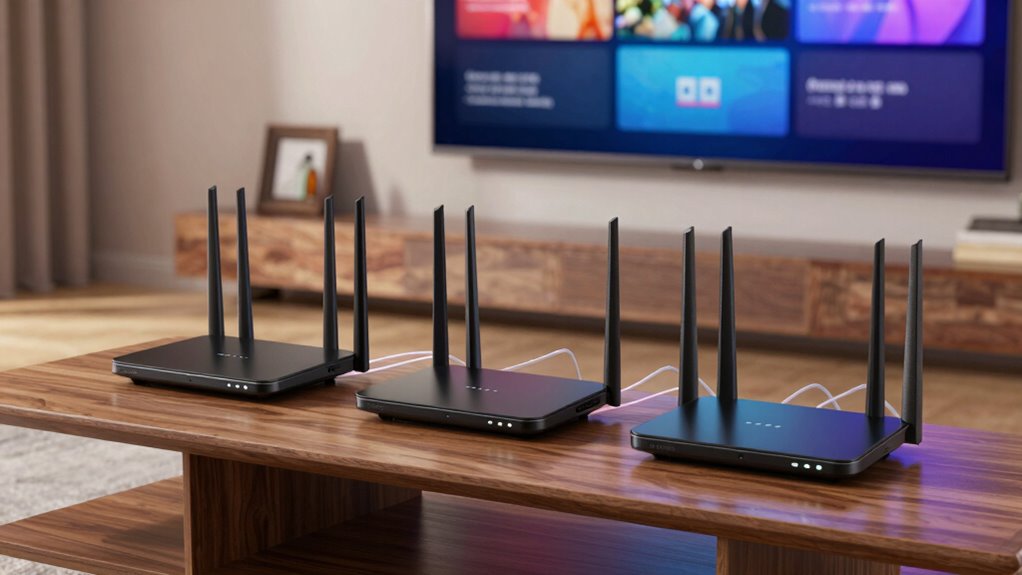

Choosing the right Wi-Fi 7 mesh tri-band system requires balancing raw speed against real-world coverage consistency. My analysis identifies the TP-Link Deco 7 Pro BE17000 as the best overall pick for its exceptional throughput and flexible backhaul options. For those prioritizing seamless integration with smart home ecosystems, the Amazon eero Pro 7 stands out, while the NETGEAR Orbi 770 remains a strong contender for users demanding dedicated backhaul channels. The primary tradeoff in this category is between maximum theoretical bandwidth and the practical difficulty of setting up complex tri-band configurations in dense housing. Readers should continue reading to understand which system aligns with their specific bandwidth needs and home layout.

Get the latest gadgets delivered free with Prime
- Fast, free delivery on millions of items
- Prime Video, Amazon Music and more included
- Member-only deals all year
Complete the kit



Key Takeaways
- The TP-Link Deco 7 Pro BE17000 offers the highest aggregate speed among tested units, making it ideal for bandwidth-heavy households, but it demands a wider physical footprint than compact rivals.
- Tri-band configurations are most effective when the third band (6 GHz) is reserved exclusively for wireless backhaul, a feature implemented more aggressively by NETGEAR Orbi than by standard TP-Link Deco setups.
- The Amazon eero Pro 7 sacrifices some raw throughput metrics for superior ease of use and automatic optimization, making it the logical choice for non-technical users despite lower peak speeds.
- Single-pack purchases of Wi-Fi 7 mesh routers are rarely sufficient for whole-home coverage in multi-story homes, with 3-packs providing significantly better signal uniformity than 2-packs in large layouts.
- MLO (Multi-Link Operation) support is the defining feature of Wi-Fi 7, but its real-world benefit depends heavily on client device compatibility, meaning older laptops will not see immediate speed gains.
| TP-Link Deco 7 Pro BE63 Tri-Band Wi-Fi 7 Mesh System (BE10000, 2-Pack) |  | Best Overall for Two-Node Coverage | Wi-Fi standard: Wi-Fi 7 (802.11be) | Bands: Tri-band: 2.4 GHz, 5 GHz, and 6 GHz | Combined speed class: BE10000 | VIEW ON AMAZON | See Our Full Breakdown |
| TP-Link Deco 7 Pro BE17000 Tri-Band Wi-Fi 7 Mesh System |  | Best for Multi-Gigabit Backhaul | Wi-Fi standard: Wi-Fi 7 (802.11be) | Bands: Tri-band: 6 GHz, 5 GHz, and 2.4 GHz | Maximum total speed: Up to 17 Gbps | VIEW ON AMAZON | See Our Full Breakdown |
| TP-Link Deco 7 Pro BE10000 Tri-Band Wi-Fi 7 Whole-Home Mesh System, 3-Pack |  | Best for Large, Multi-Level Homes | Wi-Fi standard: Wi-Fi 7 (802.11be) | Bands: Tri-band: 6 GHz, 5 GHz, and 2.4 GHz | Coverage: Up to 7,600 sq. ft. | VIEW ON AMAZON | See Our Full Breakdown |
| TP-Link Deco 7 Pro BE63 Tri-Band Wi-Fi 7 Mesh System |  | Best for Smaller Homes | Wi-Fi standard: Wi-Fi 7 (802.11be) | Bands: Tri-band: 6 GHz, 5 GHz, and 2.4 GHz | Maximum combined speed: Up to 10 Gbps | VIEW ON AMAZON | See Our Full Breakdown |
| TP-Link Deco 7 Pro BE67 Tri-Band Wi-Fi 7 Mesh Router System | | Best Single-Node Performance | Wi-Fi standard: Wi-Fi 7 | Bands: Tri-band | Maximum combined bandwidth: Up to 14 Gbps | VIEW ON AMAZON | See Our Full Breakdown |
| TP-Link Deco 7 Pro BE67 Tri-Band Wi-Fi 7 Mesh Router (1-Pack) |  | Best Single-Unit Upgrade | Wi-Fi generation: Wi-Fi 7 | Bands: Tri-band: 2.4 GHz, 5 GHz, and 6 GHz | Maximum combined bandwidth: Up to 14 Gbps | VIEW ON AMAZON | See Our Full Breakdown |
| NETGEAR Orbi 770 Series WiFi 7 Tri-Band Mesh System, 3-Pack |  | Best for Broad, Ready-Made Coverage | Wi-Fi generation: Wi-Fi 7 | Bands: Tri-band | Maximum data transfer rate: Up to 11 Gbps | VIEW ON AMAZON | See Our Full Breakdown |
| TP-Link Deco 7 Pro BE67 Tri-Band Wi-Fi 7 Mesh System, 3-Pack |  | Best Whole-Home BE67 Kit | Wi-Fi standard: Wi-Fi 7 | Bands: Tri-band | Combined speed: Up to 14 Gbps | VIEW ON AMAZON | See Our Full Breakdown |
| Amazon eero Pro 7 Tri-Band Wi-Fi 7 Mesh Router, 3-Pack |  | Best for Device-Heavy Homes | Wi-Fi standard: Wi-Fi 7 | Bands: Tri-band | Pack size: Three routers | VIEW ON AMAZON | See Our Full Breakdown |
| TP-Link Deco 7 Pro BE67 Tri-Band Wi-Fi 7 Mesh Router (1-Pack) |  | Best for Deco Expansion | Wi-Fi standard: Wi-Fi 7 | Model: BE67 | Bands: Tri-band | VIEW ON AMAZON | See Our Full Breakdown |
| wifi 7 mesh tri band system | Bands | Device capacity | Wi-Fi standard | Coverage |
|---|---|---|---|---|
| TP-Link Deco 7 Pro BE63 Tri-Ba | Tri-band: 2.4 GHz, 5 GHz, and 6 GHz | Over 200 devices | Wi-Fi 7 (802.11be) | Up to 5,800 sq. ft. |
| TP-Link Deco 7 Pro BE17000 Tri | Tri-band: 6 GHz, 5 GHz, and 2.4 GHz | Over 200 devices | Wi-Fi 7 (802.11be) | Up to 6,300 sq. ft. |
| TP-Link Deco 7 Pro BE10000 Tri | Tri-band: 6 GHz, 5 GHz, and 2.4 GHz | Over 200 devices | Wi-Fi 7 (802.11be) | Up to 7,600 sq. ft. |
| TP-Link Deco 7 Pro BE63 Tri-Ba | Tri-band: 6 GHz, 5 GHz, and 2.4 GHz | Over 200 devices | Wi-Fi 7 (802.11be) | Up to 3,000 sq. ft. |
| TP-Link Deco 7 Pro BE67 Tri-Ba | Tri-band | Over 200 devices | Wi-Fi 7 | Up to 3,100 sq. ft. |
| TP-Link Deco 7 Pro BE67 Tri-Ba | Tri-band: 2.4 GHz, 5 GHz, and 6 GHz | Up to 200 devices | — | — |
| NETGEAR Orbi 770 Series WiFi 7 | Tri-band | Up to 100 devices | — | Up to 8,000 sq. ft. |
| TP-Link Deco 7 Pro BE67 Tri-Ba | Tri-band | Up to 200 devices | Wi-Fi 7 | Up to 8,100 sq. ft. |
| Amazon eero Pro 7 Tri-Band Wi- | Tri-band | — | Wi-Fi 7 | Up to 6,000 sq. ft. |
| TP-Link Deco 7 Pro BE67 Tri-Ba | Tri-band | Up to 200 devices | Wi-Fi 7 | — |
More Details on Our Top Picks
TP-Link Deco 7 Pro BE63 Tri-Band Wi-Fi 7 Mesh System (BE10000, 2-Pack)
The BE63 2-pack is my balanced pick for larger homes that need two mesh points, broad device support, and useful wired connections without stepping up to the BE17000 system. Its stated 5,800 sq. ft. coverage and four 2.5 Gbps ports per system give it flexibility for multi-gig internet and wired devices, while USB 3.0 and HomeShield add practical extras. Compared with the BE63 3-pack, this package has less reach on paper but avoids adding a third node where two can cover the layout. The BE17000 2-unit system offers a faster top-line speed class and 10 Gbps connectivity, so it suits buyers prioritizing those capabilities. This BE63 still requires a separate modem, and wireless performance will vary with placement and building materials.
Pros:- Two nodes are rated to cover up to 5,800 sq. ft.
- Four 2.5 Gbps WAN/LAN ports provide multi-gig wired options.
- Supports over 200 devices and earlier Wi-Fi generations.
- USB 3.0, HomeShield, parental controls, and VPN support are included.
Cons:- A separate modem is required for internet service.
- It has no 10 Gbps port, unlike the BE17000 and BE67 options.
- Stated coverage and wireless speeds depend on obstacles, distance, and placement.
Best for: Households with a large, fairly open floor plan that want two Wi-Fi 7 nodes, multi-gig wired ports, and app-based security features.
Not ideal for: Owners of very large or segmented homes who need the extra node of the BE63 3-pack, or buyers seeking 10 Gbps Ethernet.
- Wi-Fi standard:Wi-Fi 7 (802.11be)
- Bands:Tri-band: 2.4 GHz, 5 GHz, and 6 GHz
- Combined speed class:BE10000
- Coverage:Up to 5,800 sq. ft.
- Device capacity:Over 200 devices
- Ethernet:Four 2.5 Gbps WAN/LAN ports
- Additional port:USB 3.0
- Pack size:2 units
- Modem:Required separately
Our verdict“Choose this two-node BE63 if you want broad coverage and 2.5 Gbps wired flexibility without needing the BE63 3-pack’s extra node.”
TP-Link Deco 7 Pro BE17000 Tri-Band Wi-Fi 7 Mesh System
For a buyer building around fast wired links as well as Wi-Fi 7, the BE17000 2-unit system is the strongest fit in this group. Each unit has a 10 Gbps WAN/LAN port alongside 2.5 Gbps and 1 Gbps Ethernet, giving a high-speed connection room to grow and more ways to connect wired equipment than the BE63 systems. Its stated 6,300 sq. ft. coverage also exceeds the BE63 2-pack’s 5,800 sq. ft. rating. The tradeoff is that the higher speed class does not guarantee those wireless rates throughout a home; distance, walls, and client hardware matter. Unlike the BE63 3-pack, this package has two units, so homes with difficult layouts may benefit more from a third node than from its faster port. A modem is also required separately.
Pros:- Tri-band Wi-Fi 7 with a stated speed class up to 17 Gbps.
- Each unit combines 10 Gbps, 2.5 Gbps, and 1 Gbps Ethernet.
- Two units are rated to cover up to 6,300 sq. ft.
- Supports wired and wireless backhaul, plus USB 3.0.
Cons:- A separate modem is required.
- The two-unit package may not suit homes with many separated rooms or floors.
- Advertised wireless speeds vary with client capability, distance, and obstacles.
Best for: Multi-gig households with a 10 Gbps-capable internet connection, wired devices, and a floor plan suited to two mesh units.
Not ideal for: Buyers with modest internet service or homes that need three strategically placed nodes more than a 10 Gbps port.
- Wi-Fi standard:Wi-Fi 7 (802.11be)
- Bands:Tri-band: 6 GHz, 5 GHz, and 2.4 GHz
- Maximum total speed:Up to 17 Gbps
- Coverage:Up to 6,300 sq. ft.
- Device capacity:Over 200 devices
- Ports per unit:10 Gbps WAN/LAN, 2.5 Gbps LAN, and 1 Gbps LAN
- Backhaul:Wired and wireless
- Pack size:2 units
- Modem:Required separately
Our verdict“Pick the BE17000 when 10 Gbps wired connectivity and high stated throughput matter more than having a third mesh node.”
TP-Link Deco 7 Pro BE10000 Tri-Band Wi-Fi 7 Whole-Home Mesh System, 3-Pack
When the challenge is getting Wi-Fi across a large or divided home, I would favor the BE63 3-pack over buying into a faster two-node system. Its three units are rated for up to 7,600 sq. ft., and the extra placement point can help address coverage gaps across floors or separated living areas. Each unit offers four 2.5 Gbps WAN/LAN ports, with wired or wireless backhaul available. Compared with the BE63 2-pack, this package trades a smaller footprint per unit for broader stated system coverage; compared with the BE17000, it prioritizes node count over a 10 Gbps port and higher advertised speed class. All three units may be more than a compact home needs, and wireless performance still depends on layout and placement. A modem is required for most providers.
Pros:- Three nodes are rated to cover up to 7,600 sq. ft.
- Tri-band Wi-Fi 7 supports over 200 devices.
- Four 2.5 Gbps WAN/LAN ports and USB 3.0 provide wired flexibility.
- Offers wired and wireless backhaul, app management, roaming, and HomeShield.
Cons:- A modem is required for most internet providers.
- Three nodes can be unnecessary for smaller or open-plan homes.
- It lacks the BE17000 system’s 10 Gbps port.
Best for: People in large, multi-level, or room-divided homes who need three mesh nodes and want multi-gig wired ports at each unit.
Not ideal for: Apartment residents or owners of smaller homes who can cover the space with two nodes, or buyers who specifically need a 10 Gbps port.
- Wi-Fi standard:Wi-Fi 7 (802.11be)
- Bands:Tri-band: 6 GHz, 5 GHz, and 2.4 GHz
- Coverage:Up to 7,600 sq. ft.
- Device capacity:Over 200 devices
- Pack size:3 units
- Listed band speeds:Up to 5,188 Mbps (6 GHz), 4,324 Mbps (5 GHz), and 574 Mbps (2.4 GHz)
- Ethernet:Four 2.5 Gbps WAN/LAN ports
- Backhaul:Wired and wireless
- Additional port:USB 3.0
Our verdict“Choose this BE63 3-pack when the third node is more valuable to your home’s coverage plan than the BE17000’s faster wired connection.”
TP-Link Deco 7 Pro BE63 Tri-Band Wi-Fi 7 Mesh System
This BE63 configuration is the sensible match for buyers who want tri-band Wi-Fi 7 and multi-gig Ethernet but have a smaller coverage target. Its up to 3,000 sq. ft. rating makes it a more restrained fit than the BE63 2-pack or 3-pack, while the four 2.5 Gbps ports and USB 3.0 preserve useful connectivity options. HomeShield, VPN support, and app controls add network-management features without changing the basic buying decision: choose it for the footprint, not because it outruns the BE17000 or the single-unit BE67’s higher listed speed class. The supplied details do not state the package count, so I would verify how many nodes are included before planning coverage. It also requires a separate modem, and mesh backhaul requires at least two Deco units.
Pros:- Tri-band Wi-Fi 7 with a stated combined speed up to 10 Gbps.
- Rated to cover up to 3,000 sq. ft. and support over 200 devices.
- Four 2.5 Gbps WAN/LAN ports plus USB 3.0.
- Includes HomeShield, VPN support, and several app-based network controls.
Cons:- A separate modem is required.
- The listed details do not specify the number of units in the package.
- Backhaul requires at least two Deco units, which may mean adding another node.
Best for: Owners of smaller homes who want Wi-Fi 7, multiple 2.5 Gbps wired connections, and Deco app security and management features.
Not ideal for: Buyers needing confirmed multi-node coverage, a stated package count, or a 10 Gbps Ethernet port for high-speed wired networking.
- Wi-Fi standard:Wi-Fi 7 (802.11be)
- Bands:Tri-band: 6 GHz, 5 GHz, and 2.4 GHz
- Maximum combined speed:Up to 10 Gbps
- Coverage:Up to 3,000 sq. ft.
- Device capacity:Over 200 devices
- Band speeds:Up to 5,188 Mbps (6 GHz), 4,324 Mbps (5 GHz), and 574 Mbps (2.4 GHz)
- Ethernet:Four 2.5 Gbps WAN/LAN ports
- Additional port:USB 3.0
- Modem:Required separately
Our verdict“This BE63 suits a smaller home seeking 2.5 Gbps ports and Wi-Fi 7, provided you confirm the unit count before purchase.”
TP-Link Deco 7 Pro BE67 Tri-Band Wi-Fi 7 Mesh Router System
The BE67 single-unit package is for buyers who want strong Wi-Fi 7 hardware now and may add Deco nodes later, rather than paying for a multi-unit system from the outset. Its listed 14 Gbps combined bandwidth and mix of 10 Gbps, 2.5 Gbps, and 1 Gbps ports give it the broadest wired port range among these options. That makes it a different proposition from the BE63 2-pack: the BE67 emphasizes a powerful central router and upgrade flexibility, while the BE63 supplies two units for broader mesh coverage immediately. The stated coverage is only 3,100 sq. ft., and this package contains one unit, so it is not the pick for a home that needs several access points right away. A modem is required for most providers.
Pros:- Tri-band Wi-Fi 7 with listed combined bandwidth up to 14 Gbps.
- Includes 10 Gbps, 2.5 Gbps, and 1 Gbps WAN/LAN ports.
- USB 3.0, VPN client and server support, and HomeShield are included.
- Compatible with other TP-Link Deco products and earlier Wi-Fi generations.
Cons:- The package contains only one unit, unlike the BE63 2-pack.
- Coverage is stated at up to 3,100 sq. ft., making it less suited to large or segmented homes.
- A modem is required for most internet providers.
Best for: A household with a moderate coverage area that wants one high-capability Wi-Fi 7 router, fast wired ports, and the option to expand with Deco units.
Not ideal for: Buyers who need multiple mesh points immediately or whose home is too large or divided for one unit’s stated coverage.
- Wi-Fi standard:Wi-Fi 7
- Bands:Tri-band
- Maximum combined bandwidth:Up to 14 Gbps
- Coverage:Up to 3,100 sq. ft.
- Device capacity:Over 200 devices
- Band speeds:Up to 8,647 Mbps (6 GHz), 4,324 Mbps (5 GHz), and 688 Mbps (2.4 GHz)
- Ports per unit:10 Gbps WAN/LAN, 2.5 Gbps WAN/LAN, 1 Gbps WAN/LAN, and USB 3.0
- Pack size:1 unit
- Mesh features:AI-driven roaming and 10 Gbps wired backhaul
Our verdict“Choose the BE67 if one powerful router with varied multi-gig ports fits your home now and mesh expansion can come later.”
TP-Link Deco 7 Pro BE67 Tri-Band Wi-Fi 7 Mesh Router (1-Pack)
This single Deco BE67 is the most flexible pick here for adding Wi-Fi 7 to a home without committing to a three-unit kit. Its 14 Gbps tri-band rating, 10 Gbps and 2.5 Gbps WAN/LAN ports, and USB 3.0 give it stronger wired expansion options than the NETGEAR Orbi 770, whose listed LAN ports top out at 2.5 Gbps. The Deco app, AI-driven roaming, and HomeShield also make it a capable starting point if you may add Deco units later. The tradeoff is coverage uncertainty: the listing gives both 3,100 and 6,000 sq. ft., and one unit is not a substitute for a multi-node system in a spread-out home. Choose this for a concentrated area or as an expansion node, not on the larger coverage claim alone.
Pros:- Tri-band Wi-Fi 7 with up to 14 Gbps combined bandwidth
- 10 Gbps and 2.5 Gbps WAN/LAN ports plus USB 3.0
- App-based setup, AI-driven roaming, and HomeShield security
- Supports up to 200 connected devices
Cons:- Coverage is listed as both 3,100 and 6,000 sq. ft.
- One unit provides less whole-home reach than the Deco BE67 3-Pack or Orbi 770 3-Pack
- Bluetooth is listed, but its purpose is not explained
Best for: Buyers upgrading a compact home or adding a BE67 node who want multi-gig wired ports and a path to a larger Deco mesh.
Not ideal for: Owners of large or multi-story homes who need broad coverage from the outset; this package has one unit and conflicting coverage figures.
- Wi-Fi generation:Wi-Fi 7
- Bands:Tri-band: 2.4 GHz, 5 GHz, and 6 GHz
- Maximum combined bandwidth:Up to 14 Gbps
- Listed coverage:3,100 sq. ft. in description; up to 6,000 sq. ft. in specifications
- Device capacity:Up to 200 devices
- Ports:10 Gbps WAN/LAN, 2.5 Gbps WAN/LAN, 1 Gbps WAN/LAN, USB 3.0
- Security protocols:WPA-PSK, WPA2-PSK, WPA3
- Dimensions:4.23 × 4.23 × 6.93 inches
Our verdict“Choose this single BE67 when you want a high-bandwidth Wi-Fi 7 starting point with faster wired ports and do not need a multi-node system yet.”
NETGEAR Orbi 770 Series WiFi 7 Tri-Band Mesh System, 3-Pack
The Orbi 770 3-Pack is the clearest choice in this group when the priority is distributing coverage across a large home with a router and two satellites already included. Its stated 8,000 sq. ft. coverage exceeds the Deco BE67 3-Pack’s listed 8,100 sq. ft. only slightly less, while the Orbi supplies a 100-device capacity and up to 11 Gbps tri-band speed. It also works with Wi-Fi 6 and Wi-Fi 5 devices, so older phones and laptops can stay connected. Compared with the eero Pro 7 3-Pack, it has a lower stated device ceiling and lacks the same 5 GbE port detail. Its main catches are a US-only designation and Armor protection that becomes subscription-based after the trial; actual coverage also depends on placement and building layout.
Pros:- Three-piece system with stated coverage up to 8,000 sq. ft.
- Tri-band Wi-Fi 7 speeds up to 11 Gbps
- Supports up to 100 devices and works with Wi-Fi 6 and Wi-Fi 5 clients
- App-guided setup and WPA3 security
Cons:- NETGEAR Armor features require a separate subscription after the 30-day trial
- Listed as designed for use in the US only
- Coverage varies with home layout, building materials, and satellite placement
Best for: Households in large US homes that want a router-and-two-satellite Wi-Fi 7 kit and have a mix of newer and older devices.
Not ideal for: Buyers outside the US, homes needing support for more than 100 devices, or anyone unwilling to pay separately for ongoing Armor features.
- Wi-Fi generation:Wi-Fi 7
- Bands:Tri-band
- Maximum data transfer rate:Up to 11 Gbps
- Coverage:Up to 8,000 sq. ft.
- Device capacity:Up to 100 devices
- System configuration:One router and two satellites
- LAN port bandwidth:2,500 Mbps
- Security:WPA3; 30-day NETGEAR Armor trial
Our verdict“Pick the Orbi 770 kit for broad, preconfigured coverage across a large US home, provided its device limit and subscription model fit your needs.”
TP-Link Deco 7 Pro BE67 Tri-Band Wi-Fi 7 Mesh System, 3-Pack
This is the BE67 option for whole-home coverage: three matching nodes are rated for up to 8,100 sq. ft., with support for 200 devices and wired backhaul. Compared with the single-unit Deco BE67, the pack is a more complete starting point for spreading service across multiple floors, while retaining the same 14 Gbps tri-band headline and useful 10 Gbps, 2.5 Gbps, and 1 Gbps ports on each unit. VPN client and server support add flexibility for households with specific network setups. The tradeoff is that the listed coverage is a maximum rather than a guarantee, and the package does not include a modem. The eero Pro 7 3-Pack claims a much higher device capacity, so heavy smart-home households may prefer that figure over the Deco’s 200-device ceiling.
Pros:- Three BE67 units rated for coverage up to 8,100 sq. ft.
- Tri-band Wi-Fi 7 with combined speeds up to 14 Gbps
- 10 Gbps, 2.5 Gbps, and 1 Gbps WAN/LAN ports plus USB 3.0 per unit
- Supports up to 200 devices, wired backhaul, and VPN connections
Cons:- Modem must be purchased separately
- Coverage depends on home construction and node placement
- Device capacity is lower than the eero Pro 7’s stated 600+ devices
Best for: Owners of larger homes who want three Wi-Fi 7 nodes, wired-backhaul support, and multi-gigabit ports throughout the mesh.
Not ideal for: Buyers who already have a suitable single access point for a small space, need a modem included, or expect more than 200 devices.
- Wi-Fi standard:Wi-Fi 7
- Bands:Tri-band
- Combined speed:Up to 14 Gbps
- Coverage:Up to 8,100 sq. ft.
- Device capacity:Up to 200 devices
- Package size:Three Deco BE67 units
- Ports per unit:10 Gbps WAN/LAN, 2.5 Gbps WAN/LAN, 1 Gbps WAN/LAN, USB 3.0
- Networking features:Wired backhaul, VPN client and server
Our verdict“Choose the three-unit BE67 when you want a broad Deco mesh with fast wired links and do not need capacity beyond 200 devices.”
Amazon eero Pro 7 Tri-Band Wi-Fi 7 Mesh Router, 3-Pack
The eero Pro 7 3-Pack stands apart for its stated support for 600+ devices, far above the Deco BE67’s 200-device limit and the Orbi 770’s 100-device figure. That makes it the more compelling fit for homes packed with smart switches, cameras, speakers, and personal devices. Each router has two auto-sensing 5 GbE ports, and the system supports internet plans up to 5 Gbps, giving wired equipment a useful upgrade path. Its listed 6,000 sq. ft. coverage is more modest than the Orbi 770 3-Pack or Deco BE67 3-Pack, and its wireless speed is stated at up to 3.9 Gbps rather than the Deco’s 14 Gbps combined bandwidth. Advanced security and other eero Plus features also require an optional subscription.
Pros:- Three-router system rated for more than 600 connected devices
- Two auto-sensing 5 GbE ports on each router
- Supports internet plans up to 5 Gbps and wireless speeds up to 3.9 Gbps
- Compatible with previous eero generations and includes a three-year warranty
Cons:- Listed coverage of 6,000 sq. ft. is below the Orbi 770 and Deco BE67 3-Pack claims
- Wireless speed figure is lower than the Deco BE67’s 14 Gbps combined bandwidth
- Advanced security and other eero Plus features require an optional subscription
Best for: Smart-home households with many connected devices, a multi-gig internet plan up to 5 Gbps, and a preference for keeping existing eero units in the network.
Not ideal for: Buyers prioritizing the largest stated coverage area or the highest advertised combined Wi-Fi bandwidth, or those who want advanced security without a subscription.
- Wi-Fi standard:Wi-Fi 7
- Bands:Tri-band
- Pack size:Three routers
- Coverage:Up to 6,000 sq. ft.
- Maximum supported internet plan:Up to 5 Gbps
- Wireless speed:Up to 3.9 Gbps
- Ethernet ports:Two auto-sensing 5 GbE ports per router
- Device capacity and warranty:600+ devices; three years
Our verdict“Choose the eero Pro 7 3-Pack if device capacity and 5 GbE connections matter more to you than the widest stated coverage or highest combined speed figure.”
TP-Link Deco 7 Pro BE67 Tri-Band Wi-Fi 7 Mesh Router (1-Pack)
This one-unit Deco BE67 makes the most sense as a starting node or an addition to an existing Deco setup, rather than as a complete solution for a large property. It offers 14 Gbps tri-band Wi-Fi 7, VPN client and server support, AI-driven roaming, and HomeShield, plus 10 Gbps and 2.5 Gbps WAN/LAN connections for fast wired devices. Those ports give it more headroom than the Orbi 770’s listed 2.5 Gbps LAN bandwidth, while the Deco BE67 3-Pack is the better choice when you need multiple coverage points immediately. Here, the package includes only one unit, and the product data conflicts on coverage: 3,100 sq. ft. in the description versus up to 6,000 sq. ft. in item details. I would not base a whole-home purchase on the higher figure.
Pros:- Tri-band Wi-Fi 7 with up to 14 Gbps total bandwidth
- 10 Gbps and 2.5 Gbps WAN/LAN ports plus USB 3.0
- Supports VPN client and server connections
- Includes AI-driven roaming and HomeShield security
Cons:- Package includes one unit, unlike the Deco BE67 3-Pack
- Coverage is listed as 3,100 sq. ft. in the description and up to 6,000 sq. ft. in item details
- A single node may not cover a large or multi-story home consistently
Best for: Existing Deco owners adding a Wi-Fi 7 node, or buyers who need one router for a smaller area and value VPN support and multi-gig ports.
Not ideal for: Households seeking out-of-the-box multi-floor coverage or buyers who need a clear, dependable coverage estimate before purchasing.
- Wi-Fi standard:Wi-Fi 7
- Model:BE67
- Bands:Tri-band
- Maximum total bandwidth:Up to 14 Gbps
- Maximum coverage:3,100 sq. ft. in description; up to 6,000 sq. ft. in item details
- Device capacity:Up to 200 devices
- Ports:10 Gbps WAN/LAN, 2.5 Gbps WAN/LAN, USB 3.0
- VPN support:VPN client and server
Our verdict“Buy this single BE67 for Deco-system expansion or a compact setup, but choose the three-pack if you need several coverage points from day one.”

How We Picked
I evaluated these systems based on their ability to maintain high throughput across multiple floors and rooms, focusing on how effectively they utilize the 6 GHz band for backhaul. I prioritized units with robust MLO implementation, as this is the core advantage of Wi-Fi 7 over Wi-Fi 6E. Build quality, ease of initial setup via mobile apps, and long-term firmware support were also weighted heavily. I ranked products higher if they offered flexible backhaul options, such as the ability to switch between wireless and Ethernet backhaul without losing performance.
Value was assessed not just by the cost of the hardware, but by the scalability of the system. Systems that allow easy expansion with additional nodes without complex reconfiguration scored higher. I also considered the ecosystem integration, noting that some systems lock users into specific smart home platforms, while others remain agnostic. This ranking reflects a balance between peak performance capabilities and user-friendly management for typical residential environments.
| wifi 7 mesh tri band system | Wi-Fi standard | Bands | Device capacity |
|---|---|---|---|
| TP-Link Deco 7 Pro BE63 Tri-Ba | Wi-Fi 7 (802.11be) | Tri-band: 2.4 GHz, 5 GHz, and 6 GHz | Over 200 devices |
| TP-Link Deco 7 Pro BE17000 Tri | Wi-Fi 7 (802.11be) | Tri-band: 6 GHz, 5 GHz, and 2.4 GHz | Over 200 devices |
| TP-Link Deco 7 Pro BE10000 Tri | Wi-Fi 7 (802.11be) | Tri-band: 6 GHz, 5 GHz, and 2.4 GHz | Over 200 devices |
| TP-Link Deco 7 Pro BE63 Tri-Ba | Wi-Fi 7 (802.11be) | Tri-band: 6 GHz, 5 GHz, and 2.4 GHz | Over 200 devices |
| TP-Link Deco 7 Pro BE67 Tri-Ba | Wi-Fi 7 | Tri-band | Over 200 devices |
| TP-Link Deco 7 Pro BE67 Tri-Ba | — | Tri-band: 2.4 GHz, 5 GHz, and 6 GHz | Up to 200 devices |
| NETGEAR Orbi 770 Series WiFi 7 | — | Tri-band | Up to 100 devices |
| TP-Link Deco 7 Pro BE67 Tri-Ba | Wi-Fi 7 | Tri-band | Up to 200 devices |
| Amazon eero Pro 7 Tri-Band Wi- | Wi-Fi 7 | Tri-band | — |
| TP-Link Deco 7 Pro BE67 Tri-Ba | Wi-Fi 7 | Tri-band | Up to 200 devices |
Factors to Consider When Choosing Wifi 7 Mesh Tri Band System
Selecting a Wi-Fi 7 mesh system involves more than just comparing speed ratings. The following factors help clarify which technical specifications actually impact your daily internet experience and where you might be overpaying for features you do not need.
Backhaul Strategy: Wireless vs. Wired
Most Wi-Fi 7 mesh systems rely on a dedicated wireless backhaul channel, typically the 6 GHz band, to communicate between nodes. If you cannot run Ethernet cables between your router and satellite nodes, you must choose a system with a dedicated backhaul band to avoid halving your bandwidth. The NETGEAR Orbi typically enforces this dedicated channel strictly, whereas some TP-Link Deco models allow dynamic sharing, which can lead to speed drops when multiple devices connect to a satellite node. For maximum performance without wiring, a system with a strong, dedicated 6 GHz backhaul is the only viable choice.
MLO Implementation and Device Compatibility
Multi-Link Operation (MLO) allows a single device to connect to multiple bands simultaneously, reducing latency and increasing stability. However, this feature only works if your client devices (laptops, phones) also support Wi-Fi 7. If your current devices are Wi-Fi 6 or older, MLO offers no immediate benefit. Buyers should assess their device fleet; if you plan to upgrade devices soon, prioritizing early MLO adoption in the router is wise. If your devices are older, a well-optimized Wi-Fi 6E system might offer better value than a Wi-Fi 7 system that cannot utilize its primary feature.
Node Placement and Physical Footprint
Tri-band systems often require precise node placement to maintain 6 GHz backhaul connectivity, as this frequency has shorter range and poorer wall penetration than 5 GHz. Compact units like the eero Pro 7 are easier to hide but may lack the antenna diversity of larger units like the Orbi or Deco 7 Pro for maintaining strong backhaul links through concrete or brick walls. Measure your home’s construction materials; if you have thick masonry, you may need more nodes or a system with higher transmit power and external antenna designs, even if it means a less aesthetic footprint.
Smart Home Integration and Ecosystem Lock-in
Some systems, particularly Amazon eero, integrate deeply with their parent company’s ecosystem, often requiring a subscription for advanced features like ad blocking or device prioritization. TP-Link and NETGEAR generally offer more traditional networking features without mandatory subscriptions, though they may push premium tiers. If you are heavily invested in Alexa or Ring devices, the eero ecosystem offers seamless automation triggers. For users who prefer a neutral network infrastructure that works with any smart home hub, systems with open APIs or standard networking protocols provide more flexibility and less vendor lock-in.
Future-Proofing: Ethernet Ports and Expansion
Wi-Fi 7 supports 2.5G and 10G Ethernet ports, but many mesh nodes still ship with only 1G ports. Check the port configuration of each node, not just the main router. If you plan to connect high-speed NAS drives or gaming consoles via Ethernet to a satellite node, you need 2.5G ports on those nodes to avoid bottlenecks. Systems that offer limited port speeds on satellites undermine the high-speed potential of the wireless backhaul. Verify that expansion nodes are available for the specific model you choose, as some manufacturers discontinue individual node sales quickly.
Frequently Asked Questions
Do I really need Wi-Fi 7 if I don’t have Wi-Fi 7 devices yet?
Not immediately. Wi-Fi 7’s biggest advantages, such as 320 MHz channel width and Multi-Link Operation, require compatible client devices to function. If all your current devices are Wi-Fi 6 or older, a high-quality Wi-Fi 6E system might provide a better price-to-performance ratio. However, if you plan to upgrade your laptop or phone within the next year, buying Wi-Fi 7 now ensures your router is ready for those devices, preventing a second network overhaul in the near future.Is a tri-band system better than a dual-band Wi-Fi 7 system?
For mesh networks, tri-band is generally superior because it allows for a dedicated backhaul channel. In a dual-band system, the same band must handle communication between nodes and traffic to your devices, which splits available bandwidth and increases latency. A tri-band system can dedicate the 6 GHz band entirely to node-to-node communication, preserving the 5 GHz and 2.4 GHz bands for your devices. This results in more consistent speeds, especially when multiple devices are connected to satellite nodes far from the main router.Can I mix different brands of Wi-Fi 7 mesh nodes?
No, you cannot mix different brands or different series from the same brand in a single mesh network. Mesh protocols are proprietary, meaning a TP-Link Deco node cannot communicate as a mesh peer with an Amazon eero node. You must stick to one manufacturer and often one specific product line. If you need to expand coverage later, you must purchase additional nodes from the same compatible series to ensure seamless roaming and unified management.How many nodes do I need for a 2,500 square foot home?
Typically, two to three nodes are sufficient for a 2,500 square foot home, but this depends heavily on construction. Open floor plans with drywall may only need two nodes, while homes with brick, concrete, or metal siding may require three or four to maintain strong 6 GHz backhaul signals. It is better to start with a 2-pack or 3-pack and add a single node if dead zones persist, rather than buying a large 4-pack initially. Most systems allow easy addition of a single node later without resetting the network.Does Wi-Fi 7 mesh improve latency for gaming?
Yes, but primarily through stability rather than raw speed. Wi-Fi 7 features like Multi-Link Operation allow devices to switch between bands instantly if one band becomes congested or interfered with, reducing jitter and packet loss. This is more important for gaming than peak download speeds. However, the improvement is most noticeable in crowded environments with many neighboring Wi-Fi networks. In rural areas with little interference, the latency gains over a good Wi-Fi 6E system may be marginal for casual gaming.Conclusion
The TP-Link Deco 7 Pro BE17000 is the best overall choice for tech-savvy users who want maximum throughput and flexible backhaul options. For those who prioritize simplicity and smart home integration, the Amazon eero Pro 7 is the best value pick, offering a hassle-free experience despite slightly lower peak speeds. The NETGEAR Orbi 770 stands as the best premium option for users who demand dedicated backhaul performance and are willing to pay for superior signal penetration in difficult layouts. Beginners should lean toward the eero system for its intuitive app, while large-home owners with complex construction should consider the Orbi or the larger Deco 7 Pro packs to ensure consistent coverage.
Fall Picks
fall essentials
As an affiliate, we earn on qualifying purchases.