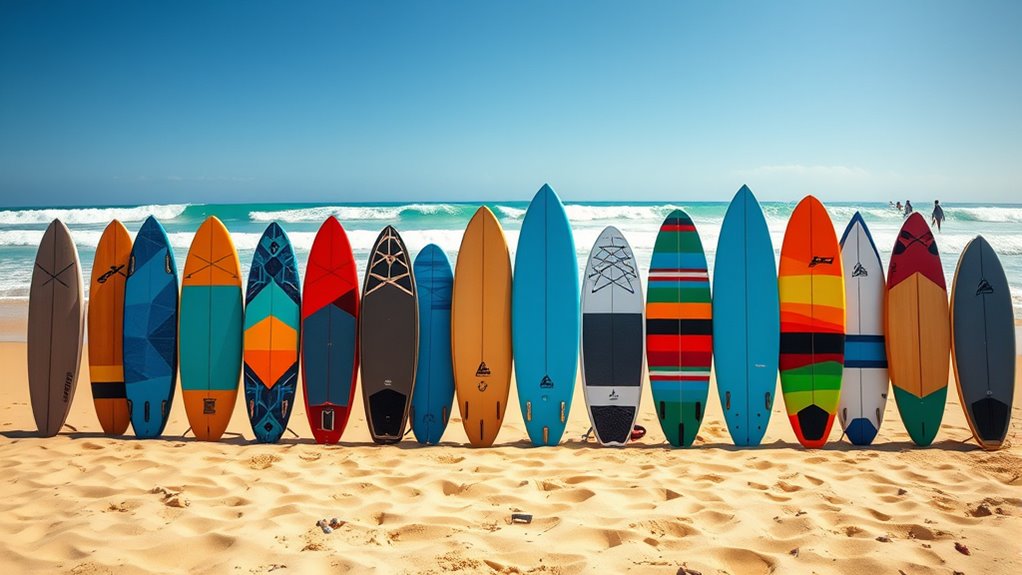

For most new surfers, the Wavestorm Classic 8-Foot Soft Top Surfboard is the strongest all-around choice because its long, forgiving shape suits learning and casual wave riding. The Wavestorm Classic 7 ft is a more manageable alternative for riders who want a shorter board, while the Giantex 6-Foot Beginner Surfboard is aimed at buyers prioritizing compact size. These boards differ in length, included setup, and intended use, so the best pick depends on rider size, experience, and the waves you plan to surf. The Salt Life Wakesurf Board is designed for boat wakes, a different setting from ocean surf. Read on for the full comparison, buying advice, and answers to common board-selection questions.

Get the latest gadgets delivered free with Prime
- Fast, free delivery on millions of items
- Prime Video, Amazon Music and more included
- Member-only deals all year
Complete the kit



Key Takeaways
- The 8-foot Wavestorm is the clearest all-around beginner pick in this group, with a long soft-top shape suited to stability and early wave practice.
- The 7-foot Wavestorm trades some length for easier handling, making it a middle ground between the two 8-foot options and the compact Giantex.
- The two Wavestorm 8-foot listings appear similar by name; compare their exact included accessories and listing details before choosing between them.
- The Salt Life board fills a different role: its wakesurf design and fiberglass deck are for riding behind a boat, not a substitute for an ocean surfboard.
- The EASYGO Flowboard and Giantex broaden the size and setup choices, but buyers should match their dimensions and intended use to their own conditions rather than assuming “beginner” means universally easy.


| surfing board | Length | Core | Skill level | Included accessories |
|---|---|---|---|---|
| Wavestorm Classic 8-Foot Soft | 8 ft | EPS | — | — |
| Salt Life Wakesurf Board with | — | EPS foam, 45 kg/m³ | Beginner to intermediate | — |
| Wavestorm Classic 7 ft Soft To | 7 ft | — | — | Leash, tail pad, and three fins |
| EASYGO PRODUCTS Flowboard Soft | — | — | Beginner and intermediate | — |
| Wavestorm Classic 8 ft Soft To | 8 ft | EPS with three-stringer system | — | Removable fins, ankle leash, and traction pad |
| Giantex 6-Foot Beginner Surfbo | — | — | Beginner | Removable fins, leash, traction pad |
More Details on Our Top Picks
Wavestorm Classic 8-Foot Soft Top Surfboard
The 8-foot length and soft foam construction make this Wavestorm a forgiving choice for new surfers who want a broad, stable platform while learning to paddle and catch small waves. Its EPS core and three stringers add structure, while the water-resistant deck and rails help protect the board through regular beach use. Compared with the 7-foot Wavestorm Classic, this model offers more length for stability but is less compact to carry and store. The supplied details do not list fins or a leash, so buyers should check what is included before heading out; the 8-foot Wavestorm with accessories is a more ready-to-go alternative. Its larger size also makes it less suited to surfers seeking a nimble board for tighter turns.
Pros:- Eight-foot length offers a stable platform for learning
- Soft foam deck and rails are more forgiving during beginner practice
- EPS core and three-stringer system add structural support
- Water-resistant deck and rails suit regular beach sessions
Cons:- Long board can be awkward to transport and store
- Provided product details do not confirm fins or leash are included
- Less compact and nimble than the 7-foot Wavestorm for tighter turns
Best for: Adults or older teens learning to paddle and catch small waves who can transport and store an 8-foot board
Not ideal for: Surfers who need a compact board or want confirmed included fins and leash without checking the package contents
- Length:8 ft
- Construction:Soft foam
- Core:EPS
- Stringer system:3 stringers
- Deck and rails:Soft webs-IXL water barrier skin
- Bottom:High-density HDPE polyethylene slick skin
Our verdict“Choose this board if you prioritize a forgiving 8-foot learning platform and can verify any accessories you need before buying.”
Salt Life Wakesurf Board with Fiberglass Deck and 3-Fin Setup
This Salt Life board is the lineup’s wakesurf-specific pick, with a fiberglass deck and three-fin setup aimed at tracking and carving behind a boat. Its lightweight EPS core helps keep the board responsive, while three size options let riders match length to their needs. That makes it a different choice from the Wavestorm Classic 8-Foot Soft Top Surfboard, which is built for ocean surfing and beginner stability rather than boat wakes. Salt Life’s stated beginner-to-intermediate level gives newer wakesurfers a clearer fit, but the weight limit depends on size, and the supplied details do not map each capacity to a specific length. Buyers should confirm sizing and capacity before choosing; this board is a poor match for anyone shopping for a conventional ocean surfboard.
Pros:- Three sizes provide options for different rider needs
- EPS core keeps the board lightweight and responsive
- Fiberglass deck supports strength and stability
- Three fins support tracking and maneuverability
Cons:- Weight capacity varies by size and is not specified for each length
- Wakesurf design does not suit ordinary ocean surfing
- Only a one-year warranty is specified
Best for: Beginner to intermediate adult wakesurfers choosing a board for boat-wave carving and tracking
Not ideal for: Ocean surfers or riders who cannot confirm that a board size supports their weight
- Sport:Wakesurfing
- Sizes:52, 56, and 63 in
- Core:EPS foam, 45 kg/m³
- Deck:Compression-molded, 2 × 6 oz fiberglass
- Fin setup:3 fins; FCS 25 mm fins
- Maximum weight capacity:Up to 190 lb, depending on size
- Skill level:Beginner to intermediate
- Warranty:1 year
Our verdict“Pick Salt Life for boat wakes and responsive carving, provided you verify the size-specific capacity before ordering.”
Wavestorm Classic 7 ft Soft Top Foam Surfboard with Leash and Fins
At 7 feet and 70 liters, this Wavestorm is the more manageable option for surfers who want a soft-top board with useful gear included. The leash, tail pad, and three performance fins mean fewer separate essentials to source than with the Wavestorm Classic 8-Foot Soft Top Surfboard, whose listed details do not confirm included accessories. Its triple stringer system adds rigidity, while the tail pad gives the back foot a grippier place to push through turns. The shorter length also makes it easier to handle on land, though it gives up some of the longer board’s stability and paddling platform. At 22 inches wide and 3 inches thick, it still has substantial volume, but buyers should choose it for a more compact package rather than maximum beginner stability.
Pros:- Leash, tail pad, and three fins are included
- Seven-foot length is easier to handle than an 8-foot board
- Triple stringers reinforce the foam core
- Tail pad improves back-foot traction
Cons:- Shorter length offers less platform than the 8-foot Wavestorm for paddling and stability
- Listed volume is lower than the 86-liter Wavestorm Classic 8 ft with accessories
- The supplied details do not specify construction materials for the deck and bottom
Best for: Surfers who want a shorter soft-top board with leash, tail pad, and fins included
Not ideal for: New surfers who prioritize the larger, more stable platform of an 8-foot board
- Length:7 ft
- Width:22 in
- Thickness:3 in
- Weight:10.2 lb
- Volume:70 L
- Core reinforcement:Triple stringer system
- Included accessories:Leash, tail pad, and three fins
- Fin setup:Triple 4.5 in performance fins
Our verdict“Choose this Wavestorm if a shorter board and included accessories matter more to you than the extra stability of an 8-footer.”
EASYGO PRODUCTS Flowboard Soft-Top Surfboard with Fins, Leash, and Traction Pad
The Flowboard stands out for three available lengths, spanning 6 to 8 feet, so a household can pick a size that suits a child or adult rather than defaulting to one board length. It includes three fins, a 6-foot leash, and a traction pad, giving it a more complete listed setup than the Wavestorm Classic 8-Foot Soft Top Surfboard. Two internal wood stringers provide reinforcement, though the product details do not give a volume or weight that would help compare flotation with either Wavestorm. That missing sizing information makes it harder to judge how stable each size will feel for a particular rider. It is listed for beginner and intermediate surfers, but the brief 30-day limited warranty is a notable ownership drawback compared with Salt Life’s one-year warranty.
Pros:- Available in 6-, 7-, and 8-foot lengths
- Includes three fins, leash, and traction pad
- Two internal wood stringers reinforce the soft-top construction
- Listed for both beginner and intermediate surfers
Cons:- No volume, width, thickness, or board weight is provided
- Thirty-day limited warranty is shorter than Salt Life’s stated one-year warranty
- A six-foot leash may not suit every setup
Best for: Families or beginner-to-intermediate surfers who need a choice of board lengths and included basic accessories
Not ideal for: Buyers who need volume and weight specifications to match board flotation closely to a rider
- Sport:Surfing
- Available sizes:6 ft, 7 ft, and 8 ft
- Construction:Soft-top foam
- Stringers:2 internal wood stringers
- Included components:3 fins, 6 ft leash, and traction pad
- Skill level:Beginner and intermediate
- Age range:Adult and kid
- Warranty:30-day limited
Our verdict“The Flowboard suits shared beginner use when size choice and included accessories matter more than detailed flotation specifications.”
Wavestorm Classic 8 ft Soft Top Foam Surfboard
This 8-foot Wavestorm combines a large 86-liter platform with an EPS core and three-stringer system, a practical mix for surfers seeking flotation and structural support in a soft-top shape. Unlike the Wavestorm Classic 8-Foot Soft Top Surfboard listed earlier, this version explicitly includes removable fins, an ankle leash, and a traction pad, so buyers have more of the setup spelled out from the start. It also shares the 8-foot length of the EASYGO Flowboard’s largest option, but provides specific width, thickness, weight, and volume figures for easier fit comparisons. The tradeoff is its size: at 11.5 pounds and 22.5 inches wide, it is less compact than the 7-foot Wavestorm. Its broad, high-volume shape is also less suited to surfers seeking a nimble shortboard.
Pros:- 86-liter volume offers a substantial flotation platform
- Removable fins, ankle leash, and traction pad are included
- EPS core and three-stringer system add structural support
- Width, thickness, and weight are provided for fit comparison
Cons:- Eight-foot length takes more room to transport and store than the 7-foot Wavestorm
- Broad, high-volume shape is less compact and nimble than a shorter board
- At 11.5 lb, it is heavier than the listed 7-foot Wavestorm
Best for: Beginner and progressing surfers who want an 8-foot soft-top board with listed dimensions and included fins, leash, and traction pad
Not ideal for: Surfers with limited storage or transport space, or those seeking a compact board for tighter turns
- Length:8 ft
- Width:22 1/2 in
- Thickness:3 1/4 in
- Weight:11.5 lb
- Volume:86 L
- Core:EPS with three-stringer system
- Deck and rails:WBS-IXL water-barrier skin
- Bottom:High-density polyethylene
- Included accessories:Removable fins, ankle leash, and traction pad
Our verdict“Choose this Wavestorm for a high-volume 8-foot soft-top with key accessories included, if you have room to carry and store it.”
Giantex 6-Foot Beginner Surfboard with Removable Fins
The Giantex 6-Foot is the lineup’s youth-focused choice: its 72-inch length and 110-pound capacity suit kids and smaller beginner surfers, while the foam deck offers a more forgiving surface than the Salt Life Wakesurf Board with its fiberglass deck. Two fiberglass stringers add stiffness to the EPS core, and the included leash and traction pad mean the basic setup is part of the package. Removable fins also make the board easier to pack than a fixed-fin design. The tradeoff is its limited size range: adults or heavier teens may outgrow its capacity, and at six feet it offers less room for beginner balance than the Wavestorm Classic 8-Foot Soft Top Surfboard. Assembly is required, so it takes setup before a session.
Pros:- Foam deck and beginner-oriented design suit younger learners.
- Removable fins make transport and storage easier.
- Leash and traction pad are included.
- Two fiberglass stringers add stiffness to the EPS core.
Cons:- 110-pound weight capacity rules out many adults and larger teens.
- Six-foot length gives beginners less room for balance than an 8-foot board.
- Assembly is required before use.
Best for: Kids and youth surfers under 110 pounds who want a compact beginner board with fins, leash, and traction pad included.
Not ideal for: Adult beginners or larger teens who need more flotation, deck space, or capacity above 110 pounds.
- Brand:Giantex
- Skill level:Beginner
- Recommended age:Kids and youth
- Dimensions:72 × 20 × 3 in
- Materials:EPE deck, EPS core, PP bottom
- Center stringers:2 fiberglass
- Unit weight:10 lbs
- Weight capacity:110 lbs
- Included accessories:Removable fins, leash, traction pad
Our verdict“Choose the Giantex for a child or smaller youth beginner who needs a compact foam board with key accessories included.”

How We Picked
I ranked these six options by how well their stated designs fit common surfboard buying needs: learning stability, manageable handling, intended riding environment, and the practical value of included equipment such as fins and a leash. Board length and construction mattered because they shape how forgiving a board may feel and how easy it is to carry, store, and control. I gave the highest placement to the 8-foot soft-top Wavestorm as the broadest fit for new and casual ocean surfers, then ranked shorter soft-top choices for buyers ready to trade some length for easier handling.
I treated the Salt Life Wakesurf Board as a specialist option because wakesurfing uses boat-generated wakes and has different requirements from ordinary surf. The product names alone do not establish every detail, such as rider weight range, exact dimensions, or differences between similarly named listings, so buyers should verify those specifications before ordering. The ranking reflects the apparent use and features in the supplied product descriptions; a different rider, wave type, or storage constraint can change which board makes the most sense.
| surfing board | Core | Skill level | Included accessories |
|---|---|---|---|
| Wavestorm Classic 8-Foot Soft | EPS | — | — |
| Salt Life Wakesurf Board with | EPS foam, 45 kg/m³ | Beginner to intermediate | — |
| Wavestorm Classic 7 ft Soft To | — | — | Leash, tail pad, and three fins |
| EASYGO PRODUCTS Flowboard Soft | — | Beginner and intermediate | — |
| Wavestorm Classic 8 ft Soft To | EPS with three-stringer system | — | Removable fins, ankle leash, and traction pad |
| Giantex 6-Foot Beginner Surfbo | — | Beginner | Removable fins, leash, traction pad |
Factors to Consider When Choosing Surfing Board
Before choosing a board, I would start with where you will ride and what you need the board to make easier. A board marketed to beginners can still be a poor fit if its length, volume, or intended setting does not match the rider and conditions.
Match the Board to Ocean Surf or Boat Wakes
Ocean surfing and wakesurfing call for different board designs and riding setups. A wakesurf board is made for the shaped wake behind a boat, where a rider stays close to the vessel and uses the wake for propulsion. An ocean surfboard is paddled into naturally breaking waves and needs to suit the surf conditions and the rider’s ability. Buying based on the word “surfboard” alone can lead to the wrong equipment for your usual session. Check the product’s stated use and ask whether you will ride behind a boat or in the ocean. In this roundup, the Salt Life board is the wakesurf-specific option, while the soft-top models are the ocean-oriented choices by their descriptions.
Choose Length for Stability, Skill, and Storage
Longer boards generally offer more surface area for paddling and balance, which can make the early learning stage more forgiving. Shorter boards take up less room and may be easier to carry, but they can demand more control and may be less accommodating for a new rider. Length alone does not determine how a board performs; shape, thickness, and volume also matter. Check the full dimensions and the maker’s rider guidance before treating a six-foot board as beginner-friendly for every person. Think about transport and storage too, since an eight-foot board can be awkward in a small car or apartment. The right compromise is the longest board you can comfortably handle that also fits your experience and surf setting.
Check Rider Weight Guidance and Volume
Two boards of the same length can support riders differently because their width, thickness, and overall volume may vary. A board with too little float for the rider can make paddling and catching waves harder, while an oversized board may feel cumbersome on land and in crowded conditions. Look for a manufacturer’s rider weight range or volume specification rather than relying on a broad label such as “beginner.” If those figures are missing, ask the seller or manufacturer before buying. Also account for wetsuit, leash, and any gear you carry when judging your expected load. This check can matter more to a successful first board choice than a small difference in accessory count.
Understand Soft-Top and Fiberglass Tradeoffs
Soft-top construction is commonly chosen for learning because the deck surface is more forgiving during falls and board handling. It can be a practical fit for shared use and early practice, though soft tops still need careful handling and should be checked for damage. A fiberglass deck, as listed on the Salt Life wakesurf board, points to a different build and riding purpose; it should not be read as a direct upgrade for ocean beginners. Construction can affect durability, feel, repair needs, and how a board tolerates transport. Consider who will use the board and how it will be stored, carried, and exposed to sun or heat. A tougher-sounding material is only useful when it fits the intended activity.
Compare the Included Setup Before Buying Extras
Fins, a leash, and a traction pad can make a board ready for particular uses, but included items vary by listing. A leash connects the rider to the board and can keep it from drifting away after a fall; fins affect tracking and handling, while traction helps a rider maintain foot placement. Confirm whether all listed accessories are included and whether they are compatible with the board’s fittings. Removable fins can make transport and storage easier, but they add parts that need to be installed and checked. Do not assume that a bundle contains every item needed for your local surf conditions. Compare the complete setup against the accessories you already own before choosing.
Plan for Care, Transport, and Local Conditions
A board that fits your skill but is difficult to transport or store may get used less often. Measure your vehicle and storage space against the board’s full length, and consider whether you can carry it safely to the water. Rinse salt and sand from fittings after ocean sessions, then let the board dry before storing it; heat and prolonged direct sun can harm many board materials. Local wave size and break conditions also affect what is manageable, so ask an instructor or experienced local surfer what suits the beach where you will learn. Avoid choosing a board based only on an unusually small or large session. A sensible first board should match the conditions you expect to encounter most often.
Frequently Asked Questions
Is an 8-foot soft-top board a better first choice than a 6-foot board?
For many new ocean surfers, an 8-foot soft top is the more forgiving starting point because the longer shape can help with paddling and balance. A 6-foot board is easier to store and carry, but its compact size can make catching waves and staying stable more demanding. Rider size, board volume, and local conditions all affect the comparison. Check the maker’s weight guidance rather than judging by length alone. If you are learning, an instructor can help confirm whether a shorter board is realistic for your build and beach.
Can I use a wakesurf board like the Salt Life model in the ocean?
A wakesurf board is designed around the shape and speed of a boat wake, so it is not a straightforward replacement for an ocean surfboard. Ocean surfing involves paddling into breaking waves and may require different board volume, shape, and fin behavior. The Salt Life listing’s fiberglass deck and three-fin setup describe features, but they do not make it a general-purpose ocean board. If you mainly surf at the beach, choose a model explicitly intended for ocean use. If you ride behind a boat, verify that the wakesurf board suits your boat’s wake and your experience.
How do I choose between the two 8-foot Wavestorm listings?
The supplied names describe two 8-foot Wavestorm soft-top foam boards that may be very similar, so the name alone does not show a meaningful performance difference. Compare the exact listing dimensions, included fins and leash, construction details, and any manufacturer guidance. Check whether one listing specifies a different package or model revision. If the board specifications and contents match, your choice can come down to seller terms and availability. Avoid assuming that a repeated brand and length label means every detail is identical.
Do I need to buy fins or a leash separately?
Not necessarily: several products in this roundup mention fins, and some also list a leash, but the exact bundle depends on the specific listing. Read the included-items section and confirm compatibility with the board’s fin boxes before adding accessories. A leash is useful for keeping the board close after a wipeout, though its length and attachment should suit the board and local conditions. Fins influence how the board tracks and turns, so the number of fins does not by itself tell you whether a setup is right for your use. Check what is in the package before budgeting for anything extra.
Should I choose a soft top if several people will share the board?
A soft top can be a practical shared board because its surface is more forgiving during ordinary handling and beginner practice. It still needs appropriate sizing: a board that suits a lighter, experienced rider may frustrate a larger beginner. If several people will use it, compare their weights and skill levels with the manufacturer’s guidance and choose for the person who needs the most support. Also consider whether the board’s length will be manageable for everyone to carry and store. Shared use does not remove the need to rinse, dry, and inspect the board after sessions.
Conclusion
I would choose the Wavestorm Classic 8-Foot Soft Top Surfboard as best overall for new and casual ocean surfers who can manage its length. The 7-foot Wavestorm is the value-minded middle ground for a buyer who wants a shorter soft top, while the two 8-foot Wavestorm listings call for a close check of their included gear before choosing. For beginners who want the most room to learn, favor an 8-foot soft top over the compact Giantex, provided it fits the rider and storage space. The Salt Life is the best pick for its specific need: wakesurfing behind a boat. Consider the EASYGO Flowboard if its listed dimensions and accessories suit your setup; verify rider guidance first. Match the board to your riding environment, then confirm the full specifications and package contents before deciding.