
Complete the kit




Get the latest gadgets delivered free with Prime
- Fast, free delivery on millions of items
- Prime Video, Amazon Music and more included
- Member-only deals all year
Key Takeaways
- The ecobee Premium leads in air quality monitoring, a feature largely absent from comparable Google and Honeywell models in this tier.
- Proprietary ecosystem lock-in is a real cost; Nest devices work best in full Google homes, while ecobee offers broader Alexa and HomeKit compatibility.
- Room sensors are now standard in premium tiers, but Honeywell’s RedLINK technology offers more reliable wireless communication than Wi-Fi-based sensors.
- Installation complexity varies widely; Honeywell’s T10+ Pro often requires professional wiring for C-wire compatibility, unlike the simpler plug-and-play nature of some Amazon devices.
- The Amazon Smart Thermostat proves that premium build quality and basic smart features can coexist without the high price tag of niche climate sensors.
| Honeywell Home X8S Premium Smart Wi-Fi Thermostat with Room Sensor, Black |  | Best for Multi-Platform Smart Homes | Display: 5-inch customizable display | Included sensor: Wireless room sensor with range up to 200 ft | Smart-home compatibility: Matter, Amazon Alexa, Google Assistant, Apple Home | VIEW ON AMAZON | See Our Full Breakdown |
| Honeywell T10+ Pro Smart Thermostat with RedLINK 3.0 and Indoor Air Sensor |  | Best for Sensor-Heavy HVAC Zoning | Model: THX321WFS3001W T10+ Pro | Controller type: Touchscreen | Connectivity: RedLINK 3.0 | VIEW ON AMAZON | See Our Full Breakdown |
| Amazon Smart Thermostat with Alexa and Ring Compatibility |  | Best for Alexa-Focused Simplicity | Model: S6ED3R | Dimensions: 3.56 x 3.56 x 0.84 inches | HVAC compatibility: Most 24V conventional forced-air, heat pump, and radiant boiler systems | VIEW ON AMAZON | See Our Full Breakdown |
| ecobee Smart Thermostat Premium with Wi-Fi, Siri and Alexa, and SmartSensor |  | Best Premium Feature Set | Connectivity: Wi-Fi | Voice assistants: Siri and Alexa | Included sensor: SmartSensor | VIEW ON AMAZON | See Our Full Breakdown |
| Google Nest Smart Thermostat, Programmable Wi-Fi, Charcoal | 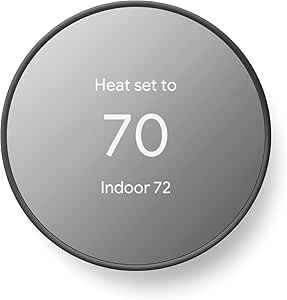 | Best for Google Home Beginners | Color: Charcoal | Connectivity: Wi-Fi at 2.4 GHz and 5 GHz; Bluetooth Low Energy | Compatibility: Google Home, Google Assistant, Matter-certified voice assistants | VIEW ON AMAZON | See Our Full Breakdown |
| Google Nest Learning Thermostat (4th Gen) with Nest Temperature Sensor (2nd Gen), Silver |  | Best for Learning Schedules | HVAC compatibility: Most 24V heating and cooling systems | Connectivity: Wi-Fi | Display: 3.5-inch touchscreen | VIEW ON AMAZON | See Our Full Breakdown |
| ecobee Smart Thermostat Enhanced |  | Best for Occupancy-Based Comfort | Compatible systems: Air conditioners, boilers, furnaces, heat pumps, and humidifiers | System coverage: Works with 90% of HVAC systems, according to the product description | Connectivity: Wi-Fi | VIEW ON AMAZON | See Our Full Breakdown |
| ecobee Smart Thermostat Essential, Wi-Fi, Energy Star Certified |  | Best for Straightforward DIY Control | HVAC compatibility: Most 24 VAC systems; listed coverage is 85% | Connectivity: Wi-Fi | Display: 3.74-inch LCD touchscreen | VIEW ON AMAZON | See Our Full Breakdown |
| Honeywell Home X7S Smart Wi-Fi Programmable Thermostat |  | Best for a Large Customizable Display | Display: Customizable 4.3-inch touchscreen | Connectivity: Wi-Fi, 2.4 or 5 GHz | Voltage and wiring: 24 volts; C-wire required; C-wire adapter voucher included | VIEW ON AMAZON | See Our Full Breakdown |
| smart thermostat premium | Connectivity | Display |
|---|---|---|
| Honeywell Home X8S Premium Sma | — | 5-inch customizable display |
| Honeywell T10+ Pro Smart Therm | RedLINK 3.0 | — |
| Amazon Smart Thermostat with A | — | — |
| ecobee Smart Thermostat Premiu | Wi-Fi | — |
| Google Nest Smart Thermostat | Wi-Fi at 2.4 GHz and 5 GHz; Bluetooth Low Energy | 2-inch LCD |
| Google Nest Learning Thermosta | Wi-Fi | 3.5-inch touchscreen |
| ecobee Smart Thermostat Enhanc | Wi-Fi | 4-inch LCD |
| ecobee Smart Thermostat Essent | Wi-Fi | 3.74-inch LCD touchscreen |
| Honeywell Home X7S Smart Wi-Fi | Wi-Fi, 2.4 or 5 GHz | Customizable 4.3-inch touchscreen |
More Details on Our Top Picks
Honeywell Home X8S Premium Smart Wi-Fi Thermostat with Room Sensor, Black
The Honeywell Home X8S is a strong premium fit for households that want a large, customizable display and broad smart-home support without centering their setup on one assistant. Its included wireless room sensor can direct comfort toward an occupied area, while Matter support joins Alexa, Google Assistant, and Apple Home options. Compared with the Amazon Smart Thermostat, the X8S offers a more substantial display, room sensing, and wider Wi-Fi support; the Amazon model is a simpler choice for Alexa-led homes. The tradeoff is installation flexibility: this Honeywell requires a C-wire and does not support electric baseboard heat. Humidity and ventilation controls may also call for compatible HVAC equipment or accessories, so I’d check the system details before choosing it.
Pros:- Included wireless room sensor supports targeted comfort and occupancy-based adjustments
- Customizable 5-inch display is larger than the Amazon Smart Thermostat’s compact control surface
- Matter support works alongside Alexa, Google Assistant, and Apple Home
- ENERGY STAR certified with occupancy-based energy-saving features
Cons:- Requires a C-wire; an adapter voucher is included if one is needed
- Not compatible with 120–240V electric baseboard heating
- Some humidity and ventilation features depend on additional HVAC equipment or accessories
Best for: Households with compatible central HVAC that want room-based comfort and Matter support across Apple, Google, and Alexa devices.
Not ideal for: Homes with electric baseboard heating or no practical C-wire option, and buyers who want advanced humidity control without checking for additional equipment.
- Display:5-inch customizable display
- Included sensor:Wireless room sensor with range up to 200 ft
- Smart-home compatibility:Matter, Amazon Alexa, Google Assistant, Apple Home
- Doorbell compatibility:First Alert VX1 and Ring streaming doorbells
- System compatibility:Up to 3 heat/2 cool heat pump with electric backup, or 2 heat/2 cool conventional systems
- Wi-Fi:2.4 GHz or 5 GHz; 802.11ax/ac/a/b/g/n
- Wiring requirement:C-wire required; C-wire adapter voucher included if needed
- Certification:ENERGY STAR
Our verdict“Choose the X8S if you want a premium, sensor-equipped thermostat that can fit into several major smart-home ecosystems and your HVAC system meets its wiring requirements.”
Honeywell T10+ Pro Smart Thermostat with RedLINK 3.0 and Indoor Air Sensor
The Honeywell T10+ Pro suits buyers who want room prioritization and detailed scheduling, especially in a home where temperatures vary from room to room. It supports up to 20 compatible indoor sensors, giving it more scope for sensor-based control than the X8S, which includes one wireless room sensor. Its 7-day schedule and smartphone location control add ways to adapt heating and cooling to household routines. The tradeoff is a more specific setup: sensors must be supported RedLINK models, and some system features require the T10+ with an EIM. Unlike the ecobee Smart Thermostat Premium, the supplied information does not list an included room comfort sensor or built-in air-quality monitor. I’d pick this Honeywell for sensor coverage and HVAC control, not for extra smart-home or air-monitoring features.
Pros:- Supports room prioritization with compatible indoor sensors
- Can pair with up to 20 supported sensors for broader room coverage than the X8S’s included sensor setup
- 7-day programming and smartphone location control offer flexible schedule changes
- Supports humidification, dehumidification, and ventilation when paired with required equipment
Cons:- Indoor sensor compatibility is limited to specified RedLINK models
- Some system features require the T10+ with an EIM
- Smart-home compatibility is listed for Alexa and Google Assistant, not Matter or Apple Home
Best for: Owners of compatible 24 VAC HVAC systems who want to prioritize multiple rooms using supported RedLINK indoor sensors.
Not ideal for: Buyers seeking broad Matter support, an included room comfort sensor, or built-in air-quality monitoring, or those unwilling to check sensor and EIM requirements.
- Model:THX321WFS3001W T10+ Pro
- Controller type:Touchscreen
- Connectivity:RedLINK 3.0
- Smart-home compatibility:Amazon Alexa, Google Assistant
- System compatibility:24 VAC systems
- Sensor compatibility:C7189R3002 or C7189R2002 indoor sensors; up to 20 sensors
- Programmable schedule:7-day
- Included component:Indoor air sensor
- Dimensions:6 x 2.5 x 5.5 inches
Our verdict“Choose the T10+ Pro if sensor-based room prioritization matters more than an included air-quality monitor or broad smart-home platform support.”
Amazon Smart Thermostat with Alexa and Ring Compatibility
The Amazon Smart Thermostat is the straightforward pick for an Alexa-centered home that needs schedules, app control, and basic voice access rather than a premium feature set. Control is available through the Alexa or Ring app, compatible Echo devices, and the thermostat’s touch buttons. Compared with the Honeywell Home X8S, it gives up the included room sensor, customizable 5-inch display, Matter support, and 5 GHz Wi-Fi; in return, its controls and feature set are more pared back. It is ENERGY STAR certified and supports up to seven schedule periods per day, but it does not offer the listed room-prioritization features of the Honeywell T10+ Pro. Check the wiring and HVAC match first: it needs a C-wire or separately sold power adapter and cannot control electric baseboard systems.
Pros:- Control through the Alexa app, Ring app, compatible Echo devices, or touch buttons
- Supports up to seven schedule periods per day
- ENERGY STAR and ECOLOGO Gold certifications
- Guided installation is available in the Alexa app
Cons:- Requires a C-wire or a separately sold power adapter
- Supports 2.4 GHz Wi-Fi only
- Not compatible with 110–240V systems such as electric baseboard heat
Best for: Alexa and Ring households with compatible 24V HVAC that want app scheduling and simple voice control without room-sensor features.
Not ideal for: Buyers who need 5 GHz Wi-Fi, an included room sensor, Matter compatibility, or support for electric baseboard heating.
- Model:S6ED3R
- Dimensions:3.56 x 3.56 x 0.84 inches
- HVAC compatibility:Most 24V conventional forced-air, heat pump, and radiant boiler systems
- Power requirement:C-wire or separately sold power adapter
- Wi-Fi:2.4 GHz, 802.11 b/g/n; no 5 GHz support
- Controls:Three touch buttons, Alexa app, Ring app, and compatible Echo devices
- Certifications:ENERGY STAR, ECOLOGO Gold
- Scheduling:Up to seven time periods per day
- Included accessories:Installation tool, wall plate, cosmetic plate, and quick start guide
Our verdict“Choose this model for basic Alexa-led scheduling on a compatible 24V system, but look to the X8S or ecobee Premium for room sensing and richer features.”
ecobee Smart Thermostat Premium with Wi-Fi, Siri and Alexa, and SmartSensor
The ecobee Smart Thermostat Premium earns its premium role by combining room sensing with features that go beyond temperature control: it includes an air-quality monitor, filter reminders, and a built-in speaker for Siri or Alexa. Its included SmartSensor helps address hot and cold spots, while the X8S takes a more Matter-focused approach to platform compatibility. ecobee lists compatibility with 95% of HVAC systems and includes a Power Extender Kit for homes without a C-wire, which can make installation more flexible than the C-wire-required X8S. The tradeoffs are ecosystem dependencies: Siri requires an Apple home hub, and some security features need an ecobee Smart Security subscription. Buyers who only need scheduling and Alexa control may find the Amazon Smart Thermostat a simpler fit, but it lacks this model’s sensor and air-monitoring package.
Pros:- Included SmartSensor supports room-by-room comfort
- Air-quality monitoring includes alerts and filter reminders
- Built-in speaker supports Siri and Alexa voice control
- Includes a Power Extender Kit for homes without a C-wire and a Trim Kit
Cons:- Siri requires an Apple home hub
- Some security features require an ecobee Smart Security subscription
- Its added air and voice features may be unnecessary for buyers who only need scheduling and remote control
Best for: Homeowners who want room-by-room comfort, indoor air-quality alerts, and built-in voice control in one premium thermostat.
Not ideal for: Buyers who want Siri without an Apple home hub, do not want subscription-linked security features, or need to avoid extra smart-home functions.
- Connectivity:Wi-Fi
- Voice assistants:Siri and Alexa
- Included sensor:SmartSensor
- HVAC compatibility:Compatible with 95% of HVAC systems
- Installation accessories:Power Extender Kit and Trim Kit included
- Warranty:3 years
- Certification:ENERGY STAR
- Air-quality features:Built-in air-quality monitor, alerts, and filter reminders
Our verdict“Pick the ecobee Premium if you’ll use its room sensor and air-quality tools; choose a simpler thermostat if those extras are not part of your plan.”
Google Nest Smart Thermostat, Programmable Wi-Fi, Charcoal
The Google Nest Smart Thermostat is the approachable choice for Google Home households that want remote adjustments, schedules, and temperature changes when the home is empty. Its DIY-oriented installation and Google Home app control make it a lighter commitment than the sensor-rich ecobee Premium, which adds room sensing and air-quality monitoring. The Nest also supports 2.4 GHz and 5 GHz Wi-Fi, unlike the 2.4 GHz-only Amazon Smart Thermostat. Those advantages come with a simpler feature set: it has a 2-inch LCD and does not list an included remote room sensor. It can also depend on a C-wire or compatible power accessory for some HVAC systems, so I’d verify the wiring before buying. This is a sensible fit when ease of setup matters more than advanced room-by-room control.
Pros:- Adjusts temperature when the home is empty to help save energy
- Remote control and scheduling are available through the Google Home app
- Supports 2.4 GHz and 5 GHz Wi-Fi, unlike the Amazon Smart Thermostat
- Designed for DIY installation and supports compatible voice assistants
Cons:- Some HVAC systems require a C-wire or compatible power accessory
- Remote features and notifications depend on working internet and Wi-Fi
- The listed 2-inch LCD and lack of an included room sensor offer less room-focused control than the ecobee Premium
Best for: Google Home users with compatible heating and cooling who want DIY installation, remote control, and automatic temperature adjustments when away.
Not ideal for: Buyers who want an included room sensor, a large display, detailed air-quality information, or guaranteed operation without checking C-wire needs.
- Color:Charcoal
- Connectivity:Wi-Fi at 2.4 GHz and 5 GHz; Bluetooth Low Energy
- Compatibility:Google Home, Google Assistant, Matter-certified voice assistants
- Power source:Battery powered; includes 2 AA batteries
- Voltage:24 volts
- Display:2-inch LCD
- Mounting type:Wall mount
- Temperature control:Heating and cooling
- Certification:ENERGY STAR
Our verdict“Choose the Nest if you want an uncomplicated Google Home thermostat for a compatible system and do not need premium room-sensing or air-monitoring features.”
Google Nest Learning Thermostat (4th Gen) with Nest Temperature Sensor (2nd Gen), Silver
Automatic schedule learning sets this Nest apart for households that prefer the thermostat to adapt to their routines instead of building every schedule by hand. Its included second-generation Nest Temperature Sensor can help address rooms that run warmer or cooler than the thermostat area, an advantage over the ecobee Smart Thermostat Enhanced, which needs separately purchased SmartSensors for room-by-room control. The 3.5-inch touchscreen and app and voice controls give buyers several ways to adjust comfort, while support for most 24V systems may simplify installation in homes without a C-wire. The tradeoff is that system compatibility still needs checking, and some learned schedule changes require user approval. Compared with the more manual ecobee Smart Thermostat Essential, this model suits buyers who want more automation, not those seeking the simplest feature set.
Pros:- Learns preferred temperatures and adapts schedules
- Includes a second-generation Nest Temperature Sensor for room-level temperature management
- Supports app and voice control across listed smart home platforms
- C-wire is not required in most homes, according to the product details
Cons:- Compatibility varies by HVAC system and should be checked before purchase
- Some schedule changes require user approval
- Its learning features may be unnecessary for buyers who prefer a fixed manual schedule
Best for: Households with changing routines that want a thermostat to learn temperature preferences and an included sensor to help manage a warm or cool room.
Not ideal for: Buyers with electric baseboard or other non-24V heating, or anyone who wants full control over every schedule adjustment without approving changes.
- HVAC compatibility:Most 24V heating and cooling systems
- Connectivity:Wi-Fi
- Display:3.5-inch touchscreen
- Power:Corded electric; C-wire not required in most homes
- Included sensor:Nest Temperature Sensor (2nd gen)
- Smart home control:Amazon Alexa, Android, Apple HomeKit, Google Assistant, and iOS
- Mounting and finish:Wall mount; polished silver
- Certification:ENERGY STAR
Our verdict“Choose this Nest if you want schedule learning and an included room sensor; choose the ecobee Smart Thermostat Enhanced if occupancy-based adjustment matters more than having a sensor in the box.”
ecobee Smart Thermostat Enhanced
Occupancy-aware adjustments give the ecobee Smart Thermostat Enhanced a different strength from the learning-focused Google Nest Learning Thermostat: it can respond to whether the home is occupied, alongside schedules and humidity. That makes it a better match for households whose routines vary but who still want automated temperature changes. Its Power Extender Kit and trim kit are included, which can make setup more approachable in homes without a C-wire. The 4-inch LCD, app control, and broad voice-platform support add everyday flexibility. The main compromise is room-by-room coverage: unlike the Nest bundle, this ecobee does not include a room sensor, and SmartSensors are sold separately. Buyers should also verify HVAC compatibility before installation. I’d pick this over the ecobee Smart Thermostat Essential when occupancy response and included wiring accessories matter more than keeping the setup basic.
Pros:- Adjusts temperature based on occupancy, schedules, and humidity
- Includes a Power Extender Kit for homes without a C-wire and a trim kit
- Works with Alexa, Google Assistant, Apple HomeKit, and SmartThings
- Remote control is available through the ecobee app
Cons:- SmartSensors for room-by-room comfort are sold separately
- HVAC compatibility should be confirmed before installation
- Occupancy-focused automation may be less useful for buyers with consistent routines
Best for: Households with variable schedules that want occupancy-based temperature adjustments, broad smart-home support, and included wiring accessories.
Not ideal for: Buyers who need room-by-room temperature sensing included or who cannot confirm compatibility with their HVAC system.
- Compatible systems:Air conditioners, boilers, furnaces, heat pumps, and humidifiers
- System coverage:Works with 90% of HVAC systems, according to the product description
- Connectivity:Wi-Fi
- Display:4-inch LCD
- Power:24 volts; corded electric
- Included accessories:Power Extender Kit and trim kit
- Smart home compatibility:Amazon Alexa, Android, Apple HomeKit, Google Assistant, iOS, and SmartThings
- Warranty and certification:3-year warranty; ENERGY STAR
Our verdict“Pick the Enhanced if occupancy-based adjustments and included installation accessories suit your home better than the Nest Learning Thermostat’s included room sensor.”
ecobee Smart Thermostat Essential, Wi-Fi, Energy Star Certified
The ecobee Smart Thermostat Essential is the simpler route into connected temperature control: it pairs a color touchscreen and app with automatic scheduling, humidity detection, and energy-use tracking. Compared with the ecobee Smart Thermostat Enhanced, it gives up occupancy-based adjustments and an included Power Extender Kit, but keeps core schedule automation and major smart-home support. Its design is aimed at DIY installation, although buyers should check their wiring first: homes without a C-wire may need a Power Extender Kit, sold separately. The product description lists compatibility with 85% of systems, so it is not a universal fit. It also lacks an included SmartSensor, unlike the Google Nest Learning Thermostat bundle. I’d choose this model for app-based control and basic automation, not for buyers who want a sensor-rich premium setup or fewer installation questions.
Pros:- Offers touchscreen and mobile-app temperature control
- Supports Apple HomeKit, Google Assistant, and Alexa
- Includes automatic scheduling, humidity detection, and energy-use tracking
- Designed for DIY installation
Cons:- A Power Extender Kit may be needed without a C-wire and is sold separately
- SmartSensor is sold separately
- Listed compatibility covers 85% of systems, so some HVAC setups will not be supported
Best for: DIY-minded homeowners with a compatible 24 VAC system who want app control, scheduling, and energy tracking without occupancy-focused features.
Not ideal for: Buyers who need an included room sensor, an included C-wire solution, or verified compatibility with less common HVAC equipment.
- HVAC compatibility:Most 24 VAC systems; listed coverage is 85%
- Connectivity:Wi-Fi
- Display:3.74-inch LCD touchscreen
- Power:Battery powered
- Smart home compatibility:Apple HomeKit, Google Assistant, and Amazon Alexa
- Built-in features:Auto-away mode, auto-scheduling, fan control, humidity detection, and energy-use tracking
- Mounting and finish:Wall mount; white plastic
- Power accessory:Power Extender Kit may be needed without a C-wire; sold separately
Our verdict“Choose the Essential for straightforward app and schedule control on a compatible system, but step up to the ecobee Enhanced for occupancy response and an included Power Extender Kit.”
Honeywell Home X7S Smart Wi-Fi Programmable Thermostat
The Honeywell Home X7S is the lineup’s display-led option, with a customizable 4.3-inch touchscreen that makes schedules and settings easier to see and adjust at the wall. Occupancy detection and humidity monitoring give it more than basic programmable control, while Matter support joins Alexa, Google Assistant, and Apple Home integration. Compared with the Google Nest Learning Thermostat, the X7S does not claim to learn your preferred schedule or include a room sensor; its appeal is a larger screen and broad smart-home connectivity. Its biggest limitation is installation fit: it requires a C-wire and supports only specified heat-pump and conventional configurations. It also does not work with electric baseboard heat, and some humidity-monitoring setups may need extra HVAC equipment or accessories. I’d shortlist it only after checking the system and wiring.
Pros:- Large, customizable 4.3-inch touchscreen
- Occupancy detection can adjust settings based on presence
- Works with Matter, Alexa, Google Assistant, and Apple Home
- Includes auto-scheduling and humidity monitoring
Cons:- Requires a C-wire, despite a C-wire adapter voucher being included
- Does not work with 120–240V electric baseboard heat
- Some systems may need additional HVAC equipment or accessories for humidity monitoring
Best for: Homeowners with a supported 24V heat-pump or conventional system, an available C-wire, and a preference for a large customizable touchscreen.
Not ideal for: Homes with electric baseboard heat, systems outside the listed configurations, or buyers without a C-wire who want a thermostat that avoids wiring constraints.
- Display:Customizable 4.3-inch touchscreen
- Connectivity:Wi-Fi, 2.4 or 5 GHz
- Voltage and wiring:24 volts; C-wire required; C-wire adapter voucher included
- Heat-pump compatibility:Up to 3 heat/2 cool with electric backup
- Conventional system compatibility:Up to 2 heat/2 cool
- Controls and features:Auto-scheduling, programmable temperature control, occupancy detection, and humidity monitoring
- Smart home compatibility:Matter, Amazon Alexa, Google Assistant, and Apple Home
- Mounting and certification:Wall mount; ENERGY STAR
Our verdict“Choose the X7S if your wiring and HVAC system are compatible and you value a large customizable screen more than the Nest Learning Thermostat’s schedule learning and included room sensor.”

How We Picked
I evaluated these nine thermostats based on four core pillars: climate accuracy, ecosystem compatibility, installation feasibility, and long-term utility. For climate accuracy, I looked at the quality of temperature sensing, including the number and type of included sensors. Ecosystem compatibility was judged by how well each device integrates with major voice assistants and smart home hubs, rather than just listing supported platforms. Installation feasibility considers whether a user can install the unit themselves or if they need to hire an HVAC technician, a factor that significantly impacts the total cost of ownership. Finally, long-term utility examines whether the software updates and feature sets justify the premium price point over time.
The ranking logic prioritizes devices that offer distinct advantages in specific use cases rather than declaring one universal winner. For instance, a thermostat with superior air quality sensors ranks higher for health-conscious buyers, even if it lacks the sleek industrial design of its competitors. I also penalized devices that require specific proprietary hubs for full functionality, as this adds hidden costs and complexity for the average consumer. This approach ensures that each recommendation serves a clear buyer persona, from the tech enthusiast to the budget-conscious homeowner.
| smart thermostat premium | Connectivity |
|---|---|
| Honeywell Home X8S Premium Sma | — |
| Honeywell T10+ Pro Smart Therm | RedLINK 3.0 |
| Amazon Smart Thermostat with A | — |
| ecobee Smart Thermostat Premiu | Wi-Fi |
| Google Nest Smart Thermostat | Wi-Fi at 2.4 GHz and 5 GHz; Bluetooth Low Energy |
| Google Nest Learning Thermosta | Wi-Fi |
| ecobee Smart Thermostat Enhanc | Wi-Fi |
| ecobee Smart Thermostat Essent | Wi-Fi |
| Honeywell Home X7S Smart Wi-Fi | Wi-Fi, 2.4 or 5 GHz |
Factors to Consider When Choosing Smart Thermostat Premium
Selecting a premium thermostat involves more than just picking the brand with the best marketing. You need to align the device’s technical capabilities with your home’s existing infrastructure and your personal comfort habits.Ecosystem Integration and Voice Assistant Priority
Your existing smart home setup dictates which thermostat will feel seamless versus frustrating. If you are deeply invested in the Google Home ecosystem, the Nest Learning Thermostat offers features like geofencing and presence detection that work flawlessly with other Google devices, often excluding non-Nest competitors from certain automation routines. Conversely, if you use Amazon Alexa or Apple HomeKit, the ecobee Premium provides broader compatibility, allowing you to control your climate through multiple interfaces without losing functionality. A common mistake is buying a proprietary device that requires a separate bridge or hub to work with your preferred voice assistant, which adds unnecessary complexity and points of failure. I recommend checking the specific integration capabilities for your primary voice assistant before committing to a brand.
The Reality of Room Sensors and Multi-Point Control
Single-point temperature control is often insufficient for multi-story homes or rooms with large windows. Premium models now include room sensors that report temperature from specific locations, allowing the thermostat to average readings or prioritize a main living area. The Honeywell T10+ Pro uses RedLINK 3.0, a proprietary wireless protocol that offers better range and reliability than standard Wi-Fi sensors, which can struggle through thick walls. However, adding more sensors increases the overall cost, so assess whether you actually need granular control over every room or if a central average is sufficient. Be aware that some systems require a base station or hub to communicate with these sensors, which is an additional factor to weigh against standalone Wi-Fi solutions.
Air Quality Monitoring: Feature or Gimmick?
Only a select few premium thermostats, notably the ecobee Premium, include built-in VOC (Volatile Organic Compounds) sensors and air quality monitoring. For households with allergies or pets, this feature provides actionable data on when to run ventilation or replace HVAC filters, going beyond simple temperature regulation. Most competitors, including the standard Nest models, rely on filter usage timers rather than real-time air quality data, which is less accurate for determining filter life. If you live in an area with high pollution or have specific health concerns, this sensor capability justifies the premium price tag. Otherwise, you might find this feature underutilized, making a simpler, cheaper model a more rational financial choice.
Installation Complexity and the C-Wire Issue
A C-wire (common wire) provides continuous power to smart thermostats, eliminating the need for frequent battery changes or power-stealing modes that can damage older HVAC systems. Many premium devices, such as the Honeywell T10+ Pro, strongly recommend or require a C-wire for full functionality, which may necessitate a professional electrician if your home lacks one. The Amazon Smart Thermostat and some ecobee models offer adapters or power kits that mitigate this issue, but these can look cluttered or limit placement options. Before purchasing, inspect your existing thermostat wiring to see if a blue wire is present and connected; if not, factor the cost of installation or adapter kits into your decision. Ignoring this step is the most common reason for thermostat malfunctions and user frustration.
Design Aesthetics and User Interface Usability
Premium thermostats are visible fixtures in your home, so design aesthetics play a significant role in daily satisfaction. The Nest Learning Thermostat features a circular, stainless steel design that many users find visually pleasing, though its interface can be less intuitive for quick manual adjustments compared to rectangular touchscreen models. The Honeywell Home X8S offers a large, customizable touchscreen that appeals to those who prefer a dashboard-style view of their home climate data. Consider how often you will interact with the device physically; if you rely mostly on voice or app control, a smaller, discreet screen may be preferable to a large, glowing panel. Test the interface logic if possible, as some operating systems hide critical settings behind multiple menus, making manual overrides tedious.
Frequently Asked Questions
Is a premium smart thermostat worth the extra cost over a standard model?
It depends on your home’s complexity and your tolerance for manual adjustments. A premium model like the ecobee Smart Thermostat Premium is worth the investment if you have multi-story layouts, specific air quality concerns, or a large smart home ecosystem that benefits from advanced automation. For a small apartment with a single HVAC zone and no voice assistant integration, a basic model like the Amazon Smart Thermostat delivers 90% of the energy-saving benefits at a fraction of the cost. The extra cost buys you convenience, precision, and data, not necessarily a colder or warmer house.Do I need to hire a professional to install a premium smart thermostat?
Not always, but it depends on your existing wiring. If your current thermostat has a C-wire installed, most premium models like the Google Nest or ecobee can be installed by a homeowner with basic tools in under an hour. However, if you lack a C-wire and are dealing with older high-voltage systems or complex HVAC setups, hiring a professional is strongly advised to prevent electrical damage. Some devices come with power adapters, but these can be unreliable or aesthetically unpleasing, making professional installation the cleaner long-term solution.Can I use multiple room sensors with any premium thermostat?
No, room sensors are typically proprietary to the manufacturer. You cannot mix Honeywell RedLINK sensors with an ecobee or Nest system. When choosing a premium thermostat, you must commit to that brand’s sensor ecosystem. If you anticipate needing more than the two or three sensors included in the box, check the price of additional units and their range limitations before buying. Some systems, like Honeywell’s, offer better wireless range for larger homes, while others rely on Wi-Fi, which can struggle with signal penetration in older houses.How much can a smart thermostat actually save on energy bills?
Most manufacturers claim savings of 10-15% on heating and cooling costs, but real-world results vary based on climate and usage habits. A premium thermostat with geofencing and smart schedules ensures you are not heating or cooling an empty house, which is the primary source of savings. However, if you already manually adjust your thermostat diligently, the marginal savings from a premium device will be smaller. The return on investment is highest for households that forget to adjust temperatures when leaving for work or vacation, as the automation compensates for human error.Will a premium smart thermostat work with my older HVAC system?
Most modern smart thermostats support standard low-voltage systems (24V) found in furnaces, air conditioners, and heat pumps. However, older high-voltage systems (120V/240V), electric baseboard heaters, or millivolt systems (common in older gas fireplaces) often require specific models or additional transformers. The Honeywell Home X7S and some ecobee models are more flexible with wiring, but you must verify compatibility with your specific equipment before purchasing. Checking your furnace label for voltage and wire configuration is the necessary first step to avoid buying an incompatible device.Conclusion
Choosing the right smart thermostat premium model comes down to identifying your primary driver: air quality, ecosystem integration, or ease of installation. For most users, the ecobee Smart Thermostat Premium is the best overall choice due to its unmatched air quality sensors and broad smart home compatibility. If you prioritize design and live in a Google-centric home, the Google Nest Learning Thermostat remains the stylish, automated leader. For those seeking professional-grade reliability and superior wireless sensor communication, the Honeywell T10+ Pro is the best premium pick, despite its higher installation hurdles. If you are new to smart home tech or want a simple, effective upgrade, the Amazon Smart Thermostat offers the best value without unnecessary complexity. Match the device to your specific home infrastructure and lifestyle to maximize both comfort and efficiency.