
If you’re searching for the 15 best NAS devices in 2025, I’ve got you covered. From affordable, easy-to-use options like the Buffalo LinkStation and Yottamaster to high-capacity, business-grade models like Synology, QNAP, and Terramaster, there’s something for everyone. Whether you want simple personal cloud storage, reliable small business solutions, or high-performance enterprise systems, these devices are designed for seamless data management. Keep going to discover detailed insights on each choice.
Key Takeaways
- The list covers a range of NAS devices from entry-level personal cloud options to high-capacity business-grade servers.
- Key features include storage capacity, performance, scalability, security, and ease of use for different user needs.
- Top models support RAID configurations, remote access, multimedia streaming, and seamless data management.
- Devices cater to various budgets, from affordable home solutions to enterprise-level storage systems.
- Expert reviews highlight pros and cons to help users choose the best NAS for their specific data management requirements in 2025.
BUFFALO LinkStation 210 6TB NAS Storage with HDD
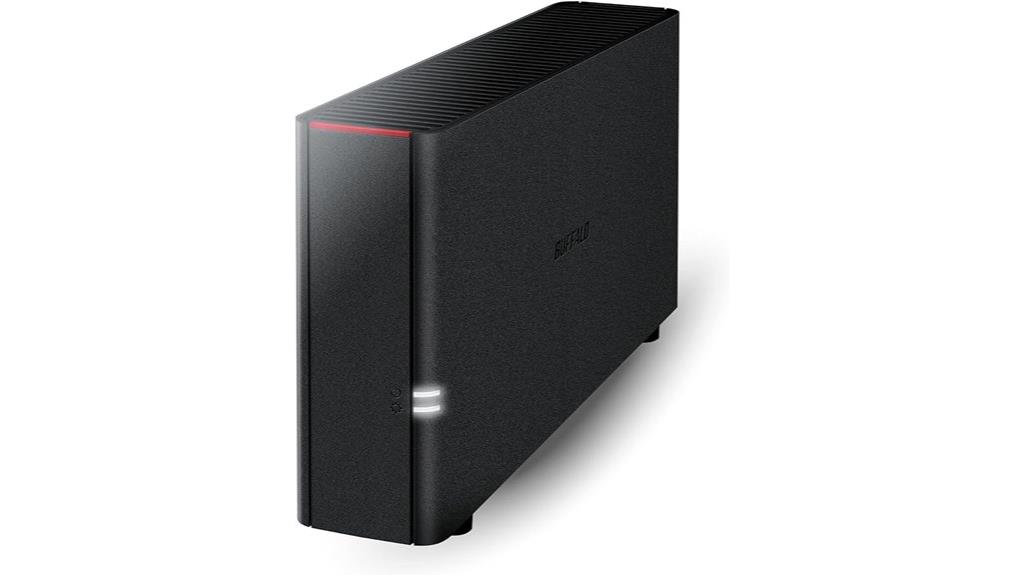
If you’re looking for an affordable, straightforward NAS solution for home use, the BUFFALO LinkStation 210 6TB offers a simple way to centralize your data. It features a 6TB HDD, connects via Serial ATA-300, and supports Windows, macOS, and router sharing. Designed as a personal cloud, it allows easy storage, backup, and media management without monthly fees. The device supports RAID for data safety, has automated backups via included software, and enables remote access through mobile apps. Its compact size and quiet, fan-less design make it ideal for home environments. Setup is manageable with some network knowledge, and Buffalo’s US-based support is available if needed.
Best For: home users seeking an affordable, easy-to-use personal cloud NAS for centralized data storage, backup, and media management.
Pros:
- Simple setup and compatible with Windows, macOS, and routers for easy network sharing.
- Quiet, fan-less design suitable for home environments.
- Supports RAID configurations and automated backups for data safety.
Cons:
- Reports of device failure, overheating, and drive clicking sounds from some users.
- Limited storage capacity with a single drive bay; no expansion beyond included 6TB HDD.
- Customer support experiences vary, with some facing warranty and data recovery issues.
UGREEN NASync DH4300 Plus 4-Bay Desktop NAS

The UGREEN NASync DH4300 Plus 4-Bay Desktop NAS stands out as an ideal choice for small businesses and tech-savvy home users who need extensive storage and fast data access. It supports up to four drives, with a maximum capacity of 120TB, compatible with NAS-grade drives like WD Red Plus and Seagate IronWolf. Powered by an Intel N5105 quad-core CPU, 8GB RAM, and a 2.5GbE port, it delivers rapid transfer speeds. The device runs UGOS, offering a user-friendly interface, AI photo recognition, and remote access. Its reliable build, security features, and expandability make it perfect for backups, media serving, and personal cloud storage.
Best For: small businesses and tech-savvy home users seeking extensive storage, fast data access, and reliable local backup solutions.
Pros:
- Supports up to 120TB of storage with compatibility for NAS-grade drives like WD Red Plus and Seagate IronWolf
- Powered by a robust Intel N5105 quad-core CPU with 8GB RAM and 2.5GbE port for high-speed data transfer
- User-friendly UGOS interface with AI photo recognition, remote access, and expandability features
Cons:
- Requires drives to be purchased separately, adding to initial setup costs
- Software may have limitations and require some IT knowledge for advanced security configurations
- Basic setup and management may be less intuitive for complete beginners without technical experience
Synology 2-Bay DiskStation DS223j (Diskless)
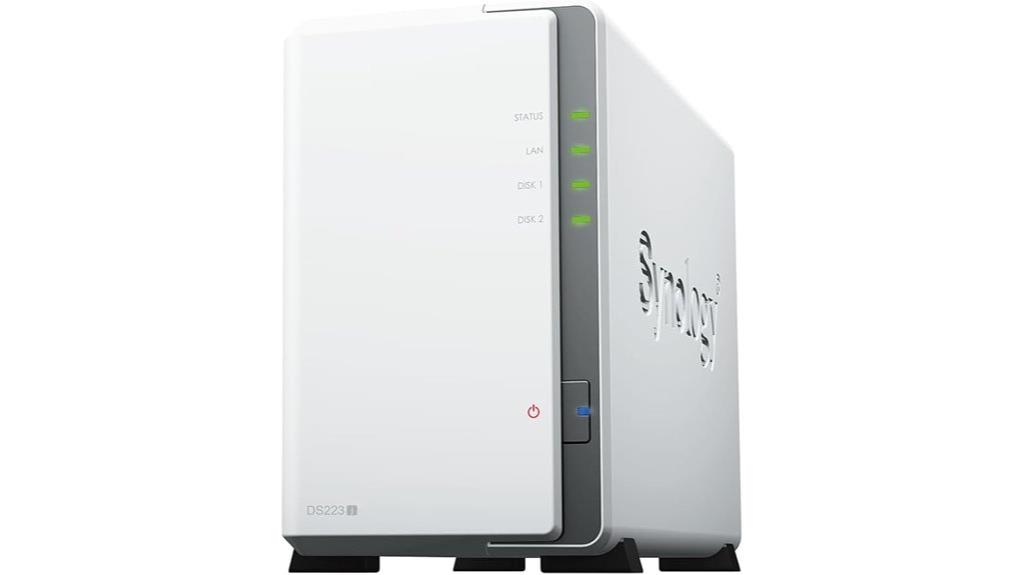
The Synology 2-Bay DiskStation DS223j (Diskless) stands out as an ideal choice for small businesses and home users seeking secure private cloud storage. It offers full data ownership with a private cloud, supporting multi-platform access from various devices and locations. I appreciate its easy file sharing and syncing capabilities, which keep my data accessible and secure no matter where I am. The device provides robust backup options, protecting my media libraries and documents against loss. Plus, with a 2-year warranty and support through Synology’s resources, I feel confident in its reliability. It’s a versatile, secure, and user-friendly solution for seamless data management.
Best For: small businesses and home users seeking secure, private cloud storage with easy access and reliable data protection.
Pros:
- Supports multi-platform access from various devices and locations
- Offers comprehensive backup options to safeguard data
- Includes a 2-year warranty with additional support resources
Cons:
- Diskless design requires users to purchase and install compatible drives separately
- May have a learning curve for users unfamiliar with NAS systems
- Limited to two drive bays, which might restrict storage expansion for some users
UGREEN NASync DXP2800 2-Bay Desktop NAS

Designed for home users seeking reliable and fast data management, the UGREEN NASync DXP2800 2-Bay Desktop NAS stands out with its powerful Intel N100 quad-core processor and 8GB DDR5 RAM. It offers quick data transfer via a 2.5GbE port and supports cache drives with two M.2 NVMe slots, reaching over 730MB/s speeds. Compatible with popular HDD brands, it can hold up to 76TB of storage. Its user-friendly interface allows easy setup, remote access, and app integration. Low power consumption, quiet operation, and temperature management make it ideal for home environments. Overall, it combines affordability with robust performance, perfect for media, backups, and file sharing.
Best For: home users seeking a reliable, high-performance, and easy-to-use NAS solution for media storage, backups, and remote access.
Pros:
- Powerful Intel N100 quad-core CPU with 8GB DDR5 RAM for smooth multitasking and fast data transfer.
- Supports cache drives with M.2 NVMe slots reaching over 730MB/s speeds, enhancing performance.
- User-friendly interface compatible with multiple devices and remote access options, ideal for non-technical users.
Cons:
- Storage drives are sold separately, requiring additional purchase for full capacity.
- Limited to 2 drive bays, which may restrict future expansion for users with large storage needs.
- OS customization options like OS upgrades require caution, as restoring stock firmware can be restrictive.
Synology DS224+ 2-Bay NAS with 16TB Bundle

If you’re looking for a reliable, easy-to-use NAS solution for small teams, the Synology DS224+ 2-Bay NAS with a 16TB bundle stands out as an excellent choice. Its compact design packs a powerful quad-core Intel Celeron J4125 processor, upgradable RAM, and support for various drive types, ensuring quick access and reliable performance. The included two 8TB Seagate IronWolf drives provide ample storage right out of the box. Running Synology DiskStation Manager simplifies management, making backups, sharing, and security straightforward. With high customer ratings, robust security features, and the ability to support many users simultaneously, it’s a versatile and efficient storage option for small organizations.
Best For: small teams and small organizations seeking a reliable, easy-to-manage centralized storage solution with expandable features.
Pros:
- User-friendly interface with straightforward setup and management through DSM OS
- Supports multiple drive types and expandable RAM for growing storage needs
- High customer ratings and robust security features ensure reliable operation
Cons:
- Limited to 2 drive bays, which may restrict maximum storage expansion compared to larger NAS systems
- 2GB DDR4 RAM might be limiting for very heavy multitasking without upgrades
- Availability and pricing can vary, potentially affecting affordability for some users
BUFFALO TeraStation Essentials 4-Bay Desktop NAS with Hard Drives

For professionals seeking reliable, high-capacity data storage, the Buffalo TeraStation Essentials 4-Bay Desktop NAS stands out with its robust 16TB setup and RAID flexibility. It comes with four pre-installed 4TB drives, configured in RAID 5 for 12TB of usable space, but you can switch to RAID 6 for extra redundancy or RAID 0 to maximize capacity. Its native 2.5GbE port ensures fast data transfers, ideal for professional environments. With 256-bit drive encryption, a closed system, and flexible backup options, it prioritizes data security. Plus, its cloud integration with services like Dropbox and OneDrive makes managing local and cloud data seamless.
Best For: professionals and small businesses seeking reliable, high-capacity, and flexible data storage solutions with robust security and easy cloud integration.
Pros:
- High-capacity 16TB storage with RAID flexibility for redundancy or maximum capacity
- Native 2.5GbE port for fast, reliable data transfer speeds
- Advanced data security features including 256-bit encryption and flexible backup options
Cons:
- May be more expensive than basic NAS options due to advanced features and enterprise-grade security
- Requires some technical knowledge to optimize RAID configurations and cloud integration
- Limited to four drives, which might not suffice for extremely large-scale storage needs
Yottamaster 1 Bay NAS Storage for HDD/SSD
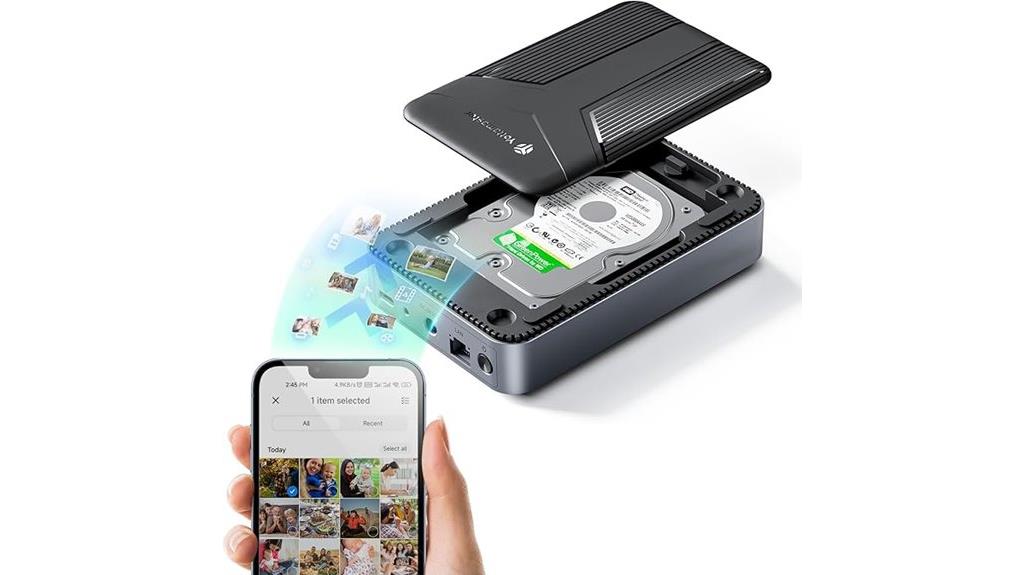
The Yottamaster 1 Bay NAS Storage stands out as an excellent choice for individuals seeking a simple, reliable private cloud solution at home. It supports 2.5-inch SATA HDD/SSD drives, up to 8TB, and features a diskless enclosure for easy installation. Powered by a quad-core ARM CPU and 1GB DDR4 RAM, it delivers solid performance. With a 1GbE network port and USB Type-C support, you can transfer data quickly and connect multiple devices. Its user-friendly Weline app makes managing files effortless, while data protection options like RAID 0 and 1 ensure security. Overall, this device offers secure, private storage tailored for personal use.
Best For: individuals and families seeking a simple, reliable private cloud storage solution for personal data, photos, videos, and backups.
Pros:
- Easy tool-free installation with magnetic cover for hassle-free setup
- Compact design ideal for home or personal use without taking up much space
- Supports flexible data protection options like RAID 0 and 1 for data security
Cons:
- Limited to a single 2.5-inch SATA drive, which may restrict storage expansion
- Only 1GB DDR4 RAM, potentially limiting performance for intensive tasks
- No support for 3.5-inch drives or larger enterprise storage needs
QNAP TS-464-8G-48WD-US 4 Bay Desktop NAS with 24TB Storage

With its 24TB storage capacity and RAID 5 configuration, the QNAP TS-464-8G-48WD-US is an excellent choice for small businesses or power users who need reliable, high-performance data management. It comes with four bays pre-installed with 8TB WD Red Plus drives, supporting fast transfer speeds through dual 2.5GbE ports and USB 3.2 Gen 2 ports. The quad-core Intel Celeron processor and 8GB DDR4 RAM ensure smooth multitasking and processing. With support for SSD caching and remote access via MyQNAPCloud, this NAS offers a versatile, scalable solution for centralized storage, backups, and media sharing.
Best For: small businesses, power users, or families seeking reliable, high-performance centralized storage and media management.
Pros:
- High-capacity 24TB storage with RAID 5 for data redundancy and security
- Powerful quad-core Intel Celeron processor with 8GB DDR4 RAM ensures smooth multitasking
- Fast transfer speeds with dual 2.5GbE ports and USB 3.2 Gen 2 connectivity
Cons:
- Limited to 4 drive bays, which may restrict scalability for growing data needs
- Pre-installed with specific 8TB drives, potentially increasing initial cost if upgrading
- No built-in HDMI or multimedia output options for direct media playback
Yxk Zero1 2-Bay Desktop NAS with Quad-Core CPU
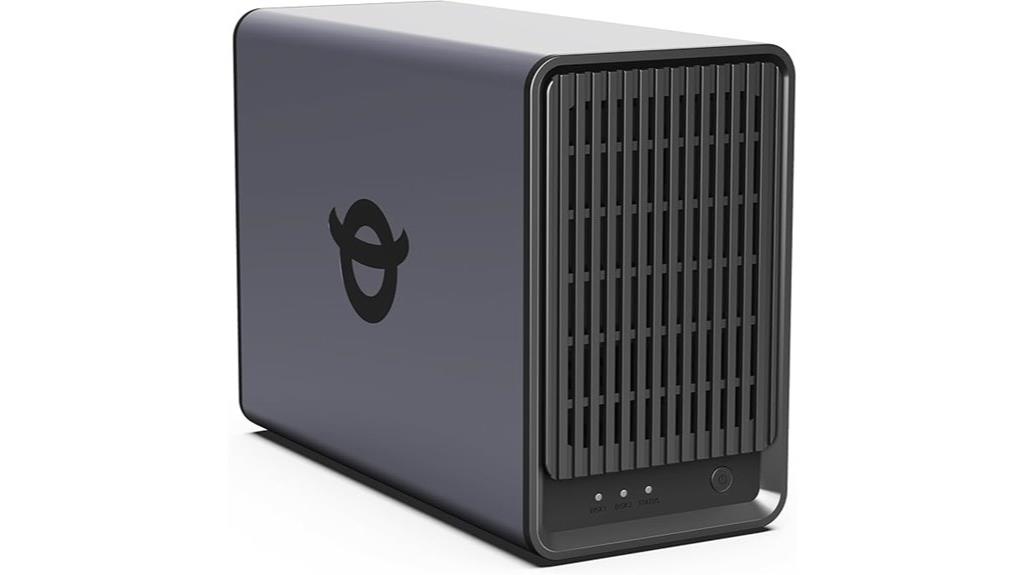
If you’re looking for a reliable, budget-friendly NAS that’s easy to set up and perfect for small offices or homes, the Yxk Zero1 2-Bay Desktop NAS with Quad-Core CPU is an excellent choice. Its sleek, compact design weighs just 3.83 pounds, making it ideal for tight spaces. The device features a digital air duct and fan for quiet, efficient cooling. Setup is quick—less than 10 minutes via QR code scanning—and it supports easy hard drive installation with a magnetic design. With enterprise-grade RAID, automated backups, and private cloud security, it offers scalable storage and user-friendly management through an intuitive app, ensuring seamless data handling.
Best For: small home offices and personal users seeking an affordable, easy-to-use NAS with reliable data security and simple setup.
Pros:
- Compact and lightweight design ideal for limited space setups
- Quick, straightforward setup via QR code scanning in less than 10 minutes
- Supports enterprise-grade RAID, automated backups, and private cloud security for data safety
Cons:
- Software features and app ecosystem may be limited compared to higher-end competitors like Synology or QNAP
- Customer reviews indicate some concerns with app range and advanced functionality
- May lack some advanced enterprise features found in more premium NAS solutions
Asustor Drivestor 2 Lite NAS Enclosure (AS1102TL)
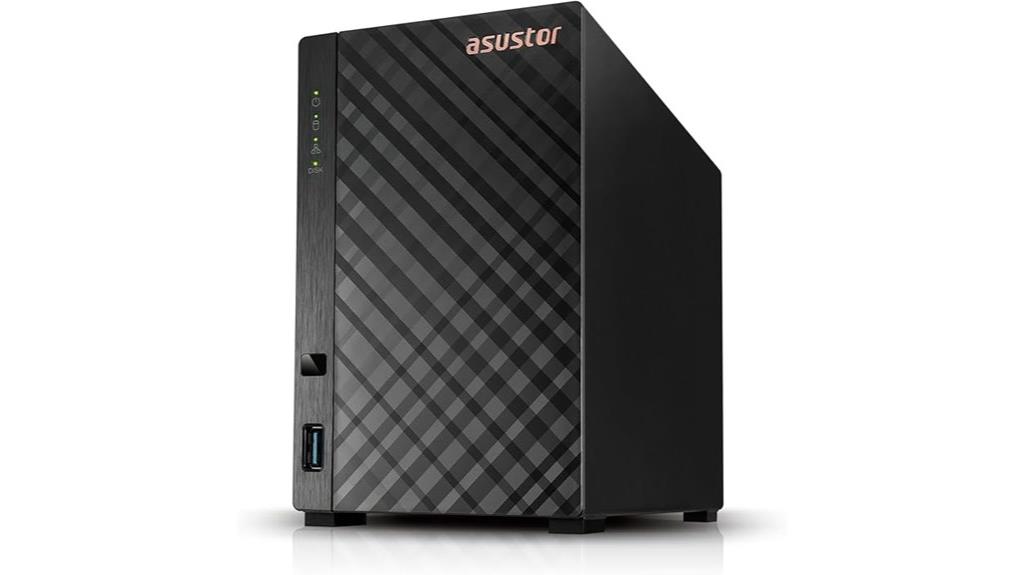
For home users and small offices seeking an affordable yet reliable NAS solution, the Asustor Drivestor 2 Lite NAS Enclosure (AS1102TL) stands out due to its easy setup and user-friendly interface. It features a 1.7GHz quad-core processor, 1GB DDR4 RAM, and supports 4K transcoding for smooth streaming. This diskless enclosure allows you to install your preferred drives and offers flexible RAID options. Its compact design and quiet operation make it ideal for personal and small business use. The device includes essential features like Wake on LAN, snapshots, and app support, delivering solid performance without breaking the bank.
Best For: home users and small offices seeking an affordable, easy-to-use NAS solution with reliable performance.
Pros:
- Easy setup with a user-friendly interface
- Supports 4K transcoding for smooth streaming
- Flexible RAID options and drive compatibility
Cons:
- Limited CPU power for resource-intensive tasks like media servers
- Occasional issues with app updates and manual configuration needed
- Hardware restrictions may affect performance with heavy media use
SSK 4TB Personal Cloud NAS Storage with Hard Drive
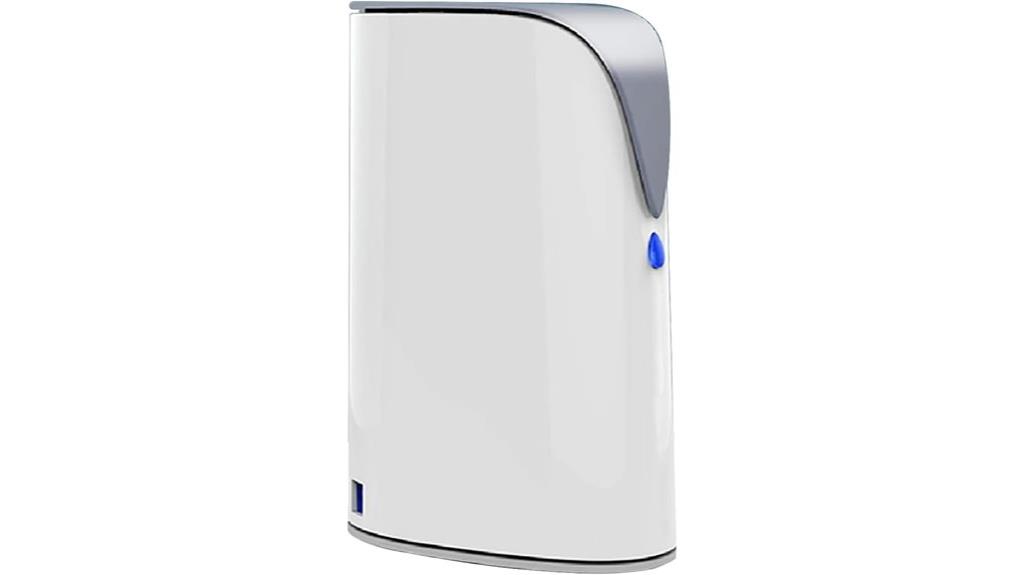
The SSK 4TB Personal Cloud NAS Storage is an excellent choice for home users and small offices seeking reliable, centralized data management without the complexity of larger enterprise solutions. It comes with a built-in 4TB hard drive, offering ample space for all your files. You can access your data remotely via PC or mobile phone, with secure P2P transmission. Supporting multiple protocols like Samba and DLNA, it seamlessly connects with smart devices in your LAN. It offers two modes—NAS and DAS—and features easy backup and synchronization. While it lacks built-in WiFi, connecting it to your router grants convenient, secure access from anywhere.
Best For: home users and small offices seeking reliable, centralized storage with easy remote access and data security without the need for WiFi functionality.
Pros:
- Large 4TB built-in hard drive provides ample storage space for all files.
- Supports remote management via PC and mobile with secure P2P transmission.
- Multiple protocols like Samba and DLNA enable seamless connection with various smart devices within LAN.
Cons:
- Lacks built-in WiFi; wireless access requires connection to a router with internet.
- No mention of advanced encryption features beyond P2P security.
- Limited to 10-30MB/s network transfer speed in NAS mode, which may be slower for large data transfers.
QNAP TVS-h1688X-W1250-32G High-speed media NAS with Intel Xeon CPU
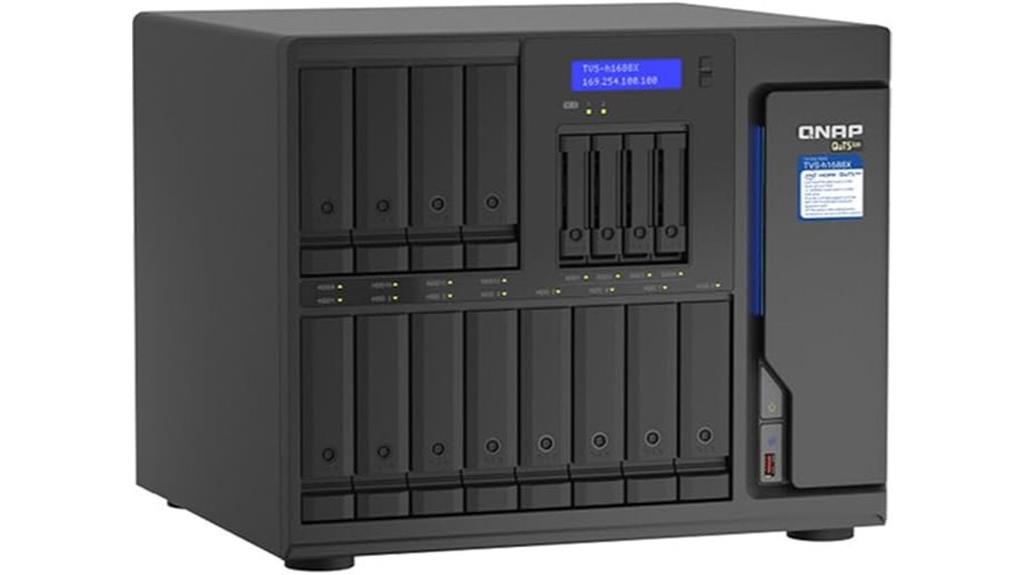
Designed for demanding media professionals, the QNAP TVS-h1688X-W1250-32G stands out with its powerful Intel Xeon W-1250 processor and extensive storage capacity, making it ideal for high-speed data management and collaboration. It features 12 hot-swappable 3.5-inch drives, supports multiple SSDs, and offers 32GB DDR4 ECC RAM—expandable to 128GB. Equipped with four 2.5GbE ports and PCIe expansion slots, it handles fast network transfers and high-performance workflows. Running the ZFS-based QuTS hero OS, it delivers advanced data protection, snapshots, and media streaming capabilities. This robust, versatile NAS is perfect for creative, virtualization, and enterprise environments.
Best For: demanding media professionals and enterprise users seeking high-speed, scalable storage solutions with advanced data management features.
Pros:
- Powerful Intel Xeon W-1250 processor and extensive RAM for high-performance workflows
- Large hot-swappable drive bays supporting a mix of HDDs and SSDs for flexible storage options
- Advanced data protection, snapshots, and media streaming capabilities via ZFS-based QuTS hero OS
Cons:
- Higher cost compared to entry-level NAS solutions
- Fragile drive trays and lack of dual power supplies may impact long-term reliability
- Steep learning curve and complex management interface for less experienced users
BUFFALO LinkStation SoHo 220 2-Bay NAS with 12TB (2x6TB)
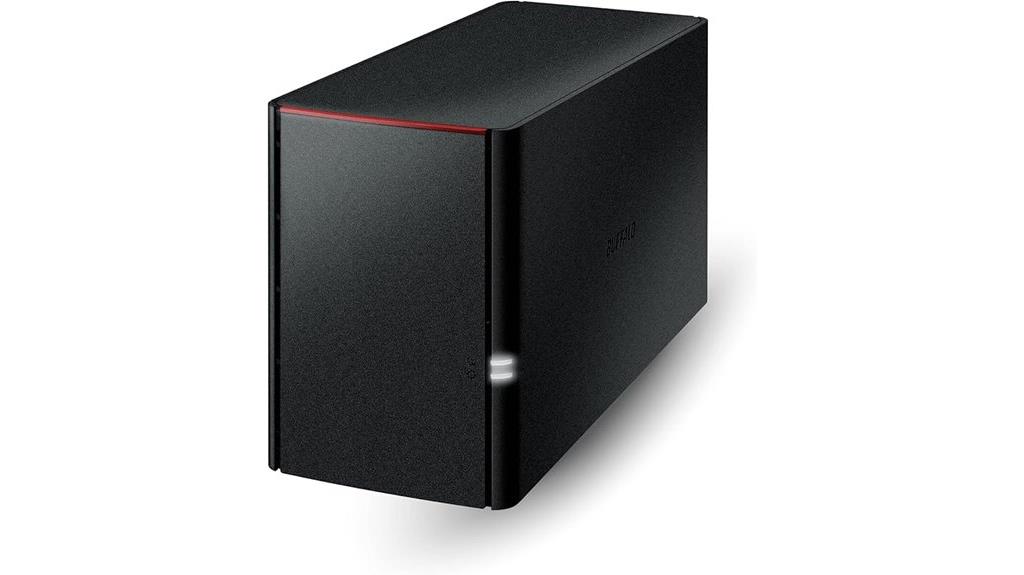
If you’re looking for a reliable, budget-friendly NAS for small offices or home use, the BUFFALO LinkStation SoHo 220 2-Bay offers an excellent balance of capacity and security. It comes with 12TB total storage, configured as 2x6TB drives in RAID 1 or RAID 0, making it flexible for backup or expanded storage. Connecting easily to your router, it enables quick sharing across multiple devices, supporting both Windows and macOS. Its secure data transfer uses SSL encryption, and it includes management tools for automated backups. Plus, its subscription-free personal cloud allows remote access, making data management simple, safe, and accessible from anywhere.
Best For: small offices and home users seeking a reliable, secure, and easy-to-manage network storage solution with flexible capacity options.
Pros:
- Easy to set up and connect to both Windows and macOS devices
- Supports RAID 1 for data redundancy and security
- Subscription-free personal cloud for remote access from anywhere
Cons:
- Limited to 2 drive bays, which may restrict expandability for growing needs
- May have slower performance compared to higher-end NAS models with faster networking options
- Basic features might lack advanced enterprise functionalities
Smart Personal Cloud Storage Device with 512GB SSD
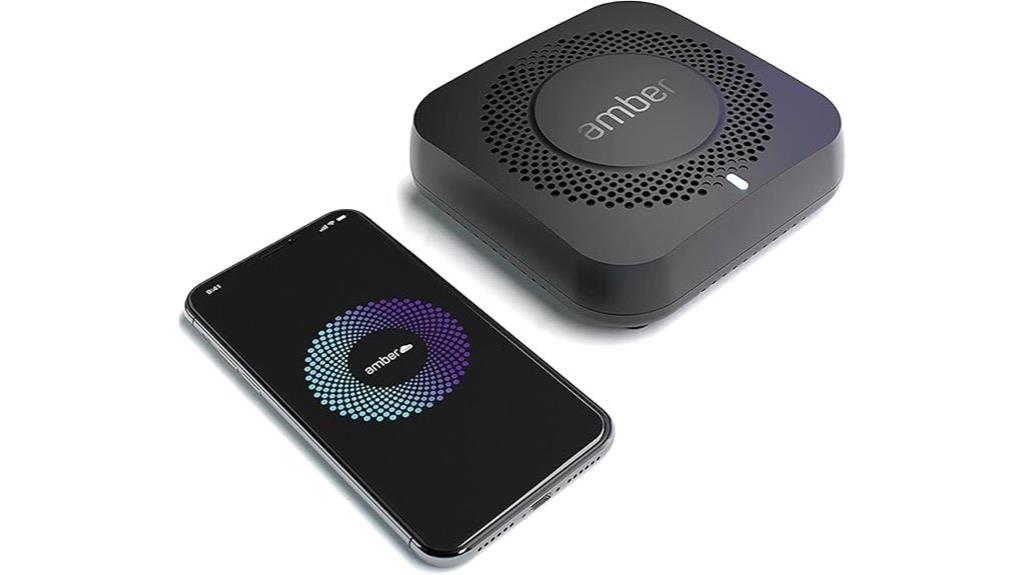
For users seeking a compact yet powerful personal cloud solution, the AMBER X Smart Personal Cloud Storage Device with 512GB SSD stands out thanks to its high-speed SSD and versatile compatibility. It supports multiple platforms like iOS, Android, Windows, and Mac, making file sharing seamless across devices. Designed for easy setup, it offers home-based data backup, web and SMB access, and optional disk encryption for security. External USB and SD slots allow storage expansion, while its hardware platform Linux guarantees solid performance. Despite some setup challenges and network hiccups, it provides a private, secure alternative to traditional cloud services, making it a compelling choice for personal data management.
Best For: users seeking a compact, high-performance personal cloud storage solution with broad device compatibility and expandable storage options.
Pros:
- Supports multiple platforms including iOS, Android, Windows, and Mac for seamless file sharing.
- High-speed 512GB SSD with USB 3.0 interface ensures quick data access and transfer.
- External USB and SD slots enable easy storage expansion and flexible backup options.
Cons:
- Initial setup can be complex, requiring multiple instructions and dealing with network and firmware issues.
- Network connection and DNS resolution problems may complicate installation and access.
- Customer support experiences reported delays and difficulties in troubleshooting and firmware updates.
TERRAMASTER F8 SSD NAS Storage, 8-Bay All SSD NAS Server
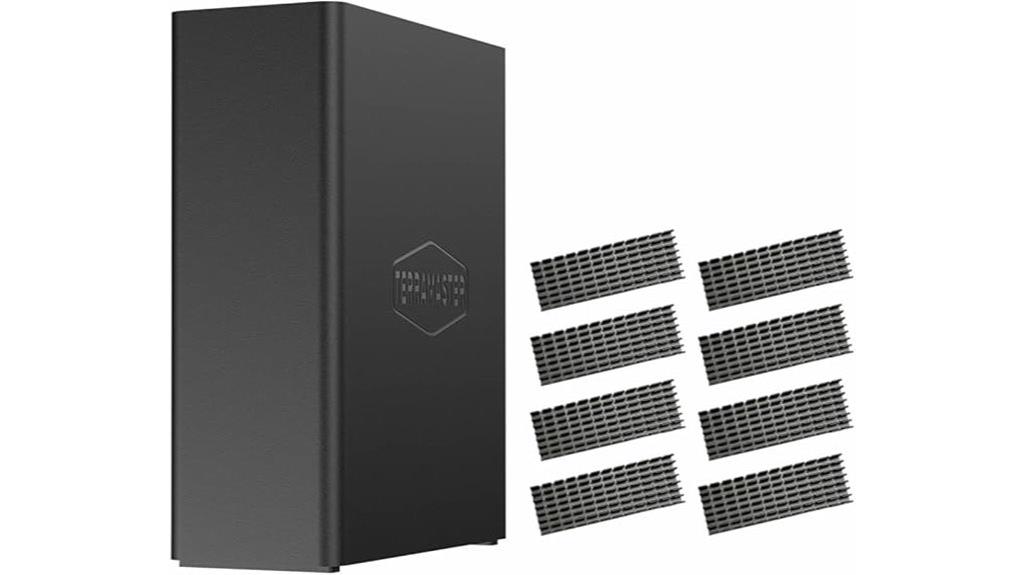
The TERRAMASTER F8 SSD NAS Storage stands out as an ideal choice for small businesses and tech enthusiasts who require high-speed, reliable data access in a compact form factor. Its all-SSD design with support for eight NVMe drives offers a total capacity of up to 64TB, delivering transfer speeds over 900MB/s. Powered by an Intel N95 quad-core processor and 8GB DDR5 RAM, it handles intensive tasks with ease. Compact and lightweight, it features effective cooling with heat sinks and silent fans, ensuring stable operation. Its flexible software options, RAID support, and easy drive installation make it a versatile, high-performance storage solution for demanding users.
Best For: small businesses, tech enthusiasts, and home users seeking high-speed, reliable, and portable all-SSD NAS storage with easy expandability.
Pros:
- High transfer speeds exceeding 900MB/s with 10GbE port support
- Compact, lightweight design ideal for space-constrained environments and portability
- Quiet operation with effective cooling, suitable for home and office settings
Cons:
- Long setup times for RAID configurations can delay initial use
- BIOS adjustments required for OS installation, which may be complex for some users
- Interface quirks and limited software features may affect user experience
Factors to Consider When Choosing Network Attached Storage Devices
When selecting a NAS device, I focus on key factors like storage capacity, performance, and security features to meet my needs. Ease of setup, expandability, and available ports also play a big role in ensuring the device fits seamlessly into my workflow. Considering these points helps me choose a solution that’s reliable, scalable, and secure.
Storage Capacity Options
Choosing the right storage capacity for a NAS device depends on your data needs and future growth plans. Storage options vary widely, from small 1TB single-bay models to multi-bay systems with over 120TB using high-capacity drives. Many NAS units support diskless setups, letting you customize storage by installing compatible drives. RAID configurations, like RAID 0, 1, 5, 6, or 10, impact usable capacity while adding redundancy and data protection. The maximum storage capacity is usually determined by the number of drive bays and the size of the drives you choose. Some NAS devices even support expansion units or additional drives, making it easier to scale your storage as your data grows. Carefully consider your current and future storage needs before making a decision.
Performance and Speed
Performance and speed are critical factors that directly impact your experience with a NAS device. The device’s CPU, RAM, and network interface determine how quickly data is processed and transferred. Upgrading to faster network ports like 2.5GbE, 10GbE, or Thunderbolt can drastically cut down transfer times, especially with large files or media streams. Using SSDs instead of traditional HDDs enhances read/write speeds and makes the system more responsive. Additionally, RAID configurations and caching features help optimize performance by balancing redundancy and access speed. Keep in mind that real-world transfer speeds depend on both your NAS hardware and network infrastructure. Investing in high-quality components guarantees you get the maximum performance, making your data management faster and more efficient.
Security Features Included
Ever wonder how to keep your data safe from cyber threats and unauthorized access? Security features like SSL encryption, user authentication, and IP filtering are essential for protecting your NAS. Many devices come with built-in firewalls and malware scanning, adding layers of defense against cyberattacks. Support for hardware encryption at the drive or volume level guarantees your data remains confidential, even if the device is compromised. Automatic backups, snapshot recovery, and RAID configurations further safeguard your data by preventing loss or corruption. Certifications such as TRUSTe, ETSI EN 303 645, and FIPS compliance demonstrate adherence to recognized security standards. When choosing a NAS, prioritize these features to ensure your data remains protected, private, and resilient against evolving threats.
Ease of Setup
When selecting a NAS device, ease of setup is a crucial factor to take into account, especially for those who want quick and hassle-free installation. Some models are truly plug-and-play, making setup straightforward even for beginners. User-friendly interfaces, step-by-step guides, and mobile apps can considerably cut down setup time and reduce complexity. Pre-configured RAID settings and automatic drive detection further simplify the process, saving time and effort. Hardware features like tool-free drive installation and minimal wiring make physical setup faster and less frustrating. Additionally, thorough online resources, video tutorials, and responsive customer support can help less experienced users get their NAS up and running smoothly. Overall, a device’s setup process can make or break the initial experience.
Expandability and Ports
Choosing a NAS device isn’t just about ease of setup; it also depends heavily on its expandability and connectivity options. The number and type of ports—USB, Ethernet, HDMI—shape how you connect external drives, stream media, or access the network. Expandable ports like M.2 or PCIe slots let you add SSD caching or extra network interfaces, boosting performance and scalability. Multiple Ethernet ports, including 2.5GbE or 10GbE, support link aggregation or faster data transfers, essential for large files. Additional USB ports enhance versatility by connecting peripherals or external drives. Hot-swappable drive bays make expanding storage or replacing drives simple, without shutdowns. Overall, a well-connected NAS with room for expansion guarantees your data management remains efficient and adaptable as your needs grow.
Frequently Asked Questions
How Does NAS Security Protect Against Cyber Threats?
NAS security safeguards against cyber threats by implementing strong encryption, which keeps data safe even if hackers access the system. I also use firewalls and regular software updates to fix vulnerabilities. User authentication and access controls ensure only authorized people can view sensitive information. Additionally, I back up data regularly, so I can restore files quickly if a breach occurs. This layered approach keeps my data secure and protected from cyber threats.
Can NAS Devices Integrate With Existing Home Automation Systems?
Did you know that over 60% of smart homes now include integrated automation systems? I can tell you that NAS devices easily integrate with these systems, offering centralized storage and control. I’ve set up my NAS to work seamlessly with my smart home, allowing me to access files, automate backups, and even trigger routines from a single interface. It’s a game-changer for managing your home tech effortlessly.
What Are the Energy Consumption Differences Among NAS Models?
Energy consumption varies among NAS models, and I’ve noticed that more advanced units tend to use more power, especially during peak performance. However, many newer models are designed with energy efficiency in mind, featuring low-power modes and better hardware. I recommend checking each device’s specs for wattage and power management features to find one that balances performance with energy savings, so you can reduce your electricity costs.
How Scalable Are These NAS Devices for Future Data Growth?
Think of NAS devices as growing trees—they can be scaled up as your data needs expand. Most models today are quite flexible, allowing you to add more drives or upgrade components to handle future growth. I find that choosing a NAS with modular design or multiple bays makes it easier to adapt. This way, I guarantee my storage keeps pace without needing a complete overhaul, saving time and money.
Do NAS Devices Support Remote Access Without Compromising Security?
Yes, NAS devices do support remote access without compromising security. I use secure protocols like VPNs and SSL encryption to connect remotely, ensuring my data stays protected. Many NAS brands also offer multi-factor authentication and customizable user permissions, which add extra layers of security. As long as you set up these features properly, remote access is both safe and convenient, giving you peace of mind while managing your data from anywhere.
Conclusion
In wrapping up, I hope this list helps you find the perfect NAS device for your needs. Remember, choosing the right storage depends on your data demands, device durability, and dollar value. Whether you’re seeking sleek simplicity or robust reliability, there’s a NAS that’s just right for you. Embark into data with confidence, and let your storage solution be seamless, secure, and super satisfying!