ENERGY STAR certified appliances in this roundup span compact fridges, full-size refrigerators, freezers, and dishwashers, so the right choice depends on both verified certification and fit. I’d put the Kenmore 17.8 cu. ft. counter-depth refrigerator first for buyers seeking a full-size kitchen model, while the Midea 18-inch built-in dishwasher is a standout for a narrow kitchen and the Whynter convertible freezer/fridge offers flexible cold storage. Compact models save floor space, but they cannot match the capacity of apartment or full-size refrigerators. Dishwasher choices also hinge on whether you need a built-in installation or a countertop unit. Read on for the full comparison and guidance on checking certification for the exact model you plan to buy.

Get the latest gadgets delivered free with Prime
- Fast, free delivery on millions of items
- Prime Video, Amazon Music and more included
- Member-only deals all year
Complete the kit



Key Takeaways
- Full-size refrigerators serve different kitchen layouts: the Kenmore 17.8 cu. ft. counter-depth model prioritizes a shallower fit, while the Kenmore 18.1 cu. ft. top-freezer model uses a familiar layout and a little more stated capacity.
- Compact capacity varies meaningfully: the 1.6–1.7 cu. ft. models suit drinks and limited groceries, while the 3.1 cu. ft. Midea and Upstreman options offer more room; the Upstreman adds a separate freezer compartment.
- The Whynter’s convertible design is the lineup’s flexibility pick: it can serve as a refrigerator or freezer, a useful distinction for changing storage needs, though its 3 cu. ft. capacity remains limited.
- Dishwasher installation is a major dividing line: the Midea 18-inch built-in and Kenmore 24-inch hybrid tub models suit installed kitchens, while the BLACK+DECKER countertop model is aimed at homes where a standard built-in is impractical.
- Certification must be verified by exact model: several product names explicitly say ENERGY STAR, but buyers should confirm the current certification listing for the precise model number rather than infer it from a similar product name.
| Midea 1.6 cu. ft. Energy Star Mini Fridge |  | Best for Quiet, Flexible Placement | Model: WHS-65LB1 | Capacity: 1.6 cu. ft. | Dimensions: 18.6 × 17.7 × 19.4 in. (W × D × H) | VIEW ON AMAZON | See Our Full Breakdown |
| Whynter Upright Convertible Freezer/Fridge 3 cu ft (CUF-301SS) |  | Best Convertible Pick | Model: CUF-301SS | Capacity: 3 cu. ft. | Annual energy consumption: Approximately 240 kWh | VIEW ON AMAZON | See Our Full Breakdown |
| Midea 1.7 cu ft Mini Fridge – Energy Star Certified, Low Noise, Adjustable Thermostat, Reversible Door (White) |  | Best for Bottled Drinks | Model: MERM17B0AWW | Capacity: 1.7 cu. ft. | Dimensions: 17.6 × 18.6 × 19.3 in. (D × W × H) | VIEW ON AMAZON | See Our Full Breakdown |
| Kenmore 17.8 cu. ft. 31-Inch Counter-Depth Bottom-Freezer Refrigerator, Fingerprint-Resistant Stainless Steel |  | Best for a Compact Main Kitchen | Capacity: 17.8 cu. ft. | Width: 31 in. | Configuration: Bottom freezer, counter-depth | VIEW ON AMAZON | See Our Full Breakdown |
| BLACK+DECKER 1.7 Cu. Ft. ENERGY STAR Compact Refrigerator, White (BCRK17W) |  | Best Compact Pick with a Chiller | Model: BCRK17W | Total capacity: 1.7 cu. ft. | Fresh food capacity: 1.5 cu. ft. | VIEW ON AMAZON | See Our Full Breakdown |
| Upstreman 3.1 cu ft Mini Fridge with Freezer, Double Door Small Refrigerator, Black (TM31) | 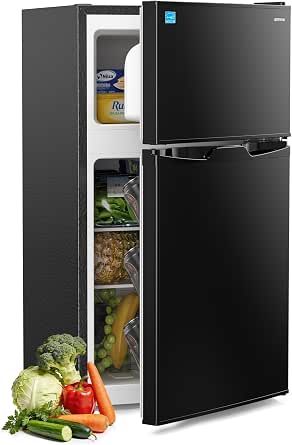 | Best Quiet Mini Fridge with a Freezer | Overall capacity: 3.1 cu. ft. | Refrigerator capacity: 2.22 cu. ft. | Freezer capacity: 0.88 cu. ft. | VIEW ON AMAZON | See Our Full Breakdown |
| Midea 18-Inch Built-In Dishwasher with Stainless Steel Tub, 8 Place Settings |  | Best Slim Built-In Dishwasher | Type: Built-in dishwasher | Width: 18 inches | Capacity: 8 place settings | VIEW ON AMAZON | See Our Full Breakdown |
| Kenmore 24-Inch Hybrid Tub Dishwasher, Black |  | Best for Flexible Full-Size Loads | Width: 24 inches | Capacity: Up to 12 place settings | Sound level: 54 dBA | VIEW ON AMAZON | See Our Full Breakdown |
| ICEBOX 2.5 Cu. Ft. ENERGY STAR Compact Refrigerator, Mint Green |  | Best Compact Refrigerator for Chilled Drinks | Capacity: 2.5 cu. ft. | Model: IBCR25MNT | Color: Mint green | VIEW ON AMAZON | See Our Full Breakdown |
| West Bend 7.5 cu. ft. Apartment Refrigerator with Top Freezer, Reversible Doors, Stainless Steel |  | Best Apartment-Size Main Refrigerator | Total capacity: 7.5 cu. ft. | Refrigerator capacity: 6 cu. ft. | Freezer capacity: 1.5 cu. ft. | VIEW ON AMAZON | See Our Full Breakdown |
| Midea 3.1 Cu. Ft. Mini Fridge with Freezer |  | Best Compact Pick | Model: WHD-113FSS1 | Total capacity: 3.1 cu. ft. | Refrigerator capacity: 2.16 cu. ft. | VIEW ON AMAZON | See Our Full Breakdown |
| Kenmore 18.1 cu. ft. 30-Inch Top-Freezer Refrigerator, White |  | Best ENERGY STAR Full-Size Fit | Capacity: 18.1 cu. ft. | Width: 30 inches | Style: Top-freezer | VIEW ON AMAZON | See Our Full Breakdown |
| BLACK+DECKER BCD6W Countertop Dishwasher, White |  | Best for Renters | Installation type: Countertop | Capacity: 6 place settings | Wash cycles: 7 | VIEW ON AMAZON | See Our Full Breakdown |
| energy star certified appliance | Capacity | Dimensions | Certification |
|---|---|---|---|
| Midea 1.6 cu. ft. Energy Star | 1.6 cu. ft. | 18.6 × 17.7 × 19.4 in. (W × D × H) | Energy Star |
| Whynter Upright Convertible Fr | 3 cu. ft. | — | ENERGY STAR |
| Midea 1.7 cu ft Mini Fridge | 1.7 cu. ft. | 17.6 × 18.6 × 19.3 in. (D × W × H) | — |
| Kenmore 17.8 cu. ft. 31-Inch C | 17.8 cu. ft. | — | — |
| BLACK+DECKER 1.7 Cu. Ft. ENERG | — | 18.5 × 17.5 × 19.7 in. (D × W × H) | — |
| Upstreman 3.1 cu ft Mini Fridg | — | 17.91 x 20.47 x 33.46 inches | ENERGY STAR certified |
| Midea 18-Inch Built-In Dishwas | 8 place settings | 22.6D x 17.6W x 32.4H inches | ENERGY STAR certified |
| Kenmore 24-Inch Hybrid Tub Dis | Up to 12 place settings | — | ENERGY STAR certified |
| ICEBOX 2.5 Cu. Ft. ENERGY STAR | 2.5 cu. ft. | — | — |
| West Bend 7.5 cu. ft. Apartmen | — | — | ENERGY STAR certified |
| Midea 3.1 Cu. Ft. Mini Fridge | — | 18.5 × 19.37 × 32.95 inches (W × D × H) | — |
| Kenmore 18.1 cu. ft. 30-Inch T | 18.1 cu. ft. | — | ENERGY STAR |
| BLACK+DECKER BCD6W Countertop | 6 place settings | 21.5 × 21.7 × 17.2 inches | — |
More Details on Our Top Picks
Midea 1.6 cu. ft. Energy Star Mini Fridge
For a bedroom, dorm, or compact office, this Midea pairs a small footprint with a reversible door and a removable glass shelf, so it can fit a tight layout without locking you into one storage arrangement. Its stated 207 kWh annual consumption gives buyers a concrete efficiency figure alongside its Energy Star certification. The noise rating is under 42 dB, which may suit rooms where a louder appliance would be distracting. Compared with the BLACK+DECKER BCRK17W, it offers slightly less capacity but a lower stated annual energy use; that model adds a small chiller compartment. The tradeoff here is the 1.6 cu. ft. interior and a listed temperature range that may not match every food-storage need. I’d choose it for drinks and everyday small items, not as a household’s main refrigerator.
Pros:- Energy Star certified with stated annual energy consumption of 207 kWh
- Reversible door allows more flexible placement
- Removable glass shelf accommodates different item sizes
- Noise level is listed as under 42 dB
Cons:- 1.6 cu. ft. capacity limits grocery and meal storage
- Listed temperature range may not suit all food-storage needs
Best for: Dorm residents or office workers who want a quiet, compact fridge with a reversible door and a stated annual energy use.
Not ideal for: People storing frozen foods or groceries for more than one person; its capacity is small and the listed temperature range may not suit every food.
- Model:WHS-65LB1
- Capacity:1.6 cu. ft.
- Dimensions:18.6 × 17.7 × 19.4 in. (W × D × H)
- Temperature range:28.4°F to 35.6°F (-2°C to 2°C)
- Annual energy consumption:207 kWh
- Noise level:Less than 42 dB
- Compressor:R600A
- Certification:Energy Star
Our verdict“Choose this Midea for quiet, flexible small-room storage when its limited capacity is enough.”
Whynter Upright Convertible Freezer/Fridge 3 cu ft (CUF-301SS)
One compact unit that can change jobs is the Whynter’s advantage: switch between refrigerator and freezer modes as storage needs shift, while its 3 cu. ft. interior gives it more room than the Midea 1.6 cu. ft. Mini Fridge. It is Energy Star certified and lists about 240 kWh per year, a useful figure for buyers weighing flexible cold storage against energy use. A reversible, lockable door suits shared offices, dorms, or other spaces where contents need to stay secure; the two wire shelves and slide-out basket keep items separated. The tradeoff is that organization is basic, and the freezer temperature range is narrow at -14°F to -11°F. Compared with a dedicated mini fridge, this is the more adaptable choice, but buyers who need a roomy, carefully organized freezer should look elsewhere.
Pros:- Convertible operation provides refrigerator or freezer use
- 3 cu. ft. capacity exceeds the Midea 1.6 cu. ft. mini fridge
- Energy Star certified with approximately 240 kWh annual consumption
- Lockable reversible door suits shared spaces
Cons:- Freezer temperature range is narrow at -14°F to -11°F
- Two wire shelves and one basket provide limited organization
Best for: Apartment, dorm, or office users who need to switch a compact appliance between refrigerator and freezer storage.
Not ideal for: Buyers who need extensive freezer organization or a wide freezer temperature range; the included shelves and basket are limited.
- Model:CUF-301SS
- Capacity:3 cu. ft.
- Annual energy consumption:Approximately 240 kWh
- Refrigerator temperature range:32°F–50°F
- Freezer temperature range:-14°F to -11°F
- Noise level:Less than 42 dB
- Storage:2 wire shelves and removable slide-out basket
- Door:Reversible, cylinder lock with two keys
- Certification:ENERGY STAR
Our verdict“Pick the Whynter when convertible, lockable cold storage matters more than extensive shelving.”
Midea 1.7 cu ft Mini Fridge – Energy Star Certified, Low Noise, Adjustable Thermostat, Reversible Door (White)
The built-in 2 L bottle shelf gives this Midea a specific advantage for dorm rooms and desks where large drinks otherwise take up the main shelf. Its 1.7 cu. ft. capacity is just above the Midea WHS-65LB1, and the reversible door and adjustable thermostat make placement and everyday use easier in compact rooms. Energy Star certification supports its fit in an efficiency-minded roundup, though its listed 246 kWh annual consumption is higher than the WHS-65LB1’s stated 207 kWh. That distinction matters to buyers comparing similarly small fridges. This model has one shelf and no freezer compartment, so it works best for chilled snacks and drinks rather than varied food storage. I’d favor it when bottle storage is the priority; buyers focused on lower stated energy consumption may prefer the WHS-65LB1.
Pros:- Built-in shelf accommodates a 2 L bottle
- Energy Star certified
- Reversible door helps adapt to tight room layouts
- Adjustable thermostat offers control over cooling
Cons:- No freezer compartment
- Listed annual consumption of 246 kWh is higher than the Midea WHS-65LB1’s 207 kWh
- 1.7 cu. ft. capacity and single shelf restrict storage options
Best for: Dorm residents or office workers who mainly chill drinks, including large bottles, and want an adjustable, reversible-door setup.
Not ideal for: Buyers needing freezer space, substantial food storage, or the lower stated annual consumption of the Midea WHS-65LB1.
- Model:MERM17B0AWW
- Capacity:1.7 cu. ft.
- Dimensions:17.6 × 18.6 × 19.3 in. (D × W × H)
- Weight:29.8 lb
- Annual energy consumption:246 kWh
- Voltage:115 V
- Shelves:1
- Door:Single, reversible
- Warranty:1 year
Our verdict“Choose this Midea for convenient bottle storage in a small room if freezer space is unnecessary.”
Kenmore 17.8 cu. ft. 31-Inch Counter-Depth Bottom-Freezer Refrigerator, Fingerprint-Resistant Stainless Steel
Full-size kitchen storage in a 31-inch counter-depth format makes this Kenmore a different kind of Energy Star pick from the compact fridges in this group. Its 17.8 cu. ft. capacity, bottom freezer, adjustable glass shelves, five door bins, and two crisper drawers give a household room to separate groceries and produce. The inverter compressor and Eco Mode add efficiency-focused features, while LED lighting and an ice maker producing up to 3.5 lb. per day address daily convenience. Compared with the Whynter CUF-301SS, it is designed as a main kitchen refrigerator rather than flexible overflow storage. That larger role also means it requires a kitchen-sized installation and more space than a dorm or office unit. The supplied details do not include annual energy consumption, so shoppers cannot compare its yearly use directly with the compact models here.
Pros:- 17.8 cu. ft. capacity suits main-kitchen grocery storage
- 31-inch counter-depth design fits narrower kitchen layouts
- Adjustable shelves, five door bins, two crispers, and a three-tier freezer support organized storage
- Energy Star certification, inverter compressor, and Eco Mode
Cons:- Requires substantially more kitchen space than compact models such as the Whynter CUF-301SS
- Provided product data does not state annual energy consumption
Best for: Households fitting a narrower kitchen that want a counter-depth main refrigerator with bottom-freezer organization and an ice maker.
Not ideal for: Dorm, office, or secondary-fridge shoppers, and buyers who need a stated annual energy-use figure to compare consumption.
- Capacity:17.8 cu. ft.
- Width:31 in.
- Configuration:Bottom freezer, counter-depth
- Finish:Fingerprint-resistant stainless steel
- Compressor:Inverter
- Ice maker output:Up to 3.5 lb. per day
- Fresh food storage:Adjustable tempered-glass shelves, five door bins, two crisper drawers
- Freezer storage:Three-tier
- Energy certification and mode:ENERGY STAR; Eco Mode
Our verdict“Choose this Kenmore for a space-conscious main kitchen that needs full household storage and a bottom freezer.”
BLACK+DECKER 1.7 Cu. Ft. ENERGY STAR Compact Refrigerator, White (BCRK17W)
A small chiller compartment sets the BLACK+DECKER apart from the similarly sized Midea 1.7 cu. ft. model, which has no freezer compartment. It offers 1.5 cu. ft. of fresh-food space plus a 0.2 cu. ft. chiller, giving dorm or office users a place for a limited amount of colder storage without moving up to the 3 cu. ft. convertible Whynter. The removable glass shelf, door storage, reversible door, and leveling legs help it fit varied small-room layouts. Its listed 201 kWh annual consumption is the lowest stated figure among the compact models in this batch, and it is Energy Star certified. The tradeoffs are modest capacity and manual defrost, which requires periodic attention. I’d choose it for a compact setup that benefits from the chiller, not for bulk groceries or hands-off freezer storage.
Pros:- Energy Star certified with stated annual consumption of 201 kWh
- 0.2 cu. ft. chiller compartment adds colder storage
- Reversible door and adjustable leveling legs help with placement
- Removable glass shelf and door storage support flexible organization
Cons:- 1.7 cu. ft. total capacity is limited for household groceries
- Manual defrost requires periodic maintenance
Best for: Dorm residents or solo office users who want an Energy Star compact fridge with a small chiller compartment and flexible placement.
Not ideal for: Households needing substantial freezer or fresh-food storage, or buyers who do not want to manually defrost the chiller compartment.
- Model:BCRK17W
- Total capacity:1.7 cu. ft.
- Fresh food capacity:1.5 cu. ft.
- Freezer capacity:0.2 cu. ft.
- Dimensions:18.5 × 17.5 × 19.7 in. (D × W × H)
- Annual energy consumption:201 kWh
- Power and voltage:70 W; 115 V
- Defrost system:Manual
- Refrigerant:R-600a
Our verdict“Pick the BLACK+DECKER for a small room when a chiller compartment and low stated annual consumption are priorities.”
Upstreman 3.1 cu ft Mini Fridge with Freezer, Double Door Small Refrigerator, Black (TM31)
The Upstreman TM31 suits a bedroom, dorm, or office where a separate freezer and low operating noise matter. Its 3.1 cu. ft. split capacity includes a 0.88 cu. ft. freezer, giving it more flexibility than the ICEBOX 2.5 cu. ft. Compact Refrigerator, which has a chiller compartment rather than a separate freezer. At about 40 dB, it is also a fitting choice for rooms where compressor noise could be distracting. Adjustable glass shelves, a freshness drawer, and a reversible door help make the small interior easier to arrange. The tradeoff is limited storage for shared households, and the manual-defrost freezer needs periodic maintenance. I’d choose it for flexible, quiet storage, not as a main refrigerator.
Pros:- ENERGY STAR certified
- Separate 0.88 cu. ft. freezer
- Quiet operation at about 40 dB
- Reversible door and adjustable glass shelves
Cons:- Limited storage for multiple people or full grocery shops
- Manual freezer defrost requires periodic upkeep
Best for: Dorm residents or remote workers who want a quiet compact refrigerator with a separate freezer.
Not ideal for: Households relying on one refrigerator for weekly groceries, since its 3.1 cu. ft. capacity is limited and the freezer needs manual defrosting.
- Overall capacity:3.1 cu. ft.
- Refrigerator capacity:2.22 cu. ft.
- Freezer capacity:0.88 cu. ft.
- Dimensions:17.91 x 20.47 x 33.46 inches
- Defrost system:Manual
- Door:Reversible
- Noise level:About 40 dB
- Certification:ENERGY STAR certified
Our verdict“Choose the TM31 for a quiet, flexible dorm or bedroom setup that benefits from a separate freezer.”
Midea 18-Inch Built-In Dishwasher with Stainless Steel Tub, 8 Place Settings
For a kitchen with an 18-inch opening, the Midea built-in dishwasher brings energy-conscious cleaning to a smaller footprint. Its ENERGY STAR certification makes it a relevant choice for buyers comparing appliances on efficiency, while six programs let them match a cycle to heavily soiled cookware, delicate dishes, or a quick load. The stainless steel tub and heated-dry, high-temperature, and sanitize functions add flexibility that the BLACK+DECKER BCD6W countertop dishwasher does not offer as a built-in format. Capacity is capped at eight place settings, though, so larger households may need to run it more often than a full-width model. Heated drying is also unavailable on Rapid and Self-clean cycles. This pick fits compact kitchens with built-in space; check dish height and cycle needs before choosing it.
Pros:- ENERGY STAR certified
- Slim 18-inch built-in format
- Six wash programs and three additional functions
- Stainless steel tub and sanitize option
Cons:- Eight-place-setting capacity may mean more frequent loads
- Heated drying is unavailable on Rapid and Self-clean cycles
Best for: Apartment dwellers with an 18-inch built-in opening who want multiple wash options in a compact kitchen.
Not ideal for: Large households that routinely wash bulky cookware or need more than eight place settings per load.
- Type:Built-in dishwasher
- Width:18 inches
- Capacity:8 place settings
- Tub material:Stainless steel
- Dimensions:22.6D x 17.6W x 32.4H inches
- Maximum dish height:11 inches
- Wash programs:Heavy, Normal, ECO, Delicate, Quick, and Rinse
- Certification:ENERGY STAR certified
Our verdict“Pick the Midea when an 18-inch built-in dishwasher must fit a compact kitchen and cover varied wash needs.”
Kenmore 24-Inch Hybrid Tub Dishwasher, Black
The Kenmore 24-inch dishwasher is a better fit than the slim Midea 18-inch built-in for kitchens where a standard-width unit and room for up to 12 place settings are priorities. Soil-sensing technology adjusts temperature, pressure, and cycle time to the load, which can help avoid using the same wash approach for lightly and heavily soiled dishes. Two pressurized spray arms and an adjustable upper rack support awkward items, while ENERGY STAR certification aligns the pick with this roundup’s efficiency focus. Its 54 dBA sound level gives buyers a concrete noise reference. The monthly cleaning required by its three-stage filter adds upkeep, and the product data does not specify dimensions or wash programs, so confirm fit and cycle details before buying. Choose it for adaptable family loads, not the narrowest kitchen opening.
Pros:- ENERGY STAR certified
- Soil sensing adjusts cleaning to each load
- Adjustable removable upper rack accommodates larger items
- Sani Rinse and Heated Dry options
Cons:- Three-stage filter needs monthly cleaning
- 54 dBA operation may be noticeable in open-plan spaces
Best for: Families with standard 24-inch dishwasher space who want soil-sensing cycles and room for larger loads.
Not ideal for: Renters or small-kitchen owners limited to an 18-inch dishwasher opening, or buyers who want minimal filter upkeep.
- Width:24 inches
- Capacity:Up to 12 place settings
- Sound level:54 dBA
- Spray arms:2
- Filter:Three-stage UltraWash Filter
- Rack:Adjustable, removable upper rack with two height levels
- Certification:ENERGY STAR certified
- Color:Black
Our verdict“Choose this Kenmore for adaptable, larger loads when you have standard-width installation space and accept monthly filter cleaning.”
ICEBOX 2.5 Cu. Ft. ENERGY STAR Compact Refrigerator, Mint Green
The ICEBOX 2.5 cu. ft. refrigerator prioritizes a small footprint and organized chilled storage over freezer space. Its ENERGY STAR certified compressor and R600a refrigerant suit buyers who want a compact appliance with efficiency credentials, while glass shelves, door storage, and a chiller compartment keep food and drinks separated. Compared with the Upstreman TM31, it gives up a dedicated freezer, but its smaller capacity may be easier to place in a tight office or bedroom. The mint-green finish adds a distinct look, and the reversible door helps adapt placement. Expect to handle manual defrosting and plan around 2.5 cu. ft. of storage. I’d pick it for drinks and snacks; buyers needing frozen-food storage should favor the Upstreman instead.
Pros:- ENERGY STAR certified compressor using R600a refrigerant
- Compact 2.5 cu. ft. capacity
- Glass shelves, door storage, and chiller compartment
- Reversible door and adjustable leveling legs
Cons:- No separate freezer compartment
- Manual defrost requires periodic maintenance
- Limited capacity for more than snacks and small food items
Best for: Office workers or students who need a compact, ENERGY STAR certified fridge for drinks and snacks.
Not ideal for: Buyers who need a separate freezer or enough capacity for substantial meal storage.
- Capacity:2.5 cu. ft.
- Model:IBCR25MNT
- Color:Mint green
- Refrigerant:R600a
- Defrost system:Manual
- Cooling method:Compressor
- Door:Reversible, left-hinged
- Warranty:6-year limited manufacturer warranty
Our verdict“Choose the ICEBOX for compact, organized chilled storage when a dedicated freezer is unnecessary.”
West Bend 7.5 cu. ft. Apartment Refrigerator with Top Freezer, Reversible Doors, Stainless Steel
Among these compact refrigerators, the West Bend 7.5 cu. ft. model offers the most practical split for apartment groceries: 6 cu. ft. for fresh food and a separate 1.5 cu. ft. top freezer. Its ENERGY STAR certification and LED interior lighting make it a stronger main-fridge candidate than the Upstreman TM31, which is quieter and more bedroom-friendly but has less than half the total capacity. Adjustable glass shelves, door bins, and reversible doors help adapt the interior and installation to a small kitchen. Still, 7.5 cu. ft. remains modest for a family, and the 12-month limited warranty is short compared with the ICEBOX’s stated six-year limited warranty. I’d choose it for an apartment or office that needs separate fresh and frozen storage, not for a large household.
Pros:- ENERGY STAR certified
- Separate 6 cu. ft. refrigerator and 1.5 cu. ft. top freezer
- Adjustable removable glass shelves and door bins
- Reversible doors and LED interior lighting
Cons:- Capacity may be inadequate for larger households
- 12-month limited warranty is shorter than the ICEBOX’s stated warranty
Best for: A single person or couple furnishing a small apartment who needs a separate freezer and refrigerator compartments.
Not ideal for: Large households or buyers seeking a longer stated warranty, since capacity is limited and coverage lasts 12 months.
- Total capacity:7.5 cu. ft.
- Refrigerator capacity:6 cu. ft.
- Freezer capacity:1.5 cu. ft.
- Freezer location:Top
- Finish:Stainless steel
- Shelves:Two adjustable, removable glass shelves
- Doors:Reversible
- Certification:ENERGY STAR certified
Our verdict“Pick the West Bend for a small apartment that needs a proper fresh-food and freezer split in one compact appliance.”
Midea 3.1 Cu. Ft. Mini Fridge with Freezer
For a dorm room or studio where a full-size refrigerator would take over the floor plan, this Energy Star certified 3.1 cu. ft. model adds a separate freezer without giving up a compact footprint. Its reversible door helps it fit around tight layouts, while removable glass shelves and a crisper make the limited refrigerator space easier to arrange. Compared with the smaller Midea 1.7 cu. ft. Mini Fridge, this option provides more room and a dedicated freezer, but it also needs more space and uses 270 kWh per year. The tradeoff is capacity: 2.16 cu. ft. is for drinks, snacks, and a modest amount of groceries, not a household’s weekly shop. Choose it when compact, certified refrigeration matters more than bulk storage.
Pros:- ENERGY STAR certified with listed consumption of 270 kWh per year
- Separate 0.92 cu. ft. freezer compartment
- Reversible door helps accommodate different room layouts
- Removable glass shelves and a crisper support flexible storage
Cons:- 3.1 cu. ft. total capacity is limited for regular household grocery storage
- The 2.16 cu. ft. refrigerator section leaves little room for bulky items
Best for: Dorm residents or studio renters who want a separate freezer for a small supply of frozen food
Not ideal for: Households storing a full week of groceries or buyers with room for a standard refrigerator
- Model:WHD-113FSS1
- Total capacity:3.1 cu. ft.
- Refrigerator capacity:2.16 cu. ft.
- Freezer capacity:0.92 cu. ft.
- Dimensions:18.5 × 19.37 × 32.95 inches (W × D × H)
- Energy consumption:270 kWh/year
- Refrigerator temperature range:32°F–50°F
- Features:Reversible door, LED interior light, removable glass shelves, crisper drawer, 2 L bottle rack
Our verdict“Pick this Midea when a compact footprint and separate freezer matter more than full-size grocery capacity.”
Kenmore 18.1 cu. ft. 30-Inch Top-Freezer Refrigerator, White
This Kenmore suits kitchens that need everyday refrigerator capacity but cannot accommodate a wider model: its 30-inch width holds 18.1 cu. ft. and carries ENERGY STAR certification. The inverter compressor supports efficient operation, while humidity-controlled crispers and adjustable glass shelves help organize produce and taller items. Compared with the 31-inch Kenmore counter-depth bottom-freezer in this roundup, this top-freezer design gives buyers a narrower footprint and a more traditional layout; the standard-depth cabinet, however, may project past nearby counters. Its freezer sits above the fresh-food section, so buyers who reach for refrigerated items most often may prefer a bottom-freezer arrangement. This is a practical fit for a smaller kitchen that needs substantially more storage than a compact or apartment refrigerator can offer.
Pros:- ENERGY STAR certified with an inverter compressor
- 18.1 cu. ft. capacity in a 30-inch width
- Two humidity-controlled crispers support produce organization
- Adjustable tempered-glass shelves and a gallon-sized door bin accommodate varied groceries
Cons:- Standard-depth design may extend beyond surrounding cabinetry
- Top-freezer layout places fresh food below the freezer
Best for: Households with a 30-inch refrigerator opening that need full-size fresh-food and freezer storage
Not ideal for: Buyers seeking a flush cabinet line or a bottom-freezer layout for frequent access to fresh food
- Capacity:18.1 cu. ft.
- Width:30 inches
- Style:Top-freezer
- Depth:Standard depth
- Shelves:Adjustable edge-to-edge tempered glass
- Crispers:2 humidity-controlled
- Compressor:Inverter
- Certification:ENERGY STAR
Our verdict“Choose this Kenmore for certified, full-size storage when a 30-inch opening rules out wider refrigerators.”
BLACK+DECKER BCD6W Countertop Dishwasher, White
For renters or small kitchens without dishwasher hookups, this Energy Star countertop dishwasher connects to a faucet and handles up to six place settings. That capacity can ease daily cleanup for one or two people, while the seven wash cycles include Eco, Glass, and Intensive options for different loads. Unlike the roundup’s Midea 18-Inch Built-In Dishwasher, it avoids permanent installation, but it offers less capacity and still claims counter space. At 46.2 pounds, it is also not a light appliance to move between uses, and its 60 dB noise rating may be noticeable in an open-plan room. The delay start and child lock add convenience, though neither offsets the basic limit: larger households may need multiple loads or a built-in machine.
Pros:- ENERGY STAR certified countertop format
- Faucet connection avoids permanent plumbing installation
- Seven cycles include Eco, Glass, Intensive, and Rapid
- Delay start and child lock add scheduling and safety options
Cons:- Six-place-setting capacity can mean frequent loads for families
- At 46.2 pounds, it can be cumbersome to move or store
- 60 dB noise level may be noticeable in small or open-plan spaces
Best for: Renters and one- or two-person households with a faucet connection and no room for a built-in dishwasher
Not ideal for: Larger households that generate several place settings of dirty dishes each day or kitchens short on counter space
- Installation type:Countertop
- Capacity:6 place settings
- Wash cycles:7
- Dimensions:21.5 × 21.7 × 17.2 inches
- Weight:46.2 pounds
- Noise level:60 dB
- Delay start:Up to 24 hours
- Energy certification:Energy Star
Our verdict“Choose this BLACK+DECKER for a renter-friendly way to automate dishwashing when countertop space and six-place capacity are enough.”

How We Picked
I compared these appliances by how well their stated format and capacity match common household needs, then considered installation demands, storage flexibility, and practical features such as reversible doors, adjustable temperature control, and separate freezer space. For a roundup centered on ENERGY STAR certification, certification status is a core screening point: model names alone do not prove that every listed variant is certified, so buyers should verify the exact model in the official directory before purchase.
The ranking favors options with a clear use case and a useful balance of capacity, fit, and flexibility. Full-size refrigerators and built-in dishwashers rank ahead of niche compact appliances for buyers outfitting a home, while compact and countertop models rise for shoppers with limited room or specific secondary-appliance needs. I treat stated capacity and format as comparison signals, not proof of energy use; actual consumption depends on the exact certified model, configuration, and use.
| energy star certified appliance | Certification |
|---|---|
| Midea 1.6 cu. ft. Energy Star | Energy Star |
| Whynter Upright Convertible Fr | ENERGY STAR |
| Midea 1.7 cu ft Mini Fridge | — |
| Kenmore 17.8 cu. ft. 31-Inch C | — |
| BLACK+DECKER 1.7 Cu. Ft. ENERG | — |
| Upstreman 3.1 cu ft Mini Fridg | ENERGY STAR certified |
| Midea 18-Inch Built-In Dishwas | ENERGY STAR certified |
| Kenmore 24-Inch Hybrid Tub Dis | ENERGY STAR certified |
| ICEBOX 2.5 Cu. Ft. ENERGY STAR | — |
| West Bend 7.5 cu. ft. Apartmen | ENERGY STAR certified |
| Midea 3.1 Cu. Ft. Mini Fridge | — |
| Kenmore 18.1 cu. ft. 30-Inch T | ENERGY STAR |
| BLACK+DECKER BCD6W Countertop | — |
Factors to Consider When Choosing Energy Star Certified Appliances
ENERGY STAR certification helps narrow choices, but it does not tell you whether an appliance fits your home or routine. I’d start with the installation and capacity constraints, then compare the certification record and operating information for the exact model.
Verify the Exact Model’s Certification
Certification applies to specific models, not every appliance in a product family. Check the full model number against the ENERGY STAR product finder before relying on a listing title or a badge shown for a related variant. This matters especially when a product comes in multiple colors, capacities, or configurations. If the listing and the directory do not clearly match, ask the seller or manufacturer to confirm the model number. Keep the product page or specification sheet so you can compare the same configuration later. A certified appliance can still differ from another certified option in capacity, features, and energy use.
Match Capacity to the Job
Choose capacity around what you store or wash in a normal week, not the largest number that fits your budget or floor plan. A compact refrigerator can work well for a dorm, office, or overflow drinks, but a separate freezer compartment and door shelves take up some of its usable space. For a household’s main refrigerator, compare internal layout and freezer arrangement alongside the stated cubic feet. Dishwasher place settings are also a planning aid rather than a guarantee that every plate, pan, or bottle will fit. Measure the largest items you wash or store before choosing. Buying too small can lead to extra appliance loads or trips, while excess capacity takes space you may not use.
Check Installation Before Comparing Features
Measure the opening, nearby doors, and path from delivery access to the final location. Counter-depth refrigerators can sit closer to the surrounding cabinetry, but usable storage and clearance still depend on the kitchen layout. Built-in dishwashers need compatible width, hookups, and cabinet space; a countertop unit avoids a permanent opening but occupies counter space and needs a suitable water connection. Reversible doors help with some tight placements, though they do not remove every clearance issue. Confirm ventilation and manufacturer spacing requirements before installation. These checks can rule out a model that looks suitable based on dimensions alone.
Compare Energy Use at the Same Capacity
Certification is a useful starting point, but comparing energy use works best between appliances with similar capacity and function. Look for the EnergyGuide label or official product data for the exact model, and compare estimated annual electricity use where it is provided. A small refrigerator will generally use less total electricity than a full-size one partly because it stores less, so raw totals do not show which is more efficient for its job. Features such as extra compartments, ice makers, or temperature modes can affect use and may not matter to every household. Think about your normal settings and how often you open the appliance. Use the energy figure alongside capacity and layout rather than treating it as the sole buying measure.
Decide Which Convenience Features Earn Their Space
Features are useful when they solve a routine problem: a convertible freezer/fridge can adapt to changing storage needs, and adjustable temperature control offers more control over different contents. A separate freezer compartment keeps frozen food apart from refrigerated items, but it reduces room available for fresh food in a compact unit. Reversible doors can make a small room easier to arrange, while added controls or modes may bring little value if you use one setting year-round. Consider who will use the appliance and whether they need simple, familiar controls. Favor features tied to a recurring need over a longer feature list. That approach helps avoid paying in space and complexity for functions you rarely use.
Account for Maintenance and Long-Term Fit
Before choosing, check how the appliance is cleaned and whether filters, seals, or other service parts require regular attention. A stainless steel tub, for example, describes a dishwasher material, but it does not by itself establish cleaning results or lower energy use. Review the manufacturer’s care instructions and warranty for the exact model. Consider whether you can reach controls, shelves, and removable parts without awkward lifting or bending. Also think ahead to changes in household size or living arrangements; a second compact refrigerator may be useful now but harder to place after a move. A model that fits your current routine and remains practical to maintain can be a better choice than one with a longer feature list.
Frequently Asked Questions
How can I tell whether the exact refrigerator model is ENERGY STAR certified?
Use the full model number from the product label or manufacturer specification sheet to search the ENERGY STAR product finder. Match the complete number, including any suffix that distinguishes capacity, finish, or configuration. A certification claim for a similar model does not confirm the variant you are considering. If the listing omits its model number, ask the seller before ordering. Check the current directory entry because product lines and certification records can change.
Is a mini fridge a good replacement for a full-size refrigerator?
It can work for one person with limited food storage, but compact capacity usually means fewer shelves and less room for meal ingredients or larger containers. Some models include a freezer compartment, which further divides the available space. Think through a typical grocery trip and check whether your regular items fit on the interior shelves. If you would need a second refrigerator or frequent shopping to make it work, a larger model may suit your routine better. A mini fridge is often more practical as a secondary appliance than as a household’s only cold storage.
Should I choose a convertible freezer or a refrigerator with a separate freezer?
A convertible unit suits buyers whose balance of frozen and fresh storage changes over time, such as when stocking up for a specific season. A refrigerator with a separate freezer compartment offers both functions at once, which is more convenient for everyday mixed storage. The tradeoff is that a compact combination unit has limited room in each section. Check the product’s temperature range and instructions to understand how conversion works. Choose based on how often your needs change and whether you can spare space for only one temperature mode at a time.
Can a countertop dishwasher handle the same needs as a built-in model?
A countertop dishwasher can address dishwashing needs where cabinet space or plumbing makes a built-in unit impractical. Its smaller capacity may require more frequent cycles, and counter space becomes part of the installation cost in practical terms. A built-in unit generally suits households that want an integrated appliance and have compatible hookups and cabinetry. Compare interior dimensions with your dishes and cookware rather than relying only on place-setting claims. Also verify the countertop model’s water connection and clearance requirements for your sink area.
Does ENERGY STAR certification mean one appliance will use less electricity than every non-certified model?
Certification signals that a model meets current efficiency criteria for its product category, but it does not make every comparison identical. Capacity, configuration, and use patterns affect total electricity consumption, so a larger certified refrigerator may use more electricity overall than a much smaller appliance. Compare official energy information for products with similar size and function. Check that the certification applies to the precise model and current criteria. For a useful decision, weigh the energy estimate alongside fit, storage needs, and how often the appliance will run.
Conclusion
For a primary kitchen refrigerator, I’d start with the Kenmore 17.8 cu. ft. counter-depth model as the best overall fit-focused option in this lineup, while buyers who prefer a conventional top-freezer layout should compare the Kenmore 18.1 cu. ft. model. The compact Midea and BLACK+DECKER refrigerators make the most sense as space-conscious or secondary appliances, and the Whynter convertible unit is the specific pick for changing between refrigerator and freezer duty. For beginners choosing a dishwasher, first decide whether a countertop installation or a built-in opening better matches the home; the BLACK+DECKER countertop dishwasher avoids a permanent built-in space, while Midea’s 18-inch unit targets a narrower installed kitchen. I can’t identify a best value or premium choice from the supplied product details alone, so compare exact-model certification, energy information, capacity, and installation fit before choosing. Verify certification for whichever model you select.
Halloween Picks
halloween
As an affiliate, we earn on qualifying purchases.