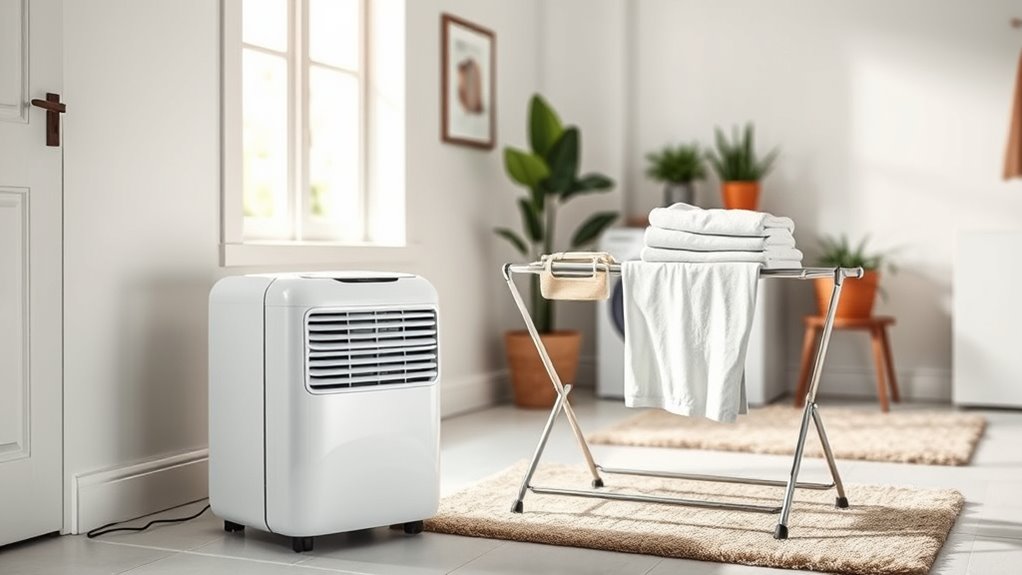

For most homes with persistent dampness, my best overall pick is the AEOCKY RHEA-001, an 80-pint model rated for spaces up to 5,500 square feet. The Waykar 80-Pint is another standout for large areas, while the ToLife 95 oz is better suited to smaller rooms where sleep mode and automatic shutoff matter. The main choice is between high-capacity compressor models for broad moisture control and compact tank models that are quieter and easier to place but need more frequent emptying. Room size, drainage options, noise, and maintenance can matter as much as the advertised coverage area. Read on for the full breakdown of all 15 options and how I’d match them to different homes.

Get the latest gadgets delivered free with Prime
- Fast, free delivery on millions of items
- Prime Video, Amazon Music and more included
- Member-only deals all year
Complete the kit


Key Takeaways
- The lineup splits into two types: 80-pint compressor models from AEOCKY, Waykar, Ludatido, and KNKA target large areas, while most 95–98 oz tank models fit smaller rooms and more localized dampness.
- AEOCKY leads for broad coverage with a stated 5,500-square-foot range; Waykar and KNKA also offer 80-pint capacity, while Ludatido is another large-space choice.
- Small-tank convenience comes with a workload: models such as ToLife, NineSky, PSOS, and OWAAE offer auto shutoff or sleep-oriented features, but their tanks need regular emptying during humid periods.
- Product names can obscure meaningful differences: the two NineSky CT2 listings and multiple OWAAE listings overlap in capacity or features, so buyers should verify the exact model and included controls before ordering.
- Coverage claims alone do not settle the choice: a large basement may call for high-capacity removal and a practical drain setup, while a bedroom may benefit more from lower noise and a manageable tank.
| OWAAE Dehumidifier for Home, 1000 Sq Ft |  | Best for Quiet Bedrooms | Brand: OWAAE | Model: TZ-C4S | Listed coverage: 1,000 sq ft | VIEW ON AMAZON | See Our Full Breakdown |
| Avylo Portable Dehumidifier with 70 oz Tank |  | Best for Adjustable Small-Room Use | Tank capacity: 70 oz (2.07 liters) | Dehumidification capacity: 1 liter per day | Listed coverage: 300 square meters | VIEW ON AMAZON | See Our Full Breakdown |
| ToLife Dehumidifier with 95 oz Tank, Sleep Mode, and Auto Shutoff |  | Best for Simple, Quiet Operation | Listed coverage: Up to 1,000 sq ft | Tank capacity: 95 oz | Technology: Semiconductor condensation | VIEW ON AMAZON | See Our Full Breakdown |
| TABYIK 35 oz Quiet Dehumidifier with Auto Shutoff |  | Best Compact Pick for Very Small Rooms | Model: DH-CS01 | Dehumidification capacity: 0.45 liters per day | Recommended floor area: 280 sq ft | VIEW ON AMAZON | See Our Full Breakdown |
| Ludatido 80-Pint Energy Star Dehumidifier for Basements and Large Rooms |  | Best for Large, Damp Areas | Model: 527BZV1R5 | Dehumidification capacity: 80 pints per day | Listed coverage: Up to 5,000 sq ft | VIEW ON AMAZON | See Our Full Breakdown |
| PSOS Quiet Dehumidifier with 98 oz Water Tank and Humidity Display |  | Best for Quiet Bedrooms | Water tank capacity: 98 oz | Coverage area: Up to 1,000 sq. ft. | Dehumidification technology: Dual semiconductor condensation | VIEW ON AMAZON | See Our Full Breakdown |
| Waykar 80-Pint Energy Star Dehumidifier for Spaces up to 5,000 Sq. Ft. |  | Best for Large Basements | Moisture removal capacity: Up to 80 pints per day at 95°F and 90% RH | Coverage area: Up to 5,000 sq. ft. | Humidity control range: 30%–80% RH | VIEW ON AMAZON | See Our Full Breakdown |
| AEOCKY RHEA-001 Dehumidifier, 80 Pints/Day, for Homes up to 5,500 Sq. Ft. |  | Best Efficiency-Focused Large-Room Pick | Model: RHEA-001 | Type: Compressor dehumidifier | Coverage area: Up to 5,500 sq. ft. | VIEW ON AMAZON | See Our Full Breakdown |
| NineSky CT2 Dehumidifier for Home, 1,000 Sq Ft, 95 oz Tank, Auto Shutoff |  | Best Portable Small-Room Pick | Model: CT2 | Coverage area: 1,000 sq. ft. | Tank capacity: 95 oz | VIEW ON AMAZON | See Our Full Breakdown |
| NineSky CT2 Dehumidifier for Home, 1,000 Sq Ft, 95 oz Tank |  | Best for Quiet, Portable Use | Model: CT2 | Coverage area: 1,000 sq. ft. | Tank capacity: 95 oz | VIEW ON AMAZON | See Our Full Breakdown |
| Niuteri Dehumidifier, 98 oz, for Home up to 1,000 sq. ft. |  | Best for Humidity Monitoring | Coverage area: 1,000 sq. ft. | Tank capacity: 98 fl oz | Listed dehumidification capacity: 40 pints per day | VIEW ON AMAZON | See Our Full Breakdown |
| OWAAE Dehumidifier with Auto Shutoff and Sleep Mode, 95 oz Tank |  | Best for Nighttime Use | Coverage area: 1,000 sq. ft. | Tank capacity: 95 fl oz | Sleep-mode noise: Under 30 dB | VIEW ON AMAZON | See Our Full Breakdown |
| OWAAE Dehumidifier with Auto Shutoff and Sleep Mode, 1000 Sq Ft |  | Best Compact Bedroom Pick | Coverage area: 1,000 sq. ft. | Tank capacity: 95 fl oz | Dehumidification capacity: 1 liter per day | VIEW ON AMAZON | See Our Full Breakdown |
| KNKA Energy Star Dehumidifier, 80 Pint per Day, for Spaces up to 5,500 Sq. Ft. |  | Best for Large, Damp Spaces | Coverage area: Up to 5,500 sq. ft. | Moisture removal: Up to 80 pints/day at 95°F and 95% RH; 56 pints/day at 86°F and 80% RH | Internal tank capacity: 1.45 gal | VIEW ON AMAZON | See Our Full Breakdown |
| BEDRED 95 oz Dehumidifier for Home, Up to 1,000 sq. ft. | 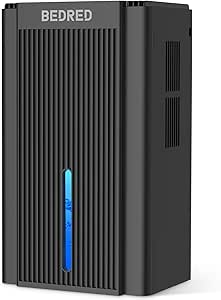 | Best for Simple Nighttime Operation | Dehumidifier type: Thermoelectric | Coverage area: Up to 1,000 sq. ft. | Tank capacity: 95 fl oz | VIEW ON AMAZON | See Our Full Breakdown |
| dehumidifier | Tank capacity | Dimensions | Coverage area | Features |
|---|---|---|---|---|
| OWAAE Dehumidifier for Home | 95 fl oz | 7.8 × 4.9 × 13.3 in | — | — |
| Avylo Portable Dehumidifier wi | 70 oz (2.07 liters) | — | — | — |
| ToLife Dehumidifier with 95 oz | 95 oz | 8.27 × 5.55 × 13.78 in | — | — |
| TABYIK 35 oz Quiet Dehumidifie | 1,000 ml | 5.9 × 5.9 × 10.1 in | — | — |
| Ludatido 80-Pint Energy Star D | 1.72 gallons | — | — | — |
| PSOS Quiet Dehumidifier with 9 | — | 9.44 × 5.9 × 14.17 inches | Up to 1,000 sq. ft. | — |
| Waykar 80-Pint Energy Star Deh | — | — | Up to 5,000 sq. ft. | — |
| AEOCKY RHEA-001 Dehumidifier | — | 14.45 × 8.66 × 24.09 inches | Up to 5,500 sq. ft. | Humidity control, power-off memory, low-temperature operation |
| NineSky CT2 Dehumidifier for H | 95 oz | 8.3 × 5.7 × 14 inches in description; 8 × 8 × 12 inches in product information | 1,000 sq. ft. | Automatic shutoff, sleep mode, seven-color LED light, built-in handle |
| NineSky CT2 Dehumidifier for H | 95 oz | 8.3 × 5.7 × 14 inches in description; 8 × 8 × 12 inches in product information | 1,000 sq. ft. | Automatic shutoff, sleep mode, seven-color ambient light, carry handle |
| Niuteri Dehumidifier | 98 fl oz | 8.27 × 5.71 × 14.17 in | 1,000 sq. ft. | Humidity display, automatic defrost, timer, washable filter, removable tank, auto shutoff, seven-color ambient light |
| OWAAE Dehumidifier with Auto S | 95 fl oz | 22 × 25 × 46 in (D × W × H) | 1,000 sq. ft. | Sleep mode, automatic shutoff, removable tank, portability, seven-color LED lighting |
| OWAAE Dehumidifier with Auto S | 95 fl oz | 7.8 × 4.9 × 13 in | 1,000 sq. ft. | Automatic shutoff, portable design, removable tank, sleep mode, seven-color LED lighting |
| KNKA Energy Star Dehumidifier | — | — | Up to 5,500 sq. ft. | Energy Star certified, auto full alert and shutoff, humidity display, washable filter, casters, child lock |
| BEDRED 95 oz Dehumidifier for | 95 fl oz | 6.7 × 8.7 × 14.6 in (D × W × H) | Up to 1,000 sq. ft. | Automatic shutoff, sleep mode, seven-color ambient lighting |
More Details on Our Top Picks
OWAAE Dehumidifier for Home, 1000 Sq Ft
The OWAAE TZ-C4S is the better fit for bedrooms and other small enclosed areas where operating noise matters more than fast moisture removal. Its sleep mode is rated under 30 dB, and the 95 fl oz tank gives it more capacity between emptying than the TABYIK’s 1,000 ml tank. Automatic shutoff helps limit spills if the reservoir fills or is not seated correctly, while the compact body and handle make it easier to move between rooms. The tradeoff is that the listing gives no extraction rate, so the 1,000-square-foot coverage claim is less useful for judging performance than the Ludatido’s stated 80-pint daily capacity. I’d choose this for supplemental moisture control, not as the main solution for a persistently damp basement.
Pros:- Sleep mode is rated under 30 dB
- 95 fl oz tank with automatic shutoff
- Compact dimensions and built-in handle support room-to-room use
- Seven-color LED lighting provides an optional ambient light
Cons:- No moisture extraction rate is provided, making capacity hard to compare
- The 95 fl oz tank can require regular emptying
- Best suited to moderate-to-high humidity rather than demanding whole-basement drying
Best for: Sleepers who want a compact dehumidifier for a bedroom, bathroom, closet, or RV and value quiet operation.
Not ideal for: People managing heavy or persistent dampness across a large area; its extraction rate is not specified, and the tank may need regular emptying.
- Brand:OWAAE
- Model:TZ-C4S
- Listed coverage:1,000 sq ft
- Tank capacity:95 fl oz
- Sleep-mode noise:Under 30 dB
- Operation:Automatic
- Dimensions:7.8 × 4.9 × 13.3 in
- Special features:Automatic shutoff; seven-color LED lighting
Our verdict“Choose the OWAAE for quiet, portable moisture control in a bedroom or other enclosed space, but look to a high-capacity unit like the Ludatido for a damp basement.”
Avylo Portable Dehumidifier with 70 oz Tank
The Avylo is the most adjustable of these compact picks: sleep, normal, and turbo modes let buyers trade quieter operation for stronger airflow, while the timer can be set for 0, 6, 12, or 24 hours. Its specified extraction rate of 1 liter per day gives a clearer performance reference than the OWAAE and ToLife, whose listings omit a daily rate. That figure still places it in supplemental-duty territory, not alongside the Ludatido’s 80-pint-per-day class. The removable 70 oz tank is smaller than the 95 oz reservoirs on those two compact alternatives, so it may need attention sooner. At 5.2 pounds, it is easy to reposition, and automatic defrost adds a useful operating safeguard; skip it if you need app control or heavy-duty moisture removal.
Pros:- Three operating modes provide a choice between quieter and stronger operation
- Specified extraction rate of 1 liter per day helps set expectations
- Timer offers 6-, 12-, and 24-hour settings
- Removable tank, automatic shutoff, and automatic defrost
Cons:- 70 oz tank is smaller than the 95 oz tanks on the OWAAE and ToLife
- 1 liter-per-day capacity is limited for severe dampness
- No Wi-Fi or app control
Best for: People who want a portable unit for a small room and value selectable modes, timed operation, and a stated extraction rate.
Not ideal for: Buyers who need high-volume basement drying, a larger reservoir, or Wi-Fi and app controls.
- Tank capacity:70 oz (2.07 liters)
- Dehumidification capacity:1 liter per day
- Listed coverage:300 square meters
- Modes:Sleep, normal, and turbo
- Timer:0, 6, 12, or 24 hours
- Sleep-mode noise:Below 38 dB
- Power:90 watts
- Weight:5.2 lb
- Warranty:2 years
Our verdict“Pick the Avylo for a small space where adjustable modes and a published extraction rate matter more than tank size or high-capacity drying.”
ToLife Dehumidifier with 95 oz Tank, Sleep Mode, and Auto Shutoff
The ToLife keeps the controls simple, with just powerful and low-speed sleep modes rather than the Avylo’s three modes and timer. That suits buyers who want a straightforward unit for a bedroom or enclosed space, especially with sleep-mode noise listed below 30 dB. Its 95 oz tank matches the OWAAE’s capacity, and auto shutoff responds both to a full tank and to incorrect placement—a practical detail when the reservoir is removed for emptying. ToLife lists semiconductor condensation technology and coverage up to 1,000 square feet, but gives no daily extraction rate; that makes its real-world workload harder to compare with the Avylo’s stated 1 liter per day. I’d treat the coverage figure as a guide, not a promise of whole-home performance.
Pros:- Sleep mode is rated below 30 dB
- 95 oz tank capacity
- Automatic shutoff detects a full or incorrectly placed tank
- Handles and compact dimensions support portability
Cons:- No moisture extraction rate is specified
- Only two modes are listed, with no timer information
- The 1,000-square-foot coverage claim is difficult to evaluate without an extraction rate
Best for: Buyers who prefer a simple two-mode unit for a bedroom or enclosed area and want a large tank for a compact dehumidifier.
Not ideal for: Shoppers who need a published daily extraction rate, scheduled operation, or dependable evidence of high-capacity performance.
- Listed coverage:Up to 1,000 sq ft
- Tank capacity:95 oz
- Technology:Semiconductor condensation
- Modes:Powerful and low-speed sleep
- Sleep-mode noise:Below 30 dB
- Ambient lighting:Seven color options
- Automatic shutoff:When tank is full or incorrectly placed
- Dimensions:8.27 × 5.55 × 13.78 in
Our verdict“Choose the ToLife for simple, quiet operation and a 95 oz tank, but favor the Avylo if a stated daily extraction rate matters more.”
TABYIK 35 oz Quiet Dehumidifier with Auto Shutoff
The TABYIK is the most clearly bounded choice here: it is rated for rooms up to 280 square feet and collects up to 0.45 liters per day under specified warm, humid conditions. That lower capacity makes it a more honest fit for a bathroom, closet, or similarly small space than the broader coverage claims attached to the OWAAE and ToLife, though those units have larger tanks. Its 28 dB operation is quiet, and the 1,000 ml reservoir shuts the unit off when nearly full. With one speed and no listed timer, it offers fewer adjustments than the Avylo; the benefit is a simple, lightweight appliance at just 2.2 pounds. I’d skip it for large rooms or serious dampness, where the Ludatido’s rated extraction capacity is in another class.
Pros:- Specified capacity of up to 0.45 liters per day under stated conditions
- Quiet 28 dB operation
- Automatic shutoff when the tank is nearly full
- Lightweight 2.2 lb body with a built-in handle
Cons:- Rated for rooms up to 280 square feet
- 0.45 liters per day is limited for substantial moisture problems
- One speed provides less flexibility than the Avylo
Best for: People seeking a lightweight, quiet dehumidifier for a bathroom, closet, or other room under 280 square feet.
Not ideal for: Owners of large rooms, damp basements, or spaces that need faster moisture removal than 0.45 liters per day.
- Model:DH-CS01
- Dehumidification capacity:0.45 liters per day
- Recommended floor area:280 sq ft
- Tank capacity:1,000 ml
- Noise level:28 dB
- Wattage:40 watts
- Dimensions:5.9 × 5.9 × 10.1 in
- Weight:2.2 lb
- Warranty:2 years
Our verdict“Choose the TABYIK for quiet, basic moisture collection in a very small room, not for broad coverage or fast drying.”
Ludatido 80-Pint Energy Star Dehumidifier for Basements and Large Rooms
The Ludatido belongs in a different category from the compact options: its stated 80-pint daily capacity and coverage up to 5,000 square feet target large rooms and basements, while the TABYIK is rated for only 280 square feet. Adjustable humidity control from 30% to 80% gives buyers a way to set a target rather than relying only on a basic on/off routine. The continuous-drainage option is especially useful for sustained operation, since its 1.72-gallon tank can need frequent emptying when drainage is not connected. It is Energy Star certified and lists sleep, fan, and dry modes, though the provided coverage data contains a conflicting 0.1-square-meter floor-area figure. I’d favor it for high moisture loads, while verifying the room and installation details before relying on the coverage claim.
Pros:- Rated to remove up to 80 pints of moisture per day
- Listed coverage reaches up to 5,000 square feet
- Continuous drainage can reduce manual tank emptying
- Adjustable 30%–80% humidity range and Energy Star certification
Cons:- The 1.72-gallon tank may need frequent emptying without continuous drainage
- Listed floor-area data conflicts with the stated 5,000-square-foot coverage
- Larger-capacity design is less suited to small-room portability than the compact picks
Best for: Homeowners managing dampness in a large basement or open-plan area who can use continuous drainage or regularly empty the tank.
Not ideal for: People seeking a small, lightweight bedroom unit or buyers who need unambiguous coverage specifications without checking the conflicting floor-area data.
- Model:527BZV1R5
- Dehumidification capacity:80 pints per day
- Listed coverage:Up to 5,000 sq ft
- Humidity range:30%–80%
- Tank capacity:1.72 gallons
- Drainage:Continuous drainage option
- Modes:Sleep, fan, and dry
- Certification:Energy Star
- Weight:13.5 kg
Our verdict“Choose the Ludatido for large, damp spaces where high extraction capacity and continuous drainage matter, but verify the conflicting coverage details first.”
PSOS Quiet Dehumidifier with 98 oz Water Tank and Humidity Display
For a bedroom or other small room where sound matters more than rapid moisture removal, I’d put the PSOS ahead of the larger compressor units in this lineup. Its sleep mode is rated below 30 dBA, and the humidity and temperature display gives a quick read on room conditions without needing a separate monitor. The 98 oz tank is larger than the NineSky CT2’s 95 oz tank, but semiconductor models like these still suit lighter moisture loads better than the Waykar 80-Pint or AEOCKY RHEA-001. Automatic shutoff helps avoid overflow, while auto defrost and a low operating-temperature limit add flexibility. The tradeoff is that tank emptying may be frequent during sustained damp weather, and its stated coverage should not be read as equivalent to a high-capacity compressor’s performance.
Pros:- Sleep mode is rated below 30 dBA
- Humidity and temperature display helps track room conditions
- 98 oz tank has automatic shutoff when full
- Compact footprint and selectable seven-color lighting
Cons:- Tank may need frequent emptying during extended use
- Semiconductor technology is a weaker fit for heavy moisture loads than the 80-pint compressor models
Best for: Light sleepers who want a compact dehumidifier with a humidity display for a bedroom, bathroom, or RV.
Not ideal for: Owners of persistently damp basements or large open areas who need high daily moisture removal or continuous drainage.
- Water tank capacity:98 oz
- Coverage area:Up to 1,000 sq. ft.
- Dehumidification technology:Dual semiconductor condensation
- Sleep-mode noise:Below 30 dBA
- Dimensions:9.44 × 5.9 × 14.17 inches
- Modes:Powerful mode and low-speed sleep mode
- Display and lighting:Humidity and temperature display; seven-color ambient light
- Safety and temperature:Automatic full-tank shutoff; auto defrost; minimum operating temperature 41°F (5°C)
Our verdict“Choose the PSOS for quiet, light-duty moisture control in a sleeping area, not for a basement that needs heavy-duty drying.”
Waykar 80-Pint Energy Star Dehumidifier for Spaces up to 5,000 Sq. Ft.
Among these five picks, the Waykar 80-Pint is the clearest choice for a large, persistently damp area: its stated removal capacity is far beyond the compact semiconductor models from PSOS and NineSky. It can target humidity from 30% to 80% RH, and the 90-degree auto-swing airflow helps distribute treated air across a room rather than concentrating it in one direction. I also value the choice between tank collection and continuous drainage; the latter matters because the 1.14-gallon tank can fill quickly when the unit is working hard. Compared with the AEOCKY RHEA-001, Waykar provides a specified tank size and drain hose, while AEOCKY states a larger coverage area and a high-efficiency certification distinction. The Waykar’s 80-pint figure applies at 95°F and 90% RH, so capacity will vary with room conditions.
Pros:- High stated capacity of up to 80 pints per day
- Supports manual tank collection or continuous drainage
- Humidity setting range extends from 30% to 80% RH
- ENERGY STAR certified, with auto defrost and overload protection
Cons:- The 1.14-gallon tank may require frequent emptying without continuous drainage
- The stated 80-pint capacity is measured in hot, very humid conditions
- Around 42 dB may be intrusive in a quiet bedroom
Best for: Homeowners managing a large basement or open area who can set up continuous drainage and want adjustable humidity control.
Not ideal for: People seeking a small, quiet bedroom unit or those unable to empty a tank regularly or position a drain hose.
- Moisture removal capacity:Up to 80 pints per day at 95°F and 90% RH
- Coverage area:Up to 5,000 sq. ft.
- Humidity control range:30%–80% RH
- Water tank capacity:4.3 L (1.14 gal)
- Noise level:Around 42 dB
- Airflow:90-degree auto swing
- Drain hose:3.3 ft
- Additional features:24-hour timer, auto defrost, overload protection
- Certifications and compliance:ENERGY STAR certified; DOE compliant; meets CSA safety requirements and CEC regulations
Our verdict“Pick the Waykar for large, wet spaces where its capacity and continuous-drain option matter more than compact size or bedroom-level quiet.”
AEOCKY RHEA-001 Dehumidifier, 80 Pints/Day, for Homes up to 5,500 Sq. Ft.
The AEOCKY RHEA-001 is the large-space option I’d compare most closely with the Waykar: both are compressor units rated for up to 80 pints per day, but AEOCKY’s standout distinction is its ENERGY STAR Most Efficient 2025 certification. Its published figures also show how conditions affect output: up to 80 pints at 95°F and 95% RH, versus 56 pints at 86°F and 80% RH. That gives buyers a more grounded sense of performance than a single headline capacity alone. Power-off memory can restore operation after an outage, and low-temperature operation adds flexibility. The compromises are practical: the provided product details omit tank capacity and drainage setup, unlike the Waykar, and its 44 dB minimum is not aimed at silent rooms. At 31 pounds, it is also less convenient to move than the compact NineSky models.
Pros:- ENERGY STAR Most Efficient 2025 certification
- Compressor design and stated capacity suit large spaces
- Provides output figures for both hotter and more moderate humid conditions
- Power-off memory supports restart after a power interruption
Cons:- Product details provided do not state water tank capacity or drainage setup
- 44 dB minimum noise level may be noticeable in quiet living spaces
- At 31 pounds, it is less portable than the NineSky CT2
Best for: Owners of large homes who prioritize the stated efficiency certification and want compressor-based moisture removal with power-outage memory.
Not ideal for: Buyers who need a confirmed tank size or drainage arrangement before purchase, or who want a lightweight unit for frequent room-to-room moves.
- Model:RHEA-001
- Type:Compressor dehumidifier
- Coverage area:Up to 5,500 sq. ft.
- Moisture removal:Up to 80 pints/day at 95°F and 95% RH; 56 pints/day at 86°F and 80% RH
- Certification:ENERGY STAR Most Efficient 2025
- Minimum noise level:44 dB
- Dimensions:14.45 × 8.66 × 24.09 inches
- Weight:31 lbs
- Features:Humidity control, power-off memory, low-temperature operation
Our verdict“Choose the AEOCKY if efficiency credentials and large-area compressor performance lead your priorities, but verify tank and drainage details first.”
NineSky CT2 Dehumidifier for Home, 1,000 Sq Ft, 95 oz Tank, Auto Shutoff
The NineSky CT2 makes the most sense when portability and a clear daily moisture-removal figure matter more than large-room drying speed. Its listed capacity is up to 34 oz per day at 86°F and 80% RH, giving buyers a useful reference point that the PSOS description does not provide. A built-in handle makes it easier to move between a bathroom and bedroom, and the 95 oz tank shuts the unit off when full or incorrectly installed. Against the nearly identical grey NineSky CT2 in this roundup, this version lists a black finish and does not provide a noise figure, while the other listing specifies operation at 40 dB or less. The seven-color light adds ambiance, though that is secondary to moisture control. One caution: its dimensions conflict between the description and product information, so fitting it into a tight spot may require confirmation.
Pros:- Stated removal rate of up to 34 oz per day under specified conditions
- 95 oz tank with automatic shutoff if full or incorrectly installed
- Built-in handle supports room-to-room carrying
- Sleep mode and seven adjustable ambient light colors
Cons:- Listed dimensions differ between the description and product information
- 34 oz daily removal figure is based on specific test conditions
- No noise-level specification is provided
Best for: People who want to carry a compact dehumidifier between small rooms and prefer a stated moisture-removal rate and full-tank shutoff.
Not ideal for: Buyers drying a large basement, anyone needing a published noise level, or shoppers who need exact dimensions for a close-fitting shelf.
- Model:CT2
- Coverage area:1,000 sq. ft.
- Tank capacity:95 oz
- Moisture removal:Up to 34 oz per day at 86°F and 80% RH
- Technology:Semiconductor cooling
- Dimensions:8.3 × 5.7 × 14 inches in description; 8 × 8 × 12 inches in product information
- Features:Automatic shutoff, sleep mode, seven-color LED light, built-in handle
- Color:Black
Our verdict“Choose this NineSky CT2 for movable, light-duty moisture control in small rooms, and confirm its dimensions if space is tight.”
NineSky CT2 Dehumidifier for Home, 1,000 Sq Ft, 95 oz Tank
This grey NineSky CT2 earns a distinct place beside the black CT2 listing because its stated noise limit of 40 dB makes it the stronger of the two NineSky options for a quiet room. Both share semiconductor cooling, a 95 oz tank, up to 34 oz of daily removal under stated conditions, and a carry handle; neither should be mistaken for a substitute for the Waykar or AEOCKY when a large basement needs serious drying. Automatic shutoff and sleep mode suit overnight or unattended use, while the seven-color light is an extra rather than a core dehumidifying benefit. I’d choose this version over the PSOS if portability is the priority, but the PSOS’s below-30-dBA sleep mode has a lower stated noise figure. As with the other CT2 listing, the conflicting dimensions make tight placement harder to plan.
Pros:- Noise level is specified at 40 dB or less
- 95 oz tank has automatic shutoff
- Carry handle makes it portable between rooms
- Sleep mode and seven-color ambient lighting are included
Cons:- Daily removal rate is based on testing at 86°F and 80% RH
- Listed dimensions differ between the description and product information
- No continuous-drain option is specified
Best for: Apartment dwellers or RV owners who want a portable small-room unit with a stated noise limit and automatic tank shutoff.
Not ideal for: People who need fast moisture removal in a large or very damp area, or buyers who need reliable dimensions for a tight installation.
- Model:CT2
- Coverage area:1,000 sq. ft.
- Tank capacity:95 oz
- Moisture removal:Up to 34 oz per day at 86°F and 80% RH
- Noise level:40 dB or less
- Technology:Semiconductor cooling
- Dimensions:8.3 × 5.7 × 14 inches in description; 8 × 8 × 12 inches in product information
- Features:Automatic shutoff, sleep mode, seven-color ambient light, carry handle
- Color and operation:Grey; intermittent automatic operation
Our verdict“Pick this CT2 for portable, modest moisture control where a stated 40 dB noise limit matters more than high-capacity drying.”
Niuteri Dehumidifier, 98 oz, for Home up to 1,000 sq. ft.
The Niuteri is the most information-focused of these compact options: its humidity display lets me check room conditions instead of relying only on a full tank as a cue. Its 98-ounce reservoir is slightly larger than the OWAAE TZ-C4S’s 95-ounce tank, though either may need regular emptying in damp conditions. At 30 dB, it is suited to rooms where quieter operation matters, and automatic defrost adds a useful safeguard in cooler enclosed spaces. The listed 40-pint daily capacity should be read cautiously alongside its semiconductor design; it is best treated as a small-room moisture manager, not a substitute for the KNKA 80-pint compressor-style unit in a wet basement. Its compact footprint and handle help with placement, but coverage claims do not change that capacity limitation.
Pros:- Humidity display makes room conditions easier to monitor
- 98-ounce removable tank with full-tank and incorrect-installation shutoff
- 30 dB operation suits quieter rooms
- Automatic defrost and built-in handle support flexible placement
Cons:- Semiconductor design is better suited to enclosed spaces with moderate-to-high humidity than heavy-duty dampness
- Tank may need frequent emptying when moisture levels are high
Best for: People managing moderate moisture in a bedroom, closet, or small enclosed room who want a humidity readout and easy portability.
Not ideal for: Owners of persistently damp basements or large open-plan spaces who need high-volume moisture removal or less frequent tank emptying.
- Coverage area:1,000 sq. ft.
- Tank capacity:98 fl oz
- Listed dehumidification capacity:40 pints per day
- Noise level:30 dB
- Power:60 W, 110 V
- Dimensions:8.27 × 5.71 × 14.17 in
- Weight:2.4 kg
- Features:Humidity display, automatic defrost, timer, washable filter, removable tank, auto shutoff, seven-color ambient light
Our verdict“Choose the Niuteri for a compact room where quiet operation and a humidity display matter more than basement-scale moisture removal.”
OWAAE Dehumidifier with Auto Shutoff and Sleep Mode, 95 oz Tank
This OWAAE is the sleep-oriented pick in this group, with a sleep mode under 30 dB and a 95-ounce removable tank. That makes it a better fit for a bedroom than the larger KNKA 80-pint dehumidifier, which is built to handle much more moisture but operates at 40–45 dB. The OWAAE also shuts off if its tank fills or is positioned incorrectly, reducing the chance of overflow during overnight use. Its seven-color lighting is an optional atmosphere feature, not a dehumidification advantage, and may not suit people who want a fully dark room unless the light can be managed. The listed dimensions are unusually large for a portable unit, so I would check the intended placement carefully rather than assume it will fit on a tight shelf or beside a bed.
Pros:- Sleep mode operates below 30 dB
- Automatic shutoff responds to a full or incorrectly positioned tank
- Removable tank and portable handle simplify moving and emptying
- Two-year warranty is specified
Cons:- Listed dimensions of 22 × 25 × 46 inches could make placement difficult
- Best suited to moderate-to-high humidity rather than demanding whole-basement use
Best for: Bedroom and RV owners who want a quiet, portable unit with automatic shutoff for overnight use in a moderately humid enclosed space.
Not ideal for: Buyers with limited floor or shelf space, or anyone dealing with heavy moisture that calls for a high-capacity unit with continuous drainage.
- Coverage area:1,000 sq. ft.
- Tank capacity:95 fl oz
- Sleep-mode noise:Under 30 dB
- Dimensions:22 × 25 × 46 in (D × W × H)
- Color:Black
- Material:Plastic
- Features:Sleep mode, automatic shutoff, removable tank, portability, seven-color LED lighting
- Warranty:2 years
Our verdict“Pick this OWAAE for quieter overnight moisture management if its listed size fits your room and your humidity problem is modest.”
OWAAE Dehumidifier with Auto Shutoff and Sleep Mode, 1000 Sq Ft
Among the small-room models here, this OWAAE has the clearest space-saving case: its listed 7.8 × 4.9 × 13-inch footprint is far more practical than the dimensions given for the other 95-ounce OWAAE listing. It pairs that compact body with sleep mode below 30 dB and automatic shutoff, so it can sit in a bedroom or closet without demanding much room or constant supervision. Its stated removal rate is 1 liter per day, a modest output compared with the KNKA’s 80-pint daily capacity; the 1,000-square-foot coverage figure should not be mistaken for equivalent performance in a damp, open basement. The 95-ounce tank reduces how often it needs emptying relative to smaller reservoirs, but it does not remove the basic limit of a low-output compact unit.
Pros:- Compact listed dimensions suit tight rooms and RVs
- Sleep mode runs below 30 dB
- 95-ounce removable tank with automatic shutoff
- Portable design and seven-color lighting
Cons:- Stated moisture removal is limited to 1 liter per day
- 220 V power may not match every household electrical system
Best for: Apartment dwellers and RV owners who need a small, quiet unit for a bedroom, closet, or bathroom with moderate moisture.
Not ideal for: People facing persistent basement dampness or needing rapid moisture removal, since its stated capacity is only 1 liter per day.
- Coverage area:1,000 sq. ft.
- Tank capacity:95 fl oz
- Dehumidification capacity:1 liter per day
- Power:85 W, 220 V
- Sleep-mode noise:Under 30 dB
- Dimensions:7.8 × 4.9 × 13 in
- Weight:2.4 kg
- Features:Automatic shutoff, portable design, removable tank, sleep mode, seven-color LED lighting
Our verdict“Choose this OWAAE when compact placement and quiet operation matter more than high daily moisture-removal capacity.”
KNKA Energy Star Dehumidifier, 80 Pint per Day, for Spaces up to 5,500 Sq. Ft.
The KNKA belongs in a different category from the compact tank-based units: it is rated for up to 80 pints per day in hot, very humid conditions and covers spaces up to 5,500 square feet. That makes it the practical choice here for a basement, laundry area, or large room where the Niuteri and OWAAE models would be better suited to localized moisture. Energy Star certification, adjustable humidity settings, and three modes give me more control over ongoing operation, while the included hose supports continuous drainage instead of repeated tank trips. Its built-in tank holds 1.45 gallons, but the larger optional tank costs extra and the 40–45 dB operating range is more noticeable than the compact models’ sleep-mode claims. It also needs to remain upright for 24 hours before first use.
Pros:- High rated removal capacity for large or very humid spaces
- Energy Star certified
- Includes a drain hose for continuous drainage
- Adjustable humidity range, three modes, casters, and washable filter
Cons:- Optional 2.64-gallon external tank is sold separately
- 40–45 dB operation is louder than the compact sleep-mode models
- Must stand upright for 24 hours before first use
Best for: Homeowners managing a damp basement, laundry room, or large area who want high removal capacity and a continuous-drain option.
Not ideal for: Bedroom users seeking near-silent operation, or buyers who need a lightweight compact unit and do not have room for a larger appliance.
- Coverage area:Up to 5,500 sq. ft.
- Moisture removal:Up to 80 pints/day at 95°F and 95% RH; 56 pints/day at 86°F and 80% RH
- Internal tank capacity:1.45 gal
- Drain hose:6.56 ft (2 m), included
- Noise level:40–45 dB
- Humidity setting range:30%–80% RH
- Operating modes:Auto, Dry, Setting
- Features:Energy Star certified, auto full alert and shutoff, humidity display, washable filter, casters, child lock
Our verdict“Choose the KNKA for substantial basement or whole-area moisture, not for a small bedroom where its capacity and operating sound are unnecessary.”
BEDRED 95 oz Dehumidifier for Home, Up to 1,000 sq. ft.
The BEDRED keeps its appeal straightforward: a 95-ounce tank, full-tank shutoff, and a sleep mode that turns off the lights and reduces noise. That light-off detail makes it a more suitable bedroom option than models that emphasize seven-color lighting, including the Niuteri. Its thermoelectric design and compact residential positioning put it closer to the small OWAAE units than to the KNKA 80-pint machine, so I would reserve it for localized moisture rather than a persistently damp basement. The main buying concern is electrical compatibility: the listed 220 V voltage may not suit common household systems, and the description notes intermittent operation. Those limitations matter more than its broad coverage claim if you need dependable, continuous moisture removal.
Pros:- Sleep mode turns off lights and reduces noise
- Automatic shutoff when the 95-ounce tank is full
- Compact thermoelectric design for residential rooms
- Seven-color lighting is available when desired
Cons:- Listed 220 V supply may not suit all household power systems
- Intermittent operation may not fit buyers seeking continuous moisture control
Best for: Buyers seeking a compact bedroom or bathroom unit whose sleep mode reduces noise and switches off ambient lighting.
Not ideal for: People who need continuous high-capacity drying, or households without compatible 220 V power.
- Dehumidifier type:Thermoelectric
- Coverage area:Up to 1,000 sq. ft.
- Tank capacity:95 fl oz
- Power:85 W, 220 V
- Dimensions:6.7 × 8.7 × 14.6 in (D × W × H)
- Material:Polypropylene (PP)
- Model:CT11
- Features:Automatic shutoff, sleep mode, seven-color ambient lighting
Our verdict“Pick the BEDRED for a small room where lights-off sleep operation is useful, provided its voltage matches your electrical supply.”

How We Picked
I compared the 15 options by the factors that change everyday dehumidifier ownership: stated moisture-removal capacity, advertised coverage, tank size, automatic shutoff, sleep or quiet features, humidity displays, and the likely effort involved in emptying and placement. I also separated large-area 80-pint models from compact tank designs rather than treating their coverage claims as interchangeable. A larger stated coverage area can be useful for open or persistently damp spaces, but it does not replace matching the unit to room conditions and choosing a drainage plan.
The ranking favors models with a clearer fit for a common buyer need and a useful balance of capacity, usability, and maintenance. The AEOCKY ranks first for its stated 80-pint capacity and 5,500-square-foot coverage; the Waykar, KNKA, and Ludatido follow as large-space alternatives. Compact models rank higher when their features suit bedrooms or smaller rooms, but their limited tank capacity and more frequent emptying keep them below the high-capacity picks for whole-area moisture control. Where product listings overlap, I treat them as separate choices only when the supplied names identify a feature distinction and recommend checking the exact listing.
Factors to Consider When Choosing Dehumidifier
Before choosing a dehumidifier, I’d start with the moisture problem and the routine you can maintain, not the largest coverage number. These broader factors help narrow the field beyond the differences between individual models.
Match Capacity to the Moisture Problem
Think about both room size and how damp the space gets. A lightly humid bedroom and a basement with persistent dampness can need different levels of moisture removal, even if their floor areas are similar. The 80-pint models in this roundup are aimed at large spaces, while the smaller tank units are more suited to localized use. Coverage figures are best treated as a starting point, not a promise that a unit will control every connected room. A closed door, poor airflow, or continuing water intrusion can limit results. If moisture is coming from a leak or drainage issue, fix that source rather than expecting a dehumidifier to solve it alone.
Plan for Tank Emptying or Continuous Drainage
Tank capacity affects how often you have to interrupt operation, especially when humidity is high. A compact unit with a tank around 95 ounces can be convenient to place, but it may need frequent attention compared with a high-capacity model. Auto shutoff helps prevent overflow when a tank fills, yet it also means moisture removal stops until someone empties it. For a basement or other space that needs long, unattended operation, check whether the product supports continuous drainage and whether a suitable drain is nearby. Do not assume that a large removal rating means the unit can run without regular maintenance. Pick the drainage setup that fits how often you can check the appliance.
Treat Quiet Operation as a Room-Specific Priority
Noise matters more in a bedroom, nursery, or home office than in a utility room. Sleep mode or a quiet-oriented design may help make a compact dehumidifier easier to live with, but those features do not automatically make it silent. Larger-capacity units can be a better match for basements while still feeling intrusive beside a bed. Consider when the appliance will run and whether a closed door separates it from quiet areas. If you need strong moisture control overnight, weigh the benefit of continuous operation against the sound you are willing to accept. For a shared living space, placement may be as useful as choosing a model with a sleep setting.
Compare Controls That Prevent Extra Work
Automatic shutoff, a humidity display, and sleep mode solve different problems, so choose based on your routine. Auto shutoff reduces the risk of an overflowing tank but requires you to restart the unit after emptying. A humidity display gives you a reference point for monitoring room conditions; it does not prove that the sensor measures every part of a large home. Sleep mode can reduce disruption but may alter how the appliance operates. Before buying, check that the control layout is understandable and that the listed feature belongs to the exact version you are considering. This matters in this roundup because some product names repeat with small wording differences.
Account for Placement and Airflow
A dehumidifier needs a practical location with room for air circulation, a stable surface, and access to its tank or drain. A unit advertised for a large area may still struggle to serve separated rooms if doors remain closed or airflow is blocked. Measure the space where you plan to put it, including clearance around the appliance and the route for carrying a full tank. In a basement, check that the floor is level and that a drain hose, if supported, can reach an appropriate outlet without kinks. For a small bedroom, footprint and access to the tank may matter more than a broad coverage claim. The easiest unit to place correctly is often more useful than one with specifications that exceed the room’s needs.
Know When a Higher-Capacity Model Is Worth It
Paying for a large-capacity unit makes the most sense when a wide area or persistent dampness would keep a small appliance running and needing attention. The 80-pint options here are designed for larger spaces, but their capacity is not automatically an advantage in a small bedroom. A compact tank model can be a better fit when the moisture issue is limited and easy tank access is part of the plan. Compare the burden of frequent emptying with the space, sound, and operating needs of a larger appliance. Also look for clear information about drainage, controls, and the exact model rather than choosing on capacity alone. The right upgrade is the one that reduces the work your particular space demands.
Frequently Asked Questions
Should I choose an 80-pint model or a small-tank dehumidifier?
I would choose an 80-pint model when moisture affects a large area or needs sustained removal, and a small-tank unit when the problem is limited to one room. The larger options in this roundup are intended for broad coverage, while models with tanks around 95–98 ounces are easier to place but require more frequent emptying. A large capacity rating does not make a unit the right fit for every room. Think about the dampness level, room layout, and whether you can drain the appliance continuously. If the source is a leak or water intrusion, address that before relying on either type.
Are the advertised square-foot coverage figures enough to pick a model?
No; I’d use coverage as a rough guide and compare it with how damp the space is and how it connects to nearby rooms. Open layouts may let one unit serve a wider area, while closed doors and blocked airflow can limit its reach. A basement with persistent dampness may need more capacity than a dry room of the same size. Consider placement and drainage alongside the stated coverage. If the manufacturer’s listing does not explain the conditions behind its figure, avoid treating that number as a guarantee.
Will auto shutoff let me leave a tank-style dehumidifier running unattended?
Auto shutoff is a helpful safeguard when the tank fills, but it does not keep moisture removal going after that point. The appliance stops until someone empties the tank and restarts it, so the interruption may happen often in a damp space. A smaller tank can fill faster than a high-capacity unit’s specifications might lead you to expect. For longer unattended operation, check the exact model for continuous-drain support and confirm that you have a suitable drain location. Do not treat auto shutoff as a replacement for a drainage plan.
Which features matter most for a dehumidifier in a bedroom?
For a bedroom, I’d prioritize manageable noise, a practical footprint, and controls that make nighttime use straightforward. Sleep mode can be useful, but the feature name alone does not tell you how quiet a unit will be or whether its operation changes. A large-capacity model may remove more moisture but could be a less comfortable bedside choice. Tank access also matters if the appliance stops when full and needs attention. Check the exact product listing for operating details, then place the unit where airflow is not blocked and the sound is less intrusive.
How can I tell which version to buy when product names overlap?
Compare the full model name, tank size, stated coverage, and control features on the specific listing rather than relying on the brand name alone. This roundup includes repeated NineSky CT2 and OWAAE names with overlapping descriptions, so small differences in the title may not explain every distinction. Confirm whether auto shutoff, sleep mode, a humidity display, or a drainage option is listed for the exact version you plan to order. Check the included instructions and dimensions as well, since those details affect daily use. If two listings appear identical, choose based on the clearer specifications and return terms rather than assuming one has an unlisted advantage.
Conclusion
My best overall pick is the AEOCKY RHEA-001 for buyers who need 80-pint capacity and broad stated coverage. For a best value-style fit among the listed choices, I’d look first at the Waykar or Ludatido if the need is large-area moisture control, then compare their exact drainage and control details. The best premium direction is the high-capacity group, led by AEOCKY and joined by KNKA, for buyers prioritizing wide coverage over a compact footprint. For beginners managing one smaller room, a tank model with auto shutoff and clear controls—such as ToLife or NineSky CT2—is easier to approach, provided frequent emptying is acceptable. For bedrooms or quiet-focused spaces, compare sleep-oriented options such as ToLife, TABYIK, and OWAAE; for a damp basement, favor an 80-pint unit and verify the drainage setup before choosing.