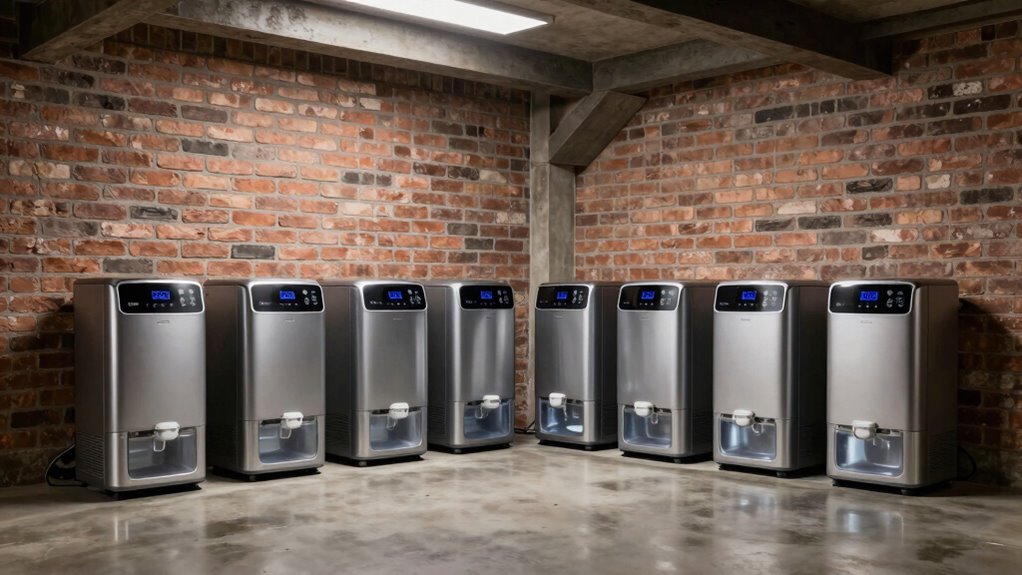

For a 70-pint dehumidifier for a basement, I’d start with the AEOCKY 5000 Sq Ft Energy Star Version 6.0 as the best overall candidate for its stated efficiency focus and large-space positioning. The AIRPLUS 70 Pint stands out for buyers who want a drain hose and coverage aimed at 4,500 square feet, while the KNKA 80-Pint suits those comparing higher stated capacity and broader coverage. The main tradeoffs are capacity claims versus real basement conditions, continuous drainage versus tank emptying, and energy use versus noise and upfront cost. A basement’s temperature, moisture load, and layout can matter as much as the advertised square footage. Read on for the full comparison and guidance on matching a unit to your space.

Get the latest gadgets delivered free with Prime
- Fast, free delivery on millions of items
- Prime Video, Amazon Music and more included
- Member-only deals all year
Complete the kit


Key Takeaways
The AEOCKY 5000 Sq Ft Energy Star Version 6.0 leads the lineup as the clearest overall fit for shoppers prioritizing a large basement, stated coverage, and an efficiency-focused model.
Several 80-pint options advertise coverage up to 5,500 square feet, including KNKA and AEOCKY RHEA-001, but nominal coverage alone does not establish which will perform best in a cool, divided, or unusually damp basement.
Drainage separates convenience-focused choices from hands-on ones: AIRPLUS 70 Pint, the 80-Pint model with a drain hose, and other hose-equipped picks can reduce tank-emptying chores when a floor drain is accessible.
There are distinct capacity and noise tradeoffs. The 45–80 Pint model advertises 40 dB operation, while a separate 80-Pint listing specifies 42 dB; buyers should weigh those claims against capacity, drainage, and the conditions under which performance is measured.
Model naming can obscure meaningful differences. AIRPLUS Max appears in both a standard and a quiet version, and Waykar has two similarly named 80-pint listings, so shoppers should compare exact specifications and included features before choosing.
| AEOCKY 5000 Sq Ft Energy Star Version 6.0 Dehumidifier for Basement |  | Best for Quiet, Efficient Basements | Coverage area: Up to 5,000 sq ft | Certification: ENERGY STAR Version 6.0 | Minimum noise level: 44 dB | VIEW ON AMAZON | See Our Full Breakdown |
| AIRPLUS 70 Pint Dehumidifier with Drain Hose for Basement, 4500 Sq. Ft. Coverage |  | Best for Buyers Who Want a Stated 70-Pint Capacity | Dehumidification capacity: 70 pints/day | Coverage area: Up to 4,500 sq ft | Tank volume: 0.7 gallons | VIEW ON AMAZON | See Our Full Breakdown |
| KNKA Energy Star Dehumidifier, 80-Pint per Day, for Spaces up to 5,500 Sq. Ft. |  | Best for Very Damp, Large Basements | Certification: ENERGY STAR | Coverage area: Up to 5,500 sq ft | Capacity at 95°F and 95% RH: Up to 80 pints/day | VIEW ON AMAZON | See Our Full Breakdown |
| AIRPLUS Max 70-Pint Dehumidifier for Rooms up to 4,500 Sq. Ft. |  | Best Value in Portability and Simple Controls | Dehumidification capacity: 70 pints/day under specified test conditions | Coverage area: Up to 4,500 sq ft | Tank volume: 0.7 gallons | VIEW ON AMAZON | See Our Full Breakdown |
| AEOCKY RHEA-001 Dehumidifier, 80-Pint, for Homes up to 5,500 Sq. Ft. |  | Best Energy-Efficient Upgrade | Model: RHEA-001 | Type: Compressor dehumidifier | Coverage area: Up to 5,500 sq ft | VIEW ON AMAZON | See Our Full Breakdown |
| 45-80 Pint Dehumidifier – 4,500 sq ft Coverage, Adjustable 90° Airflow, Quiet 40 dB Operation, Energy Star Certified |  | Best for Quiet Airflow Direction | Moisture removal: 45–80 pints per day | Coverage: Up to 4,500 sq ft | Tank volume: 1.72 gallons | VIEW ON AMAZON | See Our Full Breakdown |
| 80-Pint Dehumidifier with Drain Hose, 5,500 sq ft Coverage, 5L Tank, ENERGY STAR, 42 dB |  | Best for Clear, Simple Controls | Moisture removal: 80 pints per day | Coverage: Up to 5,500 sq ft | Tank capacity: 5 liters (1.32 gallons) | VIEW ON AMAZON | See Our Full Breakdown |
| Kesnos 80-Pint Energy Star Dehumidifier with Drain Hose |  | Best for the Largest Listed Coverage | Moisture removal: Up to 80 pints per day | Coverage: Up to 6,000 sq ft | Humidity range: 30%–80% RH | VIEW ON AMAZON | See Our Full Breakdown |
| Manastin 80-Pint Dehumidifier for Up to 5,500 Sq. Ft. with Drain Hose |  | Best for Stated Capacity Conditions | Moisture removal: 80 pints/day at 95°F and 95% RH; 50 pints/day at 86°F and 80% RH | Coverage: Up to 5,500 sq ft | Tank capacity: 1.6 gallons | VIEW ON AMAZON | See Our Full Breakdown |
| Ludatido 80-Pint Energy Star Dehumidifier for Home |  | Best for Quiet Basement Use | Moisture removal: Up to 80 pints per day at 95°F and 90% RH | Coverage: Up to 5,000 sq ft | Humidity range: 30%–80% | VIEW ON AMAZON | See Our Full Breakdown |
| AIRPLUS Max 70 Pint Quiet Dehumidifier for Home Basement up to 4500 Sq Ft |  | Best Quiet 70-Pint Pick | Moisture removal: Up to 70 pints per day | Coverage area: Up to 4,500 sq. ft. | Noise level: Under 48 dB | VIEW ON AMAZON | See Our Full Breakdown |
| Waykar 80-Pint Energy Star Dehumidifier for Homes up to 5,000 Sq. Ft. |  | Best for High-Moisture Basements | Moisture removal: Up to 80 pints per day in high-humidity conditions | Coverage area: Up to 5,000 sq. ft. | Humidity range: 30%–80% | VIEW ON AMAZON | See Our Full Breakdown |
| 4500 Sq Ft Dehumidifier for Basement, Max 80 Pint with Drain Hose, White |  | Best for Quiet Sleep-Mode Operation | Moisture removal: Up to 80 pints per day | Coverage area: Up to 4,500 sq. ft. | Tank volume: 5.5 L | VIEW ON AMAZON | See Our Full Breakdown |
| Waykar 80 Pints Energy Star Dehumidifier for Basement (5000 Sq. Ft) |  | Best Energy-Certified Pick | Moisture removal: 80 pints per day | Coverage area: Up to 5,000 sq. ft. | Noise level: 42 dB | VIEW ON AMAZON | See Our Full Breakdown |
| 80-Pint Dehumidifier for Large Spaces |  | Best for Less Frequent Tank Emptying | Moisture removal: 80 pints per day | Advertised coverage: Up to 5,000 sq. ft.; listing also states 0.1 square meters | Water tank: 1.72 gal (6.5 L) | VIEW ON AMAZON | See Our Full Breakdown |
| dehumidifier for basement 70 pint | Moisture removal | Coverage area | Noise level |
|---|---|---|---|
| AEOCKY 5000 Sq Ft Energy Star | — | Up to 5,000 sq ft | — |
| AIRPLUS 70 Pint Dehumidifier w | — | Up to 4,500 sq ft | — |
| KNKA Energy Star Dehumidifier | — | Up to 5,500 sq ft | 40–45 dB |
| AIRPLUS Max 70-Pint Dehumidifi | — | Up to 4,500 sq ft | — |
| AEOCKY RHEA-001 Dehumidifier | — | Up to 5,500 sq ft | — |
| 45-80 Pint Dehumidifier | 45–80 pints per day | — | 40 dB |
| 80-Pint Dehumidifier with Drai | 80 pints per day | — | 42 dB |
| Kesnos 80-Pint Energy Star Deh | Up to 80 pints per day | — | — |
| Manastin 80-Pint Dehumidifier | 80 pints/day at 95°F and 95% RH; 50 pints/day at 86°F and 80% RH | — | 40 dB |
| Ludatido 80-Pint Energy Star D | Up to 80 pints per day at 95°F and 90% RH | — | 35 dB |
| AIRPLUS Max 70 Pint Quiet Dehu | Up to 70 pints per day | Up to 4,500 sq. ft. | Under 48 dB |
| Waykar 80-Pint Energy Star Deh | Up to 80 pints per day in high-humidity conditions | Up to 5,000 sq. ft. | — |
| 4500 Sq Ft Dehumidifier for Ba | Up to 80 pints per day | Up to 4,500 sq. ft. | — |
| Waykar 80 Pints Energy Star De | 80 pints per day | Up to 5,000 sq. ft. | 42 dB |
| 80-Pint Dehumidifier for Large | 80 pints per day | — | Minimum 42 dB |
More Details on Our Top Picks
AEOCKY 5000 Sq Ft Energy Star Version 6.0 Dehumidifier for Basement
For a large basement where the dehumidifier may run near living areas, I’d put the AEOCKY LEO-Lite ahead of the AIRPLUS 70 Pint on efficiency and noise: its stated 44 dB minimum and ENERGY STAR Version 6.0 certification speak to quieter, more energy-conscious operation. Its 5,000-square-foot coverage also gives it room to serve a broad basement footprint, though coverage alone does not establish how quickly it will dry a space under your actual conditions. The auto-defrost system is useful in cooler basements, where frost can interrupt compressor operation. The tradeoff is that the supplied specifications do not state a pint-per-day capacity, tank size, or drainage setup, details I’d want before choosing a model specifically by its 70-pint rating. I’d favor this over the AIRPLUS Max when low noise and efficiency rank ahead of a clearly stated capacity.
Pros:- ENERGY STAR Version 6.0 certification points to an efficiency-focused design.
- 44 dB minimum noise rating suits basements near bedrooms or family spaces.
- Auto-defrost is designed for operation in cooler basement conditions.
- Rated for spaces up to 5,000 square feet.
Cons:- The supplied product data does not state its pint-per-day capacity.
- Tank capacity and drainage options are not specified, making cleanup planning harder.
Best for: Owners of large, cooler basements who value low operating noise and ENERGY STAR Version 6.0 certification.
Not ideal for: Buyers who need a confirmed 70-pint daily capacity or want tank and drainage details before choosing; those specifications are not provided here.
- Coverage area:Up to 5,000 sq ft
- Certification:ENERGY STAR Version 6.0
- Minimum noise level:44 dB
- Compressor type:High-Efficiency Rotor Compressor Pro+
- Heat-exchange tubes:7 mm pure copper
- Auto-defrost:Yes
Our verdict“Choose the AEOCKY LEO-Lite if quiet, efficient operation in a large or cool basement matters more to you than a confirmed 70-pint rating.”
AIRPLUS 70 Pint Dehumidifier with Drain Hose for Basement, 4500 Sq. Ft. Coverage
The AIRPLUS 70 Pint is the clearest fit here for someone shopping by the roundup’s capacity target: it states 70 pints per day and covers up to 4,500 square feet. That makes its capacity claim easier to compare with the AIRPLUS Max, which lists the same daily removal figure but supplies more specific dimensions and weight. This model adds four smart modes, including sleep and drying, plus a drain hose for continuous drainage—useful if you’d rather not empty a tank during humid stretches. Its 0.7-gallon tank is small relative to the stated daily capacity, so the hose matters if it runs heavily. At 28 pounds, it is also heavier than the AIRPLUS Max. I’d choose this version for its extra mode flexibility, but skip it if a large reservoir or lighter unit is a priority.
Pros:- States a 70-pint-per-day moisture-removal capacity.
- Rated for spaces up to 4,500 square feet.
- Includes a drain hose and auto shut-off for full-tank protection.
- Four smart modes include sleep and drying options.
Cons:- The 0.7-gallon tank can require frequent emptying without continuous drainage.
- At 28 pounds, it is heavier than the AIRPLUS Max model in this group.
- Plastic construction may feel less robust than heavier-duty alternatives.
Best for: Basement owners seeking a stated 70-pint daily capacity, continuous drainage, and multiple modes for drying and sleep operation.
Not ideal for: People who need a larger built-in water tank, frequently move the unit, or prefer a more substantial construction than plastic.
- Dehumidification capacity:70 pints/day
- Coverage area:Up to 4,500 sq ft
- Tank volume:0.7 gallons
- Wattage:300 watts
- Dimensions:8.7 × 12.6 × 22.2 in
- Weight:28 lb
- Modes:4 smart modes
- Drainage:Continuous drainage hose included
Our verdict“Pick this AIRPLUS if you want a clearly stated 70-pint capacity and flexible modes, and plan to use its hose instead of relying on the small tank.”
KNKA Energy Star Dehumidifier, 80-Pint per Day, for Spaces up to 5,500 Sq. Ft.
If a large basement has a serious moisture load, the KNKA 80-Pint offers more stated capacity than either 70-pint AIRPLUS model. Its rating is condition-dependent: up to 80 pints per day at 95°F and 95% RH, but 56 pints at 86°F and 80% RH. That second figure gives a more useful comparison point for buyers who may not see extreme test conditions. The 5,500-square-foot coverage and ENERGY STAR certification add appeal for broad areas, while its 1.45-gallon tank is larger than the AIRPLUS units’ 0.7-gallon tanks. Continuous drainage remains the better choice for sustained operation. At 40–45 dB, it is also quiet-rated, though the AEOCKY LEO-Lite lists a 44 dB minimum. I’d choose KNKA for capacity and controls, not simply for the biggest headline number.
Pros:- Rated up to 80 pints/day in very hot, humid conditions, with a second capacity figure provided.
- ENERGY STAR certification and coverage up to 5,500 square feet.
- 1.45-gallon internal tank plus continuous-drain hose support flexible water removal.
- Quiet-rated operation, washable filter, casters, and humidity display.
Cons:- The 80-pint figure applies to 95°F and 95% RH; stated capacity falls to 56 pints at 86°F and 80% RH.
- The optional 2.64-gallon external tank is sold separately.
- Requires 24 hours upright before first use.
Best for: Owners of large, persistently damp basements who want an ENERGY STAR model, continuous drainage, and capacity figures stated at two humidity conditions.
Not ideal for: Buyers seeking a simple, compact 70-pint unit or those unwilling to buy the optional external tank separately.
- Certification:ENERGY STAR
- Coverage area:Up to 5,500 sq ft
- Capacity at 95°F and 95% RH:Up to 80 pints/day
- Capacity at 86°F and 80% RH:56 pints/day
- Internal tank capacity:1.45 gallons
- Drain hose length:6.56 ft
- Noise level:40–45 dB
- Humidity setting range:30%–80% RH
- Operating modes:Auto, Dry, Setting
Our verdict“Choose the KNKA for a large, wet basement where higher peak capacity, clear operating-condition figures, and continuous drainage matter more than a straightforward 70-pint rating.”
AIRPLUS Max 70-Pint Dehumidifier for Rooms up to 4,500 Sq. Ft.
Compared with the AIRPLUS 70 Pint, the AIRPLUS Max keeps the same stated 70-pint capacity and 4,500-square-foot coverage but weighs less: 22.2 pounds versus 28 pounds. That difference matters if the unit will move between basement zones or need to be carried up stairs. It includes a continuous-drain hose, full-tank shutoff, three fan speeds, and a three-color humidity indicator, giving a quick visual cue without relying only on a numerical display. Drying and fan-only modes add flexibility, though the supplied information does not list a sleep mode like the other AIRPLUS. The headline capacity also comes from specified test conditions, so real removal can vary with temperature, airflow, and moisture sources. I’d favor it over the heavier AIRPLUS when portability is the priority, but not if you need detailed performance figures across conditions.
Pros:- States 70 pints/day of moisture removal and coverage up to 4,500 square feet.
- At 22.2 pounds, it is lighter than the other AIRPLUS 70 Pint in this batch.
- Includes a drain hose and automatic shutoff when the tank is full.
- Three fan speeds and a three-color humidity indicator provide straightforward control.
Cons:- The 70-pint figure is based on specified test conditions; actual performance varies with basement conditions.
- Its 0.7-gallon tank is small for extended use without the drain hose.
- The supplied specifications do not state an ENERGY STAR certification.
Best for: Basement owners who want a stated 70-pint unit that is easier to move and includes hose drainage plus simple visual humidity feedback.
Not ideal for: Buyers who need capacity figures at multiple temperature and humidity conditions, or want a stated sleep mode and more detailed controls.
- Dehumidification capacity:70 pints/day under specified test conditions
- Coverage area:Up to 4,500 sq ft
- Tank volume:0.7 gallons
- Weight:22.2 lb
- Dimensions:12.6 × 11.02 × 20.75 in
- Wattage:305 watts
- Fan speeds:3
- Modes:Dehumidification, drying, fan-only
- Drainage:Continuous drainage; hose included
Our verdict“Choose the AIRPLUS Max if you want a 70-pint-class basement unit that is easier to reposition and can drain continuously.”
AEOCKY RHEA-001 Dehumidifier, 80-Pint, for Homes up to 5,500 Sq. Ft.
The AEOCKY RHEA-001 is the efficiency-led upgrade for a large basement: it carries ENERGY STAR Most Efficient 2025 certification and is rated for up to 80 pints per day under very humid conditions. As with the KNKA, the headline capacity needs context; this model is listed at 56 pints per day at 86°F and 80% RH, so it is not an 80-pint machine in every basement environment. Its 5,500-square-foot coverage matches the KNKA’s, while the listed 44 dB minimum noise is close to the AEOCKY LEO-Lite’s quiet rating. Smart humidity control and power-off memory help it resume preferred settings after a power interruption. The tradeoff is a 31-pound body and no tank capacity or drainage method in the supplied data. I’d choose it over the KNKA for its specified efficiency certification, not for more clearly documented water handling.
Pros:- ENERGY STAR Most Efficient 2025 certification.
- Rated for spaces up to 5,500 square feet.
- Smart humidity control and power-off memory retain operating preferences.
- Designed for lower-temperature operation, with a stated minimum fan noise of 44 dB.
Cons:- The 80-pint rating applies at 95°F and 95% RH; stated capacity is 56 pints at 86°F and 80% RH.
- At 31 pounds, it is heavier than the AIRPLUS Max.
- Tank capacity and drainage options are not included in the supplied product data.
Best for: Owners of large basements who prioritize an efficiency-focused certification, automatic humidity control, and low-temperature operation.
Not ideal for: Buyers who need a confirmed tank size, drain-hose details, or a lightweight unit that is easy to move frequently.
- Model:RHEA-001
- Type:Compressor dehumidifier
- Coverage area:Up to 5,500 sq ft
- Capacity at 95°F and 95% RH:Up to 80 pints/day
- Capacity at 86°F and 80% RH:56 pints/day
- Certification:ENERGY STAR Most Efficient 2025
- Minimum fan noise:44 dB
- Dimensions:14.45 × 8.66 × 24.09 in
- Weight:31 lb
Our verdict“Choose the RHEA-001 if your large basement calls for an efficiency-focused 80-pint-class unit and you can verify that its water-handling setup suits your needs.”
45-80 Pint Dehumidifier – 4,500 sq ft Coverage, Adjustable 90° Airflow, Quiet 40 dB Operation, Energy Star Certified
For a basement where the sound of a compressor could carry into living areas, this model’s stated 40 dB operation is its clearest advantage. Its adjustable 90° air outlet also lets you direct air toward a damp zone instead of relying on fixed airflow. The listed capacity spans 45–80 pints per day and coverage reaches 4,500 square feet, putting it in range for large lower levels, though the broad capacity range makes the exact moisture-removal rate less straightforward than the fixed 80-pint rating on the Manastin. A 1.72-gallon tank is modest for a high-capacity basement unit, so continuous drainage is the more practical choice during wet spells. It also weighs 10 pounds according to the supplied specs, a notable mismatch with its portable positioning; I’d confirm handling details before relying on frequent moves.
Pros:- Adjustable 90° outlet helps direct air toward a damp basement area.
- Stated 40 dB operation is suited to spaces near bedrooms or living areas.
- Offers both a 1.72-gallon tank and continuous drainage.
- Includes smart sensors, auto-defrost, and overload protection.
Cons:- The 1.72-gallon tank can fill quickly when humidity is high.
- The 45–80 pint capacity range is less specific than the Manastin’s stated test-condition ratings.
- Its listed 10-pound weight conflicts with the product’s high-capacity, wheeled-unit positioning, so portability is unclear.
Best for: Basement owners who want adjustable airflow and quiet stated operation, and can route a drain hose for extended use.
Not ideal for: People who expect to empty a large reservoir less often or need a clearly specified fixed moisture-removal rate.
- Moisture removal:45–80 pints per day
- Coverage:Up to 4,500 sq ft
- Tank volume:1.72 gallons
- Noise level:40 dB
- Air outlet:Adjustable 90°
- Dimensions:8.6 × 14.6 × 23.8 in
- Weight:10 lb
- Drainage:Tank or continuous hose drain
Our verdict“Choose this for quiet, directional airflow in a large basement, but plan on continuous drainage rather than depending on the small tank.”
80-Pint Dehumidifier with Drain Hose, 5,500 sq ft Coverage, 5L Tank, ENERGY STAR, 42 dB
The color-coded humidity ring gives basement owners a quick visual cue about conditions, while four modes let one unit handle humidity control, drying, sleep, or fan-only use. Its 80-pint capacity and stated 5,500-square-foot coverage put it above the 4,500-square-foot ceiling listed for the adjustable-airflow model in this group. The tradeoff is a 5-liter tank: it is small relative to the claimed capacity, so the included continuous-drain option matters if the basement stays damp for long stretches. At 29.3 pounds, it is also much heavier than that 10-pound listing, though swivel casters help on level floors. Compared with the Kesnos, it offers more operating modes and a larger stated tank; Kesnos lists broader coverage and more certification details.
Pros:- Rated for up to 80 pints per day and 5,500 sq ft of coverage.
- Color-coded humidity ring makes status easier to check at a glance.
- Four modes cover humidity control, drying, sleep, and fan-only operation.
- ENERGY STAR certified and equipped with automatic defrost and continuous draining.
Cons:- The 5-liter tank may need frequent emptying in a very damp basement.
- At 29.3 pounds, it is cumbersome to lift despite its casters.
- Its 42 dB rating is slightly louder than the 40 dB figures listed for the Manastin and the adjustable-airflow model.
Best for: Homeowners with a large basement who want visible humidity feedback, multiple modes, and the option to drain continuously.
Not ideal for: Buyers who need to carry a dehumidifier up and down stairs often or want a large water tank for manual emptying.
- Moisture removal:80 pints per day
- Coverage:Up to 5,500 sq ft
- Tank capacity:5 liters (1.32 gallons)
- Noise level:42 dB
- Operation modes:Auto, drying, sleep, fan-only
- Speeds:4
- Weight:29.3 lb
- Drainage:Continuous draining; drain hose included
Our verdict“Pick this for a large basement where easy-to-read humidity feedback and varied modes matter more than a big tank or easy stair carries.”
Kesnos 80-Pint Energy Star Dehumidifier with Drain Hose
The Kesnos has the broadest stated coverage in this five-product group: up to 6,000 square feet, paired with a claimed 80-pint daily capacity. That makes it a candidate for an open basement connected to other large spaces, though coverage figures are not a substitute for matching capacity to the actual dampness and room layout. The included 3.3-foot drain hose offers continuous drainage, but its short reach may limit where you can place the unit unless the drain is nearby. The 1.06-gallon tank is smaller than those listed for the Ludatido and Manastin, making manual emptying a less attractive routine. Compared with the 5,500-square-foot Manastin, Kesnos claims more coverage and lists Energy Star, DOE, and CSA certifications, but its tank is smaller and its hose reach is specified.
Pros:- Claims coverage up to 6,000 sq ft, the largest listed in this group.
- Rated to remove up to 80 pints per day.
- Lists Energy Star, DOE, and CSA certifications.
- Automatic shutoff, tank-full alert, memory restart, and automatic defrost support unattended operation.
Cons:- The 1.06-gallon tank is the smallest listed among these five options.
- The included drain hose is only 3.3 feet long.
- Two fan speeds offer less adjustment than the four modes and four speeds listed for the 5,500-square-foot model.
Best for: Owners of very large, connected basement areas with a nearby floor drain and a preference for documented efficiency and safety certifications.
Not ideal for: People who need a longer included hose, rely on tank-only operation, or want more than two fan speeds.
- Moisture removal:Up to 80 pints per day
- Coverage:Up to 6,000 sq ft
- Humidity range:30%–80% RH
- Tank capacity:1.06 gallons (4 L)
- Drain hose:Included, 3.3 ft
- Fan speeds:2
- Airflow:106 CFM
- Dimensions:10.71 × 13.86 × 19.65 in
- Certifications:Energy Star, DOE, CSA
Our verdict“Choose the Kesnos when its 6,000-square-foot coverage and certifications suit a large basement, provided a drain is close enough for its short hose.”
Manastin 80-Pint Dehumidifier for Up to 5,500 Sq. Ft. with Drain Hose
Manastin gives buyers a more useful capacity reference than a single headline number: it lists 80 pints per day at 95°F and 95% RH, and 50 pints at 86°F and 80% RH. For a basement that runs cooler or less humid than peak summer conditions, that second figure helps set more realistic expectations. Its 78-inch drain hose provides more placement flexibility than the Kesnos’s 3.3-foot hose, and the 1.6-gallon tank is larger than Kesnos’s 1.06-gallon reservoir. Yet neither tank is generous for sustained moisture removal, so continuous drainage remains the sensible setup. The unit lists 40 dB operation and use down to 41°F, which may suit cooler basement conditions, but capacity still varies with temperature and humidity. Its 5,500-square-foot coverage is less expansive on paper than Kesnos’s 6,000.
Pros:- Provides capacity ratings at two stated temperature and humidity conditions.
- Included 78-inch hose offers more drainage reach than the Kesnos hose.
- Rated for operation at temperatures as low as 41°F.
- Lists auto-defrost, safety shut-off, and a 24-hour timer.
Cons:- The 80-pint figure applies only under very hot, highly humid conditions; the listed rate falls to 50 pints under the second condition.
- The 1.6-gallon tank can require frequent emptying without continuous drainage.
- Its stated 5,500-square-foot coverage is below the Kesnos’s 6,000-square-foot claim.
Best for: Basement owners who want capacity figures tied to specific temperature and humidity conditions, plus a longer included drain hose.
Not ideal for: Buyers who need the largest stated coverage in this group or expect peak 80-pint output in cooler, drier conditions.
- Moisture removal:80 pints/day at 95°F and 95% RH; 50 pints/day at 86°F and 80% RH
- Coverage:Up to 5,500 sq ft
- Tank capacity:1.6 gallons
- Drain hose:78 inches
- Noise level:40 dB
- Humidity settings:30%–80%
- Operating temperature:As low as 41°F
- Compressor power:480 W
- Timer:24 hours
Our verdict“Choose Manastin if realistic capacity references and a longer drain hose matter more than the largest coverage claim.”
Ludatido 80-Pint Energy Star Dehumidifier for Home
Ludatido stands apart for its stated 35 dB noise level, the quietest figure among these five listings. That can matter when a basement doubles as a workspace or sits below bedrooms, though the supplied data does not explain the conditions behind that noise rating. It is rated for up to 80 pints per day and 5,000 square feet, a smaller coverage claim than Manastin’s 5,500 or Kesnos’s 6,000. Its 1.72-gallon tank is also larger than those two models’ listed reservoirs, but still calls for regular emptying if you do not use continuous drainage. The 80-pint figure is specified under 95°F and 90% RH, so a cooler basement may see less removal. Compared with the adjustable-airflow model, Ludatido offers a clearer fixed capacity and more modes, but not directional airflow.
Pros:- Listed 35 dB noise level is the quietest among these five products.
- Energy Star certified, with adjustable humidity settings from 30% to 80%.
- 1.72-gallon tank is larger than the Kesnos and 5,500-square-foot model tanks listed here.
- Offers continuous drainage plus sleep, fan, dry, and continuous-dehumidification modes.
Cons:- The 80-pint capacity is stated for 95°F and 90% RH, not typical cooler basement conditions.
- Its 5,000-square-foot coverage claim is below the Manastin and Kesnos figures.
- The tank still requires regular emptying if continuous drainage is not set up.
Best for: People using a basement as a work or recreation area who prioritize quiet stated operation and want Energy Star certification.
Not ideal for: Owners of basements above 5,000 square feet or buyers who expect the stated 80-pint rate in cooler, less humid conditions.
- Moisture removal:Up to 80 pints per day at 95°F and 90% RH
- Coverage:Up to 5,000 sq ft
- Humidity range:30%–80%
- Tank capacity:1.72 gallons
- Noise level:35 dB
- Modes:Sleep, fan, dry, continuous dehumidification
- Timer:24 hours
- Weight:13.5 kg
- Certification:Energy Star
Our verdict“Pick Ludatido for a quieter basement setup with multiple modes, as long as its 5,000-square-foot coverage and hot-condition capacity rating fit your space.”
AIRPLUS Max 70 Pint Quiet Dehumidifier for Home Basement up to 4500 Sq Ft
For a basement where noise matters as much as moisture removal, I’d put the AIRPLUS Max 70 Pint ahead of the higher-capacity Waykar 80-Pint models. Its stated output of 70 pints per day and coverage up to 4,500 square feet suit many large basements, while operation under 48 dB is a useful fit near finished rooms or a home office. The ionizer and multiple modes add flexibility, though they don’t replace a dedicated air purifier or solve moisture sources such as seepage. Tank shut-off and continuous drainage give you a choice between occasional manual emptying and a hose setup. I’d choose it for quieter, large-area moisture control, but buyers with persistently extreme humidity may prefer an 80-pint option; the listing also cautions that performance can vary in open spaces and humidity readings can fluctuate with airflow.
Pros:- Rated to remove up to 70 pints per day for large-area basement use
- Under-48 dB operation is suited to spaces near occupied rooms
- Continuous drainage and automatic tank shut-off offer flexible unattended use
- Wheels and a handle make repositioning between rooms easier
Cons:- Lower stated daily capacity than the Waykar 80-Pint models
- Humidity readings may fluctuate with air circulation
- Performance may vary in open areas or under high-humidity conditions
Best for: Owners of large basements who want 70-pint-class moisture removal, quieter operation, and the option to use continuous drainage.
Not ideal for: Buyers dealing with very high, persistent humidity across an open basement who want the higher stated capacity of an 80-pint model.
- Moisture removal:Up to 70 pints per day
- Coverage area:Up to 4,500 sq. ft.
- Noise level:Under 48 dB
- Drainage:Continuous drainage or tank with automatic full-tank shut-off
- Modes and features:Drying, humidity control, timer, and ionizer
- Mobility:360° universal wheels and portable handle
Our verdict“Choose this AIRPLUS if quieter 70-pint-class performance matters more than the extra stated capacity of an 80-pint alternative.”
Waykar 80-Pint Energy Star Dehumidifier for Homes up to 5,000 Sq. Ft.
If a damp basement needs more removal capacity than the 70-pint AIRPLUS, this Waykar 80-Pint is the stronger fit on paper, with an advertised output of up to 80 pints per day in high-humidity conditions and coverage up to 5,000 square feet. Its 30%–80% humidity range, auto-defrost, and operation down to 41°F are useful for basements that run cool, while self-drying helps with care between uses. You can use the tank or connect a drain hose, but the 0.92-gallon tank is small relative to the stated capacity, so frequent emptying is likely during damp spells unless you use continuous drainage. Compared with the PHILODECO 80-pint model, this Waykar claims broader coverage but has a smaller tank. The advertised maximum capacity applies to high-humidity conditions, not every basement environment.
Pros:- Up to 80 pints per day and stated coverage up to 5,000 sq. ft.
- Auto-defrost supports operation in spaces as cool as 41°F
- Self-drying, washable filter, and anti-overflow function aid routine care
- Casters and top handle support moving it between rooms
Cons:- The 0.92-gallon tank may need frequent emptying in damp conditions
- Maximum removal figure is specified for high-humidity conditions
- Included drain hose is only 3.3 feet long
Best for: Owners of large, cool basements with substantial dampness who can connect a drain hose or regularly empty the tank.
Not ideal for: Buyers who need long stretches of tank-only operation without frequent emptying, or who expect the maximum stated output in ordinary conditions.
- Moisture removal:Up to 80 pints per day in high-humidity conditions
- Coverage area:Up to 5,000 sq. ft.
- Humidity range:30%–80%
- Water tank:3.5 L (0.92 gal)
- Drain hose:3.3 ft
- Operating temperature:Down to 41°F
- Timer:24 hours
- Additional features:Auto-defrost, self-drying, auto air swing, washable filter, anti-overflow
- Mobility:Four rolling casters and top handle
Our verdict“Pick this Waykar for a cool, very damp basement when its higher stated capacity and low-temperature operation outweigh the small tank.”
4500 Sq Ft Dehumidifier for Basement, Max 80 Pint with Drain Hose, White
The PHILODECO makes the most sense when a basement dehumidifier must run near a bedroom or other quiet space. Its standout detail is 42 dB Sleep mode, paired with an 80-pint maximum and a stated 4,500-square-foot coverage area. That capacity exceeds the 70-pint AIRPLUS, though its advertised coverage is narrower than the 5,000-square-foot Waykar options. Gravity drainage with the included hose can reduce tank-emptying chores, and the 5.5-liter tank offers more buffer than the small tank in the Waykar B0C9THG48W when a hose is impractical. Laundry Drying, adjustable humidity control, auto-defrost, and auto-restart add useful basement flexibility. The tradeoff is a sizable cabinet and limited tank capacity for continuous use; I’d favor a hose connection for a persistently damp space.
Pros:- Sleep mode is specified at 42 dB
- Up to 80 pints per day with stated coverage up to 4,500 sq. ft.
- Included gravity-drain hose reduces manual tank emptying
- Auto-defrost and auto-restart support ongoing basement operation
Cons:- Bulky for smaller rooms or tight utility spaces
- The 5.5-liter tank still requires regular emptying without the hose
- Stated coverage is lower than the Waykar models rated for 5,000 sq. ft.
Best for: Households with a large basement near sleeping or living areas that want a quiet mode and an included gravity-drain hose.
Not ideal for: Buyers needing the broadest stated coverage or a compact unit for a cramped utility room.
- Moisture removal:Up to 80 pints per day
- Coverage area:Up to 4,500 sq. ft.
- Tank volume:5.5 L
- Drain hose:3.28 ft, included
- Sleep-mode noise:42 dB
- Humidity control:30%–80% in 5% increments
- Operating temperature:41°F and above
- Modes:Normal dehumidifying, Dry Clothes, Sleep
- Dimensions:9.4 × 13.4 × 22.4 in. (D × W × H)
Our verdict“Choose the PHILODECO if quiet nighttime operation and included continuous drainage matter more than maximum stated coverage.”
Waykar 80 Pints Energy Star Dehumidifier for Basement (5000 Sq. Ft)
For buyers comparing large-capacity basement units with energy use in mind, this Waykar pairs an Energy Star certification with an 80-pint daily capacity and stated coverage up to 5,000 square feet. Its 42 dB operation and 90° auto-swing help it suit a basement that connects to living space, while the tank or continuous-drain option allows different installation setups. Compared with the PHILODECO, it claims broader coverage and gives you a slightly smaller 4.3-liter tank; the PHILODECO lists a larger 5.5-liter tank and more specific controls such as a 30%–80% range. The Energy Star mark is a useful efficiency credential, but it does not by itself predict your household’s energy use or performance in a particular basement. The short 3.3-foot hose may also limit placement relative to a drain.
Pros:- Energy Star certified and rated for up to 80 pints per day
- Stated coverage reaches 5,000 sq. ft.
- 42 dB operation and 90° auto-swing support quieter, broader airflow
- Removable tank and continuous-drain option offer setup flexibility
Cons:- The 4.3-liter tank is smaller than the PHILODECO’s 5.5-liter tank
- Included drain hose is 3.3 feet long
- The listed specifications provide less operating detail than some alternatives
Best for: Basement owners seeking an Energy Star-certified 80-pint unit for a large area who value quiet operation and selectable drainage.
Not ideal for: Buyers who need a larger tank for tank-only use, a longer drain hose, or detailed operating specifications beyond those listed.
- Moisture removal:80 pints per day
- Coverage area:Up to 5,000 sq. ft.
- Noise level:42 dB
- Humidity control range:30%–80% RH
- Water tank:4.3 L (1.14 gal)
- Drain hose:3.3 ft
- Certifications:Energy Star, DOE Compliant, CSA, CEC
- Airflow:90° auto-swing
Our verdict“Choose this Waykar when Energy Star certification, quiet operation, and broad stated coverage lead your shortlist.”
80-Pint Dehumidifier for Large Spaces
Among these options, this 80-pint model has the largest stated tank, which may matter if a basement has no convenient floor drain. Its 1.72-gallon (6.5-liter) reservoir holds more than either Waykar listed here or the PHILODECO, reducing how often you need to empty it in tank mode. It also lists 42 dB minimum noise, four modes, a washable filter, and child and overheat protection. The tradeoff is that the drain hose is not included, so continuous drainage requires sourcing one separately. More concerning for choosing it as a basement fit, the listing gives a conflicting floor-area figure of 0.1 square meters alongside coverage up to 5,000 square feet. Compared with the clearer coverage claims on the Waykar models, that inconsistency makes this a cautious pick despite its useful tank capacity.
Pros:- Largest listed tank in this group at 6.5 liters
- Up to 80 pints per day and advertised coverage up to 5,000 sq. ft.
- Four modes, a 24-hour timer, and washable filter
- Child lock and overheat protection add listed safety features
Cons:- Drain hose is not included
- Listing also gives a conflicting floor-area figure of 0.1 square meters
- Minimum noise figure does not specify the sound level for each mode
Best for: Basement owners who prefer tank drainage, want a larger reservoir, and are comfortable confirming the coverage specification before purchase.
Not ideal for: Buyers who need a hose-ready setup out of the box or require clear, consistent coverage information for a large basement.
- Moisture removal:80 pints per day
- Advertised coverage:Up to 5,000 sq. ft.; listing also states 0.1 square meters
- Water tank:1.72 gal (6.5 L)
- Noise level:Minimum 42 dB
- Modes:Dry, Sleep, Fan, Automatic Dehumidification
- Timer:24 hours
- Drainage:Continuous drain; hose not included
- Safety features:Automatic shutoff, child lock, overheat protection
- Dimensions:7.87 × 23.62 × 13.77 in. (D × W × H)
Our verdict“Consider this model if a larger tank is your priority, but verify its coverage details and arrange a drain hose separately if needed.”

How We Picked
I organized the ranking around basement-specific priorities: stated moisture-removal capacity and coverage, energy-efficiency information, drainage options, noise claims, and practical upkeep. A large pint rating can be useful in a damp or expansive space, but it does not tell the whole story; basement temperature, room divisions, and the availability of a drain affect day-to-day suitability. I gave more weight to listings with clearly stated, decision-relevant details than to broad capacity language alone.
The order reflects how clearly each option fits a particular buyer need, not a claim that every unit was independently tested. Models with explicit capacity, coverage, and useful operating details rise above listings whose names reveal fewer specifics. Similar variants are separated by their stated distinctions, such as quiet operation or a drain hose, while overlapping products remain useful alternatives rather than assumed upgrades. Buyers should verify current specifications and installation requirements for the exact model before purchase.
| dehumidifier for basement 70 pint | Coverage area |
|---|---|
| AEOCKY 5000 Sq Ft Energy Star | Up to 5,000 sq ft |
| AIRPLUS 70 Pint Dehumidifier w | Up to 4,500 sq ft |
| KNKA Energy Star Dehumidifier | Up to 5,500 sq ft |
| AIRPLUS Max 70-Pint Dehumidifi | Up to 4,500 sq ft |
| AEOCKY RHEA-001 Dehumidifier | Up to 5,500 sq ft |
| 45-80 Pint Dehumidifier | — |
| 80-Pint Dehumidifier with Drai | — |
| Kesnos 80-Pint Energy Star Deh | — |
| Manastin 80-Pint Dehumidifier | — |
| Ludatido 80-Pint Energy Star D | — |
| AIRPLUS Max 70 Pint Quiet Dehu | Up to 4,500 sq. ft. |
| Waykar 80-Pint Energy Star Deh | Up to 5,000 sq. ft. |
| 4500 Sq Ft Dehumidifier for Ba | Up to 4,500 sq. ft. |
| Waykar 80 Pints Energy Star De | Up to 5,000 sq. ft. |
| 80-Pint Dehumidifier for Large | — |
Factors to Consider When Choosing Dehumidifier For Basement 70 Pint
Choosing a basement dehumidifier is less about selecting the biggest number and more about matching the machine to the room and the way you can maintain it. I’d use these factors to narrow the options before comparing individual models.
Match Capacity to Moisture Load, Not Just Floor Area
Coverage figures are useful for shortlisting, but they are not a guarantee that a unit will control moisture throughout a basement. A damp, open-plan space behaves differently from a cool basement with separate rooms, a laundry area, or a recurring leak. Think about how quickly moisture returns after the unit runs, whether condensation appears, and whether the basement is used for storage or living space. A higher pint rating may make sense for persistent dampness, but it cannot solve water entering through walls or a plumbing failure. Fix those sources first, then size the dehumidifier for the remaining humidity load. If the model’s stated coverage is close to your floor area, leave room for layout and climate differences rather than treating the number as a precise limit.
Decide How You Will Handle Drainage
A built-in tank is straightforward to set up, but frequent filling can turn into a chore during humid weather. A drain hose can support more continuous operation, provided the hose reaches a suitable drain and water can flow reliably. Check whether the installation relies on gravity or requires another drainage arrangement; do not assume a hose automatically means pump-assisted drainage. The hose path also needs a stable slope and protection from kinks or accidental disconnection. If you cannot place the machine near a drain, tank capacity and a convenient emptying routine may matter more than the hose feature. Plan drainage before buying, since basement placement can be awkward once shelves, furniture, and stored items are in place.
Check Basement Temperature and Operating Conditions
Basements often run cooler than upstairs rooms, and a dehumidifier’s performance can change with operating temperature. Before choosing a high-capacity model, check the manufacturer’s stated temperature range and any defrost or low-temperature features for the exact version. A machine sized for a warm, humid room may not behave the same way in a chilly basement. If the room stays cool, give operating-temperature guidance more weight than a headline coverage claim. Avoid placing the unit directly against a wall or behind stored belongings, since blocked airflow can reduce circulation. Measure the usable placement area and leave the clearances the manual calls for.
Balance Energy Use Against Runtime
Basement units may run for long stretches, so energy use can affect the cost of ownership more than a brief burst of operation suggests. An Energy Star designation can help distinguish models that meet applicable efficiency criteria, but it does not reveal the energy use in your home under every condition. Compare the product’s available energy information and consider how much moisture it must remove each day. A larger-capacity unit may reach a humidity target faster in some settings, while frequent cycling or continuous operation can change the result. Choose a realistic humidity target rather than running the machine to an unnecessarily dry setting. Energy use is best judged alongside capacity, basement conditions, and expected runtime—not as a standalone label.
Treat Noise Claims as Placement Clues
Noise matters most when the basement doubles as an office, bedroom, TV room, or regularly used living area. A model advertising a decibel figure gives a comparison point, but sound can vary with fan speed, compressor cycling, the floor surface, and the distance to occupied rooms. If the unit will sit beside a finished space, quiet-operation claims may deserve more weight than they would in an isolated utility room. Consider whether you can place it near the dampest area without directing airflow toward a work or seating zone. A quieter model may be a better daily fit even if another option has a larger stated capacity. Check whether the noise figure is tied to a specified operating mode before treating two listings as directly comparable.
Account for Maintenance and Long-Term Placement
Filters, water tanks, hoses, and air inlets all need periodic attention, so maintenance access affects whether a unit stays useful after installation. Make sure you can reach the filter and tank without moving heavy storage or dismantling a crowded corner. A hose setup can reduce tank emptying but still needs checks for blockages, leaks, and secure routing. Leave space for airflow and for moving the unit if seasonal cleaning or service is needed. If the basement has stairs or narrow access, consider the unit’s dimensions and handling requirements before delivery. The best fit is one you can position, drain, and maintain consistently—not simply the one with the largest capacity figure.
Frequently Asked Questions
Is an 80-pint model automatically better than a 70-pint model for my basement?
Not automatically. The pint figure describes stated moisture-removal capacity under specified conditions, and those conditions may not match a cool basement. A higher rating can be useful for a large or persistently damp area, but drainage, airflow, temperature range, and energy use also affect whether the unit suits your space. Compare the full specifications and the room layout rather than choosing by capacity alone. If the basement has a water intrusion problem, address that source instead of relying on a larger dehumidifier.
Can I leave a basement dehumidifier running continuously?
Many large-capacity models support extended operation, but the safe and practical setup depends on the specific unit and its manual. Continuous use is more convenient with a correctly routed drain hose or a tank-full shutoff that prevents overflow. Check the hose connection, outlet, airflow clearance, and filter on a regular schedule. A unit may also cycle on and off as it works toward its humidity setting, rather than running nonstop. Follow the manufacturer’s instructions and avoid leaving a tank-based machine unattended if you cannot check it before it fills.
Do I need a drain hose if the dehumidifier has a water tank?
A tank can be enough if the basement is only moderately damp or you can empty it regularly. A hose is more appealing when the unit runs often and sits near a floor drain, because it cuts down on manual emptying. Confirm that the hose is included or compatible and determine how water is meant to flow; not every hose connection provides pump-assisted drainage. If there is no nearby drain, a hose may add little convenience unless the model supports another suitable routing method. Choose based on your drainage layout and how often you can check the tank.
Will a 70- or 80-pint dehumidifier work well in a cold basement?
Capacity alone does not answer that question, because operating temperature can affect dehumidifier performance. Check the exact model’s supported temperature range and whether it has features for frost or low-temperature operation. If your basement stays cold for much of the year, compare those details before focusing on the advertised coverage area. Also keep the unit clear of walls and stored items so air can circulate. If temperatures fall below the model’s operating range, a different solution or warmer placement may be needed.
How do I choose between similar listings with the same capacity and coverage?
Compare the exact model number and the specifications that affect daily use: drainage method, tank size, energy information, noise claims, dimensions, and operating-temperature range. Similar product names can refer to different versions, so check what is included rather than assuming a quiet or hose-equipped variant shares every feature with another listing. Look for clear instructions on continuous drainage and filter access as well. If the listings leave important details unclear, favor the one with more specific documentation and a service path that fits your basement. Capacity and coverage should be tie-breakers, not the only comparison points.
Conclusion
Best overall: I’d begin with the AEOCKY 5000 Sq Ft Energy Star Version 6.0 for a large basement where efficiency information and broad stated coverage matter. Best value-minded alternative: the AIRPLUS 70 Pint is a practical shortlist pick for shoppers who want stated 4,500-square-foot coverage and a drain hose, though the right value depends on the exact listing and fit. Best premium-style capacity choice: compare the KNKA 80-Pint and AEOCKY RHEA-001 if you want an 80-pint model with stated coverage up to 5,500 square feet. Best for beginners: I’d favor a clearly specified hose-equipped model if it matches your drain setup, since simpler water handling can make routine use easier. For a basement where sound is a priority, look at the 45–80 Pint listing’s stated 40 dB operation and compare it with the other specifications before deciding. Match the final pick to basement temperature, drainage, and moisture conditions; the advertised capacity alone cannot settle the choice.