For a dependable all-purpose choice, I name the Wüsthof Classic 8-Inch Chef’s Knife best overall for its workhorse German profile and broad professional appeal. The Victorinox Fibrox Pro is a practical value pick with a grippy handle, while the Shun Premier suits cooks who want a thinner Japanese-style blade and are prepared to care for it. Choosing among chef knives for professionals means balancing edge geometry and cutting feel against toughness, upkeep, handle comfort, and the demands of a busy station. A harder, thinner blade can feel precise but calls for more careful use; a robust workhorse may tolerate rougher routines but feel less delicate through fine cuts. Read on for the full breakdown and guidance on matching a knife to your work.

Get the latest gadgets delivered free with Prime
- Fast, free delivery on millions of items
- Prime Video, Amazon Music and more included
- Member-only deals all year
Complete the kit


Key Takeaways
- The Wüsthof Classic is the roundup’s broadest all-purpose recommendation: its German workhorse profile favors daily versatility over the thinner, more delicate feel associated with several Japanese-style picks.
- The Victorinox Fibrox Pro makes the strongest case for practical value: its grippy synthetic handle and straightforward design suit demanding shared kitchens, though it lacks the refined finish of premium options.
- Japanese-style knives split by steel and care demands: Shun Premier and the VG-10 or AUS-10V Damascus options emphasize a finer cutting feel, but require more attention to edge care and board choice.
- Handle comfort is a working requirement, not a cosmetic detail: Global’s metal handle, Mercer’s textured grip, and Fibrox’s nonslip design offer distinct feel and control, so a preferred grip can outweigh blade prestige.
- A knife set is not automatically a professional upgrade: the HOSHANHO three-piece set may cover several tasks, but cooks who rely on one main knife may get more value from choosing a single blade that fits their technique.
| imarku 7-Inch Santoku Knife with High-Carbon Stainless Steel Blade |  | Best Compact Prep Knife | Blade length: 7 inches | Blade material: High-carbon stainless steel | Blade thickness: 2.5 mm | VIEW ON AMAZON | See Our Full Breakdown |
| HOSHANHO 8-Inch Japanese High Carbon Steel Chef’s Knife |  | Best for Fine, Precise Cuts | Blade length: 8 inches | Blade material: Japanese high-carbon steel (10Cr15CoMoV) | Hardness: 60 HRC | VIEW ON AMAZON | See Our Full Breakdown |
| Dalstrong Gladiator Elite 8-Inch Chef Knife |  | Best for Heavy-Duty Prep | Series: Gladiator Elite | Blade length: 8 inches | Blade material: High-carbon German stainless steel | VIEW ON AMAZON | See Our Full Breakdown |
| Wüsthof Classic 8-Inch Chef’s Knife |  | Best Traditional German Workhorse | Blade length: 8 inches | Handle length: 5 inches | Weight: 8.5 ounces | VIEW ON AMAZON | See Our Full Breakdown |
| Global G-2 8-Inch Chef’s Knife |  | Best Lightweight Professional Pick | Model: G-2 | Blade length: 8 inches (20 cm) | Blade material: Molybdenum/vanadium stainless steel | VIEW ON AMAZON | See Our Full Breakdown |
| Shun Premier 8-Inch Chef’s Knife |  | Best for Fine, Precise Prep | Blade length: 8 inches | Blade material: VG-MAX steel core with 68-layer Damascus cladding | Edge: Plain, 16-degree edge | VIEW ON AMAZON | See Our Full Breakdown |
| imarku 8-Inch Japanese Chef Knife |  | Best for a Versatile Stainless Workhorse | Blade length: 8 inches | Blade material: High-carbon stainless steel | Carbon content: 0.6–0.75% | VIEW ON AMAZON | See Our Full Breakdown |
| Mercer Culinary Millennia 8-Inch Chef’s Knife, Black Handle |  | Best for Practical, Low-Fuss Prep | Blade length: 8 inches | Blade material: High-carbon Japanese steel | Construction: Stamped | VIEW ON AMAZON | See Our Full Breakdown |
| HOSHANHO 3-Piece Professional Japanese Kitchen Knife Set |  | Best Multi-Knife Set for Professional Prep | Set contents: 8-inch chef’s knife, 7-inch santoku, 6-inch utility knife | Blade material: Japanese 10Cr15CoMoV high-carbon stainless steel | Hardness: 60 HRC | VIEW ON AMAZON | See Our Full Breakdown |
| Atumuryou 8-Inch Japanese Damascus Chef Knife with VG-10 Steel |  | Best for a Hard, Fine-Edged Damascus Blade | Blade length: 8 inches | Overall length: 13 inches | Blade material: Japanese VG-10 steel | VIEW ON AMAZON | See Our Full Breakdown |
| ZWILLING Professional S 8-Inch German Chef’s Knife |  | Best for Traditional Professional Work | Blade length: 8 inches | Country of manufacture: Germany | Blade material: High-carbon, stain-resistant steel | VIEW ON AMAZON | See Our Full Breakdown |
| Victorinox Fibrox Pro 8-Inch Chef’s Knife, Black | 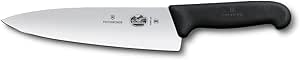 | Best Value for Busy Kitchens | Blade length: 8 inches | Blade material: Stainless steel | Construction: Stamped | VIEW ON AMAZON | See Our Full Breakdown |
| Dalstrong 8-Inch Japanese Gyuto Chef Knife, 66-Layer Damascus AUS-10V |  | Best for Fine Slicing | Blade length: 8 inches | Blade construction: 66-layer Damascus | Steel core: AUS-10V | VIEW ON AMAZON | See Our Full Breakdown |
| Atumuryou 8-Inch Japanese VG10 Damascus Chef Knife |  | Best for a Full-Tang Damascus Build | Model: AT8503 | Blade length: 8 inches | Blade material: Japanese VG10 Damascus steel | VIEW ON AMAZON | See Our Full Breakdown |
| SHAN ZU 8-Inch Damascus Steel Chef Knife |  | Best for a G10 Handle and 15-Degree Edge | Model: SZPCS-2017-002 | Blade length: 8 inches | Blade material: 10Cr15MoV Japanese steel core with 67 layers of steel | VIEW ON AMAZON | See Our Full Breakdown |
| chef knives for professional | Blade length | Blade material | Handle material | Weight |
|---|---|---|---|---|
| imarku 7-Inch Santoku Knife wi | 7 inches | High-carbon stainless steel | Pakkawood | 6.88 ounces |
| HOSHANHO 8-Inch Japanese High | 8 inches | Japanese high-carbon steel (10Cr15CoMoV) | Wood | — |
| Dalstrong Gladiator Elite 8-In | 8 inches | High-carbon German stainless steel | G-10 composite | 8 ounces |
| Wüsthof Classic 8-Inch Chef’s | 8 inches | High-carbon stainless steel | Synthetic | 8.5 ounces |
| Global G-2 8-Inch Chef’s Knife | 8 inches (20 cm) | Molybdenum/vanadium stainless steel | Stainless steel | — |
| Shun Premier 8-Inch Chef’s Kni | 8 inches | VG-MAX steel core with 68-layer Damascus cladding | — | 214 g |
| imarku 8-Inch Japanese Chef Kn | 8 inches | High-carbon stainless steel | — | 6.56 ounces |
| Mercer Culinary Millennia 8-In | 8 inches | High-carbon Japanese steel | — | 6.7 ounces |
| HOSHANHO 3-Piece Professional | — | Japanese 10Cr15CoMoV high-carbon stainless steel | — | — |
| Atumuryou 8-Inch Japanese Dama | 8 inches | Japanese VG-10 steel | — | 1.1 pounds |
| ZWILLING Professional S 8-Inch | 8 inches | High-carbon, stain-resistant steel | — | — |
| Victorinox Fibrox Pro 8-Inch C | 8 inches | Stainless steel | Thermoplastic elastomer (TPE) | — |
| Dalstrong 8-Inch Japanese Gyut | 8 inches | — | G-10 | — |
| Atumuryou 8-Inch Japanese VG10 | 8 inches | Japanese VG10 Damascus steel | Stabilized wood and resin | 7.36 ounces |
| SHAN ZU 8-Inch Damascus Steel | 8 inches | 10Cr15MoV Japanese steel core with 67 layers of steel | G10 glass fiber | 260 g in product information; 270 g in description |
More Details on Our Top Picks
imarku 7-Inch Santoku Knife with High-Carbon Stainless Steel Blade
The 7-inch santoku profile makes this a compact alternative to the longer HOSHANHO 8-Inch Japanese High Carbon Steel Chef’s Knife, especially for cooks who prefer a shorter blade for controlled chopping and mincing. Its 15–18-degree edge is suited to precise everyday prep, while the hollow blade design may help food release during repetitive slicing. The Pakkawood handle is intended to provide a comfortable, secure hold, and the knife weighs just 6.88 ounces.
The tradeoff is reach: professionals handling large ingredients or long rocking cuts may find the shorter blade less efficient than an 8-inch chef’s knife. The listing also gives no care instructions, so buyers will need to choose conservative hand washing and drying rather than assume dishwasher use is suitable. I’d pick it as a compact station knife, not as the only knife for every professional task.
Pros:- Seven-inch blade offers maneuverability for compact prep tasks
- Hollow design is intended to reduce food sticking during slicing
- Hand-polished 15–18-degree-per-side edge supports precise cutting
- Pakkawood handle is designed for a comfortable, secure grip
Cons:- Shorter blade has less reach than the 8-inch HOSHANHO and Wüsthof options
- No dishwasher or specific care guidance is provided
- Santoku shape may be less suited to cooks who rely on a pronounced rocking motion
Best for: Cooks with smaller prep stations or professionals who want a shorter santoku for controlled vegetable chopping, slicing, and mincing.
Not ideal for: Cooks who regularly portion large produce or prefer an 8-inch blade for long slicing strokes and rocking cuts.
- Blade length:7 inches
- Blade material:High-carbon stainless steel
- Blade thickness:2.5 mm
- Edge angle:15–18 degrees per side
- Handle material:Pakkawood
- Weight:6.88 ounces
- Item length:12 inches
- Model number:I-KSK0064DB
Our verdict“Choose this imarku if compact control matters more than the reach and versatility of a full-length chef’s knife.”
HOSHANHO 8-Inch Japanese High Carbon Steel Chef’s Knife
The 13-degree-per-side edge and 60 HRC Japanese high-carbon steel make this the precision-focused pick in this group. Compared with the more robust, Western-style Wüsthof Classic 8-Inch Chef’s Knife, its narrower edge angle is aimed at fine slicing and controlled chopping rather than a more forgiving all-purpose feel. The sloped bolster is designed to support a pinch grip, which can help cooks keep their fingers positioned consistently during extended prep.
That sharper, harder-steel profile asks for more care. The product description notes rust resistance, but also warns that high-carbon steel needs attention to prevent rust; I would not leave it wet or dirty between tasks. Its exact maintenance demands may be a poor fit for a fast-paced kitchen where knives are shared or routinely left in a sink. For a professional who values fine edge geometry and can maintain it, this offers a distinct alternative to the heavier German-style picks.
Pros:- 13-degree-per-side edge is suited to precise cutting
- 60 HRC hardness supports a hard, sharp blade profile
- Sloped bolster is designed to encourage a pinch grip
- Ice-tempered steel is described as rust resistant
Cons:- High-carbon steel requires prompt cleaning and drying to help prevent rust
- Hard, narrow edge geometry may call for more attentive sharpening than the Wüsthof’s broader 16–18-degree edge
- Wood handle may require more care than the synthetic handle on the Wüsthof
Best for: Professional cooks who prioritize precise slicing and chopping, use a pinch grip, and can promptly clean and dry a high-carbon blade.
Not ideal for: Busy shared kitchens where knives may sit wet or dirty, or cooks who want a lower-maintenance blade with a more forgiving edge.
- Blade length:8 inches
- Blade material:Japanese high-carbon steel (10Cr15CoMoV)
- Hardness:60 HRC
- Edge angle:13 degrees per side
- Handle material:Wood
- Finish:Matte
Our verdict“Choose the HOSHANHO for fine cutting and a pinch-grip handle if you are prepared to maintain its high-carbon steel.”
Dalstrong Gladiator Elite 8-Inch Chef Knife
The full-tang forged German stainless steel blade and 8-ounce weight give this knife a sturdier feel than the lighter Global G-2. That added heft can suit cooks who want a planted, durable tool for broad everyday prep and BBQ work, while its 16–18-degree edge keeps it in a familiar Western-style range. The G-10 handle and balanced construction are designed for control, and the included PerfectFit sheath offers a storage option for a knife that travels between stations.
This build is less compelling for professionals who favor quick, low-effort handling over weight: at 8 ounces, it is heavier than the 6.88-ounce imarku santoku and may feel tiring during high-volume fine chopping. Its edge is also less acute than the HOSHANHO’s 13-degree profile, so cooks seeking an especially fine slicing feel may prefer that alternative. I’d rank this as a durable, substantial workhorse rather than a nimble precision pick.
Pros:- Forged, full-tang construction is suited to demanding everyday prep
- G-10 handle is designed to provide control and comfort
- 16–18-degree-per-side edge offers a familiar Western-style cutting profile
- PerfectFit sheath is included for storage or transport
Cons:- Eight-ounce weight may fatigue cooks who prefer a lighter knife
- Less suited to fine-edge cutting than the HOSHANHO’s 13-degree-per-side blade
- The substantial feel may be cumbersome for compact, fast prep work
Best for: Cooks who want a substantial Western-style knife for varied prep, BBQ work, and use across multiple kitchen tasks.
Not ideal for: Professionals who prefer lightweight knives for rapid repetitive chopping or a narrower edge for fine slicing.
- Series:Gladiator Elite
- Blade length:8 inches
- Blade material:High-carbon German stainless steel
- Blade hardness:56+ HRC
- Blade edge:Hand-polished, 16–18 degrees per side
- Construction:Forged, full tang
- Handle material:G-10 composite
- Weight:8 ounces
- Included component:PerfectFit sheath
Our verdict“Choose the Dalstrong if you want a sturdy, full-tang Western-style knife and do not mind a heavier feel.”
Wüsthof Classic 8-Inch Chef’s Knife
The precision-forged, full-tang build makes the Wüsthof the traditional all-purpose choice here: its 8-inch blade is designed for chopping, mincing, slicing, and dicing, while the 58 HRC stainless steel balances a firm edge with a familiar German-knife format. Compared with the lighter Global G-2, this 8.5-ounce knife has a more substantial presence; compared with the Dalstrong Gladiator Elite, it shares the full-tang forged approach but uses a synthetic handle rather than G-10.
That weight can be reassuring for cooks who like a stable blade, but it is not the easiest pick for anyone seeking a nimble feel over long prep sessions. Its broad utility also means it is less specialized for fine, low-angle cutting than the HOSHANHO. The listed data does not specify a sharpening angle, so buyers cannot compare its edge geometry as directly. I’d favor it as a dependable station workhorse for cooks who want a conventional German profile.
Pros:- Eight-inch blade is suited to a broad range of kitchen prep
- Precision-forged, full-tang construction
- High-carbon stainless steel and 58 HRC hardness
- Synthetic handle is designed to resist fading and discoloration
Cons:- At 8.5 ounces, it is heavier than the Global G-2 and imarku santoku
- Blade edge angle is not specified in the product data
- Less focused on fine, narrow-angle cutting than the HOSHANHO
Best for: Professional cooks seeking a forged, stainless 8-inch knife for mixed daily prep and who prefer a substantial German-style feel.
Not ideal for: Cooks who want a lightweight knife, a compact santoku, or clearly specified fine-edge geometry for precision slicing.
- Blade length:8 inches
- Handle length:5 inches
- Weight:8.5 ounces
- Blade material:High-carbon stainless steel
- Hardness:58 HRC
- Construction:Precision forged, full tang, triple riveted
- Handle material:Synthetic
- Origin:Solingen, Germany
- Model number:1040100120
Our verdict“Pick the Wüsthof if you want a substantial, forged German-style knife for broad daily prep rather than a lightweight or precision-specialist blade.”
Global G-2 8-Inch Chef’s Knife
The lightweight, balanced construction is the Global G-2’s clearest distinction from the heavier Wüsthof Classic and Dalstrong Gladiator Elite. Its 8-inch molybdenum/vanadium stainless-steel blade suits standard chef-knife tasks, while the dimpled stainless-steel handle offers a grip surface without a separate wood or composite scale. For professionals who make many cuts in a shift and dislike a weighty blade, that lighter handling can be more useful than the more substantial feel of the forged German-style alternatives.
The all-steel handle and sharpening guidance are specific tradeoffs. Cooks who prefer a traditional handled knife may not like the feel, and the manufacturer recommends ceramic or diamond tools instead of a metal sharpening steel. Hand washing is also recommended, so it is not a leave-in-the-dishwasher option. I’d place it ahead of the heavier picks for cooks prioritizing balance and low weight, but not for anyone wanting conventional maintenance or handle materials.
Pros:- Lightweight, balanced design can reduce the burden of repetitive prep
- Eight-inch blade suits common chef-knife tasks
- Dimpled stainless-steel handle is designed for a secure grip
- Lifetime warranty against defects and breakage
Cons:- Hand washing is recommended
- Manufacturer recommends ceramic or diamond sharpening tools rather than a metal sharpening steel
- All-stainless-steel handle may not suit cooks who prefer wood or composite grips
Best for: Professional cooks who prioritize a light, balanced 8-inch knife for repetitive prep and are comfortable with the specified sharpening tools.
Not ideal for: Cooks who prefer wood or composite handles, rely on a metal sharpening steel, or want dishwasher convenience.
- Model:G-2
- Blade length:8 inches (20 cm)
- Blade material:Molybdenum/vanadium stainless steel
- Handle material:Stainless steel
- Number of items:1
- Warranty:Lifetime warranty against defects and breakage
Our verdict“Choose the Global G-2 if light balance matters more to you than a conventional handle or the convenience of metal-steel sharpening.”
Shun Premier 8-Inch Chef’s Knife
The Shun Premier suits professionals who prioritize a refined cutting feel and precise prep over a workhorse profile. Its VG-MAX core and 16-degree edge support clean slicing, dicing, and mincing, while the hammered finish is designed to reduce drag and food sticking. Compared with the more utilitarian Mercer Culinary Millennia, this forged Japanese knife offers a more specialized, fine-edged approach; the Mercer is the simpler fit for cooks who value straightforward upkeep. The Premier’s Pakkawood handle is specified for both left- and right-handed users, and the listed 214 g weight keeps it relatively light. The tradeoff is maintenance: a fine edge calls for regular honing and sharpening, and the blade is not the choice for careless handling or rough tasks.
Pros:- VG-MAX steel core with a fine 16-degree edge supports precise cuts
- Hammered tsuchime finish is designed to reduce food drag and sticking
- Forged construction and Pakkawood handle suit a refined, balanced prep feel
- Made for both left- and right-handed users
Cons:- Requires routine honing and sharpening to maintain its edge
- A fine edge is less suited to rough handling or misuse
- Its specialized feel may be less appealing to cooks who prefer a heavier, more robust workhorse
Best for: Professional cooks who prioritize precise vegetable, fish, and protein prep and are comfortable maintaining a fine Japanese edge.
Not ideal for: High-volume kitchens seeking a low-maintenance knife for rough handling or cooks who do not want to hone and sharpen regularly.
- Blade length:8 inches
- Blade material:VG-MAX steel core with 68-layer Damascus cladding
- Edge:Plain, 16-degree edge
- Construction:Forged
- Handle:Pakkawood
- Weight:214 g
- Country of manufacture:Japan
- Warranty:Lifetime warranty
Our verdict“Choose the Shun Premier for precise professional prep if you are willing to maintain its fine edge.”
imarku 8-Inch Japanese Chef Knife
The imarku 8-Inch Japanese Chef Knife takes a practical route for professionals who want one multipurpose blade for vegetables, meat, and everyday prep. Its high-carbon stainless steel is specified at 56–58 HRC, with 16–18% chromium, giving buyers a clear material profile rather than the harder, finer-edged construction of the Shun Premier. That makes the imarku a more approachable pick for cooks who value a general-purpose knife and a corrosion-resistant blade, though the listed specs do not provide an edge angle or construction type to help predict cutting feel. The Pakkawood handle is designed for comfort during extended use. Its tradeoffs are limited detail about sharpening and care, plus a listing note that the logo may differ from the pictured version—less reassuring for buyers who want exact presentation consistency.
Pros:- Multipurpose shape is suited to slicing, chopping, dicing, and cutting meat
- High-carbon stainless steel includes a stated carbon and chromium range
- 56–58 HRC hardness offers a less specialized profile than harder blades such as the HOSHANHO set knives
- Pakkawood handle is designed for comfort during extended prep
Cons:- No edge angle or construction type is specified
- Logo may differ from the one shown in the listing
- The product details provide limited guidance on care and edge maintenance
Best for: Working cooks seeking an all-purpose 8-inch stainless chef knife with a comfort-oriented handle and a specified moderate hardness.
Not ideal for: Professionals who need detailed edge and construction specifications, or buyers who expect the delivered logo to match listing images exactly.
- Blade length:8 inches
- Blade material:High-carbon stainless steel
- Carbon content:0.6–0.75%
- Chromium content:16–18%
- Hardness:56–58 HRC
- Handle:Pakkawood
- Weight:6.56 ounces
- Included components:1 chef knife
Our verdict“Pick the imarku if you want a versatile stainless 8-inch knife and can accept sparse edge details and possible logo variation.”
Mercer Culinary Millennia 8-Inch Chef’s Knife, Black Handle
The Mercer Culinary Millennia earns its place as a practical kitchen workhorse: its high-carbon Japanese steel is designed for edge maintenance, and its textured Santoprene handle gives grip a priority over the dressed-up wood handles on the Shun Premier and imarku. The stamped construction also distinguishes it from forged options such as the HOSHANHO 3-Piece Set; this is a single, task-focused chef’s knife rather than a broader premium setup. Its 8-inch blade covers chopping and mincing, while the tang is specified to provide balance. The main compromise is care: it must be hand washed, rinsed, and dried rather than put through a dishwasher. For professionals who want a straightforward prep knife, that routine may be manageable; cooks seeking layered steel, a forged build, or a more refined edge specification should look elsewhere.
Pros:- Textured Santoprene handle is designed to provide a non-slip grip
- High-carbon Japanese steel is intended to support lasting sharpness and easier edge maintenance
- Tang is specified to provide balance
- Useful 8-inch profile for chopping, mincing, and cutting
Cons:- Hand washing and thorough drying are required; dishwasher use is discouraged
- Stamped construction may not suit buyers seeking a forged knife
- The product data does not specify an edge angle or hardness
Best for: Professional kitchen teams seeking a straightforward 8-inch prep knife with a textured, non-slip handle and manageable edge upkeep.
Not ideal for: Cooks who need a dishwasher-compatible knife or specifically want forged construction and detailed edge-angle specifications.
- Blade length:8 inches
- Blade material:High-carbon Japanese steel
- Construction:Stamped
- Blade edge:Plain
- Handle:Santoprene
- Weight:6.7 ounces
- Care:Hand wash with warm water and mild soap; rinse and dry thoroughly
- Included components:One 8-inch chef’s knife
Our verdict“Choose the Millennia for dependable everyday prep and grip, provided hand washing fits your kitchen routine.”
HOSHANHO 3-Piece Professional Japanese Kitchen Knife Set
The HOSHANHO 3-Piece Set is the lineup’s clearest choice for cooks who need more than a chef’s knife: it pairs an 8-inch chef’s knife with a 7-inch santoku and 6-inch utility knife. That range can reduce the need to reach for one blade for every task, unlike the single-knife Shun Premier or Mercer Millennia. The forged 10Cr15CoMoV steel is listed at 60 HRC with a 15-degree-per-side edge, positioning it as a harder, sharper-edged set than the imarku’s stated 56–58 HRC blade. The tradeoff is added care: the high-carbon steel may need more attention to prevent corrosion, and no sheaths or block are included for storage. I’d favor it for a professional station building out several matching tools, not for someone replacing only one chef’s knife.
Pros:- Three distinct blade shapes cover a broader range of prep than a single-knife option
- Forged 10Cr15CoMoV high-carbon stainless steel is listed at 60 HRC
- 15-degree-per-side edges support a fine cutting profile
- Pakkawood handles are designed for a comfortable, secure grip
Cons:- High-carbon steel calls for careful maintenance to help prevent corrosion
- No protective sheaths or knife block are included
- A three-knife set is unnecessary for professionals seeking only one replacement blade
Best for: Professional cooks setting up a station who want a chef’s knife, santoku, and utility knife with matching forged construction.
Not ideal for: Buyers replacing only a chef’s knife, or kitchens that need included protective storage and minimal corrosion-care demands.
- Set contents:8-inch chef’s knife, 7-inch santoku, 6-inch utility knife
- Blade material:Japanese 10Cr15CoMoV high-carbon stainless steel
- Hardness:60 HRC
- Edge angle:15 degrees per side
- Construction:Forged
- Handle:Pakkawood
- Set weight:900 g
- Blade color:Silver
Our verdict“Choose this set if your professional station needs three complementary Japanese-style knives and you can provide separate storage.”
Atumuryou 8-Inch Japanese Damascus Chef Knife with VG-10 Steel
The Atumuryou VG-10 Damascus Chef Knife is the most specification-forward fine-edge option in this group: it combines a 62 HRC VG-10 core, 67-layer Damascus cladding, and a hand-sharpened 12-degree edge. Compared with the Shun Premier’s 16-degree edge, the Atumuryou’s narrower stated angle points toward a more acute cutting profile, while its harder core may appeal to cooks focused on edge retention. Those details come with added responsibility, not a promise of effortless upkeep. The handle is described as stabilized wood and resin, and the product data gives no care instructions; its listed weight of 1.1 pounds also makes it notably heavier than the Shun’s 214 g. I’d shortlist it for cooks seeking a fine edge and layered construction, but not for anyone who needs clear maintenance guidance or a lighter knife.
Pros:- VG-10 core is specified at 62 HRC
- Hand-sharpened 12-degree edge offers a fine cutting profile
- 67-layer Damascus cladding distinguishes its blade construction
- Stabilized wood-and-resin handle is designed for a balanced grip
Cons:- No care or maintenance instructions are provided
- Listed weight of 1.1 pounds is substantially heavier than the Shun Premier’s 214 g
- Handle material is described with differing wording, which may leave buyers uncertain about its exact composition
Best for: Experienced professional cooks seeking a forged VG-10 knife with a very fine stated edge and Damascus cladding.
Not ideal for: Cooks who want a lighter knife, clear manufacturer care instructions, or a less demanding edge profile for rough daily work.
- Blade length:8 inches
- Overall length:13 inches
- Blade material:Japanese VG-10 steel
- Core hardness:62 HRC
- Cladding:67-layer Damascus
- Edge angle:12 degrees
- Handle:Stabilized wood and resin
- Construction:Forged
- Weight:1.1 pounds
Our verdict“Choose the Atumuryou for its hard VG-10 core and fine edge if its weight and sparse care guidance suit your workflow.”
ZWILLING Professional S 8-Inch German Chef’s Knife
The ZWILLING Professional S is the most traditional workhorse in this group: its forged, full-tang build and 57 HRC steel favor a sturdy, balanced feel over the thinner, harder cutting profile of the Dalstrong 66-Layer Damascus Gyuto. Its 15-degree-per-side edge supports controlled everyday prep, while the ice-hardened FRIODUR blade is designed to retain sharpness. A three-rivet polymer handle gives it a familiar, secure format for cooks who prefer a conventional German-style grip. The tradeoff is that this knife is less specialized for exceptionally fine slicing than the Dalstrong, and the supplied details do not include care instructions despite a dishwasher-safe claim in the title. I’d choose it for durable, all-purpose professional prep, not for someone seeking the thinnest Japanese-style edge.
Pros:- Forged from a single piece of steel with a full tang for a sturdy, balanced feel
- Ice-hardened FRIODUR blade is designed to retain sharpness
- Precision-honed 15-degree-per-side edge supports controlled cutting
- Ergonomic three-rivet polymer handle offers a familiar grip
Cons:- Less suited to users seeking the thinner cutting feel of the Dalstrong Gyuto’s 8–12-degree edge
- Care guidance is not included in the description, despite a dishwasher-safe claim in the title
Best for: Professional cooks who want a balanced, forged German-style knife for varied daily prep and prefer a conventional three-rivet handle.
Not ideal for: Cooks prioritizing an especially thin, hard Japanese-style edge for fine slicing, or buyers who need clear care guidance before purchase.
- Blade length:8 inches
- Country of manufacture:Germany
- Blade material:High-carbon, stain-resistant steel
- Blade construction:Forged from a single piece of steel
- Hardness:57 Rockwell
- Edge angle:15° per side
- Handle:Ergonomic polymer with three rivets
- Tang:Full tang
Our verdict“Choose the ZWILLING for a traditional, forged German workhorse; pick the Dalstrong Gyuto instead if fine slicing and a thinner edge matter more.”
Victorinox Fibrox Pro 8-Inch Chef’s Knife, Black
The Fibrox Pro makes the strongest case here for practical, low-fuss kitchen work. Its non-slip TPE handle and dishwasher-safe care claim suit fast-moving kitchens where grip and easy cleanup count more than a forged finish. Unlike the full-tang ZWILLING Professional S, this Victorinox uses stamped construction; that keeps its design straightforward but may not satisfy cooks who specifically want the heft and traditional build of a forged knife. The stainless steel blade is described as sharp and suited to chopping, mincing, slicing, and dicing, so it covers the core prep jobs without the finer-edge focus of the Dalstrong Gyuto. I’d favor it for a professional station that values utility and simple care, while cooks who want a more refined edge or forged construction should look elsewhere.
Pros:- Ergonomic TPE handle is designed to provide a non-slip grip
- Dishwasher-safe care claim supports easy cleanup
- Stainless steel blade is suited to common chopping, mincing, slicing, and dicing tasks
- Lifetime warranty against original manufacturer’s defects
Cons:- Stamped construction may not appeal to cooks seeking a forged knife like the ZWILLING Professional S
- Knife sharpener is sold separately
Best for: Working cooks in busy kitchens who value a secure grip, broad everyday usefulness, and dishwasher-safe cleanup over forged construction.
Not ideal for: Chefs who specifically want a forged, full-tang knife or a very fine Japanese-style edge, such as the Dalstrong Gyuto’s.
- Blade length:8 inches
- Blade material:Stainless steel
- Construction:Stamped
- Handle material:Thermoplastic elastomer (TPE)
- Blade edge:Plain
- Country of origin:Switzerland
- Care:Dishwasher safe
- Warranty:Lifetime warranty against original manufacturer’s defects
Our verdict“Pick the Fibrox Pro for straightforward, easy-clean daily prep; choose a forged alternative if construction and a more specialized edge are priorities.”
Dalstrong 8-Inch Japanese Gyuto Chef Knife, 66-Layer Damascus AUS-10V
Among these five, the Dalstrong Gyuto has the clearest fine-cutting brief. Its AUS-10V core, 62+ HRC hardness, and 8–12-degree-per-side edge are aimed at precise slicing and detailed prep, a sharper-edged approach than the 15-degree Victorinox Fibrox Pro or ZWILLING Professional S. The hammered blade is intended to help food release, and the wide profile offers knuckle clearance; those details matter when working through vegetables and herbs at pace. That performance focus also narrows its job: the description specifies boneless meat, not bone work, and a fine edge calls for more care than a general-purpose workhorse. I’d choose it for cooks who value precision and control over rough handling, but the Victorinox is a more practical fit for stations where easy cleanup takes priority.
Pros:- AUS-10V steel core and 8–12-degree-per-side edge support precise slicing
- Hardness of 62+ Rockwell is suited to a fine cutting profile
- Hammered blade finish is designed to help reduce food sticking
- Wide blade supports control and knuckle clearance; sheath is included
Cons:- Specified for boneless meat and not described as suitable for cutting through bones
- Fine edge requires more careful handling than the Victorinox Fibrox Pro’s general-purpose format
Best for: Professional cooks focused on precise vegetable, herb, and boneless-meat prep who can maintain a fine-edged knife carefully.
Not ideal for: Cooks who need to cut through bones or want a lower-maintenance, dishwasher-safe option like the Victorinox Fibrox Pro.
- Blade length:8 inches
- Blade construction:66-layer Damascus
- Steel core:AUS-10V
- Hardness:62+ Rockwell
- Edge angle:8–12° per side
- Handle material:G-10
- Included accessories:Sheath and presentation box
Our verdict“Choose the Dalstrong Gyuto for controlled, fine slicing of boneless ingredients, not for bone work or rough, low-care use.”
Atumuryou 8-Inch Japanese VG10 Damascus Chef Knife
The Atumuryou pairs a VG10 core and 67-layer Damascus cladding with a forged full tang, making it the more traditional full-tang choice among the two Atumuryou listings in this roundup. Its stabilized wood-and-resin handle gives it a different look and feel from the G-10 handle on the Dalstrong Gyuto, while its stated 62 HRC hardness places it in a harder category than the 57 HRC ZWILLING Professional S. The listing does not provide an edge angle or cutting-task guidance, so I would not assume it has the Dalstrong’s defined fine-slicing profile. A leather sheath and gift box are included, but care instructions are absent, and handle appearance may vary. This makes the most sense for buyers drawn to its construction and materials who are comfortable supplying their own care routine.
Pros:- VG10 steel core with 67-layer Damascus cladding
- Forged full-tang construction
- Stabilized wood-and-resin handle offers an alternative to the Dalstrong Gyuto’s G-10
- Leather sheath and gift box are included
Cons:- No dishwasher or other care instructions are provided
- Handle texture and appearance vary
- Edge angle and task-specific cutting guidance are not specified
Best for: Cooks seeking a forged, full-tang VG10 Damascus knife with a stabilized wood-and-resin handle and included sheath.
Not ideal for: Professionals who need explicit care guidance or a clearly specified edge geometry for precise comparison with the Dalstrong Gyuto.
- Model:AT8503
- Blade length:8 inches
- Blade material:Japanese VG10 Damascus steel
- Damascus layers:67
- Hardness:62 HRC
- Construction:Forged, full tang
- Handle material:Stabilized wood and resin
- Weight:7.36 ounces
- Included components:Chef knife, leather sheath, gift box
Our verdict“Choose the Atumuryou for its full-tang VG10 Damascus construction and included sheath, provided you are comfortable without detailed care guidance.”
SHAN ZU 8-Inch Damascus Steel Chef Knife
The SHAN ZU offers a 10Cr15MoV core, 67 steel layers, and a G10 glass-fiber handle, giving it a material profile that overlaps with the Damascus-focused Atumuryou while taking a different approach to the grip. Its listed 15-degree cutting angle is less acute than the Dalstrong Gyuto’s 8–12 degrees per side, so buyers should not treat it as the same fine-edge specialist. The G10 handle is a practical contrast to Atumuryou’s stabilized wood-and-resin handle, though the product details do not describe a full tang or specific care routine. Weight is also inconsistent across the supplied data: one section says 270 g and another says 260 g. I’d shortlist it for cooks who favor a forged Damascus-style blade and synthetic handle, but those needing dependable weight information or a stated warranty beyond 12 months should compare alternatives carefully.
Pros:- Forged blade has a 10Cr15MoV steel core with 67 layers of steel
- G10 glass-fiber handle is described as comfortable and solid
- Plain edge with a stated 15-degree cutting angle
- 8-inch blade suits standard chef-knife prep
Cons:- Listed weight conflicts between 270 g and 260 g
- Care guidance and tang construction are not specified
- 12-month warranty is limited compared with the Victorinox’s stated lifetime warranty against original manufacturer’s defects
Best for: Professional cooks who prefer a G10 handle and a forged, layered-steel knife with a stated 15-degree cutting angle.
Not ideal for: Buyers who need consistent weight specifications, detailed care guidance, or a finer stated edge angle like the Dalstrong Gyuto’s.
- Model:SZPCS-2017-002
- Blade length:8 inches
- Blade material:10Cr15MoV Japanese steel core with 67 layers of steel
- Hardness:62 HRC
- Blade thickness:2.2 mm
- Blade width:2.5 inches
- Handle material:G10 glass fiber
- Cutting angle:15°
- Weight:260 g in product information; 270 g in description
Our verdict“Choose the SHAN ZU if its G10 handle and 15-degree edge suit your preferences, but skip it if consistent specs and detailed care information are required.”

How We Picked
I compared these knives as tools for professional-style prep, focusing on blade length and profile, steel and edge characteristics, handle security, build, versatility, and the care each design is likely to ask of its owner. A knife that looks refined does not automatically rank above a simpler workhorse: predictable handling, ease of upkeep, and suitability for repeated kitchen tasks matter just as much as a fine edge.
The ranking favors balanced choices that can serve a wide range of cooks, then gives distinct places to value-focused, premium, Japanese-style, compact, and set-based options. Where product details alone cannot establish a precise performance advantage, I avoid treating steel names or Damascus patterns as proof of superior cutting. Professional buyers should weigh their own grip, sharpening setup, board material, and prep routine before treating any ranking as a substitute for fit.
| chef knives for professional | Construction |
|---|---|
| imarku 7-Inch Santoku Knife wi | — |
| HOSHANHO 8-Inch Japanese High | — |
| Dalstrong Gladiator Elite 8-In | Forged, full tang |
| Wüsthof Classic 8-Inch Chef’s | Precision forged, full tang, triple riveted |
| Global G-2 8-Inch Chef’s Knife | — |
| Shun Premier 8-Inch Chef’s Kni | Forged |
| imarku 8-Inch Japanese Chef Kn | — |
| Mercer Culinary Millennia 8-In | Stamped |
| HOSHANHO 3-Piece Professional | Forged |
| Atumuryou 8-Inch Japanese Dama | Forged |
| ZWILLING Professional S 8-Inch | — |
| Victorinox Fibrox Pro 8-Inch C | Stamped |
| Dalstrong 8-Inch Japanese Gyut | — |
| Atumuryou 8-Inch Japanese VG10 | Forged, full tang |
| SHAN ZU 8-Inch Damascus Steel | — |
Factors to Consider When Choosing Chef Knives For Professionals
Professional use changes the buying question: the right knife must fit the work, the hand, and the kitchen’s maintenance routine. I would use these factors to narrow the field before choosing a particular model.
Choose blade geometry for the work you repeat
Blade profile affects how a knife moves across a board, so think about your main prep rather than choosing by length alone. A curved German-style edge supports a rocking motion and suits cooks who use that technique for herbs and vegetables. A flatter Japanese-style profile can favor push cuts and precise slicing, but may feel less natural if you rock heavily. An 8-inch blade is a common all-purpose size, yet a compact 7-inch santoku can be easier to control for smaller hands or crowded stations. Common mistake: assuming a longer blade is always more capable; extra length can slow close, controlled work. Match the knife to your motion and typical ingredients, then judge whether its profile complements the rest of your kit.
Treat steel as a maintenance choice, not a scorecard
Steel influences edge retention, sharpening feel, and tolerance for rough handling, but a steel label alone cannot predict the whole knife’s performance. Harder Japanese-style steels can hold a fine edge for demanding prep, while many German-style designs put a greater emphasis on workhorse durability. Either kind still needs regular honing or sharpening, and no blade should be used to pry, twist, or chop through bones. Think about who will maintain the knife and how often it will see a stone; a theoretically longer-lasting edge is less useful if nobody can restore it. A common buying mistake is paying more for a steel name without checking whether the kitchen’s sharpening tools and habits suit it. Choose the balance that your station can maintain consistently.
Prioritize grip, balance, and hand fatigue
Handle comfort becomes more noticeable over a long prep shift than during a quick comparison at home. A textured synthetic handle may feel secure with wet hands, while a metal handle can offer a different balance and grip sensation that some cooks prefer and others do not. Check how the handle meets the blade, whether the heel gives your fingers enough clearance, and whether the knife feels controllable in your usual pinch grip. A heavier knife can provide momentum for some tasks but may tire the wrist during repetitive fine work. Do not assume a familiar brand or traditional handle shape will fit every hand. If possible, hold the knife before buying; if that is not possible, prioritize clear information about dimensions, handle material, and return terms.
Match edge delicacy to the kitchen environment
A thin, finely edged blade can make clean cuts feel easier, but it is less forgiving of careless contact with hard surfaces and dense materials. Softer boards, careful technique, and a dedicated knife station help protect a keen edge. In a shared kitchen where tools may be dropped into a sink or used on unsuitable boards, a more robust profile can be the more productive choice even if it does not feel as nimble. Avoid glass, stone, and ceramic cutting surfaces, which can damage an edge regardless of the knife’s price or steel. Also keep chef knives away from frozen food and bones unless the maker explicitly designs them for that work. The best edge is the one the kitchen can preserve through its actual routines.
Decide whether one knife or a set solves the problem
Many professional cooks reach for a chef knife for most prep, so a three-piece set can add pieces that duplicate knives already in a roll. A set makes more sense when it fills specific gaps, such as providing task-specific blades for a new station or a cook building a kit from scratch. Before buying, list the jobs your current knife cannot handle efficiently and check that each included piece addresses one of them. One well-fitted primary knife plus a suitable paring or utility knife may serve better than several blades with no clear role. Sets can also complicate storage and sharpening, particularly when the included knives use different profiles or steels. Choose coverage over piece count.
Pay for fit and serviceability before decorative details
Premium finishes and Damascus patterns can be appealing, but appearance does not tell you how a knife will feel through a full shift or how readily it can be sharpened. Spend more when the upgrade brings a useful difference for your work, such as a preferred edge geometry, a handle that fits, or a construction and service path that suits your kitchen. Check the maker’s care instructions, warranty terms, and sharpening guidance before treating a premium blade as a low-maintenance tool. A professional knife is also a consumable working edge: sharpening gradually changes its profile, so a design that can be maintained matters over years of use. The common mistake is focusing on initial sharpness while ignoring long-term upkeep. Put ergonomics and repairability ahead of ornament.
Frequently Asked Questions
Should I choose a German-style workhorse or a Japanese-style chef knife for a busy line?
Choose based on your cutting technique and how controlled the work environment is, rather than on the country label. A German-style knife such as the Wüsthof Classic is a sensible direction for broad daily use and cooks who favor a curved profile. Japanese-style options, including the Shun Premier and VG-series Damascus models, may suit cooks who prioritize a finer, thinner cutting feel and can protect the edge. Neither style is immune to damage from twisting, hard boards, or unsuitable tasks. If several people share the knife, favor the profile and edge that the whole team can handle reliably.
Is the Victorinox Fibrox Pro a serious choice for professional work, or only a backup?
The Fibrox Pro can serve as a primary working knife for cooks who value a secure, practical grip and straightforward maintenance over premium finishing. Its appeal is strongest in busy kitchens where a knife may be used frequently and needs to feel dependable rather than precious. Compared with more refined Japanese-style options, it is less focused on a delicate cutting feel or decorative presentation. That tradeoff does not make it unsuitable for serious prep; it makes it a fit for a different set of priorities. Consider whether its handle and blade profile work for your hand before choosing it as your main knife.
Do Damascus layers make a chef knife cut better?
Damascus layering is not, by itself, proof that a knife will cut better or hold an edge longer. The blade’s core steel, heat treatment, geometry, edge finish, and upkeep have a more direct bearing on cutting and maintenance. In this roundup, several Damascus-style options also use named Japanese steels, but those specifications should be weighed alongside handle fit and sharpening needs. Decorative patterns may be a welcome feature, yet they should not replace a check of practical details. Buy for the knife’s working characteristics first and its appearance second.
Is an 8-inch chef knife the right size for a professional, or should I choose a shorter blade?
An 8-inch blade is a versatile starting point for many prep tasks, but professional use does not require every cook to choose the same length. A shorter 7-inch santoku can feel easier to control for compact work, smaller hands, or a tight board area. Longer blades can help with large ingredients and uninterrupted slicing, though they can feel cumbersome in close quarters. Consider your board size, usual ingredients, grip, and the knife’s balance as a complete package. If you have a chance to handle a knife before purchase, use that opportunity to check control rather than relying on length alone.
Should I buy a three-piece professional knife set or choose one chef knife first?
Choose one primary chef knife first if you already know which tasks dominate your work or have limited storage and sharpening capacity. The HOSHANHO set may appeal to someone building a kit, but a set is only useful when its extra knives fill real gaps rather than duplicate existing tools. A well-fitting main knife often has more daily impact than adding several blades with uncertain roles. Consider whether you can maintain each included steel and whether the set’s pieces suit your station. Expand your kit after you can name a task that your current tools do poorly.
Conclusion
For a broad professional-style workhorse, I recommend the Wüsthof Classic as best overall. For best value, the Victorinox Fibrox Pro favors grip and practical daily use over premium finish; for best premium, the Shun Premier suits cooks seeking a refined Japanese-style cutting feel who will protect and maintain the edge. The Mercer Culinary Millennia or Fibrox Pro are sensible starting points for beginners who want a straightforward synthetic handle and a less precious tool. For specific needs, consider the imarku 7-inch santoku for compact control, Global G-2 if its metal handle suits your grip, or the HOSHANHO set if you need several knives at once. The best choice is the one whose profile, handling, and upkeep match your station—not simply the most ornate blade.
Halloween Picks
halloween
As an affiliate, we earn on qualifying purchases.