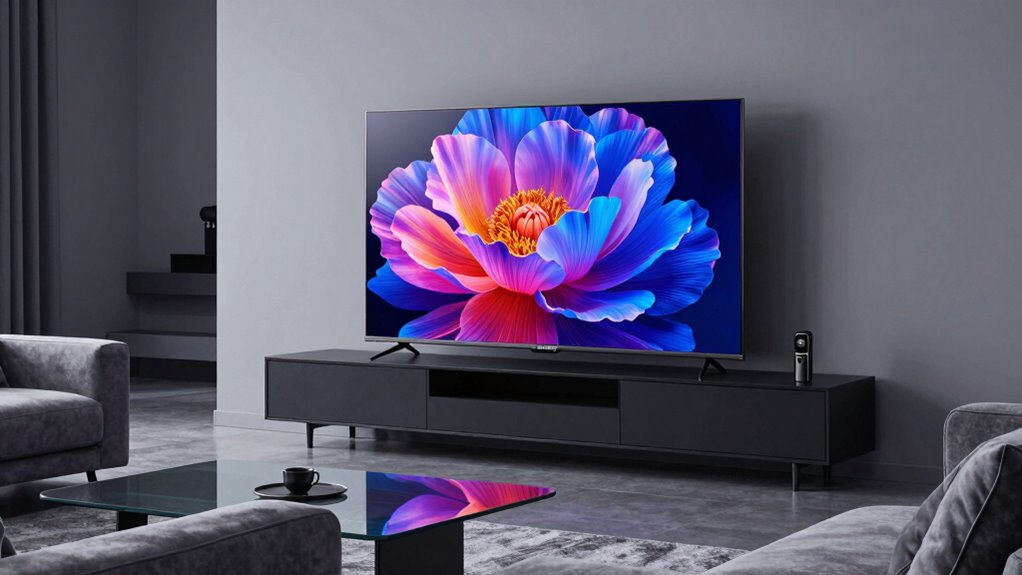

Choosing the right 75 inch QLED TV involves balancing brightness, contrast, and smart platform preferences. The TCL 75-Inch QM6K Series stands out as the best overall pick for its exceptional Mini-LED local dimming and value proposition. For those prioritizing brand ecosystem integration, the Samsung 75-Inch Neo QLED QN70F offers superior motion handling and upscaling, while the Hisense 75-Inch U6 Pro delivers impressive brightness at a competitive entry point. Most buyers face a tradeoff between peak brightness for HDR content and the depth of black levels required for cinematic viewing. Continue reading to see how these ten models stack up against each other in performance, gaming features, and long-term usability.

Get the latest gadgets delivered free with Prime
- Fast, free delivery on millions of items
- Prime Video, Amazon Music and more included
- Member-only deals all year
Complete the kit



Key Takeaways
- Mini-LED technology is no longer reserved for flagship models, with mid-range options like the TCL QM6K and Hisense E7 Cinema Series offering high local dimming zones at accessible price points.
- The distinction between standard QLED and Mini-LED QLED is the single biggest factor affecting picture quality, particularly in dark room viewing where blooming occurs.
- Gaming features like 144Hz refresh rates and variable refresh rate (VRR) support have become standard on mid-tier models like the TCL T7, removing the need to buy top-tier flagships for console gaming.
- Smart TV platforms significantly impact daily usability, with Google TV (TCL) and Roku (Hisense) offering more intuitive app ecosystems compared to Fire TV (Hisense/Toshiba/Insignia) and Samsung‘s Tizen.
- Brightness levels vary widely, with premium Mini-LED models exceeding 1,000 nits for impactful HDR highlights, while entry-level QLEDs like the Toshiba M450 often struggle with washed-out bright scenes.
| TCL 75-Inch QM6K Series Mini-LED QLED 4K HDR Smart Google TV |  | Best Overall for Gaming and HDR | Screen size: 75 inches | Display: Mini-LED, QLED | Resolution: 4K UHD | VIEW ON AMAZON | See Our Full Breakdown |
| Hisense 75-Inch U6 Pro Mini-LED 4K UHD Smart Fire TV |  | Best for Bright Rooms | Model: 75U6SF Pro | Screen size: 75 inches | Display: Mini-LED Pro, Hi-QLED (Quantum Dot) | VIEW ON AMAZON | See Our Full Breakdown |
| Toshiba 75-Inch M450 Series QLED 4K UHD Smart Fire TV |  | Best for Everyday Streaming | Screen size: 74.5 inches | Display technology: QLED | Resolution: 4K UHD | VIEW ON AMAZON | See Our Full Breakdown |
| Insignia 75-Inch QF Series 4K UHD QLED Smart Fire TV with Alexa Voice Remote (NS75-UQFL26) |  | Best for Simple Fire TV Setup | Screen size: 75 inches | Display technology: QLED | Resolution: 4K UHD | VIEW ON AMAZON | See Our Full Breakdown |
| Samsung 75-Inch Q7F Series QLED 4K Smart TV (2025) |  | Best for Samsung Smart Features | Screen size: 75 inches | Display technology: QLED | Resolution: 4K | VIEW ON AMAZON | See Our Full Breakdown |
| TCL F7D Series 75-Inch QLED 4K UHD Smart TV (2026 Model) |  | Best for Streaming Ecosystem Integration | Display Technology: QLED with Quantum Dot | Resolution: 4K UHD | Refresh Rate: 60 Hz | VIEW ON AMAZON | See Our Full Breakdown |
| Hisense 75-Inch E6SR Series Hi-QLED 4K UHD Smart Roku TV (2026) |  | Best Value for Roku Households | Display Technology: Hi-QLED | Resolution: 4K UHD | Refresh Rate: 60 Hz | VIEW ON AMAZON | See Our Full Breakdown |
| Samsung 75-Inch Neo QLED QN70F 4K Mini LED Smart TV (2025) |  | Best Premium Brand Experience | Display Technology: Neo QLED (Mini LED) | Resolution: 4K UHD | Refresh Rate: Up to 144Hz | VIEW ON AMAZON | See Our Full Breakdown |
| Hisense 75-Inch E7 Cinema Series Hi-QLED Mini-LED 4K Smart Fire TV |  | Best Home Theater Picture Quality | Display Technology: Hi-QLED Mini-LED | Resolution: 4K UHD | Refresh Rate: 144 Hz | VIEW ON AMAZON | See Our Full Breakdown |
| TCL 75-Inch T7 Series 4K QLED Smart Google TV, 144Hz (75T7) |  | Best for Versatile Gaming and Connectivity | Display Technology: QLED | Resolution: 4K UHD | Refresh Rate: 144 Hz | VIEW ON AMAZON | See Our Full Breakdown |
| inch qled tv | Resolution | Display technology | Refresh rate | HDR formats |
|---|---|---|---|---|
| TCL 75-Inch QM6K Series Mini-L | 4K UHD | — | — | Dolby Vision, HDR10+, HDR10, HLG |
| Hisense 75-Inch U6 Pro Mini-LE | 4K UHD | — | — | Dolby Vision, Dolby Vision IQ, HDR10, HDR10+, HDR10+ Adaptive, HLG |
| Toshiba 75-Inch M450 Series QL | 4K UHD | QLED | 60 Hz | Dolby Vision, HDR10+ Adaptive |
| Insignia 75-Inch QF Series 4K | 4K UHD | QLED | 60 Hz | — |
| Samsung 75-Inch Q7F Series QLE | 4K | QLED | 60 Hz | — |
| TCL F7D Series 75-Inch QLED 4K | 4K UHD | QLED with Quantum Dot | 60 Hz | Dolby Vision, HDR10+, HDR10, HLG |
| Hisense 75-Inch E6SR Series Hi | 4K UHD | Hi-QLED | 60 Hz | Dolby Vision, HDR10, HLG |
| Samsung 75-Inch Neo QLED QN70F | 4K UHD | Neo QLED (Mini LED) | Up to 144Hz | — |
| Hisense 75-Inch E7 Cinema Seri | 4K UHD | Hi-QLED Mini-LED | 144 Hz | Dolby Vision IQ, HDR10+ Adaptive |
| TCL 75-Inch T7 Series 4K QLED | 4K UHD | QLED | 144 Hz | — |
More Details on Our Top Picks
TCL 75-Inch QM6K Series Mini-LED QLED 4K HDR Smart Google TV
The TCL QM6K is the strongest all-rounder here for buyers who want a large screen without giving up fast gaming or advanced backlighting. Its Mini-LED QLED panel, local dimming, and support for Dolby Vision and HDR10+ give it a broader picture toolkit than the 60 Hz Toshiba M450 and Insignia QF. A native 144 Hz refresh rate and gaming features also make fast action a better fit than those alternatives, which are aimed more at everyday TV and streaming.
The built-in Onkyo 2.1 audio with subwoofer may reduce the immediate need for a separate speaker setup. One caution: the supplied data conflicts on the backlight description, listing Mini-LED and local dimming but also Edge LED, so I would verify the exact configuration before buying. This is also a more gaming-focused choice than the Samsung Q7F, whose refresh rate is 60 Hz.
Pros:- Mini-LED QLED display with local dimming is designed to improve contrast and highlight detail.
- Native 144 Hz refresh rate and gaming features suit fast motion and compatible games.
- Dolby Vision, HDR10+, HDR10, and HLG support a wide range of HDR sources.
- Onkyo 2.1 audio includes a built-in subwoofer.
Cons:- Product data conflicts between Mini-LED/local dimming and an Edge LED backlight description.
- At 75 inches, its size and weight call for careful placement and mounting plans.
Best for: 75-inch buyers who watch HDR films and play fast-paced console or PC games, and want stronger built-in audio than basic TV speakers.
Not ideal for: Buyers who want unambiguous backlight specifications or a TV primarily for casual viewing, where the Toshiba M450 or Insignia QF may be a simpler fit.
- Screen size:75 inches
- Display:Mini-LED, QLED
- Resolution:4K UHD
- Native refresh rate:144 Hz
- HDR formats:Dolby Vision, HDR10+, HDR10, HLG
- Maximum brightness:1000 nits
- Smart platform:Google TV
- Audio:Onkyo 2.1 with built-in subwoofer
Our verdict“Choose the QM6K if fast gaming, broad HDR support, and built-in bass matter more than having perfectly consistent backlight specifications.”
Hisense 75-Inch U6 Pro Mini-LED 4K UHD Smart Fire TV
The Hisense U6 Pro is the clearest pick here for a bright living room: its anti-reflection, glare-reducing screen addresses a problem that neither the TCL QM6K nor the Fire TV-based Insignia QF lists as a specific feature. It also pairs Mini-LED backlighting and full-array local dimming with quantum-dot color, giving it a more advanced display setup on paper than the Toshiba M450’s conventional QLED description.
Its native 144 Hz rate makes it more appealing for gaming than the 60 Hz Insignia and Samsung Q7F, while Fire TV and Alexa+ keep voice-led streaming familiar. The tradeoff is that the provided information offers no hands-on performance detail, so claimed screen and processing benefits cannot be judged beyond the listed specs. I’d choose it over the TCL when glare control matters most, but favor the TCL if its Google TV platform and Onkyo audio better suit the room.
Pros:- Anti-reflection, glare-reducing screen is suited to bright rooms.
- Mini-LED Pro, quantum-dot color, and full-array local dimming are a strong display combination on paper.
- Native 144 Hz refresh rate supports fast gaming and motion.
- Fire TV, Alexa+ voice control, and a built-in subwoofer provide an integrated setup.
Cons:- No hands-on performance details are provided to clarify real-world picture or gaming behavior.
- Fire TV may not suit buyers who prefer Google TV or another smart platform.
Best for: Viewers placing a 75-inch TV in a sunlit family room who want glare reduction, fast refresh, and Alexa-centered streaming.
Not ideal for: Buyers who prefer Google TV or want performance evidence beyond the supplied specifications before choosing a Mini-LED model.
- Model:75U6SF Pro
- Screen size:75 inches
- Display:Mini-LED Pro, Hi-QLED (Quantum Dot)
- Resolution:4K UHD
- Native refresh rate:144 Hz
- Local dimming:Full-array local dimming
- HDR formats:Dolby Vision, Dolby Vision IQ, HDR10, HDR10+, HDR10+ Adaptive, HLG
- Smart platform:Fire TV
- Audio:Built-in subwoofer, Dolby Atmos
Our verdict“Pick the U6 Pro for a bright room where glare control and 144 Hz gaming matter more than platform preference or verified performance detail.”
Toshiba 75-Inch M450 Series QLED 4K UHD Smart Fire TV
The Toshiba M450 is a straightforward large-screen choice for households centered on streaming, not high-refresh gaming. Its Fire TV interface, Alexa voice control, and AI-assisted upscaling support everyday viewing, while Dolby Vision and HDR10+ Adaptive cover major HDR formats. Compared with the TCL QM6K and Hisense U6 Pro, though, its 60 Hz refresh rate is a clear limit for buyers who want 144 Hz motion and gaming performance.
Game Mode adds ALLM and VRR, but those features do not change the panel’s stated refresh rate; I would treat them as conveniences rather than a substitute for the faster TCL or Hisense options. Four HDMI ports, eARC, and Apple AirPlay add useful connection flexibility. The M450 makes more sense than the Insignia QF for buyers who value the listed Dolby Vision, Dolby Atmos, and HDR10+ Adaptive combination, but it is not the pick for demanding sports or competitive gaming.
Pros:- Fire TV and Alexa voice control support streaming and compatible smart-home tasks.
- Dolby Vision, HDR10+ Adaptive, and Dolby Atmos are listed.
- AI-assisted upscaling can help lower-resolution sources fit a 4K screen.
- Four HDMI ports include support for eARC.
Cons:- 60 Hz refresh rate is a substantial limitation against the 144 Hz TCL QM6K and Hisense U6 Pro.
- The supplied details do not specify local dimming or a high-refresh gaming panel.
Best for: Streaming-focused households that want a 75-inch QLED with Fire TV, Alexa, broad HDR support, and several HDMI connections.
Not ideal for: Sports fans and gamers seeking a 120 Hz-or-faster panel; the TCL QM6K and Hisense U6 Pro list 144 Hz refresh rates.
- Screen size:74.5 inches
- Display technology:QLED
- Resolution:4K UHD
- Refresh rate:60 Hz
- HDR formats:Dolby Vision, HDR10+ Adaptive
- HDMI ports:4
- Smart platform:Fire TV
- Additional features:Apple AirPlay, Alexa voice control, ALLM, VRR, eARC
- Warranty:1 year
Our verdict“Choose the M450 for Fire TV-centered streaming and broad format support, but skip it if fast sports or gaming is a priority.”
Insignia 75-Inch QF Series 4K UHD QLED Smart Fire TV with Alexa Voice Remote (NS75-UQFL26)
The Insignia QF is a practical choice for buyers who want a 75-inch QLED with a familiar streaming interface and straightforward connections. Fire TV and the Alexa Voice Remote make finding apps and controlling playback simple, while four HDMI inputs—including eARC—leave room for a console, streaming device, and soundbar. Compared with the Toshiba M450, it lists a more basic HDR selection: Dolby Vision is supported, but HDR10+ Adaptive and Dolby Atmos are not specified for this model.
Its Direct LED backlight and 60 Hz refresh rate place it below the Mini-LED TCL QM6K and Hisense U6 Pro for buyers seeking more advanced dimming or faster motion. Dolby Atmos support is included, but the built-in speakers may not deliver the effect of a separate audio system. I’d pick the Insignia for a simple Fire TV living-room setup, not for high-refresh gaming or a screen expected to handle demanding HDR viewing.
Pros:- Fire TV and Alexa Voice Remote provide direct access to streaming and voice control.
- Quantum Dot QLED display offers 4K resolution and Dolby Vision HDR support.
- Four HDMI ports include one with eARC for a soundbar connection.
- Bluetooth and Wi-Fi are listed for wireless connectivity.
Cons:- 60 Hz refresh rate is less suited to fast gaming and motion than the TCL QM6K or Hisense U6 Pro.
- Direct LED backlighting is a simpler specification than the Mini-LED options in this roundup.
- Built-in speakers may fall short for buyers seeking room-filling sound.
Best for: Households wanting an uncomplicated 75-inch Fire TV with Alexa voice control and enough HDMI ports for several devices.
Not ideal for: Gamers seeking 144 Hz, or HDR viewers who want Mini-LED local dimming and broader listed format support like the TCL QM6K offers.
- Screen size:75 inches
- Display technology:QLED
- Resolution:4K UHD
- Refresh rate:60 Hz
- Backlight:Direct LED
- HDR format:Dolby Vision
- Smart platform:Fire TV
- HDMI ports:4, including one with eARC
- Audio:Built-in speakers with Dolby Atmos support
Our verdict“Choose the Insignia QF for a straightforward Alexa-and-Fire-TV setup, but look to the Mini-LED picks for faster gaming and more advanced backlighting.”
Samsung 75-Inch Q7F Series QLED 4K Smart TV (2025)
The Samsung Q7F suits buyers who want a large QLED screen tied to Samsung’s smart and gaming features rather than a high-refresh gaming panel. Its Q4 AI Gen1 processor is listed for picture and sound optimization, and Samsung Vision AI, Gaming Hub, and built-in Alexa add convenient ways to find and access content. Compared with the TCL QM6K, however, its 60 Hz refresh rate is a meaningful step down for fast games and sports; the TCL also lists Mini-LED local dimming and several HDR formats.
The Q7F’s HDR10+ support and stated 1000-nit maximum brightness give buyers useful picture specifications, but Dolby Vision is not listed. Its 20-watt, two-channel audio is modest for a 75-inch screen, so a soundbar may be a sensible addition. I’d choose it over the Insignia QF for Samsung-specific features and processing, but favor the Toshiba M450 if Dolby Vision and Dolby Atmos support are higher priorities.
Pros:- Q4 AI Gen1 processor is listed for picture and sound optimization.
- Samsung Vision AI, Gaming Hub, and built-in Alexa add smart and gaming access features.
- QLED display supports Quantum HDR and HDR10+.
- The supplied data lists a maximum display brightness of 1000 nits.
Cons:- 60 Hz refresh rate trails the 144 Hz TCL QM6K and Hisense U6 Pro for fast gaming.
- Two-channel, 20-watt audio may call for a separate soundbar.
- Dolby Vision is not listed among the supported HDR formats.
Best for: Samsung households that want a 75-inch QLED with Vision AI, Gaming Hub, Alexa, and Samsung’s connected-TV features.
Not ideal for: Buyers prioritizing 120 Hz-or-faster gaming, Dolby Vision, or stronger built-in sound; the TCL QM6K offers faster refresh and a 2.1 audio system.
- Screen size:75 inches
- Display technology:QLED
- Resolution:4K
- Refresh rate:60 Hz
- HDR format:HDR10+
- Processor:Q4 AI Gen1
- Maximum display brightness:1000 nits
- Audio output:20 watts, 2 channels
- Smart features:Samsung Vision AI, Gaming Hub, Alexa built-in
Our verdict“Pick the Q7F if Samsung’s smart features matter more than high-refresh gaming, Dolby Vision, or robust built-in audio.”
TCL F7D Series 75-Inch QLED 4K UHD Smart TV (2026 Model)
This model stands out for its deep integration with the Fire TV ecosystem, making it an excellent choice for households already invested in Alexa or Amazon services. Compared to the Hisense E6SR, which uses Roku, the TCL F7D offers a different interface experience that favors users who prioritize voice control and Amazon Prime Video accessibility. The inclusion of Dolby Atmos and DTS:X audio support is a significant advantage over budget competitors that often lack high-quality audio decoding, providing a more immersive soundstage without immediate need for a soundbar. However, the 60 Hz refresh rate is a clear limitation for serious gamers, as it cannot match the fluidity of the Samsung QN70F or the TCL T7. While the Quantum Dot color is vivid, the panel lacks the local dimming zones found in Mini LED alternatives, meaning blacks may not be as deep in dark rooms.
Pros:- Native Fire TV interface with seamless Alexa integration
- Supports Dolby Atmos and DTS:X for immersive audio
- Quantum Dot technology delivers vibrant 4K color
- Includes Apple AirPlay 2 for iOS users
Cons:- Limited to 60 Hz refresh rate, restricting gaming performance
- Lacks Mini LED backlighting for superior contrast
- Software update longevity is not publicly specified
Best for: Amazon Prime and Alexa users who want a smart TV with strong voice control and built-in high-end audio formats.
Not ideal for: Competitive gamers who require high refresh rates and viewers who need deep black levels for home theater setups.
- Display Technology:QLED with Quantum Dot
- Resolution:4K UHD
- Refresh Rate:60 Hz
- HDR Formats:Dolby Vision, HDR10+, HDR10, HLG
- Audio Formats:Dolby Atmos, DTS:X
- Smart Platform:Fire TV with Alexa Voice Control
- Gaming Features:Auto Game Mode, Game Accelerator 120
Our verdict“This is the right pick for streamers who live in the Amazon ecosystem and value voice control over high-refresh gaming.”
Hisense 75-Inch E6SR Series Hi-QLED 4K UHD Smart Roku TV (2026)
The Hisense E6SR distinguishes itself by combining Hi-QLED panel technology with the user-friendly Roku TV platform, offering a straightforward experience for those who dislike complex smart interfaces. When compared to the TCL F7D, this model provides a similar 60 Hz refresh rate and Dolby Vision support but appeals to a different demographic: Roku loyalists who prefer its app store and simplicity. The AI 4K Upscaler is a practical feature that improves the look of cable and older streaming content, which is often a weak point in budget 4K sets. However, the hardware limitations are apparent; with only one USB port and a 60 Hz panel, it falls short of the connectivity and motion handling offered by the TCL T7. It is a solid entry-level 75-inch option, but it lacks the advanced local dimming found in higher-tier Mini LED models.
Pros:- Intuitive Roku TV operating system
- AI 4K Upscaler improves lower-resolution content
- Dolby Vision and HDR10 support for vivid HDR
- Game Mode Plus includes VRR and ALLM
Cons:- Only one USB port limits peripheral connectivity
- 60 Hz refresh rate is inadequate for next-gen gaming
- No Mini LED backlighting for enhanced contrast
Best for: Roku users and budget-conscious buyers who prioritize ease of use and good upscaling for standard definition content.
Not ideal for: Users with multiple peripherals who need more USB ports and gamers seeking high frame rates.
- Display Technology:Hi-QLED
- Resolution:4K UHD
- Refresh Rate:60 Hz
- HDR Formats:Dolby Vision, HDR10, HLG
- Audio Technology:DTS Virtual:X
- Connectivity:3 HDMI Ports, 1 USB Port
- Gaming Features:Game Mode Plus with VRR and ALLM
Our verdict“This is a sensible choice for Roku fans who want large-screen QLED color without paying for gaming-specific hardware.”
Samsung 75-Inch Neo QLED QN70F 4K Mini LED Smart TV (2025)
The Samsung QN70F represents a step up in picture quality thanks to its Neo QLED (Mini LED) backlighting, which delivers significantly better contrast and brightness than the standard QLED panels in the TCL F7D or Hisense E6SR. The NQ4 AI Gen2 processor actively optimizes picture quality, a feature that appeals to viewers who want consistent performance across varying content types without manual calibration. For PC gamers, the support for up to 144Hz is a major differentiator, offering smoother motion than the 60 Hz competitors, though it requires a compatible graphics card to fully utilize. However, this premium branding comes with ecosystem lock-in; many features require a Samsung Account, which can be a friction point for users who prefer open platforms like the Google TV on the TCL T7. It is the strongest choice for those who value brand reliability and superior panel performance over raw specification flexibility.
Pros:- Mini LED backlighting for superior contrast and brightness
- Supports up to 144Hz for PC gaming
- Advanced NQ4 AI Gen2 processor for image enhancement
- Access to Samsung TV Plus free channel service
Cons:- 144Hz mode requires specific PC hardware and settings
- Some features require a Samsung Account login
- Heavier build at 68.1 pounds requires sturdy furniture
Best for: Viewers who prioritize brand reputation, superior contrast from Mini LED, and high-refresh PC gaming capabilities.
Not ideal for: Users who dislike mandatory account registrations and those looking for the absolute lowest price per inch.
- Display Technology:Neo QLED (Mini LED)
- Resolution:4K UHD
- Refresh Rate:Up to 144Hz
- Processor:NQ4 AI Gen2
- HDR Format:HDR10+
- Weight:68.1 pounds
- Smart Features:Alexa Built-in, Samsung TV Plus
Our verdict“This is the best option for brand-loyal buyers who want premium Mini LED picture quality and high-refresh gaming support.”
Hisense 75-Inch E7 Cinema Series Hi-QLED Mini-LED 4K Smart Fire TV
The Hisense E7 Cinema Series is engineered for movie enthusiasts, featuring Mini-LED backlighting with full-array local dimming that delivers deeper blacks and brighter highlights than the standard QLED models like the TCL F7D. Its native 144 Hz refresh rate ensures smooth motion for sports and action films, surpassing the 60 Hz limitations of the Hisense E6SR. The support for Dolby Vision IQ and HDR10+ Adaptive allows the TV to adjust brightness based on ambient light, a sophisticated feature that enhances viewing comfort in varied lighting conditions. While the picture processing is advanced, the audio system is a notable weak point; the 20-watt 2.0-channel speakers are underpowered for a 75-inch screen, making a soundbar almost mandatory compared to models with better integrated audio like the Samsung QN70F. It is a visual powerhouse that compromises on sound.
Pros:- Mini-LED with full-array local dimming for high contrast
- Native 144 Hz refresh rate for ultra-smooth motion
- Supports Dolby Vision IQ and HDR10+ Adaptive
- AI picture processing optimizes scenes dynamically
Cons:- Weak 20-watt built-in audio requires a soundbar
- Heavy weight of 54.7 pounds complicates wall mounting
- Fire TV interface may be less intuitive for non-Amazon users
Best for: Home theater buffs who prioritize HDR performance, deep blacks, and smooth motion for movies and sports.
Not ideal for: Viewers who do not plan to use external speakers, as the built-in audio is insufficient for this screen size.
- Display Technology:Hi-QLED Mini-LED
- Resolution:4K UHD
- Refresh Rate:144 Hz
- Backlight:Mini-LED with Full-Array Local Dimming
- HDR Formats:Dolby Vision IQ, HDR10+ Adaptive
- Audio:20 Watts, 2.0 Channel
- Smart Platform:Fire TV
Our verdict“This is the top pick for cinephiles who want premium Mini LED visuals and are willing to add a sound system.”
TCL 75-Inch T7 Series 4K QLED Smart Google TV, 144Hz (75T7)
The TCL T7 offers a compelling balance of performance and connectivity, featuring a 144 Hz refresh rate that rivals the Samsung QN70F but at a likely more accessible price point. Its Google TV platform provides a unified search experience across apps, which many users find more versatile than the Fire TV on the Hisense E7 or the Roku interface on the Hisense E6SR. The inclusion of four HDMI ports, one with eARC, is a practical advantage over models with fewer inputs, allowing users to connect multiple consoles and soundbars without swapping cables. While it lacks the Mini LED backlighting of the Hisense E7 or Samsung QN70F, meaning contrast won’t be as deep, the QLED color and high refresh rate make it a robust choice for mixed usage. It is the most well-rounded option for gamers who also stream heavily and need flexible connectivity.
Pros:- 144 Hz refresh rate for smooth gaming and motion
- Four HDMI inputs including eARC for flexible connectivity
- Google TV platform with unified app search
- Supports Dolby Vision and HDR10+ for vivid HDR
Cons:- Standard QLED panel lacks Mini LED local dimming
- Large footprint requires substantial living room space
- Weight of 52.9 pounds may strain thinner TV stands
Best for: Gamers and multi-console households who need high refresh rates, multiple HDMI inputs, and a flexible Google TV interface.
Not ideal for: Viewers who demand the deepest possible blacks and highest contrast found only in Mini LED panels.
- Display Technology:QLED
- Resolution:4K UHD
- Refresh Rate:144 Hz
- Operating System:Google TV
- HDMI Ports:4 (1 with eARC)
- Audio:Dolby Atmos, DTS:X
- Connectivity:Wi-Fi 5, Bluetooth, AirPlay 2, Google Cast
Our verdict“This is the most versatile choice for gamers who want high refresh rates and multiple ports without the premium price of Mini LED.”

How We Picked
I evaluated these ten 75-inch QLED televisions based on their ability to deliver a premium viewing experience relative to their market position. The primary criterion was picture quality, specifically focusing on the implementation of Mini-LED technology versus standard edge-lit or direct-lit QLED panels. Models with higher local dimming zone counts were prioritized for their ability to produce deeper blacks and reduce blooming around bright objects. I also weighed peak brightness capabilities, as this determines how well the TV handles HDR content in sunlit rooms versus darkened home theaters.
Beyond visual performance, I assessed gaming readiness and smart platform usability. With the prevalence of next-generation consoles, features like 120Hz+ refresh rates, HDMI 2.1 bandwidth, and low input lag became mandatory for ranking. I also considered the long-term support of the operating system, favoring platforms like Google TV and Roku for their app breadth and update frequency over more fragmented ecosystems. Finally, value was calculated by comparing the feature set against typical street prices, rewarding models that offer flagship-level specs without the flagship markup.
| inch qled tv | HDR formats | Smart platform | Display technology |
|---|---|---|---|
| TCL 75-Inch QM6K Series Mini-L | Dolby Vision, HDR10+, HDR10, HLG | Google TV | — |
| Hisense 75-Inch U6 Pro Mini-LE | Dolby Vision, Dolby Vision IQ, HDR10, HDR10+, HDR10+ Adaptive, HLG | Fire TV | — |
| Toshiba 75-Inch M450 Series QL | Dolby Vision, HDR10+ Adaptive | Fire TV | QLED |
| Insignia 75-Inch QF Series 4K | — | Fire TV | QLED |
| Samsung 75-Inch Q7F Series QLE | — | — | QLED |
| TCL F7D Series 75-Inch QLED 4K | Dolby Vision, HDR10+, HDR10, HLG | Fire TV with Alexa Voice Control | QLED with Quantum Dot |
| Hisense 75-Inch E6SR Series Hi | Dolby Vision, HDR10, HLG | — | Hi-QLED |
| Samsung 75-Inch Neo QLED QN70F | — | — | Neo QLED (Mini LED) |
| Hisense 75-Inch E7 Cinema Seri | Dolby Vision IQ, HDR10+ Adaptive | Fire TV | Hi-QLED Mini-LED |
| TCL 75-Inch T7 Series 4K QLED | — | — | QLED |
Factors to Consider When Choosing 75 Inch Qled Tv
Selecting a 75-inch display is a significant commitment to your living space and budget. The specifications listed on the box often obscure the real-world viewing experience. This guide breaks down the technical factors that actually impact your daily use.
Mini-LED vs. Standard QLED: The Contrast Difference
The term QLED simply refers to the quantum dot layer that enhances color and brightness; it does not indicate how the backlight works. Standard QLEDs often use direct-lit or edge-lit backlights with few or no local dimming zones, resulting in grayish blacks and visible haloing around bright objects on dark backgrounds. Mini-LED QLEDs use thousands of tiny LEDs with hundreds or thousands of local dimming zones, allowing the TV to dim specific areas of the screen independently. This technology dramatically improves contrast, making it the most important specification to check if you watch movies in a dim room. If you watch mostly daytime TV or sports, a standard QLED may suffice, but for cinematic content, Mini-LED is a clear upgrade.
Brightness Levels and Viewing Environment
Peak brightness, measured in nits, determines how well a TV handles specular highlights in HDR content and how visible the image is in a bright room. Entry-level models often peak between 300 and 500 nits, which is adequate for SDR content but results in flat, dull HDR images. Mid-range Mini-LED models typically reach 600 to 1,000 nits, offering a noticeable pop in bright scenes. Premium units exceed 1,500 nits, delivering impactful highlights like explosions or sunlight. If your viewing area has large windows or bright lighting, prioritize brightness over contrast to avoid reflections washing out the picture.
Gaming Features: Refresh Rate and Input Lag
For gamers, the refresh rate and input lag are more critical than color accuracy. While 60Hz is standard for casual viewing, 120Hz or 144Hz panels allow for smoother motion in fast-paced games and support high frame rates from current-gen consoles. Look for HDMI 2.1 ports, which are required for 4K at 120Hz and features like Auto Low Latency Mode (ALLM). Variable Refresh Rate (VRR) support, such as AMD FreeSync or Nvidia G-Sync, is also vital to prevent screen tearing. If you do not game, you can safely ignore these specs and save money by choosing a 60Hz model.
Smart TV Platform Longevity and Usability
The operating system is the interface you interact with every day, and some platforms are more intuitive and better supported than others. Google TV (found on TCL) offers robust content aggregation and voice control, while Roku TV (Hisense E6SR) is praised for its simplicity and extensive app library. Fire TV (Toshiba, Insignia, Hisense U6 Pro) integrates well with Amazon Alexa but can feel cluttered with ads. Samsung’s Tizen is fast but has a smaller app selection than Android-based systems. Consider how you use your TV; if you rely on specific niche apps, verify their availability on the platform before buying.
Room Size and Viewing Distance
A 75-inch screen is massive and requires adequate viewing distance to avoid pixel visibility and eye strain. The general rule of thumb is to sit between 8 and 12 feet away for 4K resolution. If your room is smaller than 10 feet deep, a 75-inch TV may feel overwhelming and cause motion sickness during fast-paced content. Measure your space carefully. If you are seated closer than 8 feet, consider dropping down to a 65-inch model for a more comfortable experience, or ensure the 75-inch TV has excellent upscaling to handle lower-resolution content without artifacts.
Frequently Asked Questions
Is a 75-inch QLED TV worth it over a 65-inch model?
The jump from 65 to 75 inches provides a more immersive cinematic experience, particularly for movies and high-end gaming. However, the law of diminishing returns applies if your viewing distance is less than 8 feet. At closer distances, the increased pixel count of 4K is less noticeable, and the sheer size can dominate a small room, causing visual fatigue. If you have a dedicated home theater or a large living room with seating 9 to 12 feet away, the 75-inch size is worth the investment for the added impact. For smaller apartments, the 65-inch size often offers a better balance of immersion and comfort.
Do I need a Mini-LED TV, or is standard QLED good enough?
You need Mini-LED if you watch a lot of movies in dark or dimly lit rooms. Standard QLEDs struggle with black levels because they cannot dim specific parts of the screen effectively, leading to blooming and gray shadows. Mini-LEDs offer precise local dimming, which creates deeper blacks and higher contrast ratios. If you primarily watch daytime TV, sports, or news in a bright room, a standard QLED like the Toshiba M450 or Insignia QF Series is sufficient and more affordable. The Mini-LED upgrade is primarily a contrast upgrade, not just a brightness upgrade.
Which smart TV platform is best for long-term use?
Google TV and Roku are generally considered the best for long-term usability due to their extensive app ecosystems and frequent software updates. Google TV excels at content discovery, aggregating shows from multiple streaming services into a single interface. Roku is known for its simplicity and reliability, with fewer intrusive ads than Fire TV. Samsung’s Tizen is fast and polished but may lack support for some niche apps. Fire TV is convenient for Alexa users but often feels cluttered. If you plan to keep the TV for 5+ years, choosing a platform with a strong track record of software support like Google or Roku is a safer bet.
Will a 75-inch TV fit on my existing TV stand or wall mount?
You must verify the physical dimensions and weight capacity of your current setup. A 75-inch TV is significantly wider and heavier than a 65-inch model, often exceeding 70 inches in width and weighing over 70 pounds without the stand. Most universal TV mounts rated for 65 inches will not support a 75-inch screen safely. Check the VESA mount pattern on the back of the TV and ensure your wall anchors can handle the weight. If using a stand, measure the width of your media console; a 75-inch TV requires a stand at least 60-65 inches wide to look proportionate and stable.
How much does gaming performance vary between these models?
Gaming performance varies primarily based on refresh rate and input lag. Models like the TCL T7 and Samsung QN70F offer 120Hz or 144Hz panels and HDMI 2.1 ports, making them suitable for next-gen consoles running at 4K/120fps. Budget models like the Hisense E6SR or Toshiba M450 typically cap at 60Hz, which limits high-frame-rate gaming and introduces higher input lag. If you play competitive shooters or racing games, the difference in motion clarity and responsiveness is noticeable. For casual gaming or RPGs, a 60Hz panel is acceptable, but for a future-proof gaming experience, prioritize a model with dedicated gaming modes and VRR support.
Conclusion
Choosing the right 75 inch QLED TV depends heavily on your viewing environment and primary use case. For the best balance of picture quality, gaming features, and value, the TCL 75-Inch QM6K Series is the top recommendation for most buyers. If you prefer a premium brand with superior motion handling and ecosystem integration, the Samsung 75-Inch Neo QLED QN70F is the best premium pick. For those on a tight budget who still want a large screen with decent brightness, the Hisense 75-Inch U6 Pro offers the best value. Gamers should look specifically at the TCL 75-Inch T7 Series for its high refresh rate and low input lag. Beginners or those who prioritize simplicity over peak performance will find the Toshiba 75-Inch M450 or Insignia QF Series easy to set up and use, though they lack the contrast of Mini-LED competitors. Match the technology to your room lighting and content habits, and you will find the perfect large-screen companion for your home.
Evergreen bestsellers Picks

Hisense 43-Inch E6SR Series Hi-QLED 4K UHD Smart Roku TV (2026 Model)

TCL 43-Inch 4K UHD Smart LED Roku TV (43S435, 2021 Model)

De'Longhi La Specialista Arte Evo Espresso Machine with Grinder
As an affiliate, we earn on qualifying purchases.