
The best tablet computers for students balance reliable schoolwork performance, a readable screen, and useful note-taking tools. I’d choose the Lenovo Idea Tab 11-Inch 2.5K with 90Hz display, 8GB RAM, 256GB storage, pen, and folio as the best overall fit, while the Samsung Galaxy Tab A11+ stands out for students who want expandable storage from an established tablet line. For a larger workspace, the Lenovo Idea Tab Pro 12.7-Inch is the premium pick. The main tradeoffs are between a stronger screen and brand support versus bundles that include a keyboard and mouse but may leave less room for demanding multitasking. Read on for the full comparison and advice on matching a tablet to your classes.

Get the latest gadgets delivered free with Prime
- Fast, free delivery on millions of items
- Prime Video, Amazon Music and more included
- Member-only deals all year
Complete the kit



Key Takeaways
- The Lenovo Idea Tab 11-Inch 2.5K with 90Hz, 8GB RAM, and 256GB storage has the most balanced student-focused feature set in this group, including a pen and folio without stepping up to a larger tablet.
- Lenovo’s Idea Tab models and Samsung’s Galaxy tablets stand apart from the many accessory bundles by offering more clearly defined hardware options for students who prioritize screen quality, storage, or a familiar brand ecosystem.
- Bundled keyboards, mice, and styluses are common among the ECOPAD, Jeazans, CUPEISI, TT.KIDS, and TABWEE options, but accessories alone do not establish how well a tablet will handle demanding apps or long-term coursework.
- Screen size divides the lineup into different study setups: 10- to 11-inch models suit commuting and everyday class notes, while the 12.1- and 12.7-inch Lenovo tablets provide more room for split-screen work and documents.
- Storage and memory claims vary widely across the listings. Students should compare the stated onboard storage and RAM, check whether expandable storage meets their needs, and avoid treating bundled accessories or large advertised figures as a substitute for a suitable workload fit.
| ECOPAD Android 15 10-inch Tablet with Keyboard and Mouse, 12GB RAM, 64GB Storage, 1TB Expandable, Wi‑Fi 6, Bluetooth, GMS Certified, IPS Touchscreen – Black |  | Best for Keyboard-Ready Schoolwork | Display: 10.1-inch IPS, 1280 × 800 HD | Operating system: Android 15 | RAM: 12GB | VIEW LATEST PRICE | See Our Full Breakdown |
| Amazon Fire HD 10 Tablet, 10.1-Inch Full HD Display, 32 GB, Black |  | Best for Reading and Video Lessons | Display: 10.1-inch, 1920 × 1200 Full HD, 224 ppi | Processor: Octa-core, up to 2.05GHz | RAM: 3GB or 4GB | VIEW LATEST PRICE | See Our Full Breakdown |
| Jeazans 10.1-Inch Android 16 Tablet Bundle with Keyboard, Mouse, Stylus, and Case |  | Best Complete Accessory Bundle | Display: 10.1-inch IPS touchscreen, 800 × 1280 | Operating system: Android 16 | Processor: Octa-core | VIEW LATEST PRICE | See Our Full Breakdown |
| COLORROOM 11-Inch Android 16 Tablet, 128GB, Blue |  | Best for Built-In Storage and Protection | Display: 11-inch, 1280 × 800 | Operating system: Android 16 | Processor: Unisoc T606 octa-core, up to 1.8GHz | VIEW LATEST PRICE | See Our Full Breakdown |
| Samsung Galaxy Tab A11+ 11-Inch Tablet, 6GB RAM, 128GB Storage, Expandable, Gray |  | Best for Smooth Everyday Multitasking | Display: 11 inches, up to 90Hz refresh rate | Memory: 6GB RAM | Storage: 128GB, expandable with microSD | VIEW LATEST PRICE | See Our Full Breakdown |
| COOPERS 10-Inch Android 15 Tablet, 32GB Storage, 8GB RAM |  | Best for Basic Coursework on a Tight Setup | Operating system: Android 15 | Display: 10-inch IPS, 1280 × 800 | Processor: Quad-core Allwinner SC7731E, 1.3 GHz | VIEW LATEST PRICE | See Our Full Breakdown |
| CUPEISI CP31M 10.1-Inch Android 16 Tablet, 20GB RAM, 128GB Storage, Expandable to 2TB, with Keyboard, Mouse, Stylus, and Case |  | Best Complete Study Bundle | Operating system: Android 16 | Display: 10.1-inch IPS, 1280 × 800 | Processor: Octa-core T606, up to 2.0GHz | VIEW LATEST PRICE | See Our Full Breakdown |
| CUPEISI CP31M 10.1-Inch Android 16 Tablet with Keyboard, Mouse, Case, and Stylus |  | Best for Storage-Heavy Coursework | Operating system: Android 16 | Display: 10.1-inch IPS touchscreen, 1280 × 800 | Processor: 2.0GHz octa-core | VIEW LATEST PRICE | See Our Full Breakdown |
| TT.KIDS 11-Inch Android 16 Tablet Bundle with Keyboard, Mouse, Stylus, and Case |  | Best for Students Who Need More Built-In Storage | Operating system: Android 16 | Display: 11-inch IPS; resolution not specified | Processor: Allwinner, 1.75GHz | VIEW LATEST PRICE | See Our Full Breakdown |
| TABWEE T90 11-Inch Android 16 Tablet with Keyboard, Mouse, and Stylus, 24GB RAM, 128GB Storage |  | Best Display for Reading and Media | Operating system: Android 16 | Display: 11-inch FHD IPS, 1920 × 1200, 380 nits | Processor: Unisoc T615 octa-core | VIEW LATEST PRICE | See Our Full Breakdown |
| Lenovo Idea Tab Pro 12.7-Inch Tablet with Pen and Folio Case |  | Best for Large-Screen Study Sessions | Display: 12.7-inch 3K LCD | Processor: MediaTek Dimensity 8300 | Memory: 8GB | VIEW LATEST PRICE | See Our Full Breakdown |
| Lenovo Idea Tab 11-Inch 2.5K Tablet with Pen and Folio Case, 90Hz, 8GB RAM, 256GB Storage | 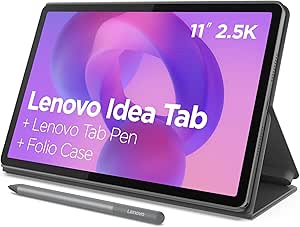 | Best Value for Everyday Coursework | Display: 11-inch 2.5K IPS touchscreen | Refresh rate: 90Hz | Processor: MediaTek Dimensity 6300, up to 2.4 GHz | VIEW LATEST PRICE | See Our Full Breakdown |
| Samsung Galaxy Tab S10 Lite – 6 GB RAM, 128 GB storage, up to 2 TB microSD, 10.9-inch LCD, Gray |  | Best for Expandable Storage and Long Days | Display: 10.9-inch LCD with adaptive brightness | Processor: Exynos 1380 | Memory: 6GB | VIEW LATEST PRICE | See Our Full Breakdown |
| Lenovo Idea Tab Plus 12.1-Inch Tablet with Tab Pen and Folio Case |  | Best for a Larger, Color-Rich Display | Display: 12.1-inch 2.5K IPS touchscreen | Refresh rate: 90Hz | Processor: MediaTek Dimensity 6400 | VIEW LATEST PRICE | See Our Full Breakdown |
| Lenovo Idea Tab 11-Inch 2.5K Tablet with Tab Pen and Folio Case |  | Best Entry-Level Pick for Note-Taking | Display: 11-inch 2.5K IPS touchscreen | Refresh rate: 90Hz | Processor: MediaTek Dimensity 6300 | VIEW LATEST PRICE | See Our Full Breakdown |
| tablet computers for student | Display | Storage | Processor | Memory |
|---|---|---|---|---|
| ECOPAD Android 15 10-inch Tabl | 10.1-inch IPS, 1280 × 800 HD | 64GB internal; expandable up to 1TB via microSD | ARM Cortex (2023) | — |
| Amazon Fire HD 10 Tablet | 10.1-inch, 1920 × 1200 Full HD, 224 ppi | 32GB (24GB available); expandable up to 1TB via microSD | Octa-core, up to 2.05GHz | — |
| Jeazans 10.1-Inch Android 16 T | 10.1-inch IPS touchscreen, 800 × 1280 | 64GB; expandable up to 1TB via TF card | Octa-core | 3GB RAM + 21GB virtual RAM |
| COLORROOM 11-Inch Android 16 T | 11-inch, 1280 × 800 | 128GB; expandable up to 1TB via microSD | Unisoc T606 octa-core, up to 1.8GHz | 32GB total (4GB RAM + 28GB virtual memory) |
| Samsung Galaxy Tab A11+ 11-Inc | 11 inches, up to 90Hz refresh rate | 128GB, expandable with microSD | — | 6GB RAM |
| COOPERS 10-Inch Android 15 Tab | 10-inch IPS, 1280 × 800 | 32GB, expandable up to 1TB with microSD | Quad-core Allwinner SC7731E, 1.3 GHz | 8GB advertised (3GB physical plus 5GB expanded) |
| CUPEISI CP31M 10.1-Inch Androi | 10.1-inch IPS, 1280 × 800 | 128GB, expandable up to 2TB via microSD | Octa-core T606, up to 2.0GHz | 20GB advertised (4GB physical plus 16GB expansion) |
| CUPEISI CP31M 10.1-Inch Androi | 10.1-inch IPS touchscreen, 1280 × 800 | 128GB, expandable up to 2TB with microSD | 2.0GHz octa-core | 20GB advertised (4GB physical plus 16GB expansion) |
| TT.KIDS 11-Inch Android 16 Tab | 11-inch IPS; resolution not specified | 256GB internal; expandable up to 1TB via microSD | Allwinner, 1.75GHz | 3GB physical RAM plus 29GB virtual memory |
| TABWEE T90 11-Inch Android 16 | 11-inch FHD IPS, 1920 × 1200, 380 nits | 128GB; TF card expansion up to 2TB | Unisoc T615 octa-core | Up to 24GB (8GB built-in plus 16GB virtual) |
| Lenovo Idea Tab Pro 12.7-Inch | 12.7-inch 3K LCD | 128GB | MediaTek Dimensity 8300 | 8GB |
| Lenovo Idea Tab 11-Inch 2.5K T | 11-inch 2.5K IPS touchscreen | 256GB | MediaTek Dimensity 6300, up to 2.4 GHz | 8GB |
| Samsung Galaxy Tab S10 Lite | 10.9-inch LCD with adaptive brightness | — | Exynos 1380 | 6GB |
| Lenovo Idea Tab Plus 12.1-Inch | 12.1-inch 2.5K IPS touchscreen | 128GB | MediaTek Dimensity 6400 | 8GB |
| Lenovo Idea Tab 11-Inch 2.5K T | 11-inch 2.5K IPS touchscreen | 128GB | MediaTek Dimensity 6300 | 4GB |
More Details on Our Top Picks
ECOPAD Android 15 10-inch Tablet with Keyboard and Mouse, 12GB RAM, 64GB Storage, 1TB Expandable, Wi‑Fi 6, Bluetooth, GMS Certified, IPS Touchscreen – Black
The ECOPAD is the most ready-to-work pick here: its keyboard and mouse are included, so students can draft assignments or manage documents without adding those accessories separately. Its listed 12GB of RAM also gives it a multitasking advantage over the Amazon Fire HD 10, whose listed RAM is 3GB or 4GB. That does not make the ECOPAD a better choice for every student: its 1280 × 800 display is less sharp than the Fire’s 1080p screen, making dense text and detailed diagrams less crisp. The 64GB onboard storage is modest, but microSD expansion up to 1TB can accommodate downloaded coursework and media. I’d choose it for accessory-ready productivity, not for the clearest screen or strongest camera.
Pros:- Keyboard and mouse are included for laptop-style typing and navigation.
- 12GB RAM is a listed advantage for keeping multiple apps active.
- microSD expansion supports up to 1TB of additional storage.
- Wi-Fi 6 and Bluetooth 5.0 provide modern wireless connectivity.
Cons:- 1280 × 800 resolution is less sharp than the Fire HD 10’s 1080p screen.
- 64GB of built-in storage may require a microSD card for larger offline libraries.
- The 2MP front and 8MP rear cameras are limited for video calls and photos.
Best for: Students who want a tablet with a keyboard and mouse included for typing assignments, browsing course materials, and basic multitasking.
Not ideal for: Students who read dense PDFs or rely on screen detail, since the HD resolution is lower than the Amazon Fire HD 10’s Full HD display.
- Display:10.1-inch IPS, 1280 × 800 HD
- Operating system:Android 15
- RAM:12GB
- Storage:64GB internal; expandable up to 1TB via microSD
- Processor:ARM Cortex (2023)
- Battery:6000mAh
- Connectivity:Wi-Fi 6, Bluetooth 5.0
- Included accessories:Keyboard and mouse
- Cameras:2MP front, 8MP rear
Our verdict“Choose the ECOPAD if included typing accessories and expandable storage matter more than a high-resolution screen.”
Amazon Fire HD 10 Tablet, 10.1-Inch Full HD Display, 32 GB, Black
The Fire HD 10’s main student advantage is its 10.1-inch 1080p display, which is sharper than the ECOPAD and Jeazans screens for reading digital textbooks, viewing slides, and watching recorded lessons. Its listed up to 13 hours of battery life also suits days with classes and study sessions away from an outlet. The tradeoff is a smaller starting storage capacity: it has 32GB, with expansion available by microSD, while the COLORROOM and Samsung Galaxy Tab A11+ each start at 128GB. This model is refurbished, a condition worth weighing when choosing a device for school. It also lacks an included keyboard or stylus, and its RAM listing is only 3GB or 4GB. I’d favor it for media and reading, not as the strongest laptop-style study setup.
Pros:- 1080p resolution provides a sharper image than the HD screens on the ECOPAD and Jeazans.
- Battery life is listed at up to 13 hours.
- Storage can be expanded by up to 1TB with a separately purchased microSD card.
- Parental controls and Alexa are included features.
Cons:- Refurbished condition may not suit students who prefer a new device.
- 32GB of built-in storage is less than the 128GB offered by the COLORROOM and Samsung Galaxy Tab A11+.
- Keyboard, stylus, and microSD card are sold separately; listed RAM is 3GB or 4GB.
Best for: Students who mainly read e-textbooks, view course videos, and want a sharp screen with long listed battery life.
Not ideal for: Students who need an included keyboard or stylus, or who want more built-in storage and higher listed RAM for multitasking.
- Display:10.1-inch, 1920 × 1200 Full HD, 224 ppi
- Processor:Octa-core, up to 2.05GHz
- RAM:3GB or 4GB
- Storage:32GB (24GB available); expandable up to 1TB via microSD
- Battery life:Up to 13 hours
- Weight:15.29oz (433.6g)
- Cameras:5MP front and rear; 1080p video recording
- Connectivity:Dual-band Wi-Fi, Bluetooth 5.3
- Condition:Refurbished, tested, and certified to look and work like new
Our verdict“Pick the Fire HD 10 for reading and video lessons on a sharper display, provided its refurbished condition and accessory needs fit your plans.”
Jeazans 10.1-Inch Android 16 Tablet Bundle with Keyboard, Mouse, Stylus, and Case
The Jeazans bundle supplies more study accessories out of the box than the ECOPAD: students get a keyboard, mouse, protective case, and stylus, covering typing, basic navigation, protection, and touch input in one package. That makes it a practical fit for someone assembling a first study setup. Its Android 16 system and Wi-Fi 6 are also newer on paper than the ECOPAD’s Android 15, while both offer 64GB of internal storage and expansion up to 1TB. The compromise is the listed memory configuration of 3GB RAM plus 21GB virtual RAM, which is not the same as 24GB of physical RAM and may limit heavier multitasking compared with the ECOPAD’s listed 12GB RAM. The 800 × 1280 screen is HD, not a high-resolution option for detailed textbook pages.
Pros:- Includes keyboard, mouse, protective case, and stylus.
- Android 16, Wi-Fi 6, and Bluetooth 5.4 are listed.
- 64GB storage can be expanded up to 1TB with a separately purchased TF card.
- 6000mAh battery and USB-C fast charging are specified.
Cons:- Only 3GB is listed as physical RAM; virtual memory is not equivalent to additional physical RAM.
- 800 × 1280 resolution is modest for reading detailed documents.
- TF card for expanded storage is not included.
Best for: Students starting from scratch who want a tablet bundle with a keyboard, mouse, stylus, and protective case included.
Not ideal for: Students who regularly run demanding apps or need crisp detail for diagrams, since its listed physical RAM is 3GB and its screen is 800 × 1280.
- Display:10.1-inch IPS touchscreen, 800 × 1280
- Operating system:Android 16
- Processor:Octa-core
- Memory:3GB RAM + 21GB virtual RAM
- Storage:64GB; expandable up to 1TB via TF card
- Battery:6000mAh
- Connectivity:Wi-Fi 6, Bluetooth 5.4, USB Type-C
- Included accessories:Keyboard, mouse, protective case, stylus
- Warranty:One-year limited warranty
Our verdict“Choose the Jeazans if having the main study accessories in one bundle matters more than higher physical RAM or a sharper screen.”
COLORROOM 11-Inch Android 16 Tablet, 128GB, Blue
The COLORROOM makes a practical case for students who want room for offline files without buying a memory card right away: its 128GB internal storage matches the Samsung Galaxy Tab A11+ and exceeds the 64GB ECOPAD and Jeazans. It also includes a shock-proof case, useful for carrying a tablet between classes, and its 8000mAh battery is larger by capacity than those two bundle tablets. The screen measures 11 inches, but its 1280 × 800 resolution is still modest; the Fire HD 10 has a smaller 10.1-inch panel with a higher 1080p resolution. Battery-life information is also mixed in the supplied details: the specifications list up to 8 hours, while the description claims 8–10 hours. I’d pick this for storage and included protection, not display sharpness.
Pros:- 128GB of built-in storage is more than the ECOPAD and Jeazans provide.
- Shock-proof case is included for everyday transport.
- 8000mAh battery capacity and 18W fast charging are specified.
- 11-inch display and Wi-Fi 6 support.
Cons:- 1280 × 800 resolution is less sharp than the Fire HD 10’s 1080p display.
- Battery life is listed as up to 8 hours in the specifications, while the description claims 8–10 hours.
- microSD card for expansion up to 1TB is sold separately.
Best for: Students who want 128GB of built-in space and an included shock-proof case for carrying class files and media.
Not ideal for: Students who prioritize sharp text, detailed diagrams, or a clearly stated long battery-life figure.
- Display:11-inch, 1280 × 800
- Operating system:Android 16
- Processor:Unisoc T606 octa-core, up to 1.8GHz
- Memory:32GB total (4GB RAM + 28GB virtual memory)
- Storage:128GB; expandable up to 1TB via microSD
- Battery capacity:8000mAh
- Charging:18W fast charging
- Audio:Dual stereo speakers
- Included components:Shock-proof case, USB cable, user manual
Our verdict“Choose the COLORROOM for generous built-in storage and an included protective case, but not if display clarity is your priority.”
Samsung Galaxy Tab A11+ 11-Inch Tablet, 6GB RAM, 128GB Storage, Expandable, Gray
The Samsung Galaxy Tab A11+ is the strongest balanced option in this group for students who want a larger screen, 6GB of RAM, and substantial built-in storage without relying on a bundled keyboard. Its 90Hz display can make scrolling through notes and web pages feel smoother than on the listed 60Hz-unspecified ECOPAD, Jeazans, and COLORROOM screens. The 128GB capacity matches the COLORROOM, while Samsung adds quad speakers with Dolby Atmos and lists up to 15 hours of battery life. That makes it better suited to mixed schoolwork and entertainment than a bundle-focused pick like the Jeazans, though accessories are less generous: the 25W charger and microSD card are sold separately, and no keyboard or stylus is listed as included. Its display resolution is not provided here, so I would not rank it on sharpness alone.
Pros:- 6GB RAM and 128GB storage provide a useful base for everyday apps and course files.
- 11-inch display supports a 90Hz refresh rate for smoother scrolling.
- Quad speakers with Dolby Atmos suit lecture videos and entertainment.
- Battery life is listed at up to 15 hours, with fast charging support.
Cons:- 25W charger and microSD card are sold separately.
- No keyboard, stylus, or case is listed among the included components.
- Display resolution is not specified in the supplied product details.
Best for: Students who want a larger tablet for everyday multitasking, media, and schoolwork, and can supply their own accessories.
Not ideal for: Students who need an included keyboard, stylus, protective case, or charger as part of their initial setup.
- Display:11 inches, up to 90Hz refresh rate
- Memory:6GB RAM
- Storage:128GB, expandable with microSD
- Battery capacity:7040mAh
- Battery life:Up to 15 hours
- Audio:Quad speakers with Dolby Atmos
- Front camera:5MP
- Included components:Data cable, ejection pin, quick start guide
- Warranty:2 years
Our verdict“Pick the Samsung Galaxy Tab A11+ for a well-equipped everyday tablet with smooth scrolling and ample storage, if you do not need bundled accessories.”
COOPERS 10-Inch Android 15 Tablet, 32GB Storage, 8GB RAM
The COOPERS CP10S is a straightforward pick for students who mainly need a screen for reading, web research, and video lessons. Its 10-inch IPS display gives documents more room than a phone, while microSD expansion up to 1TB can hold downloaded class files and media beyond the modest 32GB built-in storage. Compared with the CUPEISI CP31M models, it has a less capable quad-core processor and does not include a keyboard, mouse, or stylus; its advantage is a simpler setup for lighter tasks. The advertised 8GB RAM includes expanded memory, so it should not be read as 8GB of physical RAM. Up to 8 hours of battery life is useful for a school day with moderate use, but the entry-level hardware is a poor match for demanding multitasking.
Pros:- 10-inch IPS screen offers useful space for reading course material
- Storage can be expanded up to 1TB with a microSD card
- Includes GPS, Bluetooth, and dual speakers
- Battery life is listed at up to 8 hours
Cons:- Entry-level 1.3GHz quad-core processor is better suited to basic tasks than heavy multitasking
- 32GB internal storage is limited without a separately purchased microSD card
- No keyboard, mouse, or stylus is included
Best for: Students who need an affordable-feeling, large-screen device for reading, browsing, and watching lessons, and who are comfortable adding their own accessories.
Not ideal for: Students who need smooth multitasking, built-in typing accessories, or reliable headroom for demanding apps; its entry-level quad-core processor and limited physical memory are a constraint.
- Operating system:Android 15
- Display:10-inch IPS, 1280 × 800
- Processor:Quad-core Allwinner SC7731E, 1.3 GHz
- Memory:8GB advertised (3GB physical plus 5GB expanded)
- Storage:32GB, expandable up to 1TB with microSD
- Battery:6000mAh; up to 8 hours
- Connectivity:2.4GHz Wi-Fi, Bluetooth 4.2, GPS
- Cameras:8MP rear, 2MP front
Our verdict“Choose the COOPERS CP10S for basic reading and online coursework, but pick a CUPEISI bundle if you need included typing accessories or stronger processing.”
CUPEISI CP31M 10.1-Inch Android 16 Tablet, 20GB RAM, 128GB Storage, Expandable to 2TB, with Keyboard, Mouse, Stylus, and Case
The CUPEISI CP31M bundle makes sense for students who want typing and note-taking accessories in the box rather than building a setup piece by piece. The keyboard, wireless mouse, stylus, and foldable case support a mix of essays, navigation, handwritten notes, and everyday protection. Its 128GB storage and microSD expansion up to 2TB give it more room for files than the COOPERS CP10S, while the octa-core T606 and dual-band Wi-Fi are a better fit for routine multitasking. The display remains a modest 1280 × 800, so text and diagrams will look less detailed than on the TABWEE T90 and its FHD screen. Also, the advertised 20GB RAM combines 4GB physical memory with expansion, and battery life is listed at about 6 hours on average.
Pros:- Keyboard, wireless mouse, stylus, and foldable case are included
- 128GB internal storage with expansion up to 2TB
- Octa-core T606 processor is a stronger fit for everyday multitasking than the COOPERS CP10S
- Wi-Fi 6 supports both 2.4GHz and 5GHz networks
Cons:- 1280 × 800 resolution is modest for a 10.1-inch screen
- Only 4GB is physical RAM; the rest of the advertised memory is expansion
- Battery life is listed at about 6 hours on average
Best for: Students starting a budget study setup who want a keyboard, mouse, stylus, and protective case included for typing and basic handwritten notes.
Not ideal for: Students who read dense PDFs for long periods, need high-resolution diagrams, or expect a full day of heavy use away from a charger.
- Operating system:Android 16
- Display:10.1-inch IPS, 1280 × 800
- Processor:Octa-core T606, up to 2.0GHz
- Memory:20GB advertised (4GB physical plus 16GB expansion)
- Storage:128GB, expandable up to 2TB via microSD
- Connectivity:Wi-Fi 6, 2.4GHz and 5GHz; Bluetooth 5.0
- Battery:6000mAh; listed average of 6 hours
- Included accessories:Keyboard, wireless mouse, stylus, foldable protective case, Type-C cable
Our verdict“Pick this CP31M bundle if included accessories matter more than screen sharpness or longer battery endurance.”
CUPEISI CP31M 10.1-Inch Android 16 Tablet with Keyboard, Mouse, Case, and Stylus
This CP31M listing suits students who keep a large collection of downloaded readings, lecture recordings, and project files on one device. It pairs 128GB built-in storage with support for microSD cards up to 2TB, and the bundled keyboard, mouse, stylus, and case provide a ready-made study arrangement. Against the nearly identical CUPEISI CP31M bundle listed alongside it, the core hardware and accessories are essentially the same; the listing details here emphasize the touchscreen and Wi-Fi 6. That means buyers should compare the bundles carefully rather than expect a meaningfully different tablet. Its 1280 × 800 display is less crisp than the TABWEE T90’s 1920 × 1200 panel, and the microSD card is not included. The 20GB memory figure also includes 16GB of expansion beyond 4GB physical RAM.
Pros:- 128GB internal storage plus microSD expansion up to 2TB
- Keyboard, wireless mouse, stylus, and foldable case are included
- Wi-Fi 6 with 2.4GHz and 5GHz support
- Octa-core processor is suited to common school and media tasks
Cons:- 1280 × 800 resolution is modest for reading detailed material
- MicroSD card must be purchased separately
- Only 4GB is physical RAM; 16GB of the advertised figure is memory expansion
Best for: Students who store extensive offline course materials and want a tablet bundle with keyboard, mouse, stylus, and case included.
Not ideal for: Students who need a sharper display for fine text or detailed diagrams, or who expect the advertised 20GB memory to mean 20GB of physical RAM.
- Operating system:Android 16
- Display:10.1-inch IPS touchscreen, 1280 × 800
- Processor:2.0GHz octa-core
- Memory:20GB advertised (4GB physical plus 16GB expansion)
- Storage:128GB, expandable up to 2TB with microSD
- Wireless:Wi-Fi 6, 2.4GHz and 5GHz; Bluetooth 5.0
- Battery:6000mAh; up to 6–8 hours
- Included accessories:Keyboard, wireless mouse, stylus, foldable protective case, Type-C cable
Our verdict“Choose this CP31M listing for its roomy storage and ready-to-use accessories, but favor the TABWEE T90 if display detail matters more.”
TT.KIDS 11-Inch Android 16 Tablet Bundle with Keyboard, Mouse, Stylus, and Case
The TT.KIDS 11-inch bundle offers 256GB of built-in storage, twice the capacity of the CUPEISI CP31M models, making it a better fit for students who keep course downloads and media on the tablet without immediately adding a card. It also includes a keyboard, mouse, stylus, case, and wired headphones, giving it a broader accessory set than the TABWEE T90, which does not list headphones. Its 7800mAh battery is rated for 7 hours, and Wi-Fi 6 plus Bluetooth 5.4 provide current wireless connections. The key compromise is the limited 3GB of physical RAM; the remaining advertised memory is virtual, so intensive multitasking may feel constrained. The display resolution is not specified, which makes it harder to judge text sharpness against the TABWEE’s stated FHD panel.
Pros:- 256GB internal storage with support for up to 1TB microSD expansion
- Includes keyboard, mouse, stylus, foldable case, and wired headphones
- 7800mAh battery is rated for 7 hours
- Wi-Fi 6 and Bluetooth 5.4 support modern wireless connections
Cons:- Only 3GB of physical RAM; virtual memory does not replace dedicated RAM for multitasking
- Display resolution is not specified
- 1.75GHz Allwinner processor is a modest choice for demanding workloads
Best for: Students who want generous built-in space for offline lessons and files, plus a bundled keyboard, stylus, mouse, case, and headphones.
Not ideal for: Students who run several demanding apps at once or need a clearly specified, high-resolution screen for detailed reading and diagrams.
- Operating system:Android 16
- Display:11-inch IPS; resolution not specified
- Processor:Allwinner, 1.75GHz
- Memory:3GB physical RAM plus 29GB virtual memory
- Storage:256GB internal; expandable up to 1TB via microSD
- Battery:7800mAh; 7 hours
- Connectivity:Wi-Fi 6, Bluetooth 5.4
- Cameras and audio:5MP front, 8MP rear; dual stereo speakers
Our verdict“Choose the TT.KIDS bundle for plentiful built-in storage and a wide accessory set, but consider the TABWEE T90 for a specified FHD screen and more physical RAM.”
TABWEE T90 11-Inch Android 16 Tablet with Keyboard, Mouse, and Stylus, 24GB RAM, 128GB Storage
The TABWEE T90 is the strongest choice here for students who spend long sessions reading PDFs, watching lessons, or switching between coursework and entertainment. Its 11-inch 1920 × 1200 FHD display is substantially sharper than the 1280 × 800 panels on both CUPEISI CP31M listings, giving small text and diagrams more definition. The Unisoc T615 octa-core processor and 8GB of built-in RAM also give it a more convincing multitasking foundation than the TT.KIDS bundle’s 3GB physical RAM. A keyboard, mouse, and stylus are included, though it lacks the TT.KIDS model’s headphones and 256GB built-in storage. The advertised 24GB RAM includes 16GB virtual memory, and the stated 11-hour figure applies to video playback, not general study use.
Pros:- 11-inch FHD IPS screen offers more detail than the CUPEISI CP31M displays
- 8GB built-in RAM provides a clearer multitasking baseline than virtual-memory-heavy bundles
- Includes keyboard, mouse, and stylus
- 8000mAh battery is rated for up to 11 hours of video playback
Cons:- 16GB of the advertised 24GB RAM is virtual memory
- 128GB built-in storage is less than the TT.KIDS tablet’s 256GB
- Battery estimate is for video playback rather than general study use
Best for: Students who read detailed PDFs, view diagrams, and stream lessons, and want a sharper display with keyboard, mouse, and stylus included.
Not ideal for: Students who need more than 128GB built-in storage, included headphones, or a stated battery estimate for mixed school tasks.
- Operating system:Android 16
- Display:11-inch FHD IPS, 1920 × 1200, 380 nits
- Processor:Unisoc T615 octa-core
- Memory:Up to 24GB (8GB built-in plus 16GB virtual)
- Storage:128GB; TF card expansion up to 2TB
- Battery:8000mAh; up to 11 hours video playback
- Cameras:13MP rear, 5MP front
- Connectivity:Dual-band Wi-Fi, Bluetooth 5.0, GPS, GLONASS, Galileo, Beidou
Our verdict“Pick the TABWEE T90 if screen clarity is your priority, and choose the TT.KIDS bundle instead if built-in storage and included headphones matter more.”
Lenovo Idea Tab Pro 12.7-Inch Tablet with Pen and Folio Case
I’d choose the Idea Tab Pro for students who want room to read, annotate, and keep study materials visible side by side. Its 12.7-inch 3K display is larger and sharper than the 11-inch panels on the Lenovo Idea Tab and Idea Tab Plus, which can make lengthy readings and handwritten notes feel less cramped. The included Tab Pen Plus and folio case also mean fewer accessories to source separately, while the Dimensity 8300 gives it more processing headroom than the Dimensity 6300 in the smaller Idea Tab models. Quad JBL speakers and over 11 hours of video streaming suit lectures and downtime alike. The tradeoff is portability: this is the bulkiest study companion here, and its listed 128GB storage has no stated expansion option.
Pros:- Large 12.7-inch 3K display gives readings and notes more working space
- Tab Pen Plus and folio case are included
- Dimensity 8300 offers more processing headroom than the Dimensity 6300 in the Idea Tab models
- Quad JBL speakers and over 11 hours of listed video streaming support lectures and entertainment
Cons:- Larger screen makes it less portable than the 11-inch Lenovo Idea Tab
- 128GB is the only stated storage capacity, with no expansion option specified
- Video-streaming battery figure may not match a full day of mixed schoolwork
Best for: Students who regularly annotate PDFs, read large documents, or split study materials across a roomy screen.
Not ideal for: Students who prioritize a compact tablet for crowded commutes or need expandable storage for a large offline media library.
- Display:12.7-inch 3K LCD
- Processor:MediaTek Dimensity 8300
- Memory:8GB
- Storage:128GB
- Wireless:Wi-Fi 6E
- Speakers:Quad JBL speakers with Dolby Atmos
- Video streaming battery life:Over 11 hours
- Included accessories:Tab Pen Plus, folio case, USB-C to USB-C cable
Our verdict“Choose the Idea Tab Pro if screen space and stronger processing matter more to your studies than a light, compact carry.”
Lenovo Idea Tab 11-Inch 2.5K Tablet with Pen and Folio Case, 90Hz, 8GB RAM, 256GB Storage
The 11-inch Idea Tab is my balanced pick for students who want a sharp screen, useful included accessories, and ample built-in storage without moving to a larger tablet. Its 256GB capacity doubles the Idea Tab Plus’s 128GB, leaving more room for lecture downloads, class files, and apps. The 90Hz refresh rate makes scrolling notes and web pages feel smoother, while the included pen and folio support handwritten work and basic protection. Compared with the 12.7-inch Idea Tab Pro, this model is easier to carry between classes, though its Dimensity 6300 is a less powerful processor. The listed up to 12 hours refers to YouTube playback, not a guarantee for a full day of mixed tasks, and demanding creative workloads may suit the Pro better.
Pros:- 256GB storage offers more room than the Idea Tab Plus’s 128GB
- 11-inch 2.5K screen with a smooth 90Hz refresh rate
- Lenovo Tab Pen and folio case are included
- Up to 12 hours of YouTube playback is listed
Cons:- Dimensity 6300 has less processing headroom than the Idea Tab Pro’s Dimensity 8300
- Battery figure is based on YouTube playback and may differ with schoolwork
- 11-inch screen provides less space than the Idea Tab Pro’s 12.7-inch display
Best for: Students who want an easy-to-carry tablet for notes, online classes, and downloaded course materials, with pen and folio included.
Not ideal for: Students who run demanding creative apps or want a larger canvas for split-screen reading and writing.
- Display:11-inch 2.5K IPS touchscreen
- Refresh rate:90Hz
- Processor:MediaTek Dimensity 6300, up to 2.4 GHz
- Memory:8GB
- Storage:256GB
- Battery life:Up to 12 hours
- Battery capacity:7216 mAh
- Included accessories:Lenovo Tab Pen and folio case
Our verdict“Pick this Idea Tab for portable everyday coursework if you value 256GB storage and included study accessories over premium processing power.”
Samsung Galaxy Tab S10 Lite – 6 GB RAM, 128 GB storage, up to 2 TB microSD, 10.9-inch LCD, Gray
Students who keep large course libraries, downloaded videos, or project files on their tablet get a useful advantage from the Galaxy Tab S10 Lite’s microSD expansion up to 2TB. That flexibility sets it apart from the Lenovo Idea Tab Plus, whose listed storage is 128GB with no expansion specified. Samsung also includes an S Pen, making handwritten notes and diagrams easier to capture without adding a separate stylus. Its listed battery life reaches up to 16 hours, longer on paper than the Lenovo Idea Tab’s 12-hour YouTube figure, though the figures use different descriptions and may not represent equal workloads. The tradeoff is 6GB of RAM, less than the 8GB in several Lenovo options, which may constrain heavy multitasking. A compatible 45W charger for fast charging is sold separately.
Pros:- Storage can expand from 128GB to up to 2TB with microSD
- S Pen is included for handwriting and drawing
- Listed battery life is up to 16 hours
- 10.9-inch display has adaptive brightness
Cons:- 6GB RAM is less than the 8GB in the Lenovo Idea Tab and Idea Tab Plus
- 45W charger for fast charging is sold separately
- 10.9-inch screen is smaller than the 12.1-inch Idea Tab Plus
Best for: Students who store many offline files or videos and want a tablet with an included pen and expandable capacity.
Not ideal for: Students who frequently keep many demanding apps open or want the strongest listed memory configuration.
- Display:10.9-inch LCD with adaptive brightness
- Processor:Exynos 1380
- Memory:6GB
- Internal storage:128GB
- Expandable storage:Up to 2TB via microSD
- Battery life:Up to 16 hours
- Charging:Fast charging in about 2 hours with compatible 45W charger, sold separately
- Included components:S Pen, data cable, ejection pin, quick start guide
Our verdict“Choose the Galaxy Tab S10 Lite if expandable storage and long listed battery life matter more than having 8GB of RAM.”
Lenovo Idea Tab Plus 12.1-Inch Tablet with Tab Pen and Folio Case
The Idea Tab Plus gives students a bigger study surface than the 11-inch Idea Tab while remaining smaller than the 12.7-inch Idea Tab Pro. Its 12.1-inch 2.5K screen, 90Hz refresh rate, and stated 96% DCI-P3 color gamut make it a strong fit for reading, handwritten notes, and visual coursework. The included Tab Pen and folio case add practical value for class use, and the 800-nit maximum brightness rating may help when working in brighter surroundings. Against the Idea Tab Pro, this model lists a less powerful Dimensity 6400 processor, but it offers up to 13 hours of video playback and a slightly more compact size. Its 128GB storage is less generous than the 256GB Idea Tab, and listed battery life is based on video playback.
Pros:- 12.1-inch 2.5K display offers more room than the 11-inch Idea Tab
- 90Hz refresh rate and stated 96% DCI-P3 color gamut
- Tab Pen and folio case are included
- Up to 13 hours of video playback is listed
Cons:- Dimensity 6400 is a lower-tier processor than the Idea Tab Pro’s Dimensity 8300
- 128GB storage is half the capacity of the 256GB Idea Tab
- Battery estimate is for video playback rather than mixed study use
Best for: Students who want a larger-than-standard screen for notes and visual assignments but prefer a size below 12.7 inches.
Not ideal for: Students who need more than 128GB of built-in storage or prioritize stronger listed processing power for demanding work.
- Display:12.1-inch 2.5K IPS touchscreen
- Refresh rate:90Hz
- Processor:MediaTek Dimensity 6400
- Memory:8GB
- Storage:128GB
- Color gamut:96% DCI-P3
- Maximum brightness:Up to 800 nits
- Battery life:Up to 13 hours of video playback
- Included accessories:Lenovo Tab Pen and folio case
Our verdict“Choose the Idea Tab Plus if you want a generous, color-rich screen with a pen and folio, and can work within 128GB of storage.”
Lenovo Idea Tab 11-Inch 2.5K Tablet with Tab Pen and Folio Case
This 11-inch Idea Tab keeps the same sharp 2.5K, 90Hz display and included pen-and-folio setup as the 8GB version, but pairs them with 4GB of memory and 128GB of storage. That makes it a simpler fit for students focused on reading, handwritten notes, and routine browsing rather than keeping many apps active at once. Compared with the 8GB Lenovo Idea Tab, this configuration has half the memory and half the storage, so it is the more limited choice for multitasking and keeping course files locally. It still offers quad Dolby Atmos-tuned speakers and up to 12 hours of listed battery life, but that figure may not reflect mixed classroom use. I’d choose the 8GB model for heavier workloads; this one makes more sense for a narrower, basic study routine.
Pros:- Sharp 11-inch 2.5K display with a 90Hz refresh rate
- Tab Pen and folio case are included
- Quad Dolby Atmos-tuned speakers
- Up to 12 hours of battery life is listed
Cons:- 4GB RAM is half the memory of the 8GB Idea Tab configuration
- 128GB storage is half the capacity of the 256GB Idea Tab configuration
- Listed battery life may differ during mixed schoolwork
Best for: Students who mainly read, browse, stream lectures, and take handwritten notes, with modest multitasking needs.
Not ideal for: Students who keep many apps open, work with large files, or want more storage headroom than 128GB.
- Display:11-inch 2.5K IPS touchscreen
- Refresh rate:90Hz
- Processor:MediaTek Dimensity 6300
- Processor speed:2.4 GHz
- Memory:4GB
- Storage:128GB
- Battery life:Up to 12 hours
- Included components:Tablet, Tab Pen, folio case, USB-C 2.0 charging cable, documentation
Our verdict“Choose this configuration for basic notes and reading, but step up to the 8GB Idea Tab if you multitask or store lots of class materials.”

How We Picked
I ranked these tablet computers for students by how well their listed features support common academic tasks: reading course materials, writing notes, managing documents, attending online classes, and switching between apps. I gave greater weight to a useful screen, adequate stated memory and storage, included pen or keyboard support, and a form factor that makes sense for carrying between classes. I also separated tablets with distinct screen or storage advantages from models whose main differentiator is an accessory bundle.
The order reflects the strength and clarity of each student use case, not a claim that every tablet has been independently tested. The Lenovo Idea Tab 11-Inch 2.5K with 90Hz and 256GB leads for its balanced listed configuration and included pen and folio; the Samsung Galaxy Tab A11+ and Lenovo’s larger models follow for students who favor expandable storage or a bigger workspace. Bundle-focused options rank lower because their listings emphasize included peripherals more than differentiated study hardware. Exact performance, software support, accessory compatibility, and regional configurations should be confirmed before buying.
| tablet computers for student | Operating system |
|---|---|
| ECOPAD Android 15 10-inch Tabl | Android 15 |
| Amazon Fire HD 10 Tablet | — |
| Jeazans 10.1-Inch Android 16 T | Android 16 |
| COLORROOM 11-Inch Android 16 T | Android 16 |
| Samsung Galaxy Tab A11+ 11-Inc | — |
| COOPERS 10-Inch Android 15 Tab | Android 15 |
| CUPEISI CP31M 10.1-Inch Androi | Android 16 |
| CUPEISI CP31M 10.1-Inch Androi | Android 16 |
| TT.KIDS 11-Inch Android 16 Tab | Android 16 |
| TABWEE T90 11-Inch Android 16 | Android 16 |
| Lenovo Idea Tab Pro 12.7-Inch | — |
| Lenovo Idea Tab 11-Inch 2.5K T | — |
| Samsung Galaxy Tab S10 Lite | — |
| Lenovo Idea Tab Plus 12.1-Inch | — |
| Lenovo Idea Tab 11-Inch 2.5K T | — |
Factors to Consider When Choosing Tablet Computers For Students
Tablet choice affects more than screen size: it can shape how you take notes, organize files, and complete work away from a desk. I’d start with your actual course routine, then compare the tablet’s core hardware and software support before letting a keyboard bundle or a large advertised memory figure make the decision.
Match the Screen to Your Study Routine
A compact tablet is easier to carry and hold for readings, but a larger display gives you more room for lecture slides beside notes or a document beside a browser. Students who mostly annotate PDFs and read should prioritize comfortable viewing and manageable weight over the biggest panel. A 12-inch-plus model can make split-screen study less cramped, though it takes up more space in a backpack and on a small classroom desk. Screen resolution also matters when reading dense diagrams or small text; a sharper display can reduce the need to zoom and reposition pages. Refresh rate may make scrolling feel smoother, but it should not outrank legibility, battery needs, or app compatibility. Think about where you will use the tablet most before choosing a size.
Choose a Note-Taking Setup Before Buying a Pen
An included stylus is useful only if it works well with the apps and writing tasks you rely on. Check whether your classes call for handwritten equations, PDF markup, sketching, or mainly typed notes; each can favor a different input setup. A pen bundled with a tablet may save a separate purchase, but the listing alone may not spell out pressure sensitivity, palm rejection, replacement nibs, or how the pen charges. If handwriting is central to your coursework, look for confirmed compatibility with your preferred note app and verify those pen details. For typed essays, a dependable keyboard matters more than a stylus, and a separate Bluetooth keyboard may suit you better than a bundle. Avoid paying for accessories you will rarely use.
Treat RAM and Storage as Separate Decisions
RAM affects how comfortably a tablet can keep several apps active, while storage holds downloaded readings, lecture recordings, apps, and offline files. These numbers are not interchangeable, so a large advertised memory figure does not automatically mean there is ample permanent space for coursework. Some listings use terms such as expanded or virtual memory; check the manufacturer’s exact specification to distinguish that from physical RAM. Expandable storage can help with files, but a microSD card may not expand every app’s internal storage or improve multitasking. Students who use cloud storage still need enough local capacity for travel, unreliable campus Wi-Fi, and large apps. Estimate your offline workload before choosing a low-storage configuration.
Check App Access and Software Support
Before buying, confirm that the tablet can run the learning platform, document tools, video meeting app, and library services your school requires. Android models may differ in software updates, Google app access, and manufacturer support, while Amazon Fire tablets use a different app ecosystem that may not match every student’s workflow. A device can have an appealing screen and included keyboard yet still be a poor fit if a required app is unavailable or limited. Check the exact model and operating system rather than assuming every tablet from a brand works the same way. Also look for stated update support and warranty details, since a student tablet may need to last through several school terms. When requirements are unclear, ask your school’s IT department before purchase.
Decide Whether a Bundle Is Really Better Value
Keyboard, mouse, case, and stylus bundles can create a ready-to-study setup, especially for students buying their first tablet. Their usefulness depends on accessory quality, connection method, layout, and whether the case leaves the tablet stable at a comfortable typing angle. A bundle can also make the package look more capable than the tablet’s core specifications justify. Compare the included keyboard with the amount of writing you expect to do; frequent essay writers may prefer a larger keyboard or a laptop instead. If you already own Bluetooth peripherals, a tablet with stronger core hardware may be the better choice. Count only accessories you will use regularly when judging the package.
Set a Workload Ceiling Before Choosing a Tablet
Reading, note-taking, email, and web research place different demands on a tablet than video editing, advanced art apps, or running many demanding applications at once. A student who mainly annotates readings can usually prioritize portability and a comfortable pen setup. A student in design, engineering, or media courses should check app requirements and memory needs before selecting an entry-level model. Tablets may also lack desktop software or ports required for specialized coursework, so confirm whether your program supports a tablet-only setup. If the tablet must replace a computer, test the full workflow on paper first: file handling, external display support, keyboard shortcuts, and required software all matter. Paying more makes sense when it solves a real course-related limitation rather than adding unused features.
Frequently Asked Questions
Can a tablet replace a laptop for all of my classes?
That depends on the software and assignments in your program. Tablets are well suited to reading, handwritten notes, online research, and many document tasks, but some courses require desktop applications, specialized file tools, or more extensive multitasking. Check your school’s software list and ask whether the web or mobile versions meet course requirements. If you need a tablet as your only computer, confirm keyboard support, file management, ports, and external display compatibility for the exact model. A tablet can be a strong study companion without being a full laptop replacement.
Should I pick a tablet with a bundled keyboard or buy one separately?
A bundle is convenient when you need a case and keyboard immediately, and it can reduce the work of finding compatible accessories. It is not automatically the better setup: bundled keyboards can vary in layout, typing comfort, connection reliability, and viewing-angle support. If you write long essays, check the keyboard dimensions and whether it has the keys and shortcuts you use. Students who already own Bluetooth peripherals may get more value from choosing a tablet for its screen, memory, and software support. Compare the accessory details rather than treating the word “bundle” as a quality guarantee.
Is expandable storage enough reason to choose one tablet over another?
Expandable storage is useful for keeping readings, videos, and other files available offline, particularly when you have limited cloud access. It does not necessarily add RAM, speed up apps, or let every app run from a memory card. If you use large creative or technical apps, prioritize sufficient built-in storage and suitable memory as well. Check the supported card capacity and what kinds of content can be stored on it for the exact model. Expandability is a helpful flexibility feature, not a substitute for choosing a tablet suited to your workload.
Are the listed RAM figures on Android tablet bundles directly comparable?
Not always. Product listings may combine physical RAM with virtual or expanded memory, and terminology can differ between manufacturers. Physical RAM is the more useful figure when comparing how many apps a tablet can keep active, while storage capacity is a separate measure for files and apps. Check the manufacturer’s specification for the exact model and look for a clear breakdown before relying on a large headline number. If that information is missing, compare other confirmed details such as screen, onboard storage, software support, and included accessories.
When should I choose a larger tablet instead of an 11-inch model?
A larger display makes sense if you regularly split the screen between notes and slides, review full-page documents, or draw detailed diagrams. It can reduce constant zooming and make a tablet feel closer to a small study workspace. The tradeoff is extra bulk when carrying it between classes and less comfortable one-handed reading. An 11-inch model is often easier to pack and handle for quick notes, commuting, and everyday coursework. Base the choice on the amount of side-by-side work you actually do, not screen size alone.
Conclusion
For the strongest balance of screen detail, memory, storage, and included note-taking gear, I’d choose the Lenovo Idea Tab 11-Inch 2.5K with 90Hz, 8GB RAM, and 256GB storage as best overall. The Amazon Fire HD 10 is the best value-style choice for students whose apps and school workflow fit Fire OS and who mainly need a screen for reading and basic tasks. For beginners who want peripherals in one package, the Jeazans, CUPEISI, TT.KIDS, or TABWEE bundles offer a ready-made keyboard-and-stylus starting point, though I’d verify accessory and software details first. Students seeking a premium, larger study workspace should look at the Lenovo Idea Tab Pro 12.7-Inch; those who prefer expandable storage and a recognizable Android tablet line can compare the Samsung Galaxy Tab A11+ and Galaxy Tab S10 Lite. For everyday portability, choose an 10- or 11-inch model; for split-screen documents and roomy note-taking, favor Lenovo’s 12-inch options. The right pick is the one that supports your required apps and coursework, not simply the one with the fullest accessory bundle.