The best smart lock for most homes is the Schlage Encode Smart WiFi Deadbolt, which combines built-in Wi-Fi, a backlit keypad, and a deadbolt mechanism built to a higher standard than most budget rivals. If you want faster, more futuristic entry, the Wyze Palm Lock with palm vein recognition and the Aqara UWB Smart Lock U400 with Apple Home Key support both push the category forward. The main tradeoff in this space is between convenience features like biometrics and remote access, and price, battery life, and smart-home compatibility. Cheaper locks often skip Wi-Fi radios or Matter support, while premium models can lock you into specific ecosystems. Keep reading for the full breakdown of all 15 picks and which one fits your door, budget, and routine.

Get the latest gadgets delivered free — and shop member deals
- Fast, free delivery on millions of items
- Access to Prime Big Deal Days deals on October 6–7
- Prime Video, Amazon Music and more included
Complete the kit



Key Takeaways
- Built-in Wi-Fi was the biggest differentiator among the 15 locks — models like the Schlage Encode and Yale Assure Lock 2 work remotely without a separate hub, while several budget picks require Bluetooth only unless you buy a bridge.
- Biometrics split into two tiers: fingerprint readers (eufy C220, Tapo DL110, ULTRALOQ Bolt SE) are now common at midrange prices, but palm vein recognition (Wyze Palm Lock, eufy FamiLock S3 Max) remains a premium feature that works better for kids and wet hands.
- The Philips lineup dominated by volume, but the models differ mainly in handle bundling and finish — buyers should pick based on door hardware matching rather than features alone.
- Ecosystem lock-in is the hidden cost: the Aqara U400 is superb for Apple households with Home Key, and the ULTRALOQ Bolt SE leads on Matter over Thread, but both are weaker fits outside their intended platforms.
- Deadbolt build quality consistently separated Schlage and Yale from the budget field — cheaper locks matched features but used lighter mechanisms and plastic interior housings.
| Wyze Auto-Lock Bolt v2 Fingerprint Keyless Entry Smart Lock |  | Best for Fast Fingerprint Entry | Unlock methods: Fingerprint, app, keypad code, physical key | Fingerprint unlock speed: 0.5 seconds | Code and fingerprint capacity: Up to 50 | VIEW LATEST PRICE | See Our Full Breakdown |
| Yale Assure Lock 2 WiFi Smart Lock Deadbolt with Keypad, Keyless Entry, Black Suede |  | Best for Guest Access Management | Connectivity: 2.4 or 5 GHz Wi-Fi; no hub required | Entry methods: Keypad, smartphone or Apple Watch app, auto-unlock, backup key | Entry code capacity: Unlimited | VIEW LATEST PRICE | See Our Full Breakdown |
| Philips Wi-Fi Smart Deadbolt Lock with Keyless Entry |  | Best for Flexible Entry Methods | Unlock methods: App, passcode, fingerprint, physical key, Alexa or Google Assistant voice | Connectivity: Built-in 2.4 GHz Wi-Fi | Passcode capacity: Up to 100 custom codes | VIEW LATEST PRICE | See Our Full Breakdown |
| Schlage Encode Smart WiFi Deadbolt Lock with Century Trim, Matte Black |  | Best for Certified Residential Security | Connectivity: Built-in Wi-Fi | Access code capacity: Up to 100 | Voice assistants: Alexa and Google Home | VIEW LATEST PRICE | See Our Full Breakdown |
| Philips 4200 Series WiFi Keypad Door Lock with Handle, Satin Nickel |  | Best Complete Door Upgrade | Connectivity: 2.4 GHz Wi-Fi; no hub required | Unlock methods: Fingerprint, PIN code, app, voice | Fingerprint unlock speed: 0.3 seconds | VIEW LATEST PRICE | See Our Full Breakdown |
| eufy Security Smart Lock C220, Fingerprint Keyless Entry Door Lock |  | Best Overall | Unlock Methods: 6 (fingerprint, app, keypad, key, Apple Watch, voice) | Battery Life: Approximately 8 months (8 AA batteries) | Connectivity: Built-in Wi-Fi, no bridge required | VIEW LATEST PRICE | See Our Full Breakdown |
| Philips Wi-Fi Smart Deadbolt Lock Set with Keypad and Handles |  | Best for Guest Access | Unlock Methods: App, fingerprint, PIN code, key, voice (Alexa/Google) | User PIN Codes: Up to 100 | Connectivity: Wi-Fi | VIEW LATEST PRICE | See Our Full Breakdown |
| Wyze Palm Lock Smart Door Lock with Palm Vein Recognition and Keypad |  | Best Biometric Technology | Unlock Methods: Palm vein recognition, keypad, mechanical key | Guest Codes: Up to 50 unique or one-time | Main Battery Life: 6 months | VIEW LATEST PRICE | See Our Full Breakdown |
| Tapo DL110 Smart Wi-Fi Deadbolt Door Lock with Fingerprint Recognition |  | Best Battery Life | Lock Type: Deadbolt | Access Methods: Fingerprint, keypad, Wi-Fi, Bluetooth, voice assistant, key | Fingerprint Speed: 0.42 seconds | VIEW LATEST PRICE | See Our Full Breakdown |
| Philips WiFi Keypad Door Lock with Handle, App-Controlled Smart Deadbolt |  | Best Budget Pick | Unlock Methods: Voice (Alexa/Google), passcode, key, app | Connectivity: Built-in Wi-Fi | Password Capacity: Up to 100 custom passwords | VIEW LATEST PRICE | See Our Full Breakdown |
| Aqara UWB Smart Lock U400 with Apple Home Key and Fingerprint, Black |  | Best for Apple Home Users | Unlocking methods: UWB, Apple Home Key, fingerprint, passcode, app, voice, NFC card (sold separately), physical key | Connectivity: Matter over Thread | Battery: Rechargeable lithium, up to 6 months per charge, USB-C | VIEW LATEST PRICE | See Our Full Breakdown |
| eufy Security FamiLock S3 Max Video Smart Lock with Palm Vein Recognition |  | Best All-in-One Video Lock | Unlock method: Palm vein recognition in 0.6 seconds | Camera: 2K HD, f/1.8 lens, 150° head-to-toe view | Battery: Rechargeable up to 4 months, plus 4 AAA backup (about 1 extra month) | VIEW LATEST PRICE | See Our Full Breakdown |
| Schlage Encode Smart WiFi Deadbolt Lock with Century Trim, Satin Nickel |  | Best Classic Reliability | Finish: Satin Nickel, Century trim | Connectivity: Built-in WiFi | Voice assistants: Alexa, Google Home | VIEW LATEST PRICE | See Our Full Breakdown |
| ULTRALOQ Bolt SE Wi-Fi Smart Lock with Matter over Thread | 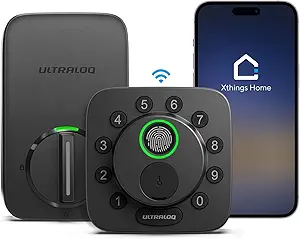 | Best Battery Life and Flexibility | Access methods: Fingerprint (up to 50), passcodes (up to 50), app, web portal, eKey sharing, voice control, 2 mechanical keys | Connectivity: Built-in 2.4 GHz Wi-Fi; Matter over Thread (requires border router) | Voice assistants: Siri, Alexa, Google Assistant | VIEW LATEST PRICE | See Our Full Breakdown |
| Philips 4200 Series WiFi Keypad Deadbolt with Handle |  | Best Value for Complete Door Upgrades | Connectivity: Built-in 2.4 GHz WiFi, no hub required | Router range: Within 33 ft (10 m) recommended | Voice assistants: Alexa, Google Assistant | VIEW LATEST PRICE | See Our Full Breakdown |
| smart lock | Connectivity |
|---|---|
| Wyze Auto-Lock Bolt v2 Fingerp | Built-in Wi-Fi |
| Yale Assure Lock 2 WiFi Smart | 2.4 or 5 GHz Wi-Fi; no hub required |
| Philips Wi-Fi Smart Deadbolt L | Built-in 2.4 GHz Wi-Fi |
| Schlage Encode Smart WiFi Dead | Built-in Wi-Fi |
| Philips 4200 Series WiFi Keypa | 2.4 GHz Wi-Fi; no hub required |
| eufy Security Smart Lock C220 | Built-in Wi-Fi, no bridge required |
| Philips Wi-Fi Smart Deadbolt L | Wi-Fi |
| Wyze Palm Lock Smart Door Lock | — |
| Tapo DL110 Smart Wi-Fi Deadbol | — |
| Philips WiFi Keypad Door Lock | Built-in Wi-Fi |
| Aqara UWB Smart Lock U400 with | Matter over Thread |
| eufy Security FamiLock S3 Max | — |
| Schlage Encode Smart WiFi Dead | Built-in WiFi |
| ULTRALOQ Bolt SE Wi-Fi Smart L | Built-in 2.4 GHz Wi-Fi; Matter over Thread (requires border router) |
| Philips 4200 Series WiFi Keypa | Built-in 2.4 GHz WiFi, no hub required |
More Details on Our Top Picks
Wyze Auto-Lock Bolt v2 Fingerprint Keyless Entry Smart Lock
The Wyze Auto-Lock Bolt v2 suits households that want to get inside with a fingerprint instead of reaching for a phone or remembering a code. Its scanner is specified to unlock in 0.5 seconds and learn over time, while built-in Wi-Fi lets you manage the lock remotely through the Wyze app. Compared with the Philips Wi-Fi Smart Deadbolt, it has fewer supported codes but adds a stated fingerprint capacity of up to 50 and an emergency USB-C power option. The tradeoff is a reliance on eight AA batteries, and remote features depend on a working Wi-Fi connection and the app. I’d choose it for convenient everyday entry, but skip it if rechargeable power or a larger guest-code roster matters more.
Pros:- Fingerprint, keypad, app, and physical-key entry provide useful alternatives
- Scanner is specified to unlock in 0.5 seconds and learn over time
- Built-in Wi-Fi supports remote control through the Wyze app
- USB-C emergency power can help when the batteries run low
Cons:- Uses eight AA batteries rather than a built-in rechargeable battery
- Remote control depends on Wi-Fi and the Wyze app
- Supports up to 50 codes or fingerprints, fewer codes than the Philips Wi-Fi Smart Deadbolt’s 100
Best for: Households that want quick fingerprint access, app control, and room for family fingerprints or keypad codes
Not ideal for: Buyers who prefer a rechargeable lock or need remote access that does not depend on Wi-Fi and the Wyze app
- Unlock methods:Fingerprint, app, keypad code, physical key
- Fingerprint unlock speed:0.5 seconds
- Code and fingerprint capacity:Up to 50
- Connectivity:Built-in Wi-Fi
- Battery life:Up to 8 months with 8 AA batteries
- Emergency power:USB-C port
- Weather resistance:IP53
- Model:WLCKB2
Our verdict“Choose the Wyze if quick fingerprint entry and multiple backup access methods matter more to you than rechargeable power or a larger code capacity.”
Yale Assure Lock 2 WiFi Smart Lock Deadbolt with Keypad, Keyless Entry, Black Suede
The Yale Assure Lock 2 is a strong fit for homes where access changes often: its unlimited entry codes can have schedules and expiration dates, so hosts can give a visitor access without sharing a permanent household code. Unlike the Schlage Encode Smart WiFi Deadbolt, which supports up to 100 codes, Yale’s listed capacity has no stated ceiling. It also connects directly to either 2.4 or 5 GHz Wi-Fi without a hub and offers Auto-Unlock and DoorSense auto-lock features. Its BHMA Grade 2 certification and broad operating-temperature range add reassurance for varied conditions. The compromises are periodic battery replacement and app availability limited to the US and Canada. I’d look elsewhere if you live outside those regions or want fingerprint entry.
Pros:- Unlimited entry codes support frequent guest turnover
- Codes can have schedules and expiration dates
- Connects to 2.4 or 5 GHz Wi-Fi without a hub
- Auto-Unlock and DoorSense auto-lock add hands-free convenience
Cons:- Yale Access app functionality is limited to the US and Canada
- Requires periodic battery replacement
- No fingerprint entry method is listed
Best for: Short-term rental hosts and households that regularly issue scheduled or temporary codes to guests and service providers
Not ideal for: Buyers outside the US and Canada, or anyone who wants fingerprint unlocking rather than keypad and app access
- Connectivity:2.4 or 5 GHz Wi-Fi; no hub required
- Entry methods:Keypad, smartphone or Apple Watch app, auto-unlock, backup key
- Entry code capacity:Unlimited
- Certification:BHMA Grade 2
- Operating temperature:-22°F to 140°F
- Door thickness:1-3/4 to 2-1/4 inches
- Bore hole:2-1/8 inches
- App availability:Yale Access; US and Canada only
Our verdict“Pick the Yale if you manage changing guest access and want flexible scheduled codes with direct Wi-Fi connection.”
Philips Wi-Fi Smart Deadbolt Lock with Keyless Entry
With five ways to unlock, the Philips Wi-Fi Smart Deadbolt gives a household plenty of options: fingerprint, passcode, app, physical key, or voice through Alexa or Google Assistant. Its support for up to 100 custom passcodes, including one-time and scheduled codes, also makes it more guest-friendly than the Wyze Auto-Lock Bolt v2’s capacity of 50. Built-in Wi-Fi enables remote control without a hub, and the auto-lock timer can be set from 10 to 180 seconds. The limits are practical: it only supports 2.4 GHz Wi-Fi, the router should be within 65 feet, and no door sensor is included. AA alkaline batteries are also not supplied. This pick makes sense if you want broad access choices, but the Yale Assure Lock 2 is a better match for unlimited codes.
Pros:- Five listed entry methods cover varied household preferences
- Supports up to 100 custom, one-time, and scheduled passcodes
- Built-in Wi-Fi enables remote control without a hub
- Auto-lock timer is adjustable from 10 to 180 seconds
Cons:- Works with 2.4 GHz Wi-Fi only and has a stated 65-foot router range note
- AA alkaline batteries are not included
- Door sensor is not included
Best for: Households that want fingerprint, voice, app, and passcode access plus temporary codes for visitors
Not ideal for: Buyers with only 5 GHz Wi-Fi, a router more than 65 feet away, or a need for a door sensor
- Unlock methods:App, passcode, fingerprint, physical key, Alexa or Google Assistant voice
- Connectivity:Built-in 2.4 GHz Wi-Fi
- Passcode capacity:Up to 100 custom codes
- Auto-lock timer:10 to 180 seconds
- Door thickness:1-3/8 to 2 inches
- Batteries:AA alkaline (LR6), not included
- Router range note:Keep router within 65 feet of the lock
- Door sensor:Not included
Our verdict“Choose this Philips if you want fingerprint and voice access alongside a large set of flexible guest codes.”
Schlage Encode Smart WiFi Deadbolt Lock with Century Trim, Matte Black
The Schlage Encode is the pick for buyers who put certified residential security and durability ahead of biometric entry. Its BHMA certification carries the highest stated ratings for residential security, durability, and finish, while an encryption feature and built-in alarm add security-focused functions beyond basic keypad access. Built-in Wi-Fi supports remote locking and unlocking without a hub, and the lock stores up to 100 access codes. Compared with the Yale Assure Lock 2, it offers a built-in alarm and a backup key, while Yale stands out for unlimited codes and broader Wi-Fi band support. Schlage’s stated battery life is up to six months with four AA batteries, and app-based features depend on Wi-Fi. Its listed door thickness range is narrower than Philips’s Wi-Fi deadbolt, so check your door before choosing it.
Pros:- BHMA-certified with the highest stated residential Security, Durability, and Finish ratings
- Built-in Wi-Fi supports remote access without an extra hub
- Built-in alarm and encrypted connections add security-focused features
- Includes a backup key and supports up to 100 access codes
Cons:- Battery life is listed as up to six months with four AA batteries
- Advanced remote features depend on the app and Wi-Fi
- Listed door thickness range is 1-3/8 to 1-3/4 inches
Best for: Homeowners who prioritize Schlage’s stated top residential BHMA ratings, a built-in alarm, and remote access without a hub
Not ideal for: Buyers who want fingerprint entry, longer stated battery life, or a lock for a door outside its listed thickness range
- Connectivity:Built-in Wi-Fi
- Access code capacity:Up to 100
- Voice assistants:Alexa and Google Home
- Certification:BHMA highest residential Security, Durability, and Finish ratings
- Door thickness:1-3/8 to 1-3/4 inches
- Backset:2-3/8 or 2-3/4 inches
- Battery life:Up to 6 months typical use with 4 AA batteries
- Backup key:Included
Our verdict“Choose the Schlage Encode if certified residential security and a built-in alarm matter more than fingerprint access or longer battery life.”
Philips 4200 Series WiFi Keypad Door Lock with Handle, Satin Nickel
The Philips 4200 Series makes the most sense when you are replacing the lock and handle together. Its included matching handle set creates a coordinated door update, while direct 2.4 GHz Wi-Fi supports remote access without a hub. Fingerprint entry is specified at 0.3 seconds, quicker on paper than the Wyze Auto-Lock Bolt v2’s 0.5 seconds, and PIN codes offer several schedules for guests. Alexa and Google Assistant voice control and an adjustable auto-lock timer round out the everyday features. The package’s main tradeoffs are its eight AA batteries, sold separately, and 2.4 GHz-only connectivity. Unlike the Philips Wi-Fi Smart Deadbolt, the supplied description does not state a passcode capacity or door sensor. I’d pick this for a coordinated hardware replacement, but not if you only need a deadbolt.
Pros:- Includes a matching handle set for a coordinated hardware replacement
- Fingerprint unlock is specified at 0.3 seconds
- Connects directly to 2.4 GHz Wi-Fi without a hub
- Supports PIN access, app control, voice assistants, and auto-lock
Cons:- Eight AA alkaline batteries are not included
- Supports 2.4 GHz Wi-Fi only
- Supplied product details do not state a passcode capacity
Best for: Homeowners replacing both a deadbolt and handle who want fingerprint, PIN, and app access in a matching finish
Not ideal for: Buyers who only need a deadbolt, use 5 GHz Wi-Fi exclusively, or want batteries included
- Connectivity:2.4 GHz Wi-Fi; no hub required
- Unlock methods:Fingerprint, PIN code, app, voice
- Fingerprint unlock speed:0.3 seconds
- Voice assistants:Alexa and Google Assistant
- Auto-lock timer:0 to 180 seconds
- Door thickness:1-3/8 to 1-3/4 inches
- Batteries:8 AA alkaline, not included
- Finish:Satin Nickel
Our verdict“Choose the Philips 4200 Series if you are replacing the handle as well as the lock and want fast fingerprint entry.”
eufy Security Smart Lock C220, Fingerprint Keyless Entry Door Lock
The eufy C220 earns the top spot because it refuses to make you choose between speed, convenience, and independence. With six unlock methods — including a sub-second fingerprint reader backed by self-learning AI — it covers every scenario from a kid coming home from school to a guest arriving while you’re on vacation. Unlike the Tapo DL110, which also offers six access methods, the eufy includes built-in Wi-Fi without a bridge and stretches battery life to roughly 8 months on disposable AAs, meaning no charging cable dangling by the front door. Installation takes about 15 minutes on standard deadbolts with no drilling. The tradeoff: that self-learning fingerprint AI needs a few training attempts before it reads reliably, and heavy daily use can shave battery life below the quoted figure.
Pros:- Six unlock methods including sub-second fingerprint access
- Built-in Wi-Fi with no bridge required
- Up to 8 months of battery life on 8 AA batteries
- Tool-free 15-minute installation on most standard deadbolts
Cons:- Self-learning fingerprint AI may require several attempts during training
- Real-world battery life falls short of 8 months with heavy use
Best for: Homeowners who want maximum entry flexibility with zero monthly fees or hub hardware
Not ideal for: Anyone with non-standard or thick door setups — the 54mm bore limit rules out some older doors
- Unlock Methods:6 (fingerprint, app, keypad, key, Apple Watch, voice)
- Battery Life:Approximately 8 months (8 AA batteries)
- Connectivity:Built-in Wi-Fi, no bridge required
- Certification:BHMA Grade 3 (100,000+ cycles)
- Operating Temperature:-22°F to 158°F (-30°C to 70°C)
- Installation:Approximately 15 minutes, no drilling
- Water Resistance:IP53
Our verdict“If you want one lock that does everything well without extra hardware, this is the one to buy.”
Philips Wi-Fi Smart Deadbolt Lock Set with Keypad and Handles
Where the Philips DDL240X pulls ahead of rivals like the eufy C220 is access management: it supports up to 100 user PIN codes plus unlimited one-time PINs, with recurring, temporary, and permanent options. That makes this pick better suited to Airbnb hosts, landlords, or households with rotating visitors than locks that cap guest codes at 50, like the Wyze Palm Lock. The bundled handle set also gives the door a matched, finished look that deadbolt-only locks leave incomplete. Auto-lock fires between 30 and 180 seconds, so nobody forgets to secure the door. Be aware that door compatibility is narrower than it first appears — doors outside the 35–50mm thickness range won’t fit — and phone support runs weekdays and Saturdays only, which stings if a guest gets locked out on a Sunday.
Pros:- Up to 100 user PIN codes plus unlimited one-time PINs
- Handle set included for a complete, matched door look
- Remote locking and real-time notifications via the Philips app
- Screwdriver-only installation on standard doors
Cons:- Strict door thickness requirement of 35-50mm limits compatibility
- Phone customer support unavailable on Sundays
Best for: Rental hosts and landlords managing frequent guest turnover with coded entry
Not ideal for: Homes with unusually thick or thin doors outside the 35-50mm range, or buyers expecting 7-day support
- Unlock Methods:App, fingerprint, PIN code, key, voice (Alexa/Google)
- User PIN Codes:Up to 100
- Connectivity:Wi-Fi
- Auto-Lock Timer:30-180 seconds
- Door Thickness:35-50mm
- Batteries:4 (included)
- Included Components:Door lock, handle set, 4 batteries
Our verdict“For anyone issuing codes to strangers weekly, this lock’s guest-code system is the strongest in this lineup.”
Wyze Palm Lock Smart Door Lock with Palm Vein Recognition and Keypad
The Wyze Palm Lock bets on contactless palm vein recognition, and that bet mostly pays off. Reading vein patterns under the skin is harder to fool and more reliable than the surface-level fingerprint sensors on the eufy C220 or Tapo DL110 — no smudges, no wet fingers, no training period. The dual-battery system is clever too: when the 6-month main battery dies, a secondary cell buys you two more weeks, and a USB-C port accepts a power bank so you’re never locked out. Throw in gyroscope-based auto-lock, tamper and door-ajar alarms, and millimeter wave radar, and this feels like the most sensor-rich lock here. The tradeoffs are real, though: emergency charging requires you to actually own a power bank, extreme weather can flub palm reads, and nearly every feature routes through the Wyze app and Wi-Fi.
Pros:- Contactless palm vein recognition is harder to spoof than fingerprints
- Dual-battery system with USB-C emergency charging prevents lockouts
- Up to 50 guest codes with anti-peep PIN protection
- Works with Alexa, Google Assistant, and Wyze Video Doorbell
Cons:- Emergency charging requires a separate power bank
- Full feature set depends on Wi-Fi and the Wyze app
- Palm recognition can falter in extreme weather
Best for: Tech-forward buyers who prioritize tamper-resistant biometrics and smart-home automation
Not ideal for: Homes in extreme climates or anyone unwilling to depend entirely on the Wyze app ecosystem
- Unlock Methods:Palm vein recognition, keypad, mechanical key
- Guest Codes:Up to 50 unique or one-time
- Main Battery Life:6 months
- Secondary Battery Life:2 weeks
- Emergency Charging:USB-C (power bank compatible)
- Smart Home:Alexa, Google Assistant
- Weather Resistance:IP53
- Certification:BHMA Grade 3
- Alarms:Tamper alarm, door ajar alarm
Our verdict“This pick makes the most sense for buyers who want the most secure biometric method available at this tier.”
Tapo DL110 Smart Wi-Fi Deadbolt Door Lock with Fingerprint Recognition
If the idea of swapping eight AA batteries twice a year — as the Philips DDL242X and eufy C220 demand — sounds tedious, the Tapo DL110 solves it with a rechargeable USB-C battery rated for up to a year in Wi-Fi mode, or two years if you lean on Bluetooth instead. Its 0.42-second fingerprint reader is marginally quicker than the eufy’s, and it registers up to 100 fingerprints, dwarfing typical household locks. SmartThings support alongside Alexa and Google Home also gives it broader smart-home reach than either Philips model in this guide. The compromises: those battery figures come from lab testing, so real households with kids and frequent guests will see less, and recognition speed can degrade as you load the sensor with more fingerprints. Compared with the Wyze Palm Lock, you give up the harder-to-spoof biometric for longer runtime.
Pros:- Up to 1 year of battery life on a single USB-C charge
- 0.42-second fingerprint unlock with up to 100 registered prints
- Works with Alexa, Google Home, and Samsung SmartThings
- Installation kit includes all necessary tools
Cons:- Battery estimates based on lab conditions, not real-world usage
- Recognition speed and accuracy can drop with many registered fingerprints
Best for: Set-and-forget buyers and SmartThings households who hate buying and swapping batteries
Not ideal for: High-traffic households registering dozens of fingerprints, where speed and battery claims both erode
- Lock Type:Deadbolt
- Access Methods:Fingerprint, keypad, Wi-Fi, Bluetooth, voice assistant, key
- Fingerprint Speed:0.42 seconds
- Registered Fingerprints:Up to 100
- Battery Life:Up to 1 year (Wi-Fi), 2 years (Bluetooth)
- Charging:USB-C
- Smart Home:Alexa, Google Home, SmartThings
Our verdict“Buy this if long gaps between charges and broad smart-home compatibility top your list; skip it if biometric security is your priority.”
Philips WiFi Keypad Door Lock with Handle, App-Controlled Smart Deadbolt
Among the app-controlled locks here, the Philips DDL242X keeps things simple and affordable by trimming what you don’t strictly need. There’s no fingerprint reader — unlike the eufy C220 or Tapo DL110 — just four dependable methods: keypad, app, key, and voice. What you don’t give up is the good stuff: built-in Wi-Fi with no hub, up to 100 custom passwords in permanent, one-time, and timed flavors, and an adjustable 10–180 second auto-lock. The IP54 rating and 2200N pressure resistance actually beat the IP53 eufy and Wyze for weather exposure, and a 24-month warranty adds peace of mind. The catches are straightforward: eight AA batteries arrive not included, and the 6-month battery ceiling trails the Tapo’s year-long charge by half. Compared with the fingerprint Philips DDL240X, this model trades biometrics for a lower barrier to entry.
Pros:- Built-in Wi-Fi remote control with no separate hub
- Up to 100 custom passwords with permanent, one-time, and timed options
- IP54 weather resistance and 2200N pressure rating
- 15-minute DIY installation on standard US doors
Cons:- 8 AA batteries not included in the box
- 6-month battery life trails rechargeable competitors
- No fingerprint or biometric unlock option
Best for: Budget-minded buyers who want hub-free remote control and solid keypad access without biometric extras
Not ideal for: Anyone who wants fingerprint entry or dislikes repeatedly buying AA batteries
- Unlock Methods:Voice (Alexa/Google), passcode, key, app
- Connectivity:Built-in Wi-Fi
- Password Capacity:Up to 100 custom passwords
- Auto-Lock Timer:10-180 seconds
- Power Source:8 AA batteries (not included)
- Battery Life:Up to 6 months
- Weather Resistance:IP54
- Door Compatibility:Cross bore 38mm or 54mm; thickness 35-50mm
- Warranty:24 months
Our verdict“The smart pick if you want dependable app and keypad entry at the lowest complexity — just budget for batteries.”
Aqara UWB Smart Lock U400 with Apple Home Key and Fingerprint, Black
This model stands out for its hands-free UWB unlocking, which senses a paired iPhone or Apple Watch as you approach — no tap, no code, no raised hand. Compared with the ULTRALOQ Bolt SE, which leans on Matter for platform flexibility, the U400 is built squarely around the Apple ecosystem, and that focus is both its superpower and its limitation. The rechargeable USB-C battery rated for up to six months removes the recurring AA replacement chore the Schlage Encode demands. Options like Night Latch Mode and a rekeyable cylinder add practical security depth. The tradeoff: without a Thread-enabled Apple hub and a recent iPhone or Watch, the flagship UWB feature is dead weight, and the NFC card costs extra.
Pros:- Hands-free UWB unlocking with a paired Apple device
- Seven entry methods including fingerprint and Apple Home Key
- Rechargeable USB-C battery lasting up to six months
- BHMA-certified with an IP65-rated exterior
Cons:- UWB and Home Key require a Thread-enabled Apple hub plus recent Apple devices
- NFC card is sold separately
Best for: Deep Apple Home households with a Thread hub and recent iPhones or Apple Watches who want true walk-up, hands-free entry
Not ideal for: Android-only or mixed-platform homes — the headline UWB and Home Key features simply won’t function there
- Unlocking methods:UWB, Apple Home Key, fingerprint, passcode, app, voice, NFC card (sold separately), physical key
- Connectivity:Matter over Thread
- Battery:Rechargeable lithium, up to 6 months per charge, USB-C
- Certification:BHMA-certified
- Weather resistance:IP65-rated exterior
- Requirements:Thread-enabled Apple Home hub plus supported iPhone or Apple Watch for UWB
- Extra features:Auto Lock, Night Latch Mode, Do Not Disturb Mode, rekeyable design
Our verdict“If your whole household runs on Apple hardware, this is the most seamless hands-free entry option in the lineup — otherwise look elsewhere.”
eufy Security FamiLock S3 Max Video Smart Lock with Palm Vein Recognition
Rather than pairing a video doorbell with a separate lock, the FamiLock S3 Max bundles a 2K camera, doorbell, deadbolt, and an indoor video screen into one unit — something no other pick here attempts. Its palm vein recognition in 0.6 seconds is harder to spoof than the fingerprint readers on the Philips 4200 Series, because vein patterns can’t be lifted from a surface, and all biometric data stays stored locally rather than in the cloud. The rear screen is a genuinely thoughtful touch: kids or older relatives can see who’s at the door without touching an app. Compared with the Wyze Palm Lock, it adds full camera hardware — but it pays for that with shorter battery life (around four months plus AAA backup) and a Matter integration that doesn’t extend to camera streams.
Pros:- Palm vein recognition is forgery-resistant and stores data locally
- Combines camera, video doorbell, and lock in one device
- Indoor screen lets family members check the door without a smartphone
- Dual power: rechargeable battery plus AAA backup
Cons:- Camera streams not supported through Matter; full features require the eufy app
- Shorter battery life than camera-less rivals like the ULTRALOQ Bolt SE
- Not compatible with HomeBase 2
Best for: Homeowners who want to replace both a lock and a video doorbell in one project, especially families with kids or elderly members who need app-free door monitoring
Not ideal for: Budget-conscious buyers or anyone wanting a simple deadbolt — the camera hardware adds cost, bulk, and battery drain for features they may not use
- Unlock method:Palm vein recognition in 0.6 seconds
- Camera:2K HD, f/1.8 lens, 150° head-to-toe view
- Battery:Rechargeable up to 4 months, plus 4 AAA backup (about 1 extra month)
- Compatibility:eufy HomeBase 3, Matter, Apple Home, Google Home, Alexa, SmartThings
- Data storage:Local
- Indoor display:Rear lock video screen, app-free
Our verdict“This is the pick for buyers who want eyes and a lock on the front door from a single device — provided they accept eufy’s app ecosystem.”
Schlage Encode Smart WiFi Deadbolt Lock with Century Trim, Satin Nickel
The Encode is the veteran of this lineup, and it earns its spot through dependability over gadgetry. There’s no fingerprint reader or biometric anything — unlike the Aqara U400 or ULTRALOQ Bolt SE — but what it does, it does with a BHMA top residential security rating and a built-in alarm for forced entry that most rivals lack. One hundred access codes dwarfs typical competitors and makes it practical for small businesses or busy households managing lots of guests. Installation is a screwdriver-only job thanks to the Snap ‘n Stay design, matching the Philips 4200 for simplicity. The compromises are real, though: four AA batteries every six months, and remote features hinge entirely on the Schlage Home app and a stable WiFi connection.
Pros:- Built-in WiFi means no hub or bridge for remote control
- Supports up to 100 access codes
- Built-in forced-entry alarm plus BHMA highest security rating
- Screwdriver-only Snap ‘n Stay installation
Cons:- Four AA batteries need replacing roughly every six months
- No fingerprint or advanced biometric option at all
- Full feature set depends on the Schlage Home app and WiFi
Best for: Buyers who prioritize proven build quality and simple keypad entry over biometrics, especially anyone managing many access codes
Not ideal for: Tech-forward users wanting fingerprint or Matter integration — this is a keypad-and-app lock, nothing more
- Finish:Satin Nickel, Century trim
- Connectivity:Built-in WiFi
- Voice assistants:Alexa, Google Home
- Access codes:Up to 100
- Battery:4 AA (included), up to 6 months
- Backup key:1 included
- Door fit:1-3/8 in to 1-3/4 in thick; 2-3/8 in or 2-3/4 in backset
- Certification:BHMA highest residential Security, Durability and Finish rating
Our verdict“A safe, boring-in-a-good-way choice for anyone who values a trusted name and physical keypad over smart-home flash.”
ULTRALOQ Bolt SE Wi-Fi Smart Lock with Matter over Thread
Battery life is where this model leaves the field behind: up to 18 months, versus roughly six for the Schlage Encode and Philips 4200 Series. That endurance comes from a frugal design and a self-healing Thread mesh, which also makes its Matter integration more stable than WiFi-only locks when the network hiccups. The 7-in-1 access model — fingerprint (up to 50 prints), codes (up to 50), app, web portal, eKeys, voice, and physical keys — covers every household scenario short of the palm-vein biometrics on the eufy FamiLock S3 Max. Where it demands more from buyers: Thread features need a compatible border router, it only speaks 2.4 GHz WiFi with the router within about 70 feet, and the door sensor is sold separately.
Pros:- Exceptional 18-month battery life
- 7-in-1 entry: fingerprint, codes, app, web portal, eKeys, voice, physical keys
- Matter over Thread with self-healing mesh for reliable automation
- 10-minute DIY install and ANSI BHMA certification
Cons:- Thread features require a compatible border router
- 2.4 GHz WiFi only, with router recommended within 70 ft
- Door sensor not included
Best for: Set-and-forget buyers who hate battery swaps and want the widest range of entry methods across Siri, Alexa, and Google
Not ideal for: Homes with distant routers or mesh dead zones at the front door — the 70-foot, 2.4 GHz constraint can cause connectivity frustration
- Access methods:Fingerprint (up to 50), passcodes (up to 50), app, web portal, eKey sharing, voice control, 2 mechanical keys
- Connectivity:Built-in 2.4 GHz Wi-Fi; Matter over Thread (requires border router)
- Voice assistants:Siri, Alexa, Google Assistant
- Battery life:Up to 18 months
- Certification:ANSI BHMA Certified
- Weather resistance:IP65 waterproof
- Installation:DIY, approximately 10 minutes
- Warranty:Lifetime mechanical, 18-month electronic
Our verdict“The most low-maintenance pick here for multi-platform smart homes — just verify your router situation before buying.”
Philips 4200 Series WiFi Keypad Deadbolt with Handle
Most smart locks replace only the deadbolt, leaving a mismatched old handle below — this set includes a matching handle for a full, cohesive front-door refresh at a single price. Its 0.3-second fingerprint unlock is faster than the eufy FamiLock’s palm reader, and the flexible code system (one-time, periodic, recurring) makes it a natural fit for Airbnb hosts and frequent-guest households, rivaling the Schlage Encode’s code management without needing as many codes. The adjustable auto-lock up to 180 seconds adds peace of mind the ULTRALOQ can’t match without an extra sensor. Tradeoffs: it demands 2.4 GHz WiFi within about 33 feet of the router — tighter than ULTRALOQ’s 70 feet — batteries aren’t included (and lithium or rechargeable cells aren’t supported), and auto-lock ships disabled.
Pros:- Includes matching handle for a complete, coordinated door upgrade
- 0.3-second fingerprint unlocking
- One-time, periodic, and recurring codes ideal for guests and rentals
- No hub needed — connects directly to 2.4 GHz WiFi
Cons:- Router must be within roughly 33 ft; 2.4 GHz only
- Batteries not included, and rechargeable or lithium types aren’t supported
- Auto-lock is disabled by default and easy to overlook
Best for: Rental hosts and homeowners wanting a coordinated lock-plus-handle upgrade with fast fingerprint entry and flexible guest codes
Not ideal for: Homes where the front door sits far from the router — the 33-foot WiFi range requirement is the strictest in this roundup
- Connectivity:Built-in 2.4 GHz WiFi, no hub required
- Router range:Within 33 ft (10 m) recommended
- Voice assistants:Alexa, Google Assistant
- Fingerprint speed:0.3 seconds
- Auto-lock timer:0–180 seconds (off by default)
- Battery life:Up to 6 months; 1.5V alkaline not included
- Door fit:1-3/8 in to 1-3/4 in thick; reversible for left or right opening
- App:Philips Home Access
Our verdict“The smartest buy for hosts and renovators who want the whole door hardware to match — just keep the router close.”

How We Picked
I ranked these 15 locks by weighing four factors the way a real buyer would: security and build quality first, because a smart lock is still a physical barrier; connectivity and ecosystem fit second, since a lock without remote access or Matter/HomeKit support loses much of its value; entry method flexibility third, including keypads, fingerprint readers, and app-based codes; and value last, meaning what you give up or gain at each price tier. Locks that paired strong deadbolt hardware with built-in Wi-Fi rose to the top, while novelty features alone couldn’t carry a pick up the rankings.
The ranking also accounts for who each lock serves. A lock that is superb for an Apple household (Aqara U400) is not automatically a top-three pick for an Android household, so placement reflects fit as much as raw capability. Where two products overlap heavily — like the Philips keypad models or the two Schlage Encode trims — I separated them by finish, handle bundling, and small hardware differences rather than treating them as interchangeable.
Factors to Consider When Choosing Best Smart Locks
Before settling on a specific model, it helps to understand the decisions that shape the entire category. These are the factors that actually determine whether a smart lock delights you or ends up frustrating you within a month.Connectivity: Built-In Wi-Fi vs. Bridges vs. Thread
The single most consequential choice is how the lock talks to your network. Locks with built-in Wi-Fi, like the Schlage Encode and Yale Assure Lock 2, connect directly to your router and work from anywhere out of the box — no extra hardware, no extra cost. Bluetooth-only locks are cheaper and sip less battery, but the moment you leave home, you lose control unless you add a bridge. Thread and Matter, as seen on the ULTRALOQ Bolt SE, represent the newest path: faster local response, better reliability, and cross-platform compatibility, though you’ll need a Thread border router such as a HomePod or SmartThings hub. A common mistake is buying a Bluetooth lock assuming it offers remote access — always check whether Wi-Fi is built in or sold separately.
Entry Method: Match the Lock to Your Household
Keypads, fingerprint readers, palm recognition, and app entry each suit different routines. A keypad is the most universally practical option because codes can be shared with guests, cleaners, or dog walkers without any setup on their end. Fingerprint unlock is faster for daily use but struggles in households with small children or anyone whose prints read poorly. Palm vein recognition, on the Wyze Palm Lock and eufy FamiLock S3 Max, solves that by reading vein patterns beneath the skin — it works regardless of surface conditions and suits families with kids. Households that host frequently should prioritize keypad-plus-app combos; single-user apartments can lean fully biometric.
Ecosystem Compatibility Can Cost You Later
A smart lock is a long-term purchase, often outliving the phone you set it up with. Locks that support Apple Home Key, like the Aqara U400, let you tap your iPhone or Apple Watch to enter — a superb experience that is invisible to Android users. Matter-certified locks are the safest bet for platform flexibility, since Matter works across Apple, Google, Alexa, and Samsung. Locks tied to proprietary apps work fine today but can become orphaned if the manufacturer changes strategy or shuts down its cloud. If you rent, plan to move, or share a household across ecosystems, weight compatibility higher than raw features.
Build Quality and Door Fit
Features mean little if the deadbolt feels flimsy or doesn’t fit your door. Check your backset measurement (the distance from the door edge to the center of the bore hole — usually 2-3/8 or 2-3/4 inches) and your door thickness before ordering, since not every lock supports both standards out of the box. Metal exteriors and metal interior housings, found on Schlage and Yale models, resist both pry attacks and the wear of daily use. Many budget locks put a plastic interior panel on the inside of the door, which is where forced-entry stress actually lands. If your door gets direct sun or coastal humidity, also factor finish durability — satin nickel and matte black coatings age very differently.
Battery Realities and Backup Entry
Every lock here runs on batteries, and battery life ranges from a few months on Wi-Fi models to a year or more on Bluetooth-only units. Wi-Fi and always-on video features (as on the eufy FamiLock S3 Max) drain faster, so decide whether you’d rather recharge occasionally or swap AAs once a year. Just as necessary is the backup entry plan: some locks keep a physical keyway, some offer terminal contacts for a 9V battery jump-start, and others offer neither — a genuinely risky choice if electronics fail while you’re locked out. Never install a smart lock without knowing exactly how you’d get in during a dead-battery scenario.
When to Pay More (and When Not To)
The jump from budget to midrange buys real value: built-in Wi-Fi, better fingerprint sensors, and sturdier deadbolt mechanisms. The jump from midrange to premium buys narrower gains — palm recognition, integrated cameras, UWB auto-unlock, and premium finishes. Pay up if those features solve a daily friction point, like a household of kids who can’t manage codes or a package-heavy doorstep that benefits from a built-in camera. Skip the premium tier if you mainly need to let in guests remotely and lock the door from bed; a $100-class Wi-Fi keypad lock handles both tasks just as reliably. The most expensive mistake in this category is paying for biometric sophistication you’ll never use.
Frequently Asked Questions
Do smart locks work if the Wi-Fi or power goes out?
Yes — every lock in this lineup operates the physical deadbolt mechanically, and most entry methods keep working offline. Keypads, fingerprints, and palm recognition are processed locally on the lock itself, so you can still get in even with your router down; what you lose is remote access, notifications, and guest code management until connectivity returns. Battery power means a power outage at your home doesn’t affect the lock at all. The scenario to plan for is dead batteries, not Wi-Fi loss: know whether your lock has a keyway, emergency terminals, or no backup at all before installation.
Is palm vein recognition actually better than a fingerprint reader?
For most households, yes, though the advantage depends on who’s using the door. Palm vein scanning reads patterns beneath the skin surface, so wet fingers, cuts, cold weather, and age don’t degrade accuracy the way they can with fingerprint sensors. It’s the better choice for households with children, elderly relatives, or anyone whose fingerprints read inconsistently. On the other hand, fingerprint readers are now common at midrange prices and are perfectly reliable for a single adult user in normal conditions. If two adults with cooperative fingerprints are the only users, saving money on a fingerprint model is a reasonable call.
Can I install a smart lock myself, or do I need a locksmith?
Most people can install a standard deadbolt replacement in under an hour with a screwdriver, since models like the Schlage Encode and Wyze Bolt are designed to drop into an existing bore hole. The process gets more complicated if your door has an unusual backset, a mortise lock, or a separate handle set — which is why several Philips models in this roundup bundle the handle, saving you a compatibility headache. If your current deadbolt is misaligned or the door sticks, fix that first, because a smart lock amplifies mechanical problems rather than hiding them. A locksmith is only warranted for non-standard doors or if you want the strike plate reinforced for security.
Should I choose Matter and Thread, or stick with a brand’s own app?
Matter over Thread, as on the ULTRALOQ Bolt SE, gives you faster local control, multi-platform support, and immunity to a manufacturer shutting down its cloud — genuine long-term advantages. The tradeoff is that proprietary apps often expose more features, like detailed access logs, auto-lock schedules, or voice-specific integrations, that Matter’s standard hasn’t fully absorbed yet. If you’re committed to one ecosystem for the next five years, a native lock (Aqara for Apple, Schlage for Alexa) usually delivers a smoother day-to-day experience. If you mix platforms or want future-proofing, Matter is the safer architecture even at the cost of some feature depth today.
Are smart locks with cameras, like the eufy FamiLock S3 Max, worth it?
A lock with a built-in camera consolidates two devices into one and guarantees the camera angle covers exactly the spot that matters — the door itself. That said, camera-equipped locks carry real tradeoffs: heavier battery drain, higher prices, and privacy considerations around continuous recording at your entry point. They make the most sense for homes with frequent deliveries, shared access, or a landlord who wants visual verification of entries. If you already own a video doorbell covering the same door, the camera on the lock is largely redundant, and your money goes further toward better build quality or biometrics.
Conclusion
For most homes, the Schlage Encode Smart WiFi Deadbolt is the best overall pick — it nails the fundamentals of build quality, built-in Wi-Fi, and keypad convenience without ecosystem strings attached. Budget-conscious buyers get the most from the Wyze Auto-Lock Bolt v2, which delivers fingerprint entry and auto-locking at an entry-level price. At the premium end, the eufy FamiLock S3 Max justifies its cost with palm vein recognition and an integrated camera, while the Aqara U400 stands as the best choice for Apple households thanks to Home Key and UWB. Beginners should start with the Yale Assure Lock 2, whose modular design and straightforward app remove the usual setup friction. For specific needs: the ULTRALOQ Bolt SE for Matter and Thread households, the Tapo DL110 for TP-Tapo ecosystem users, and the Philips lock-and-handle sets for anyone replacing a full handle-and-deadbolt combo in one project. Match the pick to your door, your ecosystem, and who actually walks through it each day — that’s the real decision.
Fall Picks
fall essentials
As an affiliate, we earn on qualifying purchases.