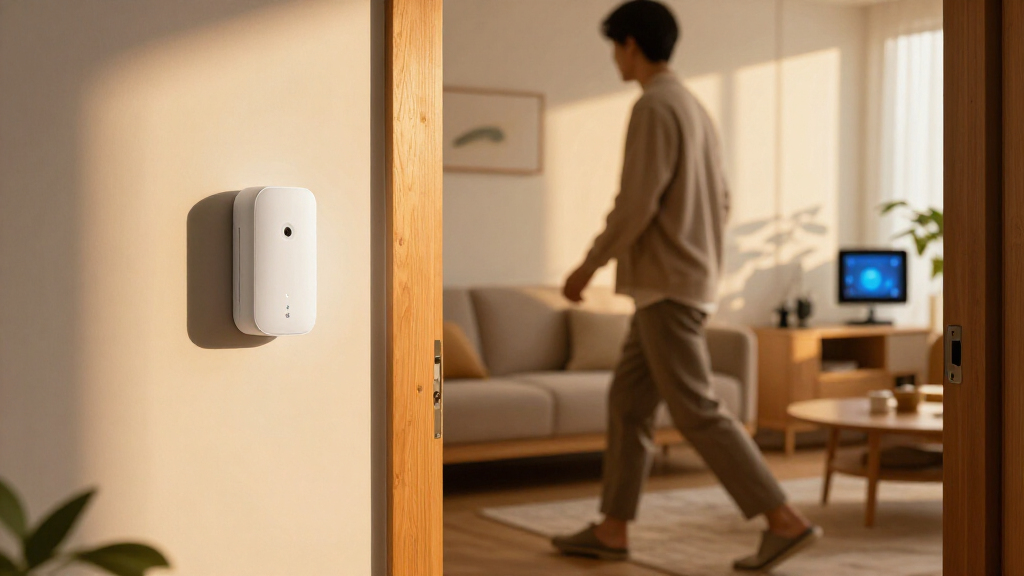
Choosing the best mmWave motion sensors requires balancing detection sensitivity with false-positive risks. My top pick, the Lafaer LWR02, stands out for its Matter over Thread compatibility and 5-in-1 sensor suite. For those prioritizing battery life and outdoor durability, the meross MS605 offers IP67 waterproofing and wireless freedom. The primary tradeoff in this category is between micro-motion detection capabilities and power consumption, as continuous radar operation drains batteries faster than traditional PIR sensors. Continue reading to see how these devices stack up against each other in real-world smart home scenarios.

Get the latest gadgets delivered free with Prime
- Fast, free delivery on millions of items
- Prime Video, Amazon Music and more included
- Member-only deals all year
Complete the kit



Key Takeaways
- Matter over Thread support is becoming the standard for reliable, low-latency local automation, distinguishing newer models like the Lafaer LWR02 from older Zigbee-only devices.
- mmWave sensors excel at detecting micro-motions like breathing, solving the ‘standing still’ problem that plagues traditional PIR sensors.
- Power consumption remains a critical differentiator; battery-powered mmWave sensors require careful threshold tuning to avoid frequent replacements.
- Integration with Home Assistant often depends on whether the sensor uses Zigbee, Z-Wave, or Thread, with Zigbee offering the widest hub compatibility.
- False positives from pets or HVAC airflow are common; models with adjustable sensitivity zones provide better control than fixed-range sensors.
| Lafaer LWR02 5-in-1 Presence Sensor with PIR, mmWave Radar, and Matter over Thread |  | Best for Battery-Powered Multi-Sensing | Radar: 24 GHz mmWave | Additional sensors: PIR, temperature, humidity, ambient light | Maximum range: 8 m motion; 4 m presence | VIEW LATEST PRICE | See Our Full Breakdown |
| meross Matter Presence Sensor with mmWave Radar, PIR, and Light Sensor |  | Best for Zone-Based Matter Automations | Radar: mmWave | Additional sensors: PIR and ambient light | Maximum range: 6 m | VIEW LATEST PRICE | See Our Full Breakdown |
| Fermion C4002 24 GHz mmWave Human Presence Sensor |  | Best for DIY Long-Range Projects | Frequency: 24 GHz | Detection range: Up to 11 m motion; up to 10 m stationary and micro-motion | Light detection: 0–50 lux | VIEW LATEST PRICE | See Our Full Breakdown |
| Akamatis LITOS v3 mmWave Presence and Light Sensor |  | Best for Home Assistant Wi-Fi Setups | Radar: HLK-LD2401, 24 GHz mmWave | Maximum range: 20 ft (6 m) indoors | Wi-Fi: 2.4 GHz | VIEW LATEST PRICE | See Our Full Breakdown |
| Besisglas Zigbee Human Presence Sensor with 24 GHz Millimeter Wave Radar |  | Best Simple Zigbee Battery Pick | Model: MOTION-1 | Frequency: 24 GHz | Maximum range: 7 m (20 ft) | VIEW LATEST PRICE | See Our Full Breakdown |
| SwitchBot Smart mmWave Radar Presence Sensor |  | Best for Existing SwitchBot Ecosystems | Detection Technology: 60 GHz mmWave Radar + PIR + Light Sensor | Detection Range: 8 m (moving), 5 m (stationary) | Power Source: 2 x AAA Batteries (Included) | VIEW LATEST PRICE | See Our Full Breakdown |
| meross MS605 Presence Sensor with Matter over Thread, IP67 Waterproofing, and Battery Power |  | Best for Outdoor and Humid Environments | Ingress Protection: IP67 Waterproof and Dustproof | Connectivity: Matter over Thread | Sensors: mmWave, PIR, Light | VIEW LATEST PRICE | See Our Full Breakdown |
| Aqara FP300 Wireless 5-in-1 Presence Sensor with mmWave and PIR |  | Best Multi-Sensor Integration | Sensors: mmWave, PIR, Light, Temperature, Humidity | Connectivity: Zigbee 3.0, Matter over Thread | Detection Range: 6 meters | VIEW LATEST PRICE | See Our Full Breakdown |
| AKAMATIS Human Presence Sensor v2.2 for Home Assistant with LD2410B Radar and External Wi-Fi Antenna |  | Best for Home Assistant Power Users | Radar Module: HLK-LD2410B | Power Source: USB-C (Corded) | Detection Range: 20 feet (6 meters) | VIEW LATEST PRICE | See Our Full Breakdown |
| Waveshare 24GHz Human Micro-Motion Detection MmWave Sensors, 3-Pack |  | Best for DIY and Engineering Projects | Frequency: 24 GHz | Radar Technology: FMCW (Frequency Modulated Continuous Wave) | Interface: UART, GPIO Header | VIEW LATEST PRICE | See Our Full Breakdown |
| 2-Pack 24 GHz Human Micro-Motion mmWave Sensors with UART and GPIO |  | Best for Bulk DIY Integration | Frequency Band: 24–24.25 GHz | Modulation: FMCW | Power Supply: 3.3 V | VIEW LATEST PRICE | See Our Full Breakdown |
| Martin Jerry Array Sensor, 24 GHz mmWave Presence Sensor for Home Assistant |  | Best for Large Home Assistant Rooms | Connectivity: Wi-Fi, MQTT | Processor: ESP32 | Maximum Range: 19 feet | VIEW LATEST PRICE | See Our Full Breakdown |
| THIRDREALITY Presence Sensor R2, 24 GHz mmWave Radar, Zigbee |  | Best Battery-Powered Zigbee Sensor | Power Source: 3 AA batteries | Connectivity: Zigbee 3.0 | Maximum Range: 5 meters | VIEW LATEST PRICE | See Our Full Breakdown |
| Waveshare 24 GHz Human Micro-Motion Detection mmWave Sensor |  | Best for Entry-Level DIY Projects | Radar Frequency: 24 GHz | Communication: UART | Dimensions: 0.1 × 0.78 × 0.78 inches | VIEW LATEST PRICE | See Our Full Breakdown |
| SONOFF SNZB-06P24 Zigbee Presence Sensor with 24 GHz mmWave and Light Sensing |  | Best for Ceiling-Mounted Lighting Automation | Model: SNZB-06P24 | Power Source: Corded electric (USB-C) | Detection Range: 4 meters | VIEW LATEST PRICE | See Our Full Breakdown |
| mmWave motion sensor | Connectivity | Dimensions | Mounting |
|---|---|---|---|
| Lafaer LWR02 5-in-1 Presence S | Matter over Thread | — | Wall mount, magnetic adjustable base, adhesive, or shelf placement |
| meross Matter Presence Sensor | Matter over Thread | 1 × 1 × 1 in | Wall mount or adjustable stand; stand folds 90° and rotates 360° |
| Fermion C4002 24 GHz mmWave Hu | — | 22 × 26 mm | — |
| Akamatis LITOS v3 mmWave Prese | — | — | Wall mount |
| Besisglas Zigbee Human Presenc | Zigbee; hub required | 0.79 × 0.98 × 2.76 in | Wall mount |
| SwitchBot Smart mmWave Radar P | SwitchBot Hub, Matter, Alexa, Google Home | 2.1 × 1.2 × 2.1 inches | Magnetic Base, Wall Mount, Flat Placement |
| meross MS605 Presence Sensor w | Matter over Thread | — | Wall, Ceiling, Corner; 90° Foldable Stand |
| Aqara FP300 Wireless 5-in-1 Pr | Zigbee 3.0, Matter over Thread | — | Wall, Ceiling, Corner (Adjustable) |
| AKAMATIS Human Presence Sensor | 2.4 GHz Wi-Fi | — | — |
| Waveshare 24GHz Human Micro-Mo | — | — | Wall or Top-Mounted |
| 2-Pack 24 GHz Human Micro-Moti | — | 20 × 20 mm | — |
| Martin Jerry Array Sensor | Wi-Fi, MQTT | 2.07 × 2.8 × 3 inches | — |
| THIRDREALITY Presence Sensor R | Zigbee 3.0 | 1.18 × 2.56 × 2.56 inches | — |
| Waveshare 24 GHz Human Micro-M | — | 0.1 × 0.78 × 0.78 inches | — |
| SONOFF SNZB-06P24 Zigbee Prese | Zigbee; BLE configuration | 1.74 × 1.74 × 2.32 inches | — |
More Details on Our Top Picks
Lafaer LWR02 5-in-1 Presence Sensor with PIR, mmWave Radar, and Matter over Thread
The LWR02 suits buyers who want presence detection and room data in one battery-powered device. Its 24 GHz radar and PIR combination covers both subtle stationary presence and larger movement, while temperature, humidity, and ambient-light readings can inform other automations. Compared with the meross Matter Presence Sensor, it adds temperature and humidity sensing and reaches up to 8 m for motion; the meross offers up to three detection zones, which can be more useful for limiting triggers in a specific area. The LWR02’s adjustable mounting options make placement flexible, and its stated battery life is up to two years. The tradeoff is that Matter over Thread requires a compatible border router, and IPX3 protects against splashes, not immersion.
Pros:- Combines mmWave, PIR, temperature, humidity, and ambient-light sensing.
- Detects presence up to 4 m and motion up to 8 m.
- Battery-powered operation with up to two years of stated battery life.
- Wall, magnetic-base, adhesive, and shelf placement options.
Cons:- Requires a compatible Thread border router for Matter connectivity.
- IPX3 splash protection is not suitable for immersion or heavy water exposure.
Best for: Smart-home owners who want battery-powered presence detection plus temperature, humidity, and light readings in a room with a Thread border router.
Not ideal for: Buyers without a Thread border router, or anyone needing a sensor suited to immersion or direct water exposure.
- Radar:24 GHz mmWave
- Additional sensors:PIR, temperature, humidity, ambient light
- Maximum range:8 m motion; 4 m presence
- Field of view:Approximately 120°
- Connectivity:Matter over Thread
- Power:2 AAA batteries included
- Stated battery life:Up to 2 years
- Water resistance:IPX3
- Mounting:Wall mount, magnetic adjustable base, adhesive, or shelf placement
Our verdict“Choose the LWR02 if you want battery-powered presence detection with more room sensing than the meross model, and already have Thread support.”
meross Matter Presence Sensor with mmWave Radar, PIR, and Light Sensor
The meross stands out for pairing three configurable detection zones with battery-powered Matter over Thread. Zones can help separate the area where presence should trigger an automation from nearby spaces, a practical distinction from the Lafaer LWR02, which offers more environmental readings but lists no zone configuration. The meross also combines mmWave with PIR and ambient-light sensing, so it can respond to subtle presence while supporting light-aware routines. Its compact body and folding, rotating stand allow flexible indoor placement without wiring. The compromise is a 6 m maximum range, shorter than the Lafaer’s stated motion range, and third-party platform use needs a Matter- and Thread-compatible hub. Buyers using Alexa should update firmware through the Meross app before pairing, adding a setup step that simpler integrations may avoid.
Pros:- Supports up to three independently configured detection zones.
- Combines mmWave, PIR, and ambient-light sensing.
- Compact design with a stand that folds 90° and rotates 360°.
- Up to three years of stated battery life from a CR123A battery.
Cons:- Requires a Matter- and Thread-compatible hub for third-party platform connectivity.
- Its 6 m maximum range is shorter than the Lafaer LWR02’s stated motion range.
- Alexa pairing requires a firmware update through the Meross app.
Best for: Matter smart-home users who want to divide a room into up to three detection zones and place a small sensor without running power.
Not ideal for: Buyers seeking longer stated range, temperature or humidity readings, or a hub-free Matter setup.
- Radar:mmWave
- Additional sensors:PIR and ambient light
- Maximum range:6 m
- Detection zones:Up to 3
- Connectivity:Matter over Thread
- Power:CR123A battery included
- Stated battery life:Up to 3 years
- Mounting:Wall mount or adjustable stand; stand folds 90° and rotates 360°
- Dimensions:1 × 1 × 1 in
Our verdict“Pick the meross if adjustable detection zones matter more to you than longer range or the Lafaer LWR02’s extra environmental sensors.”
Fermion C4002 24 GHz mmWave Human Presence Sensor
The C4002 is a bare sensor module for builders who want to tune a presence project rather than install a finished smart-home device. Its stated detection reaches up to 10 m for stationary or micro-motion presence and 11 m for motion, exceeding the listed range of the consumer-ready Besisglas Zigbee sensor. Configurable detection zones and background-noise filtering offer useful control when integrating it with an Arduino, ESP32, or Raspberry Pi. The small 22 × 26 mm board and UART interface make it easier to embed in a custom enclosure, and the light sensor can support basic lighting logic. That flexibility comes with real setup work: it needs a separate 3.6–5.5 V supply and firmware configuration. Unlike the Lafaer LWR02, it has no battery-powered finished housing or ready-made Matter connection.
Pros:- Listed stationary and micro-motion presence range of up to 10 m.
- Configurable detection zones and background-noise filtering.
- UART and configurable OUT pin support integration with common microcontrollers.
- Compact 22 × 26 mm module with an integrated 0–50 lux light sensor.
Cons:- Requires a separate 3.6–5.5 V power supply.
- Needs wiring and firmware or integration setup rather than plug-and-play pairing.
- Module format requires the builder to plan for mounting and protection.
Best for: DIY smart-home builders and electronics hobbyists comfortable wiring UART modules and configuring ESPHome or custom firmware.
Not ideal for: Buyers who want a ready-to-mount sensor with straightforward consumer smart-home pairing or included power.
- Frequency:24 GHz
- Detection range:Up to 11 m motion; up to 10 m stationary and micro-motion
- Light detection:0–50 lux
- Interfaces:UART and configurable OUT pin
- Operating voltage:3.6–5.5 V
- Compatible devices:Arduino, ESP32, Raspberry Pi
- Operating temperature:-20 to 85 °C
- Dimensions:22 × 26 mm
- Weight:9.07 g
Our verdict“Choose the C4002 for a custom long-range presence project, but choose the Besisglas or Lafaer if you want a finished sensor instead.”
Akamatis LITOS v3 mmWave Presence and Light Sensor
The LITOS v3 is a finished, corded sensor for people already running Home Assistant and willing to keep their presence hardware within that ecosystem. It arrives pre-flashed with ESPHome, which cuts down on firmware preparation compared with the Fermion C4002 module, though it still depends on an existing Home Assistant installation. Its 24 GHz radar detects stationary presence as well as motion at up to 6 m indoors, while the VEML7700 light sensor can support brightness-based automations. Wi-Fi connectivity avoids needing a Thread or Zigbee hub, but the device is Home Assistant-only and requires corded power, unlike battery-powered options such as the Lafaer LWR02. The external antenna is intended to aid Wi-Fi range and stability; buyers should still plan placement around available power and wireless coverage.
Pros:- Pre-flashed with ESPHome for Home Assistant use.
- Detects motion and stationary presence up to 6 m indoors.
- Integrated VEML7700 ambient-light sensor supports light-based automations.
- Wi-Fi connection avoids a separate Zigbee or Thread hub.
Cons:- Requires an existing Home Assistant installation and works exclusively with that platform.
- Corded power limits placement compared with battery-powered models such as the Lafaer LWR02.
- Listed indoor range is shorter than the Fermion C4002 module’s stated detection range.
Best for: Home Assistant users who want a ready-flashed, corded mmWave sensor with Wi-Fi and ambient-light sensing.
Not ideal for: People seeking a battery-powered sensor, broad Matter compatibility, or a device that works without Home Assistant.
- Radar:HLK-LD2401, 24 GHz mmWave
- Maximum range:20 ft (6 m) indoors
- Wi-Fi:2.4 GHz
- Controller:Seeed XIAO ESP32-C3
- Ambient-light sensor:VEML7700
- Firmware:ESPHome, pre-flashed
- Power:Corded electric
- Mounting:Wall mount
- Compatible platform:Home Assistant
Our verdict“Choose the LITOS v3 if you already use Home Assistant and prefer a pre-flashed Wi-Fi device over a battery-powered hub-connected sensor.”
Besisglas Zigbee Human Presence Sensor with 24 GHz Millimeter Wave Radar
The Besisglas is a straightforward choice for a Zigbee household that wants battery-powered detection of still presence without wiring or a microcontroller project. Its 24 GHz radar has a stated range of up to 7 m, and the included two AAA batteries are rated for up to two years in typical use. Compared with the meross Matter Presence Sensor, it uses Zigbee rather than Matter over Thread and does not list configurable detection zones or an ambient-light sensor. Its appeal is simpler: wall mounting, a small indoor body, and compatibility with a range of Zigbee hubs and platforms. That flexibility still depends on having a compatible hub, so it is not a standalone Wi-Fi device. The indoor-only design and listed temperature range also make it a poor fit for exposed or wet locations.
Pros:- 24 GHz radar is designed to detect a person sitting still.
- Stated detection range reaches up to 7 m.
- Includes two AAA batteries with up to two years of stated typical life.
- Compatible with several Zigbee platforms and hubs.
Cons:- Requires a compatible Zigbee hub.
- Designed for indoor use only.
- Does not list detection-zone configuration or an ambient-light sensor.
Best for: Zigbee smart-home owners who want a compact, battery-powered wall sensor for detecting people who remain seated or still.
Not ideal for: Buyers without a compatible Zigbee hub, or those who need detection zones, ambient-light sensing, or outdoor placement.
- Model:MOTION-1
- Frequency:24 GHz
- Maximum range:7 m (20 ft)
- Connectivity:Zigbee; hub required
- Power:2 AAA alkaline batteries included
- Stated battery life:Up to 2 years in typical use
- Mounting:Wall mount
- Dimensions:0.79 × 0.98 × 2.76 in
- Compatible platforms:Home Assistant, SmartThings, Aeotec, Homey, Hubitat, and Echo devices with built-in Zigbee hub
Our verdict“Choose the Besisglas for basic battery-powered presence sensing on an existing Zigbee hub, but pick the meross if you need configurable zones.”
SwitchBot Smart mmWave Radar Presence Sensor
This sensor stands out for its hybrid detection approach, combining 60 GHz mmWave radar with PIR and light sensors. Unlike the meross MS605, which relies on Matter over Thread, this SwitchBot unit prioritizes its proprietary hub integration, though it does support Matter via a specific bridge. The AI self-learning feature effectively filters out interference from ceiling fans, a common pain point with cheaper radar modules. However, the reliance on AAA batteries means you must plan for replacements every two to three years, unlike the longer-lasting CR123A or rechargeable options. It is an excellent choice if you are already invested in SwitchBot devices, but the need for a specific hub for Apple Home integration adds complexity for non-SwitchBot users.
Pros:- Combines mmWave, PIR, and light sensing for accurate presence detection
- AI algorithms reduce false triggers from fans and AC units
- Magnetic base allows flexible positioning and zone adjustment
Cons:- Apple Home support requires an additional SwitchBot Matter Hub
- Uses AAA batteries which have shorter lifespans than CR123A cells
Best for: Users already using SwitchBot hubs who want reliable presence detection with fan interference filtering.
Not ideal for: Apple Home users without a SwitchBot Matter Hub, as native integration is not included.
- Detection Technology:60 GHz mmWave Radar + PIR + Light Sensor
- Detection Range:8 m (moving), 5 m (stationary)
- Power Source:2 x AAA Batteries (Included)
- Connectivity:SwitchBot Hub, Matter, Alexa, Google Home
- Mounting:Magnetic Base, Wall Mount, Flat Placement
- Dimensions:2.1 × 1.2 × 2.1 inches
Our verdict“A solid choice for SwitchBot users seeking reliable presence detection with built-in interference filtering.”
meross MS605 Presence Sensor with Matter over Thread, IP67 Waterproofing, and Battery Power
The meross MS605 distinguishes itself with IP67 waterproofing, making it uniquely suited for bathrooms, patios, or covered outdoor areas where other sensors would fail. While the SwitchBot Smart mmWave Radar Presence Sensor is limited to dry indoor spaces, this unit handles humidity without issue. It uses Matter over Thread for local control, ensuring fast response times even without internet. The adaptive AI learning helps maintain accuracy when detecting stationary people. However, setting up Matter over Thread requires a compatible Thread Border Router, which adds a layer of infrastructure complexity compared to simpler Zigbee or Wi-Fi alternatives. It is a robust option for harsh environments but demands a modern smart home foundation.
Pros:- IP67 rating allows use in wet or dusty environments
- Matter over Thread ensures local, low-latency automation
- Adjustable stand and customizable detection zones offer precise control
Cons:- Requires a Thread Border Router for Matter connectivity
- Firmware updates are necessary for stable Alexa integration
Best for: Homeowners needing reliable presence detection in bathrooms, covered porches, or humid climates.
Not ideal for: Users without a Thread Border Router or Matter-compatible hub infrastructure.
- Ingress Protection:IP67 Waterproof and Dustproof
- Connectivity:Matter over Thread
- Sensors:mmWave, PIR, Light
- Battery Life:Up to 3 years (CR123A included)
- Detection Range:6 meters
- Mounting:Wall, Ceiling, Corner; 90° Foldable Stand
Our verdict“The go-to choice for presence sensing in wet or outdoor-adjacent spaces thanks to its durable build.”
Aqara FP300 Wireless 5-in-1 Presence Sensor with mmWave and PIR
This device packs five sensing functions into one compact unit, including temperature and humidity monitoring alongside presence detection. Compared to the meross MS605, which focuses solely on presence and light, the Aqara FP300 offers broader environmental awareness, reducing the need for separate climate sensors in small rooms. It supports both Zigbee and Matter over Thread, providing flexibility for different hub setups. The tradeoff is that third-party Matter use requires a Thread Border Router and Matter Controller, while Zigbee requires an Aqara hub. Battery life varies by protocol, lasting longer on Zigbee than Thread. It is ideal for users who want to consolidate sensor count and data points in their smart home dashboard.
Pros:- Integrates temperature, humidity, light, PIR, and mmWave sensing
- Supports both Zigbee and Matter over Thread protocols
- Long battery life of up to 3 years in Zigbee mode
Cons:- Requires specific hubs for either Zigbee or Matter connectivity
- Battery life drops to 2 years when using Thread
Best for: Smart home enthusiasts who want to consolidate presence, climate, and light sensing into one device.
Not ideal for: Users with no existing Zigbee hub or Thread Border Router infrastructure.
- Sensors:mmWave, PIR, Light, Temperature, Humidity
- Connectivity:Zigbee 3.0, Matter over Thread
- Detection Range:6 meters
- Battery Life:3 years (Zigbee), 2 years (Thread)
- Power Source:2 x CR2450 Batteries
- Mounting:Wall, Ceiling, Corner (Adjustable)
Our verdict“A versatile all-in-one sensor that reduces device clutter by combining climate and presence monitoring.”
AKAMATIS Human Presence Sensor v2.2 for Home Assistant with LD2410B Radar and External Wi-Fi Antenna
Designed specifically for Home Assistant, this sensor comes pre-flashed with ESPHome, eliminating the tedious setup often associated with DIY radar modules. Unlike the Waveshare 24GHz Human Micro-Motion Detection MmWave Sensors, which require manual coding and host board integration, this unit works out of the box with HA. It uses a HLK-LD2410B module known for sensitivity to micro-movements. The external Wi-Fi antenna improves signal reliability in dense RF environments. However, it is strictly USB-C powered, meaning you need a nearby outlet or USB port, restricting placement flexibility compared to battery-powered options like the SwitchBot. It is the definitive choice for Home Assistant users who want plug-and-play reliability without writing code.
Pros:- Pre-flashed ESPHome firmware for easy Home Assistant integration
- USB-C power eliminates battery replacement concerns
- External antenna improves Wi-Fi connectivity stability
Cons:- Requires an active Home Assistant server to function
- Must be placed near a USB-C power source
Best for: Home Assistant users seeking a pre-configured, high-sensitivity radar sensor with minimal setup effort.
Not ideal for: Users without a Home Assistant installation or those needing battery-powered wireless placement.
- Radar Module:HLK-LD2410B
- Power Source:USB-C (Corded)
- Detection Range:20 feet (6 meters)
- Firmware:Pre-flashed ESPHome
- Connectivity:2.4 GHz Wi-Fi
- Antenna:External High-Gain Antenna
Our verdict“The optimal plug-and-play solution for Home Assistant users who want advanced radar features without DIY complexity.”
Waveshare 24GHz Human Micro-Motion Detection MmWave Sensors, 3-Pack
This three-pack offers a cost-effective entry into mmWave sensing for makers and engineers. Unlike the consumer-focused Aqara FP300, these modules are raw components requiring integration with boards like Raspberry Pi or Arduino. The 24 GHz FMCW radar detects micro-movements effectively, and the UART interface allows for precise tuning of sensitivity and detection zones. Because they lack built-in Wi-Fi or Bluetooth, they are not standalone smart home devices. This limitation makes them unsuitable for casual users who want a simple app-controlled experience. However, for developers building custom automation systems or IoT prototypes, the ability to configure output signals and detection parameters via code provides unmatched flexibility.
Pros:- Highly configurable via UART for custom detection logic
- Three-pack provides good value for multi-room DIY projects
- Compatible with popular maker platforms like Arduino and Pi
Cons:- Requires technical knowledge to integrate with host hardware
- No native wireless connectivity or smart home app support
Best for: Developers and DIY enthusiasts building custom home automation systems with Raspberry Pi or Arduino.
Not ideal for: Users looking for a ready-to-use smart home device with a mobile app interface.
- Frequency:24 GHz
- Radar Technology:FMCW (Frequency Modulated Continuous Wave)
- Interface:UART, GPIO Header
- Compatibility:Raspberry Pi, Arduino, Custom Boards
- Quantity:3 Units per Pack
- Mounting:Wall or Top-Mounted
Our verdict“A versatile hardware component for builders who need customizable radar sensing for custom electronics projects.”
2-Pack 24 GHz Human Micro-Motion mmWave Sensors with UART and GPIO
This 2-pack offers exceptional value for developers who need multiple presence points in a single smart home build. Unlike the single-unit Waveshare HMMD, this bundle provides two identical 24 GHz FMCW modules, allowing you to cover adjacent rooms or create redundant coverage without buying separate items. The UART and GPIO outputs make it compatible with popular microcontrollers like ESP32 and Raspberry Pi, giving you direct control over the data stream rather than relying on pre-packaged smart home protocols. However, this is not a plug-and-play device; it requires a 3.3 V power supply and custom coding to interpret the radar data, meaning it lacks the ease of use found in consumer-grade sensors like the Martin Jerry Array Sensor.
Pros:- Includes two sensors per package, reducing per-unit cost for multi-room setups
- Detects micro-motion and stationary presence with high sensitivity
- Flexible UART and GPIO outputs allow for custom microcontroller integration
- Compact 20x20mm form factor fits discreetly behind panels or in small enclosures
Cons:- Requires external 3.3V power supply and wiring
- No native smart home protocol support (Zigbee/Wi-Fi) without custom code
- Micro-motion range is limited to 6 meters wall-mounted
Best for: Hobbyists building custom smart home nodes who need multiple sensor points and have programming skills.
Not ideal for: Users without soldering or coding skills, as it lacks a standard smart home hub integration.
- Frequency Band:24–24.25 GHz
- Modulation:FMCW
- Power Supply:3.3 V
- Output Interfaces:UART and GPIO
- Detection Range (Wall):Moving: 10 m; Micro-motion: 6 m
- Dimensions:20 × 20 mm
- Compatible Devices:Raspberry Pi, ESP32, Arduino
Our verdict“This bundle is the most cost-effective choice for developers building custom, multi-zone presence detection systems.”
Martin Jerry Array Sensor, 24 GHz mmWave Presence Sensor for Home Assistant
The Martin Jerry Array Sensor stands out for its unique master-slave architecture, which allows a single primary unit to coordinate up to eight secondary sensors. This makes it superior to standalone units like the THIRDREALITY Presence Sensor R2 for covering large open-plan areas where a single radar beam might miss corners. It runs on Wi-Fi with local MQTT integration, ensuring fast response times and privacy without cloud dependency. The tradeoff is its ecosystem lock-in; it requires a Home Assistant or MQTT platform, so it is less versatile than Matter-compatible options like the meross MS605. Additionally, the array setup adds complexity, as one sensor must be designated as the master, and all units need power, limiting placement flexibility compared to battery-powered rivals.
Pros:- Array feature links up to 8 sensors for comprehensive room coverage
- Local MQTT integration ensures privacy and low latency
- Auto-discovery simplifies Home Assistant setup without complex YAML
- Adjustable radar parameters allow fine-tuning for specific room layouts
Cons:- Requires Home Assistant or another MQTT platform
- No support for Matter, Zigbee, or other common smart home protocols
- Corded power limits installation to locations near outlets
Best for: Home Assistant power users needing to cover large rooms with synchronized, local-only presence detection.
Not ideal for: Users without a Home Assistant or MQTT server, or those wanting simple Zigbee/Z-Wave hub compatibility.
- Connectivity:Wi-Fi, MQTT
- Processor:ESP32
- Maximum Range:19 feet
- Array Capacity:1 master and up to 8 secondary sensors
- Power Source:Corded electric
- Compatible Platforms:Home Assistant, MQTT
- Dimensions:2.07 × 2.8 × 3 inches
Our verdict“Ideal for advanced Home Assistant users who need scalable, local presence detection for large spaces.”
THIRDREALITY Presence Sensor R2, 24 GHz mmWave Radar, Zigbee
This sensor solves the placement problem that plagues wired options like the SONOFF SNZB-06P24. By running on three AA batteries, the THIRDREALITY Presence Sensor R2 can be placed anywhere, including ceilings or high shelves, without worrying about cables. It uses Zigbee 3.0, making it compatible with a wide range of hubs like SmartThings and Hubitat, unlike the Wi-Fi-only Martin Jerry. The AI-assisted environment learning helps reduce false triggers from pets or HVAC systems, though it still struggles with strong repetitive movements like fans. While it offers great flexibility, the 5-meter maximum range is shorter than the 10-meter capability of the 2-Pack 24 GHz Sensors, and battery life will require monitoring, adding a maintenance task that wired sensors avoid.
Pros:- Battery-powered design allows wireless placement anywhere
- Zigbee 3.0 compatibility works with many major smart home hubs
- AI learning feature helps filter out common environmental noise
- Detects presence through nonmetallic materials like wood and glass
Cons:- Requires a compatible Zigbee hub
- Shorter detection range (5m) compared to wired radar modules
- Fan movement can still cause false positives
Best for: Users with Zigbee hubs who need flexible placement and want to avoid visible power cords.
Not ideal for: Those without a Zigbee hub, or users needing coverage beyond 5 meters.
- Power Source:3 AA batteries
- Connectivity:Zigbee 3.0
- Maximum Range:5 meters
- Sensitivity Levels:5
- Dimensions:1.18 × 2.56 × 2.56 inches
- Weight:4.8 ounces
- Compatible Devices:Home Assistant, SmartThings, Homey
Our verdict“The best choice for Zigbee users who prioritize clean installation and flexible mounting over maximum range.”
Waveshare 24 GHz Human Micro-Motion Detection mmWave Sensor
For those starting with radar integration, the Waveshare HMMD offers a manageable single-unit experience compared to the 2-Pack 24 GHz Sensors. It includes extensive documentation and code examples for Raspberry Pi, Arduino, and ESP32, lowering the barrier to entry for implementing micro-motion detection. The onboard algorithm handles the complexity of distinguishing between moving and stationary humans, so you do not need to write complex signal processing code. However, it lacks the multi-unit scaling of the 2-pack or the Martin Jerry Array Sensor, and its very small module size requires careful handling and mounting solutions. It is strictly a development board, not a consumer appliance, so it lacks the polished enclosure and hub connectivity found in products like the SONOFF SNZB-06P24.
Pros:- Comprehensive documentation and sample code for multiple platforms
- Onboard algorithm simplifies human presence detection logic
- Compact size allows for integration into small custom builds
- Supports UART and GPIO for flexible microcontroller connection
Cons:- Requires compatible host board and wiring for operation
- Single sensor limits coverage to one specific zone
- Small form factor can be difficult to mount securely without a case
Best for: Beginners and makers learning to integrate mmWave radar with microcontrollers using provided libraries.
Not ideal for: Users looking for a ready-to-use smart home device with a companion app or hub.
- Radar Frequency:24 GHz
- Communication:UART
- Dimensions:0.1 × 0.78 × 0.78 inches
- Weight:0.01 kg
- Included Components:1x HMMD-mmWave-Sensor
- Mounting Type:Wall mount; top-mounted
- Antenna Configuration:1T1R
Our verdict“The ideal starting point for makers who want to understand mmWave radar basics before scaling up.”
SONOFF SNZB-06P24 Zigbee Presence Sensor with 24 GHz mmWave and Light Sensing
The SONOFF SNZB-06P24 is engineered specifically for ceiling-mounted lighting control, featuring a wide 110° field of view that covers an entire room from above. Unlike the THIRDREALITY R2, which is battery-powered and portable, the SONOFF requires USB-C power, ensuring consistent performance without battery swaps. Its standout feature is the ambient light sensor, which allows automations to trigger lights only when the room is dark, saving energy. It also supports seven configurable detection zones, letting you ignore high-traffic areas like hallways. The downside is its dependency on a Zigbee hub and a power outlet, making it less flexible than Wi-Fi options like the Martin Jerry or battery units. It is a specialized tool, best for fixed lighting setups rather than general presence tracking.
Pros:- Built-in ambient light sensor enables context-aware lighting automations
- Seven configurable zones allow precise control over detection areas
- Calibration feature learns to filter recurring environmental interference
- Wide 110° field of view is ideal for ceiling mounting
Cons:- Requires a Zigbee hub and USB-C power source
- Corded design limits placement to areas near outlets or ceiling boxes with power
- Larger footprint than compact sensors like the Waveshare module
Best for: Homeowners with Zigbee hubs wanting automated ceiling lights that react to both presence and ambient light levels.
Not ideal for: Renters or users without nearby power outlets, as it must be plugged in via USB-C.
- Model:SNZB-06P24
- Power Source:Corded electric (USB-C)
- Detection Range:4 meters
- Field of View:110°
- Detection Zones:Up to 7 configurable zones
- Connectivity:Zigbee; BLE configuration
- Dimensions:1.74 × 1.74 × 2.32 inches
Our verdict“The definitive choice for automated ceiling lighting that needs to distinguish between presence and ambient light conditions.”
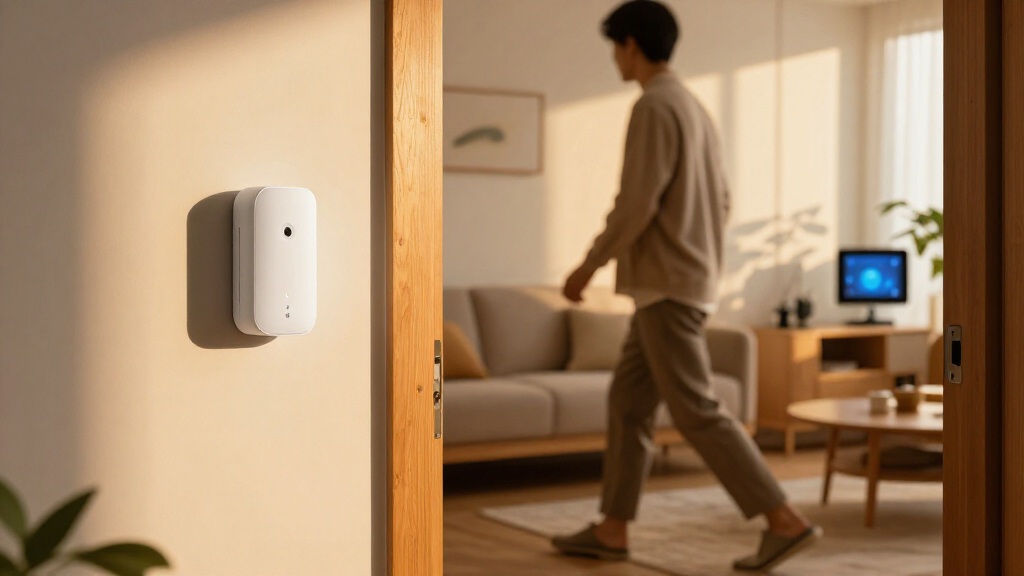
How We Picked
I evaluated these sensors based on detection accuracy, specifically looking at how well they distinguish human presence from environmental noise like fans or pets. I also prioritized ecosystem compatibility, favoring devices that support Matter, Thread, or Zigbee for seamless integration into existing smart home setups. Build quality and ease of installation were secondary but important factors, as complex wiring or fragile housings detract from daily usability.
The ranking reflects a balance between performance and value. Devices with advanced features like zone mapping or multi-protocol support rank higher, while budget-friendly options are judged on their reliability and core functionality. I excluded products with poor documentation or limited community support, as troubleshooting mmWave sensitivity often requires active user forums and detailed guides.
Factors to Consider When Choosing Best MmWave Motion Sensors
Selecting the right mmWave sensor involves more than just picking the cheapest option. You need to consider how the technology interacts with your specific living space and automation goals. Here are the key factors that should drive your decision.
Power Source and Placement Flexibility
Most mmWave sensors rely on continuous radar emission, which consumes more power than traditional PIR sensors. Battery-powered models offer placement freedom but often require sensitivity adjustments to preserve lifespan. Wired or USB-powered sensors provide consistent performance but limit where you can install them. Consider whether you need a sensor in a hard-to-reach corner or near a power outlet. Battery life estimates can vary wildly based on reporting intervals, so look for devices with adjustable reporting frequencies.
Protocol Compatibility and Hub Requirements
The communication protocol dictates which hub or ecosystem you need. Zigbee sensors require a compatible hub like Home Assistant with a Zigbee dongle or a dedicated gateway. Matter over Thread devices promise universal compatibility but may still need a border router for full functionality. Wi-Fi sensors often connect directly to the cloud, raising privacy and latency concerns. Match the protocol to your existing infrastructure to avoid buying unnecessary hardware. Home Assistant users have the most flexibility, while Apple HomeKit users should prioritize Matter-certified devices.
Sensitivity Tuning and False Positives
mmWave sensors are sensitive to movement, but that sensitivity can be a double-edged sword. False positives from ceiling fans, curtains, or pets are common complaints in user forums. Look for sensors that allow granular control over sensitivity thresholds and detection range. Some advanced models offer zone exclusion, letting you ignore specific areas like a pet bed or a window with moving blinds. Without these controls, you may find yourself disabling the sensor due to annoyance rather than utility.
Detection Range and Field of View
Not all mmWave sensors detect movement equally. Detection range varies from a few feet to over twenty feet, depending on the radar frequency and antenna design. A sensor with a wide field of view might catch movement in adjacent rooms, causing unwanted automations. Conversely, a narrow beam might miss someone sitting quietly on a sofa. Measure your room dimensions and furniture layout before choosing. For small rooms, a compact sensor with a shorter range is often more effective than a high-power model.
Privacy and Local Processing
Since mmWave sensors detect movement through radar waves, they do not capture images, which is a privacy advantage over cameras. However, data transmission methods matter. Cloud-dependent sensors send movement data to external servers, which may concern privacy-focused users. Local processing via Zigbee or Matter ensures that movement data stays within your home network. Check if the manufacturer provides local API access or requires cloud accounts for basic functionality. Local control also ensures your automations continue working during internet outages.
Frequently Asked Questions
Why do I still need mmWave sensors if I have PIR sensors?
PIR sensors detect changes in heat, so they often fail to detect people who remain stationary for long periods. mmWave sensors use radar to detect micro-motions like breathing or slight shifts in posture. This makes them ideal for bathrooms, bedrooms, or reading nooks where you might sit still for extended times. Combining both technologies can reduce false positives while maintaining high presence detection accuracy.Will mmWave sensors detect my pets and trigger lights?
Yes, mmWave sensors can detect pets, especially larger dogs or cats moving around. Most sensors allow you to adjust sensitivity to ignore smaller movements, but this might also reduce sensitivity to humans. Some advanced models offer height filtering or specific pet-immune modes. If you have pets, prioritize sensors with detailed sensitivity controls or zone exclusion features to minimize unwanted triggers.Do mmWave sensors work through walls or glass?
mmWave radar waves can penetrate thin materials like wood, drywall, and glass, which can lead to ghost triggers from adjacent rooms. Thicker materials like concrete or brick block the signal more effectively. To prevent issues, aim sensors away from windows or thin walls. Some users successfully use sensors through glass doors for outdoor detection, but you must tune the sensitivity to avoid detecting cars or pedestrians outside.How do I reduce false positives from ceiling fans or HVAC vents?
False positives from moving objects are a common challenge with mmWave technology. Start by lowering the sensitivity threshold in the device settings. If the sensor supports it, create exclusion zones to ignore areas with fans or vents. Reorienting the sensor to face a different direction can also help. In Home Assistant, you can create automation logic that requires a secondary confirmation, like a PIR sensor trigger, before activating lights.Is Matter over Thread better than Zigbee for mmWave sensors?
Matter over Thread offers better interoperability with major ecosystems like Apple Home, Google Home, and Amazon Alexa without needing proprietary hubs. Zigbee often provides longer battery life and a more mature ecosystem for DIY enthusiasts. Thread networks are self-healing and low-latency, but require a Thread border router. If you want plug-and-play simplicity with modern smart home platforms, Matter over Thread is the forward-looking choice. If you prioritize battery life and have a Zigbee hub, Zigbee remains highly reliable.Conclusion
The Lafaer LWR02 is the best overall choice for most users, combining Matter over Thread reliability with comprehensive 5-in-1 sensing. For budget-conscious buyers, the SONOFF SNZB-06P24 delivers solid mmWave performance at a lower cost, though it requires a Zigbee hub. If you need outdoor durability or wireless flexibility, the meross MS605 is the premium pick, offering IP67 waterproofing and long battery life. Beginners should look toward the Aqara FP300 for its seamless integration with the Aqara Hub and user-friendly app. For Home Assistant power users who want maximum control and customization, the AKAMATIS v2.2 with its external antenna and detailed configuration options is the best specialized tool. Choose based on your existing hub infrastructure and whether you prioritize local control, battery life, or multi-protocol compatibility.
Fall Picks

DJI Osmo Action 4 Essential Combo Waterproof 4K Action Camera
As an affiliate, we earn on qualifying purchases.