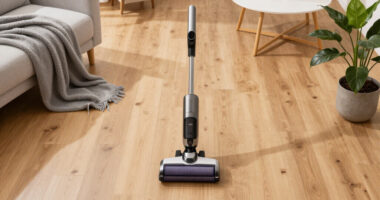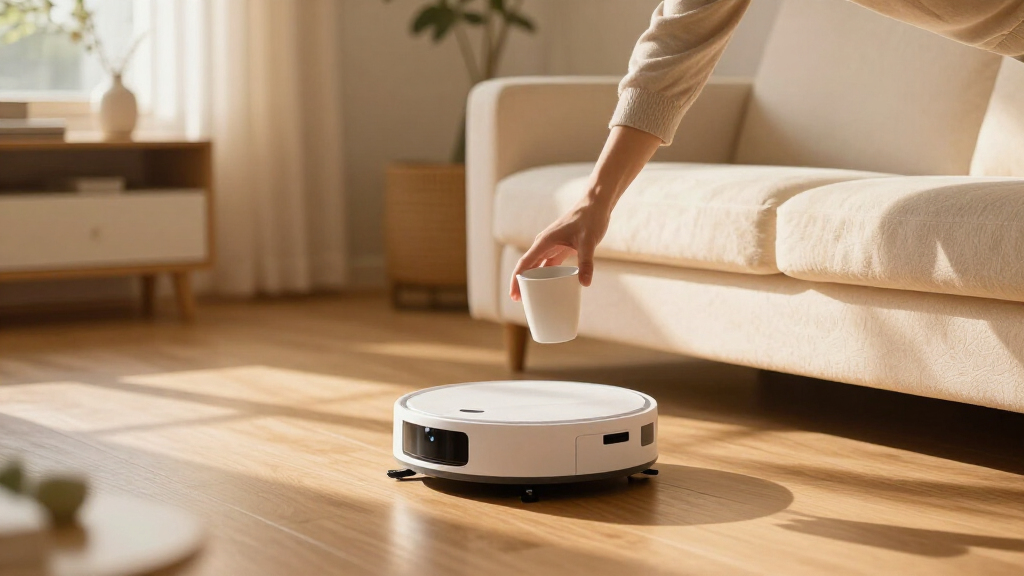

The best home robots in 2026 cover a lot of ground: robot vacuums and mops that clean while you are out, mobile cameras that patrol your home, and AI companions that keep you company. My top pick overall is the Roborock Qrevo 2 Pro, which pairs strong suction with a self-washing mop dock that handles nearly every floor-cleaning chore on its own. For shoppers who want capable cleaning without the flagship price, the Tikom L8000 Plus stands out as the best value, while the eufy 11S MAX remains the simplest entry point for first-time robot vacuum owners. The main tradeoff in this category is between automation level and cost: models with self-emptying and mop-washing docks do far more independently, but they cost more and take up more space. Keep reading for the full breakdown of all 15 picks and which one fits your home, budget, and cleaning habits.

Get the latest gadgets delivered free — and shop member deals
- Fast, free delivery on millions of items
- Access to Prime Big Deal Days deals on October 6–7
- Prime Video, Amazon Music and more included
Complete the kit


Key Takeaways
- Dock technology was the single biggest differentiator: models like the Roborock Qrevo 2 Pro and Dreame L40 Ultra Gen 2 with self-washing mop docks required almost no hands-on maintenance, while budget combos like the Tikom G8000 Max still need manual mop rinsing.
- Suction specs diverged wildly — from 5,200 Pa to 20,000 Pa — but raw power mattered less than navigation and mopping design for homes with mostly hard floors; the eufy E25’s roller mop system out-cleaned higher-suction rivals on stuck-on messes.
- Not every product in this category cleans: the Enabot EBO SE and AIONIOS ata05 serve as mobile home cameras, and the EMOPET EMO is a desk companion, so buyers should first decide whether they want cleaning, security, or entertainment from a home robot.
- Older simple designs like the eufy 11S MAX and Roomba 115 Combo still earned spots because they avoid app frustrations and Wi-Fi dependency — a real advantage for buyers who want a robot that just works.
- Self-emptying docks (Tikom L8000 Plus, Roborock Q7 M5+, Shark AI Ultra) are the sweet spot for value: they eliminate the most hated chore, emptying the bin, without the full flagship price of mop-washing docks.
| ROPVACNIC Robot Vacuum and Mop Combo, 5200 Pa |  | Best Budget-Friendly Pet Hair Pick | Suction power: 5200 Pa | Functions: Vacuuming and mopping | Water adjustment: Four-stage | VIEW LATEST PRICE | See Our Full Breakdown |
| Enabot EBO SE 1080p Mobile Home Robot Camera |  | Best Mobile Home Monitoring Robot | Video resolution: 1080p | Night vision: Yes | Two-way audio: Yes | VIEW LATEST PRICE | See Our Full Breakdown |
| iRobot Roomba Max 705X Combo Robot Vacuum and Mop with AutoWash Dock | 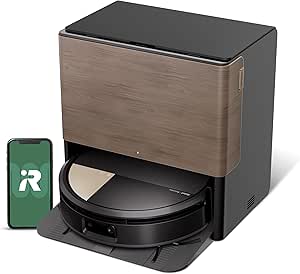 | Best Premium All-in-One Cleaning | Type: Robot vacuum and mop combo | Dock: AutoWash Dock with auto-emptying, mop washing/drying, and solution dispensing | Auto-emptying: Up to 75 days | VIEW LATEST PRICE | See Our Full Breakdown |
| EMOPET EMO AI Desk Robot Companion with Charging Station |  | Best Desk Companion Robot | Model: EMO GO HOME | Included components: Robot and charging station | Connectivity: Network connection; EMO app | VIEW LATEST PRICE | See Our Full Breakdown |
| Roborock Qrevo 2 Pro Robot Vacuum and Mop |  | Best High-Power Performer | Suction power: 20,000 Pa | Noise level: 54 dB | Mop lift: Up to 15 mm | VIEW LATEST PRICE | See Our Full Breakdown |
| Roborock Q7 L5 Robot Vacuum and Mop Combo |  | Best Value Combo | Suction power: 8,000 Pa | Navigation: LiDAR | Water tank capacity: 270 ml | VIEW LATEST PRICE | See Our Full Breakdown |
| iRobot Roomba 115 Combo Robot Vacuum and Mop with AutoEmpty Dock |  | Best for Allergy Sufferers | Vacuum suction: 15,000 Pa | Coverage per charge: Up to 900 sq ft | Dock bag capacity: 2.5 L | VIEW LATEST PRICE | See Our Full Breakdown |
| Tikom G8000 Max Robot Vacuum and Mop Combo |  | Best Budget Pick | Suction power: 5000 Pa | Battery life: Up to 150 minutes | Dustbin capacity: 450 ml | VIEW LATEST PRICE | See Our Full Breakdown |
| eufy E25 Robot Vacuum and Mop Combo, 20,000 Pa, HydroJet Roller Mop |  | Best Premium Automation | Suction power: 20,000 Pa | Mop system: HydroJet roller mop | Dust bag capacity: 3 L (approx. 75 days) | VIEW LATEST PRICE | See Our Full Breakdown |
| Tikom L8000 Plus Robot Vacuum and Mop with Self-Emptying Base |  | Best for Multi-Story Homes | Maximum suction: 6000 Pa | Dustbag capacity: 3 L | Navigation: 360° LiDAR | VIEW LATEST PRICE | See Our Full Breakdown |
| Dreame L40 Ultra Gen 2 Robot Vacuum and Mop |  | Best Premium Pick | Suction power: 25,000 Pa | Carpet care modes: 4 | Mop lift: 0.41 in | VIEW LATEST PRICE | See Our Full Breakdown |
| AIONIOS ata05 4WD Home Robot Camera |  | Best Mobile Home Monitoring | Camera resolution: 1080p HD with HDR | Viewing angle: 95° | Drive system: 4WD | VIEW LATEST PRICE | See Our Full Breakdown |
| Roborock Q7 M5+ Robot Vacuum and Mop with Self-Emptying Dock |  | Best Self-Emptying Value | Suction power: 10,000 Pa | Dust bag capacity: 2.7 L | Self-emptying interval: Up to 7–9 weeks | VIEW LATEST PRICE | See Our Full Breakdown |
| Shark AI Ultra Robot Vacuum with 60-Day Self-Emptying Base (AV2511AE) |  | Best for Pet Hair | Model: AV2511AE | Runtime: Up to 90 minutes | Self-emptying base: Bagless, holds up to 60 days of debris | VIEW LATEST PRICE | See Our Full Breakdown |
| eufy 11S MAX Robot Vacuum Cleaner | 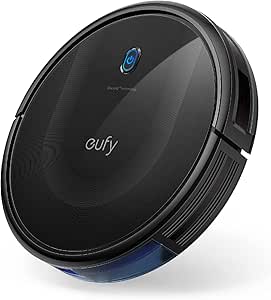 | Best No-Wi-Fi Pick | Profile height: 2.85 inches | Runtime: Up to 100 minutes on hardwood floors | Suction adjustment: BoostIQ, adjusts within 1.5 seconds | VIEW LATEST PRICE | See Our Full Breakdown |
More Details on Our Top Picks
ROPVACNIC Robot Vacuum and Mop Combo, 5200 Pa
Pet households on a budget get the most out of this combo, because its brush-free design and dual rotating side brushes collect hair without the tangled rollers that plague cheaper machines. Compared with the Tikom G8000 Max, the ROPVACNIC trades raw power for a tangle-resistant layout, which matters more if you have two shedding cats than if you have deep carpets. Four-stage water adjustment lets you tune mopping for sealed wood versus tile, and scheduling plus Alexa and Google Assistant support keep it competitive with pricier rivals. The tradeoff is real: suction tops out at 5200 Pa, and carpet support stops at low pile, so thick rugs are off the menu. It also lacks the self-emptying dock of the iRobot Roomba 115 Combo, so expect to empty the bin yourself.
Pros:- Vacuums and mops in one affordable package
- Brush-free design resists pet hair tangles
- App, voice, and scheduled cleaning controls
- Automatically returns to recharge
Cons:- Limited to low-pile carpet — no deep-carpet cleaning
- No self-emptying dock, so bins need manual emptying
Best for: Pet owners in small homes or apartments who mainly have hard floors and low-pile rugs
Not ideal for: Homes with thick, high-pile carpet — the suction and floor compatibility aren’t designed for it
- Suction power:5200 Pa
- Functions:Vacuuming and mopping
- Water adjustment:Four-stage
- Suction levels:3
- Controls:Smartphone app, voice control (Alexa and Google Assistant)
- Floor compatibility:Wood, hard floors, and low-pile carpets
- Automatic features:Scheduling, obstacle detection, mode switching, self-recharging
Our verdict“A sensible low-cost choice for pet owners with mostly hard floors who don’t need dock automation.”
Enabot EBO SE 1080p Mobile Home Robot Camera
Not every home robot cleans — some keep watch. The EBO SE stands out as a drivable camera you pilot room to room through the ROLA app, which is something a fixed security cam or the AIONIOS ata05 can only partially replicate at a higher complexity level. Two-way audio means you can talk to a lonely dog or an elderly relative, and night vision keeps check-ins useful after dark. When the battery runs down, it heads back to its dock automatically. The tradeoffs are practical: infrared docking can be confused by reflective surfaces near the charger, so placement takes some trial and error, and you may occasionally need to drive it close to the dock yourself. There’s no vacuuming here — this pick is purely about presence and monitoring.
Pros:- Remotely drivable between rooms for full-home coverage from one camera
- 1080p video with night vision
- Two-way audio for talking to pets or family
- Automatically returns to its charging dock
Cons:- Docking can be disrupted by reflective objects near the dock
- Requires the ROLA app and may need manual driving near the dock after use
Best for: Pet owners and remote caregivers who want to move around the house and talk to people or animals in real time
Not ideal for: Buyers wanting cleaning help — this robot only monitors and communicates, it doesn’t vacuum or mop
- Video resolution:1080p
- Night vision:Yes
- Two-way audio:Yes
- Remote control:Via the ROLA app
- Auto-recharge:Returns to charging dock when power is low
Our verdict“The pick for anyone who wants eyes and a voice throughout the house without installing multiple fixed cameras.”
iRobot Roomba Max 705X Combo Robot Vacuum and Mop with AutoWash Dock
This is the most automated cleaning package in the lineup. The Max 705X pairs a self-cleaning extending roller mop with heated scrubbing at 200 RPM against the flat mopping pads of the Roborock Qrevo 2 Pro, and its AutoWash Dock goes further than most — emptying debris for up to 75 days, washing and drying the mop, and dispensing solution so you rarely touch anything messy. ClearView Pro LiDAR mapping plus PrecisionVision AI let it target specific rooms and re-clean detected messes, while carpet protection and Carpet Boost handle mixed flooring without soaking rugs. The catch is cost and complexity: it’s the priciest way to clean, iRobot’s docking ecosystem requires proprietary solution refills, and the listed specs omit battery runtime and noise, so quieter-home buyers are guessing.
Pros:- Vacuums and mops in a single run with floor-type adjustments
- Dock handles emptying, mop washing, drying, and solution dispensing
- AI obstacle avoidance with re-clean capability for detected messes
- Carpet protection and Carpet Boost for mixed-floor homes
Cons:- Premium price for automation many smaller homes don’t need
- Dock uses proprietary cleaning solution refills
- No published battery life or noise figures
Best for: Busy households with mixed hard floors and carpets who want maximum dock automation and minimal hands-on maintenance
Not ideal for: Budget-conscious buyers or small apartments — this level of automation is overkill when a Roborock Q7 L5 would cover the basics
- Type:Robot vacuum and mop combo
- Dock:AutoWash Dock with auto-emptying, mop washing/drying, and solution dispensing
- Auto-emptying:Up to 75 days
- Mop:Self-cleaning extending roller mop with 200 RPM heated scrubbing
- Navigation:PrecisionVision AI obstacle avoidance and ClearView Pro LiDAR mapping
- Brushes:Dual Rubber Brushes and Dual Edge-Sweeping Brushes
- Voice assistants:Alexa, Siri, and Google Assistant
Our verdict“The hands-off choice for large, mixed-floor homes where dock automation justifies the premium.”
EMOPET EMO AI Desk Robot Companion with Charging Station
EMO occupies a completely different niche from the cleaners in this roundup — it’s a desk-sized AI companion that talks, dances, and plays games. Conversations powered by ChatGPT give it more personality than the Enabot EBO SE, which is built for monitoring rather than interaction, and touch responses plus app-based games make it feel like a desktop pet rather than a gadget. It finds its own charging station when it needs power. Compared with a cleaning robot, the value proposition is emotional, not practical: EMO won’t pick up a single crumb. Note the 15-and-up age recommendation, and expect deeper conversations to depend on network connectivity — offline, it’s much less interesting. Volume control also lives in the app rather than on the robot itself, which is mildly annoying.
Pros:- Voice interaction with ChatGPT-powered conversation
- Dances, plays app-based games, and responds to touch
- Automatically locates its own charging station
Cons:- Needs network connectivity for richer conversations
- Volume adjustment only through the app, not on the device
Best for: Teens and adults who want an interactive desk gadget and AI conversation partner rather than a cleaning tool
Not ideal for: Young children under 15, or anyone expecting practical household help — this is entertainment, not chores
- Model:EMO GO HOME
- Included components:Robot and charging station
- Connectivity:Network connection; EMO app
- Features:Voice commands, ChatGPT conversations, dancing, games, touch interaction, automatic charging
- Dimensions:11 x 8.5 x 2.95 inches
- Recommended age:15 years and up
Our verdict“A fun desktop companion for older teens and adults; skip it if you’re shopping for actual household labor.”
Roborock Qrevo 2 Pro Robot Vacuum and Mop
Where the Roomba Max 705X leans on ecosystem polish, the Qrevo 2 Pro wins on raw cleaning muscle. With 20,000 Pa suction, automatic carpet boost, and an extending mop plus side brush that reaches edges and corners, it out-cleans most combos here, including the eufy E25 at the same power rating, thanks to its more complete dock. That dock empties dust, refills water, and washes the mop at 149°F before drying at 113°F, so mop pads stay hygienic with zero effort. Anti-tangle brushes reduce the hair-wrapping problem, and at 54 dB it runs quieter than most high-suction rivals. The tradeoff is network rigidity: it only supports 2.4 GHz Wi-Fi, so mesh-network households on 5 GHz bands will need to reconfigure before setup. It’s also a serious investment compared with simpler picks like the Roborock Q7 L5.
Pros:- 20,000 Pa suction with automatic carpet boost
- Dock handles dust emptying, water refilling, heated mop washing, and drying
- Anti-tangle brush design plus extending mop for edge coverage
- Quiet 54 dB operation for its power class
Cons:- 2.4 GHz Wi-Fi only — troublesome for 5 GHz mesh networks
- Premium price point for features smaller homes won’t fully use
Best for: Homes with heavy carpet traffic, pets, and edge-to-edge cleaning needs who want top-tier suction with full dock automation
Not ideal for: Homes running only 5 GHz Wi-Fi networks, or buyers who don’t need mop-washing dock automation
- Suction power:20,000 Pa
- Noise level:54 dB
- Mop lift:Up to 15 mm
- Dock features:Automatic dust emptying, water refilling, mop washing at 149°F, mop drying at 113°F
- Navigation:Reactive Tech obstacle avoidance, Quick Mapping, 3D Map Display
- Wi-Fi compatibility:2.4 GHz
Our verdict“The strongest cleaner in this batch for demanding, mixed-floor homes — as long as your router speaks 2.4 GHz.”
Roborock Q7 L5 Robot Vacuum and Mop Combo
The Roborock Q7 L5 delivers the strongest suction-per-dollar argument in this batch, pairing 8,000 Pa suction with the same LiDAR navigation that pricier models use. Compared with the Tikom G8000 Max, the extra 3,000 Pa of suction means visibly better results on medium-pile carpet and pet hair, while multi-floor mapping and no-go zones give it scheduling flexibility the G8000 lacks. The tradeoff is hands-on maintenance: unlike the eufy E25 or Tikom L8000 Plus, there is no self-emptying dock, and the combo dustbin-and-water-tank unit has to be manually emptied and refilled more often than separate modules. For buyers who want smart navigation and serious suction without paying for a full-service station, this model makes the most sense — it prioritizes cleaning muscle over automation.
Pros:- 8,000 Pa suction handles dust, debris, and pet hair effectively
- LiDAR mapping with multi-floor support and no-go zones
- Vacuums and mops simultaneously
- Anti-tangle brushes reduce hair wrap for pet owners
Cons:- No self-emptying dock, so the combo bin needs frequent attention
- Water tank and dustbin are a single integrated part, making refills awkward
- 2.4 GHz Wi-Fi only
Best for: Buyers who want LiDAR mapping and high suction on a budget and don’t mind emptying the bin themselves
Not ideal for: Hands-off owners who want a dock that empties debris — this model has no self-emptying option
- Suction power:8,000 Pa
- Navigation:LiDAR
- Water tank capacity:270 ml
- Battery life:150 minutes
- Noise level:60 dB
- Surfaces:Carpet, laminate, tile, vinyl, wood, marble
- Smart home compatibility:Amazon Echo, Google Home
Our verdict“A smart pick for buyers who’d rather pay for suction and navigation than a docking station.”
iRobot Roomba 115 Combo Robot Vacuum and Mop with AutoEmpty Dock
What separates the Roomba 115 Combo from the field is its 2.5 L sealed, allergen-trapping dock bag — debris goes in and stays contained for up to three months, which matters a lot if dust triggers allergies in your household. Its 15,000 Pa suction nearly doubles the Tikom L8000 Plus, so it pulls fine particles out of carpet rather than skimming the surface. The No Mop Zones feature also works better in practice than the L8000 Plus’s approach, which asks you to physically remove the mop pad near carpet. The catch is scale: at roughly 900 sq ft per charge, larger homes will need multiple runs, and unlike the eufy E25’s station, the dock empties dust but never washes the mop pad — that stays on your chore list.
Pros:- Sealed 2.5 L allergen-trapping dock bag holds up to 3 months of debris
- 15,000 Pa suction rivals models costing far more
- Vacuums and mops in a single pass
- No Mop Zones keep rugs and carpet dry automatically
Cons:- Coverage limited to about 900 sq ft per charge
- Dock empties dust but doesn’t wash or dry the mop pad
- Mop pad and filters need regular manual maintenance
Best for: Allergy-sensitive households in small to medium homes who want sealed debris disposal
Not ideal for: Owners of larger homes — the 900 sq ft per-charge coverage means interrupted cleaning cycles
- Vacuum suction:15,000 Pa
- Coverage per charge:Up to 900 sq ft
- Dock bag capacity:2.5 L
- Self-emptying duration:Up to 3 months
- Navigation:ClearView LiDAR
- Mop pad:Washable microfiber
- Cleaning modes:Vacuum and mop in one pass; spot clean
Our verdict“The right choice if contained dust disposal and strong suction matter more than whole-home coverage in one run.”
Tikom G8000 Max Robot Vacuum and Mop Combo
The Tikom G8000 Max is the entry point of this lineup, and it earns that slot by keeping the essentials — simultaneous vacuum-mopping, HEPA filtration, and a genuinely quiet 45 dB operation — while cutting the extras. There’s no dock, no LiDAR, and no floor mapping here, which separates it sharply from the Roborock Q7 L5: instead of methodical mapped routes, it relies on zig-zag, spot, and edge modes. That’s fine for a single open room, less ideal for a cluttered multi-room home. Its slim 2.99-inch profile lets it slide under furniture the taller, dock-equipped robots can’t reach, and the included remote control is a nice touch for households without smart speakers. Just know the 150-minute runtime figure applies to quiet mode, and the modest 450 ml bin fills fast with pet hair.
Pros:- Simultaneous vacuuming and mopping at a budget price
- Very quiet operation at 45 dB
- Slim 2.99-inch height cleans under low furniture
- Four control options including a physical remote
Cons:- No LiDAR mapping, so navigation is pattern-based rather than room-aware
- 450 ml dustbin and 300 ml tank require frequent emptying and refilling
- 150-minute runtime only applies in quiet mode
Best for: First-time robot vacuum buyers or apartment dwellers wanting quiet, low-cost vacuum-mopping in one room or a small space
Not ideal for: Multi-room homes needing mapped, methodical navigation — this has no LiDAR or floor mapping
- Suction power:5000 Pa
- Battery life:Up to 150 minutes
- Dustbin capacity:450 ml
- Water tank capacity:300 ml
- Height:2.99 inches
- Noise level:45 dB
- Filter type:HEPA
- Cleaning modes:Spot, edge, zig-zag, and manual
Our verdict“A sensible starter robot for small spaces where mapped navigation and a self-emptying dock aren’t priorities.”
eufy E25 Robot Vacuum and Mop Combo, 20,000 Pa, HydroJet Roller Mop
The eufy E25 is the most self-sufficient machine in this batch, and it’s priced accordingly. Its HydroJet roller mop continuously rinses itself with clean water mid-clean — a fundamentally different approach from the flat pads on the Roomba 115 Combo or Roborock Q7 L5, which spread whatever they’ve picked up until you wash them. The all-in-one station then empties dust, washes and hot-air dries the mop at 50°C, and refills water, cutting nearly all manual upkeep. At 20,000 Pa, suction also tops the group. The 10.8 mm mop lift is modest compared with robots that raise pads fully clear of carpet, so I’d steer heavy-carpet households toward the Roomba 115 instead. The 110 V US-only power spec and 2.4 GHz Wi-Fi limit are minor irritations on an otherwise fully automated package.
Pros:- HydroJet roller mop refreshes with clean water throughout the run
- Station empties dust, washes mop, dries with 50°C hot air, and refills water
- Class-leading 20,000 Pa suction
- Stores up to 5 floor plans for multi-story homes
Cons:- 10.8 mm mop lift is shallow compared with competing carpet-avoidance systems
- 2.4 GHz Wi-Fi only, no 5 GHz support
- Specified for 110 V US power, limiting international use
Best for: Owners who want maximum automation — self-emptying, self-washing, and self-drying — and mostly hard floors
Not ideal for: Carpet-heavy homes — the 10.8 mm mop lift doesn’t clear rugs as well as models with No Mop Zones
- Suction power:20,000 Pa
- Mop system:HydroJet roller mop
- Dust bag capacity:3 L (approx. 75 days)
- Mop drying:50°C hot air
- Floor plan storage:Up to 5 floor plans
- Mop lift:10.8 mm
- Runtime:125 minutes (vacuum and mop, standard mode)
- Voice assistants:Alexa, Google Assistant, Siri
Our verdict“The closest thing to a maintenance-free robot here — worth it if your home is mostly hard flooring.”
Tikom L8000 Plus Robot Vacuum and Mop with Self-Emptying Base
Where the Tikom L8000 Plus quietly outperforms its rivals is connectivity and mapping: it’s one of the few robots here supporting both 2.4 GHz and 5 GHz Wi-Fi, and it saves up to five floor maps — a genuine advantage over single-map competitors if you live in a two-story house. The 3 L self-emptying base puts it in the same maintenance class as the Roomba 115 Combo’s dock, though its 6,000 Pa suction trails that model considerably, so deep-carpet performance is more modest. The recharge-and-resume function means big jobs finish even when the battery doesn’t. The main frustration is carpet handling: there’s no mop lift, so you either pull the mop holder off manually or fence off carpeted zones in the app — an extra step the eufy E25 handles automatically.
Pros:- Supports both 2.4 GHz and 5 GHz Wi-Fi, unlike most rivals here
- LiDAR mapping with up to 5 saved floor plans
- 3 L self-emptying base holds weeks of debris
- Automatically recharges and resumes long cleaning jobs
Cons:- No mop lift — mop holder must be removed or carpet zones restricted
- 6,000 Pa suction lags behind similarly docked competitors
- 150-minute runtime applies only to gentle suction mode
Best for: Multi-story homeowners who want dual-band Wi-Fi, five saved floor maps, and weeks between bag changes
Not ideal for: Homes with mixed carpet and hard floors who won’t want to remove the mop pad or set restricted zones constantly
- Maximum suction:6000 Pa
- Dustbag capacity:3 L
- Navigation:360° LiDAR
- Saved floor maps:Up to 5
- Maximum runtime:Up to 150 minutes in gentle suction mode
- Connectivity:2.4 GHz and 5 GHz Wi-Fi
- Voice assistant compatibility:Alexa
- Recharge and resume:Yes
Our verdict“The practical pick for split-level and two-story homes that other single-map robots handle poorly.”
Dreame L40 Ultra Gen 2 Robot Vacuum and Mop
The L40 Ultra Gen 2 sits at the top of this roundup because it attacks the two problems that frustrate robot vacuum owners most: missed corners and constant dock maintenance. Its extending brush and mop reach edges that fixed-brush rivals like the Roborock Q7 M5+ simply drive past, and 25,000 Pa of suction more than doubles that model’s cleaning power on carpet. The all-in-one dock washes its own mops, which is a real time-saver over combo units like the Tikom G8000 Max that leave pad rinsing to you.
Tradeoffs exist. Wi-Fi is limited to 2.4 GHz networks in the USA only, and the auto-detergent dispenser costs extra. Compared with the eufy E25, the mopping hardware is less specialized, so buyers chasing scrubbing performance should weigh that option too.
Pros:- 25,000 Pa suction with five adjustable levels for carpets and hard floors
- Extending brush and mop reach corners and under furniture
- All-in-one self-cleaning dock cuts manual maintenance
- Quiet Mode runs up to 231 minutes and covers up to 1,679 sq. ft. per charge
Cons:- Connectivity restricted to 2.4 GHz Wi-Fi and USA use only
- Auto-detergent dispenser sold separately
Best for: Homeowners with mixed hard floors and carpet who want corner-to-corner vacuuming and self-washing mops with minimal hands-on upkeep
Not ideal for: Buyers outside the USA or on 5 GHz-only networks, and anyone unwilling to pay extra for detergent dispensing
- Suction power:25,000 Pa
- Carpet care modes:4
- Mop lift:0.41 in
- Quiet Mode runtime:Up to 231 minutes
- Battery capacity:5,200 mAh
- Connectivity:2.4 GHz Wi-Fi; USA use only
- Voice assistants:Alexa, Siri, Google Home
- Dock:All-in-one self-cleaning
Our verdict“This pick makes the most sense for buyers who want a near-hands-off vacuum-and-mop flagship and accept USA-only 2.4 GHz connectivity in exchange.”
AIONIOS ata05 4WD Home Robot Camera
Where most home robots clean, the ata05 patrols. Its four-wheel-drive chassis climbs 25° slopes and clears 3 cm obstacles, so it can roll across thresholds and rugs that strand stationary cameras — and unlike the similarly mobile Enabot EBO SE, it pairs that mobility with color night vision and HDR for usable footage in dim hallways. The local microSD storage model is a genuine advantage for anyone who refuses cloud subscriptions.
The catch is operational: up to 12 hours of continuous running means you can’t leave it actively roaming around the clock, relying instead on its 150-day standby with motion-triggered use. It’s also indoor-only, so it won’t double as a driveway or porch monitor the way a fixed outdoor camera would.
Pros:- 4WD design climbs slopes up to 25° and clears 3 cm obstacles
- 1080p HDR video with color night vision
- Local microSD storage with no cloud subscription fees
- Up to 150 days of standby time
Cons:- Continuous operation caps out at 12 hours
- Indoor use only
Best for: Pet owners and frequent travelers who want to actively check on rooms, kids, or pets from wherever the robot happens to be
Not ideal for: Anyone needing 24/7 continuous recording or outdoor coverage — it’s built for indoor, intermittent patrols
- Camera resolution:1080p HD with HDR
- Viewing angle:95°
- Drive system:4WD
- Maximum slope:25°
- Maximum speed:55 cm/s
- Battery capacity:5200 mAh (19.24 Wh)
- Standby time:Up to 150 days
- Storage:Built-in local storage, expandable via microSD
Our verdict“A smart buy for households that prefer a camera they can drive to the problem rather than a wall of fixed ones, as long as patrols stay occasional.”
Roborock Q7 M5+ Robot Vacuum and Mop with Self-Emptying Dock
The Q7 M5+ earns its slot by making the self-emptying dock — usually a flagship perk — attainable without flagship pricing. Its 2.7 L sealed dust bag stretches emptying intervals to 7–9 weeks, matching the convenience of pricier models like the Roborock Qrevo 2 Pro while skipping that machine’s mop-washing hardware. LiDAR mapping with no-go zones and scheduled room cleaning puts it well ahead of remote-only units like the eufy 11S MAX in automation.
Its 10,000 Pa suction is respectable but trails the Dreame L40 Ultra Gen 2‘s 25,000 Pa on deep carpet, and mopping here is basic drag-along: you adjust water flow manually in the app rather than getting auto-modulation. Compared with the Tikom L8000 Plus, the trade is slightly less mopping sophistication for tighter, more reliable navigation.
Pros:- 2.7 L sealed dust bag extends emptying to 7–9 weeks
- Anti-tangle JawScrapers brush handles pet hair on carpets and edges
- LiDAR mapping enables efficient routes, no-go zones, and spot cleaning
- App supports scheduling and live progress monitoring
Cons:- App requires 2.4 GHz Wi-Fi only
- Mopping water flow must be adjusted manually
Best for: Busy households that mostly want set-and-forget vacuuming with weeks between maintenance and precise room-by-room scheduling
Not ideal for: Buyers whose priority is serious mopping performance — the water flow system is rudimentary compared with roller-mop rivals
- Suction power:10,000 Pa
- Dust bag capacity:2.7 L
- Self-emptying interval:Up to 7–9 weeks
- Navigation:PreciSense LiDAR
- Mopping:Three adjustable water flow settings
- Brush design:JawScrapers main brush and anti-tangle side brush
- App connectivity:2.4 GHz Wi-Fi only
Our verdict“This model is better suited to vacuum-first households that want flagship dock convenience at a mid-tier price than mop-first buyers.”
Shark AI Ultra Robot Vacuum with 60-Day Self-Emptying Base (AV2511AE)
Shark’s AV2511AE is the hair specialist of this lineup. The self-cleaning brushroll actively resists hair wrap, which matters more than raw suction numbers if you share a home with a shedding dog or a long-haired cat — the Roborock Q7 M5+ tackles tangles with brush geometry, but Shark’s approach is more direct. The bagless 60-day base also sidesteps the ongoing cost of replacement dust bags that bagged docks like Roborock’s require.
The compromises are real. 90 minutes of runtime is the shortest in this batch, so larger homes will trigger recharge-and-resume cycles mid-clean, and while the description nods to mopping, no mop hardware ships in the box — buyers who want wet cleaning should look at the ROPVACNIC combo instead.
Pros:- Self-cleaning brushroll resists pet hair wrap
- Bagless base holds up to 60 days of debris without replacement bags
- Matrix Clean grid navigation covers floors systematically
- LiDAR mapping, app and voice controls, plus recharge-and-resume
Cons:- Runtime caps at 90 minutes, short for big floor plans
- No mop hardware included despite mopping references in the description
Best for: Pet owners in small-to-medium homes who want hair-wrap-free vacuuming and a bagless base with no consumable dust bags
Not ideal for: Large homes over roughly 1,200 sq. ft. or anyone expecting genuine mopping from the box contents
- Model:AV2511AE
- Runtime:Up to 90 minutes
- Self-emptying base:Bagless, holds up to 60 days of debris
- Navigation:360° LiDAR mapping with Matrix Clean
- Brushroll:Self-cleaning
- Controls:SharkClean app, Amazon Alexa, Google Assistant
- Included:Robot, XL self-empty base, 1 side brush, 1 filter
Our verdict“This option stands out for shedding-pet households that value a tangle-free brushroll and bagless emptying over long runtime or mopping.”
eufy 11S MAX Robot Vacuum Cleaner
The 11S MAX is the intro-level choice here, and its appeal is refreshingly simple: no app, no account, no Wi-Fi. You press a button or use the remote, and it cleans — which makes it ideal for tech-averse owners, guest houses, or homes with unreliable internet. Its 2.85-inch profile slips under sofas and beds that taller docked rivals like the Dreame L40 Ultra Gen 2 physically can’t reach, and quiet operation means it can run during dinner without notice.
But the simplicity cuts both ways. No mapping means random bounce navigation rather than the methodical LiDAR routes of the Roborock Q7 M5+, no no-go zones, and no self-emptying — you’ll pull the bin yourself every few runs. Compared with app-connected budget options like the Tikom G8000 Max, you trade control and mopping for reliability and a lower price.
Pros:- Slim 2.85-inch body fits under low-clearance furniture
- Quiet enough to run while people are home
- BoostIQ adjusts suction automatically within 1.5 seconds
- Drop and obstacle sensors plus self-recharging for safe, unattended runs
Cons:- No Wi-Fi, app, or voice control — remote and buttons only
- No mapping or no-go zones, so coverage is less efficient in multi-room homes
Best for: First-time robot vacuum buyers, renters, or anyone who wants a low-cost, quiet cleaner with zero setup and no smartphone required
Not ideal for: Owners of large or complex floor plans who want mapped routes, no-go zones, or self-emptying convenience
- Profile height:2.85 inches
- Runtime:Up to 100 minutes on hardwood floors
- Suction adjustment:BoostIQ, adjusts within 1.5 seconds
- Connectivity:No Wi-Fi or app support
- Controls:Remote control and onboard buttons
- Safety features:Infrared obstacle sensor and drop-sensing technology
- Charging:Self-recharging
- Top cover:Anti-scratch tempered glass
Our verdict“This pick makes the most sense for buyers who want dependable, quiet suction under furniture without apps or subscriptions — and nothing more.”

How We Picked
I ranked these 15 home robots by asking the questions a buyer would actually face: how much daily maintenance does each one demand, how well does it clean different floor types, and how much space and money does its dock require. Cleaning performance came down to suction paired with navigation quality — a powerful vacuum that bumps around randomly wastes its own potential. For mop combos, I weighed whether the mop pads lift out of the way on carpet, whether the dock washes them, and whether the water tanks are large enough to cover a full home without refills.
Usability was the second filter. A home robot should reduce chores, not add app troubleshooting to your day, so I favored models with reliable mapping, virtual no-go zones, and straightforward setup. Build quality, replacement-part availability, and dock footprint all factored into value. Finally, I ranked products within their roles — flagship, value, budget, beginner, and specialty picks like cameras and companions — because comparing a desk robot to a vacuum-mop flagship makes no sense for a buyer deciding between them.
Factors to Consider When Choosing Best Home Robots
Before picking a specific model, it helps to understand what separates a home robot you will love from one that ends up unplugged in a closet. These are the factors that shaped my rankings and the ones I would weigh before spending anything in this category.
Decide What Job You Actually Want Done
The biggest mistake buyers make is treating every home robot as the same product. Cleaning robots, mobile security cameras, and AI companions overlap very little in what they deliver day to day. If your goal is less housework, a vacuum-mop combo earns its cost quickly; if it is peace of mind while away, a mobile camera robot like the Enabot or AIONIOS does something a fixed camera cannot — it moves to check rooms on demand. AI companions are the narrowest use case, and buyers often overestimate how long the novelty lasts. My advice is to write down the single chore or worry you want solved, then pick the robot type that solves it, rather than being drawn in by feature lists.
Match the Dock to Your Tolerance for Maintenance
The dock is where most of the price difference — and most of the daily experience difference — lives. A basic robot needs its bin emptied after nearly every run, a self-emptying dock cuts that to every few weeks, and a self-washing mop dock also rinses and dries mop pads so you are not handling dirty, mildew-prone cloth every other day. Many buyers underestimate how much they dislike handling dirty dustbins and mop pads until they own a robot without automation. On the flip side, flagship docks are large, need their own consumables, and require a nearby drain or frequent water refills. If your home has mostly carpet, paying for a mop-washing dock may be wasted money that would be better spent on suction power.
Navigation Quality Beats Raw Suction Numbers
Marketing suction figures have climbed into the tens of thousands of Pa, but a robot that maps your home with LiDAR, cleans in efficient rows, and respects no-go zones will outperform a stronger vacuum that wanders. Structured navigation also protects your furniture and prevents the robot from getting stuck under low couches or eating cables. Buyers in multi-story homes should check whether the robot supports multiple maps, and pet owners should look at how well the brush resists hair tangles — a common complaint that turns into weekly maintenance. When comparing two models, I would always give the edge to the one with better mapping and obstacle handling over higher advertised suction.
Consider Carpet Behavior on Mop Combos
Combo robots handle carpet in two very different ways: some lift or retract their mop pads when they detect rug, while others simply avoid carpeted areas during mopping runs or drag damp pads across your rugs. If your home mixes hard floors with carpet, this single feature can decide whether the robot works for you or forces you to run separate vacuum-only passes. Retractable mop systems used to be exclusive to flagship models but have moved down into mid-range pricing, so there is little reason to accept a fixed-mop design in a mixed-floor home today. Also check mop pressure or roller-style mops if you have kitchen floors that collect dried spills — flat pads that only glide over messes rarely remove them.
Budget for Consumables and Ongoing Costs
The sticker price is only part of the cost. Self-emptying docks need replacement bags, mop systems need new pads every few months, brushes and filters wear out, and some brands lock you into pricier proprietary consumables. Over two or three years, these costs can add up to a meaningful share of the purchase price. Budget brands often offset their lower upfront cost with cheaper, widely available parts, which is part of why value picks like the Tikom models ranked well despite fewer features. Before buying, check the price of replacement brushes, bags, and pads — and whether third-party versions exist.
Smart Home Compatibility and App Reliability
A home robot lives inside its app, and a poorly designed one becomes a daily frustration — missed schedules, lost maps, or firmware updates that break features. If you rely on voice assistants or routines, verify the robot works with your ecosystem before buying, since compatibility varies even within a single brand’s lineup. Buyers who dislike app dependency altogether should consider simpler models that run on a button press, which is why the eufy 11S MAX still has a place in this lineup. Privacy is worth a thought too, especially for camera-equipped robots: check whether video streams to the cloud and what recording controls the app offers before putting a mobile camera in your home.
Frequently Asked Questions
Is a self-emptying dock worth the extra cost?
For most buyers, yes — emptying a robot’s small dustbin after every run is the chore people abandon fastest, and a self-emptying dock reduces it to swapping a bag every few weeks. The value depends on your home size and shedding levels: a large home with pets fills the onboard bin in a single run, making the dock feel indispensable, while a small apartment with hard floors may only need emptying every few runs anyway. Where the value equation changes is with mop-washing docks, which cost considerably more. Those make sense mainly if you mop frequently and dislike handling dirty pads; if you mostly vacuum, a self-empty dock alone captures most of the convenience at a lower price.
Can one robot really handle both vacuuming and mopping well?
Modern combos have closed most of the gap, but with limits. Vacuuming performance is now essentially equal to vacuum-only robots at the same price point, and roller-mop systems like the eufy E25’s actually scrub dried-on messes better than most people mop by hand. The weaknesses show up in extremes: very plush carpet still favors dedicated vacuums with stronger agitation, and the water tanks on combo robots are small enough that large homes may need refills mid-clean. If your floors are a mix of hard surface and low-pile rug, a good combo with a mop-lifting mechanism covers both jobs well enough that owning two separate robots rarely makes sense.
What is the point of a mobile home camera robot instead of a fixed security camera?
A fixed camera only sees one room, while a mobile robot can be driven through the house to check on pets, kids, elderly family members, or anything unusual — one robot effectively replaces several cameras. Models like the Enabot EBO SE also add two-way audio and autonomous patrol modes, letting you interact rather than just watch. The tradeoffs are real: a mobile robot cannot monitor continuously in one spot, needs charging time, and cannot cover a whole home simultaneously the way multiple fixed cameras can. The best fit is someone who wants on-demand check-ins rather than constant surveillance, particularly pet owners or caregivers who want to actively interact while away.
Do I need LiDAR navigation, or is random navigation acceptable?
LiDAR-based mapping is worth it in almost any home larger than a studio. Robots that map clean in efficient, overlapping rows, return to where they left off after charging, and let you set no-go zones around pet bowls or cable nests. Random-bounce robots still clean eventually, but they take longer, miss spots, and bump furniture constantly, which shortens their own lifespan. The one case where simpler navigation is acceptable is a very small, open floor plan with few obstacles, where a basic robot like the eufy 11S MAX covers everything quickly anyway. Beyond that, mapping has become affordable enough that there is little reason to compromise.
How much should I spend on my first home robot?
First-time buyers should resist jumping straight to flagships, because the habits matter as much as the hardware — if the robot does not fit your routine, its dock automation goes unused. A mid-range model with a self-emptying dock and basic mapping is the sweet spot for a first purchase: it delivers the core experience without a painful learning cost. A genuinely budget vacuum-only robot is also a reasonable first step if you mainly want to test whether you will use one at all. Where I would not start is with flagship mop-washing docks, since their extra value depends on habits you have not formed yet. Buy for the chores you already do today, then upgrade later once you know what you wish the robot did better.
Conclusion
For the best overall home robot, the Roborock Qrevo 2 Pro earns the top spot with the most complete cleaning automation in this lineup, with the Dreame L40 Ultra Gen 2 as the close alternative for buyers who prefer its dock design. The best value pick is the Tikom L8000 Plus, which bundles self-emptying convenience and mopping at a mid-range price, while the ROPVACNIC and Tikom G8000 Max suit tighter budgets that still want vacuum-mop versatility. Best premium goes to the eufy E25 for buyers focused purely on mopping power, thanks to its roller mop and 20,000 Pa suction. For beginners, the eufy 11S MAX is the least intimidating way into the category, and the Roomba 115 Combo adds auto-emptying for those who want a bit more automation from day one. For specific needs: the Enabot EBO SE and AIONIOS ata05 cover mobile home monitoring, the EMOPET EMO suits anyone wanting an AI desk companion, and households balancing price with self-emptying should shortlist the Roborock Q7 M5+ or Shark AI Ultra. Whatever your priority, decide first whether you want cleaning, security, or companionship — everything else follows from that choice.
Fall Picks
fall essentials
As an affiliate, we earn on qualifying purchases.