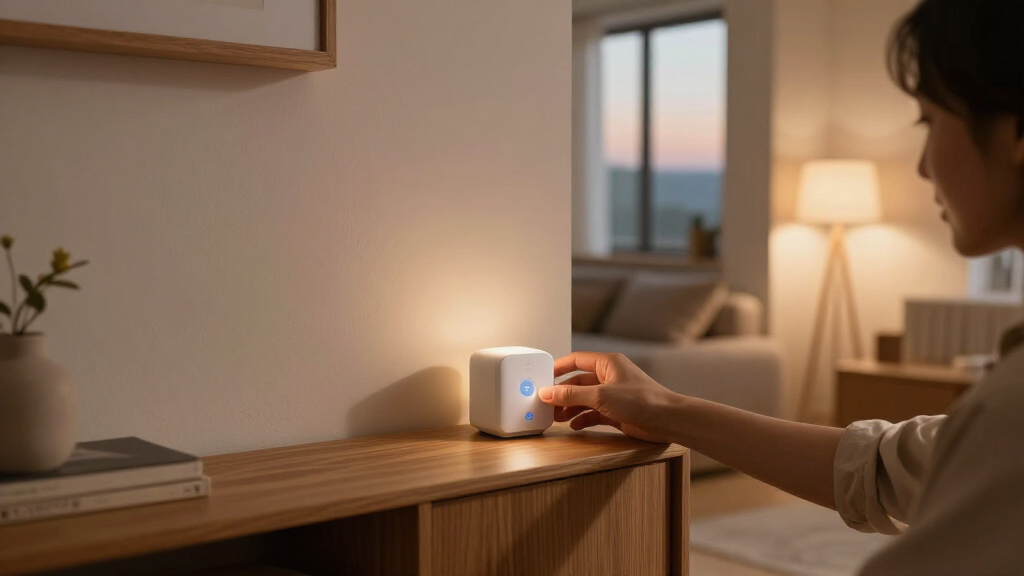

The best smart presence sensors keep lights and automations active while someone remains in a room, even when they sit still. My best overall pick is the Aqara Presence Sensor FP400 for its multi-zone spatial automation and Thread and Zigbee connectivity; the Meross MS605 stands out for battery power and an outdoor-ready IP67 rating, while the ThirdReality R3 adds 60GHz radar and a Zigbee repeater. The main tradeoffs are wired versus battery power, hub and ecosystem compatibility, and simple room detection versus zone-level control. More features can add setup work, while a simpler sensor may be enough for one room. Read on for the full breakdown and guidance on choosing a sensor that fits your setup.

Get the latest gadgets delivered free — and shop member deals
- Fast, free delivery on millions of items
- Access to Prime Big Deal Days deals on October 6–7
- Prime Video, Amazon Music and more included
Complete the kit



Key Takeaways
- The FP400 leads for spatial control: its multi-zone approach sets it apart from sensors focused mainly on room-level presence.
- Power source changes placement freedom: the battery-powered MS605 and FP300 avoid a permanent cable, while USB- or cord-powered models suit fixed locations.
- Connectivity is not interchangeable: Matter over Thread, Matter over Wi-Fi, Zigbee, and ecosystem-specific features can lead to different hub and setup requirements.
- Outdoor use narrows the field: the MS605’s IP67 rating gives it a distinct role among this lineup, most of which are positioned for indoor use.
- More detection features can mean more setup: zone controls and multi-sensor detection add flexibility, but basic room presence may be better served by a simpler model such as the SONOFF SNZB-06P.
| 5-in-1 Presence Sensor LWR02 (PIR + mmWave Radar, Matter over Thread) |  | Best Overall | Sensing: 24 GHz mmWave radar, PIR, temperature, humidity, ambient light | Presence range: 4 m | Motion range: 8 m | VIEW LATEST PRICE | See Our Full Breakdown |
| ThirdReality Presence Sensor R2 – 24GHz mmWave Radar, Zigbee 3.0, Battery Powered |  | Best for Zigbee Households | Technology: 24 GHz mmWave radar | Connectivity: Zigbee 3.0 | Maximum range: 5 m | VIEW LATEST PRICE | See Our Full Breakdown |
| Meross MS605 Presence Sensor, IP67 Battery-Powered, Matter Over Thread |  | Best for Flexible Mounting | Sensing: mmWave, PIR, ambient light | Maximum range: 6 m | Power: CR123A battery included | VIEW LATEST PRICE | See Our Full Breakdown |
| Meross Presence Sensor MS600 – Matter Over Wi-Fi Motion & Presence Sensor with 1.5m Cord |  | Best for Powered, Wide-Area Coverage | Sensing: Millimeter-wave radar, PIR, light sensor | Motion detection range: Up to 12 m | Presence detection range: Up to 6 m | VIEW LATEST PRICE | See Our Full Breakdown |
| Akamatis Litos v3 Human Presence & Light Sensor (mmWave, White, 1 Pack) |  | Best for Home Assistant Tinkerers | Presence sensor: HLK-LD2401 24 GHz mmWave radar | Light sensor: VEML7700 ambient-light sensor | Controller: Seeed XIAO ESP32-C3 | VIEW LATEST PRICE | See Our Full Breakdown |
| Aqara Presence Sensor FP400 – Multi-Zone Spatial Automation, Thread & Zigbee, 60GHz mmWave Radar |  | Best for Large, Multi-Zone Spaces | Radar: 60GHz mmWave | Connectivity: Thread and Zigbee; Matter over Thread | Headcount tracking: Up to 10 people | VIEW LATEST PRICE | See Our Full Breakdown |
| Aqara Presence Sensor FP2 – mmWave Radar Wired Smart Motion Sensor |  | Best for Hub-Free Zone Control | Connectivity: 2.4GHz Wi-Fi | Power: Wired DC, 5V/1A; adapter not included | Maximum range: 8 m | VIEW LATEST PRICE | See Our Full Breakdown |
| Aqara Presence Sensor FP300 – Wireless 5-in-1 mmWave Motion & Presence Sensor |  | Best Battery-Powered Multi-Sensor | Sensor types: 60GHz mmWave, PIR, light, temperature, humidity | Connectivity: Matter over Thread and Zigbee 3.0 | Battery: 2 × CR2450 replaceable batteries | VIEW LATEST PRICE | See Our Full Breakdown |
| Zigbee Human Presence Sensor with Millimeter Wave Radar, Compatible with Home Assistant, SmartThings, Hubitat, Echo Devices |  | Best Simple Battery-Powered Zigbee Pick | Radar frequency: 24GHz | Maximum range: 7 m | Power: 2 AAA batteries, included | VIEW LATEST PRICE | See Our Full Breakdown |
| SONOFF SNZB-06P24 Zigbee Presence Sensor with 24GHz mmWave Radar & Light Sensor |  | Best for Tunable Ceiling Coverage | Radar frequency: 24GHz mmWave | Detection range: 4 m | Field of view: 110° | VIEW LATEST PRICE | See Our Full Breakdown |
| SONOFF SNZB-06P Zigbee Human Presence Sensor (1-Pack) |  | Best for Hub-Based Setups | Detection technology: 5.8GHz microwave radar | Protocol: Zigbee 3.0; hub required | Maximum range: 4 meters | VIEW LATEST PRICE | See Our Full Breakdown |
| ThirdReality Smart Presence Sensor R3, 60GHz mmWave Radar, USB-C Powered, RGB Light with Status Indicator, Illumination Sensor, Zigbee Repeater, Compatible with Home Assistant, SmartThings, Homey |  | Best for Quiet Rooms | Detection technology: 60GHz mmWave radar | Maximum range: 6 meters | Power: USB-C, 5V/1A | VIEW LATEST PRICE | See Our Full Breakdown |
| GoveeLife Human Presence Sensor, mmWave Radar & PIR Wired Motion Sensor |  | Best for Large-Room Coverage | Detection technology: mmWave radar and PIR infrared | Maximum detection range: 26 feet | Connectivity: 2.4GHz Wi-Fi | VIEW LATEST PRICE | See Our Full Breakdown |
| SwitchBot Smart mmWave Radar Motion & Presence Sensor with Dynamic Detection & Zone Positioning |  | Best for Flexible, Cable-Free Placement | Sensor technology: mmWave radar, PIR, and light sensor | Detection range: 8 meters for moving humans; 5 meters for stationary humans | Detection angle: 120° | VIEW LATEST PRICE | See Our Full Breakdown |
| smart presence sensor | Connectivity | Mounting | Power | Compatible platforms |
|---|---|---|---|---|
| 5-in-1 Presence Sensor LWR02 | Matter over Thread | Magnetic adjustable base; adhesive or shelf placement | 2 AAA batteries included; rechargeable batteries supported | — |
| ThirdReality Presence Sensor R | Zigbee 3.0 | — | 3 AA batteries included | — |
| Meross MS605 Presence Sensor | Matter over Thread | 90° foldable, 360° rotatable stand | CR123A battery included | Home Assistant, Alexa, Google Home, HomeKit |
| Meross Presence Sensor MS600 | Matter over Wi-Fi | — | Continuous wired power | HomeKit, Alexa, Google Home, Home Assistant, Meross app |
| Akamatis Litos v3 Human Presen | 2.4 GHz Wi-Fi with external antenna | — | — | — |
| Aqara Presence Sensor FP400 | Thread and Zigbee; Matter over Thread | Side, corner, or ceiling; magnetic base | — | Apple Home, Home Assistant, Google Home, Alexa, SmartThings |
| Aqara Presence Sensor FP2 | 2.4GHz Wi-Fi | — | Wired DC, 5V/1A; adapter not included | — |
| Aqara Presence Sensor FP300 | Matter over Thread and Zigbee 3.0 | Wireless adjustable mount for wall, ceiling, or corner | — | — |
| Zigbee Human Presence Sensor w | Zigbee; hub required | Wall mount | 2 AAA batteries, included | — |
| SONOFF SNZB-06P24 Zigbee Prese | Zigbee; BLE for setup | Ceiling mount | — | Home Assistant, Alexa, SmartThings |
| SONOFF SNZB-06P Zigbee Human P | — | Wall mount | One 9V battery | Alexa, Google Home, SmartThings, Alice, IFTTT, Home Assistant |
| ThirdReality Smart Presence Se | — | Casual placement | USB-C, 5V/1A | Home Assistant (ZHA and Z2M), SmartThings, Aeotec, compatible Echo devices with Zigbee hubs, Homey |
| GoveeLife Human Presence Senso | 2.4GHz Wi-Fi | Wall or ceiling; magnetic base folds 120° and rotates 360° | Wired power | Alexa, Google Assistant, IFTTT, GoveeLife |
| SwitchBot Smart mmWave Radar M | Bluetooth | Magnetic base; flat or wall mount with adjustable angle | — | Apple Home via SwitchBot Matter Hub, Alexa, Google Home, Home Assistant |
More Details on Our Top Picks
5-in-1 Presence Sensor LWR02 (PIR + mmWave Radar, Matter over Thread)
The LWR02 is my strongest all-round pick for buyers who want presence detection plus useful room readings in one battery-powered device. Its 24 GHz mmWave and PIR pairing can keep an automation active when someone sits still, while temperature, humidity, and light readings add options for climate and lighting routines. Compared with the Meross MS600, it avoids a permanent power cord and adds longer battery life; the MS600, in turn, reaches farther for motion and includes a pet shield. Matter over Thread offers broad platform choice and local data processing, but only if you already have a Thread border router. Its IPX3 housing handles light splashes, not wet areas, so I would keep it away from direct water exposure.
Pros:- Combines mmWave, PIR, temperature, humidity, and ambient-light sensing
- Detects stationary presence while helping limit false triggers from fans, curtains, and pets
- Up to two years of battery life, with rechargeable battery support
- Matter over Thread and local data processing support broad, privacy-minded automations
Cons:- Requires an existing Thread border router
- IPX3 protection is limited to light splashes
- Presence range is shorter than its motion range
Best for: Smart-home owners with a Thread border router who want battery-powered presence, environmental readings, and broad Matter platform support in one sensor.
Not ideal for: Buyers without a Thread border router or anyone needing a sensor for a wet location.
- Sensing:24 GHz mmWave radar, PIR, temperature, humidity, ambient light
- Presence range:4 m
- Motion range:8 m
- Field of view:Approximately 120°
- Power:2 AAA batteries included; rechargeable batteries supported
- Battery life:Up to 2 years
- Connectivity:Matter over Thread
- Water resistance:IPX3 splash-proof
- Mounting:Magnetic adjustable base; adhesive or shelf placement
Our verdict“Choose the LWR02 if you have Thread and want one long-running sensor for presence and room conditions rather than the MS600’s corded, longer-range setup.”
ThirdReality Presence Sensor R2 – 24GHz mmWave Radar, Zigbee 3.0, Battery Powered
The ThirdReality Presence Sensor R2 is a focused choice for buyers already running Zigbee who want radar-based presence without adding a wired device. Its 24 GHz mmWave detection can sense a person through non-metallic materials such as wood and glass, which may help when the sensor needs to sit out of sight. Five sensitivity levels give buyers some control over how it responds, and AI-assisted detection is intended to reduce triggers from curtains and air currents. Unlike the LWR02, it does not add temperature, humidity, or light sensing, and it uses three AA batteries rather than two AAA batteries. Its Zigbee compatibility is broad, but a compatible hub is still required, and repetitive movement such as a fan can remain a source of false triggers.
Pros:- Battery powered for flexible placement without wiring
- Can detect presence through non-metallic materials such as wood and glass
- Five sensitivity levels allow detection to be tuned
- Compatible with several Zigbee hubs and ecosystems
Cons:- Requires a separate compatible Zigbee hub
- Repetitive or strong motion, including fans, may still trigger false detections
- Provides radar presence detection without the extra room sensors found in the LWR02
Best for: Zigbee smart-home owners who want a battery-powered mmWave sensor that can be placed discreetly and adjusted for room conditions.
Not ideal for: Buyers without a Zigbee hub, or those seeking built-in environmental readings or a Matter-over-Thread connection.
- Technology:24 GHz mmWave radar
- Connectivity:Zigbee 3.0
- Maximum range:5 m
- Power:3 AA batteries included
- Sensitivity:Five adjustable levels
- Dimensions:1.18 × 2.56 × 2.56 in
- Weight:4.8 oz
- Compatible hubs:Home Assistant, SmartThings, Aeotec, Homey, Echo with Zigbee, Hubitat
Our verdict“Pick the R2 if your home already uses Zigbee and you value discreet, adjustable placement more than extra sensing functions.”
Meross MS605 Presence Sensor, IP67 Battery-Powered, Matter Over Thread
The Meross MS605 makes the most sense when mounting position is the main challenge. Its foldable, 360°-rotatable stand can be aimed from a wall, corner, or ceiling, giving it more placement flexibility than the fixed placement options described for the ThirdReality R2. The combination of mmWave, PIR, and light sensing pairs stationary-presence detection with motion and lighting data, while local Matter control supports responsive automations without relying on internet access. A CR123A battery is listed for up to three years, reducing routine battery attention. The tradeoff is that third-party platform integration needs a hub supporting both Matter and Thread, and the six-meter maximum range may not suit large rooms. Alexa direct control can also require a firmware update through the Meross app.
Pros:- Foldable stand pivots 90° and rotates 360° for flexible placement
- Combines mmWave, PIR, and light sensing for presence and lighting routines
- CR123A battery is rated for up to three years
- Local Matter control supports privacy and low-latency automations
Cons:- Third-party integration requires a hub supporting both Matter and Thread
- Maximum range is limited to 6 m
- Stable Alexa direct control may require a firmware update in the Meross app
Best for: Homeowners who need to aim a battery-powered presence sensor around an awkward wall, ceiling, or corner mounting position.
Not ideal for: People without a Matter-and-Thread-capable hub, or buyers who need coverage beyond the stated six-meter range.
- Sensing:mmWave, PIR, ambient light
- Maximum range:6 m
- Power:CR123A battery included
- Battery life:Up to 3 years
- Connectivity:Matter over Thread
- Mounting:90° foldable, 360° rotatable stand
- Dimensions:1.38 × 1.91 × 3.03 in
- Compatible platforms:Home Assistant, Alexa, Google Home, HomeKit
Our verdict“Choose the MS605 over the ThirdReality R2 when adjustable mounting and Matter-over-Thread flexibility matter more than simple Zigbee integration.”
Meross Presence Sensor MS600 – Matter Over Wi-Fi Motion & Presence Sensor with 1.5m Cord
The Meross MS600 suits a fixed spot where a nearby outlet is available and broader motion coverage matters more than battery freedom. Its motion range reaches up to 12 m, while radar and PIR also detect stationary presence at up to six meters; the adjustable base helps direct that coverage. A pet-proof shield is a practical difference from the battery-powered MS605, particularly in rooms where pets or robot vacuums might otherwise trigger lighting. The cord does impose a placement limit, and Matter compatibility requires a hub even though the sensor can work with several listed platforms without one. I would choose the MS600 for a powered room setup, not for a hallway or corner with no convenient outlet.
Pros:- Motion detection reaches up to 12 m, with presence detection up to 6 m
- Radar, PIR, and light sensing support motion, stationary-presence, and lighting automations
- Pet-proof shield helps reduce triggers from pets and robot vacuums
- Adjustable base pivots 180° and rotates 360°
Cons:- Needs continuous wired power and a nearby outlet
- Matter compatibility requires a hub
- The 1.5 m cord can restrict placement compared with the battery-powered MS605
Best for: Buyers automating a frequently used room with a nearby outlet who want long motion reach, stationary-presence detection, and a pet shield.
Not ideal for: People who need battery-powered placement, or anyone who wants Matter integration without adding a compatible hub.
- Sensing:Millimeter-wave radar, PIR, light sensor
- Motion detection range:Up to 12 m
- Presence detection range:Up to 6 m
- Connectivity:Matter over Wi-Fi
- Power:Continuous wired power
- Cord length:1.5 m
- Base adjustment:180° pivot, 360° rotation
- Compatible platforms:HomeKit, Alexa, Google Home, Home Assistant, Meross app
Our verdict“Choose the MS600 over the MS605 if you have an outlet nearby and want greater motion reach plus pet-focused filtering.”
Akamatis Litos v3 Human Presence & Light Sensor (mmWave, White, 1 Pack)
The Akamatis Litos v3 is the specialist pick for buyers who already build automations in Home Assistant and want a compact, direct-to-Wi-Fi sensor. Its pre-flashed ESPHome firmware avoids manual flashing, while the 24 GHz radar is specified to detect motion and stationary presence indoors up to six meters. An integrated ambient-light sensor lets a presence rule respond to room brightness as well as occupancy. Compared with the broader-platform LWR02, the Litos v3 is less versatile for mixed smart-home households: it requires Home Assistant and uses 2.4 GHz Wi-Fi rather than Matter over Thread. Its external antenna is intended to aid Wi-Fi stability, but this remains a better fit for a technically comfortable Home Assistant setup than a plug-and-play, multi-ecosystem home.
Pros:- Detects motion and stationary presence up to 20 ft indoors
- Integrated ambient-light sensor supports brightness-aware automations
- Ships with ESPHome pre-flashed, avoiding manual firmware flashing
- External antenna is designed to improve Wi-Fi range and stability
Cons:- Requires an existing Home Assistant installation
- Some Home Assistant familiarity is recommended
- Does not offer the multi-platform Matter support of the LWR02
Best for: Home Assistant users who want an ESPHome-ready mmWave and light sensor for custom presence-based automations.
Not ideal for: Buyers who need Apple Home, Alexa, or Google Home compatibility without Home Assistant, or who prefer a general-purpose Matter sensor.
- Presence sensor:HLK-LD2401 24 GHz mmWave radar
- Light sensor:VEML7700 ambient-light sensor
- Controller:Seeed XIAO ESP32-C3
- Maximum detection range:20 ft (6 m) indoors
- Connectivity:2.4 GHz Wi-Fi with external antenna
- Firmware:ESPHome, pre-flashed
- Compatibility:Home Assistant required
- Pack size:1 sensor
Our verdict“Pick the Litos v3 if Home Assistant and ESPHome are already part of your setup; choose the LWR02 instead for wider platform compatibility.”
Aqara Presence Sensor FP400 – Multi-Zone Spatial Automation, Thread & Zigbee, 60GHz mmWave Radar
The FP400 is the strongest fit here for rooms where one presence reading is not enough. Its custom detection zones and headcount tracking for up to 10 people can support more specific automations than the FP2, which tracks up to five people, while its 120° view and flexible mounting suit larger or awkward layouts. Matter over Thread and Zigbee also gives it a broad platform path, including Apple Home, Home Assistant, Google Home, Alexa, and SmartThings. The tradeoff is setup compatibility: this model needs a newer supported Aqara hub and current app and firmware versions, and Thread use calls for a Thread Border Router. Compared with the no-hub FP2, the FP400 offers more headcount capacity and mounting flexibility, but is a less straightforward choice for homes with older Aqara equipment.
Pros:- Custom zones can trigger different automations across one room.
- Tracks up to 10 people, more than the FP2’s stated capacity.
- Thread and Zigbee support connects it to several major smart-home platforms.
- Side, corner, and ceiling mounting help adapt coverage to the room.
Cons:- Older Aqara hubs listed as incompatible cannot support it.
- Requires Aqara Home app v6.4.1 or later and hub firmware v4.5.70 or later.
- Thread connectivity requires a separate Thread Border Router.
Best for: Smart-home owners automating large, open rooms who want separate zones and headcount data, and already have a supported Aqara hub or Thread setup.
Not ideal for: Owners of older Aqara M1S, M2, G2H, or G3 hubs, or anyone seeking a sensor that works without hub and firmware checks.
- Radar:60GHz mmWave
- Connectivity:Thread and Zigbee; Matter over Thread
- Headcount tracking:Up to 10 people
- Field of view:120°
- Side-mounted range:10 × 8 m
- Corner-mounted range:7 × 7 m
- Mounting:Side, corner, or ceiling; magnetic base
- Compatible platforms:Apple Home, Home Assistant, Google Home, Alexa, SmartThings
- Supported Aqara hubs:Hub M3, M200, M100, Camera G350, Doorbell G410, Thermostat W200
Our verdict“Choose the FP400 for multi-zone coverage and higher headcount capacity in a large room if your hub setup is compatible.”
Aqara Presence Sensor FP2 – mmWave Radar Wired Smart Motion Sensor
The FP2 makes a different bet from Aqara’s FP400: it connects over Wi-Fi and works with major ecosystems without an Aqara hub, while still offering up to 30 customizable zones. That makes it a strong pick for buyers who want room-specific automations without investing in Aqara’s hub lineup. It can detect up to five people and supports local automations, so basic presence routines need not depend on an internet connection. Its ceiling-mount fall detection and IPX5 rating also give it uses beyond lighting. The main compromise is installation: unlike the battery-powered FP300, the FP2 needs continuous wired power, and stable Wi-Fi depends on keeping it close to the router. Choose it over the FP300 for zone control and hub-free ecosystem access; skip it if you need a flexible, battery-powered placement.
Pros:- Supports up to 30 customizable detection zones.
- Works with several major ecosystems without an Aqara hub.
- Local automations can continue without internet access.
- IPX5 rating supports use in humid spaces such as bathrooms.
Cons:- Requires continuous 5V/1A power; the adapter is not included.
- Stable connection calls for close proximity to the router.
- Fall detection works only when ceiling-mounted.
Best for: HomeKit, Alexa, Google Home, or Home Assistant users who want detailed room zones without buying an Aqara hub and can provide continuous power.
Not ideal for: Renters or anyone who wants a battery-powered sensor, has no convenient outlet, or cannot place the sensor near a reliable Wi-Fi connection.
- Connectivity:2.4GHz Wi-Fi
- Power:Wired DC, 5V/1A; adapter not included
- Maximum range:8 m
- Coverage area:Up to 40 sq m (430 sq ft)
- Custom zones:Up to 30
- People detected:Up to 5 simultaneously
- Compatible ecosystems:HomeKit, Alexa, Google Home, Home Assistant
- Water resistance:IPX5
Our verdict“Pick the FP2 for hub-free, zone-based presence automations if you can supply wired power and dependable nearby Wi-Fi.”
Aqara Presence Sensor FP300 – Wireless 5-in-1 mmWave Motion & Presence Sensor
The FP300 is the most versatile choice here for buyers who want presence detection without running a power cable. Its five sensing functions combine mmWave presence, PIR motion, light, temperature, and humidity, giving automations more context than the presence-focused FP2. The stated battery life reaches up to three years on Zigbee or two years on Thread, and its adjustable mount supports wall, ceiling, or corner placement. Matter over Thread and Zigbee widen its platform options, though a compatible hub or Thread Border Router and Matter controller is needed for full functionality. Compared with the FP400, the FP300 trades large-room headcount tracking and expansive stated coverage for wireless installation and environmental readings. Its 6 m detection range also makes it better suited to a defined area than a broad open-plan space.
Pros:- Combines presence, motion, light, temperature, and humidity sensing.
- Battery-powered installation avoids a permanent power cable.
- Stated battery life is up to three years on Zigbee.
- Adjustable mount supports wall, ceiling, or corner placement.
Cons:- Requires a compatible hub or Thread Border Router and Matter controller for full functionality.
- Detection range is limited to 6 m, below the FP400’s stated side-mounted reach.
- Battery life is shorter on Thread than on Zigbee.
Best for: People who want a wire-free sensor with presence, light, temperature, and humidity readings for a small or medium room.
Not ideal for: Buyers who need headcount tracking, expansive coverage, or a sensor that works without a compatible hub or Thread setup.
- Sensor types:60GHz mmWave, PIR, light, temperature, humidity
- Connectivity:Matter over Thread and Zigbee 3.0
- Battery:2 × CR2450 replaceable batteries
- Battery life:Up to 3 years on Zigbee; up to 2 years on Thread
- Detection range:Up to 6 m
- Field of view:120°
- Mounting:Wireless adjustable mount for wall, ceiling, or corner
- Compatible ecosystems:Apple Home, Alexa, Google Home, Home Assistant, SmartThings, Homey, Aqara
Our verdict“Choose the FP300 for flexible, battery-powered placement and extra environmental readings rather than maximum room coverage.”
Zigbee Human Presence Sensor with Millimeter Wave Radar, Compatible with Home Assistant, SmartThings, Hubitat, Echo Devices
This sensor suits buyers who want the core benefit of presence radar—detecting someone who is sitting still—without the elaborate zone mapping of the Aqara FP2 or FP400. Its 24GHz radar has a stated reach of up to 7 m, and two included AAA batteries are specified to last about two years. That makes it a practical candidate for a wall-mounted room where wiring is inconvenient. Platform support includes Home Assistant, SmartThings, Hubitat, Homey, Aeotec, and Echo devices with a Zigbee hub. The tradeoff is a narrower feature set: unlike the SONOFF SNZB-06P24, it has no listed light sensor or configurable detection zones, and it cannot operate without a Zigbee hub. Choose it for straightforward battery-powered presence detection, not finely tuned room control.
Pros:- Radar detects stationary as well as moving people.
- Runs on two included AAA batteries, with a stated life of about two years.
- Up to 7 m range supports flexible wall placement.
- Compatible with several Zigbee-based smart-home platforms.
Cons:- Requires a Zigbee hub to operate.
- No light sensor or configurable detection zones are listed, unlike the SONOFF SNZB-06P24.
- Battery replacement is needed after the stated service life.
Best for: Zigbee smart-home owners who want stationary-person detection in a room without a wired power connection or advanced zone setup.
Not ideal for: Buyers without a Zigbee hub, or those who need light-aware automations, configurable zones, or detailed multi-person tracking.
- Radar frequency:24GHz
- Maximum range:7 m
- Power:2 AAA batteries, included
- Stated battery life:Approximately 2 years
- Mounting:Wall mount
- Connectivity:Zigbee; hub required
- Compatible devices:Home Assistant, SmartThings, Aeotec, Homey, Hubitat, Echo devices with Zigbee hub
- Operating temperature:-10°C to 65°C
Our verdict“Pick this sensor for basic, battery-powered Zigbee presence detection if you already have a compatible hub.”
SONOFF SNZB-06P24 Zigbee Presence Sensor with 24GHz mmWave Radar & Light Sensor
The SNZB-06P24 stands out among the simpler Zigbee options for buyers who want to shape the detection area rather than accept one broad reading. It offers seven configurable zones within a 4 m range, plus self-learning calibration intended to filter interference from appliances, pipes, and airflow. Its ambient light sensor can also make lighting automations respond to room brightness, a capability not listed for the basic Zigbee Human Presence Sensor. The shorter range makes this SONOFF a better match for a defined room than the Aqara FP400, which is designed for larger coverage and headcount tracking. It needs a Zigbee hub, and advanced settings are handled through the eWeLink app over BLE, so it is less convenient for buyers who want configuration entirely in their preferred smart-home platform.
Pros:- Seven configurable zones help exclude unwanted areas.
- Self-learning calibration is designed to reduce interference from appliances and airflow.
- Ambient light sensing supports brightness-aware lighting automations.
- Radar detects subtle movements such as breathing.
Cons:- Requires a Zigbee hub, sold separately.
- The 4 m detection range is much shorter than the Aqara FP400’s stated coverage.
- Advanced configuration requires the eWeLink app over BLE.
Best for: Zigbee users who want ceiling-mounted presence detection with adjustable zones and brightness-aware lighting in a smaller room.
Not ideal for: People needing coverage beyond 4 m, hub-free operation, or advanced setup managed outside the eWeLink app.
- Radar frequency:24GHz mmWave
- Detection range:4 m
- Field of view:110°
- Detection zones:Up to 7 configurable zones
- Mounting:Ceiling mount
- Connectivity:Zigbee; BLE for setup
- Compatible platforms:Home Assistant, Alexa, SmartThings
- Configuration app:eWeLink
Our verdict“Choose the SNZB-06P24 for adjustable, light-aware coverage in a smaller Zigbee-connected room.”
SONOFF SNZB-06P Zigbee Human Presence Sensor (1-Pack)
The SONOFF SNZB-06P is a sensible fit for buyers who already run Zigbee and want stationary-person detection without adding a Wi-Fi device. Its 5.8GHz microwave radar can keep lights on when someone is sitting still, while the built-in light detector can prevent daytime activations. Compared with the wired GoveeLife Human Presence Sensor, this SONOFF is smaller and battery powered, but its 4-meter maximum range is much shorter than GoveeLife’s 26 feet. Local scene execution is useful when internet access drops, though a Zigbee hub is still required. The main compromise is the 9V battery: it avoids a power cable but adds replacement upkeep, and the listed platform compatibility may depend on the hub and setup.
Pros:- Radar detects stationary people as well as movement.
- Built-in light sensing can help prevent unnecessary daytime lighting.
- Local scene execution can work without an internet connection.
- Supports a range of ecosystems, including Home Assistant and Alexa, through a compatible Zigbee hub.
Cons:- Requires a separate Zigbee hub.
- The 4-meter maximum range is limited compared with the GoveeLife model’s 26-foot range.
- The 9V battery needs periodic replacement.
Best for: Zigbee smart-home owners who want a compact sensor for a nearby room, plus local lighting scenes and a daylight cutoff.
Not ideal for: Buyers who need broad-room coverage, a hub-free setup, or a power source that does not require battery replacement.
- Detection technology:5.8GHz microwave radar
- Protocol:Zigbee 3.0; hub required
- Maximum range:4 meters
- Power:One 9V battery
- Mounting:Wall mount
- Compatible platforms:Alexa, Google Home, SmartThings, Alice, IFTTT, Home Assistant
- Dimensions:1.73 x 2.32 x 1.73 inches
- Operating temperature:-10 to 60 °C
Our verdict“Choose the SONOFF if you already have a Zigbee hub and want a compact, battery-powered presence sensor for a smaller space.”
ThirdReality Smart Presence Sensor R3, 60GHz mmWave Radar, USB-C Powered, RGB Light with Status Indicator, Illumination Sensor, Zigbee Repeater, Compatible with Home Assistant, SmartThings, Homey
For a study, bedroom, or other quiet space, the ThirdReality R3 puts its emphasis on detecting people who are not moving. Its 60GHz mmWave radar and 6-meter range offer more reach than the 4-meter SONOFF SNZB-06P, while USB-C power removes the battery-replacement task. It also works as a Zigbee repeater, which can help extend a compatible mesh, and its RGB indicator makes sensor status visible. The tradeoff is a cord and a hub requirement: it is less flexible to place than the battery-powered SONOFF. Environmental readings for light and air quality may support richer automations, but the product data notes that some readings depend on platform support. I’d pick it for a powered, hub-based room, not a cable-free installation.
Pros:- 60GHz radar detects people even when they remain still.
- USB-C power avoids periodic battery replacement.
- Can act as a Zigbee repeater as well as a presence sensor.
- RGB status lighting and ambient light and air-quality sensing add automation options.
Cons:- Requires a compatible Zigbee hub for full functionality.
- USB-C power ties placement to an outlet and cable.
- Some Lux and TVOC data depends on platform support.
Best for: Home Assistant, SmartThings, or Homey users who need stationary-person detection in a quiet room and have a convenient USB-C outlet.
Not ideal for: People seeking a battery-powered sensor, a hub-free setup, or guaranteed access to every environmental reading across platforms.
- Detection technology:60GHz mmWave radar
- Maximum range:6 meters
- Power:USB-C, 5V/1A
- Compatible platforms:Home Assistant (ZHA and Z2M), SmartThings, Aeotec, compatible Echo devices with Zigbee hubs, Homey
- Additional functions:Zigbee repeater, RGB status light, ambient light and air-quality sensing
- Mounting:Casual placement
- Dimensions:1.42 x 2.64 x 2.76 inches
- Weight:4.8 ounces
Our verdict“Choose the R3 for a quiet, powered room where still-person detection and Zigbee mesh support matter more than cable-free placement.”
GoveeLife Human Presence Sensor, mmWave Radar & PIR Wired Motion Sensor
The GoveeLife Human Presence Sensor is the range-focused pick here: its stated 26-foot reach makes it better suited to covering a larger room than the SONOFF SNZB-06P’s 4-meter maximum. Combining mmWave radar and PIR lets it respond to both still occupants and movement, while target exclusion and automation settings based on distance or duration give buyers more ways to tune behavior around pets and appliances. Its magnetic base can fold and rotate, helping aim coverage from a wall or ceiling. Those advantages come with a fixed-power tradeoff: this is a wired, 2.4GHz Wi-Fi sensor, not a battery-powered Zigbee option like SONOFF. It also lacks Home Assistant compatibility, so buyers building automations there should look elsewhere, including at the ThirdReality R3.
Pros:- 26-foot detection range suits larger spaces.
- Combines mmWave radar and PIR for still-presence and movement detection.
- Target exclusion can reduce triggers from pets or appliances.
- Magnetic base offers wall or ceiling placement with folding and rotating adjustment.
Cons:- Requires constant wired power.
- Needs a 2.4GHz Wi-Fi connection.
- Does not support Home Assistant.
Best for: Alexa or Google Assistant households that want adjustable, long-range presence detection in a larger room and can provide constant power.
Not ideal for: Home Assistant users, people without a convenient power connection, or anyone who wants a Zigbee-based sensor.
- Detection technology:mmWave radar and PIR infrared
- Maximum detection range:26 feet
- Connectivity:2.4GHz Wi-Fi
- Power:Wired power
- Mounting:Wall or ceiling; magnetic base folds 120° and rotates 360°
- Compatible platforms:Alexa, Google Assistant, IFTTT, GoveeLife
- Not compatible with:Home Assistant
Our verdict“Choose GoveeLife when wide coverage and adjustable detection matter more than battery operation or Home Assistant support.”
SwitchBot Smart mmWave Radar Motion & Presence Sensor with Dynamic Detection & Zone Positioning
The SwitchBot Smart mmWave Radar Motion & Presence Sensor is the most placement-flexible choice in this group for buyers who want to avoid a permanent power cable. Its rechargeable battery is rated for up to two years per charge, and its magnetic adjustable base supports flat or wall mounting. Detection combines mmWave radar, PIR, and light sensing, with a stated range of 8 meters for moving people and 5 meters for stationary people. That gives it more listed reach than the SONOFF SNZB-06P, but less than GoveeLife’s 26-foot coverage. AI self-learning is designed to filter interference from fans and air conditioners. The catch is Bluetooth connectivity: Apple Home requires a SwitchBot Matter Hub, and the data does not establish that every platform works directly without additional hardware.
Pros:- Detects stationary people as well as movement.
- Battery life is rated for up to two years per charge.
- Magnetic adjustable base supports flat or wall mounting.
- AI self-learning is designed to filter interference from fans and air conditioners.
Cons:- Apple Home support requires a SwitchBot Matter Hub.
- Bluetooth connectivity may limit direct range without a hub.
- Stationary detection is specified at 5 meters, shorter than the moving-person range.
Best for: People who want a rechargeable sensor they can reposition easily and use with a supported SwitchBot, Alexa, Google Home, or Home Assistant setup.
Not ideal for: Buyers who need direct, hub-free Apple Home support, Wi-Fi connectivity, or the longest stated detection range.
- Sensor technology:mmWave radar, PIR, and light sensor
- Detection range:8 meters for moving humans; 5 meters for stationary humans
- Detection angle:120°
- Battery life:Up to 2 years per charge
- Connectivity:Bluetooth
- Mounting:Magnetic base; flat or wall mount with adjustable angle
- Compatible platforms:Apple Home via SwitchBot Matter Hub, Alexa, Google Home, Home Assistant
Our verdict“Choose SwitchBot if cable-free repositioning and long battery life matter more than direct Apple Home access or maximum coverage.”

How We Picked
I ranked these sensors by how well their stated capabilities address the practical job of presence detection: keeping an automation active when a person is still, reducing unwanted triggers, and fitting the room and smart-home system where the sensor will live. I weighed detection approach, zone or spatial controls, power and placement options, environmental suitability, and the clarity of the stated connectivity. I also considered the work a buyer may face around hub compatibility, placement, and configuration; a feature only helps when it fits the rest of the setup.
The order gives preference to useful flexibility and a distinct advantage for a real buyer need, not to a longer feature list on its own. That puts the FP400 first for spatial control and connectivity options, while the MS605 and ThirdReality R3 rank highly for their specific placement and system benefits. Simpler Zigbee models remain sensible picks for narrower needs, but they rank lower when their stated feature set offers less flexibility than higher-ranked alternatives. I did not treat different protocols, power arrangements, or radar frequencies as automatic proof of superior detection.
Factors to Consider When Choosing Best Smart Presence Sensors
Before choosing a sensor, I would start with the room, the automation, and the smart-home system it needs to join. A model that appears feature-rich can still be a poor fit if it needs a hub you do not own or a power cable you cannot conveniently route.
Match Detection to the Automation
Presence detection is most useful when an automation needs to distinguish an occupied room from a brief pass-through. For a light that should stay on while someone reads or works, radar-based presence detection can address a weakness of motion-only triggers. But a presence sensor is not a substitute for every kind of security or occupancy system, and its output depends on placement and configuration. Think through the exact behavior you want: turning lights on, keeping them on, or changing actions by area. If an automation only needs to detect someone entering a hallway, a simpler motion sensor may be easier to manage. Avoid buying advanced presence features before you have a use for them.
Check Protocols Against Your Existing Hub
Thread, Zigbee, and Wi-Fi describe different ways devices connect, not a guarantee that every feature will work in every smart-home app. Matter support can make cross-platform integration easier, but it does not remove the need to check the device’s stated Matter transport and required controllers. Zigbee sensors generally need a compatible coordinator or hub, and supported automations can vary by platform. Before ordering, check whether your hub supports the exact sensor and whether the functions you want—such as zones, illumination readings, or configuration controls—are exposed there. A sensor that pairs successfully may still offer fewer controls in your preferred app. Match the product to your existing setup rather than assuming a familiar brand name means full compatibility.
Choose Power for the Mounting Location
Battery power makes it easier to place a sensor away from an outlet, but it adds battery upkeep and can limit how often the device reports or how its features operate. A corded or USB-powered unit avoids routine battery changes but ties placement to cable reach and a suitable outlet. Think about whether the sensor will sit on a shelf, face a bed, cover a work area, or monitor a less sheltered space. For a fixed location, a cable may be a fair trade for continuous power; for flexible placement, battery operation can be more practical. Do not overlook cable routing, access for battery replacement, or how a device will be mounted before choosing by power type alone.
Decide Whether You Need Zones
Zone controls can make one sensor useful for more than a simple occupied-or-empty signal—for example, separating a desk area from a doorway. That flexibility can help in open-plan rooms, but it usually brings more setup decisions around boundaries, placement, and automation rules. A single-room presence signal is often easier to understand and maintain if all you need is a light that stays on. Consider how furniture, room layout, and the sensor’s mounting position affect the areas you want to distinguish. Do not pay in setup time for spatial controls if your automations will treat the whole room as one space. If you do need zones, confirm that your chosen ecosystem exposes those controls.
Treat Environmental Ratings as a Placement Requirement
A sensor intended for a bathroom, sheltered patio, or other damp area needs a suitable environmental rating; indoor positioning alone does not make a device safe for those locations. The MS605 is the standout in this group for its stated IP67 rating, but a rating does not answer every question about mounting, temperature, or placement. Check the manufacturer’s instructions for the exact conditions the device supports. For ordinary indoor rooms, an outdoor rating may add little value and should not outweigh compatibility or power needs. Match protection to the actual exposure rather than choosing a rugged model by default. This also helps avoid placing a non-rated sensor where moisture or dust could affect it.
Plan for Calibration and False Triggers
Presence sensors can respond to movement beyond the person you intend to detect, so placement and sensitivity settings matter as much as the headline sensing method. A fan, moving curtain, pet, or nearby doorway can complicate automations depending on the room and device. Start with conservative settings and test the automation in normal room conditions before relying on it for every light or climate routine. If your platform supports separate occupancy delays or zones, tune those rules to the room rather than copying a generic setting. A sensor that is easy to adjust may be more useful than one with more features but fewer controls in your chosen app. Plan for a little adjustment after installation.
Frequently Asked Questions
Will a Matter presence sensor work without a Thread border router?
Not automatically: Matter devices use a transport such as Thread or Wi-Fi, and the controller must support the device’s transport. A Matter-over-Thread sensor needs a compatible Thread border router in the smart-home setup, while Matter over Wi-Fi follows a different connection path. Check the product’s exact connection method and your controller’s requirements before purchase. Also confirm that the features you want are supported in your chosen platform, since basic pairing does not promise access to every setting. If you already use a hub, verify its compatibility rather than relying on the Matter label alone.
Can I use a presence sensor to keep lights on while I sit still?
That is one of the main reasons to choose a presence sensor rather than relying only on a motion trigger. Radar-based models are designed to detect presence without requiring large movements, which can help with desk work, reading, or resting. Results still depend on mounting position, sensitivity, room layout, and the automation’s timing rules. Test the sensor in the exact spot where you plan to use it, then adjust its settings and the light-off delay. A model with more detection controls may offer more tuning options, but it can also take longer to configure.
Do I need a multi-zone sensor for an open-plan room?
Not always. Multi-zone detection is useful when you want automations to respond differently to separate areas, such as a seating zone and a work desk. If every area should trigger the same lights or climate routine, one room-level presence signal may be easier to set up and maintain. Map out the actions you actually want before deciding whether zones add value. You should also check that your hub or app supports the sensor’s zone features, since controls can differ across platforms. A more advanced sensor cannot compensate for an automation that does not use its extra data.
Is a battery-powered presence sensor the right choice for a rental?
Battery power can suit a rental because it can reduce the need for a nearby outlet or permanent wiring, and it may make placement easier to change. The tradeoff is periodic battery replacement and the need to check whether the device’s features meet your needs on battery power. A corded sensor may be a better fit if a useful outlet is already nearby and you want to avoid battery maintenance. Consider mounting restrictions too: a sensor that can sit on furniture may be easier to reposition than one that needs a fixed installation. Check hub compatibility before choosing based on power alone.
Will a Zigbee presence sensor pair directly with my smart speaker?
Only if the speaker or its connected hub supports the sensor’s Zigbee device profile and exposes the features you need. A listed ecosystem name does not always mean every setting, zone, or illumination reading will be available through that platform. Some setups require a separate Zigbee coordinator or a specific hub. Check the compatibility details for the exact sensor and the exact speaker or hub model, then confirm whether the device is supported in your automation app. If you plan to use Home Assistant, SmartThings, or Hubitat, check that platform’s current device support before buying.
Conclusion
For most buyers seeking a flexible smart presence setup, I recommend the Aqara FP400 as the best overall, especially when multi-zone control matters and the existing system supports its connectivity. Choose the Meross MS605 as the best fit for battery-powered placement and rated outdoor use; its IP67 rating gives it a distinct advantage for locations where that protection is relevant. The ThirdReality R3 is my pick for a Zigbee setup that can benefit from a repeater and 60GHz radar, while the SONOFF SNZB-06P is a straightforward option for buyers who want a simpler Zigbee presence sensor. For a premium, zone-focused setup, look first at the FP400; for beginners, prioritize whichever sensor pairs cleanly with a hub you already own, rather than buying the longest feature list. If you need a more specific match, compare the FP300 for wireless multi-sensor flexibility, the MS600 for Matter over Wi-Fi, and the FP2 or SwitchBot model when their particular detection and ecosystem features suit your room.
Fall Picks
fall essentials
As an affiliate, we earn on qualifying purchases.