Finding the best telescope for astrophotography involves balancing optical quality, ease of use, and budget. The Celestron NexStar 8SE stands out as the overall top choice for its powerful 8-inch aperture and automated features that simplify capturing deep-sky objects. For those just starting out, the Celestron StarSense Explorer LT 114AZ offers an easy entry point with smartphone compatibility, while the Gskyer 600x90mm AZ provides a budget-friendly refractor for casual astrophotography. Each option involves tradeoffs—larger apertures boost image detail but increase complexity and cost, whereas compact designs are more portable but may limit capabilities. Continue reading for a full breakdown of the best telescopes tailored to various needs and skill levels.
Key Takeaways
- Larger apertures, like the 8-inch Celestron NexStar 8SE, deliver more detailed astrophotos but come with higher costs and setup complexity.
- Smartphone compatibility, found in models like the StarSense Explorer series, greatly benefits beginners seeking easy-to-use options.
- Refractors such as the SVBONY SV503 are favored for planetary astrophotography due to their high contrast and color accuracy.
- Portability varies widely; ultra-light models like the DWARFLAB Dwarf Mini excel for travel and casual use, but may sacrifice some image detail.
- Automation features like GoTo mounts simplify tracking and object location, making advanced astrophotography more accessible for amateurs.




More Details on Our Top Picks
Celestron StarSense Explorer LT 114AZ App-Enabled Telescope – 114mm Newtonian Reflector with Smartphone Dock & StarSense App – iPhone & Android Compatible – Easy-to-Use for Beginners
This model stands out for its integration of StarSense technology, which uses sky recognition to help beginners quickly locate celestial objects, making it an ideal choice for those new to astrophotography who want straightforward setup and operation. Compared with more advanced options like the Celestron NexStar 6SE, this scope sacrifices some of the manual control and deep-sky detail but excels in user-friendliness and instant targets from city skies. The manual altazimuth mount is simple but less precise for long-exposure astrophotography, which is a tradeoff for its ease of use. The 114mm aperture delivers sharp views of the Moon, planets, and bright deep-sky objects. It includes a smartphone dock for capturing images, although the image quality isn’t comparable to dedicated astrophotography cameras. This pick makes the most sense for beginners who prioritize simplicity and quick results over advanced imaging capabilities.
Pros:- Intuitive SkySense app for automatic celestial targeting
- Easy setup with manual altazimuth mount
- Sharp views of the Moon, planets, and bright nebulae
Cons:- Limited for long-exposure astrophotography due to manual mount
- Optical quality is good but not comparable to larger, more advanced scopes
Best for: Beginner hobbyists who want a hassle-free, app-guided stargazing and imaging experience
Not ideal for: Serious astrophotographers aiming for high-resolution deep-sky imaging with long exposures
- Optical Tube Diameter:114mm
- Mount Type:Manual Altazimuth
- Focal Length:1000mm
- App Compatibility:iPhone & Android
- Smartphone Dock:Yes
- Aperture:114mm
Bottom line: This telescope is perfect for beginners wanting quick, guided celestial views and basic astrophotography from light-polluted skies.
Smart Telescope, Professional Refractor Auto-focus Portable Digital Electronic Telescopes with 4K Astrophotography Camera, Internal And Externat Dual Screens Spotter for Adults and Beginners Astronomy
This pick makes the most sense for those who want a self-contained digital astrophotography setup with dual screens and automatic focus, offering a new level of convenience. Unlike traditional telescopes like the SVBONY SV503 70ED, which require external cameras and manual focusing, this telescope features built-in 4K imaging, auto-focus, and dual screens, making it ideal for quick captures and sharing celestial images. Its 80mm aperture supports bright, detailed images of the Moon and planets, without the need for additional accessories. The 6-hour battery life and auto power-off are practical for extended sessions, but the all-in-one design limits upgradeability and long-exposure capabilities. It’s better suited for amateurs who prioritize portability and ease of use over deep-sky astrophotography or long exposures.
Pros:- Built-in 4K camera with auto-focus for instant image capture
- Dual screens for real-time observation and recording
- Long battery life with auto-shutdown
Cons:- Limited upgrade options for advanced imaging
- Smaller aperture restricts deep-sky imaging
Best for: Amateurs and casual astrophotographers who want an easy, portable all-in-one imaging telescope
Not ideal for: Advanced astrophotographers requiring extensive control and long-exposure astrophotography
- Aperture:80mm
- Focal Length:300mm
- Magnification Support:Up to 350X
- Display:Dual 4K Screens
- Battery Life:6 hours
- Focus Type:Auto Focus
Bottom line: Ideal for beginners and casual users seeking a compact, all-in-one digital astrophotography device with minimal setup.
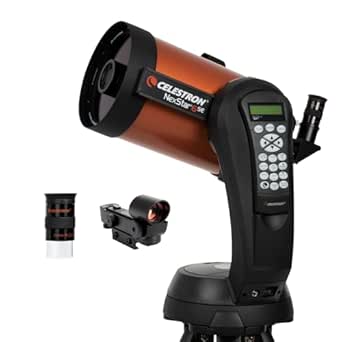
Celestron NexStar 6SE Computerized Telescope – 6-Inch Schmidt-Cassegrain Optical Tube – Fully Automated GoTo Mount with SkyAlign – Ideal for Beginners and Advanced Users – 40,000+ Object Database
This telescope stands out for its large 6-inch Schmidt-Cassegrain optics combined with a fully automated GoTo mount, making it suitable for users ready to upgrade from beginner scopes like the Celestron StarSense Explorer LT 114AZ. Its high light-gathering ability enables detailed lunar and planetary views, as well as deep-sky objects, with excellent image quality for astrophotography. The SkyAlign technology simplifies setup, while the extensive object database supports advanced star-hopping. Compared to smaller, less capable scopes, the 6SE offers a significant leap in resolution and imaging potential, but this comes with increased weight and complexity. It is a solid choice for those looking to develop their astrophotography skills with more control and better imaging results.
Pros:- Large 6-inch Schmidt-Cassegrain optics for bright, detailed images
- Automated GoTo with SkyAlign for quick setup
- Extensive object database for easy navigation
Cons:- Heavier and bulkier than smaller scopes
- Requires more learning curve for setup and operation
Best for: Intermediate hobbyists and aspiring astrophotographers who want automation and better imaging potential
Not ideal for: Complete beginners who prefer manual scopes or lightweight portability
- Optical Type:Schmidt-Cassegrain
- Aperture:6 inches
- Focal Length:1500mm
- Mount Type:Computerized GoTo
- Object Database:40,000+
- Weight:Approximately 30 lbs
Bottom line: Perfect for users seeking a balance of portability, automation, and high-quality imaging capabilities as they advance.
SVBONY SV503 Refractor Telescope with Built-in Field Flattener, 70mm F6.78 Extra Low Dispersion Achromatic Refractor OTA, Telescope for Adults, for Astrophotography Visual Astronomy
This telescope excels in delivering sharp, wide-field views thanks to its built-in field flattener and ED glass, making it particularly suitable for astrophotography of large deep-sky objects like the Andromeda Galaxy or the Pleiades. Compared with larger aperture scopes like the Celestron NexStar 6SE, it is more portable and easier to mount, but sacrifices some light-gathering power. Its 70mm aperture supports bright, detailed images, especially when combined with a reducer for faster focal ratios, which is crucial for capturing large objects in a single shot. The dual-speed focuser offers precise control, but the scope’s small size limits its ability to capture faint, distant galaxies. It is ideal for astrophotographers focusing on wide-field imaging rather than deep-sky detail.
Pros:- Built-in field flattener for edge-to-edge sharpness
- Extra low dispersion ED glass for true colors
- Compact and lightweight for portability
Cons:- Limited aperture reduces deep-sky faint object imaging
- Less suited for high-magnification planetary imaging
Best for: Amateur astrophotographers wanting a portable, high-clarity wide-field telescope
Not ideal for: Users aiming for detailed deep-sky imaging or planetary high-magnification work
- Aperture:70mm
- Focal Length:474mm
- Focal Ratio:f/6.78
- Built-in Field Flattener:Yes
- Optical Glass:ED
- Mount Type:Altazimuth
Bottom line: A strong choice for those seeking crisp, wide-field astrophotography in a compact form factor.
Celestron StarSense Explorer 150AZ App-Enabled Telescope – 150mm Tabletop Dobsonian with Smartphone Dock & StarSense App – iPhone & Android Compatible – Easy-to-Use for Beginners
This telescope stands out for its innovative use of StarSense technology that turns your smartphone into a celestial navigator, making it remarkably accessible for newcomers. Compared with the Celestron NexStar 4SE, which relies on a fully computerized mount, the 150AZ offers a simpler setup with an altazimuth tabletop base—ideal for casual stargazing. The app curates targets based on your location and time, providing instant guidance, which reduces the learning curve significantly. However, the manual altazimuth mount means less precise tracking for astrophotography, and the scope’s design limits long-exposure imaging. This pick makes the most sense for beginners who want quick, enjoyable views of the Moon, planets, and some deep-sky objects without technical complexity.
Pros:- Intuitive smartphone app with sky recognition technology
- Bright 150mm aperture delivers vivid, sharp views
- Compact, tabletop design for portability and easy setup
- Includes two eyepieces for versatile viewing
Cons:- Manual altazimuth mount offers limited tracking accuracy for astrophotography
- No motorized tracking or goto system, restricting long-exposure astrophotography
Best for: Beginners who want an easy, guided introduction to night sky observing with smartphone integration
Not ideal for: Serious astrophotographers seeking precise tracking or long-exposure imaging capabilities
- Optical Tube Length:723.9 Millimeters
- Objective Lens Diameter:150 Millimeters
- Item Dimensions:19″D x 19″W x 32.5″H
- Item Weight:25 Pounds
- Exit Pupil Diameter:6 Millimeters
- Focus Type:Manual Focus
Bottom line: This is an excellent choice for beginners eager for guided sky tours and straightforward visual observing, but not for those aiming at advanced astrophotography.
Celestron NexStar 4SE Computerized Telescope – 4-Inch Maksutov-Cassegrain Optical Tube – Fully Automated GoTo Mount with SkyAlign – Ideal for Beginners and Advanced Users – 40,000+ Object Database
The NexStar 4SE combines powerful optical performance with cutting-edge automation, making it ideal for both newcomers and those wanting more control. Its computerized GoTo mount with a vast database simplifies object location, surpassing the manual navigation of the Celestron StarSense Explorer 150AZ. The Maksutov-Cassegrain optics provide sharp planetary views with a long focal length, perfect for detailed lunar and planetary astrophotography. The system’s SkyAlign technology allows quick setup, and the optional wedge supports longer exposures. The tradeoff comes in the form of a more complex setup process compared to the 150AZ, and the scope’s narrower field of view makes wide-sky astrophotography less practical. This scope is well-suited for users ready to progress from visual to imaging, with automation enhancing ease of use.
Pros:- Automated GoTo mount with extensive object database
- High-contrast Maksutov optics for detailed lunar and planetary views
- Quick SkyAlign setup reduces time to observing
- Supports astrophotography with optional wedge
Cons:- More complex initial setup compared to manual scopes
- Limited wide-field imaging due to narrow field of view
Best for: Beginners who want automated object locating and a solid platform for planetary astrophotography
Not ideal for: Advanced astrophotographers seeking large apertures for deep-sky imaging with long exposures
- Focal Length:1325 Millimeters
- Objective Lens Diameter:102 Millimeters
- Field of View:0.11 Degrees
- Mount Type:Computerized Alt-Az
- Focus Type:Manual
- Weight:10.4 Kilograms
Bottom line: Ideal for beginners ready to explore automated tracking and planetary imaging, but less suitable for wide-field deep-sky astrophotography.
SVBONY SV503 Telescope for Adults High Powered, 102mm F7 Extra Low Dispersion Achromatic Refractor OTA, Dual-Speed Focuser, Refractor Telescope for Planets Deep Sky Astrophotography&Visual Observation
This SVBONY SV503 refractor excels at high-contrast planetary and deep-sky imaging, thanks to its 102mm aperture and S-FPL51 ED glass that minimizes chromatic aberration. Compared to the more beginner-oriented Gskyer 600x90mm, it offers better optical quality and more precise focusing with its dual-speed focuser. The built-in 360° field rotator makes camera alignment straightforward, which is a significant advantage for astrophotography. Nevertheless, its narrower field of view means it’s less suited for wide-sky imaging or large nebulae. The scope’s focus travel of 90mm allows for fine adjustments, enhancing image sharpness. This telescope makes the most sense for dedicated amateurs seeking high-quality images and precise focus control, but it may be overkill for purely visual use or beginners.
Pros:- Excellent chromatic correction with ED glass
- Precise dual-speed focuser and 360° rotator for camera alignment
- Brighter, high-contrast images for detailed planetary imaging
- Minimized internal reflections due to FMC coating
Cons:- Limited field of view unsuitable for large nebulae or star clusters
- Requires stable mount and good tracking for astrophotography
Best for: Intermediate to advanced amateur astrophotographers focusing on planetary and deep-sky imaging
Not ideal for: Beginners or those wanting wide-field views or casual visual observing
- Aperture:102mm
- Focal Length:714mm
- Focal Ratio:f/7
- Focuser Type:Dual-Speed
- Focus Travel:90mm
- Coating:FMC
Bottom line: Best suited for dedicated astrophotographers aiming for detailed planetary and deep-sky images, not for casual or wide-field observing.
Gskyer Telescope 600x90mm AZ Astronomical Refractor Telescope for Adults Astronomy, German Technology Scope
The Gskyer 600x90mm offers an affordable entry point into astronomy with its fully coated optics and versatile magnification options, including a 3x Barlow lens that triples the power of each eyepiece. Its simple azimuth mount and adjustable tripod make it user-friendly for novices. While its optical quality is decent for casual viewing, it doesn’t match the clarity or contrast of more premium scopes like the SVBONY SV503. The scope’s high magnification potential can be misleading; image brightness and detail may suffer at the highest zooms. It’s a suitable choice for beginners interested in planetary and lunar views but less effective for deep-sky astrophotography or detailed star cluster work. Overall, it provides good value for those just starting out.
Pros:- Affordable price point with decent optical coatings
- Includes multiple eyepieces and a 3x Barlow for flexible magnification
- Adjustable aluminum tripod for comfortable viewing positions
- Easy setup suitable for beginners
Cons:- Limited aperture restricts deep-sky and planetary detail
- Potential image degradation at highest magnifications
Best for: Beginner amateurs seeking an inexpensive, easy-to-use telescope for planetary and lunar viewing
Not ideal for: Serious astrophotographers or those aiming for deep-sky imaging with detailed results
- Focal Length:600mm
- Objective Lens Diameter:90mm
- Magnification:Up to 600x with Barlow
- Mount Type:AZ
- Focus Type:Manual
- Coatings:Fully Coated
Bottom line: A good starter scope for those on a budget wanting to explore planets and the Moon, but not for advanced imaging.
DWARFLAB Dwarf 3 Smart Telescope – Portable Astrophotography Camera, Capture Astronomy/Wildlife/Panorama, AZ/EQ Mode, Built-in Processing, 4K Auto-Tracking, Ultra-Light 3lb, Ideal for All Ages
This DWARFLAB Dwarf 3 combines portability and automation, making it a compelling choice for spontaneous astrophotography and outdoor adventures. Weighing just 3 pounds, it’s significantly lighter than traditional scopes like the Celestron NexStar 4SE, yet packs a 4K camera with auto-tracking that captures clear images of stars, wildlife, and landscapes. Its built-in cloud processing simplifies image enhancement, perfect for users of all ages, especially beginners and casual users. The scope’s dual imaging modes expand its versatility, but the small aperture limits deep-sky imaging quality and detail compared to larger scopes. It excels in portability and ease of use but is less suitable for detailed astrophotography or extensive long-exposure work.
Pros:- Extremely lightweight and portable for travel
- 4K auto-tracking ensures sharp, stable images
- Built-in cloud processing for quick image enhancement
- Dual-lens system for day and night use
Cons:- Limited aperture restricts deep-sky detail
- Not designed for long-exposure astrophotography
Best for: Travelers, outdoor enthusiasts, and casual astrophotographers seeking a lightweight, all-in-one imaging device
Not ideal for: Dedicated deep-sky astrophotographers requiring high-resolution imaging or large apertures
- Weight:3 Pounds
- Built-in Camera:4K Auto-Tracking
- Modes:AZ and EQ
- Focus:Built-in Processing
- Aperture:Small
- Connectivity:Cloud Processing
Bottom line: A highly portable, user-friendly option for casual astrophotography and outdoor adventures, but not suited for high-detail deep-sky imaging.
MEEZAA Telescope, 150EQ Newtonian Reflector Telescope for Adults Astronomy Beginners, Professional Astronomical Telescopes with Equatorial Mount, Phone Adapter, Tripod, Moon Filter and Large Carry Bag
This model stands out for its impressive 150mm aperture, delivering bright, detailed images of planets, the Moon, and deep-sky objects, making it a strong contender against more expensive options like the Celestron NexStar 8SE. Compared to the NexStar, the MEEZAA offers a larger aperture at a more affordable price, which translates into better light-gathering and resolution for astrophotography, especially for beginners eager to capture clearer images. Its sturdy German Equatorial mount with slow-motion controls makes manual tracking accessible, though the included focuser is all plastic, which may limit stability when adding heavier cameras. The telescope’s quick setup, complete accessories, phone adapter, and carry bag add significant value for those just starting out or traveling to dark skies. However, the tradeoff involves entry-level eyepieces and the need for potential upgrades to the focuser for serious astrophotography. Ideal for beginners and budget-conscious hobbyists who want to grow their imaging skills without a hefty investment.
Pros:- Large 150mm aperture for bright, detailed images
- Complete starter package with accessories and phone adapter
- Sturdy stainless steel tripod and easy setup
Cons:- Focuser made of all plastic, limiting stability under heavier loads
- Entry-level eyepieces that may require upgrades for advanced imaging
Best for: Beginners and amateur astronomers seeking a large aperture telescope with upgrade potential and portable setup.
Not ideal for: Serious astrophotographers needing high stability and precision for long-exposure imaging, due to the plastic focuser and basic accessories.
- Optical Tube Length:650mm
- Objective Lens Diameter:150mm
- Mount Type:German Equatorial
- Focal Length:650mm
- Magnification Range:26X to 130X
- Accessories Included:Phone adapter, Moon filter, Carry bag, 2 eyepieces, Barlow lens
Bottom line: This telescope suits those beginning their astrophotography journey who want a capable, expandable large-aperture reflector on a budget.
Celestron NexStar 8SE Computerized Telescope – 8-Inch Schmidt-Cassegrain Optical Tube – Fully Automated GoTo Mount with SkyAlign – Ideal for Beginners and Advanced Users – 40,000+ Object Database
The NexStar 8SE makes a compelling case for serious astrophotography with its 8-inch Schmidt-Cassegrain optics, offering excellent light-gathering power comparable to larger telescopes like the Sky-Watcher 8″ Dobsonian but with the convenience of automation. Its fully computerized GoTo mount with SkyAlign technology simplifies setup and object targeting, making it accessible for those transitioning from manual scopes or newcomers ready to explore deep-sky astrophotography. The high-quality StarBright XLT coatings enhance image clarity, and the compact design enables portability that larger Dobsonians lack. While the mount’s aluminum structure and advanced features support long-exposure imaging, the scope’s short battery life and plastic accessories can pose limitations, especially in remote dark-sky sites. Compared to the Dwarf Mini, the 8SE offers more stable imaging capacity but at a higher cost. This is ideal for intermediate to advanced astrophotographers who want a powerful, automated setup with room to grow.
Pros:- Powerful 8-inch Schmidt-Cassegrain optics for deep-sky imaging
- Automated GoTo mount with SkyAlign for quick setup
- Compact and portable for a scope of this size
Cons:- Short battery life limits extended imaging sessions
- Plastic accessories and some components may require upgrades for professional astrophotography
Best for: Serious amateurs and intermediate users seeking a versatile, automated astrophotography platform with high light-gathering capability.
Not ideal for: Beginners or travelers needing ultra-portability, due to its size and weight, and those requiring extensive long-exposure stability without upgrades.
- Optical Tube Diameter:8 inches
- Focal Length:2032mm
- Mount Type:Computerized Alt-Az
- Object Database:40,000+
- Focus Type:Manual
- Weight:24 lbs
Bottom line: This telescope is best for dedicated astrophotographers looking for high performance and automation in a manageable size.
DWARFLAB Dwarf Mini Smart Telescope – 1.85lb Ultra-Portable Astronomy Telescope for Astrophotography with Built-in Filters, Auto GOTO, AZ/EQ Mode and Cloud Processing
The DWARFLAB Dwarf Mini stands out for its astonishing portability, weighing just 1.85 pounds, and offers surprisingly advanced features like Auto GOTO, dual mode (AZ/EQ), and cloud-based processing, making it perfect for beginners and families exploring astrophotography in various settings. Its compact design allows easy packing for trips to dark skies, and the built-in filters and 4K camera support capture impressive images of the Moon and stars, comparable to larger scopes like the Dwarf Mini at a fraction of the size. Its dual-screen display provides real-time viewing, a feature usually reserved for high-end models, although the smaller aperture limits deep-sky capabilities and long-exposure astrophotography. Compared to the Sky-Watcher Refractor, it is far more portable but sacrifices some imaging detail due to its size. Ideal for casual astrophotography, family outings, and travel-focused astronomy.
Pros:- Ultra-portable weight and size for travel
- Built-in 4K camera with real-time dual display
- Auto GOTO with cloud processing simplifies capturing images
Cons:- Limited aperture and long-exposure capabilities
- Smaller size reduces deep-sky imaging detail
Best for: Beginners, kids, and travelers wanting a lightweight, easy-to-use astrophotography device with smart features.
Not ideal for: Advanced astrophotographers requiring high stability and deep-sky imaging capabilities, due to its small aperture and limited long-exposure potential.
- Aperture:80mm
- Focal Length:300mm
- Mount Type:Alt-Azimuth / EQ
- Weight:1.85 lbs
- Camera Resolution:4K
- Connectivity:App-controlled
Bottom line: This telescope is perfect for casual users and families seeking a lightweight, tech-savvy device for quick astrophotography fun.
Smart Telescope, Digital Electronic Telescopes with 4K Astrophotography Camera, Internal and External Dual Screens Spotter for Adults & Kids & Beginners Astronomy with 64G Card
This all-in-one digital telescope excels in its user-friendly design, featuring dual screens for real-time viewing and capturing stunning 4K images with its integrated camera. Its 300mm focal length and 80mm aperture create bright, detailed lunar and planetary images, comparable to the Dwarf Mini but with a more traditional refractor form factor. The internal and external dual screens foster shared viewing experiences, making it ideal for kids, beginners, and family outings. Its simple one-touch photo and video modes eliminate the need for external devices, and the included 64GB card supports ample storage for celestial moments. However, the small aperture limits deep-sky astrophotography and long-exposure options, similar to other portable models. While not suited for high-end astrophotography, it offers great value for family fun and quick, high-quality planetary imaging. Perfect for novices and families wanting a straightforward, engaging astrophotography experience.
Pros:- Dual-screen display for real-time sharing
- Simple one-touch photo/video capture
- Bright 80mm aperture with 4K imaging
Cons:- Limited aperture restricts deep-sky imaging
- Not suitable for serious long-exposure astrophotography
Best for: Beginners, kids, and casual astronomers looking for an easy-to-operate, family-friendly device for planetary and lunar imaging.
Not ideal for: Advanced astrophotographers aiming for deep-sky and long-exposure astrophotography, due to its small aperture and limited long-exposure capabilities.
- Aperture:80mm
- Focal Length:300mm
- Display:Dual 3-inch screens
- Camera Resolution:4K
- Memory Support:64GB included
- Mount Type:Manual/EQ
Bottom line: This telescope is best for families and beginners who want an intuitive, portable device for high-quality planetary images and fun astrophotography.
How We Picked
The products in this roundup were selected based on a combination of optical performance, ease of use, build quality, and value for money. Emphasis was placed on models that balance astrophotography capabilities with user-friendliness, especially for those new to the craft. We also prioritized versatility, including options suitable for planetary, deep-sky, and wide-field astrophotography, ensuring a broad appeal. Each entry was evaluated for its tracking accuracy, mount stability, and compatibility with cameras or smartphones. The ranking reflects how well each telescope meets the needs of different skill levels and budgets while maintaining consistent quality and reliability.Factors to Consider When Choosing Best Telescope For Astrophotography
Choosing the best telescope for astrophotography involves understanding key factors that influence image quality, usability, and long-term satisfaction. While many models may seem similar, subtle differences in features can significantly impact your experience. By considering these factors, you can select a telescope that not only matches your current skill level but also supports your growth as an astrophotographer.Aperture Size and Optical Quality
The aperture size determines how much light the telescope gathers, directly affecting image brightness and detail. Larger apertures, such as an 8-inch or 6-inch, are ideal for deep-sky imaging but require more precise mounts and more space for setup. Optical quality matters just as much—apochromatic refractors and well-constructed Schmidt-Cassegrain models produce sharper images with less chromatic aberration. Balancing aperture with your skill level and setup space helps prevent frustration and ensures better results.
Mount Type and Tracking Capabilities
The mount is the backbone of astrophotography. Equatorial mounts with motorized tracking are essential for long exposures, allowing the telescope to follow celestial objects’ apparent motion. Computerized GoTo mounts significantly reduce star-hopping and setup time, especially for beginners. Stability and smooth tracking prevent blurry images, so investing in a sturdy, reliable mount pays off in clearer astrophotos. Remember, a good mount can be the difference between frustration and success.
Ease of Use and Automation
For newcomers or those with limited setup time, user-friendly features like smartphone apps, automatic alignment, and pre-programmed object databases are invaluable. Automated tracking and object locating simplify the process, making astrophotography more approachable. However, more automated systems often come at a higher price and may require learning specific software. Weigh your willingness to learn against convenience, especially if you’re just starting out.
Portability and Setup Time
If you plan to take your telescope to different locations, portability becomes a key concern. Compact refractors or lightweight models like the DWARFLAB Dwarf Mini offer quick setup and easy transport but might limit aperture size. Larger, more powerful telescopes often involve more complex assembly and heavier equipment. Consider where you’ll use your telescope most—if portability matters, prioritize models designed for travel without sacrificing core astrophotography features.
Budget and Future Growth
Your budget influences not just the initial purchase but also potential upgrades. Entry-level telescopes are affordable and simple but may limit your astrophotography capabilities over time. Investing in a slightly more expensive model with better tracking, larger aperture, and expandability can save money in the long run. Think about your aspirations—whether casual observing or serious astrophotography—and select a model that can grow with your skills.
Frequently Asked Questions
Can I use a beginner telescope for astrophotography?
Yes, many entry-level telescopes are suitable for basic astrophotography, especially those with equatorial mounts or built-in tracking features. However, achieving sharp images often requires additional accessories like adapters, cameras, and sometimes software modifications. Starting with a model designed for astrophotography or with user-friendly tracking capabilities can make the learning curve less steep and improve your results.
Is a refractor or a reflector better for astrophotography?
Refractors generally offer sharper, high-contrast images with less maintenance, making them popular for planetary and wide-field astrophotography. Reflectors, especially larger aperture models, excel at capturing faint deep-sky objects but can require more collimation and maintenance. The choice depends on your target objects, budget, and willingness to manage equipment upkeep—each type offers distinct advantages for different astrophotography styles.
How important is mount stability in astrophotography?
Mount stability is critical because any wobble or jitter causes motion blur in long exposures. A sturdy, well-balanced mount ensures smooth tracking and accurate pointing, which are essential for detailed astrophotos. Cheap or unstable mounts may save money initially but often lead to frustration and subpar images. Investing in a reliable, stable mount is one of the best ways to improve your astrophotography results.
Should I prioritize aperture size or portability?
This depends on your typical usage. Larger apertures gather more light and produce better images but tend to be heavier and more cumbersome. If you plan to travel or frequently move your setup, portability might be more important, favoring smaller refractors or compact models. For dedicated, stationary setups, investing in larger apertures can significantly boost image quality, especially for deep-sky objects.
What accessories do I need to get started with astrophotography?
Basic accessories include a camera adapter compatible with your telescope, a sturdy mount with tracking, and possibly a remote shutter release to reduce vibrations. Additional equipment like filters, guide scopes, and software for image stacking can enhance your results but are usually added as you gain experience. Starting with a good telescope and mount is the foundation—additional accessories can improve your images once you understand your specific needs.
Conclusion
For those seeking the best overall experience, the Celestron NexStar 8SE delivers powerful optics and automated features suitable for both beginners and advanced users. Budget-conscious buyers or casual astrophographers will find the Gskyer 600x90mm AZ or the StarSense Explorer LT 114AZ excellent choices that combine ease of use with affordability. Beginners aiming for simple setup and quick results should consider models with automated tracking and smartphone compatibility, while more serious enthusiasts should look toward larger aperture, professional-grade telescopes like the Celestron NexStar 8SE or NexStar 6SE. Ultimately, your choice hinges on your specific targets, mobility needs, and how much you’re willing to invest in your astrophotography journey.