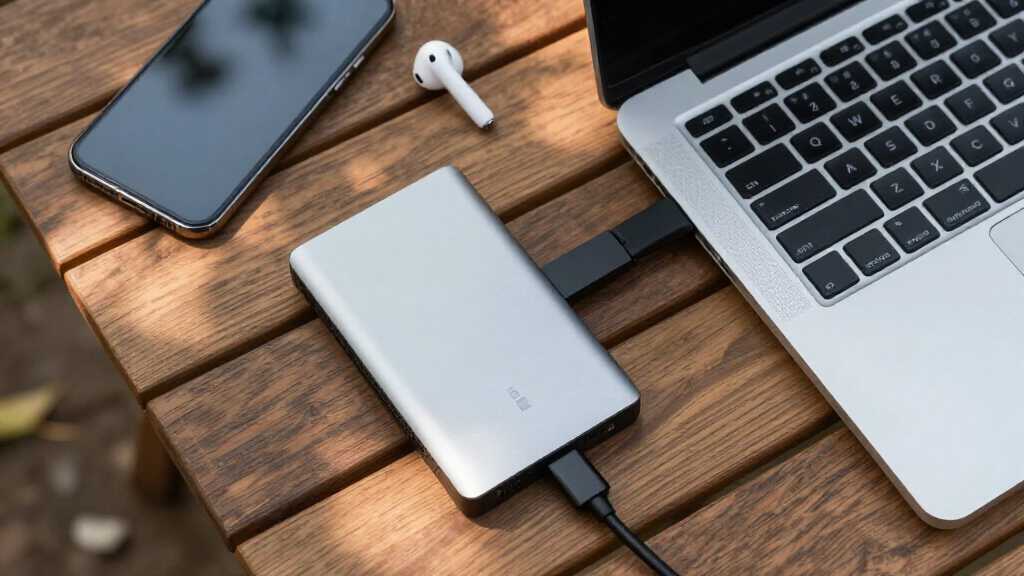

Portable external SSDs have replaced hard drives as the smart way to carry files, and the difference between a good one and a great one comes down to real-world transfer speed, durability, and price per gigabyte. The Samsung T9 takes the top spot here because its USB 3.2 Gen 2×2 connection roughly doubles the ceiling of everything else in this lineup — up to 2,000 MB/s on a compatible port. If you don’t have a Gen 2×2 computer, the Samsung T7 Shield 2TB is the smarter buy, pairing 1,050 MB/s speeds with a rugged, drop-resistant shell, while the SSK 1TB stands out as the value play with the same speed rating at a lower price. The main tradeoffs you’ll face: paying a premium for Gen 2×2 speed you may never use, choosing between rugged and slim designs, and resisting the temptation of cheap 128GB drives that offer terrible cost per gigabyte. Keep reading for the full breakdown of all 12 models.

Get the latest gadgets delivered free with Prime
- Fast, free delivery on millions of items
- Prime Video, Amazon Music and more included
- Member-only deals all year
Complete the kit


Key Takeaways
- The Samsung T9 is the only Gen 2×2 drive in this lineup, making it the sole option that can exceed ~1,050 MB/s — but only if your computer has a matching port; on older ports it performs the same as the cheaper T7.
- Every SSK model rated at 1,050 MB/s matched the Samsung T7’s headline speed on paper, which means the real differentiators in this roundup were durability, warranty, and software — not raw spec sheets.
- The SSK 128GB and 250GB models had the worst price-per-gigabyte in the comparison; small-capacity SSDs are a false economy unless you genuinely need a tiny scratch drive.
- The SanDisk Extreme and Samsung T7 Shield both add IP65 water and dust resistance, but the T7 Shield’s rubberized shell felt more drop-friendly, which is why it edged out the Extreme for the rugged role.
- The Lexar ES3 undercut every 1TB name-brand rival on price, making it the pick where budget matters more than brand recognition and bundled software.
| Samsung T7 Shield Portable SSD 2TB |  | Best Overall | Capacity: 2TB | Transfer Speed: Up to 1,050 MB/s | Interface: USB 3.2 Gen 2 | VIEW LATEST PRICE | See Our Full Breakdown |
| SSK Portable SSD 250GB |  | Best Budget Entry Point | Capacity: 250GB (~232GB on Windows) | Read Speed: Up to 1,050 MB/s | Write Speed: Up to 1,000 MB/s | VIEW LATEST PRICE | See Our Full Breakdown |
| SanDisk 1TB Portable SSD |  | Best Value Per Terabyte | Capacity: 1TB | Read Speed: Up to 800 MB/s | Drop Protection: Up to 2 meters | VIEW LATEST PRICE | See Our Full Breakdown |
| SSK Portable SSD 500GB |  | Best for Mobile Creators | Capacity: 500GB (~465GB on Windows) | Max Read Speed: 1,050 MB/s | Max Write Speed: 1,000 MB/s | VIEW LATEST PRICE | See Our Full Breakdown |
| SanDisk 2TB Extreme Portable SSD |  | Best for Security-Minded Travelers | Capacity: 2TB | Read Speed: 1,050 MB/s | Write Speed: 1,000 MB/s | VIEW LATEST PRICE | See Our Full Breakdown |
| SanDisk 1TB Extreme Portable SSD |  | Best Rugged Pick | Capacity: 1TB | Transfer Speed: Up to 2000MB/s | Protection: IP65 water/dust resistance, 3M drop protection | VIEW LATEST PRICE | See Our Full Breakdown |
| SSK Portable SSD 1TB External Solid State Drive USB-C Up to 1050MB/s |  | Best Budget 1TB Value | Capacity: 1TB | Read Speed: 1050MB/s | Write Speed: 1000MB/s | VIEW LATEST PRICE | See Our Full Breakdown |
| Lexar ES3 1TB Portable SSD |  | Best for Multi-Device Users | Capacity: 1TB | Interface: USB 3.2 Gen 2 | Read Speed: 1050MB/s | VIEW LATEST PRICE | See Our Full Breakdown |
| Samsung T9 Portable SSD 1TB USB 3.2 Gen 2×2 External SSD | 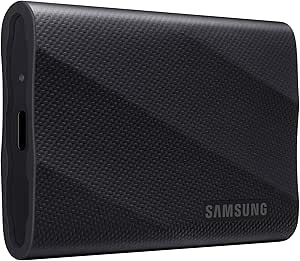 | Best for Creators | Capacity: 1TB | Transfer Speed: Up to 2000MB/s | Interface: USB 3.2 Gen 2×2 | VIEW LATEST PRICE | See Our Full Breakdown |
| SSK 128GB Portable SSD External Hard Drive Solid State Drive up to 550MB/s |  | Best Budget Starter Drive | Capacity: 128GB | Max Speed: 550MB/s | Connectivity: USB-C, USB-A | VIEW LATEST PRICE | See Our Full Breakdown |
| Samsung T7 Portable SSD 2TB (Titan Gray) |  | Best Mid-Capacity Workhorse | Capacity: 2TB | Interface: USB 3.2 Gen 2 (Type-C) | Max Read Speed: 1,050MB/s | VIEW LATEST PRICE | See Our Full Breakdown |
| Samsung T7 Portable SSD 1TB (Titan Gray) | | Best for Smartphone Creators | Capacity: 1TB | Interface: USB 3.2 Gen 2 (Type-C) | Max Speed: 1,050MB/s | VIEW LATEST PRICE | See Our Full Breakdown |
| portable external SSD | Capacity | Interface |
|---|---|---|
| Samsung T7 Shield Portable SSD | 2TB | USB 3.2 Gen 2 |
| SSK Portable SSD 250GB | 250GB (~232GB on Windows) | — |
| SanDisk 1TB Portable SSD | 1TB | — |
| SSK Portable SSD 500GB | 500GB (~465GB on Windows) | USB-C & USB-A (USB 3.2 Gen 2) |
| SanDisk 2TB Extreme Portable S | 2TB | — |
| SanDisk 1TB Extreme Portable S | 1TB | — |
| SSK Portable SSD 1TB External | 1TB | — |
| Lexar ES3 1TB Portable SSD | 1TB | USB 3.2 Gen 2 |
| Samsung T9 Portable SSD 1TB US | 1TB | USB 3.2 Gen 2×2 |
| SSK 128GB Portable SSD Externa | 128GB | — |
| Samsung T7 Portable SSD 2TB | 2TB | USB 3.2 Gen 2 (Type-C) |
| Samsung T7 Portable SSD 1TB | 1TB | USB 3.2 Gen 2 (Type-C) |
More Details on Our Top Picks
Samsung T7 Shield Portable SSD 2TB
The Samsung T7 Shield earns the top spot because it balances speed, capacity, and durability without leaning too hard on any one trait. Its 1,050 MB/s transfer speeds match the SanDisk Extreme 2TB, but the rubberized shell and IP65 rating make it feel better prepared for a backpack than a desk drawer. Compared with the standard Samsung T7, the Shield trades a slimmer profile for genuine drop resistance up to 9.8 feet — a worthwhile swap for anyone who actually carries their drive places. The tradeoffs are modest: it needs the included cable for peak performance, and the operating range tops out at 60°C, so parked-car summers are off the table. This pick makes the most sense for buyers who want one drive that handles everything rather than optimizing for a single scenario.
Pros:- Genuine IP65 water, dust, and drop resistance in a pocketable size
- 1,050 MB/s speeds competitive with anything in this roundup
- Broad compatibility from PC and Mac to Android and iPhone 15 Pro
- Multiple capacity options to match different budgets
Cons:- Requires the included cable for optimal transfer speeds
- Operating temperature limited to 0°C–60°C
- Rugged build makes it chunkier than the non-Shield T7
Best for: Working professionals and content creators who need a durable 2TB drive that travels daily between laptop, phone, and console
Not ideal for: Buyers on a strict budget who mainly need small-capacity transfers — the smaller SSK models deliver similar speeds for far less
- Capacity:2TB
- Transfer Speed:Up to 1,050 MB/s
- Interface:USB 3.2 Gen 2
- Resistance:Water, dust, drop (up to 9.8 feet)
- IP Rating:IP65
- Operating Temperature:0°C to 60°C
- Supported Devices:PC, Mac, Android, gaming consoles, iPhone 15 Pro
Our verdict“If you can only buy one portable SSD in this roundup, this is the one that won’t let you down in speed, capacity, or rough handling.”
SSK Portable SSD 250GB
Not everyone needs terabytes, and the SSK 250GB understands that better than anything else here. At 36.6 grams with an aluminum shell, it undercuts the Samsung T7 Shield on capacity but not on headline speed — 1,050 MB/s reads means a full drive transfers in about four minutes. The dual USB-C and USB-A connectivity is a genuine convenience that pricier drives in this list skip, letting you plug into older laptops without hunting for an adapter. The obvious limitation is space: Windows reports roughly 232GB, so it fills fast if you shoot video. This option stands out for students, technicians, and anyone who needs a fast scratch drive or bootable utility stick rather than a media archive.
Pros:- Full 1,050 MB/s read speed at a fraction of larger drives’ cost
- Both USB-C and USB-A connectors built in
- Featherweight at 36.6g with heat-dissipating aluminum body
- Low power draw under 2.4W, friendly to phone use
Cons:- Only 250GB of storage, reported as ~232GB on Windows
- Needs USB 3.2 Gen 2 ports to hit rated speeds
- No hardware encryption or bundled software
Best for: Students and IT technicians who need a fast, cheap drive for documents, utilities, or bootable tools
Not ideal for: Photographers and video editors — 232GB of usable space disappears after a single shoot
- Capacity:250GB (~232GB on Windows)
- Read Speed:Up to 1,050 MB/s
- Write Speed:Up to 1,000 MB/s
- Connectivity:USB-C and USB-A (USB 3.2 Gen 2)
- Power Consumption:Under 2.4 Watts
- Dimensions:2.6 x 1.5 x 0.5 inches
- Weight:36.6g
- Material:Aluminum alloy
Our verdict“The cheapest way into genuine SSD speeds, as long as you measure your storage needs in gigabytes, not terabytes.”
SanDisk 1TB Portable SSD
Sometimes the smartest buy is the one that skips flashy extras. The SanDisk 1TB Portable SSD runs at 800 MB/s reads — roughly 25% slower than the SanDisk Extreme 2TB — but for everyday file moves that difference is minutes, not hours, and the price gap is usually substantial. Its 2-meter drop protection covers real-world bumps, though it lacks the Extreme’s IP65 water resistance, so rain-soaked commutes demand more care. The rubber carrying hook is a small touch that matters, clipping the drive to a bag where it can’t be forgotten in a pocket. This model is better suited to desk-to-desk commuters and students than adventurers; compared with the Samsung T7 Shield, it trades weatherproofing for value.
Pros:- Solid 800 MB/s read speed for everyday transfers
- Drop protection up to 2 meters
- Rubber hook for clipping to bags and belts
- 1TB of capacity at a friendlier price than rugged rivals
Cons:- Noticeably slower than the 1,050 MB/s drives in this roundup
- No water or dust resistance rating
- Real-world performance varies with host device
Best for: Students and office commuters who want a dependable terabyte of fast storage without paying for extreme ruggedness
Not ideal for: Outdoor shooters and travelers who need water and dust resistance — step up to the T7 Shield or SanDisk Extreme instead
- Capacity:1TB
- Read Speed:Up to 800 MB/s
- Drop Protection:Up to 2 meters
- Color:Black
- Carrying Feature:Rubber attachment hook
Our verdict“A sensible terabyte for people whose drives face coffee tables and backpacks, not rainstorms and cliffs.”
SSK Portable SSD 500GB
The SSK 500GB carves out a specific niche: direct-to-drive video capture. Its 1,000 MB/s sustained writes and low 2.4W power draw make it well suited to recording 4K ProRes HDR footage straight from a phone, something the cheaper SSK 250GB can’t attempt for long before filling. Heat is the quiet killer of capture drives, and SSK’s aluminum chassis peaks around 105°F — warm but controlled during long sessions. Like its smaller sibling, it offers dual USB-C/USB-A connectivity, which the Samsung T7 Shield doesn’t. The tradeoffs: no encryption software is included, so sensitive footage travels unencrypted unless you add your own tooling, and 465GB of usable space means serious shooters will still offload nightly.
Pros:- 1,050 MB/s reads and 1,000 MB/s writes handle direct video capture
- Heat dissipation keeps the drive stable through long recording sessions
- Dual USB-C/USB-A support without adapters
- Light 36.6g body won’t strain a phone rig
Cons:- 500GB fills quickly when shooting high-bitrate video (~465GB usable)
- No encryption or backup software included
- Slower ports bottleneck it well below rated speeds
Best for: Mobile filmmakers recording 4K ProRes footage directly from an iPhone or Android device
Not ideal for: Anyone storing client data or sensitive files — there’s no included encryption to protect the contents
- Capacity:500GB (~465GB on Windows)
- Max Read Speed:1,050 MB/s
- Max Write Speed:1,000 MB/s
- Interface:USB-C & USB-A (USB 3.2 Gen 2)
- Power Consumption:Under 2.4 Watts
- Dimensions:2.6 x 1.5 x 0.5 inches
- Weight:36.6g
- Heat Dissipation:Peaks at 105.58°F
- Material:Aluminum alloy
Our verdict“Purpose-built for creators who record straight to the drive, with thermal management that cheaper capture setups lack.”
SanDisk 2TB Extreme Portable SSD
Where the Samsung T7 Shield wins on polish, the SanDisk 2TB Extreme wins on security and survivability. It’s the only drive in this batch with 256-bit AES hardware encryption, which matters if your drive holds client work or personal documents and gets lost in an airport. Its 3-meter drop rating beats the Shield’s 9.8 feet, and the -20°C to 85°C temperature range doubles Samsung’s window — this drive genuinely shrugs off a car trunk in winter or summer. The carabiner loop invites clipping it to a pack, unlike the pocket-only SSK models. The catch: SanDisk’s encryption management software isn’t clearly bundled, and rated speeds depend heavily on the host, so older USB ports will leave performance on the table.
Pros:- 256-bit AES hardware encryption protects data if the drive is lost
- 3-meter drop protection and IP65 water/dust resistance
- Wide -20°C to 85°C operating range for extreme climates
- Carabiner loop for securing to bags
Cons:- Encryption management software details are vague
- Performance drops on older USB host ports
- Typically priced above comparable 2TB rivals
Best for: Business travelers and photographers carrying sensitive data through airports, weather, and rough conditions
Not ideal for: Casual home users — the rugged build and encryption are wasted if the drive never leaves the desk, and cheaper options match the speed
- Capacity:2TB
- Read Speed:1,050 MB/s
- Write Speed:1,000 MB/s
- Drop Protection:Up to 3 meters
- Water and Dust Resistance:IP65
- Encryption:256-bit AES hardware encryption
- Temperature Range:-20°C to 85°C
Our verdict“The pick for people whose drive contains things they can’t afford strangers to see, backed by the toughest environmental ratings here.”
SanDisk 1TB Extreme Portable SSD
For buyers whose drive lives in a camera bag rather than a desk drawer, this SanDisk stands out for its IP65 water and dust resistance plus 3-meter drop protection — a durability package most rivals here can’t match. The Samsung T7 Shield offers similar ruggedness, but the Extreme’s 2000MB/s transfer ceiling gives it a clear speed advantage when paired with a Gen 2×2 port. The tradeoff is real, though: you’ll need to download SanDisk software separately to use the 256-bit AES encryption, and write speeds trail read speeds noticeably during long transfers. Compared with the plainer SanDisk 1TB Portable SSD, the Extreme justifies its premium only if you genuinely need weather sealing. If your drive stays indoors, that money buys more capacity elsewhere.
Pros:- IP65 water and dust resistance with 3-meter drop protection
- Fast 2000MB/s transfer speeds on Gen 2×2 hosts
- Genuine pocket-sized portability
- Hardware-based 256-bit AES encryption
Cons:- Encryption requires a separate software download
- Write speeds lag behind read speeds during sustained transfers
Best for: Outdoor photographers and travelers who need a drive that survives rain, dust, and drops in the field
Not ideal for: Desk-bound users — the ruggedness premium is wasted money if the drive never leaves a climate-controlled office
- Capacity:1TB
- Transfer Speed:Up to 2000MB/s
- Protection:IP65 water/dust resistance, 3M drop protection
- Encryption:256-bit AES
- Form Factor:Pocket-sized
Our verdict“Buy it if your storage goes into the field; skip it if your biggest hazard is a spilled coffee indoors.”
SSK Portable SSD 1TB External Solid State Drive USB-C Up to 1050MB/s
This SSK delivers the same 1050MB/s read speeds as the Samsung T7 at a noticeably lower price, which is why it earns the value slot over the brand-name 1TB options. Its aluminum alloy shell doubles as a heat sink, so sustained transfers don’t throttle the way plastic-bodied drives sometimes do. At 36.6 grams it’s the lightest 1TB drive in this lineup — lighter than the Lexar ES3 by a comfortable margin. It also handles direct iPhone file transfer, a nice bonus at this price. The compromises are familiar budget territory: Windows will report roughly 931GB of usable space, and there’s no path beyond 1TB if your library grows. Compared with the SSK 500GB model, spending a bit more here doubles your storage for the same speeds.
Pros:- 1050MB/s read / 1000MB/s write at a budget price
- Featherweight 36.6g aluminum build with good heat dissipation
- Cross-platform support including direct iPhone transfers
- Works with both USB-C and USB-A ports
Cons:- Windows reports usable capacity as roughly 931GB
- Capped at 1TB with no larger capacity variants
Best for: Students and budget-conscious buyers who want a full 1TB of fast SSD storage without paying Samsung or SanDisk prices
Not ideal for: 4K video editors working with multi-terabyte libraries — 1TB fills up fast and there’s no larger capacity option
- Capacity:1TB
- Read Speed:1050MB/s
- Write Speed:1000MB/s
- Connection:USB-C, USB-A
- Dimensions:2.6 x 1.5 x 0.5 inches
- Weight:36.6g
- Material:Aluminum alloy
Our verdict“The smart pick if you want Samsung T7-class speed for less and don’t need brand-name software support.”
Lexar ES3 1TB Portable SSD
The ES3’s strength is breadth: it moves comfortably between gaming consoles, laptops, and smartphones, making it a fit for households or creators who shuttle one drive across many machines. Like the SSK 1TB, it hits 1050MB/s read and 1000MB/s write over USB 3.2 Gen 2, and it adds 256-bit AES encryption that the SSK doesn’t advertise. Where it falls behind the SSK is portability — at 45 grams and a wider footprint, it’s noticeably heftier in a pocket. Phone users should also check compatibility carefully; the marketing leans on specific iPhone models, and older phones may not negotiate full speed. There’s no bundled software suite, which keeps things simple but means you manage security tools yourself. This model makes the most sense for console gamers who also need a phone backup drive.
Pros:- 1050MB/s read and 1000MB/s write over USB 3.2 Gen 2
- Broad compatibility spanning consoles, laptops, and smartphones
- Built-in 256-bit AES hardware encryption
- Slim 0.41-inch profile
Cons:- Full speeds require a USB 3.2 Gen 2 port on the host device
- Heavier and wider than competing 1TB drives like the SSK
- No bundled software for encryption management
Best for: Console gamers and multi-platform households who want one encrypted drive that works across PS5, Xbox, laptops, and phones
Not ideal for: Minimalists who prioritize the smallest, lightest carry — the SSK 1TB shaves weight and bulk for the same speeds
- Capacity:1TB
- Interface:USB 3.2 Gen 2
- Read Speed:1050MB/s
- Write Speed:1000MB/s
- Weight:45g
- Dimensions:3.96 x 1.97 x 0.41 inches
- Encryption:256-bit AES
- Compatible Devices:Gaming consoles, laptops, smartphones
Our verdict“A solid all-rounder for multi-device lives, though lighter and cheaper alternatives exist if you only use one or two machines.”
Samsung T9 Portable SSD 1TB USB 3.2 Gen 2×2 External SSD
The T9 is the speed play of this batch, pairing USB 3.2 Gen 2×2 with 2000MB/s transfers — double the throughput of the Lexar ES3 or SSK 1TB when your host port supports it. For video editors scrubbing ProRes footage or photographers offloading large card dumps, that difference is felt in minutes saved per session. Samsung’s thermal management also keeps sustained writes from sagging, an area where cheaper drives quietly slow down. The catch: Gen 2×2 is still unevenly supported, so on older laptops or phones the T9 drops to Gen 2 speeds and its price premium buys nothing — the Samsung T7 becomes the smarter buy at that point. Samsung’s software support for updates and encryption is the polish that rounds this out. This pick makes the most sense for creators with modern hardware.
Pros:- 2000MB/s transfers over USB 3.2 Gen 2×2
- Advanced thermal management sustains long write sessions
- Wide compatibility including iPhone 15 Pro 4K workflows
- Samsung software support for firmware updates and encryption
Cons:- Speeds halve or worse on non-Gen 2×2 host ports
- Samsung’s included cable is effectively required for rated performance
Best for: Video editors and content creators with modern Gen 2×2 hardware who need the fastest sustained transfer speeds available
Not ideal for: Owners of older laptops or Android phones without Gen 2×2 ports — you’ll pay for speed you can never use
- Capacity:1TB
- Transfer Speed:Up to 2000MB/s
- Interface:USB 3.2 Gen 2×2
- Thermal Management:Advanced heat control for sustained performance
- Compatibility:Desktops, cameras, gaming consoles, iPhone 15 Pro (4K)
Our verdict“The fastest drive in this batch — worth every dollar on modern hardware, wasteful on anything older.”
SSK 128GB Portable SSD External Hard Drive Solid State Drive up to 550MB/s
Not everyone needs a terabyte, and this 128GB SSK is the roundup’s cheap on-ramp for buyers who just want fast, reliable portable storage for documents, game saves, or a bootable rescue drive. Its 550MB/s ceiling comfortably beats any flash drive at similar money while still outpacing mechanical portable hard drives. Extras like an LED activity indicator and S.M.A.R.T. monitoring are genuinely useful for spotting drive health problems early — features rarely found at this price. The honest tradeoff is capacity: Windows will show roughly 116GB, which fills after a handful of large games or one modest video project. Compared with the SSK 250GB model, this one only makes sense if the budget is truly tight; doubling storage for a small premium is usually the better call.
Pros:- 550MB/s speeds far beyond typical flash drives
- S.M.A.R.T. monitoring and TRIM support for drive health
- LED activity indicator shows transfer status at a glance
- Dual USB-C and USB-A connectivity
Cons:- Only 128GB of storage (roughly 116GB usable in Windows)
- Speeds depend heavily on host device and OS
Best for: First-time SSD buyers or students who need a fast, inexpensive drive for documents, backups, and small projects
Not ideal for: Anyone storing games, video, or photo libraries — 116GB of usable space disappears alarmingly fast
- Capacity:128GB
- Max Speed:550MB/s
- Connectivity:USB-C, USB-A
- Technology:S.M.A.R.T., TRIM
- Indicator:LED activity light
Our verdict“A fine starter drive for light storage needs, but stretch to the 250GB SSK if your budget allows even a little more.”
Samsung T7 Portable SSD 2TB (Titan Gray)
The 2TB T7 hits a practical sweet spot that smaller drives in this roundup miss. Where the SSK 1TB offers similar peak speeds on paper, the T7’s solid aluminum unibody and mature firmware give it more consistent sustained writes when you’re shuttling video projects between machines. Two terabytes is enough room for a working library of 4K footage plus backups, without paying the premium that larger SanDisk Extreme capacities command. Compared with the Samsung T7 Shield, this standard T7 trades away rubberized impact protection for a slimmer, lighter body that slides into a laptop sleeve unnoticed. The tradeoff is real: drop it on concrete and the Shield survives where this one may not. It’s also stuck at USB 3.2 Gen 2, so the Samsung T9 will nearly double its throughput on Gen 2×2 ports.
Pros:- 1,050MB/s transfers move large video files in a fraction of hard-drive time
- Aluminum unibody resists everyday bumps and runs cooler than plastic drives
- 2TB balances capacity and cost better than 1TB models for media work
- Compact enough to live permanently in a laptop bag
Cons:- No rubberized protection, unlike the T7 Shield, despite the 6-foot shock rating
- USB 3.2 Gen 2 caps it well below the Samsung T9’s Gen 2×2 speeds
- No hardware encryption included at this tier
Best for: Video editors and photographers who need a dependable 2TB shuttle drive for daily project transfers
Not ideal for: Job-site or outdoor users — the T7 Shield’s rugged shell is the safer pick where drops and dust are routine
- Capacity:2TB
- Interface:USB 3.2 Gen 2 (Type-C)
- Max Read Speed:1,050MB/s
- Max Write Speed:1,000MB/s
- Shock Resistance:Up to 6 feet
- Body:Solid aluminum unibody
- Color:Titan Gray
Our verdict“Buy this if you want the T7 family’s polish with enough capacity for real media work, and skip it if you need T9-level speeds or Shield-level toughness.”
Samsung T7 Portable SSD 1TB (Titan Gray)
This 1TB T7 earns its place by being the most phone-friendly drive in the lineup. Direct compatibility with the iPhone 15 Pro and Android devices over USB-C means you can record ProRes video straight to it or offload a shoot without touching a computer — something the budget SSK 128GB simply can’t accommodate at its tiny capacity. Speed matches the 2TB T7 and the SanDisk 1TB Extreme at 1,050MB/s, and the aluminum shell feels more premium than the SSK alternatives. The tradeoff is simple economics: price per gigabyte runs higher than the 2TB version, so anyone whose library keeps growing will outgrow it. It also inherits the same limitation as its sibling — one drop where the T7 Shield would shrug it off could end badly.
Pros:- Works directly with iPhone 15 Pro and Android phones over USB-C
- 1,050MB/s speeds rival the SanDisk Extreme at a slimmer size
- Aluminum unibody is lighter and pocket-friendlier than ruggedized rivals
- 1TB is ample for phone-shot video libraries and travel backups
Cons:- Higher cost per gigabyte than the 2TB T7
- Lacks the drop protection of the T7 Shield
- Needs a USB 3.2 Gen 2 port to hit advertised speeds — older ports throttle it hard
Best for: iPhone 15 Pro and Android creators who need to record or offload high-resolution footage directly from their phone
Not ideal for: Users with large and growing media libraries — the 2TB T7 or SanDisk Extreme 2TB offers far better cost per gigabyte
- Capacity:1TB
- Interface:USB 3.2 Gen 2 (Type-C)
- Max Speed:1,050MB/s
- Shock Resistance:Up to 6 feet
- Body:Solid aluminum unibody
- Color:Titan Gray
- Compatibility:PC, Mac, Android, iPhone 15 Pro
Our verdict“This is the pick if your primary computer is your phone; desktop-centric users with big libraries should step up to the 2TB model.”
How We Picked
I evaluated these 12 portable external SSDs against the criteria that actually affect daily use: sustained transfer speeds (not just peak ratings, since many budget drives throttle during large file copies), build quality and durability, price per gigabyte at each capacity, connection type and compatibility, and the practical extras that separate premium drives from commodity ones — bundled encryption software, warranty length, and included cables. Because this lineup spans 128GB to 2TB and roughly $25 to $200, ranking them head-to-head required normalizing for value rather than treating them as equals.
The ranking logic follows a simple principle: a drive earns a higher spot by delivering more of what buyers at its price point care about. The T9 leads because its Gen 2×2 interface is a genuine generational leap, not marketing. The T7 Shield and SanDisk Extreme rank highly for balancing speed with physical protection. SSK’s mid-capacity models place well on raw value but rank below Samsung and SanDisk for their thinner feature sets. And the smallest drives land at the bottom because, however cheap they look upfront, their cost per gigabyte fails the value test that defines this category.
| portable external SSD | Interface |
|---|---|
| Samsung T7 Shield Portable SSD | USB 3.2 Gen 2 |
| SSK Portable SSD 250GB | — |
| SanDisk 1TB Portable SSD | — |
| SSK Portable SSD 500GB | USB-C & USB-A (USB 3.2 Gen 2) |
| SanDisk 2TB Extreme Portable S | — |
| SanDisk 1TB Extreme Portable S | — |
| SSK Portable SSD 1TB External | — |
| Lexar ES3 1TB Portable SSD | USB 3.2 Gen 2 |
| Samsung T9 Portable SSD 1TB US | USB 3.2 Gen 2×2 |
| SSK 128GB Portable SSD Externa | — |
| Samsung T7 Portable SSD 2TB | USB 3.2 Gen 2 (Type-C) |
| Samsung T7 Portable SSD 1TB | USB 3.2 Gen 2 (Type-C) |
Factors to Consider When Choosing Portable External SSDs
Before settling on one of the 12 drives above, it helps to understand the forces that shape pricing and performance across the whole category. These are the factors I weighed during the comparison — and the traps that catch the most buyers.Interface Speed: Don’t Pay for Headroom You Can’t Use
The single most expensive spec on a portable SSD box is the interface, and it’s also the easiest place to overspend. A USB 3.2 Gen 2×2 drive like the Samsung T9 can hit 2,000 MB/s, but only when plugged into a Gen 2×2 port — found on some recent desktops, Thunderbolt 4 hubs, and the PlayStation 5’s front port. Plug that same drive into a standard Gen 2 port and it caps out around 1,050 MB/s, exactly where the cheaper Samsung T7 and SSK drives already sit. Before paying the Gen 2×2 premium, check your actual ports; most laptop owners will never see the extra speed. The reverse mistake is just as common: buying a 550 MB/s drive like the SSK 128GB for video work, then waiting on long transfers every single session. Match the drive to the port you have, not the port you wish you had.
Price per Gigabyte: Where Small Drives Fall Apart
Portable SSD pricing is heavily front-loaded, which means capacity is where your money stretches the furthest. In this roundup, the jump from 250GB to 1TB often cost only 40–60% more money while delivering four times the storage — that’s the difference between roughly 20 cents per gigabyte and 8 cents. The 128GB and 250GB models looked appealing on the shelf price alone, but the math exposed them as the worst values in the comparison. My general guidance: treat 1TB as the default buy for anyone transferring media, and treat sub-500GB drives as specialty purchases for specific jobs like a bootable recovery disk or a camera offload buffer. Also watch for 2TB price inversions — during sales, the SanDisk 2TB Extreme occasionally dips close to what two 1TB drives cost, and a single drive is always more convenient to manage.
Durability: Match the Shell to Your Actual Life
Not every buyer needs a rugged drive, and paying for armor you’ll never stress is wasted budget. The IP65-rated options — the Samsung T7 Shield and SanDisk Extreme line — shrug off rain and dust and survive drops around three meters, which matters if the drive lives in a camera bag or travels for work. The standard Samsung T7 and Lexar ES3 trade that protection for slimmer, pocket-friendlier bodies at lower prices, a reasonable deal if the drive mostly moves between a desk drawer and a laptop. One honest caveat: no portable SSD survives a washing machine, and water resistance ratings apply to splashes, not submersion. A common mistake is assuming all SanDisk models share the Extreme’s durability — the plain SanDisk 1TB Portable SSD in this lineup is a different, non-rugged product. Check the specific model, not just the brand.
Sustained Speed vs. Peak Speed
Manufacturers quote the flattering number — peak sequential speed, measured under ideal conditions on a fast computer. What you’ll actually experience during a 100GB video copy is sustained speed, and drives with small internal caches can slow dramatically once that cache fills. This is where brand-name controllers tend to justify themselves: Samsung and SanDisk drives generally hold close to their rated speeds through long transfers, while some budget models with identical spec-sheet ratings sag noticeably after the first minute. If you regularly move large files, look for independent sustained-write testing rather than trusting the box. If your transfers are mostly documents and photos, this distinction barely matters and a value-brand drive is a perfectly rational choice.
Security and Software: The Invisible Differentiator
The hardware inside many portable SSDs is similar; the software and security layer is where premium brands quietly separate themselves. Samsung includes its own encryption and drive-management tools with the T7 and T9 lines, while most SSK and Lexar models ship as blank storage with minimal support. If you carry client files, financial documents, or any work covered by data-protection rules, hardware-level AES 256 encryption with a proper password tool should be a requirement, not a bonus. Also factor in warranty length — Samsung and SanDisk typically back their drives for five years, while budget brands often offer three or fewer. That difference only matters when something fails, which is precisely when it matters a lot. Losing a cheap drive is annoying; losing the only copy of unencrypted work files is a crisis.
Cables, Ports, and the Compatibility Tax
A final practical factor that rarely makes the spec sheet: what comes in the box and whether it works with your devices. Most of these drives include a short USB-C cable, but USB-A compatibility varies — older laptops and many desktops still lack USB-C, and buying the right cable separately erodes a budget drive’s price advantage. Phones are another consideration: all these drives work with modern Android phones over USB-C, but the 550 MB/s SSK 128GB is bottlenecked by most phone ports anyway, making it a defensible choice for mobile offloads specifically. Console owners should note that the PS5 benefits from Gen 2×2 drives like the T9 for PS5-game storage, while the Xbox series has its own requirements. A five-minute audit of your ports before buying saves a genuinely annoying evening of cable hunting after.
Frequently Asked Questions
Is the Samsung T9 worth the extra money over the Samsung T7 if my laptop is a few years old?
Probably not, and this is the most common overspend in the category. The T9’s advantage comes entirely from its USB 3.2 Gen 2×2 interface, which needs a matching port to exceed ~1,050 MB/s. On a standard Gen 2 port — which describes most laptops from before 2022 — the T9 performs essentially identically to the cheaper T7, because both hit the same bandwidth ceiling. You’re better off saving the difference or putting it toward a larger capacity T7. The T9 only earns its premium if you have a Gen 2×2 or Thunderbolt-equipped machine, a PS5, or plan to upgrade your computer within the drive’s lifespan.
Are the budget SSK drives as fast as the Samsung T7 since they claim the same 1,050 MB/s?
On paper, yes; in practice, the difference shows up in sustained transfers and consistency. The SSK 1TB model can genuinely hit its rated speed in short bursts, and for everyday file moves most people won’t notice a gap. Where name-brand drives pull ahead is during long, large copies — Samsung’s controllers and thermal management tend to hold rated speed longer before throttling. SSK drives also come with shorter warranties and no encryption software, which is part of how the price stays low. If your workload is documents, photos, and occasional video files, the SSK is a smart buy; if you move 50GB+ video projects daily, the Samsung is worth the premium.
What capacity should I actually buy for backing up a laptop?
Start by checking how much data you’re actually backing up, then buy one size larger than you need today. For a typical laptop with 256–512GB of storage, a 1TB drive is the sweet spot — big enough for a full backup plus growth, and the price-per-gigabyte cliff means 1TB costs far less per gigabyte than 500GB. The 250GB and 128GB models in this roundup make poor backup drives for most people because they fill up before your first year is out. A 2TB drive like the T7 Shield 2TB or SanDisk 2TB Extreme only makes sense if you work with video, RAW photo libraries, or multiple machines. Storage you’ve already outgrown is the most expensive storage there is.
Do I need a rugged drive like the T7 Shield or SanDisk Extreme?
Only if your drive will genuinely face rough conditions — and most people overestimate this. The IP65 water and dust resistance plus 3-meter drop protection on the T7 Shield and Extreme line matters for photographers shooting outdoors, commuters whose bags get tossed around, and anyone working at job sites. If your drive will live in a home office and occasionally ride in a padded laptop bag, the standard T7 or Lexar ES3 offers the same speed in a slimmer body for less money. One useful middle-ground test: SSDs have no moving parts, so even non-rugged models handle everyday bumps far better than portable hard drives ever did. Ruggedness is insurance — buy it if the risk is real, skip it if it’s theoretical.
Can I use one of these portable SSDs to run games or as extra console storage?
Yes, and it’s one of the best uses for the faster models — with caveats per platform. On the PS5, the Samsung T9 is the standout choice because the console’s front USB-C port supports Gen 2×2 speeds, letting the T9 run PS5 games at close to internal-drive load times; the 1,050 MB/s drives work well for PS4 titles and archived PS5 games. The Xbox Series X and S are stricter: you can store and move games freely, but Series-optimized games must run from internal storage or an official expansion card, so any of these drives serves as a fast archive rather than a playable drive. On PC, any of these drives can hold a game library, and load times will be excellent on the T9 and good on everything else. Just remember that constant gaming writes will wear a drive faster than archival use — another reason to favor the longer warranties on Samsung and SanDisk models.
Conclusion
After comparing all 12 drives, the right choice depends less on spec sheets than on how you’ll actually use the drive. For most buyers, the Samsung T7 Shield 2TB is my best overall pick — it combines fast 1,050 MB/s transfers, genuine drop and water resistance, a five-year warranty, and a fair price per gigabyte in one package. The best premium pick is the Samsung T9, which stands alone in this lineup for Gen 2×2 speed and is the only drive here worth buying for a PS5 or a high-end PC. Best value goes to the SSK 1TB, which matches the big brands on paper speed at a noticeably lower price — ideal if you’d rather have more storage than a logo. For beginners or light users, the Samsung T7 1TB is the safest entry point: reliable, simple, widely supported, and fast enough for years. And for specific needs: the SanDisk Extreme 2TB suits photographers who want rugged capacity, the Lexar ES3 fits the tightest budgets at 1TB, and the small SSK drives only make sense as pocket scratch disks or phone-offload companions. Whichever direction you take, buy one size more storage than you think you need and match the interface to the ports you own — those two decisions matter more than any brand name on the box.
Halloween Picks
halloween
As an affiliate, we earn on qualifying purchases.