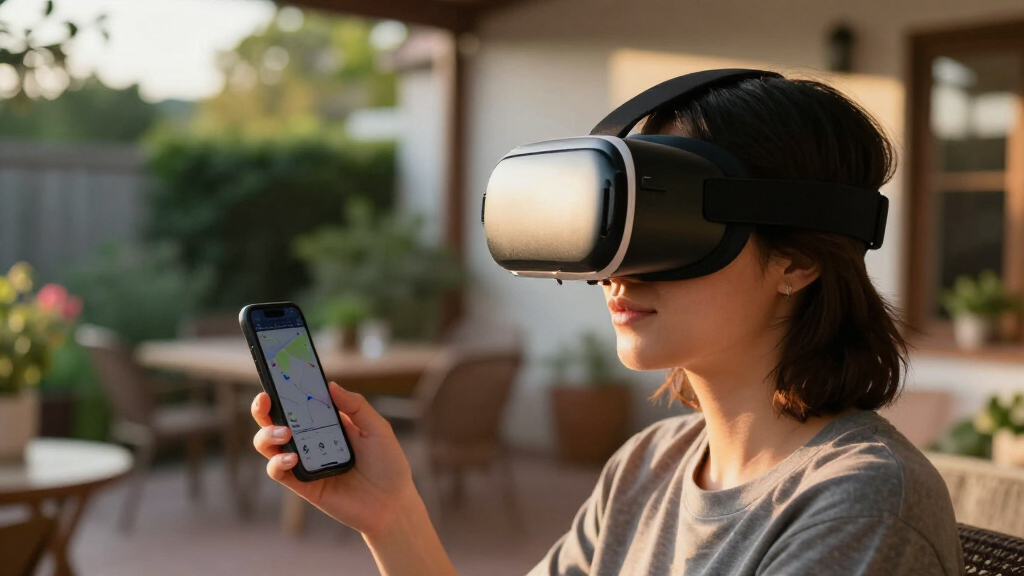

TL;DR

Get the latest gadgets delivered free — and shop member deals
- Fast, free delivery on millions of items
- Access to Prime Big Deal Days deals on October 6–7
- Prime Video, Amazon Music and more included
AR and VR technologies are increasingly integrated into brand strategies, offering immersive consumer experiences. This shift is confirmed by recent industry developments, signaling a major change in marketing approaches.
Major brands are significantly increasing their investment in augmented reality (AR) and virtual reality (VR) technologies, aiming to redefine consumer engagement and experience. This trend is confirmed by recent industry reports indicating a sharp rise in AR and VR campaigns across sectors such as retail, entertainment, and automotive. The development signals a strategic shift toward immersive experiences that could transform how brands connect with customers, making this a critical area to watch for marketers and consumers alike.
According to industry sources, several leading brands have launched new AR and VR initiatives in the first quarter of 2024, with investments reportedly increasing by over 30% compared to the previous year. These initiatives include virtual try-ons for fashion and beauty products, immersive showrooms for automotive brands, and augmented reality campaigns in retail environments. Experts note that the technology’s maturation is making these experiences more accessible and engaging for consumers, with some companies reporting higher conversion rates and increased brand loyalty.
One notable example involves a major retailer deploying AR-enabled shopping apps that allow customers to visualize products in their home environments before purchase. Similarly, automotive companies are using VR to offer virtual test drives, reducing the need for physical visits and expanding reach to a global audience. Industry analysts predict that as hardware costs decline and software platforms improve, adoption will accelerate further, embedding AR and VR into mainstream marketing strategies.
Future Brand Experiences · Field Brief
The Role of AR and VR in Future Brand Experiences
Brands are using augmented and virtual reality to make shopping, discovery and storytelling more interactive. The opportunity is growing, while adoption, access and returns are still taking shape.
01 / Where brands are experimenting
Experiences built around the customer
Reported initiatives span product discovery, remote exploration and interactive retail. The formats differ, but each gives customers a more hands-on way to evaluate a brand or product.
AR · Retail & beauty
Try before you buy
Virtual try-ons and in-home product visualization help shoppers preview color, fit or scale before making a purchase.
VR · Automotive
Explore from anywhere
Virtual showrooms and test drives let prospective buyers experience vehicles without traveling to a dealership.
AR + VR · Brand worlds
Turn attention into action
Immersive campaigns and virtual environments invite people to interact with products, stories and branded spaces.
02 / Why marketers care
More interaction, richer signals
Immersive tools can make product exploration more personal and memorable. They may support satisfaction and loyalty, while giving brands useful signals about customer interests. Results depend on execution and access.
03 / The evolution
From simple overlays to immersive spaces
AR and VR have appeared in marketing since the early 2010s. More capable hardware, better software and growing familiarity have helped brands test richer formats. Pandemic-era digital shifts also pushed virtual alternatives to physical retail and events.
Early experiments
Simple AR layers introduce digital information into physical settings.
Digital acceleration
Virtual formats offer new ways to reach customers beyond physical spaces.
Richer experiences
Improved platforms support interactive shopping and immersive showrooms.
Broader adoption?
Lower costs and easier tools could bring immersive campaigns to more brands.
04 / What could slow adoption
Access and trust will shape the outcome
Growing investment does not guarantee widespread use. Brands still need to make experiences comfortable, inclusive and worthwhile for customers.
Access
Hardware and reach
Device costs and availability may limit who can take part, especially in VR experiences.
Usability
Comfort and simplicity
Technical friction, user comfort and differences in digital confidence can affect participation.
Trust
Privacy and proof
Richer consumer data brings privacy responsibilities. Long-term business returns also remain uncertain.
05 / A practical view
AR and VR have different jobs
The best format depends on the customer task. AR can support decisions in a familiar environment; VR can offer a deeper remote experience.
| Format | Brand uses | Customer value | Watch point |
|---|---|---|---|
| Augmented reality | Try-ons, product visualization, retail activations | Preview in context | Device compatibility |
| Virtual reality | Showrooms, test drives, immersive brand spaces | Explore remotely | Hardware access and comfort |
| Traditional channels | Broad reach, familiar campaigns, in-person service | Easy to access | Less immersive interaction |
06 / What to watch next
Build, learn, then scale
The next phase is likely to bring more pilots and brand–technology partnerships. Falling hardware costs and more intuitive platforms may widen access. Consumer response will show which experiences deserve investment at scale.
07 / Key questions
Quick answers for marketers
How are brands using AR and VR?
AR supports try-ons, product previews and interactive retail. VR enables virtual showrooms, test drives and remote brand experiences.
What benefits can they offer?
More engaging discovery, personalized interactions, possible loyalty gains and useful customer insights.
What are the main challenges?
Hardware costs, technical complexity, accessibility, user comfort, privacy and data security.
Will immersive tools replace traditional marketing?
They are expected to complement existing channels, adding interactive experiences where they serve customers well.
When could adoption become widespread?
Industry observers expect growth over the next five years as hardware becomes more affordable and user-friendly.
What should brands track now?
Customer uptake, experience quality, conversion, repeat engagement, privacy expectations and the cost to serve.
Implications for Consumer Engagement and Brand Loyalty
The increasing adoption of AR and VR by brands could fundamentally change consumer engagement, offering personalized, interactive experiences that surpass traditional advertising. These technologies enable brands to create memorable interactions, which can lead to higher customer satisfaction and loyalty. As one industry expert stated, “immersive experiences are no longer optional but essential for brands seeking a competitive edge in a saturated market.” This shift could also influence purchasing behavior, with consumers more likely to buy from brands that provide engaging, virtual try-on or test-drive options.
Furthermore, AR and VR can help brands gather richer consumer data, enabling more targeted marketing and product development. This could lead to more tailored offerings and improved customer service, ultimately strengthening brand reputation and market share. However, the success of these initiatives depends on technological accessibility and user adoption, which remain areas of ongoing development.
As an affiliate, we earn on qualifying purchases.
Evolution of AR and VR in Marketing Strategies
AR and VR have been gradually integrated into marketing since the early 2010s, but recent technological advances and increased consumer familiarity have accelerated their adoption. Early applications focused on simple AR overlays, but now, with improved hardware and software, brands are creating fully immersive environments. The pandemic accelerated digital transformation, prompting many companies to explore virtual experiences as alternatives to physical events and retail spaces.
Major tech companies and startups alike have invested heavily in developing AR and VR platforms, aiming to make these tools more accessible and scalable. Industry reports from 2023 indicated a growing trend of brands experimenting with virtual showrooms, augmented reality shopping, and branded virtual worlds. This ongoing evolution suggests that AR and VR are becoming integral to the future of brand engagement, with forecasts predicting continued growth over the next five years.
Uncertainties Around Consumer Adoption and Technology Limits
While investments and pilot programs are increasing, it remains unclear how quickly and widely consumers will adopt AR and VR experiences at scale. Factors such as hardware accessibility, user comfort, and privacy concerns could influence adoption rates. Additionally, some experts question whether current technology can deliver seamless, engaging experiences across all demographic groups, especially in less tech-savvy populations. The long-term ROI for brands investing heavily in these technologies is still being evaluated, and there is ongoing debate about the best ways to integrate AR and VR into broader marketing ecosystems.
Next Steps in AR and VR Brand Integration
Industry observers expect continued investment and experimentation in 2024, with more brands launching large-scale AR and VR campaigns. Technological advancements, such as lighter, more affordable hardware and more intuitive software platforms, are anticipated to facilitate broader adoption. Additionally, collaborations between tech firms and brands are likely to produce innovative virtual experiences, including virtual events, augmented shopping malls, and interactive brand worlds. Monitoring consumer response and technological improvements over the coming months will be key to understanding the full potential of AR and VR in future branding strategies.
Key Questions
How are brands currently using AR and VR in marketing?
Brands are using AR for virtual try-ons, interactive product visualizations, and augmented retail environments. VR is being employed for virtual showrooms, test-drives, and immersive brand experiences that engage consumers remotely.
What are the main benefits of AR and VR for brands?
These technologies can enhance consumer engagement, increase brand loyalty, provide personalized experiences, and gather valuable consumer data for targeted marketing.
What challenges do brands face in adopting AR and VR?
Challenges include hardware costs, technical complexity, ensuring accessibility across demographics, and maintaining user privacy and data security.
Will AR and VR replace traditional marketing methods?
While unlikely to replace all traditional methods, AR and VR are expected to become complementary tools that enhance overall marketing strategies, especially in creating immersive experiences.
What is the timeline for widespread adoption of AR and VR in branding?
Experts predict increased adoption over the next five years, with significant growth expected as hardware becomes more affordable and user-friendly.
Source: rss
Fall Picks
fall essentials
As an affiliate, we earn on qualifying purchases.