
TL;DR

Get the latest gadgets delivered free — and shop member deals
- Fast, free delivery on millions of items
- Access to Prime Big Deal Days deals on October 6–7
- Prime Video, Amazon Music and more included
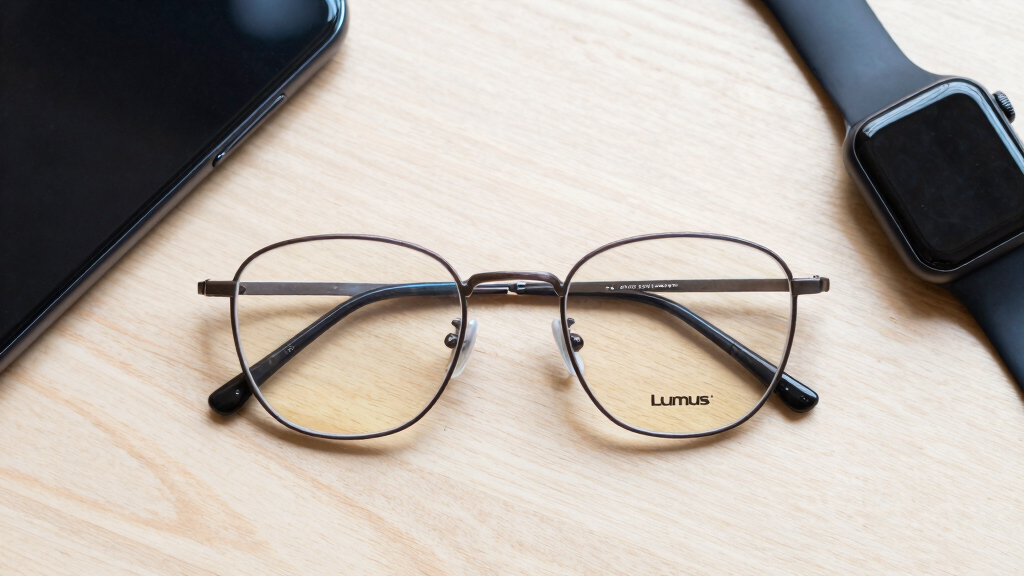
Lumus has showcased a prototype of waveguides capable of delivering a 70° field of view in thin AR glasses, with commercial availability expected by 2026. The technology marks a significant step toward more immersive, practical smartglasses.
Lumus has demonstrated a prototype waveguide capable of supporting a 70° field of view in slim augmented reality glasses, marking a significant advance in AR display technology. This development is confirmed by a recent private demo and aligns with Lumus’s announced timeline for 2026, making it a notable milestone for immersive smartglasses.
During a private demonstration at AWE, Lumus showcased a prototype AR glasses fitted with a new waveguide technology that achieves a 70° field of view. The prototype used a glass-based waveguide, avoiding exotic materials like silicon carbide, and was connected to a standard display, though current display limitations caused some color and distortion issues. Lumus indicated that future display modules will resolve these issues, and privacy features similar to Meta Ray-Ban will be integrated into the next waveguide generation.
The prototype confirms Lumus’s progress toward delivering high-FOV, slim AR glasses by 2026, fulfilling a promise made earlier this year. The company also revealed ongoing work on a new series of waveguides, series “A,” which are half as thick as previous versions, enabling thinner, lighter glasses. This reduction in thickness is crucial for user comfort and practicality, especially for extended wear. The demonstration also highlighted that the current waveguide series, “Z,” supports up to 70° FOV and that the new series “A” will further improve form factor.
Potential Impact of 70° FOV in Slim AR Glasses
The achievement of a 70° field of view in thin AR glasses could significantly enhance user immersion and productivity, making smartglasses more practical for everyday use. This leap addresses longstanding limitations of smaller FOVs, which have restricted the usability of AR devices in real-world scenarios. As Lumus advances its waveguide technology, the prospect of commercially available, high-FOV, lightweight smartglasses by 2026 becomes increasingly tangible, potentially transforming AR applications across industries.
AR smart glasses with 70 degree FOV
As an affiliate, we earn on qualifying purchases.
As an affiliate, we earn on qualifying purchases.
Advances in Waveguide Technology and Industry Timeline
Lumus has been a key supplier of waveguides for AR glasses, notably providing the technology for Meta’s Ray-Ban Stories. Previous developments included waveguides with 30° and 50° FOVs, with the company promising a 70° version by 2026. The challenge has been balancing FOV, thickness, brightness, and color fidelity. The latest demonstration confirms Lumus’s commitment and progress toward this goal, building on years of incremental improvements. The current limitations mainly stem from display technology, which Lumus expects to improve with upcoming display modules.
“We are excited to demonstrate the 70° FOV waveguide, which is a major step toward practical, immersive smartglasses by 2026.”
— Lumus spokesperson
Display Technology Limitations and Future Improvements
It is not yet confirmed when commercially available display modules will resolve current issues like color fidelity and pincushion distortion. The privacy feature, which is still in development, is expected to be integrated into the next waveguide generation, but specific timelines are unconfirmed. The overall battery consumption and power management for high-FOV AR glasses remain uncertain as development continues.
Upcoming Milestones and Commercialization Timeline
In the coming months, Lumus plans to finalize its next-generation display modules to address current prototype limitations. The company aims to introduce the improved waveguides with privacy features and thinner lenses in the next two years, with commercial products expected by 2026. Further testing and partnerships with device manufacturers are anticipated to accelerate the adoption of high-FOV, slim AR glasses.
Key Questions
When will 70° FOV AR glasses be available to consumers?
Lumus expects to have commercial versions of high-FOV, slim AR glasses by 2026, pending display module improvements and product development cycles.
What are the main technical challenges remaining?
The primary challenges include improving display resolution, color accuracy, and privacy features, as well as optimizing power consumption for practical, all-day wear.
How does this development compare to existing AR glasses?
Current AR glasses like Meta Ray-Ban have a 20° FOV, while Lumus’s prototype supports 70°, offering a much wider immersive experience, which could revolutionize AR usability.
Will the waveguides be compatible with different glasses brands?
Yes, Lumus supplies waveguides to multiple manufacturers, and their new designs aim to be adaptable for various smartglasses products.
Are there privacy concerns with wider FOV AR glasses?
Current prototypes lack privacy features, but Lumus is developing next-generation waveguides with privacy capabilities similar to existing products like Meta Ray-Ban.
Source: The Ghost Howls
Fall Picks
fall essentials
As an affiliate, we earn on qualifying purchases.