Drones are transforming how you get deliveries and capture images, making these tasks faster, safer, and more efficient. They use advanced sensors, AI, and real-time data to navigate complex environments, optimize routes, and fly in challenging weather. In photography, drones offer stunning aerial shots with stability and high resolution. If you want to learn more about how UAVs are revolutionizing these industries, there’s plenty of innovative technology and industry growth to explore.
Key Takeaways
- UAVs enable fast, autonomous delivery in remote areas, reducing transportation time and costs with real-time tracking.
- Advanced cameras and stabilization tech improve aerial photography and filmmaking, capturing high-quality images and videos.
- Drones enhance safety by inspecting hazardous sites and infrastructure, minimizing human risk and operational errors.
- AI-powered navigation and sensors allow precise, efficient delivery routes and detailed environmental monitoring.
- Regulatory frameworks ensure safe UAV operations, supporting widespread adoption in delivery, photography, and other industries.
Growing Market and Key Industry Applications

The drone market is experiencing rapid growth, driven by expanding applications across various industries. By 2025, the global UAV market is expected to hit nearly $39.5 billion, with commercial services making up most of that at around $29.4 billion. The commercial hardware segment valued at US$6.7 billion in 2025 is the second largest and fastest-growing, highlighting the increasing demand for drone equipment across sectors. Military UAVs are also booming, projected to reach $26.8 billion, doubling their 2018 value. You’ll see drones used in military surveillance, agriculture for crop monitoring, construction site inspections, law enforcement for search and rescue, and energy sector maintenance. Different types serve specific roles—fixed-wing for long-distance mapping, rotary blades for inspections and photography, and hybrid models for versatility. This growth is fueled by innovations in sensors, miniaturization, and autonomous features, transforming how industries operate worldwide.
Innovations in Delivery and Logistics
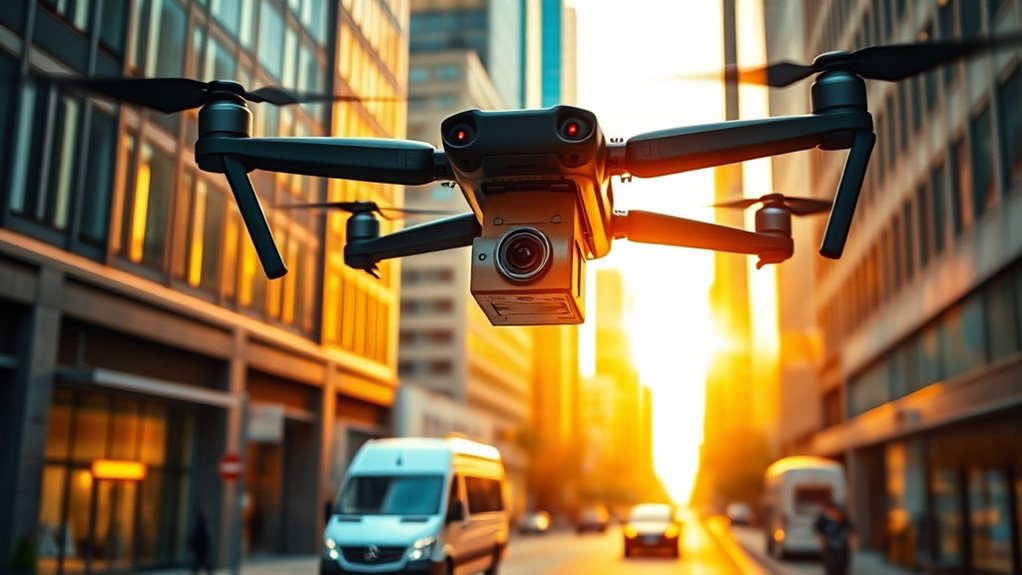
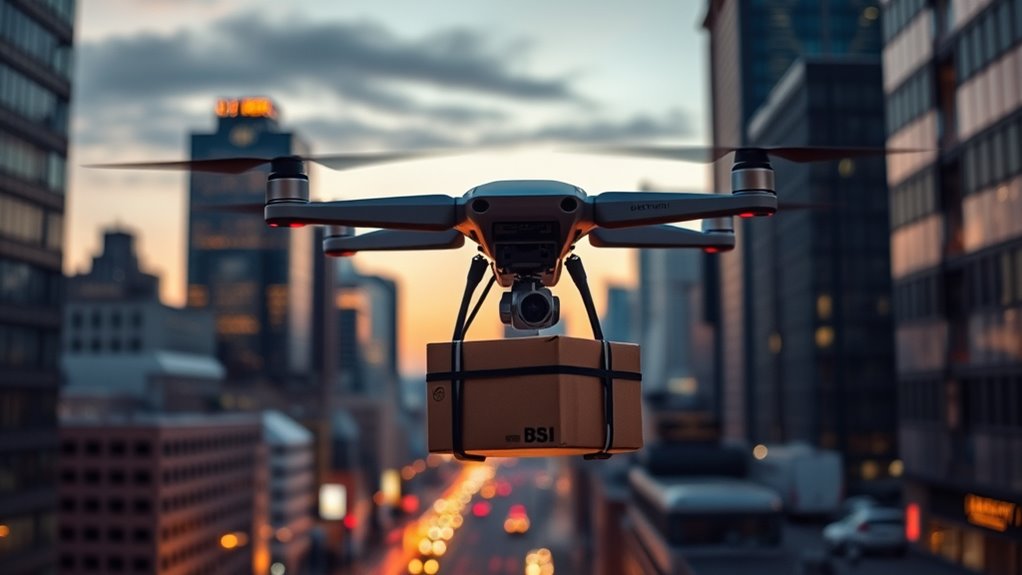
Advances in drone delivery technology are transforming logistics by enabling faster, more efficient, and reliable services. You benefit from AI, GPS, and machine learning that allow drones to navigate autonomously, reaching speeds of up to 80 kph (50 mph) and drastically reducing delivery times from hours to minutes. Market growth Real-time tracking systems improve accuracy and transparency, keeping you informed every step of the way. Drones operate reliably in adverse weather conditions, ensuring consistent service. They cut operational costs by reducing labor and infrastructure needs, while also lowering carbon emissions compared to traditional vehicles. Their ability to reach remote or hard-to-access areas enhances accessibility. Enhanced capabilities These innovations boost customer satisfaction through quicker, more precise deliveries, making drone logistics a game-changer across many industries. Additionally, integrating regulatory compliance ensures that drone operations adhere to evolving legal standards, supporting sustainable growth in this emerging field. As drone technology advances, tuning and maintenance will become increasingly important to optimize performance and safety for commercial applications. Furthermore, ongoing research into AI-powered navigation aims to improve drone autonomy and safety.
Advancements in Aerial Photography and Filmmaking
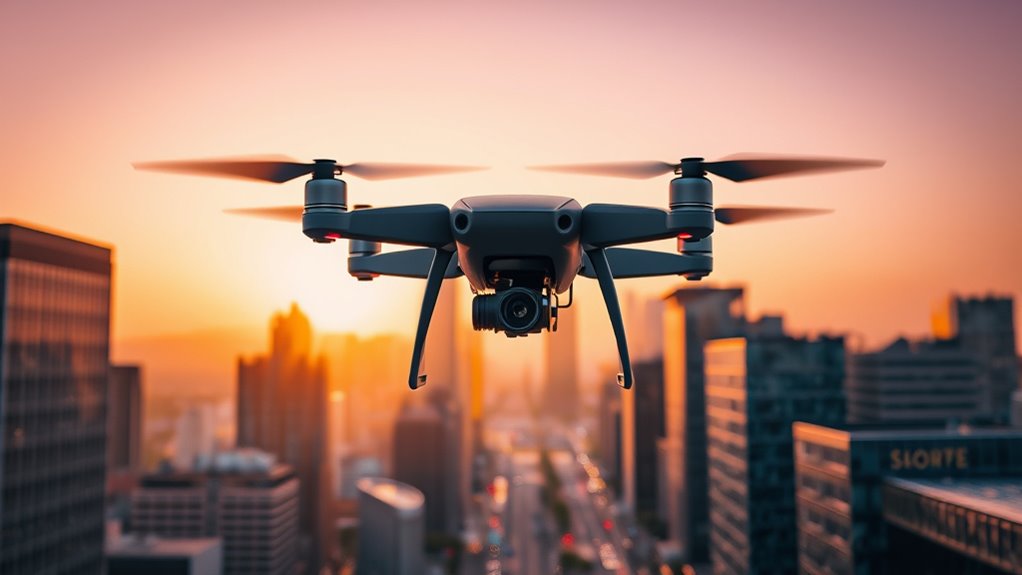
As drone technology continues to evolve, it’s revolutionizing aerial photography and filmmaking by making stunning visuals more accessible and versatile. You can now capture high-resolution images with drones equipped with advanced cameras, offering incredible detail and clarity. Improved stability reduces blur, while longer battery life lets you shoot extended sessions without interruption. Enhanced sensors improve image quality and processing, creating sharper, more vibrant visuals. The global drone market is projected to reach $129.23 billion by 2028 with a CAGR of 40.5%, promising continued innovations that will further enhance aerial imaging capabilities. These advancements are driven by ongoing research and development in aerospace engineering, leading to even more reliable and sophisticated drone systems. The integration of autonomous flight technology enables drones to operate with minimal human intervention, opening up new possibilities for complex shot planning. Autonomous navigation capabilities promise even more efficient shoots in the future. These advancements open new creative possibilities, allowing you to explore unique perspectives and access challenging locations with ease. Drones have become essential tools in environmental monitoring, real estate, filmmaking, and emergency response, transforming how you capture and tell stories from the sky.
Enhancing Safety and Operational Efficiency

Have you ever wondered how drones are transforming safety and efficiency on construction sites and beyond? Drones reduce risks by keeping workers out of dangerous areas and give you a clear overview of sites to spot hazards early. They help improve project timelines by cutting inspection and monitoring times by up to 30%, while also lowering errors and costs. The use of drones in construction is increasing rapidly, providing industry-wide benefits that encourage continued adoption. Real-time data from drones supports quick decisions, boosting safety and productivity. They easily access hard-to-reach spots, minimizing disruptions and preventing accidents, especially falls. Across industries, drones simplify risky tasks and enhance risk management with detailed data. Furthermore, the integration of drones with workforce management systems can optimize scheduling and resource allocation, leading to more streamlined operations. As the technology evolves, drones are becoming an essential part of digital transformation strategies in various sectors, promoting smarter and safer work environments. Additionally, the ability of drones to gather comprehensive data can support compliance with safety regulations and industry standards. Increased adoption of smart home technology in commercial settings further exemplifies how automation and data collection improve operational safety and efficiency. These advancements lead to safer work environments, faster project completion, and significant cost savings—all while increasing operational efficiency.
Cutting-Edge Technologies Shaping the Future
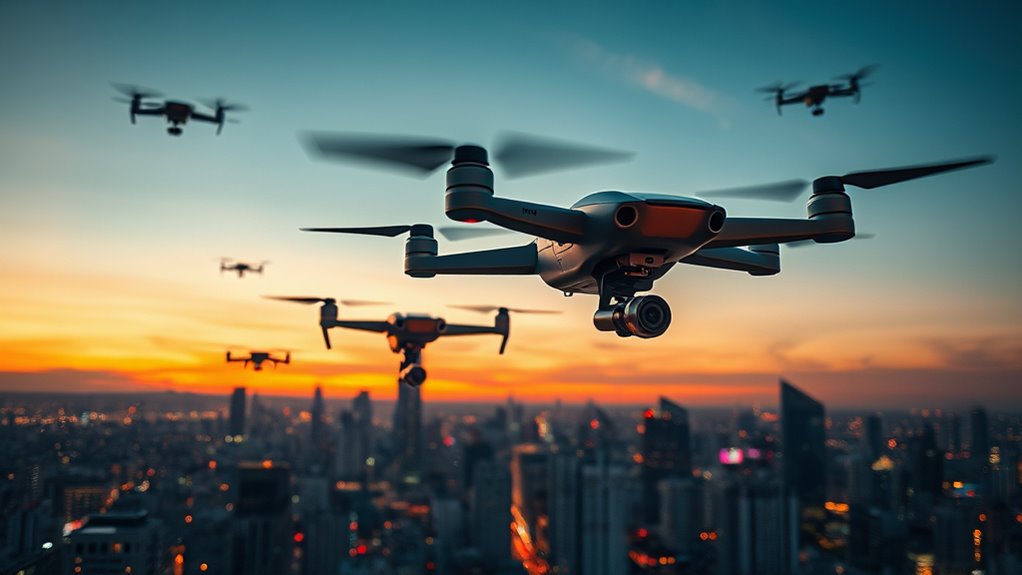
Cutting-edge drone technologies are transforming the way industries operate by enabling smarter, more autonomous, and highly adaptable systems. AI-driven autonomy allows your drones to adapt in real-time, recognize objects, and make decisions using predictive analytics. Autonomous problem-solving capabilities support wildfire assessment, control, and firefighting efforts. Fully autonomous navigation handles complex tasks like precision agriculture and disaster response without human input, while AI enhances security during surveillance. Swarm intelligence lets multiple UAVs coordinate seamlessly for large-scale operations. Advanced sensors, such as LiDAR and thermal imaging, enable precise terrain mapping and 24/7 safety. Power innovations like graphene batteries and solar-assisted charging extend flight times. Meanwhile, high-speed connectivity with 5G, edge computing, and satellite links ensures real-time data streaming and global reach. Additionally, ongoing research in AI-powered drone AI is continuously pushing the boundaries of autonomous capabilities, paving the way for even more sophisticated applications across industries. The integration of advanced sensor technology further enhances drone versatility and operational efficiency, opening new avenues for innovation. Moreover, implementing performance tuning techniques can optimize drone hardware and software for specific operational needs, improving overall efficiency and longevity. As cybersecurity concerns grow, implementing AI security measures in drone systems becomes essential to protect sensitive data and ensure safe operations. Furthermore, strict adherence to privacy and cookie policies is crucial for maintaining user trust and compliance with regulations, especially as drones collect increasing amounts of data. These technologies are setting the foundation for the future of UAV applications across industries.
Economic Impact and Industry Expansion
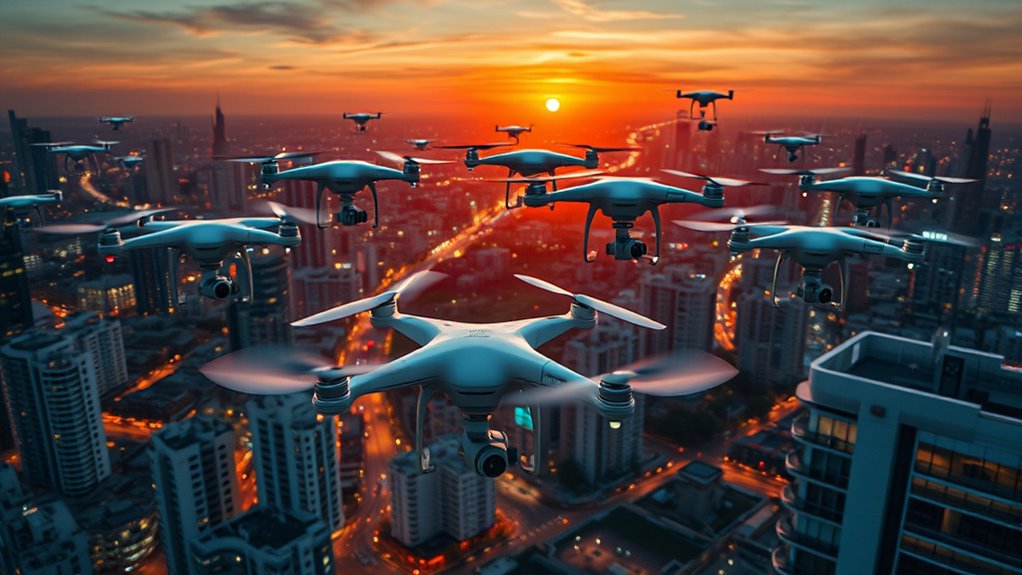
The economic impact of drone technology is reshaping industries and fueling widespread industry expansion. You’ll see the global commercial drone market, valued at nearly $20 billion in 2022, grow at about 13.9% annually through 2030, creating over 100,000 jobs mainly in manufacturing and operations. Drones also deliver cost savings for inventory management, transportation, and distribution, boosting efficiency across sectors. States benefit from increased tax revenue driven by drone-related businesses. In agriculture, infrastructure, healthcare, and environmental monitoring, UAVs improve productivity and safety, expanding industry reach. This growth is often guided by regulatory hurdles and infrastructure needs, which are essential to address for sustainable industry development. Additionally, the integration of drones into existing logistics networks can optimize delivery routes and reduce delivery times, further enhancing industry efficiency. As industries adopt drone technology, the need for specialized training and certification becomes increasingly important to ensure safety and compliance. These advancements are supported by improvements in sensor technology, which enhance drone capabilities and applications. The increasing adoption of drones is also driven by the continuous evolution of artificial intelligence, enabling autonomous operations and smarter decision-making. This growth prompts new opportunities but also challenges, like regulatory hurdles and infrastructure needs.
Navigating Regulations and Ensuring Compliance
Managing drone regulations requires staying informed about evolving rules set by authorities like the FAA. You must register drones over 0.55 lbs at faadronezone.faa.gov and follow operational restrictions, such as flying below 400 feet and maintaining visual line of sight unless granted a waiver.
If you need to go beyond these limits, request waivers for nighttime flights or flying over people. The remote ID mandate is now mandatory, ensuring safety and accountability.
To stay compliant, keep up with FAA updates, follow safety guidelines, and obtain a Part 107 certification if operating commercially. Be aware of state and local laws, and regularly maintain your drone and software.
Understanding and adhering to these regulations helps you avoid violations, protect privacy, and operate safely within the law.
Frequently Asked Questions
How Do Drones Ensure Privacy During Aerial Photography?
You can guarantee privacy during aerial photography by following regulations and ethical practices. Always get explicit consent from property owners before flying over private spaces.
Use geo-fencing to avoid private areas and configure your camera settings to limit zoom or resolution.
Plan your flight paths carefully to stay out of no-fly zones, and be transparent about how you handle and share the images.
Respecting these measures helps protect individual privacy and builds trust.
What Are the Main Challenges in Implementing Drone Delivery Systems?
Think of deploying drone delivery systems like building a complex puzzle. You face challenges like limited range, battery life, and maneuvering through busy environments.
Regulations act as gatekeepers, while high costs and infrastructure needs add to the difficulty.
Weather and privacy concerns are like storm clouds looming overhead.
To succeed, you need robust technology, clear laws, and public trust—it’s a delicate dance of innovation and regulation.
How Do Autonomous Drones Navigate Complex Environments Safely?
You navigate complex environments safely by relying on advanced navigation systems like SLAM, which helps build maps and track your location.
You use sensor integration—GPS, LiDAR, cameras, and radar—to detect obstacles and adapt to changing conditions.
Path planning algorithms, such as A* and RRT, chart efficient routes.
Redundant systems guarantee safety if sensors fail.
Balancing processing capabilities lets you operate reliably even in challenging environments.
What Training Is Required for Drone Operators in Commercial Sectors?
You need to complete specific training to operate drones commercially. Start by passing the FAA Part 107 test, which covers regulations, airspace, and weather.
Enroll in ground school programs, like those offered online or by universities, to prepare. You must also register your drone with the FAA and verify it meets weight and operational requirements.
Continuous professional development through advanced courses and manufacturer training can boost your skills and career prospects.
How Do Regulations Vary Internationally for Drone-Based Services?
You’d think flying a drone was as simple as pressing a button, but international regulations tell a different story. In the EU, you’re categorized into open, specific, or certified, while in the US, you need a Remote Pilot Certification.
Countries like China and Japan impose strict registration and flight restrictions. So, before flying, you better brush up on each country’s rules or risk turning your drone adventure into a legal nightmare.
Conclusion
Just as Icarus once reached for the sun, drones are elevating industries to new heights, transforming how we deliver and capture the world. With innovation guiding your way, you’ll navigate this skyward journey responsibly, balancing progress with regulation. Embrace these flying pioneers, knowing they hold the power to redefine tomorrow—reminding us that, like Icarus, we must soar wisely, guided by wisdom, not hubris. The future’s horizon beckons; it’s yours to shape.